Showing posts with label Canberra Writers Festival. Show all posts

Monday, 19 December 2016

It's what you make it


My Life in an Object
Canberra Writers Festival
National Museum of Australia, Visions Theatre
Saturday 27 August 2016

Objects acquire symbolism through our transference. Many people have items of ‘sentimental value’ that would mean little to anyone else. I have a quilt my sister made me when she left home. It has accompanied me around the world and graced my bed in every house I’ve ever lived in. I know that once the people and animals were safe, that would be the thing I save from a house fire. Sentimental and worthless to strangers, it connects me to my love for my family although they are many miles away.

Ahead of the National Museum’s A History of the World in 100 Objects exhibition, three authors were asked to bring along an object and explain how it had changed their life. That’s a tough request, and they all admitted that they chose something lightweight and easily portable to represent a greater truth. George Megalogenis, Karen Middleton and Nick Earls all entered into the spirit of the panel show-and-tell, My Life in an Object, with enthusiasm.
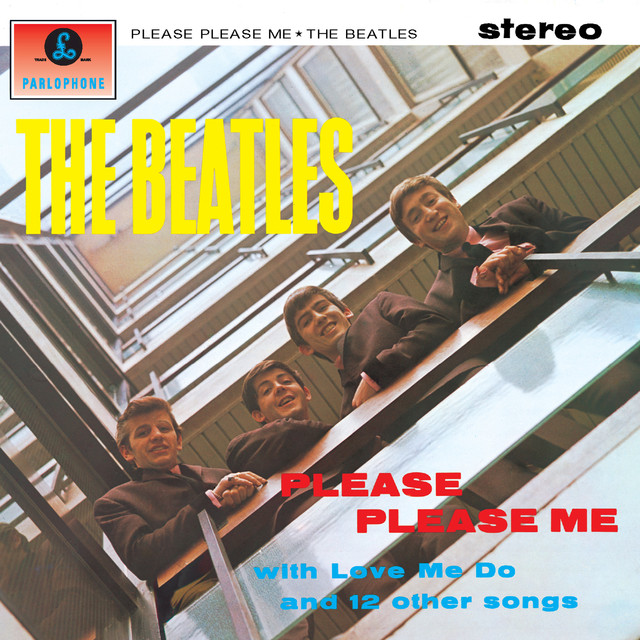

Author, journalist and political economist, George Megalogenis, brought along a Beatles record, Please, Please Me. He explained how the first time he heard it he had to have it, even though he didn’t have a record player. He was crippled with consumer anxiety that by the time he had the wherewithal to play it; the record wouldn’t be available any more. Clearly he couldn’t predict the enduring popularity of the Fab Four and the ubiquity of their songs.

He mused that it is no longer his favourite Beatles track, and that objects don’t necessarily change but people do and so the relationship alters. Our need to possess things we like is also interesting, but I wonder if it is fading in the world of digital downloads, minimalist furnishing, and premium prices on real estate space.


Karen Middleton's effect was a stars-and-stripes bandana purchased shortly after the terrorist attacks on September 11th 2001. At the time she had been in Washington DC with John Howard as a political correspondent for the West Australian newspaper, reporting on the then Prime Minister's visit to the United States. She recalled that John Howard was bundled onto Airforce 2 and flown to Hawaii, then Qantas to Canberra, but Air Traffic Control was asleep so he was diverted to Sydney where he was met by recently-sacked Ansett workers.

She, meanwhile, flew to New York to report on the scene there. The air was full of noxious dust comprised of potentially lethal asbestos from toppled buildings and human remains. Some African-American kids saw a gap in the market and sold these bandanas not as souvenirs but for practical reasons so people could mask their faces and breathe a little more easily. “They were enterprising kids – I paid way too much for it.” Even in the face of grief and horror, capitalist opportunism will triumph.

At the time she didn’t know she would become a war correspondent, but she knew this was a life-changing moment and that it would have a dramatic effect on her personal and professional development. Indeed she went to Afghanistan three times as a direct consequence of these events and published the book, An Unwinnable War: Australia in Afghanistan. In it she questioned Australia’s carte blanche commitment to help the US, for which she received hate mail and was labelled a traitor. She took the bandana with her, as a reminder of why she was doing what she was – the object became imbued with her projected focus, and although she said it is not a talisman, she has clearly made it a token.


A butter pat makes a fairly unassuming object for author, Nick Earls, to expand upon, but he soon brings the domestic wooden item to life. It was used on the farm in Ireland where he lived until he was nine. He explained that such simple appliances provide links to the land, and that the stories of nearby churches or landmarks become your stories too – we willingly assume the ties and inherently form affiliations.

Apparently we crave these connections and researching family history is the third most popular activity on the internet “after shopping and pornography”. Earls used this platform to appeal for more funding for Trove, the popular and free digital resources portal created by the National Library of Australia. “Please remove the shackles and let it run.” The on-line resource contains books, images, historic newspapers, maps, music and archives, but the Library stopped funding content in July due to government cuts. (At the time of writing, this decision has been reversed.)

Nick Earls is writing a series of novellas. He has researched the form and understands the way it works to intrigue and delight the reader in a single sitting. He complained that people now consume so much information and content and so quickly they don’t understand anticipation or deferment. He believes in enforcing breaks “to let the stories sit in your head.”

Just as the Quarterly Essay (for which George Megalogenis writes, bringing us full circle) fills the gap in the market that has been dropped from the weekend newspaper, novellas have their own place on the bookshelf. Earls claimed that while articles were getting shorter, books were getting fatter, and that we are losing the art of digesting information. He stated that novellas can give depth without padding. Similarly objects can give meanings without words.  It’s a concept worth exploring, and this panel did so convincingly.

Tuesday, 6 September 2016

Getting to Know 'The Other'

Climbing Mountains and Writing Stories: In Conversation with Yann Martel
Canberra Writers Festival
Llewellyn Hall, 26 August, 2016


Yann Martel looks a little like a scruffy and earnest student. He talks like one too, frequently wandering off on tangents and occasionally forgetting what he’s talking about. But he is so erudite, charming and fascinating, that he is captivating as he describes his attitude to religion, politics, art, and life (both of Pi and in general).

He studied philosophy at university, which he claims is a good way of being reasonable; of “scouring the wonder from religion and art”. And yet he is fascinated by religion and he loves religious texts, which both tell stories and entail the suspension of disbelief. He laments that our culture is so cynical and explains that if you can set that aside, the texts of the gospels can open up to faith and wonder. Admitting that there is no proof for faith, he confesses, “it is comforting and it makes me feel better.”

He asks us to consider why Agatha Christie is so popular? Her novels all follow the same framework and they are very English in their setting, humour and morals, and yet she has sold five billion copies of her books worldwide. He suspects this is because she writes about death in a way that is entertaining rather than depressing. We are all going to die in the end, so it is comforting to think of death in terms of faith. The Jesus event is a bit of an anomaly, because gods are usually omnipotent and don’t die. But this one resurrects; death is not a finality, but merely a threshold.

This returns him to his interest in religious faith and Life of Pi. He feels there is a proximity of animals to the divine, stating where there are lots of animals (India), there is a strong manifestation of religion. Gods and animals are always in the moment (not worried about the past or thinking about something else), and have a strong sense of presence. They can play the role of the witness, and he has put a chimpanzee into his latest book, The High Mountains of Portugal. The chimpanzee is an interesting choice as it is the closest animal to a human, sharing 98% of the same DNA as us, but what a difference that 2% makes!

With little prompting, Martel speaks about the film adaptation of Life of Pi. He accepts that adapting a novel to screen is challenging. For a start, there is the need to use different language. He may write, ‘the ship sank’, because he is more interested in the effect this has on Pi than the event itself, whereas in the film, it becomes a visually dramatic and engaging scene. His reaction to the film was mixed due to the difference of perspective and point of view. In the book we see everything through Pi’s eyes; in the film we see Pi himself. Naturally the ruminations of the book are lost. Martel considers the film is a nice compliment to the book if you read the book first. If you see the film first, it seems a little lacking. He was slightly disappointed in the film but, he laughs, no one ever blames the author for a bad adaptation of their novel, and anyway, “I cried all the way to the bank”.

When asked which version of Life of Pi really happened, he throws it back to the audience – which did we prefer? Obviously the first one with the animals is more marvellous and remarkable. We tend to prefer metaphors; who cares if they are true? If we are obsessed with facts and the truth alone, we would never read novels or poetry. We also tend to believe what we last see, which becomes problematic in a film. In a novel we don’t see anything; we create it all mentally, and because the ‘real’ story is macabre and horrible, most people want to believe the first story, even if it is incredible. Life of Pi is going to be adapted for the stage in London (cue gasps of delight from the audience), and Martel hopes to involve himself more and suggesting that the storyline is inverted, putting the grim one first, and allowing the fable to be teased out by the investigators in the Mexican hospital.

Martel has a shack to write in, in which he isolates himself. Before he begins a novel he reads books, asks questions and researches. Then, “I close my eyes and try to imagine being the other”. He wrote about a man who became a woman and returned to being a male with a new sense of awareness in Self (1996). Interested in sexual identity, he asked women about all aspects of their sexuality and physicality and concluded there is a greater sorority of women than there is fraternity of men. Beatrice and Virgil (2010) is an allegorical tale about the Holocaust featuring a donkey and a monkey. He believes that a great story creates empathy, and the best way of understanding ‘the other’ is to be ‘the other’ through fiction. It is a matter of concern to him that the largest group of people who don’t read is that of middle-aged males; the ones who tend to run the world, and therefore, need the most understanding.

One of his more controversial actions was his attempt to educate former Canadian Prime Minister, Stephen Harper, whom he describes as a “tight, narrow little man”. Harper had no life/ work/ travel experience and famously never read. When asked what his favourite book was, he replied “The Guinness Book of World Records”. Shocked by this gulf between the political and the arts, as Harper was meant to be the people’s representative of both, Martel sent him a book every two weeks with a short note. The first was The Death of Ivan Ilyich by Leo Tolstoy, for which he was accused of being elitist – “We can’t all read Tolstoy!”

Martel continued to send Harper a variety of books from Agatha Christie to Harlequin Romances (The Virgin Secretary’s Impossible Boss) over four years – 101 books and letters – and received no reply. People accused Martel of arrogance and asked him, “What does it matter if Harper doesn’t read?” He counters that it is important to read the imaginative word; “If you have power over other people; you must know these other people.”

Naturally, this statement lead to a question from the audience asking what he would recommend our own Prime Minister read. After commenting, “You make me feel like a literary oncologist”, Martel fielded the question deftly, suggesting that, as he needs courage and serenity, perhaps a war novel would be appropriate – something like The Red Bad of Courage. Playing expertly to the crowd, Martel concluded, “but I understand that Turnbull likes the arts – he’s just in the wrong party…”