Showing posts with label etiquette. Show all posts

Friday, 25 July 2014

Friday Five: Rules of Civility


Thanks to my friend, The Green Goddess, who recommended that I read The Rules of Civility by Amor Towles. I've yet to consolidate my opinions on the novel beyond a glaring neon of Great Gatsby and 'written with both eyes firmly on the film rights', so this isn't a review. 

The title relates to the Young George Washington's Rules of Civility and Decent Behaviour in Company and Conversation. Aged sixteen, the future President of America copied out these rules as a writing exercise from a translation of a French etiquette manual first published in 1640. The original French manual has been traced back to a manuscript written by the Jesuits in 1595. 

Many of the 'rules' relate to table manners, when to doff one's hat, where to position oneself when walking along a corridor or through a door with another, and how one should never fidget, sigh, yawn, hum, bite one's nails or appear in a state of undress in the presence of others. Speaking with one's mouth full, scuffing ones feet, wearing dirty clothes, raising one eyebrow, or spreading gossip are all equally frowned upon.

What strikes me is that following most of these edicts would still serve us well over four hundred years later. Unfortunately, as most of them refer to deference, putting others before oneself, and not assuming one is the centre of attention, they are increasingly dropping out of fashion. 

It is also interesting to note that the young George did not think these behaviours were necessarily innate (otherwise, there would be no need to list them), but that, if learned, they would make shared society all the more pleasant. I still hold these truths to be self-evident. These are my favourite of the 110 rules:

5 Favourite Rules of Civility:
  1. 1st - Every Action done in Company, ought to be with Some Sign of Respect, to those that are Present.
  2. 18th - Read no Letters, Books, or Papers in Company but when there is a Necessity for the doing of it you must ask leave: come not near the Books or Writings of Another so as to read them unless desired or give your opinion of them unask'd also look not nigh when another is writing a Letter. (Poor George would have conniptions over mobile-phone usage!)
  3. 41st - Undertake not to Teach your equal in the art himself Professes; it Savours of arrogancy. (Critics; take note!)
  4. 53rd - Run not in the Streets, neither go too slowly nor with Mouth open go not Shaking yr Arms kick not the earth with yr feet, go not upon the toes, nor in a Dancing fashion.
  5. 89th - Speak not evil of the absent for it is unjust.

Monday, 16 September 2013

Cooking the Books

The Short Life and Long Times of Mrs Beeton by Kathryn Hughes
(Harper Perennial)
Pp. 428

We all know Mrs Beeton, right? She was a Victorian matron who presided over bland food in bizarre combinations (calf’s foot blancmange, anyone) and fussy serviette folding. She wrote a book about cookery, servant management and other household hints that became a byword for bourgeois and has been much-derided ever since it was written.

Well, wrong, according to Kathryn Hughes’ scholarly biography, which also includes a plethora of information on the changing times, consumerism and attitudes towards women and home-making. Mrs Beeton, née Isabella Mary Mayson, was 21 when she began working on the first Beeton's Book of Household Management which was published in 1859 in serial form in her husband, Sam Beeton’s, Englishwoman's Domestic Magazine. Much of it was copied or stolen from other (often unattributed) sources. She died aged 28, although it benefitted her publishers to pretend that she was still alive as they brought out myriad editions of her books in different packages and formats.

As a young wife, Isabella had no idea how to run a household and probably wished there was a manual, but as there didn’t seem to be one, she began to write it herself. She offered help to women floundering in domesticity, and “emphasised the moral duty of the middle-class mistress in keeping her expenditure in check by brushing up on her arithmetic rather than her conversational Italian.”
This was not to say that Mr and Mrs Beeton were against educating women or thought they should be chained to the kitchen sink, and in fact they were adamant that “those women who needed to should have access to properly paid and respectable jobs.” The key phrase here is ‘women who needed to’, as they assumed, as did all publications of the time, that “a woman’s first and proper desire was always to marry, have children, and run a happy home.”

In an interesting aside, Hughes notes that this situation is so reversed that homemaking is now generally only appealing to those who don’t ‘need to’. Neither condemning nor condoning Mrs Beeton, this attitude also politicises the supposedly simple choice of being a housewife.

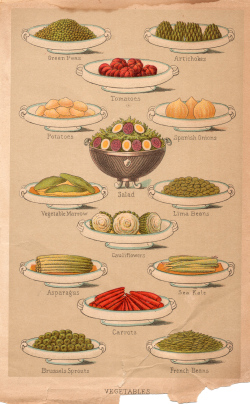
Perhaps Mrs Beeton is best known for her recipes, although most of them are not original. She was possibly the first person to include a comprehensive index at the front and to cross-reference the entries. The inclusion of cooking times and listed ingredients first, before the method, was also innovative albeit derided by ‘proper’ cooks who maintained one should always read through the recipe in full anyway. Beeton's Book of Household Management was the first British cookery book to use colour plates (in 1861) to show readers exactly how the food should look when it came to table.

Another 100 pages of the biography remain after Isabella’s death, reinforcing the idea that she and Sam were Mrs Beeton between them, and that the reputation which was built up around her had very little to do with the woman herself. It made sense for the publishing company to “pretend that Mrs Beeton was alive, well, and looking forward to supplying the nation with yet more words of wisdom from her immaculately-run home.” 

Friday, 14 August 2009

Etiquette


When I was swimming today, I noticed signs in the changing rooms about lane etiquette. Basically, they informed swimmers how to behave around others: stick to the left; swim at the same speed as others in your lane and change lane if they are faster/slower than you (there are slow, medium, fast, and aqua-jogging lanes, all of which are clearly labelled); allow others to overtake you if they are faster; only overtake between the flags; leave the ends of the lanes free for people who are turning.

I would have thought this was obvious, but apparently not – hence the signs. A UK website dedicated to work etiquette has a page about
what and what not to do in a lift. Advice ranges from pressing the hold button when you see people rushing to catch the lift, to acceptable topics for conversation. Honestly, there are people who need to be told these things.

My favourite bit is the piece of advice that admonishes against using a mobile phone in a lift. It simply says, ‘It’s bad manners’. When I was a child, that was enough of a deterrent for anything. Being impolite was tantamount to eating tripe or listening to Val Doonican – something to be avoided at all costs.

On the occasions where I got a bit excitable and started to converse rather more loudly than was strictly necessary, my mother would say, ‘I’m sure the whole bus/park/world doesn’t wish to know about the minutiae of your day’ and I would blush, understandably chastised and be quiet until I had something interesting to say. Some might say they’re still waiting… You just didn’t want to ‘draw attention to yourself’ as this was considered a Bad Thing.

Recently I was at the theatre and a group of young lads were in the seats behind me. They were obviously in Wellington for some sporting tournament or other (either that or they revelled in wearing matching tracksuits) and they been dragged along to the theatre to keep them out of mischief. It soon became apparent that they had no idea how to behave in a theatre – I suspect this was a first for them.

They texted on their mobile phones, they asked each other what was going on and at one point they became directly involved – one of the actors was illustrating the dank depressing feel of the bach by trying to light a fire with damp matches when one lad offered him a lighter. To be fair, a couple of them seemed to be engaged as they made (loud) comments such as, ‘Oh wow, he’s really upset!’ and ‘She’s going to be really annoyed about this.’ But they had no comprehension that they were disrupting everyone else’s enjoyment.

I’m not alone in this experience. Linley Boniface wrote about a traumatic cinema visit with ‘people who believe their conversation is far more insightful, entertaining and hilarious than what’s happening up on the screen.’ Doing, or not doing all of these things are common courtesy and common sense, attributes which perhaps we are loosing in society.
Instances of complete oblivion to others are rising, not only in the pool or the theatre but also, and perhaps more dangerously, on the road. What is worse than ignorance of others is wilful disregard. When did we decide that our needs were so much more important than everybody else’s?

I blame two things – the i-pod and L’oreal. When plugged into a machine full of tunes you have illegally downloaded from the internet, thereby killing the potential of recording artists to actually make a living (but why should you care – you’ve got it for free!), you become unaware of everyone and everything else around you, existing only in your personal bubble. Words like communication, community, commonality, cease to mean anything to you. Because you are so special.

Or, in the words of an insidious marketing campaign that promotes vanity and makes money out of hiding what people really look like behind layers of make-up, ‘Because you’re worth it.’ Are you, really? When did we become so narcissistic? Was it when schools were no longer allowed to fail children who didn’t pass their exams? Was it when we started giving certificates to everyone who showed up and extra points for spelling things correctly? Was it when we started making reality television out of spoiled brats? Bob Brockie mentions some suggestions in a recent opinion piece.

As a human it would be nice to think you are entitled to clean water, fresh air, sufficient food, shelter, clothing, free education (up to 16 and then for those with aptitude) and a health service. As for the right to mouth off and assert your individuality at everyone else’s expense – I don’t think so. Some may call it etiquette – that’s clearly a tricky French word that people don’t understand. Let’s make things simple; it’s basic manners.