One of the biggest talking points of any Olympic Opening Ceremony is the parade of nations, more particularly, the outfits they are wearing. So I have taken it upon myself (fashionista that I am), to give you the lowdown on the haute couture (in roughly alphabetical order and with the chosen highlights in bold and italics).
Andorra has a huge team considering the size of the country, but then they are in the middle of the mountains.
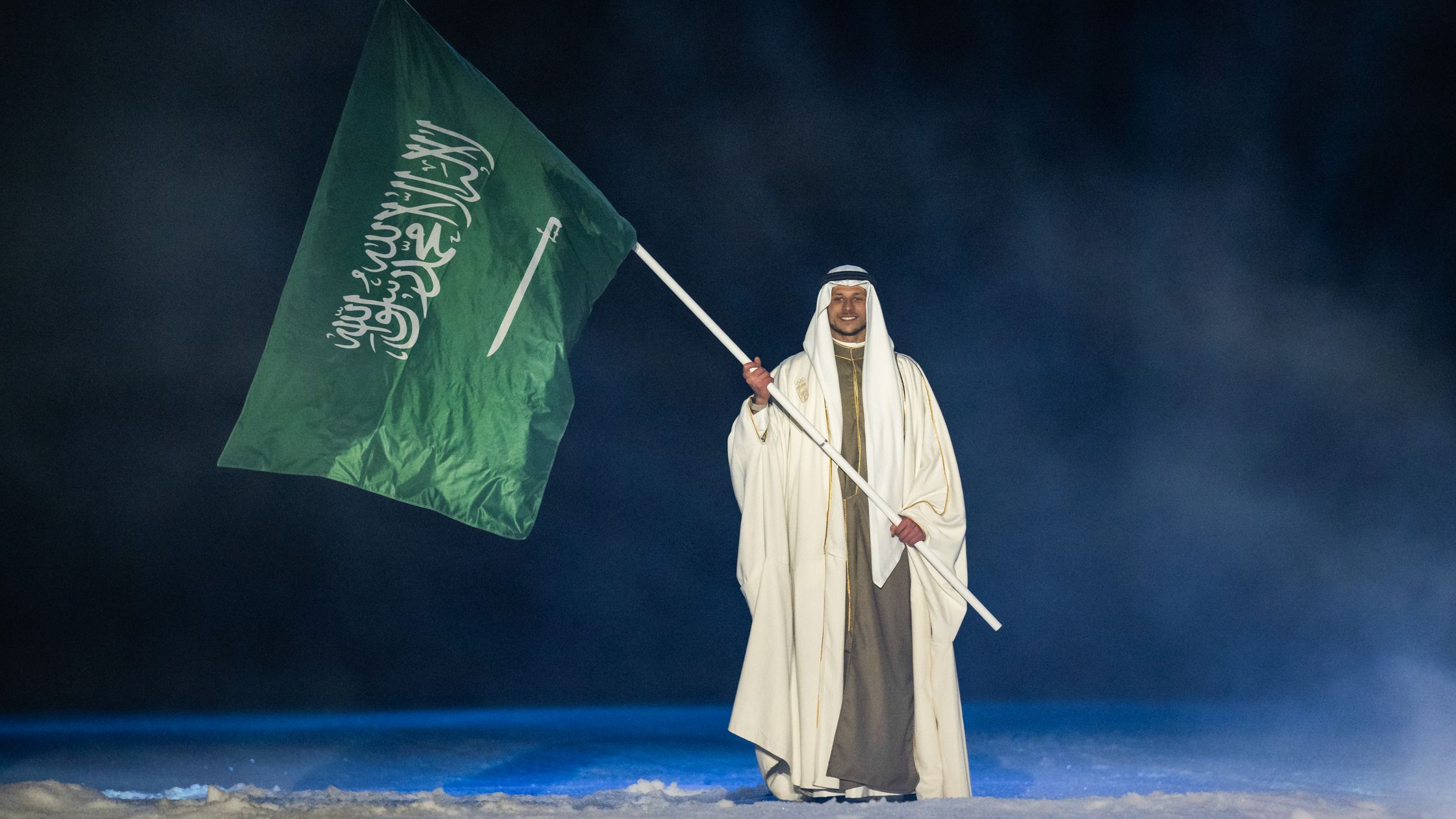
Saudi Arabia/ Arabia Saudita have half a dozen skiers (both downhill and X-country) so they are all in Predazzo and Livigno, leaving the oven-ready baked potato name-bearer to enter the San Siro solo.
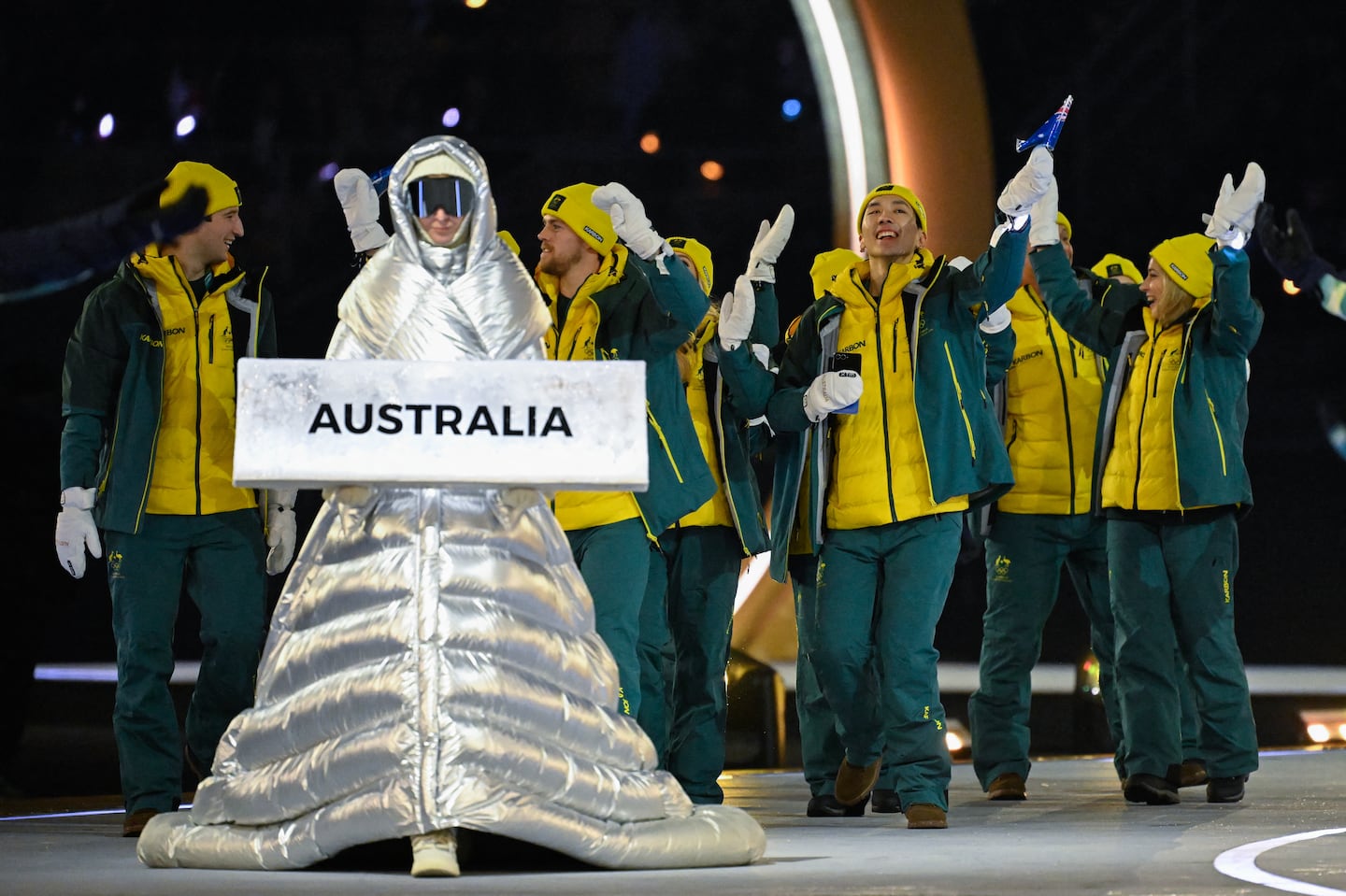
Australia is, according to the commentary, "the most successful warm climate country in Winter Olympics history". The green and gold always stands out, and gets confused with South Africa.
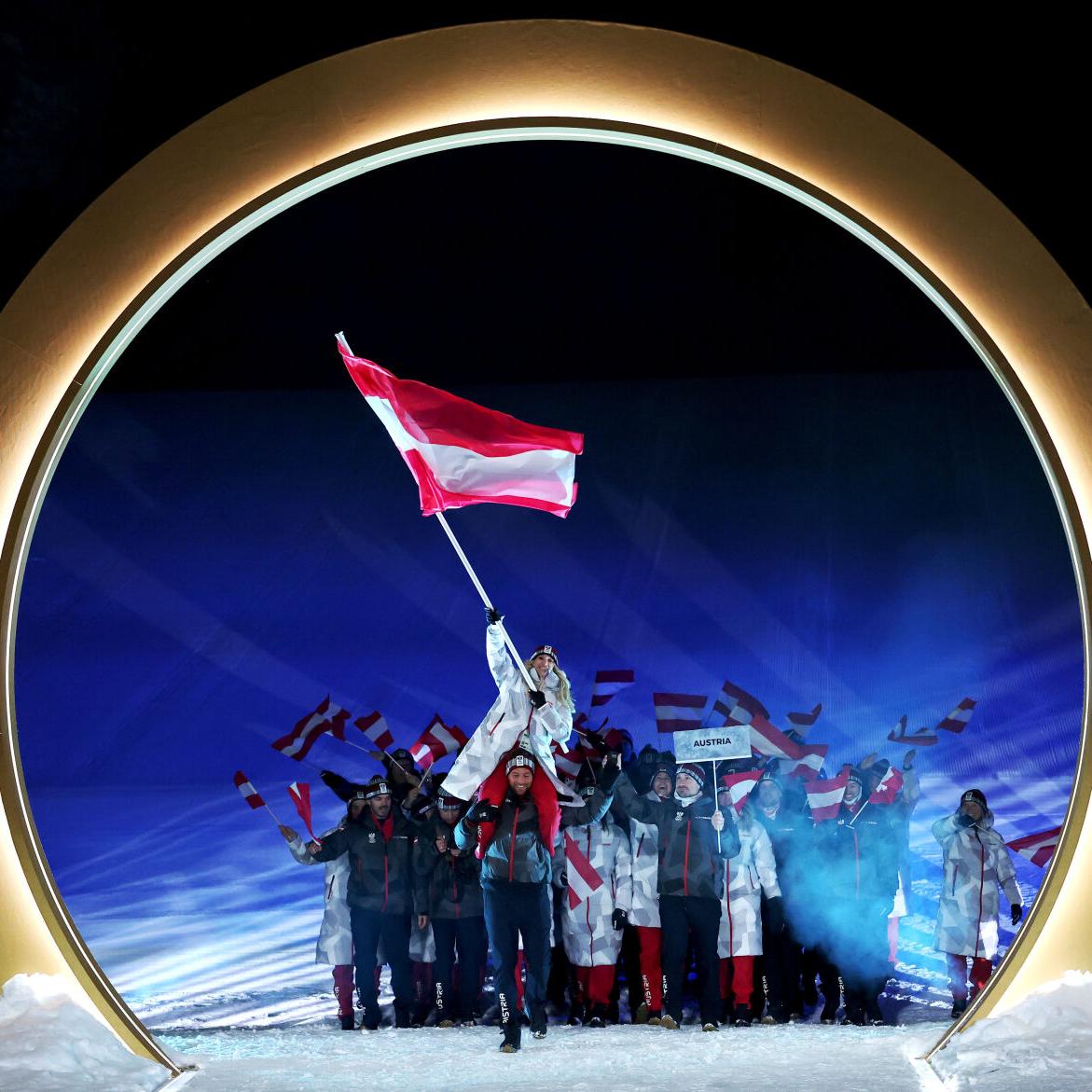
Austria enter the Cortina catwalk in nice knitted beanies, not just carrying the flag but carring the flag-bearer too.

Belgium look like cheery cheeses (Babybels perhaps) in bright yellow snowsuits.
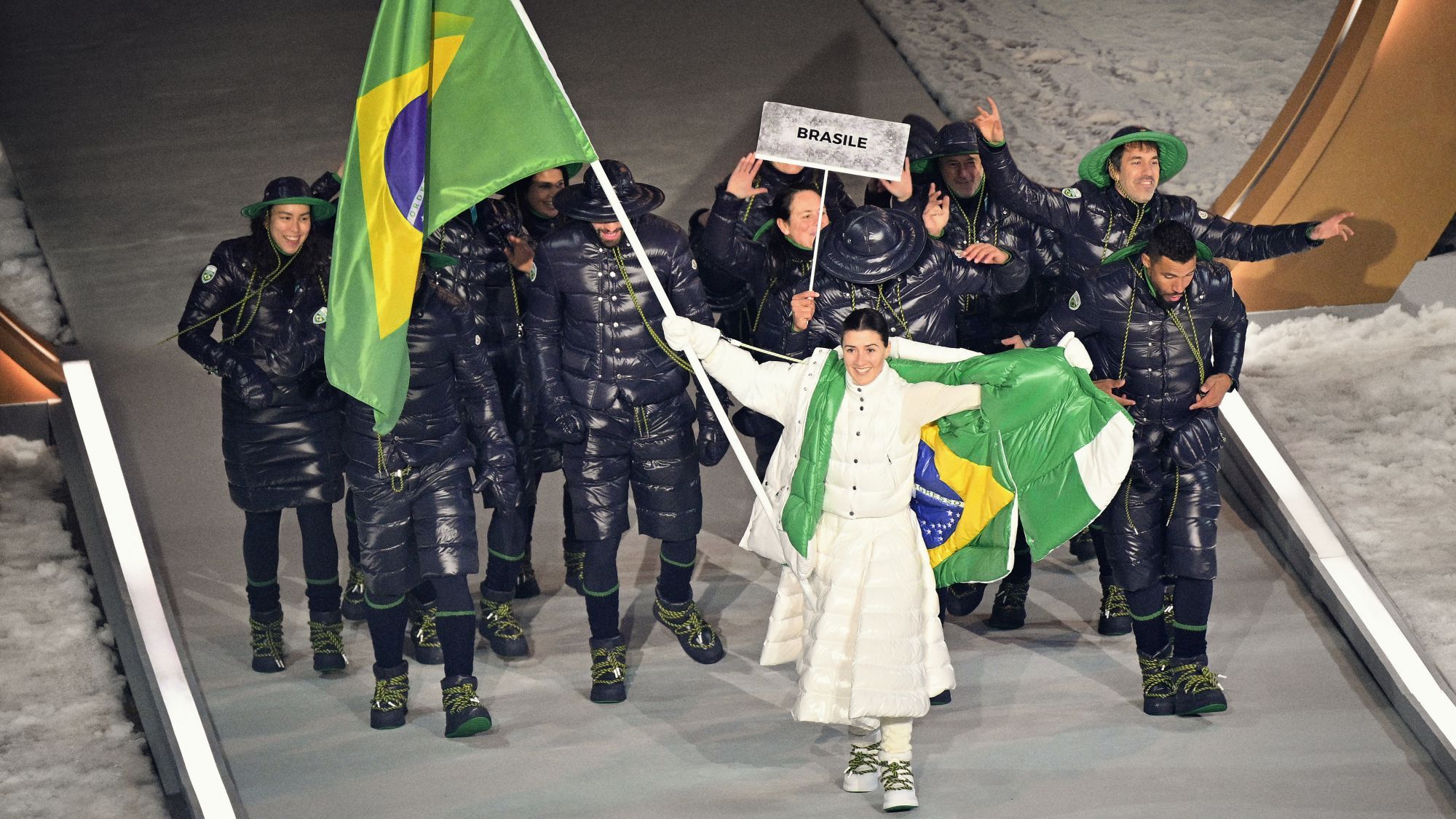
Brazil are kitted out in very odd three-quater-length purple puffer outfits with rainhats featuring a green underside. I think they look like Lewis Carroll's caterpillar after a few too many tokes on the hookah, waiting to break out into butterflies. They do break out into a samba at Cortina (complete with back-flip), but it's all a bit peculiar. I read that this is in fact "a reinterpretation of the brand's (Moncler) signature Karakorum down parka, which was originally created for Italian mountaineers Achille Compagnoni and Lino Lacedelli during their 1957 ascent of K2. The flag bearers are in structured white capes with a long-flowing silhouette with a hood, adapted from expedition gear intended for protection in snowy conditions. The colours together combine to create the flag", which is also revealed on the inner lining. Curiouser and curiouser.
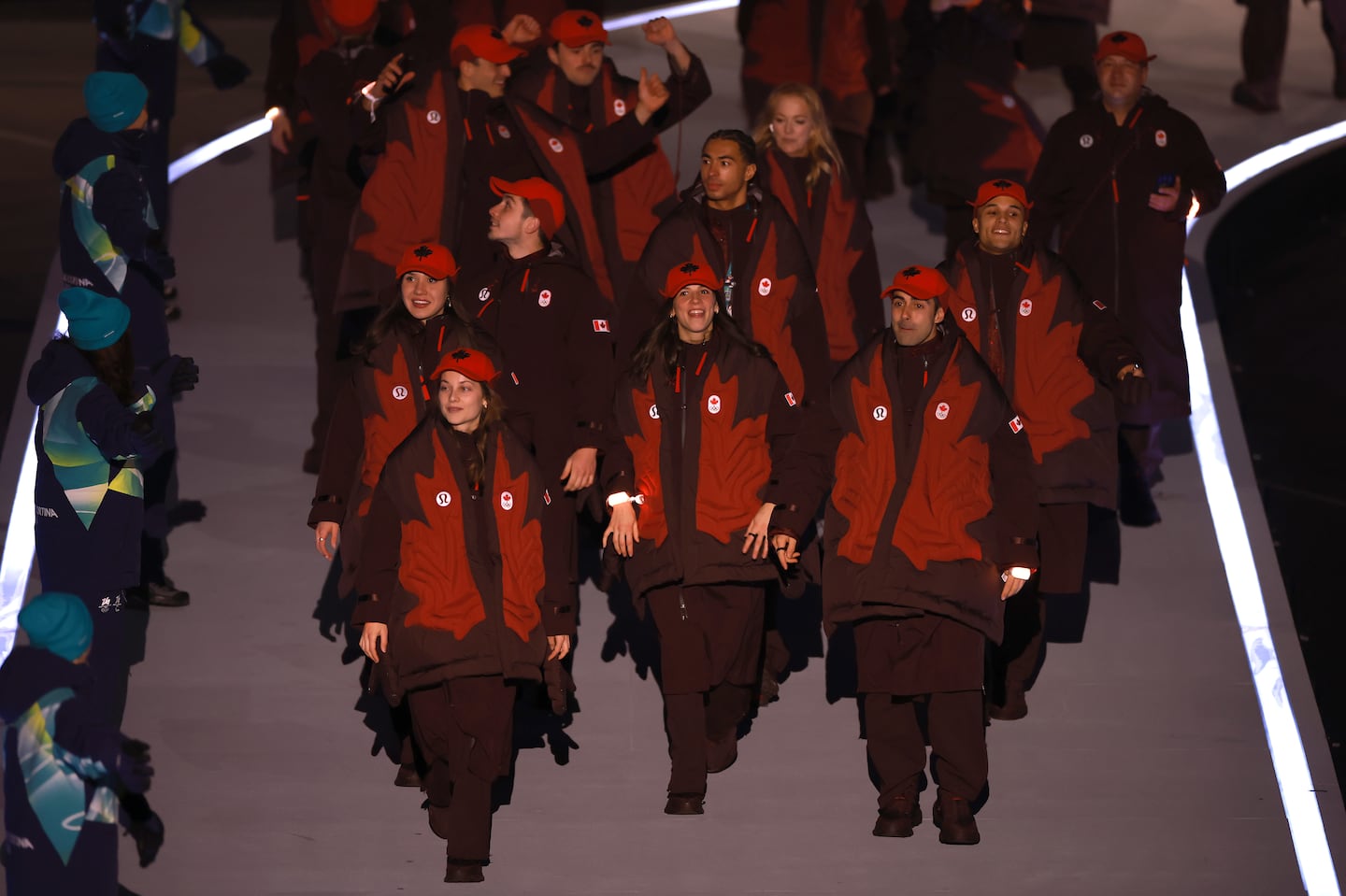
The Canadians look like Lululemon Christmas puddings with an embroidered oversize maple leaf on their one-of-many-layered jackets. They also sport idiot mittens and converted baggy baseball caps. The commentators tell us they are one of the largest and most gender-balanced (actually with more women than men representing their country) at these games. Again, I learn from reading, that these outfits feature, "a convertible quilted wrap vest as the 'statement item' [I think the statement might be 'send help'], as it can be worn as a vest, scarf or packed up as a pillow (also, the maple leaf is massive when unfurled). For extra frigid temperatures they've also been equipped with an optional nylon taffeta insulated 'shacket', emblazoned with a print inspired by Canada's nature trails."
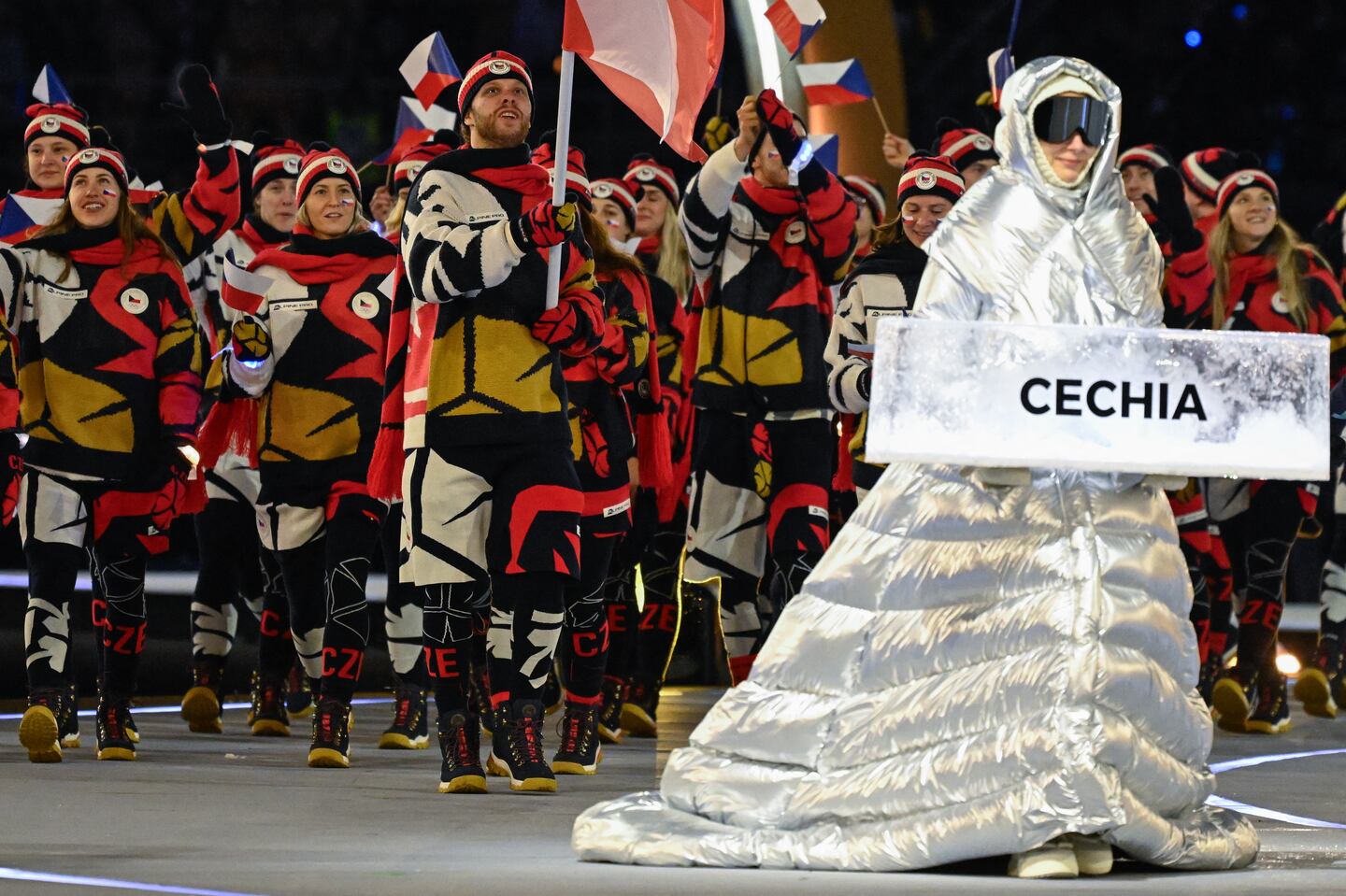
Czechia get a lot of flack for their Mondrian-styled knitted jumpers in red, white, black and yellow. They are in fact inspired by graphic designer, Vojtech Preissig (1873-1944), whose work has apparently influenced the entire Czech creative scene. The athletes also wear knee-length shorts and socks, and I don't care what anyone says; I like this modish look.
Cyprus have one athlete who is competing in the alpine skiing. In broader terms they have only won one medal at any Olympic Games, and that was in sailing. One suspects they have more sea than snow to play with.

Colombia have great jackets and scarves accessorised with a wide-brimmed gaucho-style hat.
Croatia's all-red outfits are snazzy.
Denmark has the oldest continually used national flag in the world. While this is an interesting fact in itself, it probably tells you a lot about the impact of the uniforms.
Eritrea mean (snow) business in practical green jackets and funky multi-coloured scarves.
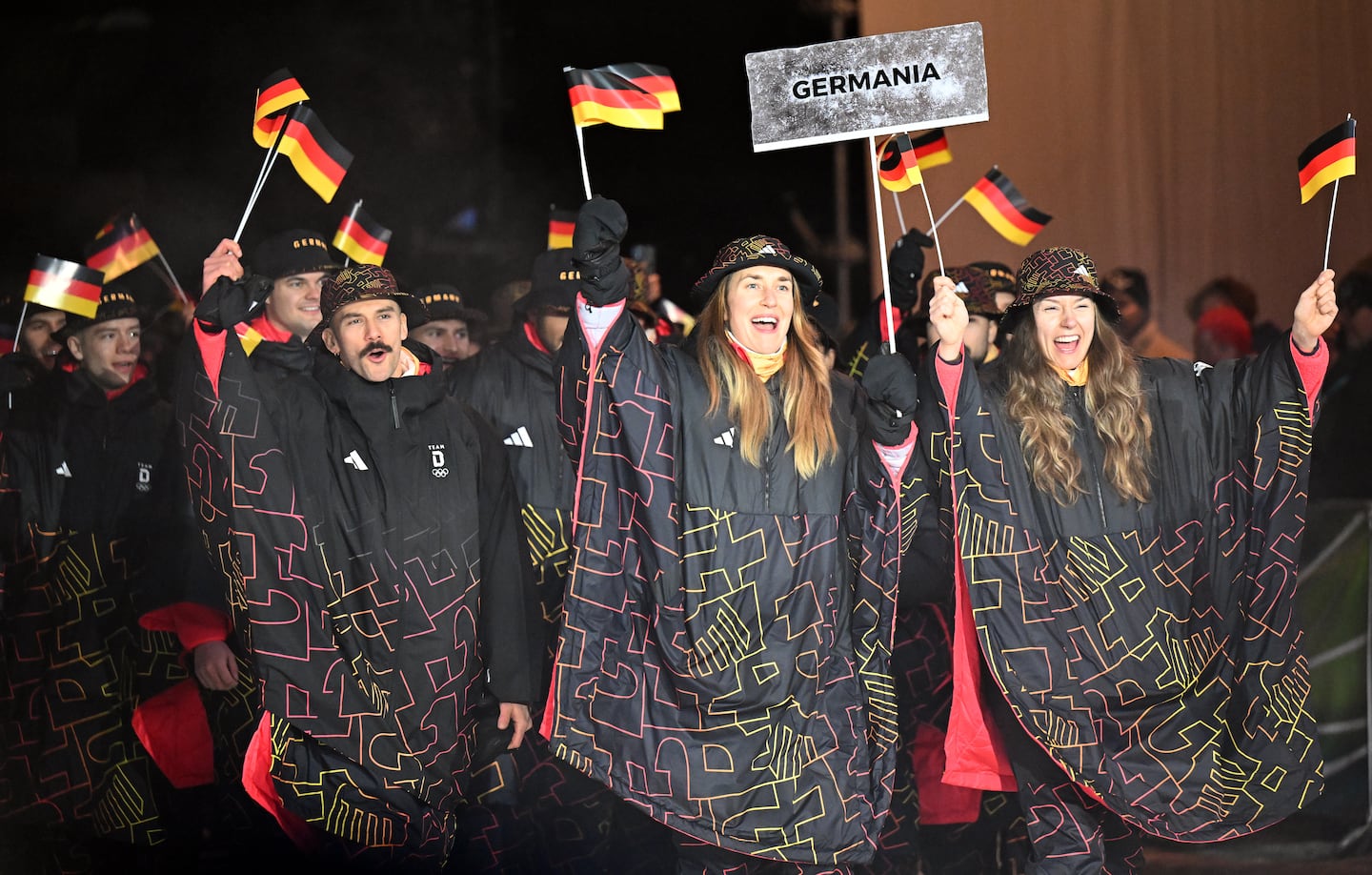
Germany are inexplicably kitted out in ponchos and bucket hats that look more music festival than Milano, and one suspects the designer might have been on one of those 'field trips'.
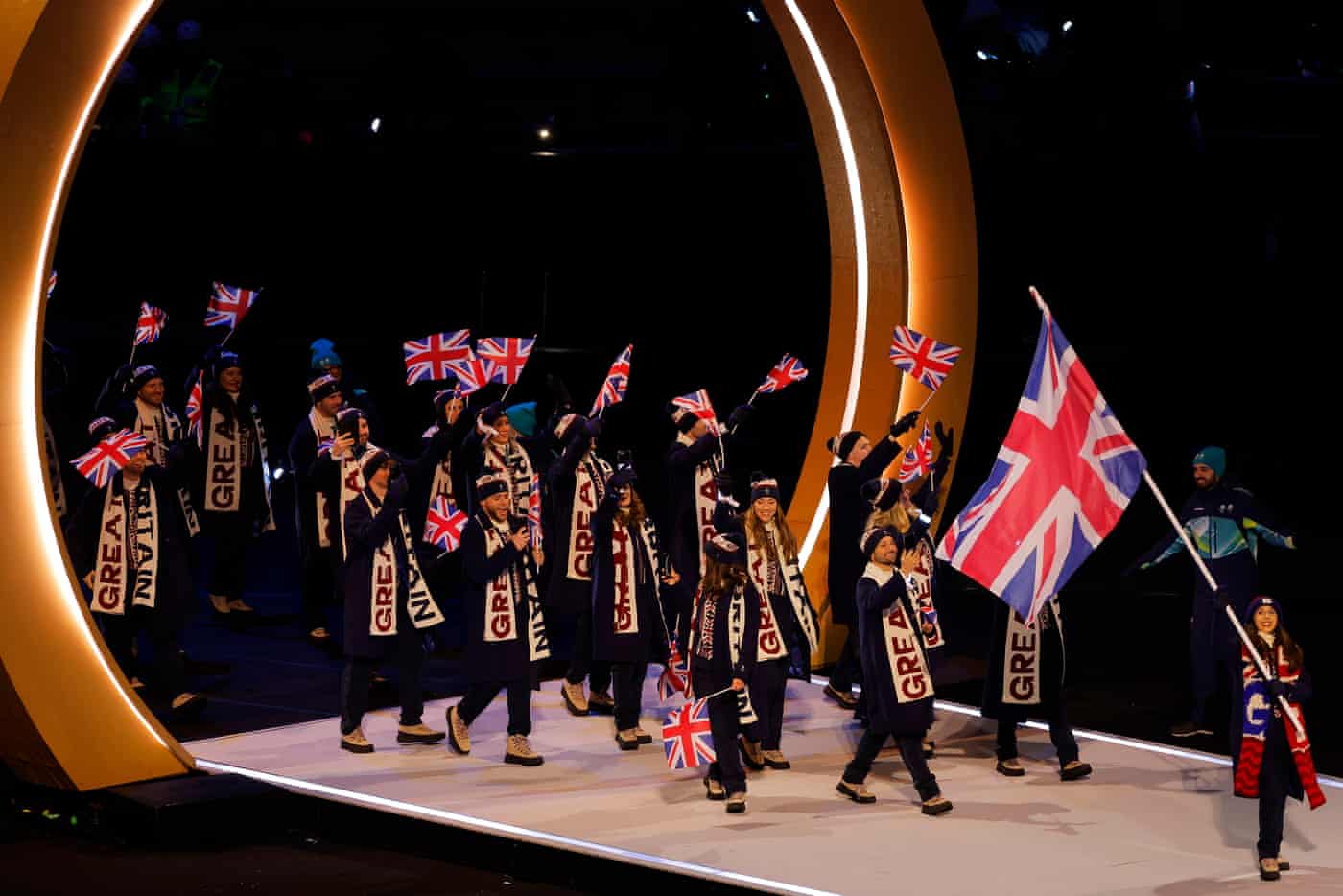
Call me biased but I love Great Britain's outfits designed by Ben Sherman. Sylish and modern with a strong colour palette, they project an image of collective sincerity and confidence. The zip-up jumpers will be highly sought-after and the hand-knitted hats and scarves by Tom Daley for flagbearers Brad Hall and Lila Fear are pure class.

In their Winter Olympics debut (two skiers), Haiti dress to impress in hand-painted jackets showcasing striking images by designer Stella Jean. The design incorporates a riderless red horse set against a tropical blue bckground, inspired by artist Edouard Duval-Carrie. It seems the original design featured a portrait of Toussaint Louverture, but was modified to remove the image to comply with IOC rules against political symbolism. I mean, it simply wouldn't do to champion an abolitionist on a world stage!
Iran are kitted out in red, white and green snowboarding attire with a geometric design.
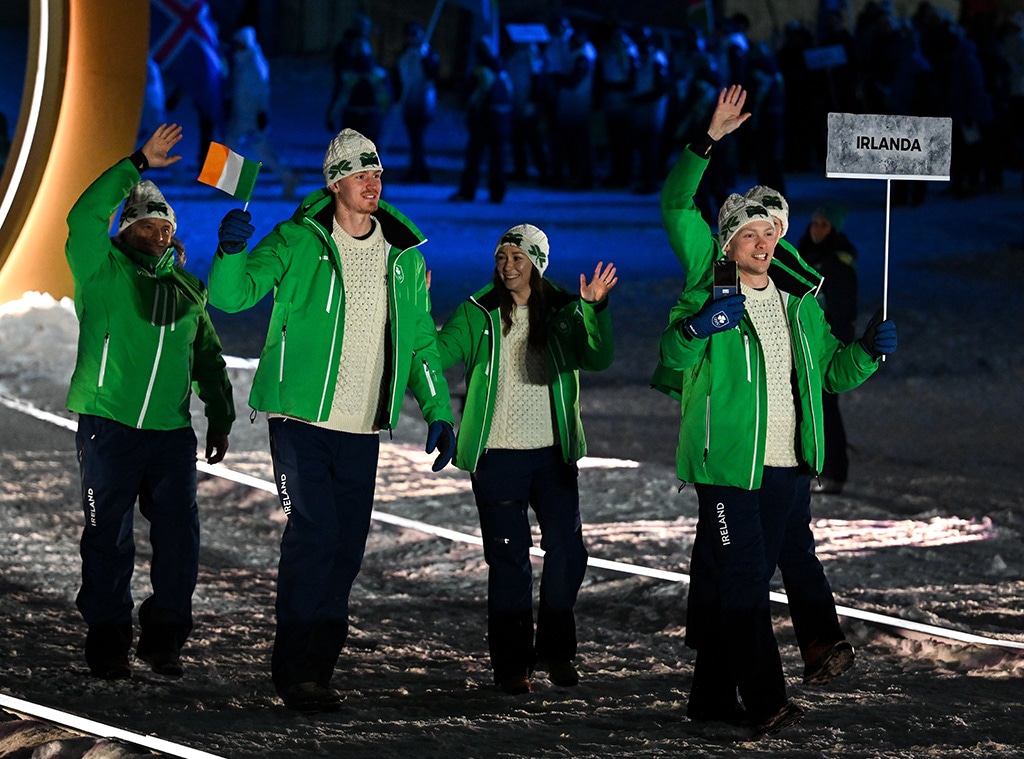
Ireland might as well be going to the pub on a gloomy Sunday in their cream knitted jumpers and (tea) cosy-looking woolly hats with shamrock emblem. Don't get me wrong, I love it, but I'm just not sure it screams Olympics.
Kyrgistan (both of them) are also sporting special headgear - I learn that this is the traditional ak-kalpak.
In the latest of commentator quips we are told that Lichtenstein is such a friendly nation that during the Austro-Prussian War in 1866, they sent 80 soldiers to war and returned with 81, having befriended an Austrian officer who joined them on the return journey. This marked their last military action before disbanding the army in 1868. Clearly they are lovers (and bobsleighers), not fighters.
Lithuania in matching knitted scarves and bobble hats look like an incomplete Rubik's cube.
Madagascar's team features the first African woman to compete at three Winter Games.
Malta is one of only four countries to be represented by women only (there is only one 'team' member and she is a cross-country skier).
Mexico have smart parkas showcasing ethnic motifs.
Moldova are very primary with their blue jackets, yellow scarves and red hats.
Monaco also only have one athlete at the games. He is an alpine skier and he looks like a saggy baggy astronaut.
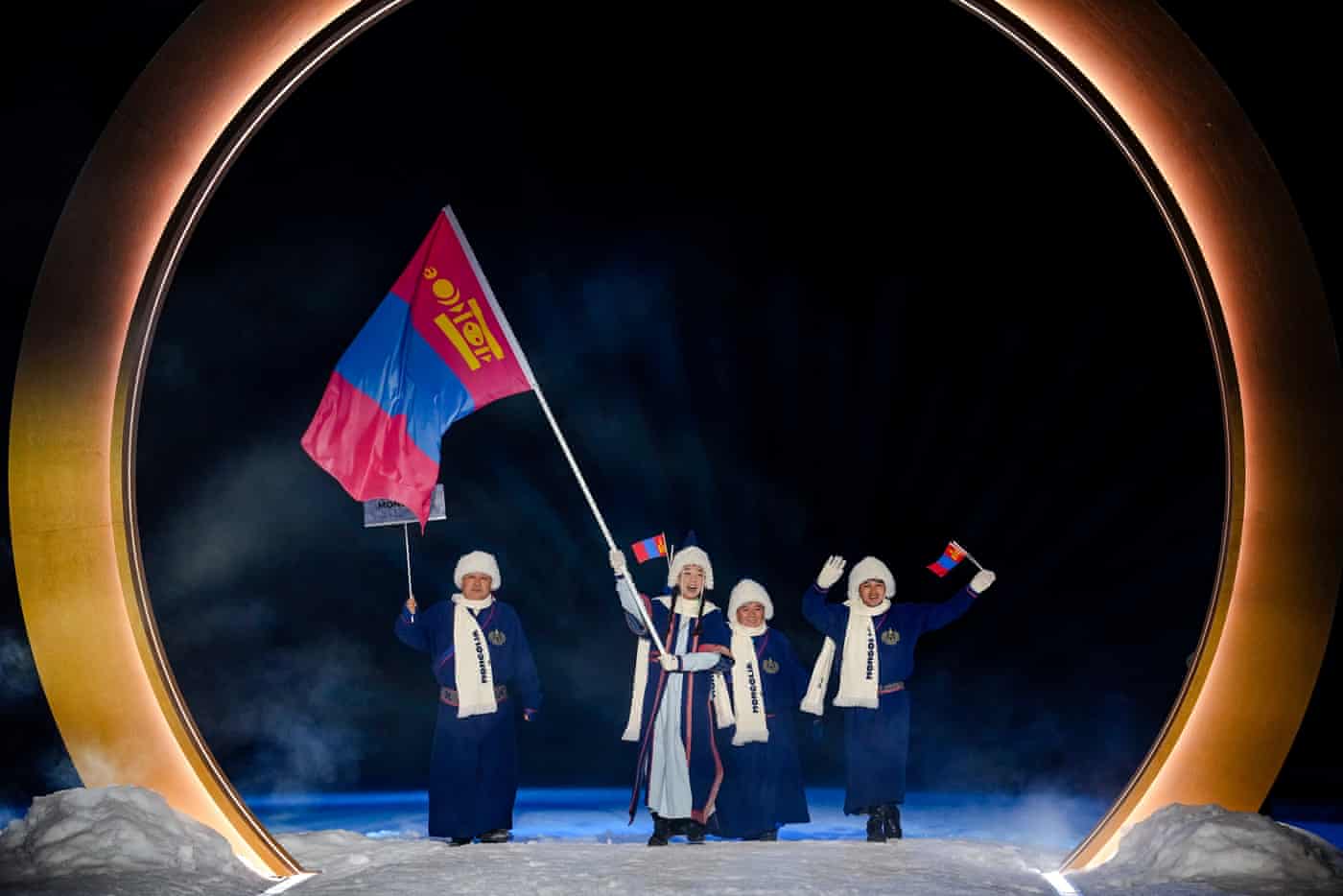
Mongolia may be the least populated country in the world, but they are certainly staking a claim to be one of the most stylish in super-smart dress tunics and statement headgear. In team kit inspired by the Great Mongol Empire of the 13th-15th century, their official Instagram account explains, "Using Mongolian cashmere - long relied upon by our nomadic people to endure harsh winters - we have created ceremonial deels [kaftan-like garments] that honor traditional history and culture, alongside premium cashmere knit casual ensembles inspired by alpine ski sweaters rooted in Western mountain culture, enriched with motifs of the Mongolian ger [yurt] and nomadic life. Through these designs, we proudly present to the global sporting stage the resilience, wisdom, and warrior spirit forged over thousands of years by Mongolians who have endured the eternal winters of the Central Asian highlands. What we carried through winter, we carry to the world."
Just to balance the scales a little, I have absolutely nothing to say about Montenegro.
New Zealand's outfits are boring black but saved by the dramatic kākahu "(a traditionally-woven Māori cloak, known as Te Māhutonga representing mana, leadership and national unity, first worn in 2004 and passed between flagbearers to connect them with past, present and futre Olympians)".

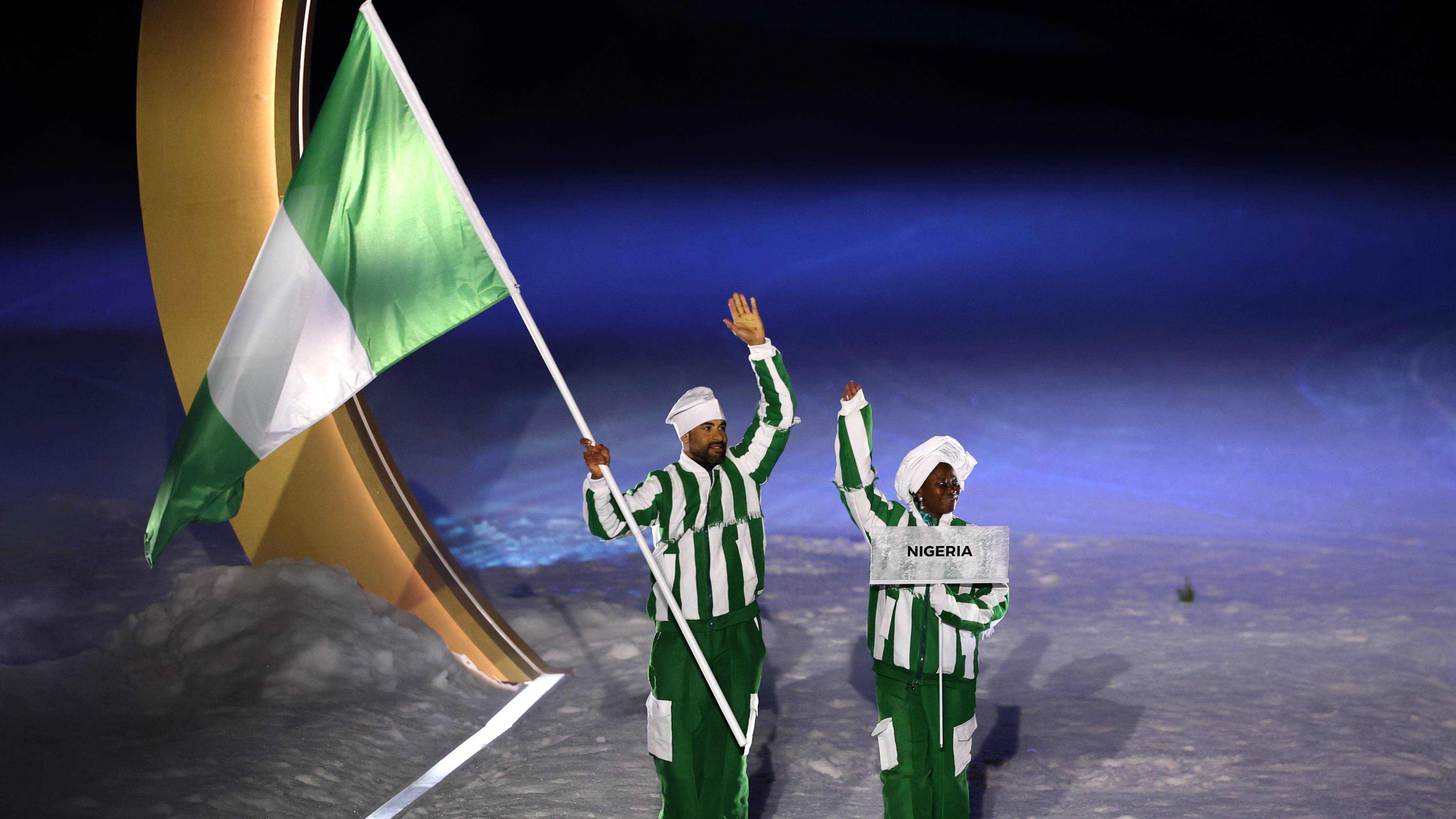
Remember Pacers? Well, you know what Nigeria look like then.
Norway are the most successful Winter Olympic nation, and they are also doing well in the knitwear competition.
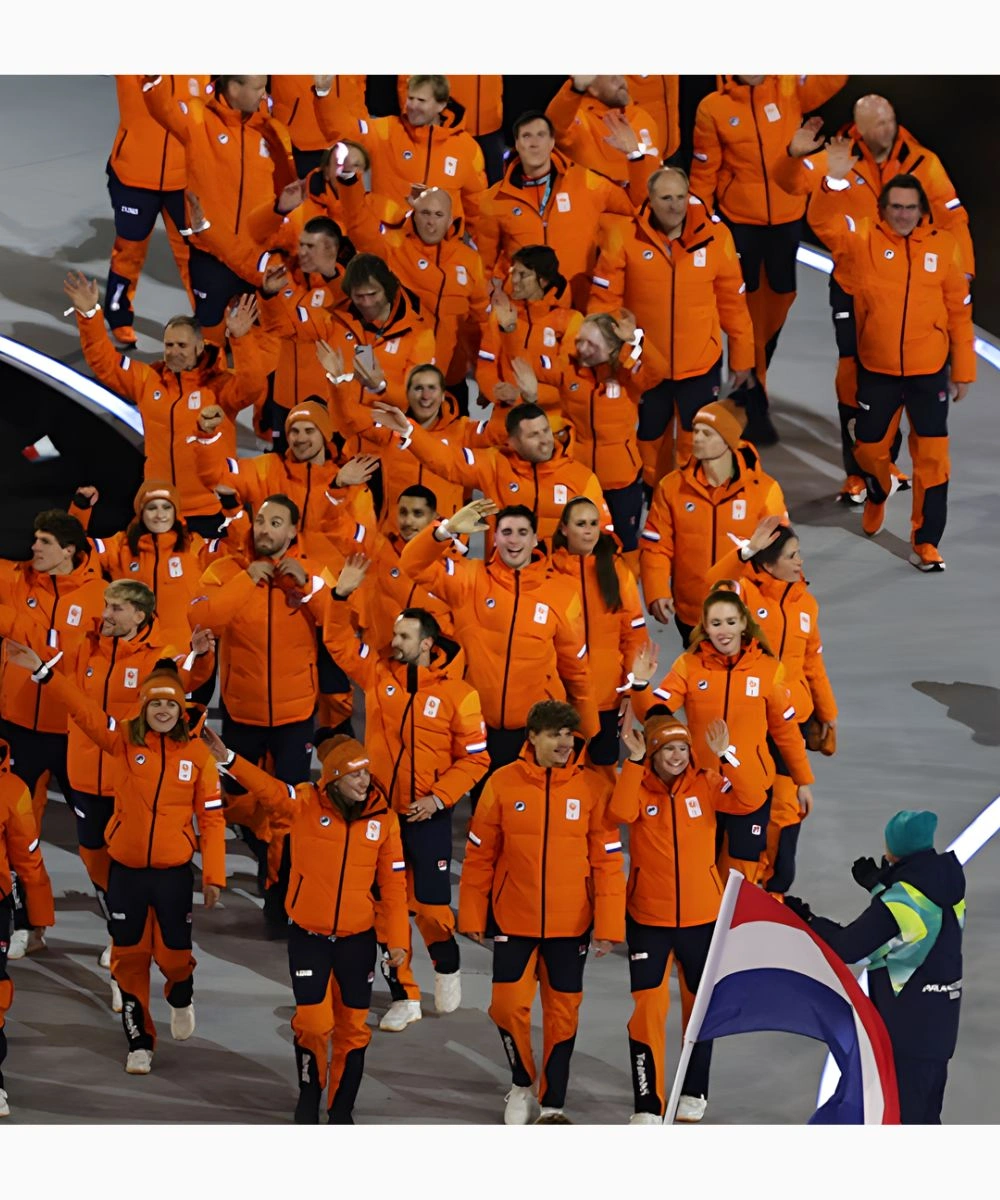
Out of 147 medals available in speed skating, The Netherlands have won 133 of them. You'd have thought people might see them coming.
Poland arrive with one woman doing an ice-dancing lift above her partner's shoulders. It just feels a bit like showing off.
Puerto Rico's flagbearer looks super-stylish in a winter skirt and bright top and their hairstyle is pretty cool too.
Serbia's flagbearers appear to be fighting over waving duties.
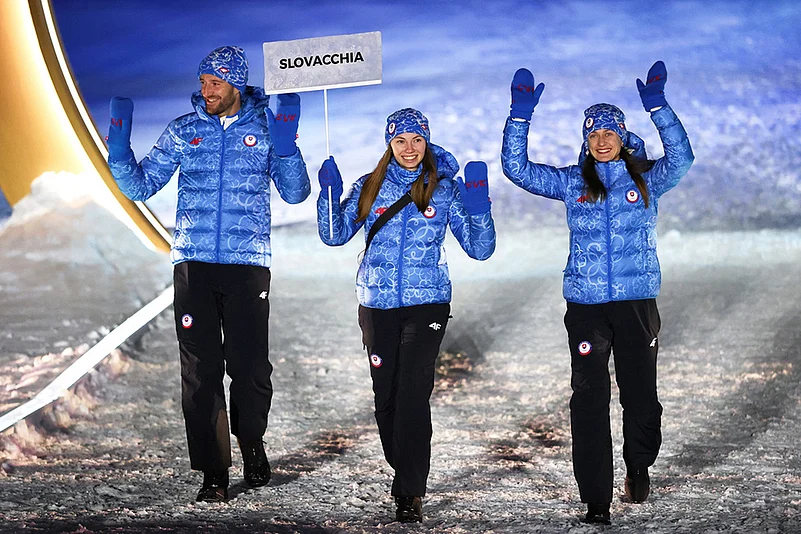
Slovakia have a funky design on the puffer jacket and beanies.
Slovenia look like they might be standing on the sidelines at kids' sporting matches and freezing their butts off, but they have got bright green mittens. Although there is no green in their flag, the reasoning for this is because it symbolizes "the country's lush forested landscape".
Spain are rocking their red snowsuits and bobble hats, asking, why be stylish when you can be fun?
Chinese Taipei have great boots.
Uzbekistan appear to have left some brand new jeans in with the whites.

Team USA have duffle jackets and knitted jumpers with their flag incorporated into them, belted baggy trousers and solid tramping boots. Their outfits are designed by Ralph Lauren and they look pretty fly. They are third last becasue they will host the 2034 Winter Olympics.
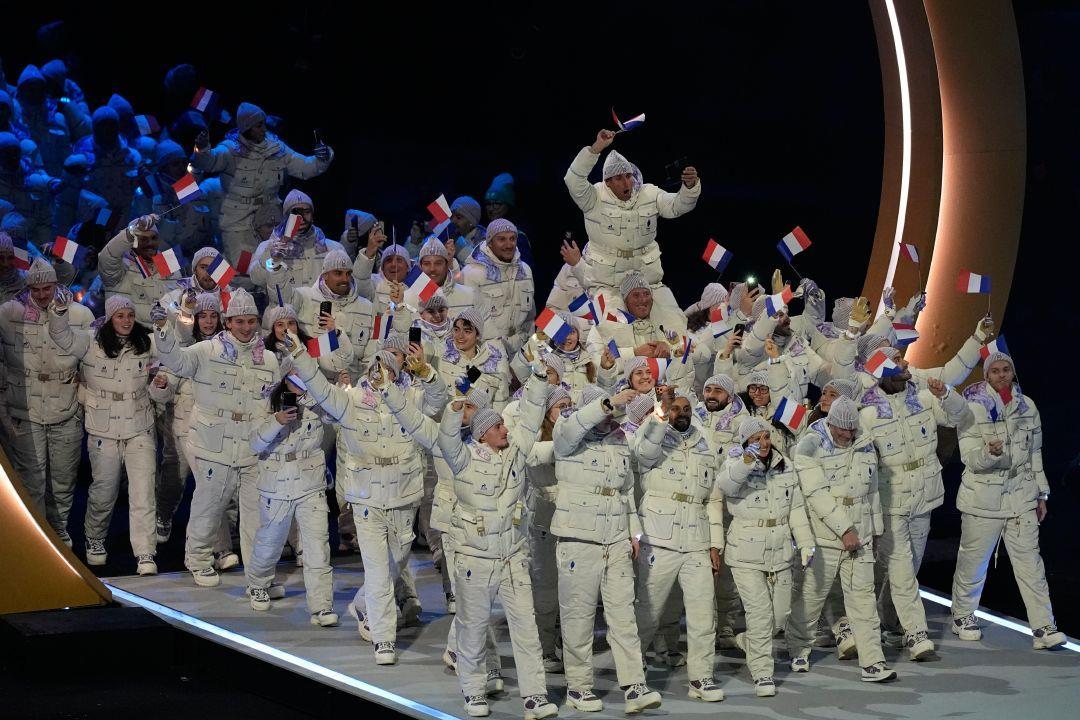
France will host the 2030 Olympics, so they are the penultimate team on the catwalk, wearing all white with blue and red accented highlights.

And Italy bring up the rear, as it were, as the current hosts. Designed by Giorgio Armani, are fairly military-looking with understated grey trousers and jackets with red, white and green trim with matching bobble hats. The music changes for them as DJ Mace shifts the tunes to some banging rave opera Rossini samples. And that's your lot.