Malaphor - (rare) an idiom blend: an error in which two similar figures of speech are merged, producing an often nonsensical result.
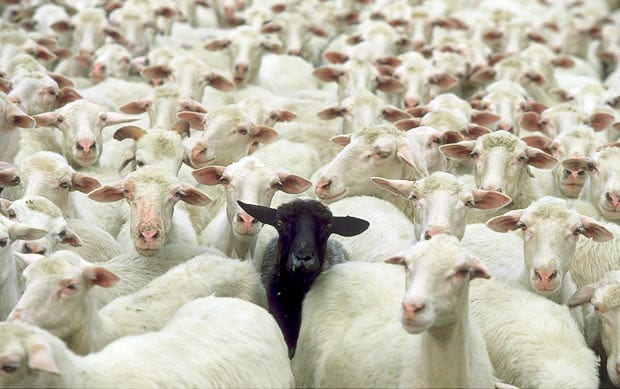
The portmanteau word is a result of blending malapropism and metaphor. A metaphor is a figure of speech that describes an object or action in a way that isn't literally true, but helps explain an idea or make a comparison. You may remember learning at school in English class that a a simile states that one thing is like another thing, whereas a metaphor states that one thing is another thing. It equates two things not because they are actually the same but for the sake of comparison, symbolism, and higher marks in your third form poetry exercise. If you take the metaphor literally, it will sound pretty odd - or are there really any literal black sheep in your family?
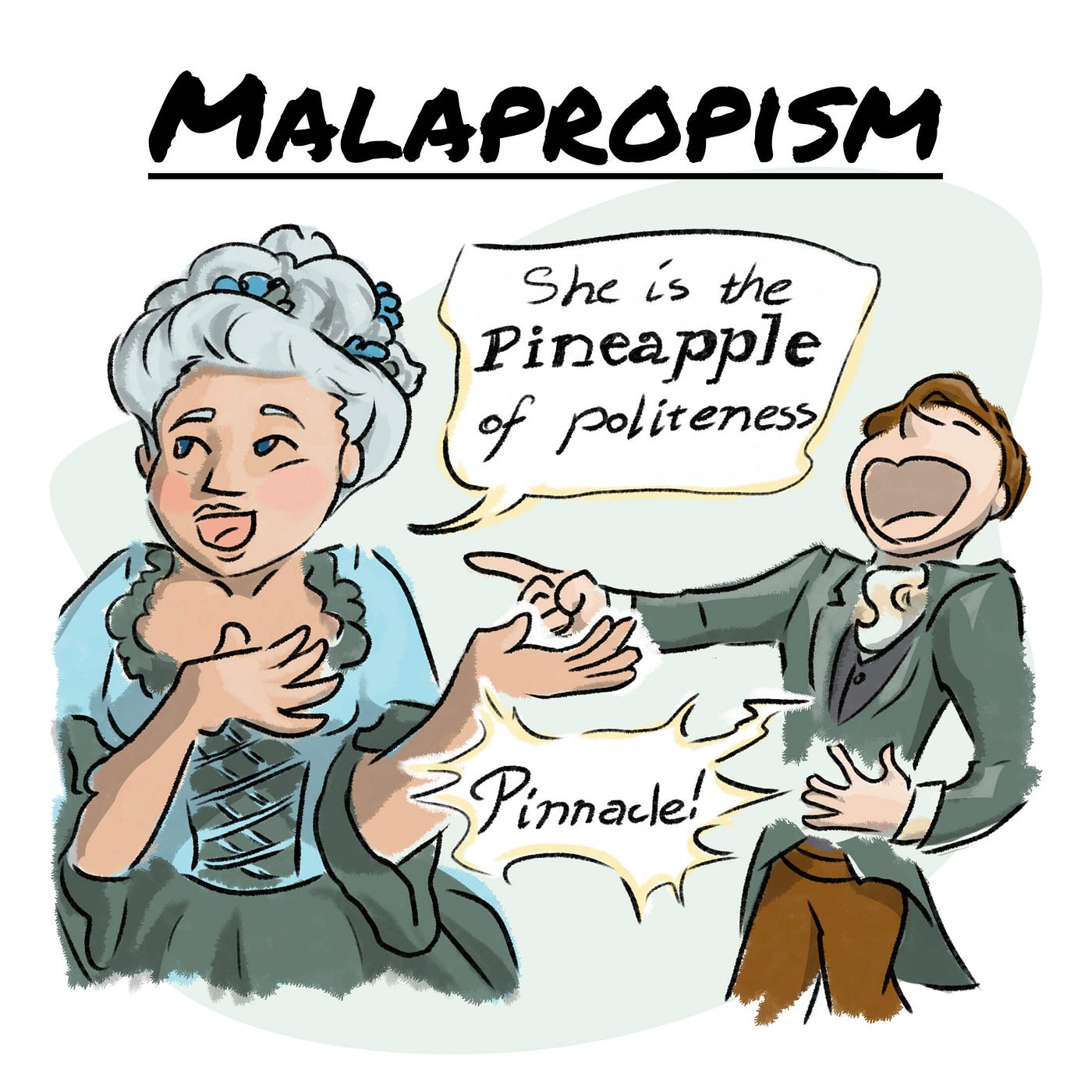
The word malapropism (and its earlier form, malaprop) comes from the character Mrs Malaprop in Richard Brinsley Sheridan's 1775 play The Rivals. She frequently misspeaks to comic effect by using words which do not have the meaning she intends but which similar to those that do. For example, she says, "illiterate him from your memory" (instead of obliterate), "he is the very pineapple of politeness" (instead of pinnacle), and "she's as headstrong as an allegory on the banks of the Nile" (instead of alligator).
Sheridan chose her name in reference to the word malapropos, an adjective or adverb meaning inappropriate or inappropriately derived from the French phrase mal à propos (literally poorly placed). According to the Oxford English Dictionary the first recorded use of malapropos in English is from 1630, and the first person known to have used the word malaprop specifically in the sense of a speech error is Lord Byron in 1814.
Of course malapropisms appeared in many works before Sheridan created the character of Mrs Malaprop. William Shakespeare used them in a number of his plays, almost invariably spoken by comic ill-educated lower-class characters, such as Mistress Quickly (Henry IV parts 1 & 2; Henry V; Merry Wives of Windsor) and Dogberry in Much Ado About Nothing. Mistress Quickly states at one point that Falstaff has been indicted to dinner when she means invited, and I believe she also substitutes the word erection for direction, but I wasn't game to look it up on Google as a search for Mistress Quickly erection is at best blocked by a firewall and at worst likely to corrupt my computer and send pornographic images to all my contacts.
 |
| Dogberry from Much Ado about Nothing as depicted by Henry Stacy Marks (1853) |
Dogberry asks "the learned writer to set down our excommunication" (instead of communication), "Dost thou not suspect my place? Does thou not suspect my years?" (instead of respect), "Our watch, my lord, have indeed comprehended two auspicious persons" (instead of apprehended and suspicious), and "thou wilt be condemned into everlasting redemption for this" (instead of condemnation). There is a term 'Dogberryism', but although Shakespeare was an earlier writer than Sheridan (Much Ado About Nothing is from 1598), 'malapropism' is an earlier coinage than 'Dogberryism', which is not attested until 1836.
Anyway, back to malaphors (also known as idiom blends) - here are some of my favourites:
- I'll burn that bridge when I get to it
- A bird in the hand catches the worm
- That's a whole new kettle of worms
- You hit the nail right on the nose
- I can read him like the back of my book
- She's going to hell in a handbag
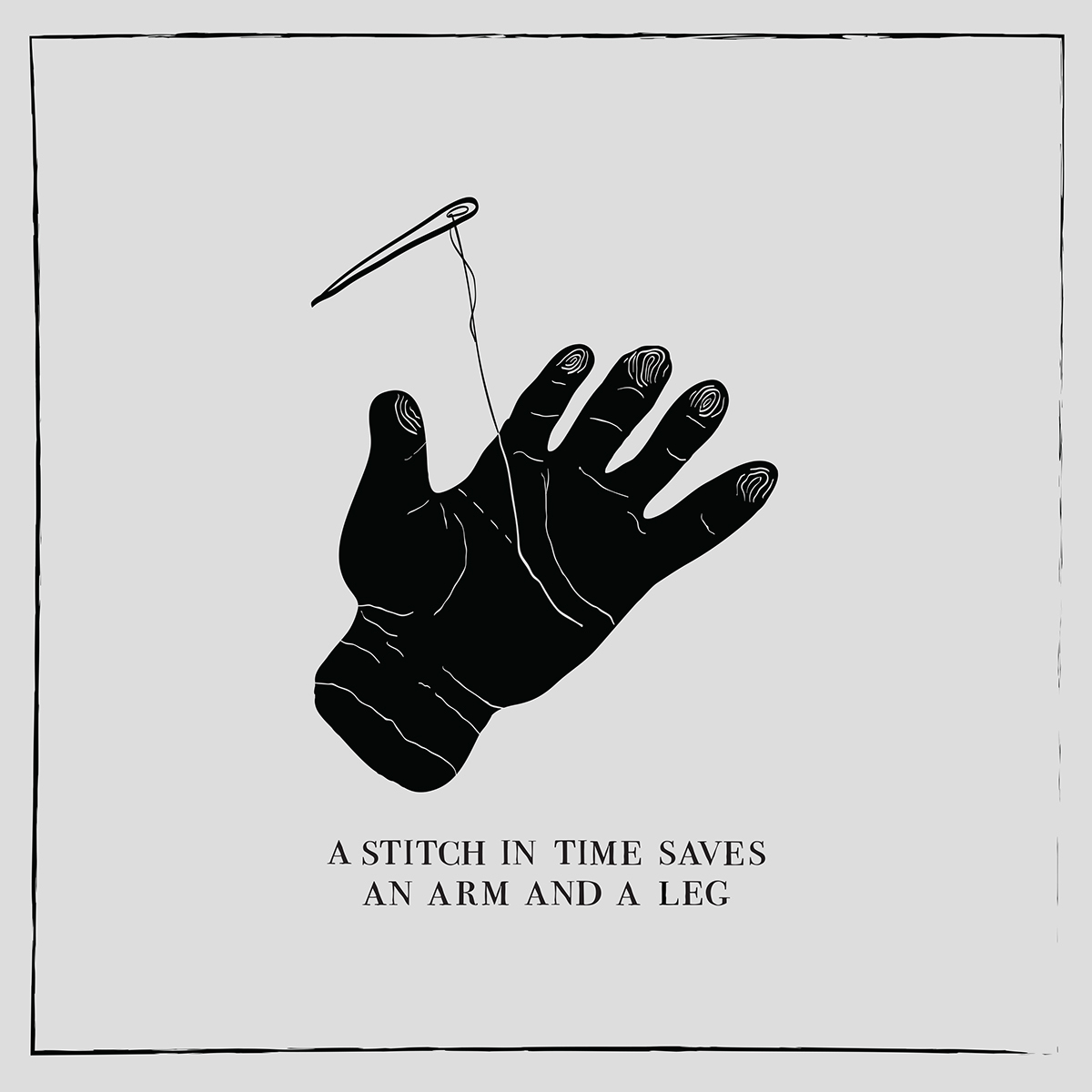
- A stitch in time saves an arm and a leg
- She stuck her neck out on a limb
- You can't see the wood for the haystack
- Does the pope shit in the woods?