Showing posts with label Gryphon Theatre. Show all posts

Wednesday, 24 August 2011

Playing Dress-Ups

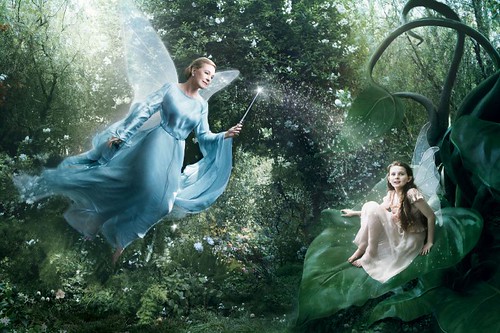
The Weevil took her children to see a production of Pinocchio at the Gryphon Theatre the other day. They loved it, especially as they got to meet the actors afterwards; the Blue Fairy was a big hit by all accounts. There are photos on the wall of the theatre of previous productions and they spotted me in one of the pictures. 'Is that Aunty Katy playing dress ups?' the youngest one asked, apparently. And yes, I suppose it is.

I am currently rehearsing for Secret Bridesmaids' Business (which is due to open on Thursday 1st September at the Athenaeum Hall in Arrowtown), in which I get to play a character completely unlike myself. Lucy Dean is 'earthy, impetuous, direct.' She is 'tall, striking', and one hell of a trouble-maker. She never censors herself, is impossible to embarrass, and is 'not scared to say things that people don't want to hear'.

I am a Libran who is almost incapable of making a decision. I hate conflict and am terrified of hurting people's feelings. Can you imagine how liberating it is to portray the exact opposite? There are many reasons that actors act. This is one of them. You can slip into different characters and try them on for size just like a new outfit. It's a lot of fun, and can be a thrilling experience. I think you just have to make sure you don't take it too far, however, which is why I am not a fan of method acting.

When the lights go down and the audience leaves, you have to remember who you are underneath the temporary wardrobe. Acting (in the words of the great Sir Ian McKellen) is pretending. Imagination is powerful, and children instinctively know that. Maybe I have just never really grown up, but I still love playing dress ups and hope I always will.

Thursday, 6 August 2009

Influential Women


The Prime of Miss Jean Brodie, (Stagecraft)
Gryphon Theatre, August 5 – 15


I’ve never liked those inspirational teacher stories. Sure, we’ve all had one, but do they have to be so nauseating? Trudy White as the eponymous character in The Prime of Miss Jean Brodie doesn’t break the mould so much as shatter it and proves that influential educators are not always a good thing.

Miss Jean Brodie holidays in Italy so that she can revel in “goodness, truth and beauty”. She delights in art, language and architecture and wears flamboyant dresses that look like geology maps. She tells her ‘gels’ sad stories about her beau who fell in Flanders’ fields, and teaches them about Einstein, the benefits to the skin of cleansing cream, the love life of Charlotte Brontë, and God’s near Eastern counterpart, Allah.

Trudy White artfully captures her devious and manipulative character with a mischievous glance, a voluptuous shrug, or a twitch of her finger. Her machinations are intriguing as she plays her lovers against one another. Full of confidence, she commands the attentions of the philandering art teacher, Mr Lloyd (the ever-dependable Tom Rainbird, who handles the intimate moments with credible sensitivity) and the effete music teacher, Mr Lowther (Stephen Fearnley - in a kilt and a fine harried performance).

The seductive schemes are less alluring as she worms her way into her pupils’ affections. She calls them the “crème de la crème” and they are desperate to impress her in whatever way possible. When she is surrounded by the adoring and rapt students she is clearly elevated above them as a group, standing toe-to-toe only when she singles one out, with devastating consequences.

The girls, Sandy (Aisha Pachoud), Jenny (Gabrielle Stewart), Mary (Corinna Bennett) and Monica (Katrina Yelavich) are foils to her rapier wit, and she encourages them to develop their distinctive nature, which they all do very well. While they are typical teenagers, bullying and gossiping in the corridors, they each examine the nuances of their unique personality.

In her belief that humanities are the foundation of real life, she is thwarted by her nemesis, Miss Mackay, whose motto is “safety first” and prefers the children to be playing hockey and taking secretarial courses rather than visiting art galleries and moping about composing romances. She warns Miss Brodie that “We are not a progressive school and do not encourage progressive attitudes.”

With her admiration for Stanley Baldwin and prim suits, Miss Mackay is beautifully portrayed by Deanne Graham who invests her with both lightness and depth rather than creating a harridan caricature as could easily be done. A little more projection would help, especially when she is speaking upstage, but on the whole her flinty demeanour with a hint of humour is ideal.

The contrast between these women is excellent as one exudes passion and vitality too strong to be contained within the walls of Marcia Blaine School for Girls, and the other attempts to steer the pupils with a firm and guiding hand. The struggle for the hearts and minds of the youngsters is compelling and when Miss Brodie asserts, “Give me a girl of an impressionable age and she is mine for life”, there is a frisson of foreboding as we question where does guardianship end and interference begin?

The story is told through a series of flashbacks as Sister Helena (Ingrid Sage) relates to Mr Perry (Graeme Carruthers) how much the teacher has influenced her. Miss Brodie is a puppeteer but when the strings are cut she looses control and visibly diminishes. She views her profession as a calling (“I am a teacher, first, last and always”), and refuses to be crucified by Miss Mackay and “the ignorant gossip of petty provincials”, but her self-sabotage leaves the audience with conflicting emotions.

Alan Burden’s insightful sound design incorporates arias from La Traviata, which swoop and soar above the scene changes. Director Leigh Cain ensures that these are delightful vignettes in themselves – besides being slick, they do not interrupt the action. On opening night a few lines were fluffed which stalled the pace towards the end, but the script stuffed full of witticisms is generally well-delivered.

The inspired set which combines naturalistic desks, blackboards and lockers with abstract spaces and designs indicates the confines of the educational system. Although Miss Brodie encourages the girls to “let your imaginations soar” there is nowhere for them to escape in the stifling morality of the school.

In the 1930s, she lectures, “This is the twentieth century – there are many outlets for women of intelligence.” Fortunately, this production proves there are theatrical roles for them too and it is great to see these powerful women commanding the stage – long may their prime continue!

Wednesday, 1 April 2009

Necessary Targets reviews

Thank you to everyone who has been to see Necessary Targets so far. We had a night off last night, but it goes for another week so there's still plenty of opportunities to come and see it.

If it's a review you're wanting, here's one from the Theatre Federation, and one from Salient. Reading between the lines, they both seem to say that it's a pretty good production of a pretty average play. I think that's a reasonably fair assessment, although I am obviously biased, so there's no impartial review from me.

Saturday, 14 March 2009

All the world's a stage

We moved into the theatre this week, two weeks ahead of the opening of Necessary Targets.

There is something so special about a theatre space. It can be an area in the round, a stage thrusting beyond a proscenium arch or simply a black box. And with each performance it can be transformed. That's the magic of theatre to me.

Just move the seats, construct a set, add some lights and you are in another world. I say 'just' but it is far from a simple achievement. The crew who build, paint and dress the set, and who design, plot and focus the lights are the craftsmen and artisans of old. Their work is incomparable.

In the short space of time that I have performed in the Gryphon it has been a 17th century New England courtroom and jail, a middle-class Suffolk drawing room, a French convent in the early 1600s, and a Bosnian refugee camp in the mid 1990s.

Each time it has been wholly believable and the actors and audience alike suspend their belief and are transported to whole new worlds. I am of course reminded of the chorus' words in Shakepeare's Henry V when he begs the audience's indulgent imaginations.

"Can this cockpit hold
The vasty fields of France? or may we cram
Within this wooden O the very casques
That did affright the air at Agincourt?

Think when we talk of horses, that you see them
Printing their proud hoofs i' the receiving earth;
For 'tis your thoughts that now must deck our kings,
Carry them here and there; jumping o'er times,
Turning the accomplishment of many years
Into an hour-glass:"

By this time, people are tired and a little grumpy - there are conflicting needs and priorities as the crew beaver away to get the production looking and sounding right while the cast are desperately trying to give them something good to work with.

But the shift into the theatre dissolves some of this tension as the lights come up and you know you're not far away now. It's exciting waiting in the darkness of the wings for your cue which will allow you to take flight to another place. And that's why we do it.

Monday, 22 December 2008

The Importance of Being Earnest

The Importance of Being Earnest
Wellington Repertory Theatre,
Gryphon Theatre, November 26 – December 6


Oscar Wilde is in the highest echelon of playwrights – to my mind, only half a step behind William Shakespeare – and his plays are legendary with oft-quoted lines. Sometimes directors can ruin the sparkling wit by trying to stamp their own interpretation on them, but Julia Harris largely resists this temptation.

Stephen Walter as Algernon Moncrieff has some of the best lines of the play and he delivers them superbly. His mix of cynicism and bafflement is both comic and endearing, pitched at just the right level of understated savoir faire. If only men were like this in real life, women would stop complaining about the man drought. His understanding butler Lane (Chris Barker who doubles as Merriman) copes stoically with his indiscretions á la Jeeves and Wooster.

Hayden Rogers as John Worthing is the foil to Algie’s rapier. Often these two are played as a comedy duo, and here Jack is the straight-man. Rather than criticism of his lies and deceit (pretending to have an ailing brother and then ‘killing him off’ when he gets inconvenient), his even temper elicits sympathy as it is plain he will never succeed if left to his own bumbling devices.

The girls the boys are in love with are poles apart but both exquisite. As Gwendolen Fairfax, Danielle Duberguet is the ultimate in refinement – woe betides any man who attempts to resist her girlish determination. Rosemary Williams is sprightly and verging on feral as Cecily Cardew; no less resolved to snag her man despite flights of infantile fancy. The scene in which Gwendolen and Cecily become friends, adversaries and then friends again is the highlight of the play.

Lady Bracknell is one of the most fun creations for an actor and Margaret Hill doesn’t disappoint. Her icy demeanour gives an indication as to how Gwendolen (her daughter) will develop. After all, as Algie quips, ‘All women become like their mothers. That is their tragedy. No man does. That's his’. She remains tight-lipped and ferocious throughout without a hint of warmth. How refreshing it would be to see her played with the merest suggestion of humour and flirtation. She is slightly one-dimensional but to her credit, delivers the famous ‘handbag’ speech with distinction.


Mary Coffey is an utter delight as Miss Prism with a unique blend of blushing girlishness and spinsterish insecurity. It is charming to see her paired with the Reverend Chasuble (Leslie Craven). His calm generosity of spirit ensures that this will be one relationship that is likely to last and brings a genuine smile to the audience. If this is a battle of the sexes, it is one in which all is equal – the women get their men, and the men are happy to be got.

I would question why it is set in the present. The use of cell phones, blackberries and laptops is incongruous in a play which hinges on the difference of town and country mores – the global village effect negates all the intricacies and farcical constructs that Wilde works so hard to establish. The dialogue is practically poetry, and when did you last hear a texting teenager speak in sentences of more than rudimentary grammar and vocabulary?


Also, Algie and Jack’s discussion about smoking jackets or going to a club so that they can sit and talk makes no sense in a modern context. This setting allows for some delicious wardrobe (once again the undisputed domain of the excellent Annabelle Hensley and team) but if the intention was for us not to get distracted by the period frocks, it has backfired by making us question the contemporary relevance. Whoever designed the poster has stuck with vintage Victoriana and designed one of the best posters seen all year.

The Importance of Being Earnest is like a sumptuous game of cricket – all dramatic tradition and tortuous tactics. Despite some devastating spin and dazzling confidence, five days of manoeuvres can end in a very satisfying draw. It is, after all, just a game.

Saturday, 20 December 2008

Theatre briefs

I’ve seen some very varied shows in the last month or so. This time of year brings out some gems, and some garbage. Fortunately, the theatre I’ve seen has been more at the diamond than the rough end of the scale.

Backyard Productions put on Summer Shorts at the Gryphon Theatre which was a selection of five short plays with varied themes and a high caliber of acting. The Look of Love at Downstage is Jennifer Ward-Leland’s take on a range of love songs from writers such as George Harrison, Irving Berlin, Rodgers and Hart, Stephen Sondheim, John Lennon, Jacques Brel, and Burt Bacharach.

I also saw the fabulous play The Little Dog Laughed at Downstage, which was everything good theatre should be – I was entertained, amused, provoked and inspired. It may well be a contender for the best play I have seen this year. Here are the highlights:

The plot – a gay male actor (Mitchell) and his lesbian agent (Diane) pose as a couple for the sake of the press. He has made his career on playing rugged action heroes and it won’t do either of their bank accounts any good for him to come out now.

He has a penchant for rent boys but starts a relationship with one (Alex) which threatens to blow his cover (I apologize for the terrible pun). Alex has a girlfriend (Ellen) who discovers his betrayal, although she can hardly complain as she has been prostituting herself for a sugar daddy. This is what passes for relationships in Hollywood.

Themes – theatre versus film – a rich seam of material is well and truly mined. When Diane pitches her idea to a screenwriter, it becomes apparent that the play is not as straight-forward as it seemed. There will be changes. How far would you go for money and is your reputation worth keeping if it’s based on lie?


The set (Daniel Williams) – a minimalist backdrop against which the Hollywood letters are strewn across the stage to become variously a drinks cabinet; a sun-lounger; and a bed. They are adapted and altered with a realism that makes them functional as well as decorative.

The acting – uniformly excellent. Small casts can sometimes make you wish to see another actor to break things up. With this ensemble you simply can’t get enough of them, baby.

Mitchell – Richard Knowles; it’s tough to play an actor playing an actor, but he pulls it off (apologies again) running the whole gamut of emotions through his relationship with Alex from anger, passion, denial, resistance, control and tenderness. His Tom Cruise smile and boyish enthusiasm is far from accidental.

Diane – Renee Sheridan; a slick bitch exuding glamour and insincerity. Her character is meant to be from New York although her accent is still stuck in the Deep South from her previous outing as Blanche DuBois. She is perfectly calculating and manipulative, never allowing feelings to get in the way of a good deal; exploiting the personal for the public attention, but never allowing the paparazzi to see the whole story.

Alex – Kip Chapman; I last saw him playing a totally different all-American role in The American Pilot and this proves his spectacular talent. His outré role-playing disguises his deep insecurity and when he falls for Mitchell the vulnerability is more raw and confronting than any amount of nudity or homosexual displays of affection (and there are plenty of those too).

Ellen – Sophie Hambleton; her portrayal of shallow, material and vacuous is superb. Although her anger at her betrayal is justified and well-acted, she knew what she was getting herself into. Her haircut may recall Katie Holmes but her righteous indignation recalls Diana, so-called Princess of Hearts.

These are some of the theatre stories of the week:

New version of West Side Story

Actor hurt by stage knife

The state of theatre in America

The second story has since been discredited, but what a great conspiracy theory while it ran! Among my fellow actors, there was talk of little else… Of course, that’s not true either but so what, since when did that matter?