Showing posts with label Joseph Stalin. Show all posts

Wednesday, 15 September 2021

Hiding Her Light Under a Bustle: Agent Sonya


Agent Sonya: Lover, Mother, Soldier, Spy by Ben MacIntyre
Viking
Pp.328

Spies, especially female spies, capture the imagination. Ursula Kuczynski, codenamed Sonya, was a German Jew, a dedicated communist, a colonel in Russia’s Red Army, and a highly trained spy. From planning an assassination attempt on Hitler in Switzerland to spying on the Japanese in Manchuria and helping the Soviet Union build the atom bomb, Sonya conducted some of the most dangerous espionage operations of the twentieth century. Ursula Kuczynski married several times – she had many names, both real names and codenames. The novel is subtitled ‘Lover, Mother, Soldier, Spy’, and, although she had many lovers, none of her partners ever betrayed her. MacIntyre, meanwhile, is obsessed with her conflicting duties towards the party and her family, which he embodies by talking about making jam and baking cakes.

Ursula had a relatively comfortable and privileged background, and became a communist through ideology. She moved to Shanghai, where she was appalled by the discrepancy in conditions caused by wealth. Bored and sickened by her life in Shanghai, she was anxious to do something more meaningful. She was clearly passionately idealistic, but with sexism bordering on misogyny, MacIntyre is unable to believe that she supported the Communist cause for reasons of ideology alone and frequently espouses the theory that she was attracted to the glamour and the excitement of espionage. “Ursula was committed to communism, but also increasingly addicted to danger, the romance of risk, the addictive drug of secrecy.”
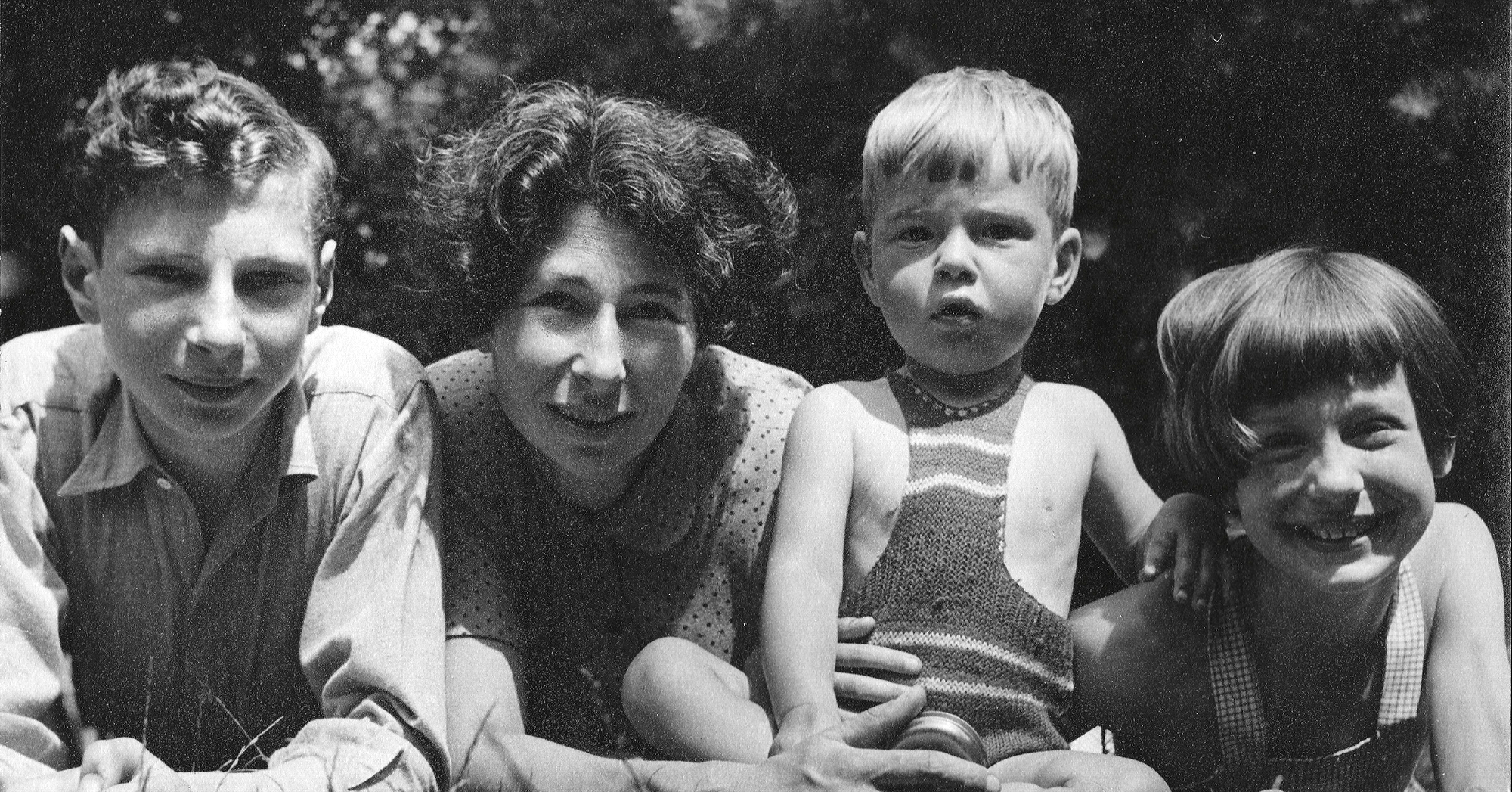
Throughout the book he clearly points us in a certain direction, editorialising in a blunt fashion as if he doesn’t trust the reader to make up their own mind, or perhaps he mistakes condescension for humour. He is also critical of other authors, which is spiteful and unprofessional, merely heightening the sense of smugness. There is a lot of repetition, suggesting the lack of a disciplined editor and, whereas this is a great story and would make a great film or novel, this biography has got both a muddled and didactic approach. He sets the scene very well, even if he does it multiple times, and he clearly enjoys the complicated details of the meetings between handlers and recruits in which two people walk towards each other “holding a green book in one hand and a tennis ball in the other, exactly as Sonya had instructed. At 4pm on the dot, a stocky man appeared, wearing a pair of gloves and holding a second pair in his left hand.”

In 1932 when Japanese forces attacked Shanghai, Ursula was “dispatched” to the war zone to discover if Japanese incursions into China presented a potential threat to the Soviet Union. Later she was sent to Mukden, a city in Manchuria in Inner Mongolia (invaded by the Japanese in 1931) “to liaise with the communist partisans, provide them with material assistance, and transmit military and other intelligence to Moscow by radio.” She built her own radios (which she had to bury in the fields) and assembled aerials on the roof (which she had to dismantle each night). She moved to Switzerland, where she ran a spy network, using the “peaceful land of cowbells and cuckoo clocks” as a base to launch operations into enemy territory. 

Threatened by possible exposure, she left Switzerland and took her family to England where she settled in Oxfordshire. When Ursula moved to Great Rollright, she cycled into the countryside to put messages in a hollow tree and receive drops with her instructions, but there were no communications and she began to worry. Basically, the GRU had got the wrong tree. After the war, Ursula continued to spy for the Communist Party, and in 1949, she went to Berlin where she continued her work in East Germany. She worked with many ‘famous’ spies, including Alexander Foote, a radio operator who spied for Russia and Britain, and Klaus Fuchs, who supplied information from the American, British and Canadian Manhattan Project to the Soviet Union during and shortly after WWII.

It seems incredible that Ursula was not caught. Her brother and father were already under surveillance by MI5 and the whole family were considered suspicious. She had been made a colonel in the Red Army – the only woman to rise so high in Soviet military intelligence. All of her previous husbands, lovers and many of her recruits were interrogated, but none betrayed her. Many men couldn’t comprehend that a woman could be a spy. MacIntyre writes, “Some in MI5 wondered how Ursula could possibly have time to spy since ‘her hands are fairly full with domestic duties.’”

She became dissatisfied with the Communist regime due to instances such as Stalin’s Great Purge, the crushing of the Hungarian revolt against Moscow in 1956, the building of the Berlin Wall in 1961, and the put down of the Prague Spring in 1968, but she still believed she was helping to make the world a safer place by stealing atomic secrets from one side and sharing them with the other. Her own children did not know anything about her life as a spy until she published an autobiography, Sonja’s Rapport in 1977, which would probably be a great read. MacInytre’s attempt to place her experiences into a domestic and female context is clearly done for dramatic effect, but somehow manages to undermine the commitment and consequences of this remarkable woman.

Friday, 14 May 2021

Friday Five: Moustaches

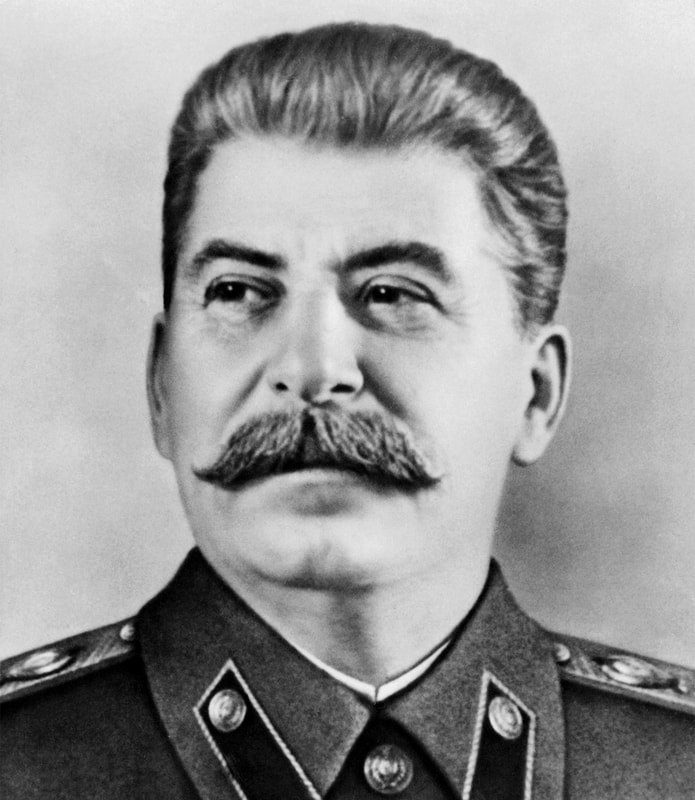
The no-nonsense reign-of-terror tache of Joseph Stalin
Last week we went to see the shake & stir production of Animal Farm, which was excellent. The person playing the character of Napoleon was sporting a moustache reminiscent of Joseph Stalin - obviously not accidentally. Generally I'm not a big fan of moustaches, but there are certain aspects of this type of facial hair that are instantly recognisable, and have become iconic. On the way home we discussed which ones instantly spring to mind.

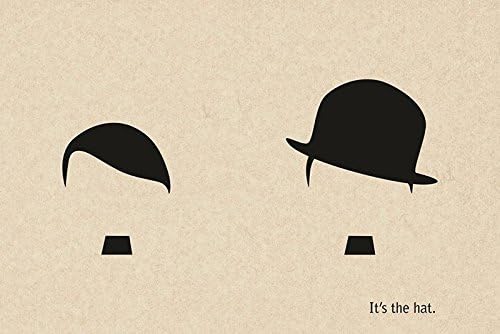
  1. Apparently it was once known as the 'toothbrush moustache'; now it can only be seen as the Hitler-tache. It was also popular with Charlie Chaplin (born 1889, the same year as Adolf Hitler) and Oliver Hardy (born 1892). So it seems that for a few years in the early 1990s, if one sported this style of tache, it would be touch and go as to whether one turned into a beloved comedian or a fascist dictator.
  2. Salvador Dali lived his surrealist art through his facial hair - weird and improbable; somewhat nightmarish but certainly memorable. A special mention in this category must go to Hercule Poirot, who was also a twirling tache fan, but since he is fictional, I'm going with the David Suchet representation.
  3. The mid-80s manly actor version as popularised by Tom Selleck and Burt Reynolds. It shouted American TV to me, and I found them strangely off-putting (plus I couldn't tell them apart). I always expect people with this type of tache to speak with an American accent.
  4. Merv Hughes. He was a brilliant bowler who (being Australian) was equally revered and reviled by England fans, crowds of whom used to imitate his warm-up stretches behind him. But when his name is mentioned, the first thing that comes to my mind is that moustache.
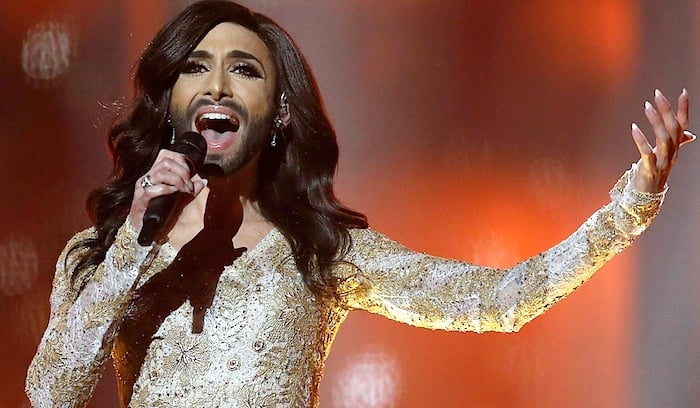
  5. For sheer shock factor, Austrian Conchita Wurst stands out with her 2014 Eurovision-winning entry that confused and confronted several viewers and made her a style icon for others. When she accepted the trophy she announced, 'We are unity and we are unstoppable', which she later admitted was a direct message to Vladimir Putin whose administration had implemented a law restricting LBGT rights the previous year. I have never liked a moustache more.     
That's all, folks!