- Bombshells - Echo Theatre, The Q: A great night out at the theatre is presented by six women delivering monologues that encompass the highs and lows of their lives. Director Jordan Best has them remain on stage throughout, whether they are having their moment in the spotlight or not, and the interactions between them as they segue between scenes are as sharp as the main content. There is no question that Joanna Murray-Smith writes incisive pieces for women, and these explorations of what it means to be a woman of any age in this strange, competitive world of ours are equally sharp and sparkling. Lainie Hart plays the ageing cabaret singer who can't quite move on from the end of her career; Ella Buckley is the blushing bride-to-be who isn't sure this is what she wants after all; Amy Kowalczuk portrays the exhausted young mother, desperate for reassurance that she's doing something right; Sally Taylor is hilarious as the precocious teenager with a talent routine that falls woefully short; Kate Harris bites back her anguish as she tries to hold her life together while delivering a TED talk on cacti; and Alice Ferguson brings the house down with some old lady wish fulfilment fantasy. At ninety minutes with no interval, this play delivers a lot of laughter and a range of emotions. I just wish that togetherness was one of them.
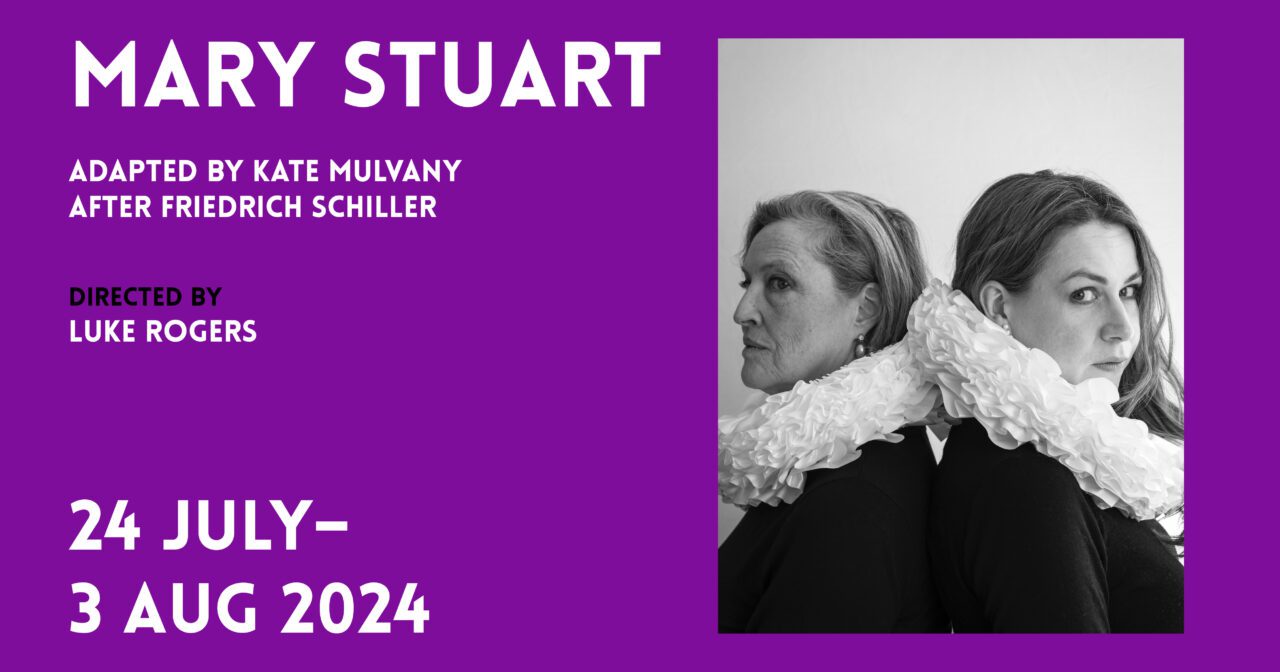
- Mary Stuart - Chaika Theatre, ACT Hub: There is some interesting staging with a crucifix formation, and a bold interpretation of the dance/ meeting scene as the two queens, Mary Queen of Scots and Elizabeth I meet in an encounter that never actually happened. Steph Roberts is strong in the titular role, playing the likeable aspects of the character with humour and sensitivity. Karen Vickery also displays strength as Elizabeth I, but comes over as bold rather than regal, and the fear and vulnerability inherent in the role are also lacking. The dynamic relationship she shares with Leicester is given a manipulative and conniving presence by Jarrad West, playful and/ or pragmatic as required. Of the supporting cast, Cameron Thomas stands out as Paulet with great dramatic energy, exquisitely embodying the conflicting emotions between the personal and political. Kathleen Kershaw's set design provides obvious points of strength, hierarchy and balance, and the execution block/ stone is a provocative dichotomy. More light and shade from Disa Swifte's lighting design would have better highlighted the fear and paranoia. Contemporary costumes (Kathleen Kershaw again) are a bold stylistic choice, which works better in concept than performance (whereas the masquerade outfits are striking, some costumes hamper movement). Overall, some curious actor choices result in one-sided presentation, and, despite the very strong leads, there is a lack of intensity, and the stakes don't appear to be played high enough.
- The Lord of the Flies - Canberra Repertory Society, Theatre 3: There is a theatre adage that states if you put on plays featuring lots of young people, you will get large audiences, as all the parents, friends and family are strongly encouraged to see it. This may be the case, but it does generally mean the production will be full of youngsters of greatly varying acting abilities. This production is action-packed, but lacking in shade or nuance; it hits a high intensity early that it struggles to sustain. While there are some excellent creative design and production elements (the set by Michael Sparks evokes atmosphere and location differentiation, and the lighting by Chris Ellyard conjures mood with shifts in tone and a sense of dread), but there are issues with the actors - too much shouting loses clarity and the young directors (Caitlin Baker and Lachlan Houen) have no understanding of class distinctions. The schoolkids cut adrift on an island, having to organise themselves to collectively survive is a metaphor for life, and this concept seems to be beyond some of the cast. Robert Kjellgren is disturbingly calm and direct in his convincing portrayal of the psychopath, Roger and Ty MaKenzie as Jack has great energy, indulging in totalitarian bully tactics to disguise deep insecurities. The gender blind casting is essential to both modernise the play and accommodate the auditionees, but the necessary machismo is missing from some actors, who come across as whiny and irritating rather than empathetic.
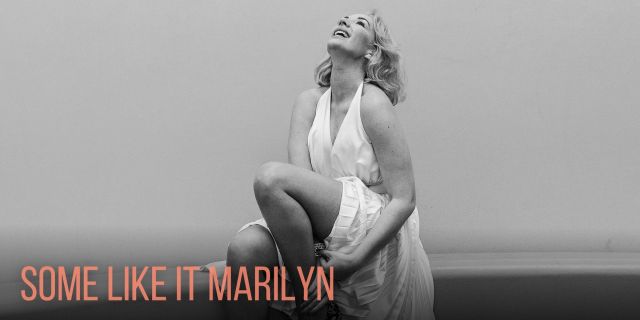
- Some Like It Marilyn - Lexi Sekuless Productions, The Mill Theatre: The Mill Theatre presents plays with previews attached. The preview may be paused while technical elements are adjusted, and at the end the audience feedback is ploughed back into the next night's performance as it is tweaked and enhanced. There is very little to perfect in this production in which Lexi Sekuless embodies one of the most iconic figures of the twentieth century in a sort of cabaret, highlighting moments from her career ranging from singing to interviews, to photo-shoots and letters. Helen McFarlane as Jane Russell pairs with Sekuless in impressive duets, while other characters (managers; beaux; fellow actors; media; stalkers) are played by Tim Sekuless and Mark Lee. Music (Leisa Keen) is wonderfully harmonious - the night I saw it backing tracks were employed, but I think they will be ditched for the true performances - and the choreography (Annette Sharpe) is eminently suited to each performer. The set by Sam Thomas is simple but effective, including a grille to recreate the iconic skirt lift scene from The Seven Year Itch, and the costumes are a delight, as Tania Jobson has designed everything from the pink satin sheath gown in which Marilyn sings Diamonds are a Girl's Best Friend, to the sexy bed sheet in which she was famously interviewed. The show portrays Marilyn as fun, charming, glamorous and smart; not just a 'dumb blonde', she was the first woman (since silent film star, Mary Pickford), to found her own production company, Marilyn Monroe Productions, in 1955. Who wouldn't like it Marilyn?
- August Osage Country - Free-Rain Theatre Company, ACT Hub: I also saw Free-Rain's production 2014 production, but the power of this one is that it swiftly eradicated that one from my mind. It may be inevitable with this play but it feels a little 'stagey' and disjointed - the scenes where everyone is talking at once are the best, as the audience can make up their own mind where to look. Some things are staged in less prominent areas, and it would be itneresting to know where the director feels the focus of this play is. Violet, the matriarch of the dysfunctional family, is a vehicle for a strong actor and Karen Vickery fits that definition with aplomb. It's hard not to feel sorry for someone living with cancer, but she made me do it. The supporting cast all excel in their roles either as family members, in-laws or additional characters, and fortunately the Native American role is for once played by a Native American (Andrea Garcia who holds an impressive stillness at the centre of the cyclone). Director Cate Clelland demonstrates great focus on character, and the shifts between scenes work well. She plays the humour where possible (the audience on the night I saw it were in stitches) but some of the darker moments (the creepy Steve; the powerplay between mother and daughter; the brutality of Charles) are toned down. The set and costumes are effective, but some of the props (such as the notebook of poems and the bouncing plates) are distracting. One comment on the lighting (Craig Muller) - we can see all the bits we are meant to when we are meant to see them, which is no mean feat considering the width of the stage. However, sometimes the audience is lit more than the stage - this may be due to limited equipment or placement options, but it is very distracting.
Showing posts with label Mary Stuart. Show all posts
Friday, 13 September 2024
Friday Five: Theatre reviews
Thursday, 8 April 2010
Off with her head!
Mary Stuart
Circa, February 27 – April 3
In 1587 Elizabeth I of England signed the warrant that led to the death of her cousin, Mary Stuart. That much is recorded as fact; most of the rest of this three-hour intense drama is conjecture. Originally written in 1800 by Johann Christoph Fredrich von Schiller, this 2006 adaptation by David Harrower brings many of the political concerns into the contemporary climate.
The play centres around the two women – Mary and Elizabeth – and pivots around an imagined meeting. Mary (Tina Retigen) is cut off from the world with no news and a Puritan guard, Sir Paulet (Nick Blake in an admirable restrained performance); ‘an honest man’ with overtones of Iago as he stands by and eavesdrops. The three central black columns and severe wooden pews that define her world are transformed through lighting (design by Ulli Briese) to a sumptuous throne or an elaborate altar as the colourscape ranges from austere light to golden glow, royal purple and blood red.
The spymasters whisper in her ear and she is constantly provoked by people’s demands and entreaties. The court wants her to marry to share the burden of rule and to provide an heir to the throne, but she protests, “A ring signifies marriage and yet it is from rings that chains are made.” Robert Dudley (a wonderfully manipulative Aaron Alexander) may be her closest confidant and potential lover and yet even his questionable affections are demonstrably eleswhere. Elizabeth is finally left alone on stage in a spotlight; abandoned to her conscience and history as her judge.
While talking of imprisonment, both queens stare out longingly towards the audience – we feel that we represent freedom; we are also the jury and the electorate. Hounded to make a decision over whether Mary Stuart will live or die, Elizabeth cries, “I am my people’s slave, ruling in servitude. Is this the voice of the people? Is this the voice of all the world? What happens when they charge and condemn me?” Elizabeth is connected to the land of her people and when she beats the ground with her hands, she draws strength from it. Mary, by contrast, stamps petulantly upon it.
The fear or Catholicism was strong and Mary makes no attempt to hide her rosary or her crucifix, “Carrying Christ in her hand as pride and lust burn in her heart.” Elizabeth worries that she is the figurehead for a French or Spanish plot to depose her, asking, “What lock can win your loyalty that cannot be unlocked by St Peter’s keys?” This was no mere theological whimsy as Elizabeth makes clear with her barbed reminder, “Your uncle taught me massacre on St Bartholomew’s Day” (when at least 10,000 French Protestants were ordered to be massacred by the Catholic mob).
A semi-circle of male advisors (well represented by different ages and characteristics) forms around them as the contretemps becomes a cat-fight with each trying to prove that she is more desirable and humiliate the other. Mary’s appeal was largely based on her looks and powers of persuasion, “Her influence on men’s minds is too strong.” She is seductive but dangerous and Elizabeth reminds her, “no one wants to be your fourth husband”.
With so few other weapons in their armoury, neither is above using her womanly wiles to get her way. Tina Retigen (as Mary Stuart) has breathing issues, often running out of breath before she finishes her sentences, and recites her lines with a self-conscious declamatory style. She says, “I can’t move so quickly from misery to hope” and it’s true that she can’t, at least not convincingly.
Carmel McGlone (as Elizabeth I) is far more natural in both speech and action. She looks the part with her regal bearing, tempestuous mood swings and expansive gestures. Elizabeth was famously proud of her fine hands and long fingers, and McGlone waves her arms like a tree in the wind or a spider in its web. When she signs the death warrant she exclaims, “The arrow has left the bow and flown to its mark” and her hands flutter through the air; elsewhere they are pressed together in supplication, prayer or applause.
Hands implicate personal responsibility and there is a touch of the Lady MacBeths about Elizabeth as she attempts to keep her royal hands free from the taint of blood, “Free from doubt, free from guilt, let the people choose.” When she gives the death warrant to Davison (Gavin Rutherford in fine form) she instructs him, “Take it with you; I have placed it in your hands; God’s business is in your trembling hands.” Aware of the weight of the document, Davison falls to his knees and the equivocation over the delivery of the death warrant adds an element of macabre comedy.
Although the drama is firmly focused on this specific moment in history, it has wide-reaching implications. The madrigal music that opens the play instantly transports us back to sixteenth-century England, while the closing bagpipes might be considered either an elegiac call or a triumphant procession. The costumes (designed by Gillie Coxhill) are a curious mix of mob caps and modern dress; capes and feathered hats are worn with double-breasted suits to show a blend of eras. Some of the gestures are also contemporary, such as the mocking bows and the flippant insincerity.
David Harrower’s adaptation is non-too subtle with lines such as “An Englishman will never show a Scotsman justice” getting a knowing laugh in performance. Mary’s argument is that the accused must be judged by a jury of equals, “And who are my equals?” This is a basic tenet of English law and Lord Burleigh (Jeff Kingsford-Brown with an unfathomable accent) notes, “For someone who claims not to be bound by English laws, you know a lot about them.” As do all renegades and underdogs.
Despite their warring factions, the countries have many similarities; “The narrow Tweed is all that separates us and often runs red with our soldiers’ blood.” The suggestion is made that these wars and conflicts will never end until the two parliaments are joined (which they were in 1707, but devolved nearly 300 years later in 1998). Occasionally the patriotic tub-thumping jars, especially when the characters talk of Britain – there was no Britain until the first Act of Union in 1707 which politically united the Kingdom of England (which included Wales) with the Kingdom of Scotland.
Perhaps the moral of the story is embodied in the words of Lord Shrewsbury (Eddie Campbell) who cautions “The most votes do not mean it is right. The present England is not the future England or the past England.” The inference is that rather than hankering back to historic insults, we should all just move on and stop reopening old wounds; a theory that has resonance in New Zealand politics also.
Circa, February 27 – April 3
In 1587 Elizabeth I of England signed the warrant that led to the death of her cousin, Mary Stuart. That much is recorded as fact; most of the rest of this three-hour intense drama is conjecture. Originally written in 1800 by Johann Christoph Fredrich von Schiller, this 2006 adaptation by David Harrower brings many of the political concerns into the contemporary climate.
Coincidentally, this show premiered at the National Theatre of Scotland, just as Black Watch had done before it came to these shores and blew audiences away at the previous New Zealand International Arts Festival. Sadly, this is not in the same class. Although the drama is good, the directing assured (Ross Jolly) and the acting fine, it is not as excellent as it needs to be to hold the attention. A lot of back-story and history is crammed into the dialogue and it needs highly-skilled practitioners to execute it well (pun entirely intended) if they are not to sound like an amateur historian at a debating society.
The times were treacherous; rumours were rife and suspicion led to death. The claustrophobic atmosphere is enhanced by a sparse set with pillars which provide peepholes to hide behind, and the edges of the stage in shadow – perfect to hatch conspiracies. The espionage, bluff and double-bluff is all conducted like a fatal game of chess where the stakes are as high as the pikes on Tower Bridge.
Elizabeth (Carmel McGlone) is surrounded by quarrelling men as she struggles to deal with the allegations and counter-accusations. Unsure whether to listen to her heart or her judgement, she is equally isolated. We feel her anguish as she stammers, “I don’t know what to say; I don’t know who to believe. I think you’re guilty; I hope you’re not.” The talk is of innuendo, rumour, martyrs and propaganda. Elizabeth knows that, “Public opinion will invariably side with the accused” and she feels alone: “The Pope against me; betrayed by France’s Judas kiss; and Spain wages war against me on the sea.”
The spymasters whisper in her ear and she is constantly provoked by people’s demands and entreaties. The court wants her to marry to share the burden of rule and to provide an heir to the throne, but she protests, “A ring signifies marriage and yet it is from rings that chains are made.” Robert Dudley (a wonderfully manipulative Aaron Alexander) may be her closest confidant and potential lover and yet even his questionable affections are demonstrably eleswhere. Elizabeth is finally left alone on stage in a spotlight; abandoned to her conscience and history as her judge.
While talking of imprisonment, both queens stare out longingly towards the audience – we feel that we represent freedom; we are also the jury and the electorate. Hounded to make a decision over whether Mary Stuart will live or die, Elizabeth cries, “I am my people’s slave, ruling in servitude. Is this the voice of the people? Is this the voice of all the world? What happens when they charge and condemn me?” Elizabeth is connected to the land of her people and when she beats the ground with her hands, she draws strength from it. Mary, by contrast, stamps petulantly upon it.
For one to live the other must die, and their meeting is charged with anguish. Mary kneels at Elizabeth’s feet in an outward show of passion but finds Elizabeth to be, “like a rock, harsh and unyielding”. Although she states, “I renounce all claim to this throne. Give me back my life, my liberty”, Mary taunts Elizabeth with her illegitimate birth.
The fear or Catholicism was strong and Mary makes no attempt to hide her rosary or her crucifix, “Carrying Christ in her hand as pride and lust burn in her heart.” Elizabeth worries that she is the figurehead for a French or Spanish plot to depose her, asking, “What lock can win your loyalty that cannot be unlocked by St Peter’s keys?” This was no mere theological whimsy as Elizabeth makes clear with her barbed reminder, “Your uncle taught me massacre on St Bartholomew’s Day” (when at least 10,000 French Protestants were ordered to be massacred by the Catholic mob).
A semi-circle of male advisors (well represented by different ages and characteristics) forms around them as the contretemps becomes a cat-fight with each trying to prove that she is more desirable and humiliate the other. Mary’s appeal was largely based on her looks and powers of persuasion, “Her influence on men’s minds is too strong.” She is seductive but dangerous and Elizabeth reminds her, “no one wants to be your fourth husband”.
With so few other weapons in their armoury, neither is above using her womanly wiles to get her way. Tina Retigen (as Mary Stuart) has breathing issues, often running out of breath before she finishes her sentences, and recites her lines with a self-conscious declamatory style. She says, “I can’t move so quickly from misery to hope” and it’s true that she can’t, at least not convincingly.
Carmel McGlone (as Elizabeth I) is far more natural in both speech and action. She looks the part with her regal bearing, tempestuous mood swings and expansive gestures. Elizabeth was famously proud of her fine hands and long fingers, and McGlone waves her arms like a tree in the wind or a spider in its web. When she signs the death warrant she exclaims, “The arrow has left the bow and flown to its mark” and her hands flutter through the air; elsewhere they are pressed together in supplication, prayer or applause.
Hands implicate personal responsibility and there is a touch of the Lady MacBeths about Elizabeth as she attempts to keep her royal hands free from the taint of blood, “Free from doubt, free from guilt, let the people choose.” When she gives the death warrant to Davison (Gavin Rutherford in fine form) she instructs him, “Take it with you; I have placed it in your hands; God’s business is in your trembling hands.” Aware of the weight of the document, Davison falls to his knees and the equivocation over the delivery of the death warrant adds an element of macabre comedy.
Although the drama is firmly focused on this specific moment in history, it has wide-reaching implications. The madrigal music that opens the play instantly transports us back to sixteenth-century England, while the closing bagpipes might be considered either an elegiac call or a triumphant procession. The costumes (designed by Gillie Coxhill) are a curious mix of mob caps and modern dress; capes and feathered hats are worn with double-breasted suits to show a blend of eras. Some of the gestures are also contemporary, such as the mocking bows and the flippant insincerity.
David Harrower’s adaptation is non-too subtle with lines such as “An Englishman will never show a Scotsman justice” getting a knowing laugh in performance. Mary’s argument is that the accused must be judged by a jury of equals, “And who are my equals?” This is a basic tenet of English law and Lord Burleigh (Jeff Kingsford-Brown with an unfathomable accent) notes, “For someone who claims not to be bound by English laws, you know a lot about them.” As do all renegades and underdogs.
Despite their warring factions, the countries have many similarities; “The narrow Tweed is all that separates us and often runs red with our soldiers’ blood.” The suggestion is made that these wars and conflicts will never end until the two parliaments are joined (which they were in 1707, but devolved nearly 300 years later in 1998). Occasionally the patriotic tub-thumping jars, especially when the characters talk of Britain – there was no Britain until the first Act of Union in 1707 which politically united the Kingdom of England (which included Wales) with the Kingdom of Scotland.
Perhaps the moral of the story is embodied in the words of Lord Shrewsbury (Eddie Campbell) who cautions “The most votes do not mean it is right. The present England is not the future England or the past England.” The inference is that rather than hankering back to historic insults, we should all just move on and stop reopening old wounds; a theory that has resonance in New Zealand politics also.
Subscribe to:
Posts (Atom)