- The Dear Departed: Live Radio Play - Lexi Sekuless Productions and ArtSound, The Mill Theatre: A fun hour or so spent in the presence of some fine actors going through their paces and clearly enjoying themselves. The play itself is a fairly innocuous drama from 1908 by Stanley Houghton which Bart Meehan has adapted into something more immediately palatable. A couple of sisters, Amelia and Elizabeth (Andrea Close and Helen McFarlane) and their extended family of husbands and child (Richard Manning, Sarah Hartley and Timmy Sekuless), squabble over the last will and testament of their dear deaprted father, until they realise that he (Graeme Rhodes) is not dead a at all. Although they do their own foley and commit to the characterisation, I question whether performing a rehearsed reading is a little self-indulgent. Don't get me wrong, all these people are charming actors and delightful company, but I can't help questioning whether it is more entertaining for the actors than the audience.
- No Exit - Mockingbird Too, The Studio, Belconnen Arts Centre: The famous quote, "Hell is other people" is the premise of this play, except it was written by Jean-Paul Sartre, so it is actually, "L'enfer, c'est les autres". The originial title is Huis clos, which is the French equivalent of the legal term, in camera, itself Latin for 'in a chamber' or a private discussion behind closed doors. These levels of translation and interpretation are relevant to this existentialist drama first produced in 1944, in which three people, Garcin (Eli Narev), Inez (Victoria Tyrell Dixon) and Estelle (Phoebe Chua) are trapped together in the afterlife. They imagine they will face torture or flames of damnation but the Valet (played with goblin-like glee by Peter Fock) who guides them to their room, assures them that while there is none of that, they can never close their eyes. While physically this does indeed sound like torment, metaphorically they are forced to see everything, including themselves through others' eyes and without filters. Initially they attempt not to speak to each other, but they then decide to explain why and how they died, before falling back upon the realisation that they don't like each other and perhaps silence might be the best policy. Being as we know that hell is eternal, there is no dramtic intrigue in the expectation of a denoument which compromises the pacing of the play. The actors try their best to enliven the situation and Victoria Tyrell Dixon in particular displays her range, from anger to seduction and back through desparation and ennui, as well as she can. The other two are less successful and once the premise is set, the action doesn't really take us anywhere - perhaps that is the true meaning of hell.
- Thom Pain (based on nothing) by Will Eno - Lexi Sekuless Production and Joey Minogue, The Mill Theatre: Do you like those stream of consciousness comedians (usually American - usually New York) who seem to fall apart in front of your eyes when performing in a club? Or do they make you cringe as you have no option but to sit and endure their manic inner monologue, wondering if there are actually any jokes in this set at all? If the former, this is the play for you, as Joey Minogue as Thom Pain performs an hour of deep introspection, musing on seemingly random subjects including the death of his childhood dog, which informs his adolescent trauma, while being constantly distracted by his environment. It's a rambling monolgue delivered as therapy, without inviting the audience to do anything but witness a private meditation. The performace is solid, but the show is unengaging.
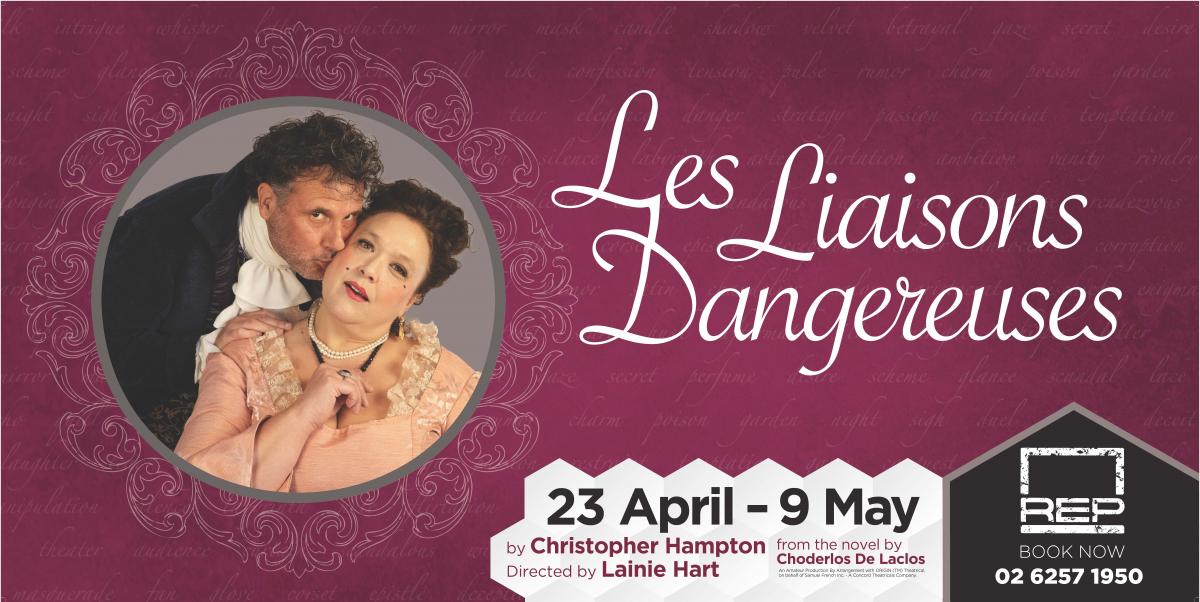
- Les Liaisons Dangereuses - Canberra Repertory, Theatre 3: This is a strong production of a highly-regarded play. Excellent performances from the three leads carry the drama and wit well; the casting of married leads (Jordan Best as Merteuil and Jim Adamik as Valmont) allows the sexual flirtation to flourish, and Yanina Clifton as Tourvel displays a haughty demeanour which is broken as she abandons herself to a torturous love. Director Lainie Hart keeps the action tight, with staging in quadrants and sharp character-driven scene changes, the fight scene is well executed, and the understanding of the game-turned-bad nature comes across well through card games and levels of both actors and set. The innovative approach to multiple scenes and locations keeps the pace from dragging too much, as the scene changes are fluid and morph into each other, although a touch more of the letters on which the play/novel is based would have been welcome. The set, sound and costume and are all cohesive; the scarlet woman taffeta of Merteuil and matching waistcoat of Valmont are suitably sumptous, and all the bodices, bustles, ruffles and cuffs look absolutely comme il faut. A commendation must go the intimacy consultant (Jill Young) as this play contains a rape scene which is vey sensitively handled.
- Vanya and Sonia and Masha and Spike - Mockingbird, The Studio, Belco Arts Centre: Brother and sister (by adoption; not birth, which accounts for some almost incestous contemplations), Vanya (Chris Bladock) and Sonia (Tracey Noble) live alone together in a Pennsylvanian farmhouse contemplating the blue heron in the garden and their daily grind. Their lives stretch before them in an endless future of ennui, until the third sibling, Masha (Helen McFarlane) returns from her rapidly-drying-up screen career with a toyboy lover, Spike (Darcy Worthy), in tow and news that she is going to sell the family home (which she owns and allows her siblings to live in rent-free). There is also a fancy-dress party next door to which she has invited them, bringing costumes that show her in a good light. A young woman, Nina (Lily Welling), suggests a threat to Masha's hold over Spike while providing a catalyst for Vanya to stage his play based on the avant-garde work of Konstantin in The Seagull. And hovering on the edges is Cassandra, the housekeeper who spits out random portentious warnings and dabbles in a little voodoo on the side. Mockingbird Theatre often mixes veteran actors with newcomers, and the effect can make for an uneven production. Chris Baldock is commanding as Vanya, particularly shining in his closing tirade lamenting the decline of manners in the modern world, Tracey Noble fully embodies the petulance of a woman afraid she has missed out on life and trying to blame someone else for her failings, and Helen McFarlane is utterly beliveable as the one trying to cling to her outward presentation to the world, secretly knowing that it isn't their true self. Darcy Worthy keeps taking his clothes off as the script demands and he is certainly nice to look at, although his acting is laboured and gestures repetitive, Lily Welling's freshness and innocence are delightful but the pitch is a little too high, and India Kazakoff feels too young and inexperienced to carry the weight of the Cassandra character (described as '30-60' in the script). Steph Evans directs with a relatively light touch - the best moments are the natural sibling bickerings - in this consummate satire of Chekovian drama in which nothing appears to happen, but everything actually does.
Showing posts with label Lexi Sekuless Productions. Show all posts
Friday, 22 May 2026
Friday Five: The shows keep on coming
Friday, 13 September 2024
Friday Five: Theatre reviews
- Bombshells - Echo Theatre, The Q: A great night out at the theatre is presented by six women delivering monologues that encompass the highs and lows of their lives. Director Jordan Best has them remain on stage throughout, whether they are having their moment in the spotlight or not, and the interactions between them as they segue between scenes are as sharp as the main content. There is no question that Joanna Murray-Smith writes incisive pieces for women, and these explorations of what it means to be a woman of any age in this strange, competitive world of ours are equally sharp and sparkling. Lainie Hart plays the ageing cabaret singer who can't quite move on from the end of her career; Ella Buckley is the blushing bride-to-be who isn't sure this is what she wants after all; Amy Kowalczuk portrays the exhausted young mother, desperate for reassurance that she's doing something right; Sally Taylor is hilarious as the precocious teenager with a talent routine that falls woefully short; Kate Harris bites back her anguish as she tries to hold her life together while delivering a TED talk on cacti; and Alice Ferguson brings the house down with some old lady wish fulfilment fantasy. At ninety minutes with no interval, this play delivers a lot of laughter and a range of emotions. I just wish that togetherness was one of them.
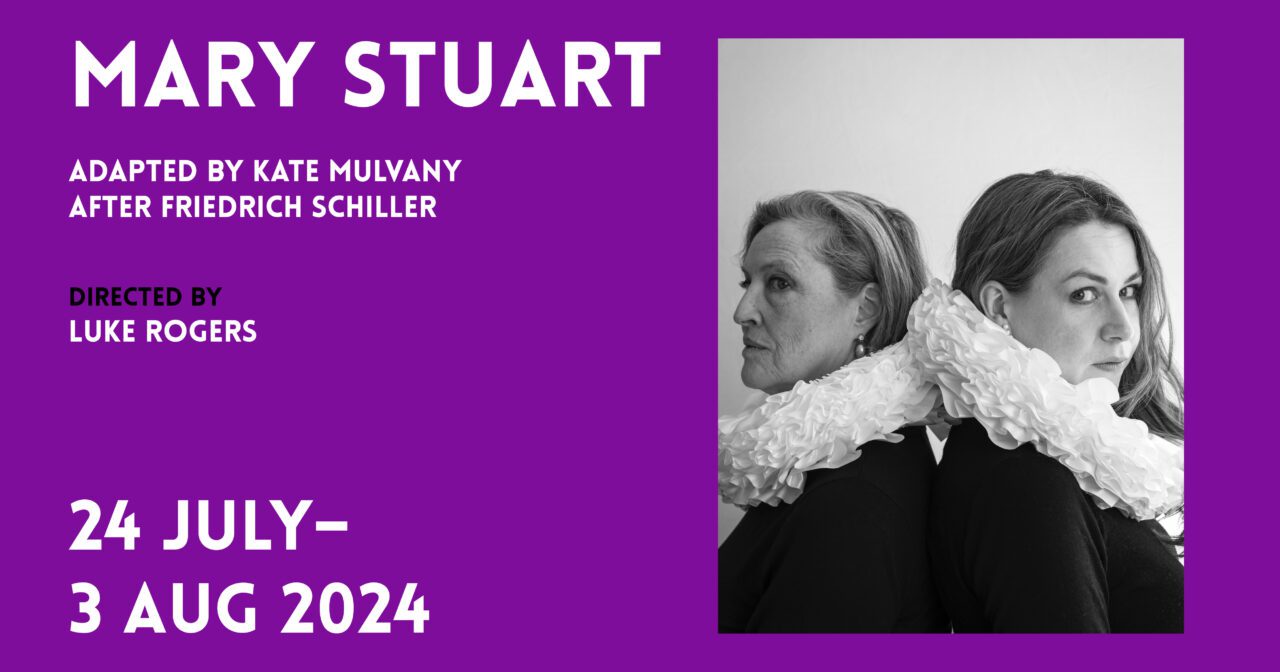
- Mary Stuart - Chaika Theatre, ACT Hub: There is some interesting staging with a crucifix formation, and a bold interpretation of the dance/ meeting scene as the two queens, Mary Queen of Scots and Elizabeth I meet in an encounter that never actually happened. Steph Roberts is strong in the titular role, playing the likeable aspects of the character with humour and sensitivity. Karen Vickery also displays strength as Elizabeth I, but comes over as bold rather than regal, and the fear and vulnerability inherent in the role are also lacking. The dynamic relationship she shares with Leicester is given a manipulative and conniving presence by Jarrad West, playful and/ or pragmatic as required. Of the supporting cast, Cameron Thomas stands out as Paulet with great dramatic energy, exquisitely embodying the conflicting emotions between the personal and political. Kathleen Kershaw's set design provides obvious points of strength, hierarchy and balance, and the execution block/ stone is a provocative dichotomy. More light and shade from Disa Swifte's lighting design would have better highlighted the fear and paranoia. Contemporary costumes (Kathleen Kershaw again) are a bold stylistic choice, which works better in concept than performance (whereas the masquerade outfits are striking, some costumes hamper movement). Overall, some curious actor choices result in one-sided presentation, and, despite the very strong leads, there is a lack of intensity, and the stakes don't appear to be played high enough.
- The Lord of the Flies - Canberra Repertory Society, Theatre 3: There is a theatre adage that states if you put on plays featuring lots of young people, you will get large audiences, as all the parents, friends and family are strongly encouraged to see it. This may be the case, but it does generally mean the production will be full of youngsters of greatly varying acting abilities. This production is action-packed, but lacking in shade or nuance; it hits a high intensity early that it struggles to sustain. While there are some excellent creative design and production elements (the set by Michael Sparks evokes atmosphere and location differentiation, and the lighting by Chris Ellyard conjures mood with shifts in tone and a sense of dread), but there are issues with the actors - too much shouting loses clarity and the young directors (Caitlin Baker and Lachlan Houen) have no understanding of class distinctions. The schoolkids cut adrift on an island, having to organise themselves to collectively survive is a metaphor for life, and this concept seems to be beyond some of the cast. Robert Kjellgren is disturbingly calm and direct in his convincing portrayal of the psychopath, Roger and Ty MaKenzie as Jack has great energy, indulging in totalitarian bully tactics to disguise deep insecurities. The gender blind casting is essential to both modernise the play and accommodate the auditionees, but the necessary machismo is missing from some actors, who come across as whiny and irritating rather than empathetic.
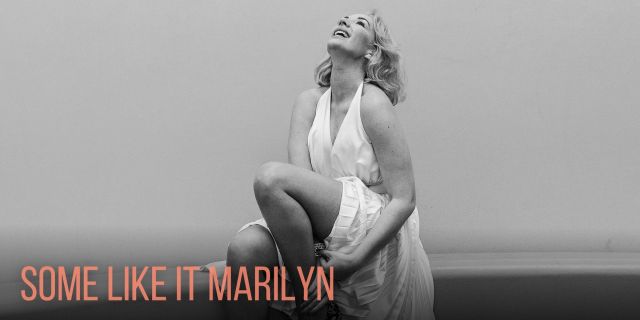
- Some Like It Marilyn - Lexi Sekuless Productions, The Mill Theatre: The Mill Theatre presents plays with previews attached. The preview may be paused while technical elements are adjusted, and at the end the audience feedback is ploughed back into the next night's performance as it is tweaked and enhanced. There is very little to perfect in this production in which Lexi Sekuless embodies one of the most iconic figures of the twentieth century in a sort of cabaret, highlighting moments from her career ranging from singing to interviews, to photo-shoots and letters. Helen McFarlane as Jane Russell pairs with Sekuless in impressive duets, while other characters (managers; beaux; fellow actors; media; stalkers) are played by Tim Sekuless and Mark Lee. Music (Leisa Keen) is wonderfully harmonious - the night I saw it backing tracks were employed, but I think they will be ditched for the true performances - and the choreography (Annette Sharpe) is eminently suited to each performer. The set by Sam Thomas is simple but effective, including a grille to recreate the iconic skirt lift scene from The Seven Year Itch, and the costumes are a delight, as Tania Jobson has designed everything from the pink satin sheath gown in which Marilyn sings Diamonds are a Girl's Best Friend, to the sexy bed sheet in which she was famously interviewed. The show portrays Marilyn as fun, charming, glamorous and smart; not just a 'dumb blonde', she was the first woman (since silent film star, Mary Pickford), to found her own production company, Marilyn Monroe Productions, in 1955. Who wouldn't like it Marilyn?
- August Osage Country - Free-Rain Theatre Company, ACT Hub: I also saw Free-Rain's production 2014 production, but the power of this one is that it swiftly eradicated that one from my mind. It may be inevitable with this play but it feels a little 'stagey' and disjointed - the scenes where everyone is talking at once are the best, as the audience can make up their own mind where to look. Some things are staged in less prominent areas, and it would be itneresting to know where the director feels the focus of this play is. Violet, the matriarch of the dysfunctional family, is a vehicle for a strong actor and Karen Vickery fits that definition with aplomb. It's hard not to feel sorry for someone living with cancer, but she made me do it. The supporting cast all excel in their roles either as family members, in-laws or additional characters, and fortunately the Native American role is for once played by a Native American (Andrea Garcia who holds an impressive stillness at the centre of the cyclone). Director Cate Clelland demonstrates great focus on character, and the shifts between scenes work well. She plays the humour where possible (the audience on the night I saw it were in stitches) but some of the darker moments (the creepy Steve; the powerplay between mother and daughter; the brutality of Charles) are toned down. The set and costumes are effective, but some of the props (such as the notebook of poems and the bouncing plates) are distracting. One comment on the lighting (Craig Muller) - we can see all the bits we are meant to when we are meant to see them, which is no mean feat considering the width of the stage. However, sometimes the audience is lit more than the stage - this may be due to limited equipment or placement options, but it is very distracting.
Friday, 19 July 2024
Friday Five: More Theatre
![]() |
| Lexi Sekuless as the prosecutor in Terror |
- Terror - Lexi Sekuless Productions, Mill Theatre on Dairy Road - This is a really interesting and interactive piece with audience voting on a jury decision. A pilot (played by Mark Lee, who can stand looking inscrutable for a long time) has shot down a plane full of hijacked passengers, on his own initiative and contrary to an official order. The lawyers arguing for the prosecution and defence (Lexi Sekuless and Tim Sekuless respectively) deliver convincing arguments and appeal to the audience directly. As the judge, Tracy Noble is inimitable in her summing up and control of the situation. Director Kim Beamish has a tight rein on the cast and the raw, industrial set, with expertly choregraphed moments representing the dramatic events and the claustrophobic atmosphere both of a targeted plane and a tense courtroom.
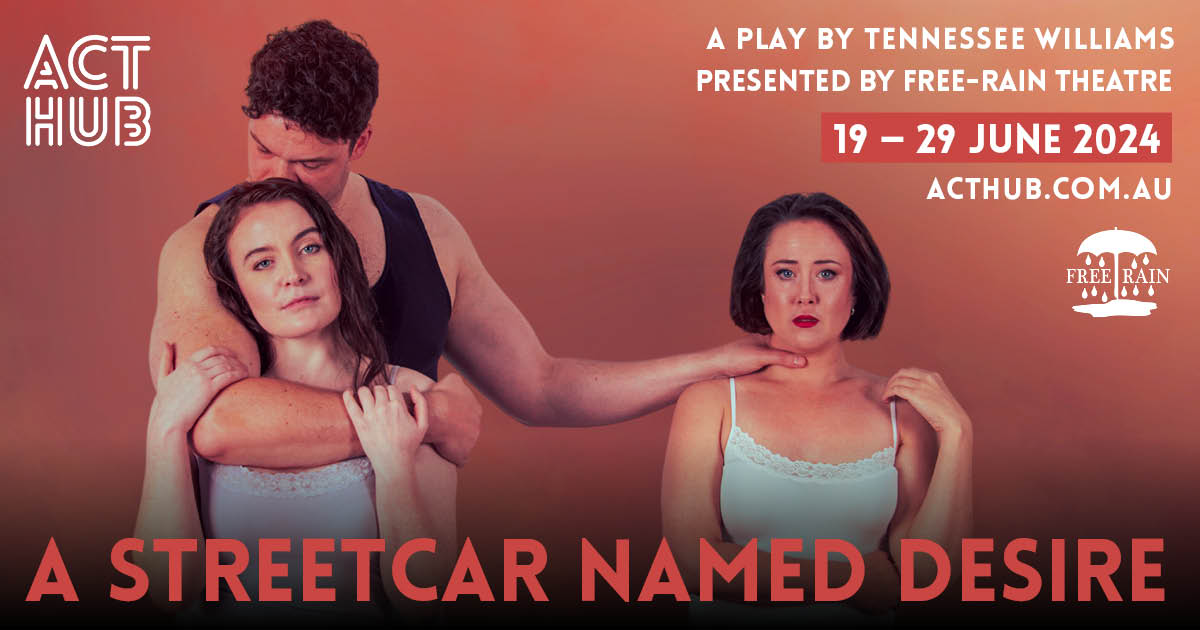
- Streetcar Named Desire - Free-Rain, ACT Hub - This is known as a vehicle for female actors to shine, and there is, indeed, great acting from the female leads, although the men have a little more issue being authentically oafish, and the ensemble is uneven, with some of the muttering being distracting rather than supportive of the main cast. Amy Kowalczuk as Blanche DuBois is one of the best Blanches I've ever seen. It's a vile role but she approaches it with depth and nuance. Fluttery hand gestures and quick movements highlight her stressed (bordering on neurotic) attitude. Her playful sister moment with Stella (Meaghan Stewart) is beautiful as a glimpse of what could have been. The switch to flirtation and girlishness powerfully shifts to predatory, and the moment when she realises she has lost everything and has no autonomy is frightening and heartbreaking. Alex Hoskison as Stanley Kowalski is powerful and wounded with an inner strength and plenty of charisma, but not brutish or disgusting enough. He doesn't play ignorant and always looks as though he has a plan, making him defensive rather than cruel. Meaghan Stewart as Stella is charming and convincingly caught between her man and her sister, wanting to do right by both and failing to please either. Her compassion and need shine through on stage with only occasional slips into the actor instead of the character, with accent and mannerisms. Lachlan Ruffy gives the character of Harold Mitchell more nuance than it often receives, wanting to be the gentleman and look after the vulnerable, but fiercely wounded when he thinks he has been duped. He is the real toxic male of this production. Sarah Hull's Eunice is a perfect antidote to the heightened situation of the downstairs flat - she is earthy and sensual, putting up with the situation and trying to find positives where she can, providing sympathy, understanding and compassion as a real good Southern neighbour should. The tight, cramped set implies the situation and environment well, although there are some issues with sightlines. The bathroom is such a large presence in the play that it could have been incorporated, and there is no obvious indication where Blanche is actually sleeping. Tennessee Williams has a very specific attitude to light expressing truth in his plays, which can be intrusive but works well here. Blanche says, 'I don't want realism. I want magic' and this is reflected in the chase light scene and the abrupt changes. As she is afraid of bright lights and prefers the softening glow, more shade and contrast could have been provided. Sound is very clear and obvious - perhaps too much so, as it comes in single chunks rather than spread throughout - but the nightmare tune ending in a gunshot is well played.
- American Idiot - Queanbeyan Players, The Q - It's a juke box musical with privileged young people trying desparately hard to be desparate and hard. Three wannabe incel lads (Johnny, Tunny and Will, played by John Whinfield, Darcy Kinsella and Zac Izzard) want to get out of town and have adventures, seeing women as handbrakes to their careering egos. As it is sung through, there are some strong songs (Holiday, Know Your Enemy, She's a Rebel, We Are the Waiting, and the titular track) but not a lot in between. The choreography seems very out of place and era (there is a lot of jumping, hand flicking and weird lurching, which is more reminiscent of Michael Jackson's Thriller than post-punk angst), whereas the inclusion of some older, steadying hands in the ensemble (I'm looking at you, David Cannell), may bring experience to the stage but their presence is questionable. A standout is Declan Pigram in the role of St Jimmy, a creepy, sunglasses-wearing dealer who is revealed to be a drug-addled manifestation of Johnny's subconscious (occasionally portrayed by Green Day's lead singer and guitarist, Billie Joe Armstrong). It doesn't really matter what the audience feel as this is paean to the fans and the friends; the cast all have a fantastic time (and I'm sure they all think they look cute in their costumes - they do), as is exemplified by them draping their arms around each other in the high-school-esque final number/ curtain call, Good Riddance (Time of Your Life). This is a passion project for director, Bradley McDowell, and I like the laughably faux-punk Green Day just fine, but this doesn't add anything to my appreciation of the band or their music.
- Crime and Punishment - The Street, Street Two - In this claustrophobic production, Christopher Samuel Carroll plays the anti-hero of Dostoyevsky's novel with a range of emotion that compels the audience to side with him at times despite his heinous deed. His vocal and physical presentations cover a gamut of feelings and experiences that are quite exquisite. PJ Williams is remarkably phlegmatic as the inspector who goads his friend/ confidant/ suspect into a confession (come on - no one can accuse this of spoilers since the seminal work of psychological fiction was first published in 1866). Josephine Gazzard is perhaps the weak link as she plays all the female characters, some with a lack of focus and a listlessness that threatens to derail the play. The adaptation by Marilyn Campbell-Lowe and Curt Columbus condenses the towering novel into a mere 90 minutes, which could have been even more taut if Sonia, the street-walker character, had more impetus and energy. Designer Kathleen Kershaw has given us levels and surfaces to consider, with the idea of self-reflection never far from the surafce.
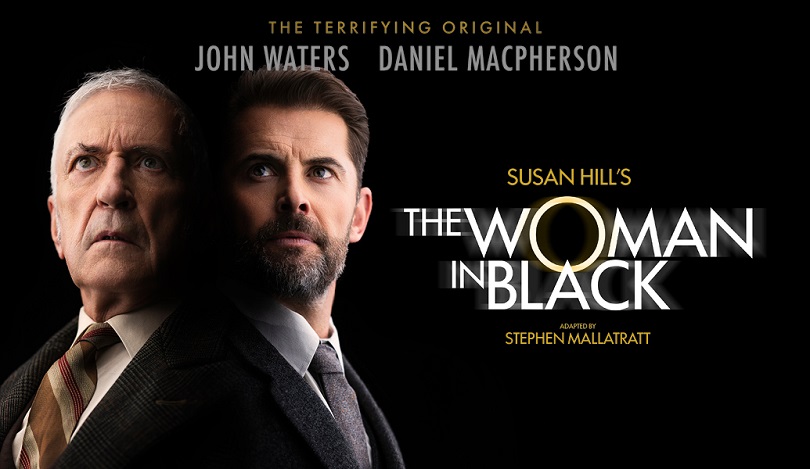
- The Woman in Black - PW Productions, Woodward Productions & Neil Gooding Productions, Canberra Theatre Centre - The play relies upon actors who elicit empathy and technical elements that create suspense. Fortunately, this production has all that in spades. John Waters plays Arthur Kipps, the narrator of the story, complete with framing device, and proceeds to assume all the other parts with aplomb. Daniel Macpherson acts out the story that Waters narrates, as the young Arthur Kipps, and the unreliable narrator trope weaves in and out of the production with fascinating and thoroughly engaging stagecraft. The set is sparse (designer - Michael Holt), allowing the audience to picture the scenes as described in their imagination, the lighting is effective (Kevin Sleep) and the sound dramatic (Sebastian Frost). The rocking chair that rocks by itself; the door that opens with no-one there; the galloping horse and the sudden jump scares are all genuinely scary. Director, Robin Herford has given us a wonderfully atmospheric piece of theatre, which is worth going out in the cold to experience.
Friday, 17 May 2024
Friday Five: Theatre Since Then
- Seagull - Chaika Theatre, ACT Hub: A bright and witty adaptation by Karen Vickery with some fine performances, particularly from Natasha Vickery as Nina (a divine portrayal of a broken spirit without mawkish sentimentality), Joel Horwood as Kostya, and Amy Kowalczuk as Polina (calmy understated with a stillness and depth that is very moving). The outood to indoor setting works well and overall the production manages to be fresh and original while maintaining the humour and pathos, although there are slight distractions in some curious staging and costume choices, and some excess faffing with props.
- The Shoe-Horn Sonata - Lexi Sekuless Productions, Mill Theatre: This is an exquisite production of a challenging script. Two women, Bridie (Andrea Close) and Sheila (Zsuzsi Soboslay), meet again 50 years after they were released from a concentration camp where they were taken in the fall of Singapore. Close is a non-nonsense Aussie and Soboslay is a more subdued Brit, and they complement and contrast each other equally. They say you should never ask what someone in these circumstances has done to survive, and these women, who were forced to be the best of friends, have kept secrets from each other for half a century. Now they are exposed in a hotel bedroom and a television studio as their histories are probed and dissected. Lexi Sekuless' direction and setting aloow us to feel their emotions as we intrude upon their privacy. War robs humans of their dignity - the very least we owe the survivors is respect. This is essential viewing.
- Gaslight - Gas Theatricals, Canberra Theatre Centre: The play that launched the term for someone (usually a man) persuading another (usually a woman) that they are going mad due to a series of seemingly insignificant but carefully planned incidents is often considered old-fashioned. Patrick Hamilton wrote it in 1938, and now Canadian playwrights Johanna Wright and Patty Jamieson have given it a sensitive remodelling, while maintaing its Edwardian essence. The story remains basically the same as an utter arse of a man, Jack (played with casual indifference by Toby Schmidt) toys with the mental health of his wife Bella (a superb study in character development by Geraldine Hakewill). In trying to discover hidden gems, he turns down the lights, hides her personal affects and removes paitings, all while administering laudanum and telling her she is frail and over-imaginative. ithout spoiling the plaot, it will suffice to say that the character of Inspector Ruff has been excised from the stage allowing Bella more agency over her discories and the thoroughly satisfying denoument.
- Five Women Wearing the Same Dress - Everyman Theatre, ACT Hub: For a play that is supposedly about five women (bridesmaids at a wedding), it still manages to fail the Bechdel Test, and it introduces the concept of child sexual abuse as an 'amusing' 10-minute diversion. The setting in the round with a railing effectively screening the bedroom (as if the bridesmaids are in an MMA cage) leads to some poor blocking and limited interaction between characters. The same dress is obviously the bridesmaids' gown and, as is often the case when supposed to suit all, it looks equally horrendous on everyone - fantastically well designed by Fiona Leach.The level of acting is variable, with Kelly Roberts providing a focal point as Trisha, the strongest of the women in a poorly-written role. Billed as a 'fun night out', it is dicordant at best.
- The Actress - Canberra Repertory Society, Theatre 3: With a great vision for the set and staging, the production elements are strong but the limited range in acting and pace hampers this production. It is slow on cues with a lack of engagement between characters. Kate Harris as Nicole, the daughter, has clear diction and a warm presence that felt more natural than everyone involved in the dramatic sphere. Rob de Fries as Paul, her father and ex-husband of the main character, played his part on the same plane, which worked well for their relationship, and displayed unctous charm and amusing confidence without being creepy por aggressive, whihc is hard to do with that script. As the eponymous Lydia Martin, Liz St Clair-Long is obviously theatrical without any doftening or expression of character that encourages audience empathy. This is far from her best work and, if this really were the last performace from an actress, it would be disappointing.
Subscribe to:
Posts (Atom)