Showing posts with label The Street. Show all posts

Friday, 19 July 2024

Friday Five: More Theatre

Lexi Sekuless as the prosecutor in Terror
  1. Terror - Lexi Sekuless Productions, Mill Theatre on Dairy Road - This is a really interesting and interactive piece with audience voting on a jury decision. A pilot (played by Mark Lee, who can stand looking inscrutable for a long time) has shot down a plane full of hijacked passengers, on his own initiative and contrary to an official order. The lawyers arguing for the prosecution and defence (Lexi Sekuless and Tim Sekuless respectively) deliver convincing arguments and appeal to the audience directly. As the judge, Tracy Noble is inimitable in her summing up and control of the situation. Director Kim Beamish has a tight rein on the cast and the raw, industrial set, with expertly choregraphed moments representing the dramatic events and the claustrophobic atmosphere both of a targeted plane and a tense courtroom. 
  2. Streetcar Named Desire - Free-Rain, ACT Hub - This is known as a vehicle for female actors to shine, and there is, indeed, great acting from the female leads, although the men have a little more issue being authentically oafish, and the ensemble is uneven, with some of the muttering being distracting rather than supportive of the main cast. Amy Kowalczuk as Blanche DuBois is one of the best Blanches I've ever seen. It's a vile role but she approaches it with depth and nuance. Fluttery hand gestures and quick movements highlight her stressed (bordering on neurotic) attitude. Her playful sister moment with Stella (Meaghan Stewart) is beautiful as a glimpse of what could have been. The switch to flirtation and girlishness powerfully shifts to predatory, and the moment when she realises she has lost everything and has no autonomy is frightening and heartbreaking. Alex Hoskison as Stanley Kowalski is powerful and wounded with an inner strength and plenty of charisma, but not brutish or disgusting enough. He doesn't play ignorant and always looks as though he has a plan, making him defensive rather than cruel. Meaghan Stewart as Stella is charming and convincingly caught between her man and her sister, wanting to do right by both and failing to please either. Her compassion and need shine through on stage with only occasional slips into the actor instead of the character, with accent and mannerisms. Lachlan Ruffy gives the character of Harold Mitchell more nuance than it often receives, wanting to be the gentleman and look after the vulnerable, but fiercely wounded when he thinks he has been duped. He is the real toxic male of this production. Sarah Hull's Eunice is a perfect antidote to the heightened situation of the downstairs flat - she is earthy and sensual, putting up with the situation and trying to find positives where she can, providing sympathy, understanding and compassion as a real good Southern neighbour should. The tight, cramped set implies the situation and environment well, although there are some issues with sightlines. The bathroom is such a large presence in the play that it could have been incorporated, and there is no obvious indication where Blanche is actually sleeping. Tennessee Williams has a very specific attitude to light expressing truth in his plays, which can be intrusive but works well here. Blanche says, 'I don't want realism. I want magic' and this is reflected in the chase light scene and the abrupt changes. As she is afraid of bright lights and prefers the softening glow, more shade and contrast could have been provided. Sound is very clear and obvious - perhaps too much so, as it comes in single chunks rather than spread throughout - but the nightmare tune ending in a gunshot is well played. 


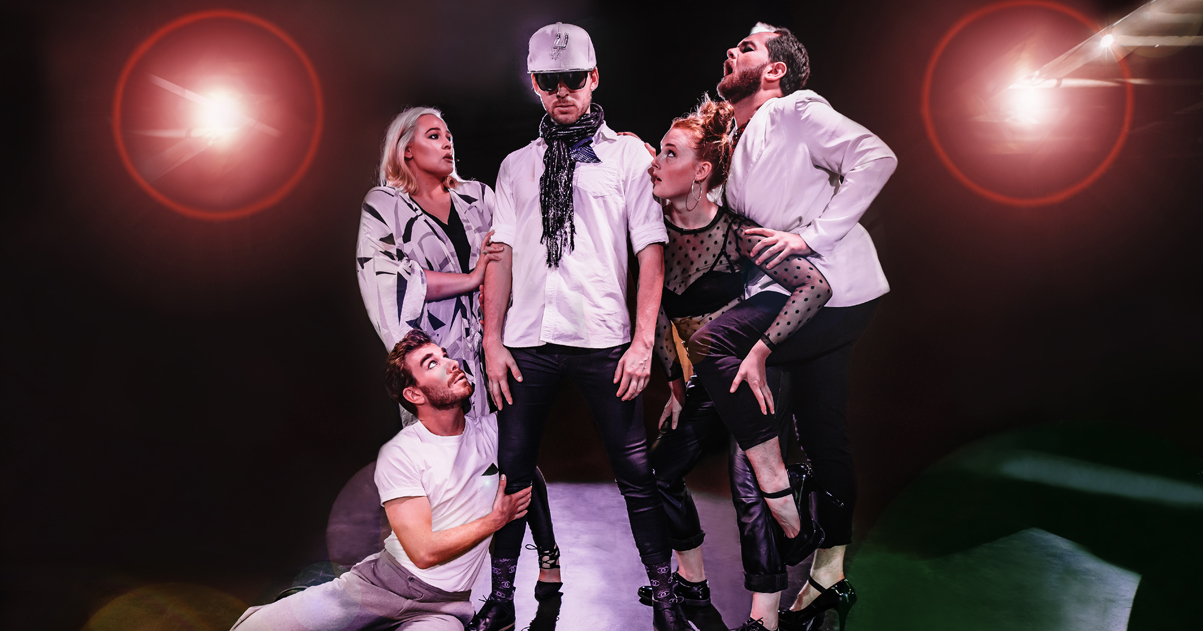
  3. American Idiot - Queanbeyan Players, The Q - It's a juke box musical with privileged young people trying desparately hard to be desparate and hard. Three wannabe incel lads (Johnny, Tunny and Will, played by John Whinfield, Darcy Kinsella and Zac Izzard) want to get out of town and have adventures, seeing women as handbrakes to their careering egos. As it is sung through, there are some strong songs (HolidayKnow Your Enemy, She's a RebelWe Are the Waiting, and the titular track) but not a lot in between. The choreography seems very out of place and era (there is a lot of jumping, hand flicking and weird lurching, which is more reminiscent of Michael Jackson's Thriller than post-punk angst), whereas the inclusion of some older, steadying hands in the ensemble (I'm looking at you, David Cannell), may bring experience to the stage but their presence is questionable. A standout is Declan Pigram in the role of St Jimmy, a creepy, sunglasses-wearing dealer who is revealed to be a drug-addled manifestation of Johnny's subconscious (occasionally portrayed by Green Day's lead singer and guitarist, Billie Joe Armstrong). It doesn't really matter what the audience feel as this is paean to the fans and the friends; the cast all have a fantastic time (and I'm sure they all think they look cute in their costumes - they do), as is exemplified by them draping their arms around each other in the high-school-esque final number/ curtain call, Good Riddance (Time of Your Life). This is a passion project for director, Bradley McDowell, and I like the laughably faux-punk Green Day just fine, but this doesn't add anything to my appreciation of the band or their music.
  4. Crime and Punishment - The Street, Street Two - In this claustrophobic production, Christopher Samuel Carroll plays the anti-hero of Dostoyevsky's novel with a range of emotion that compels the audience to side with him at times despite his heinous deed. His vocal and physical presentations cover a gamut of feelings and experiences that are quite exquisite. PJ Williams is remarkably phlegmatic as the inspector who goads his friend/ confidant/ suspect into a confession (come on - no one can accuse this of spoilers since the seminal work of psychological fiction was first published in 1866). Josephine Gazzard is perhaps the weak link as she plays all the female characters, some with a lack of focus and a listlessness that threatens to derail the play. The adaptation by Marilyn Campbell-Lowe and Curt Columbus condenses the towering novel into a mere 90 minutes, which could have been even more taut if Sonia, the street-walker character, had more impetus and energy. Designer Kathleen Kershaw has given us levels and surfaces to consider, with the idea of self-reflection never far from the surafce.
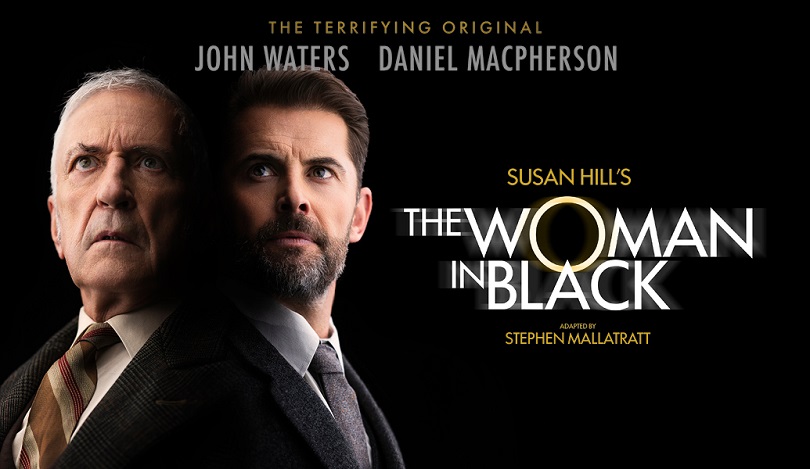
  5. The Woman in Black - PW Productions, Woodward Productions & Neil Gooding Productions, Canberra Theatre Centre - The play relies upon actors who elicit empathy and technical elements that create suspense. Fortunately, this production has all that in spades. John Waters plays Arthur Kipps, the narrator of the story, complete with framing device, and proceeds to assume all the other parts with aplomb. Daniel Macpherson acts out the story that Waters narrates, as the young Arthur Kipps, and the unreliable narrator trope weaves in and out of the production with fascinating and thoroughly engaging stagecraft. The set is sparse (designer - Michael Holt), allowing the audience to picture the scenes as described in their imagination, the lighting is effective (Kevin Sleep) and the sound dramatic (Sebastian Frost). The rocking chair that rocks by itself; the door that opens with no-one there; the galloping horse and the sudden jump scares are all genuinely scary. Director, Robin Herford has given us a wonderfully atmospheric piece of theatre, which is worth going out in the cold to experience.

Friday, 2 December 2022

Friday Five: Another Round of Theatre

  1. Who's Afraid of Virginia Woolf? - Free-Rain Theatre Company, ACT HUB: If you’ve ever been to one of those parties which go on too long and you should have left hours ago but somehow you just can’t and it turns into a metaphorical self-flagellation and everyone is ugly, mean and cruel, you will recognise this scenario. Cate Clelland directs Edward Albee’s Who’s Afraid of Virginia Woolf? with an almost uncomfortable intimacy as we come literally face to face with couples falling and tearing each other apart. Albee wrote, "There was a time when people believed in deities. And then revolutions came—industrial, French, Freudian, Marxist. God and absolutes vanished. Individuals find this very difficult and uncomfortable. All they have left is fantasy or the examination of the self." The four actors (Andrea Close; Michael Sparks; Karina Hudson; Josh Wiseman) do an outstanding job of examining themselves for three hours, hiding behind games and illusions because their reality is empty and brutal. Watch this play with absolute admiration; then find someone you love, hold them close, and tell them how much you value them, because the alternative is unbearable.
  2. Art - The Street, Street One: Directed by Shelley Higgs and designed by Imogen Keen, this production is outstanding. It deconstructs language and theatre itself and builds it back into something cohesive as three men argue over a painting that remains concealed for a good part of the play. Serge (Shane Dundas) has bought it; Marc (Christopher Carroll) thinks it is ridiculous and Yvan (Craig Alexander) attempts to placate both sides without being forced into expressing an opinion. Of course, we take from art what we bring to it, and the men project their feelings, emotions, resentments and frustrations onto the canvas, just as the audience projects theirs onto the stage. The physical comedy is ramped up to match the witty script by Yasmina Reza, translated from French into English by Christopher Hampton, and they combine to make a fast-paced entertaining night out that also gives the audience something to think about.  
  3. Christopher Carroll, Craig Alexander and Shane Dundas in Art at The Street Theatre
  4. Bakkhai - NUTS, Kambri Cultural Centre: Playwright Anne Carson adapted this Greek tragedy from Euripides, claiming that it is his most subversive play, "telling the story of a man who cannot admit he would rather live in the skin of a woman, and a god who seems to combine all sexualities into a single ruinous demand for adoration." Director Kieran Knox has found plenty to exploit in the work, giving roles to a multitude of actors (some much better than others) in this student production. While it may miss many of the subtleties of civic duty and personal insecurity and identification, it succumbs to the trans and queer narrative that the cast and crew so clearly want to give it. Played in the round, the audience are up close and personal to way too much shrieking and the sombre moments risk being laughable, but the ensemble has a lot of fun with lots of anger, gore, shouting, violence, death, exile, filicide and madness - typical fun Greek tragedy. Moral of the story: don’t mock the gods; they’ve not got a great sense of humour or humility. Definitely worth watching if you like that sort of thing.
  5. Soul Trading - Canberra Youth Theatre, Courtyard Studio: Kate Walder has written an intriguing new work set in the future (2079) where every child has an educational robot to help them learn and their lives are strictly regulated in every department. Jerry (Ted Abraham) is slightly different from the other kids and his 3-D-printed robot, Elon (Orlando Dove), is even more so. Thematic elements of  human interaction, environmental concerns and the morality of genetic selection add engaging layers to the witty production directed by Jena Prince. Production values of set, costume (Phoenix Mae), sound (Patrick Haesler) and lights (Antony Hateley) are extremely high and contribute to the atmosphere of the performance, which is both slick and charming. Although projection and diction from the cast is frequently questionable, the movement of the young actors which differentiate the sharp efficiency of the AI bots from their more languid and emotive human companions is highly commendable from this promising ensemble.
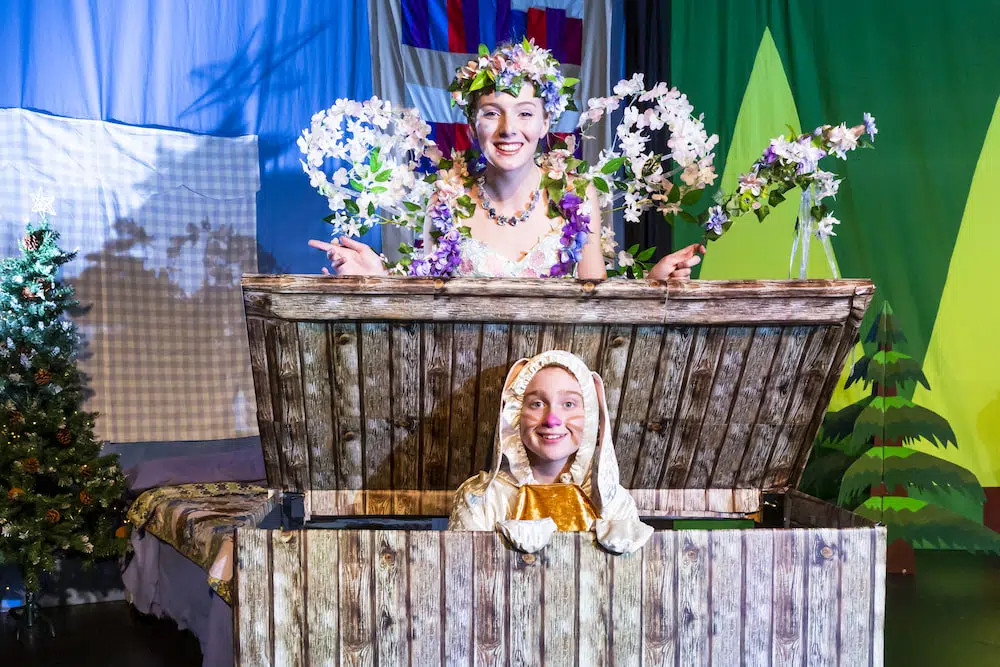
  6. The Velveteen Rabbit - Child Players ACT, Belconnen Community Theatre: This theatrical adaptation of a childhood classic is utterly adorable and perfectly pitched at the young audience. Simple and effective set, props and costumes are all innovative for the obviously limited budget. It is a good decision to have an adult actor (Janine O' Dwyer) play Nana - the older audience loved her long-suffering actions and eye rolls - and child actors for all the rest; the toys who come alive by emerging from the toy-box are clear and easy to understand. The blocking in a couple of scenes means that sight-lines are challenged and focus is lost, but on the whole it is well-delineated with separate spaces for action - inside/ outside - and the calendar marking the passage of time is inspired and beautifully illustrated. As the Velveteen Rabbit, Asha Ellis displays a  delightfully mature approach for such a young performer with clear physical movements and facial expressions, great comedy timing, a sense of innocent wonder, and sympathetic interactions with the other characters. All the cast members get moments to highlight their abilities (the choreography of the real rabbits dance is charming), pleasing the family audience and the actors themselves. There is nothing too fancy or distracting, with nice moments of differentiation between the characters and explanation of the story, which makes for a wonderful first theatre outing.
Lily Welling and Asha Ellis in The Velveteen Rabbit by Child Players ACT

Friday, 11 November 2022

Friday Five: The Latest Theatre

  1. This Changes Everything - Echo Youth, The Q: In a dystopian future, a group of young adults try to set up their own society, called The Community, on a platform out in the sea - the set with hierarchical levels and isolated pods works well for symbolism and lighting opportunities (Direction by Jordan Best; Lighting design by Jacob Aquilina). Written by Joel Horwood, it's not necessarily a novel idea (I wouldn't be the first to call it Animal Farm meets Lord of the Flies) and many of the motifs of a disingenuous leadership model are familiar - rules written on the wall are altered to suit and the founder of the group mysteriously vanishes, said to have fled and abandoned the remainers. As a British viewer, it's impossible not to think of Brexit, but there are many other issues and themes ('the negatives of Capitalism; the inequalities bred by exponential growth; a culture failing to engage with causes or impact of climate change') which are all generally well-handled, although the 'abuse trope' seems glib and unnecessary. The play also explores the fine line between Socialism (in which each works according to their talents) and Communism ruled by a totalitarian dictator, in which the level of violence and oppression are well-pitched at an adolescence; they can all be aware and concerned, but not still safe and not traumatised. Jade Breen has solid conviction as the Stalinist overlord, Maja; Tara Rose Blake as Kim, the one who switches sides to become the enforcer is believable and nuanced, and Will Best also stands out as Basic Jane, the cynical one trying to keep their head down and avoid being noticed (Animal Farm's Benjamin, if you will). There are the usual awkward moments and projection issues seen in junior casts, but generally this is a respectable piece of theatre that should be encouraged. 
  2. First Seen: Barren Ground by Helen Machalias - The Street, Street Theatre: Helen Machalias is such a great talent and I was intrigued to see what she would do next. This rehearsed read did not disappoint. I loved the exploration of the liminal spaces between life and death; myth and relaity; advertising dreams and political realities. Refugee's stories at an off-shore detention centre (on Christmas Island between 2010 and the closure of the centre in 2018) are told against a supporting framework of The Tempest where 'brave new world' poetry collides with 'stop the boats' rhetoric. When this returns as a full production, I will be first in line.
  3. Hand to God - Everyman Theatre, ACT HUB: I've not seen this play before, but I read that it won the Off Broadway Alliance Award for Best New Play and received five Tony Award nominations in 2015, although it closed early when it transferred to London and didn't garner such glowing reviews. I'm not surprised. It's crude, crass, blindingly obvious, and, according to the original playbill, an 'irreverent puppet comedy... about a possessed Christian-ministry puppet'. The widowed Margery (Steph Roberts) runs a Bible-promoting puppet-class attended by her son Jason (Michael Cooper), the sleazy teenager Tim (Joshua Wiseman), and quirky girl next-door, Jessica (Holly Ross). Men expect respect for no apparent reason, and women exist to give it to them - Steph Roberts deserves better than the demeaning cougar-seduction role she's given. Sure, she does it well - she does everything well - but this borders on hot-for-teacher-soft-porn fantasy.  To make this message more palatable (and supposedly satirical), Jason becomes fused with his demonic puppet, Tyrone, and Pastor Greg (Jarrad West filling in for Arran McKenna) has to perform an exorcism, while also trying to woo Margery despite the fact that her husband has only just died. Michael Cooper is quite brilliant at physical comedy and the combination of his acting skills and Jarrad West's slick slapstick direction make this less than just a repulsive piece of low-brow misogyny (mocking organised religion is hardly cutting-edge). In its favour, at least the entitled incel released his toxic masculinity with his hand up a puppet, not on a gun.  
  4. Romeo and Juliet - Canberra Repertory Society, Theatre 3: Co-directors Kelly Roberts and Chris Zuber use a young cast who display energy and enthusiasm, although many lost the poetry with the pace of their delivery, rushing the words and trying too hard to put their own stamp on this classic. Annabelle Hanson plays Juliet as a determined teenager who decides what she wants and goes for it, although it appears to be more independence from her parents (Richard Manning and Crystal Mahon) rather than love for Romeo (Pippin Carroll).Through her strong stance, balled fists and rigid posture, she radiates power and poetry with no need of any love interest - indeed she convinces more in her individual scenes than in those with Romeo, which lack chemistry or passion - this is not helped by the setting of their intimate scenes (the meeting; the balcony scene the bed scene) on distant parts of the stage. Carroll works hard on diction and projection but sacrifices passion and feeling, leaving the audience to rather engage with Mercutio (a fine performance by Anneka van der Velde whose restless movements imply there are hidden depths to the character hidden behind a facade of bravado) and the Nurse (Tracy Noble), who both bring the necessary energy and choric interpretation. 
  5. Ngadjung - Belco Arts, Belconnen Arts Centre: If you get a chance to see any work by Dylan Van Den Berg, see it. He is an original and incredible young talent who makes theatre that moves, inspires, connects, provokes and questions. In his director's notes, Van Den Berg explains that 'Ngadjung emerged from an original provocation to write a play about water - First Nations connection to water, human connection to water.' His play casts two women in a futuristic (and dry) environment, controlled by corporations who have privatised, monetised and politicised water to make it a commodity to which only the wealthy have ready access. Lisa Maza plays Flick, the elder who is desperately trying to maintain her connection to Country in a landscape that is irrevocably changing, and Kylah Day is Cass, the young interloper who stumbles across her patch, hiding from pursuers determined to repossess the secrets she stole. The relationship between these two actors is superb as their stories collide, mingle and separate like tributaries in a river. Production standards are also outstanding from the evocative set (designed by Imogen Keen) to the sound (Peter Bailey) and lighting (Linda Buck) design which create tension and atmosphere. In an extraordinary coup, Belco Arts commissioned this work from Van Den Berg, and it can only serve to enhance the significant reputations of all concerned. As with the inherent call to action against ignorance of climate change, this is one that demands to be seen and heard. 
Kylah Day and Lisa Maza in Ngadjung

Friday, 24 December 2021

Friday Five: Best Theatre of 2021

A Slightly Isolated Dog perform Don Juan

Following on from last year, it was still difficult to see much theatre over the last twelve months, what with COVID shutting down shows with moments to go, and the arts industry in a perilous position. I did manage to see approximately 20 productions this year, however, so I am able to list my top five, with honourable mentions.

5 Best Theatre Productions I Saw in 2021 (in alphabetical order):
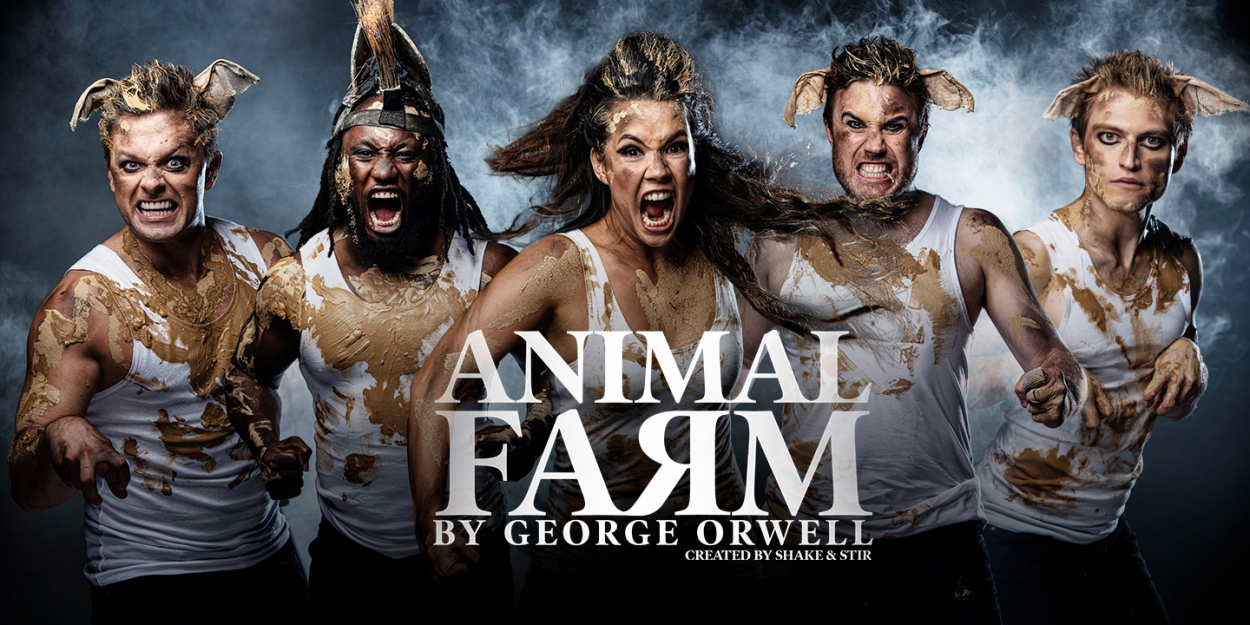
  1. Animal Farm - shake & stir theatre co., The Playhouse: This is an absolutely fantastic interpretation of one of my favourite novels. People are falling over themselves to draw parallels between the Trump administration and the propaganda within the play, but it remains as firmly rooted as ever in Orwell’s concerns about communist doublespeak. The ensemble of actors portrays all the anthropomorphised animals with excellent gestures and expressionism, maintaining an outstanding physicality throughout. The set is bleak and brilliant in equal measure. Lighting and sound blend artfully into the overall presentation and despite the grim truths of the production, there are still laugh-out-loud moments - the hen rebellion is dealt with humour until it suddenly isn't, and the transformation of beasts into men and back again is wry and poignant. A teacher of year eights (13-14) said her class went to see it and were disappointed that it didn't feature real animals. I never thought I'd say this, but sometimes theatre is wasted on the young.

  2. The Appleton Ladies Potato Race - Ensemble Theatre, The Playhouse: Written by Melanie Tait, this charming, heartfelt and positively affirming play provides five great roles for women and a story that is both specific and universal. The small country town of Appleton is disturbed when returning resident and new GP Penny Anderson (Sharon Millerchip) discovers that the famous Potato Race awards $1,000 prize money to men and $200 to women. As she takes on the organisers, the competitors and the spectators she comes face to face with those who want change and those who see no problems with the way things are. Director, Priscilla Jackman teases out all the niggles, nuances, resentments and rejections as the characters try to understand and accept each other for who they really are. It's as like a fusion of Made in Dagenham with The Dressmaker served with an added side of potato puns.
  3. Don Juan/ Jekyll & Hyde - A Slightly Isolated Dog, Bicentennial Hall, Queanbeyan Performing Arts Centre: Pretending to be a famous French theatre troupe – ‘We are very famous’ ‘And very French’ – gives this Kiwi ensemble of five actors the perfect opportunity to have fun with flamboyant stereotypes and outrageous accents. Theirs is a modern and collaborative approach and they encourage photos, which they then later share through their social media channels - direct marketing for the non-traditional theatre goers. Through a mixture of audience interaction (nothing confronting), song, dance, visual interpretations (a boat tossed on a stormy sea is a cardboard box on a tarpaulin, shaken about by the audience), and a voice distortion box, one night we learn a different side to Don Juan from any we had previously known. Another night, they bring bring their seemingly chaotic but totally controlled performance style to the story of Jekyll and Hyde. All of the ensemble get a go at being the man with a dark side within (‘but he pushes it down’) donning a wig and glasses to play the evil alter-ego, but their physicality is more important than their props and they literally embody character acting. The sound and lighting production is excellent and the timing is superb – it takes a lot of hard work to make something look this effortless, and they are a joy to watch. Both this and the previous offering are conducted in traverse staging, drawing the audience into the unfolding drama in a non-confrontational manner; the performances are short and leave the audience laughing and wanting more – they are a triumph.

  4. A German Life - The Gordon Frost Organisation, The Playhouse: Robyn Nevin delivers this fantastic script by Christopher Hampton as if she were born to play this role. Brunhilde Pomsel is an unassuming woman with good shorthand skills who, almost by chance, came to work in Joseph Goebbels’ Propaganda Ministry. She survived the war and its aftermath (after five years in prison) and now, near the end of her life and in a nursing home, she recounts what she recalls of those days. The sparsely furnished room for an elderly resident throws up echoes of incarceration while projections of Nazi rallies, mass evacuations, ruined cities and concentration camps, are starkly presented in black and white on the walls for all to see. It is disturbingly intimate and asks us to question how much we think she knew (every time she denies knowledge, she stumbles over her words or questions her receding memory) and what would we honestly do in her situation. Neil Armfield directs one woman to capture our attention throughout the running time, and the play raises many questions about personal responsibility, communal culpability and the veracity of memory. She opines, "Nowadays, I don’t think people would be stupid enough to fall for the kind of nonsense we fell for. All that hot air, I don’t think you can get that past people anymore.” Well, the audience all felt uncomfortable at that moment - apart from the smug ones who missed the point.
  5. Milk - The Street, The Street Theatre: I believe the theatre is a forum for sharing stories; exploring the past; questioning the present; and preparing for the future. ‘Milk’ does all of the above with superb staging and atmospheric sound and lighting featuring pivotal moments in liminal spaces. If Dylan Van Den Berg wrote this as an ode to his daughter, she is one very lucky human. We stand with you. We pay our respects to the traditional custodians of the land on which we live.

Honourable Mentions to:
  • Carpe DM - Canberra Youth Theatre, Gorman's House: A bold, thoughtful and intelligent new work as past of a project with Canberra Youth Theatre's Emerge Company. Devised works exploring contemporary themes can be a little self-indulgent, but the moments of honesty and reflection make up for the understandable cliches as young people think they are the first to ever have these thoughts.
  • The Governor's Family - Canberra Repertory Society, Theatre 3: Plaudits to Rep for taking on this confronting work. It's not often a community theatre company with a traditionally conservative audience would program a play tackling themes of cultural appropriation, gender diversity, incest and political revolution.
  • The Stranger - Ainslie and Gorman Arts Centres and Bare Witness Theatre Company, Ralph Wilson Theatre: Outstanding work by Christopher Samuel Carroll to command the audience with a one-man show and deliver fresh insight to a work of existentialist nihilism. Considering I detest the original novel by Albert Camus, I was impressed beyond all expectations at the translation, staging and performance. Chapeau!
Christopher Samuel Carroll standing on a beach staring at the sea in a production of The Stranger

Friday, 20 August 2021

Friday Five: More Theatre


As we are all in lockdown, I thought it would be time to review the last theatre productions I was able to attend as, who knows when we will get to go and sit collectively in the dark again.

5 Recent Theatre Productions:
Josh Wiseman and Pippin Carroll in Rope
  1. Rope - Canberra Repertory Society, Theatre 3: This is a well-acted and well-staged production of an old-fashioned piece of theatre. Known to many due to the Alfred Hitchcock film, this interpretation still has sufficient bluffs and double bluffs to keep the audience hanging on until the end. The trope of a bored entitled elite killing someone just because they can and not acknowledging there will be consequences is well trod now (not least through Dostoevsky's Crime and Punishment or, more recently, Donna Tartt's 1990s book club favourite The Secret History), but at the time of writing (1929), the concept was original enough to be diverting. Patrick Hamilton's plays (he also wrote Gaslight) can be interpreted as stuffy and overwrought drawing-room dramas (and the opulence of the set threatens to overwhelm), but the fact that this still felt fresh is due in large part to the light but detailed direction by Ed Wightman and the flamboyantly compelling acting by Pippin Carroll in the lead role of Wyndham Brandon. Other acting is uneven and not all of the styles blend well together, but it is relatively tight at a one-act 90-mins running time.
  2. The Appleton Ladies Potato Race - Ensemble Theatre, Canberra Theatre Centre: Written by Melanie Tait, this charming, heartfelt and positively affirming play provides five great roles for women and a story that is both specific and universal. The small country town of Appleton is disturbed when returning resident and new GP Penny Anderson (Sharon Millerchip) discovers that the famous Potato Race awards $1,000 prize money to men and $200 to women. As she takes on the organisers, the competitors and the spectators she comes face to face with those who want change and those who see no problems with the way things are. Director, Priscilla Jackman teases out all the niggles, nuances, resentments and rejections as the characters try to understand and accept each other for who they really are. It's as like a fusion of Made in Dagenham with The Dressmaker served with an added side of potato puns.
  3. Hello, Is There Anybody There? - Tempo Theatre, Belconnen Community Theatre: Tempo love to have fun with their productions, and they ham up this self-aware murder mystery with great delight. Lady Amelia (Cheryl Browne) is searching for a subject for her next novel, aware that it has all been done before and there are no new murder tropes - so with many a knowing nod to the audience (the fourth wall is completely demolished), she explores them all over the space of the play, aided and abetted by her drunken sot of a sexist husband (Kim Wilson) and the farcical cop duo (Michael Ubrihien and Nikki-Lynne Hunter rocking her Scottish accent for all its inherent humour). The writing is drenched in self-deprecation and deadpan delivery, and the cast milk it like the comedy cow it is with the butler and the maid (Gary Robinson and Marian FitzGerald) joining in the murderous parlour games. It's ridiculous but it's fun.
  4. Milk - The Street, Street TheatreI believe the theatre is a forum for sharing stories; exploring the past; questioning the present; and preparing for the future. Milk does all of the above with superb staging and atmospheric sound and lighting featuring pivotal moments in liminal spaces. If this an ode to the writer (Dylan Van Der Burgh)'s daughter, she is one very lucky human. We stand with you. We pay our respects to the traditional custodians of the land on which we live.
  5. The Governor's Family - Canberra Repertory Society, Theatre 3: Plaudits to Rep for taking on this confronting work. It's not often a community theatre company with a traditionally conservative audience would program a play tackling themes of cultural appropriation, gender diversity, incest and political revolution. If it is a little packed with righteousness, that is the fault of the writing and not of the delivery. Director Tony Llewellyn-Jones has assembled a cast of considerable merit to portray the dysfunctional family of the fictional Governor of NSW, Howard Mountgarret (played with agonising guilt and torment by Peter Holland in one of his finest performances to date). Frances Pod (Kiara Tomkins) is a young indigenous woman who has been raped by a group of Irishmen. Mountgarrett takes her into his home ostensibly as a gesture of compassion, but one which is viewed with scepticism by his weary and depressed wife (Antonia Kitzel) and insurrectionist cross-dressing daughter (Caitlin Baker) and partisan interest by his poetic justice-seeking son (Robbie Haltiner). As Mountgarret has to decide how to deal with the perpetrators - brothers of the temperamental newspaper man and potential beau of his daughter (Jack Casey) - he knows his actions will have greater implications for the future of the colony, which are hammered home with a decisive lack of subtlety in the second act. Andrew Kay's versatile set is a highlight, using the potential of the revolve and the scrim to place us in different sections of society with always the suggestion of another in the periphery. The production elements add in the moments of light and shade that the script itself lacks to make this a fully challenging piece of theatre.

Thursday, 10 June 2021

Life's Nourishment: Milk by Dylan Van Den Berg

Dylan Van Den Berg, Katie Beckett and Roxanne McDonald in Milk

Milk by Dylan Van Den Berg

Directed by Ginny Savage
The Street Theatre
3 -12 June, 2021

The theatre is a forum for sharing stories; exploring the past; questioning the present; and preparing for the future. ‘Milk’ does all of the above with superb staging and atmospheric sound and lighting featuring pivotal moments in liminal spaces, directed with depth and nuance by Ginny Savage.

We are taken to a metaphysical Flinders Island off the coast of Tasmania, which is created instantly through imagery and sound (Peter Bailey) – the wind is a constant presence. The design of the rock-strewn stage (Imogen Keen) is evocative and versatile; piles of stones can be interpreted as cairns and path-markers, burial sites and weapons. Ranging in size they indicate the passage of time through erosion, and they can be put in a pocket and transplanted to another time and place.

Spanning two centuries the play tracks the conversation between three Aboriginal ancestors coming together on the verge of life-changing moments. The characters are nameless – known only as Character A, B, and C – which suggests a blending of personalities and continuation of stories. Playwright and Character C, Dylan Van Den Berg has just become a father, which has made him introspective. He wants to know where he came from and what he might be passing on to a future generation.

Character A (Roxanne McDonald) and Character C (Dylan Van Den Berg) 

He and the other characters, A (Roxanne McDonald) and B (Katie Beckett), attempt to reconcile what came before invasion and colonisation of Tasmania with what is yet to come. Roxanne McDonald (portraying an old woman from the 1840s) tells her story with honesty and heartbreaking integrity. While the horror and violence of the past is not dwelt upon, there are certainly uncomfortable scenes and a few tears were shed in the audience. A note in the programme reminds us that “a group of Palawa people, mostly women, were removed from their country and taken to the Bass Strait Islands in the early-to-mid 1800s. They were sold, bartered, and gifted as ‘wives’ to the white sealers who lived there.”

Katie Beckett plays Character C’s grandmother, although the actors are similar in age, which leads to an intimacy and shared understanding of identity. The difference is that “You’re lucky with that milky skin. You get no trouble. You get to carry it all on the inside – all the knowledge. Some of us gotta carry it on the outside for everyone to see.” Character B is a middle-aged woman from the 1960s who is attempting to find fun and explore the world through various encounters and relationships, while refusing to be confined by convention. 

Katie Beckett as Character B

Through outstanding physicality, the actors all embody greatly varying experiences and shifts of mood that are entirely convincing and utterly compelling. The costumes, also by Imogen Keen, are designed to accentuate the details of their circumstances, from the rough-looking, sturdy coverings, fashioned like a blanket, of Character A, to the impractical and uncomfortable shiny fabric worn by Character B as she prepares to go on a date and sell herself as something she is not – “I’m a natural blonde, baby… this is just a dye-job.”

They progress and move past grief, shame and self-loathing by literally picking themselves up and carrying on. Lighting by Gerry Corcoran illuminates, defines and conceals spaces in intriguing ways that create conversation. We all have blind spots in our family history, but learning about the past can inform our present and teach us to be more compassionate towards the people around us.

It is apt that Milk opened in a world premiere during Reconciliation Week. It may be a personal story about loss and survival, but it asks us all to question our heritage and to consider our relationship to the land we live on. Again, the programme notes that, “For many years it was said that the Palawa people were ‘extinct’. White history has swallowed our stories. This is just one of many.” A lot of stories and knowledge have been lost through lack of sharing, but in the words of character C, “It’s all out there. Even the stuff we think is gone. We just – have to listen. We just – have to dance.”

This play is stunning and heartfelt. It is personal and it is broader than one man’s story. It affects all of us, as it should. See it; feel it; share it. That is all.

Friday, 15 December 2017

Friday Five: Recent Theatre Excursions

And here are another five shows I have seen and enjoyed, to various extents.

David Pearson as Sweeney Todd
  1. Sweeney Todd: The Demon Barber of Fleet Street produced by Dramatic Productions at Gunghalin College Theatre - The staging of this show is problematic, as the pivotal scenes (such as the action in the barber's shop and the hellish production detail of the pie-shop) are shunted too far up-stage to receive the full attention they deserve. As is often the case with amateur musicals, director Richard Block has largely jettisoned acting ability in favour of singing voices. David Pearson as the titular barber has strong presence and a commanding voice, but doesn't bring sufficient contrast to his performance, striking the same sneering pose throughout. Kate O'Sullivan in an understudy role as Mrs Lovett has better acting chops than most, although she struggles a bit with the higher register. Demi Smith is the complete opposite bringing a piercing clarity to her singing that is noticeably absent from her dialogue; Lachlan Agett as Antony Hope does neither, and Max Gambale's Judge Turpin does a fine job of bring the sleaze and cynicsm. While some of the set pieces (No Place Like London; Pirelli's Miracle ElixirGod, That's Good!By the Sea) are entertaining, they are incongruous with the tone of the whole, and generally filling the stage with chorus members doing a number does this show a disservice. It should contrast the demonic with the divine, but instead comes across as dull and dismal.
  2. The Merchant of Venice produced by Bell Shakespeare at The Playhouse, Canberra Theatre Centre - My problem with Bell Shakespeare is that they often re-interpret the bard's plays to fit their own sensibilities by re-arranging the words and forcing modern meanings into the text. Admittedly The Merchant of Venice is a tricky play with its tones of antisemitism, but the ending is generally one of couplings, suggesting a more tolerant and understanding future, not one of heart-rending guilt. When Jessica says 'I am much ashamed', it is in Act II and refers to her dislike of being seen in male clothing by her lover. Bell Shakespeare moves these lines to the end of the play as she rocks back and forth and pretend they reveal her feelings about the treatment of her father, Shylock. This may work for schools (and the slick production values and strong acting styles will certainly please teens used to one-dimensional characters and plots) but is insulting to the intelligence of anyone who appreciates the intrigues and subtleties of Shakespeare.
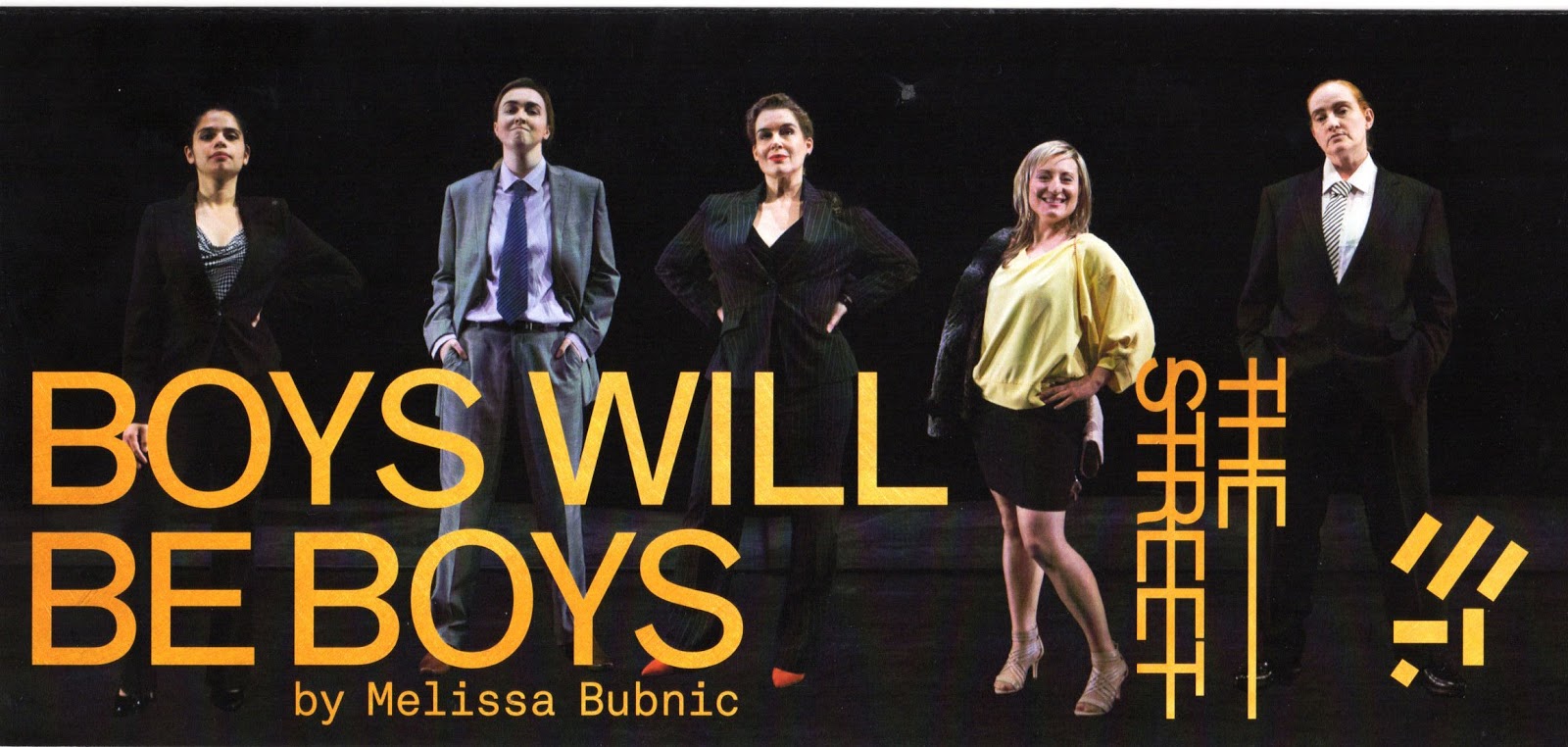
  3. Boys Will Be Boys produced by The Street at The Street - Caroline Stacey directs this hard-hitting boardroom drama in which all the men are played by women in sharp suits and cutting dialogue. The world of financial politics is clinical and unforgiving with no room for compassion, and everyone has a price. The stark set of mirrors and neon reflects the emptiness of the characters' souls, but there is also nowhere to hide. This is a problem for some of the weaker actors who are simply not strong enough to wield the crushing testosterone wrecking balls indicated by the text. Pippa Grandison stands out as Astrid, the woman with the most at stake who strikes the hardest deals and dares reveal a softer side only in song.
  4. Love/ Chamberlain produced by Moral Panic and Ainslie and Gorman Arts Centres at Ralph Wilson Theatre, Gorman Arts Centre - Playwright Bridget Mackey imagines that Courtney Love and Lindy Chamerlain might have a lot in common. Despite coming from contrasting backgrounds with seemingly disparate outlooks, they were both pilloried by the media for not responding to grief and trauma the way women are expected to react. In her play directed by Cathy Hunt, Love (Emma Macmannus) and Chamberlain (Heidi Silberman) meet several times in several contexts as they jump back and forth in time across the Federal Highway; strewn with the paper detritus of old news. They are aided and abetted by the versatile barb barnett in a dozen different and well-developed roles, but even as the Oracle (dispensing advice from a cardboard booth like Lucy in Peanuts) she doesn't have all the answers. It's great to see new work by local theatre artists, especially when it is as thought-provoking as this.
  5. Australia Day produced by Canberra Repertory at Theatre 3 - What is the purpose and relevance of the national celebration? Jonathan Biggins opens this can of worms in his satire set in a fictional country town. Lofty ideals clash with political expediency, torrential rain and an outbreak of food-poisoning. Anyone who has ever sat through tedious committee meetings will appreciate the contrasting personalities and sensitivities encompassed in the preparations conducted in a scout hall, which is freezing in the winter and boiling in the summer. The set is basic, and so is the acting and the direction by Cate Clelland, but this is not necessarily a criticism, as the script is allowed to take centre-stage where it belongs without distracting interpretations or excessive 'input'.

Friday, 1 September 2017

Friday Five: And Yet More Theatre Outings

And the latest offerings are (admittedly from a while back before I got engrossed with my own show):

Talk by Johnathan Biggins at The Playhouse
  1. Noel Coward Double Bill (Weatherwise & Mild Oats) at Teatro Vivaldi - Director Tony Turner unearths two delightful short (one-act) plays by The Master. A simple drawing-room set serves to provide all the context required to enjoy these theatrical morsels between meals. They are perfectly suited to the dinner-theatre theme with humour arising from well-acted awkward situations. Whether unaccountably thrown together in a bachelor's apartment (awkward pauses are perfectly played by Henry Strand and Alessa Kron) or dealing with a hypnotised woman who believes she's a dog (a great comic turn by Elaine Noon), strict adherence to manners and deportment are not negotiable. They combine to form a veritable amuse bouche.
  2. First Seen 2017: Hired Mother at The Street - The First Seen programme helps playwrights develop their work by presenting them in rehearsed readings to the public, who then engage in conversation which will hopefully lead to further progress and production. Cathy Petocz's imaginative play deals with mother/daughter interactions and how they affect (and are affected by) the greater cosmos. One of the characters is a piece of moon rock who witnesses the maternal breakup and attempts to put the relationship back together. However, as she falls for the daughter and wonders about the need for a powerful female figure in her life, she waxes and wanes in both provocation and potency. There's a lot to like here and I look forward to seeing it hit the stage.
  3. Talk produced by the Sydney Theatre Company at The Playhouse, Canberra Theatre Centre Jonathan Biggins' writing epitomises social and political satire in action. Set in a fantastically realised radio station, a talk-back jock (played with toe-curling credibility by John Walters) ignites vigilante justice: 'Whether it's using an i-pad or a pitchfork; a mob is still a mob.' A traditional journalist quits in despair after trying to pass on tips of the trade and ethics to an intern more bent on reporting a sizzling soundbite than cold hard facts. Meanwhile the TV executives are playing a ratings game which tramples on truth and lives to achieve figures and awards. It's all rather depressing but brilliantly executed. 
  4. Verdict produced by Tempo Theatre Inc at Belconnen Community Theatre - Tempo Theatre under the helm of Jon Elphick tackle their latest Agatha Christie with their trademark enthusiasm and solid production values. Professor Karl Hendryk (Paul Jackson) is a romantic in terms of education but less so in other areas, much to the chagrin of his long-suffering invalid wife (Nikki- Lynne Hunter whose wheelchair confinement doesn't hamper her expressive performance) and her cousin (Monique Dyson) who also yearns for him. As we actually see the murder committed on stage (by an infatuated student - Kirsten Doyle), this particular puzzle is not so much a whodunnit as a willtheygetawaywithit? It's a faithful rather than an inspiring production, but it poses some interesting questions such as whether principles more important than people, and the Queen of Crime's less-than-sparkling dialogue is once again carefully handled. 
  5. The 39 Steps produced by Canberra Repertory at Theatre 3 - Despite inexplicably deciding that the great Scottish hero, Richard Hannay (Patrick Galen-Mules) should be Canadian (with all the jarring inconsistencies that creates), Jarrad West and cast and crew attempt to squeeze every ounce of humour from Patrick Barlow's adaptation of Alfred Hitchcock's film of John Buchan's novel. Steph Roberts is spectacular in her several roles, bringing nice differentiation to each. There is no corresponding subtlety in the clowns (Helen McFarlane and Nelson Blattman) who are somewhat overblown and their broad-stroke performances tend to merge multiple characters into one. If you're after a fast-paced frolic; a ridiculous roller coaster ride; a preposterous performance, and some jolly good fun, however, you could do worse.