- Away - Canberra Repertory Society, Theatre 3: This is considered an Australian classic, and it is treated as such, with weighty moments and dragging pauses. It tells the story of three internally conflicted families holidaying on the coast for Christmas, 1968 and, according to Wikipedia, is one of the most widely produced Australian plays of all time, being on the school curriculum in many states. It incorporates several moments of Shakespeare which don't so much subtley enhance the story but profoundly crash into it to try and suggest merit. This production doesn't hang well together, with some self-indulgent drama school moments (the storm at the end of the first act is enacted by cast practicing physical theatre in the way that non-theatre people is typical am-dram), but the sound (Neville Pye) and lighting (Nathan Sciberras) are excellent with a multitude of notes, techniques and colour to enhance the production. A variety of acting styles speak of a lack of cohesion - Callum Doherty excudes a flamboyant melodrama as Tom, a teenager with leukemia trying to experience all he can while he is well enough, while Andrea Close as Coral portrays the ups and downs of someone medictating through grief with great sincerity. The stage is not used to its full extent and scene changes are uneven - some of the cast remain in character to perform them; others don't. The play-within-a-play is appropriately intimate, and the half-painted scene for the 'beach' in the second act is evocative, although some of the kodak screen images are poorly projected and detract from the overall ambience. A stronger vision from director Lainie Hart communicated more clearly to all cast and crew might have helped this play find an even keel.
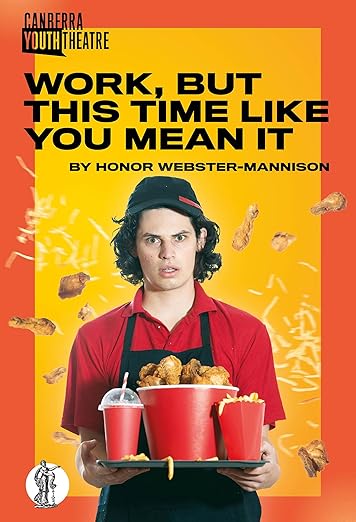
- Work But This Time Like You Mean It - Canberra Youth Theatre, Courtyard Theatre: A play about young people's first experiences in the workplace explores subjects such as trying to survive and have a good time on a minimum wage, dealing with demanding customers and irritating colleagues, and the realisation that this might be all there is for the endlessly foreseeable future. Written by Honor Webster-Mannison, the script won the 2022 Emerging Playwright Commission, and this production is really not as bleak as that might sound. Working in a fast food outlet (no names but it is red and yellow and the actors dress in chicken suits at one point), the characters are simply called after their positions, such as Shift Manager, Drive, Deep Fryer, Kiosk, etc. and perform repetive gestures, throwing and catching balls in synchronised movements. The young actors are mainly self-satisfied and have little rapport with their fellow cast members, with the possible exception of Kathleen Dunkerley as Register 1 (good range of pace and emotion) and Sterling Notley as Food Prep (measured and generous performance providing a foil to other actors). The set (Kathleen Kershaw) is the highlight of the piece, marking the transition between childhood (a soft play centre) and the slippery slope of post adolescence with a bright and obvious visual metaphor of a ballpit. Multiple overlapping voices, recorded speech, video games projections and dance breaks all add to the anarchic feeling, as directed by Luke Rogers, but each one of these elements could have been explored more thoroughly, instead of too many ideas appearing under-realised. The play has interesting moments and deliberately descends into chaos, but the unstructured disorder soon becomes tedious and looses the audience engagement.
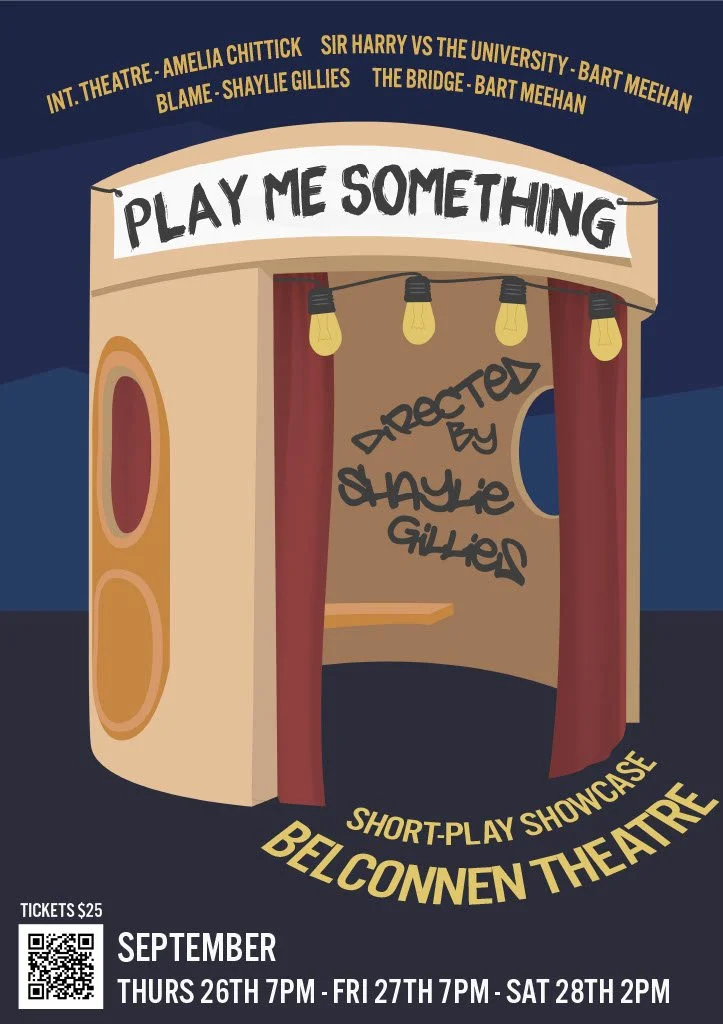
- Play Me Something - Green Oak Theatre, Belconnen Community Centre: Four short plays with no apparent direction (although Shaylie Gillies is credited) or cohesion. INT.THEATRE by Amelia Chittick is a play about actors preparing to do a play, while Sir Harry vs, The University by Bart Meehan is a well-written comedy about a disgraced actor who applies for a job at a university only to sue for discrimination when they don't get the role. I was surprised to see that Blame by Shaylie Gillies is about the effect on the community of the Aberfan disaster, until I was told that the event featured heavily in the TV hit show, The Crown, which would explain why people in Australia suddenly know about it. The last play on the bill is The Bridge, also by Bart Meehan, which deals with family loss, grief, difficult relationships and distorted memories. Due to the changing sets required, these were necessarily perfunctory, although the use of sheets in Blame is interesting, and the Greek chorus effect adds a much-needed diversion. I also admire the decision not to make the cast attempt Welsh accents. Actors performing in different pieces are at best competent and have clear favourites, interpreting these and mumbling inaudibly through others. For example Chazelle Cromhot plays Professor Turner with solid gestures in Sir Harry, obviously relishing the role, while leaving unnecessary pauses and being almost completely uncommitted to the role of Daughter in The Bridge. While I applaud the motivation to bring short plays to the stage in search of a wider audience, the performance feels under-rehearsed and could be considered a drama exercise, but not a finished product. The poster is a highlight.
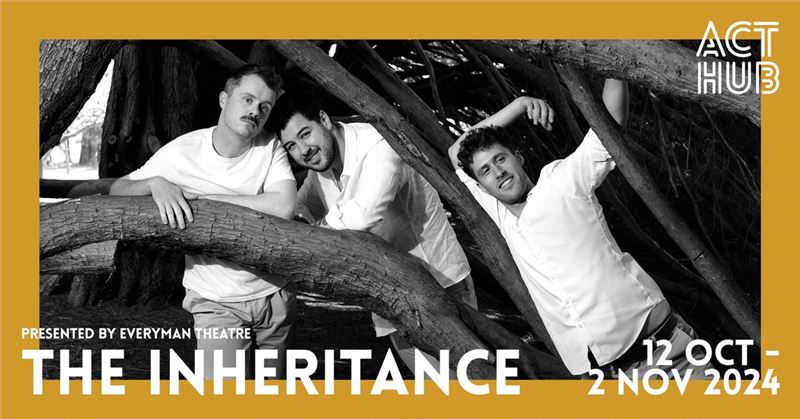
- The Inheritance Pts 1 & 2 - Everyman Theatre, ACT Hub: Seen over two nights (or for a solid six hours on a day with a matinee), this is a massive work of friendship and death, intended to be a re-imagining of E. M. Forster's Howard's End. It deals with homosexuality in the 1980s, so of course the promising young men are struck down by AIDS, in that decade's anthem for doomed youth. This is an intergenerational piece as the contemporary couple, Eric Glass (James McMahon) and Toby Darling (Joel Horwood) deal with the inherited trauma of that era through their privileged existence in Eric's family-owned apartment in New York. They are surrounded and embraced by a coterie of quasi-intellectuals, who shuffle bare foot across the boards, offering metaphorical foils if not rapier-like wit, and draping over each other to produce carefully posed tableaux. Self-referentially enough, Toby's semi-autobiographical novel is due to be adapted for Broadway, and he involves himself in the writing and the auditioning of himself through the character of Adam McDowell (Andrew Macmillan). It's full of in-jokes and meta-theatrical references, and it's actually quite hard to like these characters as they lounge about the stage reading and pontificating as though their every utterance holds weight. It doesn't. It's didactic and preachy and finishes with a monologue from Margaret (Karen Vickery), the only woman of the thumpingly male show, who loves all the rogues and scamps. And yet. Director, Jarrad West has done wonders with the material, not least in finding twelve men of solid acting ability. Joel Horwood's petulance is compelling, James McMahon's brooding presence is powerful, and Duncan Driver delivers an excellent commentary as the unfairly criticised E.M. Forster (why didn't he make his sexuality public?). There are simulations of sex and abuse, but the moment where an actor leapt into the arms of his acolytes who failed to catch him, leaving him crashing into the stage, was the one that really brought tears to my eyes.
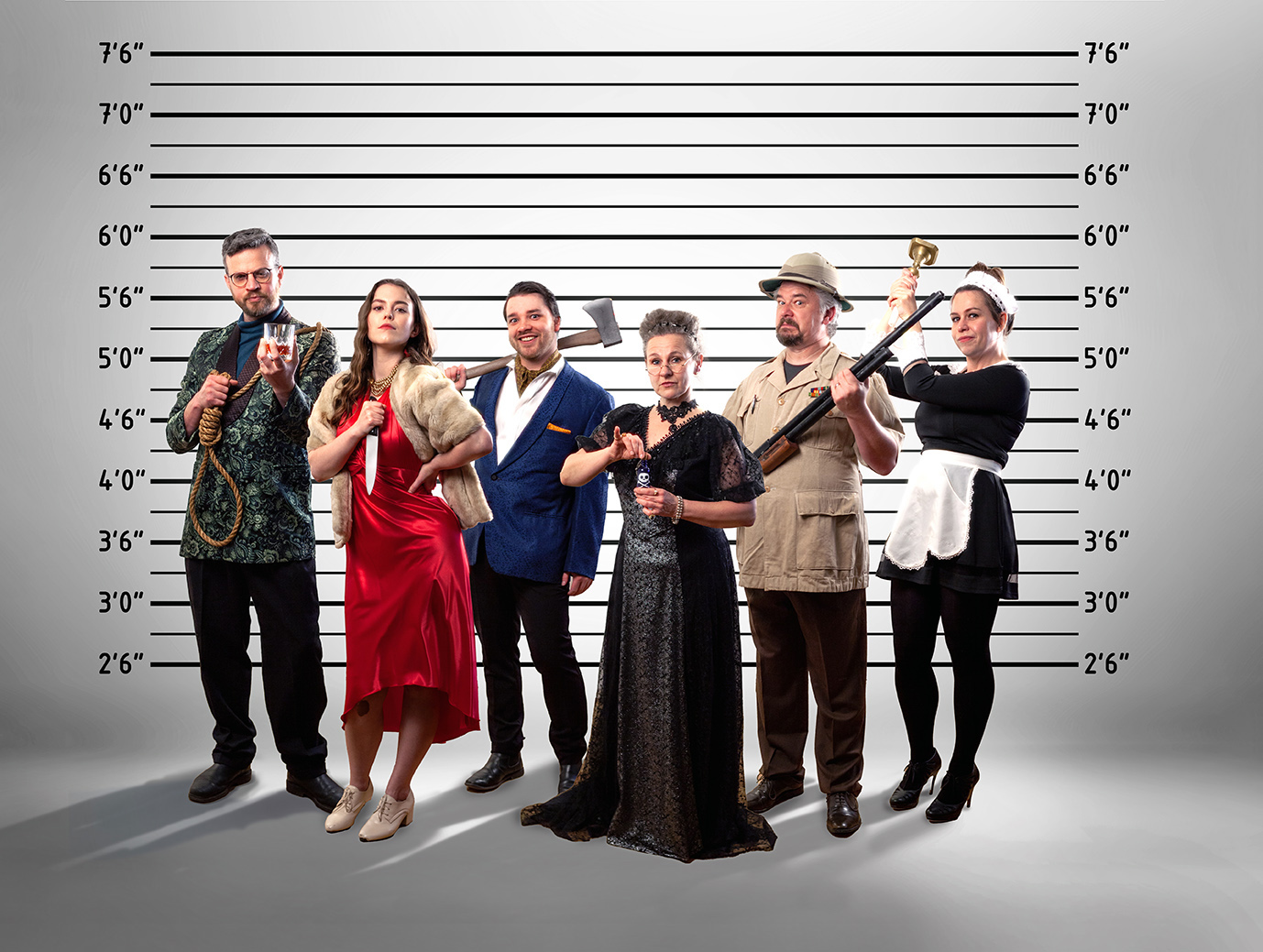
- Bloody Murder - Canberra Repertory Society, Theatre 3: Canberra Repertory traditionally stages their final production of the year as a fun night out in which audience and actors main purpose is to have fun. This is achieved in Bloody Murder, written by Ed Sala and directed by Josh Wiseman. The premise is that the characters in a quintissential country house murder mystery get fed up with playing the same old roles and turn upon the author (and the audience) to forge new ground and subvert their sterotypes. Antonia Kitzel is the matriarch of the house, Lady Somerset; Glenn Brighenti is her nephew, Charles, waiting in the wings to inherit her fortune, Steph Roberts is the maid in the ridiculous sexy French maid outfit favoured of male directors while delivering a Sybil Fawlty-esque performance, Arran McKenna is the war bore, an uptight mayor from India via central casting, Stuart Roberts is Devon Tremaine, the alcoholic has-been actor, and Holly Ross is Emma and the Countess, with a variety of accents with which she has a lot of fun, although I would caution that self-satisfaction on stage doesn't always equate to enjoyment from the audience. This is an ensemble piece so there are not meant to be stand-outs, but Aaron McKenna and Stuart Roberts both excel in their commitment to harmonious performances, never pulling focus, remaining pitch perfect in vocal and physical delivery, and offering supportive presence demonstrating superior textual understanding. The technical details all serve the play well, particularly the sound where Neville Pye is in his element, heightening atmosphere in an ironic manner from creaking floors to sensuous foreboding mood music. When it remembers not to take itself too seriously, this play is a lot of fun.
Showing posts with label Canberra Youth Theatre. Show all posts
Friday, 29 November 2024
Friday Five: Bits of Theatre Reviews
Friday, 2 December 2022
Friday Five: Another Round of Theatre
- Who's Afraid of Virginia Woolf? - Free-Rain Theatre Company, ACT HUB: If you’ve ever been to one of those parties which go on too long and you should have left hours ago but somehow you just can’t and it turns into a metaphorical self-flagellation and everyone is ugly, mean and cruel, you will recognise this scenario. Cate Clelland directs Edward Albee’s Who’s Afraid of Virginia Woolf? with an almost uncomfortable intimacy as we come literally face to face with couples falling and tearing each other apart. Albee wrote, "There was a time when people believed in deities. And then revolutions came—industrial, French, Freudian, Marxist. God and absolutes vanished. Individuals find this very difficult and uncomfortable. All they have left is fantasy or the examination of the self." The four actors (Andrea Close; Michael Sparks; Karina Hudson; Josh Wiseman) do an outstanding job of examining themselves for three hours, hiding behind games and illusions because their reality is empty and brutal. Watch this play with absolute admiration; then find someone you love, hold them close, and tell them how much you value them, because the alternative is unbearable.
- Art - The Street, Street One: Directed by Shelley Higgs and designed by Imogen Keen, this production is outstanding. It deconstructs language and theatre itself and builds it back into something cohesive as three men argue over a painting that remains concealed for a good part of the play. Serge (Shane Dundas) has bought it; Marc (Christopher Carroll) thinks it is ridiculous and Yvan (Craig Alexander) attempts to placate both sides without being forced into expressing an opinion. Of course, we take from art what we bring to it, and the men project their feelings, emotions, resentments and frustrations onto the canvas, just as the audience projects theirs onto the stage. The physical comedy is ramped up to match the witty script by Yasmina Reza, translated from French into English by Christopher Hampton, and they combine to make a fast-paced entertaining night out that also gives the audience something to think about.
- Bakkhai - NUTS, Kambri Cultural Centre: Playwright Anne Carson adapted this Greek tragedy from Euripides, claiming that it is his most subversive play, "telling the story of a man who cannot admit he would rather live in the skin of a woman, and a god who seems to combine all sexualities into a single ruinous demand for adoration." Director Kieran Knox has found plenty to exploit in the work, giving roles to a multitude of actors (some much better than others) in this student production. While it may miss many of the subtleties of civic duty and personal insecurity and identification, it succumbs to the trans and queer narrative that the cast and crew so clearly want to give it. Played in the round, the audience are up close and personal to way too much shrieking and the sombre moments risk being laughable, but the ensemble has a lot of fun with lots of anger, gore, shouting, violence, death, exile, filicide and madness - typical fun Greek tragedy. Moral of the story: don’t mock the gods; they’ve not got a great sense of humour or humility. Definitely worth watching if you like that sort of thing.
- Soul Trading - Canberra Youth Theatre, Courtyard Studio: Kate Walder has written an intriguing new work set in the future (2079) where every child has an educational robot to help them learn and their lives are strictly regulated in every department. Jerry (Ted Abraham) is slightly different from the other kids and his 3-D-printed robot, Elon (Orlando Dove), is even more so. Thematic elements of human interaction, environmental concerns and the morality of genetic selection add engaging layers to the witty production directed by Jena Prince. Production values of set, costume (Phoenix Mae), sound (Patrick Haesler) and lights (Antony Hateley) are extremely high and contribute to the atmosphere of the performance, which is both slick and charming. Although projection and diction from the cast is frequently questionable, the movement of the young actors which differentiate the sharp efficiency of the AI bots from their more languid and emotive human companions is highly commendable from this promising ensemble.
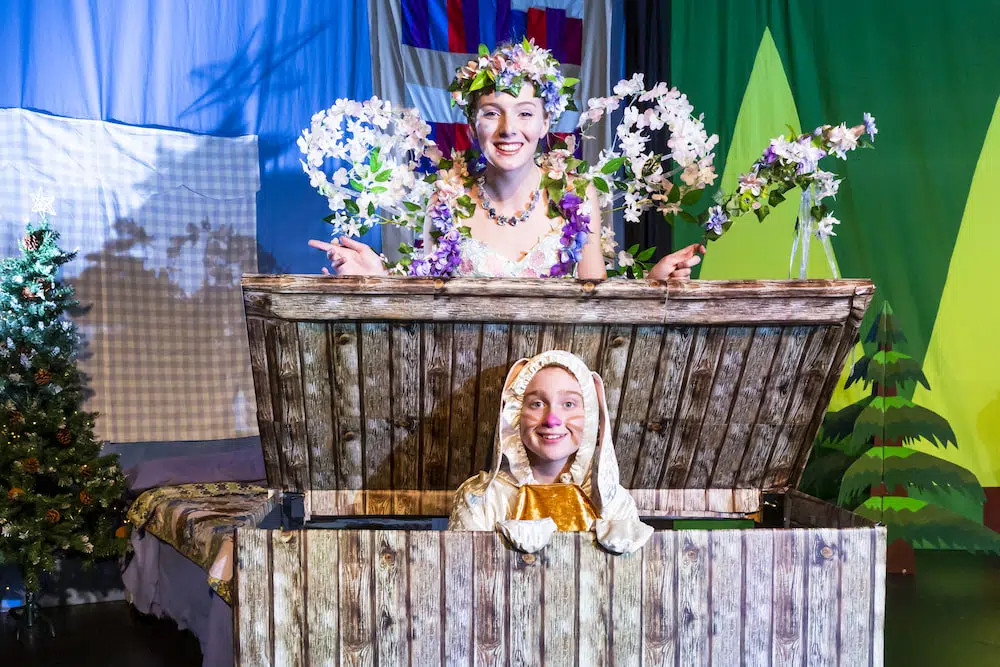
- The Velveteen Rabbit - Child Players ACT, Belconnen Community Theatre: This theatrical adaptation of a childhood classic is utterly adorable and perfectly pitched at the young audience. Simple and effective set, props and costumes are all innovative for the obviously limited budget. It is a good decision to have an adult actor (Janine O' Dwyer) play Nana - the older audience loved her long-suffering actions and eye rolls - and child actors for all the rest; the toys who come alive by emerging from the toy-box are clear and easy to understand. The blocking in a couple of scenes means that sight-lines are challenged and focus is lost, but on the whole it is well-delineated with separate spaces for action - inside/ outside - and the calendar marking the passage of time is inspired and beautifully illustrated. As the Velveteen Rabbit, Asha Ellis displays a delightfully mature approach for such a young performer with clear physical movements and facial expressions, great comedy timing, a sense of innocent wonder, and sympathetic interactions with the other characters. All the cast members get moments to highlight their abilities (the choreography of the real rabbits dance is charming), pleasing the family audience and the actors themselves. There is nothing too fancy or distracting, with nice moments of differentiation between the characters and explanation of the story, which makes for a wonderful first theatre outing.
![]() |
| Christopher Carroll, Craig Alexander and Shane Dundas in Art at The Street Theatre |
![]() |
| Lily Welling and Asha Ellis in The Velveteen Rabbit by Child Players ACT |
Friday, 27 May 2022
Friday Five: Recent Theatre Excursions
These are brief reviews of the theatre productions I have seen recently:
- King of Pigs - Red Line Productions and Critical Stages Touring, The Q, Queanbeyan: King of Pigs is an excellent and important show. We can’t ignore violence in the home. Physical violence; mental cruelty; coercive control. Talk about it; make it stop. We are all responsible. Seventy minutes of tightly-directed well produced storytelling with a strong ensemble and Kate Skinner as a commanding presence in the centre of the maelstrom.
- Dags - Canberra Youth Theatre, Courtyard Studio: It's amazing to see how people who didn't live through the 80s love it a lot more than those of us who did. The energetic ensemble had great fun with the spirited design elements in this American teen-movie-style coming-of-age story at a high school. Choreography, props (not credited) and costumes (Aislinn King) were vibrant with upbeat pop tunes and hair ballads; Rubik cubes and rollerblades; dresses, playsuits and tops and shorts in bright geometric prints all proving to be highly enjoyable for cast and audience. The functional and movable set (Aislinn King) was in harmony with the Day-Glo colours and abstract, angular art of the period, allowing for flow of action across multiple scenes - bedroom; classroom; school bus - and interaction as the cast moved it into position with choreographed routines. Jade Breen as Gillian developed her character from an annoying brat unsure of her place in the world to a determined young woman with inner strength and individuality. Some of the ensemble work was engaging as the actors split into small groups and came back to a cohesive whole (ones to watch are Lily Welling; Breanna Kelly; Elliot Cleaves; William Best; Disa Swifte), while other aspects looked a little awkward and uncomfortable and were inaudible. Director Luke Rogers could have explored some of the darker themes in more depth (sexual pressure; eating disorders; self-harm) but he chose to play to his audience with refreshing humour and nothing to scare the horses.
- The Boys - Alchemy Artistic, ACT HUB: This company has set a ludicrously high benchmark for its inaugural production. By placing this work dealing with toxic masculinity and gender violence in the round, director Amy Kowalczuk has embraced a stylish naturalism. Highlighting the pugilistic elements by evoking a boxing ring atmosphere, this is a very immersive experience as the audience are so close to the action. The power play between the genders and classes are embodied through physical movement (choreographed by Michelle Norris), inspired Brechtian alienation devices, and a versatile set that allows for various levels and height dynamics. As Brett, the man released from prison and returning to his family, Alex Hoskison portrays the barely pent up rage of a psychopath with chilling conviction. His brothers Glenn (Cole Hilder) and Stevie (Blue Hyslop) are powerless to choose their own path away from the blindingly narrow beam of his searchlight, while their respective girlfriends Michelle (Meaghan Stewart), Jackie (Indy Scarletti) and Nola (Caitlin Baker) fight for recognition and respect in their own individual ways. As the matriarch, Sandra (Liz St Clair Long), makes excuses for her 'boys' and gathers the 'girls' together, we see in the final silent scream what a losing battle this is. Amy Kowalczuk has produced this piece as the final component of her Master of Theatre and Performance (there is a Q&A and a survey as part of each performance). I would award her top marks.
- Hotel Sorrento - Canberra Repertory Society, Theatre 3: Kudos to director, Alexandra Pelvin, for taking Hannie Rayson's script with multiple scenes and settings and creating something harmonious. It's a great modern Australian work involving three sisters, one of whom, Meg (Rachel Howard) has written a Booker-Prize-nominated novel which, although fictional, may border on autobiography and expose some family stories. When she returns from London to Sorrento in Victoria with her English husband, Edwin (Peter Holland), the tensions simmer below the surface and threaten to drag them all down in their wake. Hilary (Victoria Tyrrell Dixon), the eldest, has stayed in the family home to care for their father, Wal (Saban Lloyd Berrell) and her son, Troy (Nick Dyball) while Pippa (Jess Waterhouse) is on a break from her high-powered New York career, displaying all the angst of the middle child simultaneously trying to fit in and stand out. An odd couple of friends, Marge (Elaine Noon) and Dick (Ryan Erlandsen) round out the characters - as written they exist to be the mouthpiece for ideas of gender and cultural politics, but they are acted with enough depth to be more than just the discussion puppets they might be. The creative set design (Michael Sparks) allows room for expression and interpretation of all the moments, and the delivery is kept subtle avoiding the temptation to fall into melodramatic soap opera, highlighting the wry asides rather than full-frontal confrontation. There are many potential stereotypes contained within this play but the admirable direction and acting make these characters seem like real people, and the dinner scene is remarkably convincing. As Tolstoy once wrote, "All happy families are alike; each unhappy family is unhappy in its own way."
- Three Tall Women - Chaika Theatre Company, ACT HUB: One of the titular women is Karen Vickery, playing a ninety-two-year-old woman (A) who is close to death and reliving her life with senile and interrupted memories. Her audience is her carer, B (Lainie Hart), and a solicitor, C (Natasha Vickery), who attend to her physical and legal/ financial needs when she lets them. At the end of the first act she has a stroke, and then, as a figure lies in the bed throughout Act II, the three women play versions of her aged 26, 52 and 78, none of them wanting to turn into their future version but knowing that inevitably they must. So far; so Edward Albee, who delights in distancing his plays from his audience with overt absurdism. Due to the nature of the play it highlights the individual aspect of the actor and leaves little room for rapport. It is like watching a masterclass - "Look at me; I'm acting!" - and they do it very well with clarity and deliberation, but it feels dispassionate and insular. With the concluding lines, 'That's the happiest moment. When it's all done. When we stop. When we can stop.', I don't think this play even likes itself.
![]() |
| Jess Waterhouse, Rachel Howard and Victoria Tyrrell Dixon as the three sisters in Hotel Sorrento |
Friday, 24 December 2021
Friday Five: Best Theatre of 2021
![]() |
| A Slightly Isolated Dog perform Don Juan |
Following on from last year, it was still difficult to see much theatre over the last twelve months, what with COVID shutting down shows with moments to go, and the arts industry in a perilous position. I did manage to see approximately 20 productions this year, however, so I am able to list my top five, with honourable mentions.
5 Best Theatre Productions I Saw in 2021 (in alphabetical order):
- Animal Farm - shake & stir theatre co., The Playhouse: This is an absolutely fantastic interpretation of one of my favourite novels. People are falling over themselves to draw parallels between the Trump administration and the propaganda within the play, but it remains as firmly rooted as ever in Orwell’s concerns about communist doublespeak. The ensemble of actors portrays all the anthropomorphised animals with excellent gestures and expressionism, maintaining an outstanding physicality throughout. The set is bleak and brilliant in equal measure. Lighting and sound blend artfully into the overall presentation and despite the grim truths of the production, there are still laugh-out-loud moments - the hen rebellion is dealt with humour until it suddenly isn't, and the transformation of beasts into men and back again is wry and poignant. A teacher of year eights (13-14) said her class went to see it and were disappointed that it didn't feature real animals. I never thought I'd say this, but sometimes theatre is wasted on the young.
- The Appleton Ladies Potato Race - Ensemble Theatre, The Playhouse: Written by Melanie Tait, this charming, heartfelt and positively affirming play provides five great roles for women and a story that is both specific and universal. The small country town of Appleton is disturbed when returning resident and new GP Penny Anderson (Sharon Millerchip) discovers that the famous Potato Race awards $1,000 prize money to men and $200 to women. As she takes on the organisers, the competitors and the spectators she comes face to face with those who want change and those who see no problems with the way things are. Director, Priscilla Jackman teases out all the niggles, nuances, resentments and rejections as the characters try to understand and accept each other for who they really are. It's as like a fusion of Made in Dagenham with The Dressmaker served with an added side of potato puns.
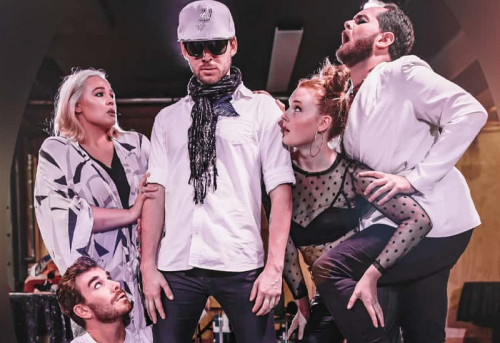
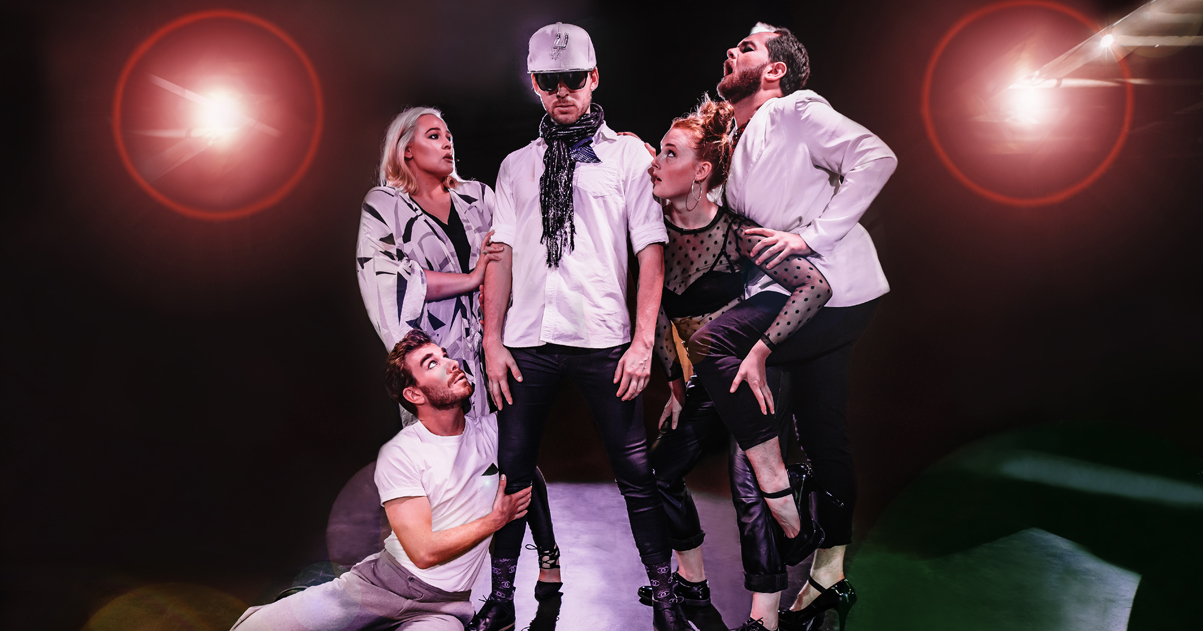
- Don Juan/ Jekyll & Hyde - A Slightly Isolated Dog, Bicentennial Hall, Queanbeyan Performing Arts Centre: Pretending to be a famous French theatre troupe – ‘We are very famous’ ‘And very French’ – gives this Kiwi ensemble of five actors the perfect opportunity to have fun with flamboyant stereotypes and outrageous accents. Theirs is a modern and collaborative approach and they encourage photos, which they then later share through their social media channels - direct marketing for the non-traditional theatre goers. Through a mixture of audience interaction (nothing confronting), song, dance, visual interpretations (a boat tossed on a stormy sea is a cardboard box on a tarpaulin, shaken about by the audience), and a voice distortion box, one night we learn a different side to Don Juan from any we had previously known. Another night, they bring bring their seemingly chaotic but totally controlled performance style to the story of Jekyll and Hyde. All of the ensemble get a go at being the man with a dark side within (‘but he pushes it down’) donning a wig and glasses to play the evil alter-ego, but their physicality is more important than their props and they literally embody character acting. The sound and lighting production is excellent and the timing is superb – it takes a lot of hard work to make something look this effortless, and they are a joy to watch. Both this and the previous offering are conducted in traverse staging, drawing the audience into the unfolding drama in a non-confrontational manner; the performances are short and leave the audience laughing and wanting more – they are a triumph.
- A German Life - The Gordon Frost Organisation, The Playhouse: Robyn Nevin delivers this fantastic script by Christopher Hampton as if she were born to play this role. Brunhilde Pomsel is an unassuming woman with good shorthand skills who, almost by chance, came to work in Joseph Goebbels’ Propaganda Ministry. She survived the war and its aftermath (after five years in prison) and now, near the end of her life and in a nursing home, she recounts what she recalls of those days. The sparsely furnished room for an elderly resident throws up echoes of incarceration while projections of Nazi rallies, mass evacuations, ruined cities and concentration camps, are starkly presented in black and white on the walls for all to see. It is disturbingly intimate and asks us to question how much we think she knew (every time she denies knowledge, she stumbles over her words or questions her receding memory) and what would we honestly do in her situation. Neil Armfield directs one woman to capture our attention throughout the running time, and the play raises many questions about personal responsibility, communal culpability and the veracity of memory. She opines, "Nowadays, I don’t think people would be stupid enough to fall for the kind of nonsense we fell for. All that hot air, I don’t think you can get that past people anymore.” Well, the audience all felt uncomfortable at that moment - apart from the smug ones who missed the point.
- Milk - The Street, The Street Theatre: I believe the theatre is a forum for sharing stories; exploring the past; questioning the present; and preparing for the future. ‘Milk’ does all of the above with superb staging and atmospheric sound and lighting featuring pivotal moments in liminal spaces. If Dylan Van Den Berg wrote this as an ode to his daughter, she is one very lucky human. We stand with you. We pay our respects to the traditional custodians of the land on which we live.
Honourable Mentions to:
- Carpe DM - Canberra Youth Theatre, Gorman's House: A bold, thoughtful and intelligent new work as past of a project with Canberra Youth Theatre's Emerge Company. Devised works exploring contemporary themes can be a little self-indulgent, but the moments of honesty and reflection make up for the understandable cliches as young people think they are the first to ever have these thoughts.
- The Governor's Family - Canberra Repertory Society, Theatre 3: Plaudits to Rep for taking on this confronting work. It's not often a community theatre company with a traditionally conservative audience would program a play tackling themes of cultural appropriation, gender diversity, incest and political revolution.
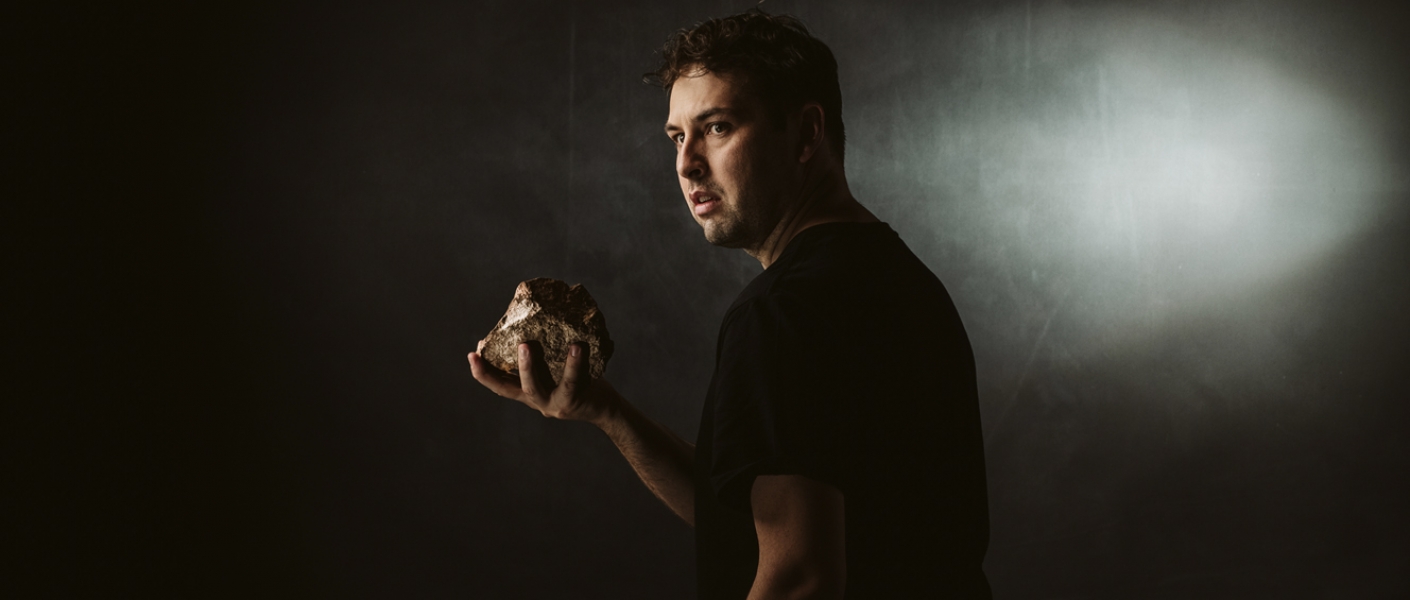
- The Stranger - Ainslie and Gorman Arts Centres and Bare Witness Theatre Company, Ralph Wilson Theatre: Outstanding work by Christopher Samuel Carroll to command the audience with a one-man show and deliver fresh insight to a work of existentialist nihilism. Considering I detest the original novel by Albert Camus, I was impressed beyond all expectations at the translation, staging and performance. Chapeau!

![]() |
| Christopher Samuel Carroll standing on a beach staring at the sea in a production of The Stranger |
Friday, 4 June 2021
Friday Five: The Shows Go On
As mentioned in a previous post, I am trying to see as much theatre as I can, dependent on my other commitments, and I shall try to report back (in chronological order of viewing).
5 Shows Seen So Far This Year:
- Animal Farm - shake & stir theatre co., The Playhouse, Canberra Theatre Centre: This is an absolutely fantastic interpretation of one of my favourite novels. People are falling over themselves to draw parallels between the Trump administration and the propaganda within the play - but it remains as firmly rooted as ever in Orwell's concerns about communist doublespeak. The ensemble of actors portray all the anthropomorphosised animals with excellent gestures and expressionism, maintaining an outstanding physicality throughout. The set is bleak and brilliant in equal measure. Lighting and sound blend artfully into the overall presentation and despite the grim truths of the production, there are still laugh-out-loud moments - the hen rebellion is dealt with humour until it suddenly isn't, and the transformation of beasts into men and back again is wry and poignant. A teacher of year eights (13-14) said her class went to see it and were disappointed that it didn't feature real animals. I never thought I'd say this, but sometimes theatre is wasted on the young.
- Don Juan - A Slightly Isolated Dog, Bicentennial Hall, Queanbeyan: Pretending to be a famous French theatre troupe - 'We are very famous' 'And very French' gives this Kiwi ensemble of five actors the perfect opportunity to have fun with flamboyant stereotypes and outrageous accents. Theirs is a modern and collaborative approach and they encourage photos, which they then later share through their social media channels - direct marketing for the non-traditional theatre goers. Through a mixture of audience interaction (nothing confronting), song, dance, visual interpretations (a boat tossed on a stormy sea is a cardboard box on a tarpaulin, shaken about by the audience), and a voice distortion box, we learn a different side to Don Juan from any we had previously known. It is engaging and great fun for a cold mid-week night, reminding us why we need to get back into performance spaces.
- A German Life - The Gordon Frost Organisation, The Playhouse, Canberra Theatre Centre: Robyn Nevin delivers this fantastic script by Christopher Hampton as if she were born to play this role. Brunhilde Pomsel is an unassuming woman with good shorthand skills who, almost by chance, came to work in Joseph Goebbels' Propaganda Ministry. She survived the war and its aftermath (after five years in prison) and now, near the end of her life and in a nursing home, she recounts what she recalls of those days. The sparsely furnished room for an elderly resident throws up echoes of incarceration while projections of Nazi rallies, mass evacuations, ruined cities and concentration camps, are starkly presented in black and white on the walls for all to see. It is disturbingly intimate and asks us to question how much we think she knew (every time she denies knowledge, she stumbles over her words or questions her receding memory) and what would we honestly do in her situation. Neil Armfield directs one woman to capture our attention throughout the running time, and the play raises many questions about personal responsibility, communal culpability and the veracity of memory. She opines, "Nowadays, I don’t think people would be stupid enough to fall for the kind of nonsense we fell for. All that hot air, I don’t think you can get that past people anymore.” Well, the audience all felt uncomfortable at that moment - apart from the smug ones who missed the point.
- Jekyll & Hyde - A Slightly Isolated Dog, Bicentennial Hall, Queanbeyan: And we're back for more from A Slightly Isolated Dog who bring their seemingly chaotic but totally controlled performance style to the story of Jekyll and Hyde. All of the ensemble get a go at being the man with a dark side within ('but he pushes it down') donning a wig and glasses to play the evil alter-ego, but their physicality is more important than their props and they literally embody character acting. The sound and lighting production is excellent and the timing is superb - it takes a lot of hard work to make something look this effortless, and they are a joy to watch. Both this and the previous offering are conducted in traverse staging, drawing the audience into the unfolding drama in a non-confrontational manner; the performances are short and leave the audience laughing and wanting more - they are a triumph.
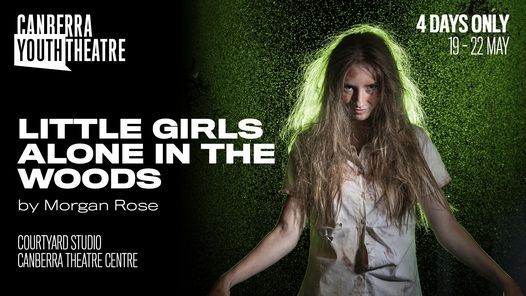
- Little Girls Alone in the Woods - Canberra Youth Theatre, Courtyard Studio, Canberra Theatre Centre: The Bacchae by Euripides is an ancient Greek drama which has captured imaginations for years, and lent itself to many interpretations as playwrights, authors, composers and directors seek to assign meaning and moral to a tale of violence, cynicism, divination and control. Among others Joe Orton, Caryl Churchill, Ingmar Bergman, Brian De Palma, Wole Soyinka, Friedrich Nietzsche, Gustav Holst, Thomas Mann and Henrik Ibsen have pondered the dichotomy between protection and imprisonment. Morgan Rose views the cult and legend of Dionysus through a feminist lens as her play suggests that young women are disappearing into the wilds of the woods to cavort and rebel against the confines of the patriarchy. Luke Rogers directs this version with a large cast of varying ability, and he is adept at playing to their strengths. Some of the ensemble work is excellent as the actors work together with both movement and voice, but when they try to stand out and compete against each other, it becomes discordant and incomprehensible. Whether they are lounging about in a study group preparing for exams and completing assignments on their laptops, or play fighting in pyjamas with pillows, they portray the messiness of youth that some adults try to streamline and corral. Change, transition, adolescence, questions and exploration can be uncomfortable for those who want to control, such as the police force who issue tagging bracelets that all females must wear for their own safety, to prevent them from going astray. The staging is bold with a man-made metal cage-like structure hinting of capture and confinement from a prison to a zoo, and as the action spills off the set into the audience space it suggests that our wilderness could either be part of the problem or a solution. Sound and lights are incorporated well to highlight some of the more confrontational aspects of isolation and power imbalance, although the musical ending doesn't pack the punch that perhaps it hoped it would. In general, this is a highly promising piece of work that delivers a deliberate sense of unease.
Subscribe to:
Posts (Atom)


.jpg?format=2500w)