Showing posts with label milk. Show all posts

Friday, 20 August 2021

Friday Five: More Theatre


As we are all in lockdown, I thought it would be time to review the last theatre productions I was able to attend as, who knows when we will get to go and sit collectively in the dark again.

5 Recent Theatre Productions:
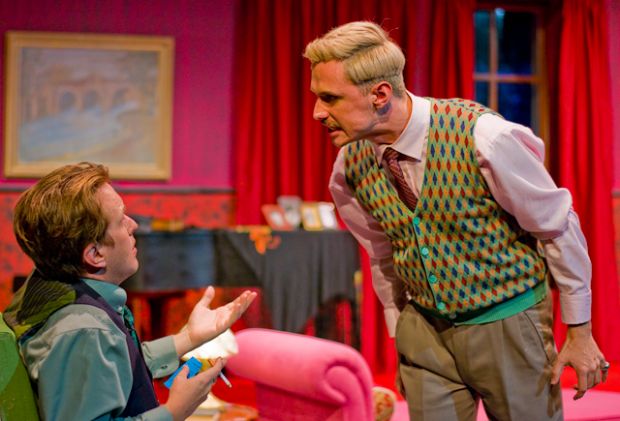
Josh Wiseman and Pippin Carroll in Rope
  1. Rope - Canberra Repertory Society, Theatre 3: This is a well-acted and well-staged production of an old-fashioned piece of theatre. Known to many due to the Alfred Hitchcock film, this interpretation still has sufficient bluffs and double bluffs to keep the audience hanging on until the end. The trope of a bored entitled elite killing someone just because they can and not acknowledging there will be consequences is well trod now (not least through Dostoevsky's Crime and Punishment or, more recently, Donna Tartt's 1990s book club favourite The Secret History), but at the time of writing (1929), the concept was original enough to be diverting. Patrick Hamilton's plays (he also wrote Gaslight) can be interpreted as stuffy and overwrought drawing-room dramas (and the opulence of the set threatens to overwhelm), but the fact that this still felt fresh is due in large part to the light but detailed direction by Ed Wightman and the flamboyantly compelling acting by Pippin Carroll in the lead role of Wyndham Brandon. Other acting is uneven and not all of the styles blend well together, but it is relatively tight at a one-act 90-mins running time.
  2. The Appleton Ladies Potato Race - Ensemble Theatre, Canberra Theatre Centre: Written by Melanie Tait, this charming, heartfelt and positively affirming play provides five great roles for women and a story that is both specific and universal. The small country town of Appleton is disturbed when returning resident and new GP Penny Anderson (Sharon Millerchip) discovers that the famous Potato Race awards $1,000 prize money to men and $200 to women. As she takes on the organisers, the competitors and the spectators she comes face to face with those who want change and those who see no problems with the way things are. Director, Priscilla Jackman teases out all the niggles, nuances, resentments and rejections as the characters try to understand and accept each other for who they really are. It's as like a fusion of Made in Dagenham with The Dressmaker served with an added side of potato puns.
  3. Hello, Is There Anybody There? - Tempo Theatre, Belconnen Community Theatre: Tempo love to have fun with their productions, and they ham up this self-aware murder mystery with great delight. Lady Amelia (Cheryl Browne) is searching for a subject for her next novel, aware that it has all been done before and there are no new murder tropes - so with many a knowing nod to the audience (the fourth wall is completely demolished), she explores them all over the space of the play, aided and abetted by her drunken sot of a sexist husband (Kim Wilson) and the farcical cop duo (Michael Ubrihien and Nikki-Lynne Hunter rocking her Scottish accent for all its inherent humour). The writing is drenched in self-deprecation and deadpan delivery, and the cast milk it like the comedy cow it is with the butler and the maid (Gary Robinson and Marian FitzGerald) joining in the murderous parlour games. It's ridiculous but it's fun.
  4. Milk - The Street, Street TheatreI believe the theatre is a forum for sharing stories; exploring the past; questioning the present; and preparing for the future. Milk does all of the above with superb staging and atmospheric sound and lighting featuring pivotal moments in liminal spaces. If this an ode to the writer (Dylan Van Der Burgh)'s daughter, she is one very lucky human. We stand with you. We pay our respects to the traditional custodians of the land on which we live.
  5. The Governor's Family - Canberra Repertory Society, Theatre 3: Plaudits to Rep for taking on this confronting work. It's not often a community theatre company with a traditionally conservative audience would program a play tackling themes of cultural appropriation, gender diversity, incest and political revolution. If it is a little packed with righteousness, that is the fault of the writing and not of the delivery. Director Tony Llewellyn-Jones has assembled a cast of considerable merit to portray the dysfunctional family of the fictional Governor of NSW, Howard Mountgarret (played with agonising guilt and torment by Peter Holland in one of his finest performances to date). Frances Pod (Kiara Tomkins) is a young indigenous woman who has been raped by a group of Irishmen. Mountgarrett takes her into his home ostensibly as a gesture of compassion, but one which is viewed with scepticism by his weary and depressed wife (Antonia Kitzel) and insurrectionist cross-dressing daughter (Caitlin Baker) and partisan interest by his poetic justice-seeking son (Robbie Haltiner). As Mountgarret has to decide how to deal with the perpetrators - brothers of the temperamental newspaper man and potential beau of his daughter (Jack Casey) - he knows his actions will have greater implications for the future of the colony, which are hammered home with a decisive lack of subtlety in the second act. Andrew Kay's versatile set is a highlight, using the potential of the revolve and the scrim to place us in different sections of society with always the suggestion of another in the periphery. The production elements add in the moments of light and shade that the script itself lacks to make this a fully challenging piece of theatre.

Thursday, 10 June 2021

Life's Nourishment: Milk by Dylan Van Den Berg

Dylan Van Den Berg, Katie Beckett and Roxanne McDonald in Milk

Milk by Dylan Van Den Berg

Directed by Ginny Savage
The Street Theatre
3 -12 June, 2021

The theatre is a forum for sharing stories; exploring the past; questioning the present; and preparing for the future. ‘Milk’ does all of the above with superb staging and atmospheric sound and lighting featuring pivotal moments in liminal spaces, directed with depth and nuance by Ginny Savage.

We are taken to a metaphysical Flinders Island off the coast of Tasmania, which is created instantly through imagery and sound (Peter Bailey) – the wind is a constant presence. The design of the rock-strewn stage (Imogen Keen) is evocative and versatile; piles of stones can be interpreted as cairns and path-markers, burial sites and weapons. Ranging in size they indicate the passage of time through erosion, and they can be put in a pocket and transplanted to another time and place.

Spanning two centuries the play tracks the conversation between three Aboriginal ancestors coming together on the verge of life-changing moments. The characters are nameless – known only as Character A, B, and C – which suggests a blending of personalities and continuation of stories. Playwright and Character C, Dylan Van Den Berg has just become a father, which has made him introspective. He wants to know where he came from and what he might be passing on to a future generation.

Character A (Roxanne McDonald) and Character C (Dylan Van Den Berg) 

He and the other characters, A (Roxanne McDonald) and B (Katie Beckett), attempt to reconcile what came before invasion and colonisation of Tasmania with what is yet to come. Roxanne McDonald (portraying an old woman from the 1840s) tells her story with honesty and heartbreaking integrity. While the horror and violence of the past is not dwelt upon, there are certainly uncomfortable scenes and a few tears were shed in the audience. A note in the programme reminds us that “a group of Palawa people, mostly women, were removed from their country and taken to the Bass Strait Islands in the early-to-mid 1800s. They were sold, bartered, and gifted as ‘wives’ to the white sealers who lived there.”

Katie Beckett plays Character C’s grandmother, although the actors are similar in age, which leads to an intimacy and shared understanding of identity. The difference is that “You’re lucky with that milky skin. You get no trouble. You get to carry it all on the inside – all the knowledge. Some of us gotta carry it on the outside for everyone to see.” Character B is a middle-aged woman from the 1960s who is attempting to find fun and explore the world through various encounters and relationships, while refusing to be confined by convention. 

Katie Beckett as Character B

Through outstanding physicality, the actors all embody greatly varying experiences and shifts of mood that are entirely convincing and utterly compelling. The costumes, also by Imogen Keen, are designed to accentuate the details of their circumstances, from the rough-looking, sturdy coverings, fashioned like a blanket, of Character A, to the impractical and uncomfortable shiny fabric worn by Character B as she prepares to go on a date and sell herself as something she is not – “I’m a natural blonde, baby… this is just a dye-job.”

They progress and move past grief, shame and self-loathing by literally picking themselves up and carrying on. Lighting by Gerry Corcoran illuminates, defines and conceals spaces in intriguing ways that create conversation. We all have blind spots in our family history, but learning about the past can inform our present and teach us to be more compassionate towards the people around us.

It is apt that Milk opened in a world premiere during Reconciliation Week. It may be a personal story about loss and survival, but it asks us all to question our heritage and to consider our relationship to the land we live on. Again, the programme notes that, “For many years it was said that the Palawa people were ‘extinct’. White history has swallowed our stories. This is just one of many.” A lot of stories and knowledge have been lost through lack of sharing, but in the words of character C, “It’s all out there. Even the stuff we think is gone. We just – have to listen. We just – have to dance.”

This play is stunning and heartfelt. It is personal and it is broader than one man’s story. It affects all of us, as it should. See it; feel it; share it. That is all.

Sunday, 30 November 2008

Coffee Culture in Italy

In a bustling café in Rimini men stand at the counter and knock back tiny cups of powerful caffeine – ristretto is ‘very short black coffee’ – shuddering as they swallow, almost as if it is a chore – so why do they do it? It costs more to sit down.

I ask for a latte and receive a glass of milk. If you ask for a caffe é latte, you also get a small jug of coffee (a shot of double strength coffee – not espresso) which you add to your milk and watch the colours and flavours mingle. These are generally only drunk at breakfast and made in the privacy of your own home (and certainly without froth).

They are akin to the French café au lait, and what Americans call a latte would be considered an abomination on the continent. US lattes were first made in Berkeley in America and are basically a cappuccino with extra milk added. What they call a latte; New Zealander’s call a flat white. This is all getting confusing.

But don’t worry, because you can only drink milky coffee in the mornings unless you are uncouth or a tourist – which seems to amount to the same thing. Otherwise you have an espresso, or an espresso doppio (a double espresso) or a caffe Americano which is an espresso served with a jug of hot water so you can make your own – they can’t bring themselves to adulterate the coffee in this way. New Zealanders call that a long black.

Italians are also known to drink moccaccino (which is a third of espresso with two thirds of steamed milk mixed with chocolate), caffe macchiato (espresso ‘stained/marked’ with a dash of milk) or latte macchiato (vice-versa; i.e. milk ‘stained’ with a dash of espresso). They do not drink triple Venti nonfat decafe latte white chocolate blended mocha frappucino whip. Without froth.

They do get a bit weird though with the old espresso confuso, which is a sort of coffee desert – espresso mixed with a chocolate gelato. Very confuso indeed. And the freddoccino is a cold (freddo) cappuccino. I’m not sure if they make these specially or just leave them lying around until they get cold. My mum’s good at that. I bet they don’t then put them in the microwave and forget about them though.


My very favourite is the caffe corretto, which is a shot of espresso, 'corrected' with a shot of grappa. Wow! That's enough to blow your socks off. We were walking in the snow in Dolomites for four hours and stumbled back off the mountain to a cutesy cafe by a lake when we discovered these. I could have done the walk all over again. Well, maybe not, but for about ten minutes I thought I could. Mind you, I thought I could leap tall buildings in a single bound. I was wrong.