Showing posts with label bushranger. Show all posts

Wednesday, 19 October 2022

With a Pinch of Salt


I've been thinking about my post last week, and what an incongruity there is between the epergne that was awarded to the Campbells, and the bushrangers who attacked them in their home. I am often inspired by the authors I read and I am currently reading both 1788: Comprising of A Narrative of the Expedition to Botany Bay and A Complete Account of the Settlement at Port Jackson by Watkin Tench, and Diary of a Somebody by Brian Bilston. 

While describing the behaviour of the convicts in Port Jackson, Tench lamented that they were punished for stealing food. Rations were systematically reduced as food was scarce, but the convicts still had to toil for long hours in high temperatures "without adequate refreshment." Those who stole food were frequently flogged and chained together. Tench decries, 
"The first step in every community which wishes to preserve honesty should be to set the people above want. The throes of hunger will ever prove too powerful for integrity to withstand."

This is as true now as it was in 1788, or in 1864 when the bushrangers stole from the landowners. And it seems trenchantly symbolic that the victims were awarded an ornament designed for displaying and sharing condiments in turn created to enhance and complement fancy food. With this and the pithy wit of Brian Bilston 'the poet laureate of Twitter' in mind, I crafted the following (with apologies to both).

You were always keen as mustard,
To spice things up,
Not to curry favour
But to rub salt in the wounds.
So you got us all in a pickle
Then sat back gingerly
All big cheese and toffee-nosed,
As though butter wouldn't melt.  

Thursday, 13 October 2022

The Campbell Epergne

When I visited the Orange Regional Museum a couple of years ago, I was struck by this decorative table piece (not literally - it was displayed behind glass). I read that the national Cultural Heritage Account had assisted the museum with the purchase of this item to the tune of $90,000. I thought that was a fair whack for a candlestick, so I read all the information about it - turns out it is quite the icon, so here are the facts, as presented by the museum.

"This sterling silver epergne was presented to David and Amelia Campbell of Goimbla, Eugowra in 1864 by residents of the district to mark their respect and admiration for her role in defending her family's property. The gift was in recognition of the heroism shown by Mrs Campbell and her husband in resisting an attack on their property Goimbla by Ben Hall, Johnny Gilbert, and John O'Meally. The bushrangers attacked the property and set the Campbell's barn and stables on fire. O'Meally was killed in the attack.

The epergne is a decorative table centrepiece which stands 72cm high and was made in London in 1862 by Thomas Smily. The epergne was purchased from Hardy Brothers Sydney for £150 with funds raised by community subscriptions. Modelled in a rococo revival style, the epergne has a tri-form base with leaf feet, scrolls and beading, rising to a naturalistic trunk with six scrolling arms, three with candle fittings and three supporting loop-handled baskets with a centre basket. The entire epergne is ornately decorated with vines and grapes.

Although the inscription is to both David and Amelia Campbell, contemporary accounts of the presentation event describe Mr Campbell being given a gold watch, now in the State Library of NSW, while the epergne was a gift to Mrs Campbell along with a silver-plated coffee urn inscribed by the ladies of Upper and Middle Adelong, and a printed silk address signed by 92 male residents of Forbes and District. The presentation of these lavish gifts was made at Goimbla in October 1864.

David and Amelia Campbell (taken from a lantern slide: National Museum of Australia)

Approximately 16 gold and silver bushranger medals were presented to police and members of the public to mark their heroism during encounters with bushrangers. This is the only presentation-epergne associated with bushranger attacks and the only presentation made to a woman. Its delicacy of design and execution has a particularly feminine character. 

Amelia Campbell was lauded as a 'daughter of Australia - a lady brought up and educated in Sydney who did not flinch under gunfire.'

Her heroism is emblematic of the often-overlooked dangers of many women living on lonely farms in regional Australia. Sadly, other women who stood their ground and fended off attacks by bushrangers received little public recognition. This epergne represents an important aspect of Australian colonial history and is one of the most notable and significant items of nineteenth-century Australian women's history."


From the 1840s attacks by bushrangers and acts of resistance prompted public recognition in the form of testimonial gifts. In addition to cash gifts as compensation for property losses, presentation items included watches, gold medals, firearms, and written testimonials. 

The attack on Goimbla and Mrs Campbell's courage in particular marked a turning point in public sentiment towards the Ben Hall gang, who had until then received covert support from some settlers through the exchange of horses and food. The bushrangers' decision to shoot at Amelia Campbell was likely a major factor in undermining whatever trust or passive support existed for the gang. 

In 1865 the Felons Apprehension Act effectively declared bushrangers outlaws and shortly afterwards Ben Hall was shot dead. 

Ben Hall 
As for Amelia Campbell, she died in childbirth at the age of 34 along with one of the twins she had given birth to. The notes in the museum record that 'The other twin lived only for a few months. This followed her losing a son at ten years of age. This was a very sad end for a very heroic woman.'

I feel this is the purpose of museums: to tell stories through objects and relate the history of past events to the current perception of the society.

Sunday, 3 May 2020

What is Truth? - True History of the Kelly Gang


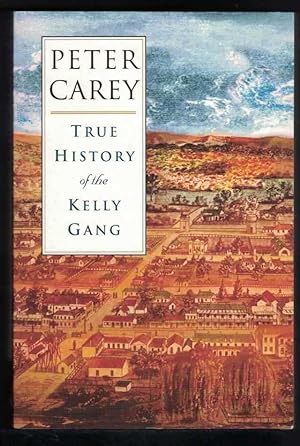
True History of the Kelly Gang by Peter Carey
University of Queensland Press
Pp. 400

Peter Carey is often touted as Australia’s literary representative, so his take on one of its biggest questionable icons is bound to be interesting and exciting. The book purports to be written by Ned Kelly in thirteen parcels of stained and dog-eared papers, and it includes excerpts from newspapers and transcripts of conversations. Towards the end of the novel, the printer, Thomas Curnow, purportedly says, “What is it about us Australians, eh? What is wrong with us? Do we not have a Jefferson? A Disraeli? Might not we find someone better to admire than a horse-thief and a murderer? Must we always make such an embarrassing spectacle of ourselves?” This is the question which Carey address in his ‘true’ history.

The beginning contains accounts of Ned’s upbringing, schooling, interactions with the police, his father’s brutality (beatings with the belt and drunken rages), and his mother’s (Ellen) subsequent suitors, one of whom is Bill Frost (whom Ned later shoots. Life was hard and brutal with death and violence all around. His uncle tried to burn their house down after being rejected by Ellen, and he was sentenced to hang. Ned was a Catholic amongst mainly Protestants; the family was poor and anti-establishment so they were picked upon and bullied in “a district of English snobs”.

It is written in a sort of vernacular, but the narrator is very erudite and falsely descriptive. There is no swearing; ‘bastards’ is redacted and other words are substituted with “adjectival”. His use of metaphor is rich and, while the structure is unrealistic for a poorly educated farm boy, the vocabulary is credible. “The memory of the policeman’s words lay inside me like the egg of a liver fluke and while I went about my growing up this slander wormed deeper and deeper into my heart and there grew fat.” His similes enrich the novel and raise it above the monotonous account it might otherwise have been, and he employs pathetic fallacy in a way that would make Thomas Hardy proud.


Peter Carey paints Ned as a rural lad who wants nothing more than to support his family, farm the land and breed horses, but his plans are thwarted by perceived persecution and his mother’s men. The nature of the relationship between Ned and his mother, Ellen, has long been a topic of historical debate. Ned is the oldest son with a primitive love for his family and a macho need to protect them. He cares for the family, although he doesn’t notice that his sister has grown into a young woman, and he is mainly concerned for his mother, rushing to defend her and fighting over her reputation. 

He loves his mother – some say to an unseemly extent – although she sells him into apprenticeship with Harry Power, and seeks out the company of other men. Ned takes up with Mary Hearn, in a supposedly touching but very plain fashion, and introduces her to his mother although he claims not to know that his mother and his girlfriend share a lover (George King) who has made both of them pregnant.


Mary Hearn pleads for Ned to leave Australia with her and their child for their safety, but obviously he doesn’t. Her lines are very similar to those spoken by Etta Place in the film, Butch Cassidy and the Sundance Kid, suggesting a very limited view of roles for women in stories of legend. Ellen, however, has a rebellious spirit (the spade is her favoured weapon), and she tells stories of the Irish legends, heroes and great women.

Ned holds some belief in fairy stories of banshees, curses and bad luck, but also understands the realities and corruption of the world. The police slander his family; he is angry and hungry and carries within “that flame the government of England lights in a poor man’s guts every time they make him wear the convicts irons.” He dislikes talk of colonials not being able to farm properly, and despite his Irish heritage, he considers himself Australian. In Peter Carey’s telling, he becomes one of the original founders, and claims he and his ilk were formed by the harsh treatment they received.
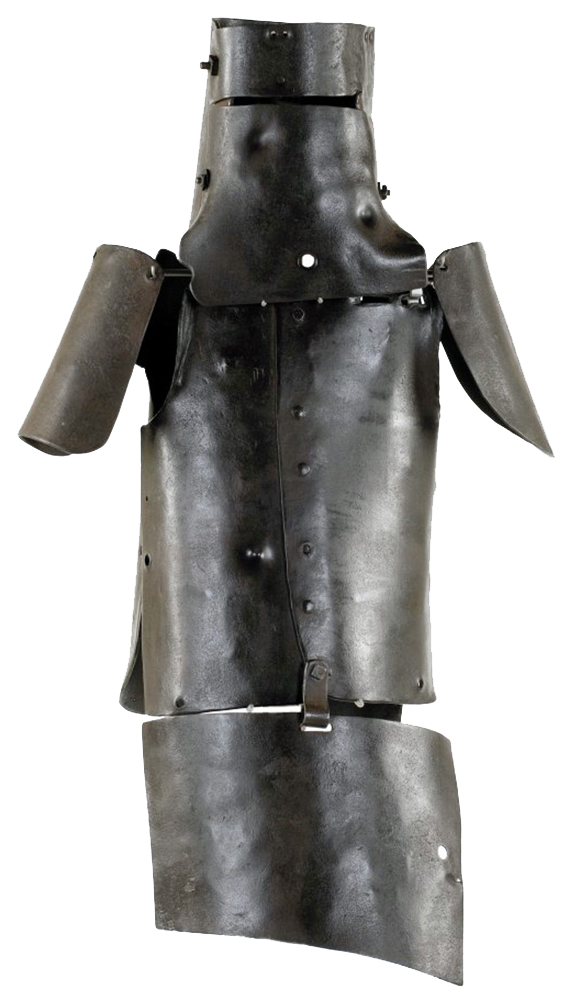

Carey includes all the details of the legend in his ‘history’. He mentions the undertakers, leather cords specifically created for the purpose of binding a body to horseback, which were used as evidence that the policemen had come to the Kelly gang with the intention of killing them. He also devotes pages to the creation of the iconic suits of ‘armour’. In 1879 Ned Kelly dictated an 8,000 word manifesto to Joe Byrne, known as the Jerilderie Letter, in which he tried to justify his crimes. Intended for publication, it was instead handed in to the police. Carey questions the making of the legend – was Kelly seeking fame, justice or acknowledgement? There is a great legend woven around Ned Kelly, and although Peter Carey suggests he will clarify it with his ‘true history’, he gleefully obfuscates even further.