Showing posts with label myth. Show all posts

Friday, 22 October 2021

Friday Five: Halloween Cross-Stitch

It does feel very odd to me that the seasons are back to front here and certain festivals occur at the 'wrong' time of the year. Halloween falls between Harvest Festival and Guy Fawkes Night. It occurs as the nights begin to draw in and there are more shadows and misty corners in which things can lurk and our fears and anxieties can grow if left unattended. To me it is tied to the Gaelic festival of Samhain, which marks the end of the harvest season and the beginning of winter or the 'darker-half' of the year. 

As with many things the ancient pagan, mythical, religious roots have largely been consumed by consumerism and capitalism. I dislike that intensely. I do, however, like the idea of making the connections with the liminal world more comforting and less frightening. To this end, I have enjoyed stitching these designs. 

5 Halloween Cross Stich Designs:

Wednesday, 13 January 2021

You'll do girl, you'll do: Finding Baba Yaga


Finding Baba Yaga by Jane Yolen
Tom Doherty Associates
Pp. 131

This contemporary retelling of an iconic myth is written entirely in blank verse. It is reminiscent of the artful design of a Russian Matryoshka nesting dolls, as elements of Slavic myth, Russian folklore and fairy tales cleverly fit among the contours of American realism. It also explores a number of themes including the nature and power of language, the journey from childhood to adulthood, the relationship between religion and language, ‘good’ and ‘bad’ words, the unique dynamic of female friendships and the mother/daughter relationship. Yolen begins her tale, “You think you know this story. / You do not.”

Teenaged Natasha lives with her parents, and knows she must get away from them and their constant fighting. Ever since her father has discovered religion, it has become worse as he monitors her language and behaviour. She runs away into the forest but, although the woods, stones and water are a recurring fairy tale image or reference, this is not the one familiar from storybooks and the settings are slightly skewed; “The forest opens like a yawn,/ as if it knew I was coming,/ has seen me before,/ can’t be bothered to resist.” We recognise the motifs of the lost child in the woods, but Yolen suggests there is more to the story if we look, listen, and abandon our preconceptions. At the end of Chapter Two, The Runaway, in This Is Not a Fairy Tale she writes, “Expect no princes./ Expect no magic rings./ Expect no glass slippers./ Expect no fairy godmothers. / Expect no singing dwarfs. / Expect no talking dragons. / Expect only/ seven deadlies delivered:/ exhaustion,/ boredom,/ regret,/ hunger,/ anger,/ danger,/ death./ All part of God’s taketh away.”

And then she encounters Baba Yaga, with all of her traditional traits. She lives in a house which turns about on its chicken legs: “It is like living on a house boat:/ the swell of the waves, the turn of the tides,/ a moment of emotion, with the ‘e’ removed.” She is a tough old woman with an iron nose, and the contemporary references to strong women are apparent; “She’s tougher than Clinton or Thatcher ever were.” This clash of realism and magical imagery continues as she explains how Baba Yaga flies through the sky in her mortar, guided by her pestle, but no one see her “unless you count bad dreams”. She flies “across tundra, taiga, major highways,/ avoiding traffic jams, roundabouts,/ only bothering the occasional helicopter/ or low-flying private planes.”

Natasha learns to tell her story, and that “A story is, not always means.” It may be grim – “I think I know now/ there are no happy evers./ Only happy moments.” – but she grows as a narrator, examining the meanings of words and exploring postmodernism through form and structure, drawing attention to the artifice of the narrative. “I am becoming a poet./ I am thinking in metaphors./ I am walking through a poem.”

As Natasha rewrites the myth with herself as the hero of her own story, she discovers that “Stories retold are stories remade.” After all, if we believe critical analysis, there are only seven stories anyway, so we need to refresh them every now and then. In searching for (and finding) Baba Yaga, Natasha is really on a quest to discover her own inner vice, strength and truth. By the end of the book she states, “So, this is a tale/ both old and new,/ borrowed, narrowed,/ broadened, deepened,/ rethreaded, rewoven,/ stitches uneven,/ re-plastered, re-harled, rehearsed, reworked/ until it’s my own.” It is familiar and unique. It is brilliant.

Monday, 14 December 2020

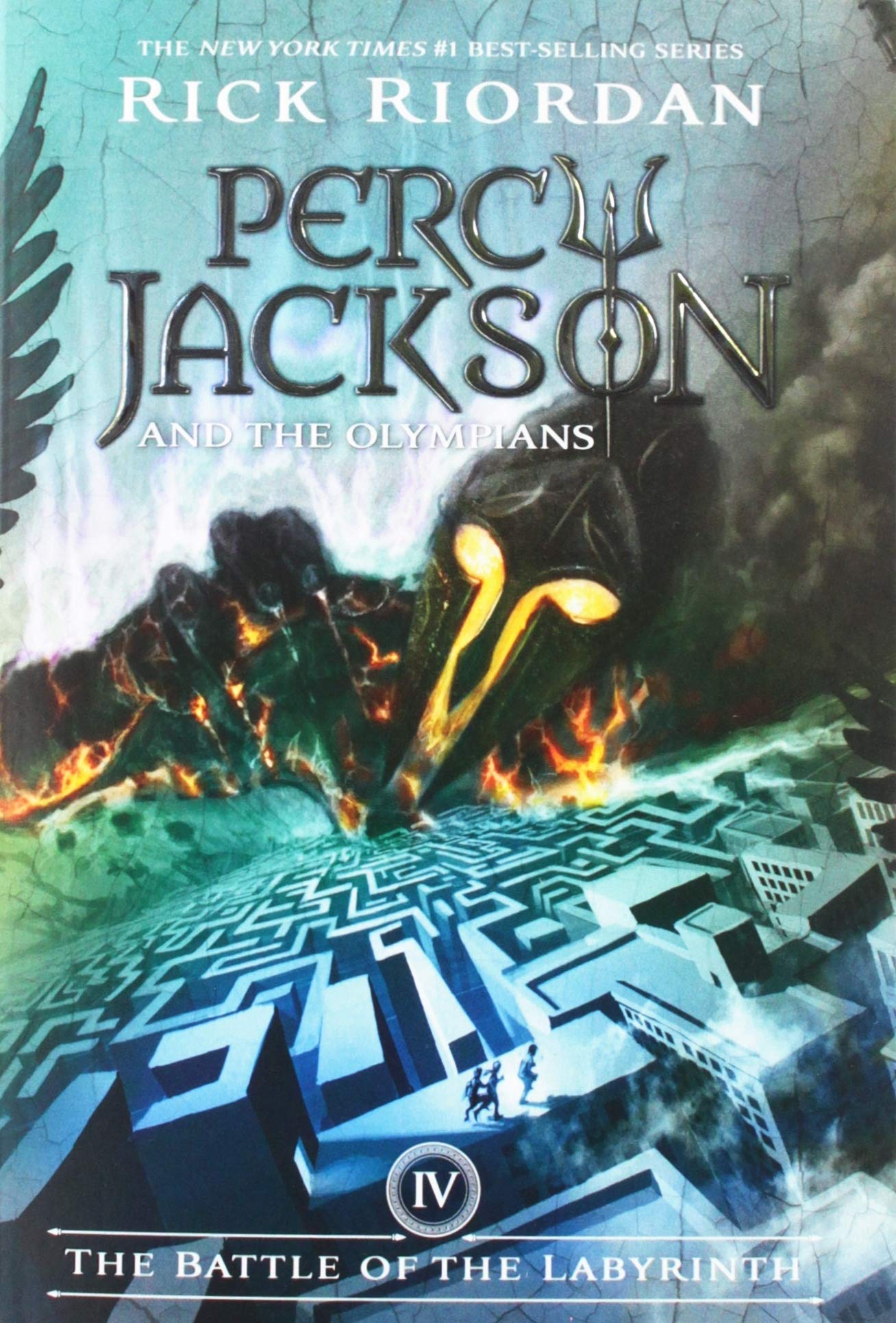
There is no Planet B: The Battle of the Labyrinth


The Battle of the Labyrinth by Rick Riordan
Disney Hyperion
Pp. 361

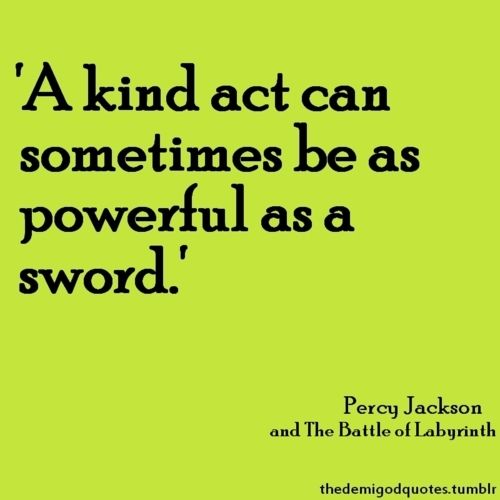
In this fourth instalment in the Percy Jackson and the Olympians series, Percy and his companions embark on quest through the Labyrinth, a terrifying place created by Daedalus, which exists in another dimension. Like its predecessors, the novel is an entertaining introduction to the world of Greek mythology, featuring gods, heroes, monsters, half-bloods and mortals There are great action scene set pieces, and an underpinning ecological message that keeps the pace varied and adds a touch of depth to the adventures.

We meet many gods, who mostly fight each other: the Olympians are in perpetual conflict with the Titans, ruled by Kronos who is gathering his forces in secret. The gods with their games and their prophecies are fickle and deceptive. Thy are omnipotent, yet they fight against the heroes and half-bloods with their magical assistants. For example, Quitus has a large and terrifying hellhound called Mrs O’Leary who can kill and chews on a life-size squeaky pink rubber yak. There are magical swords, invisibility caps, and charmed whistles, but we learn that humans’ knowledge can help as much as (if not more than) magic.

In a gameshow sequence Annabeth has to answer the sphinx’s riddle: she thinks she knows it (the one about the ages of man), but it has been changed because everyone knows that one by now. “Canned applause blasted from the ceiling, as if there were invisible loud speakers. Spotlights swept across the room and reflected off the dais, throwing disco glitter over the skeletons on the floor.” The pop-culture meets horror story aesthetic is very similar to a Stephen King novel.

The satirical style is maintained throughout to counteract the hyperbolic escapades, and Riordan makes great use of the deadpan approach (pun intended), such as when he introduces the idea of Grover searching for Pan, god of the wild. It is Grover’s mission to find Pan, and if he fails, his life means nothing. “I’d never heard him sound so confident about anything, except maybe that cheese enchiladas were better than chicken enchiladas.” Pan’s wilderness is being destroyed by humans and development. Gods can’t die, but they can fade, as Pan tells Grover, “when everything they stood for is gone. When they cease to have power, and their sacred places disappear. The wild is so small now, so shattered, that no god can save it. My realm is gone.” 

The remaining humans must work together for salvation. The name, Pan, originally meant rustic, but over the years it has come to mean all. “The spirit of the wild must pass to all of you now. You must tell each one you meet: if you would find Pan, take up Pan’s spirit. Remake the wild, a little at a time, each in your own corner of the world. You cannot wait for anyone else, even a god, to do that for you.” The environmental message is strong, suggesting that life (both of people and the planet) is fragile and that we should take more care of it. Hephaestus bemoans, “People are more difficult to work with than machines. And when you break a person, he can’t be fixed.”

Percy Jackson was hailed as the new Harry Potter, and there are many similarities with J.K. Rowling’s wizard world. Percy is different; he has ADHD, which means he can’t sit still and he blurts things out – perhaps this is also an excuse for antisocial behaviour? His dreams threaten to torment him, as did Harry’s. He goes to camp every summer, fights to protect his friends, starts having human hormones, learns to accept difference, and deals with monsters and magic that ‘normal’ humans can’t see. Camp Half-Blood is very dangerous and people die there; each year there is a quest, and everyone wants one so that they can prove themselves. Rachel asks Percy, not unreasonably, “So you do this every summer? Fight monsters? Save the world? Don’t you ever get to do just, you know, normal stuff?”

There are five novels in this series and it is all building to the final show-down. After all, that’s how fantasy always ends; not with a whimper, but with a big bang.


Sunday, 26 July 2020

All Things Come to Those Who Wait: The Penelopiad


The Penelopiad
 by Margaret Atwood
Canongate
Pp. 196

Margaret Atwood’s Penelopiad is part of The Myths series (other authors include Chinua Achebe, A.S. Byatt, Alexander McCall Smith, Ali Smith, and Jeanette Winterson) which offer alternate approaches to the tales we think we know. This novella is a companion piece to Homer’s Odyssey, providing a female-forward counter-narrative to the story of Odysseus’s quest with his heroic journey and the intervention of the Gods in the lives of mortals. Myths are universal and timeless stories that reflect and shape our lives, and Margaret Atwood provides sardonic asides and a contemporary characterisation of the woman left behind.

Penelope’s experience of remaining, running the estate and defending herself from suitors has always seemed the more interesting part of the story (in the way same way as it was in Cold Mountain) but the focus is usually on the male counterpart and his fantastic adventures. Penelope addresses the reader directly, with a wonderfully clear voice and deadpan delivery, as she wants to set the record straight and present us with her side of the story. She has fought hard for the right to speak, as she sets out from the striking first lines: “Now that I’m dead I know everything. This is what I wished would happen, but like so many of my wishes it failed to come true. I know only a few factoids that I didn’t know before. Death is much too high a price to pay for the satisfaction of curiosity, needless to say.”

She begins with her birth, and the disappointment of realising that her mother, a Naiad, doesn’t really care for her, and her father, fearing a prophecy, throws her into the sea not expecting her to survive. She is understandably bitter: “It never hurts to be of semi-divine birth. Or it never hurts immediately.” She proceeds to write about her marriage to Odysseus and consequent move to his home in Ithaca. Odysseus leaves to fight a war, brought about by Paris of Troy who ‘steals’ Helen from Menelaus. Women are chattels; pawns in men’s battles. Penelope is abandoned for years without protection and with a troublesome son, Telemachus, who doesn’t seem to understand her compromised position or to offer to help her in any way. She weaves a shroud that she unravels at night, delaying her marriage decision until its completion, using the only weapons available to her; cunning and an aptitude for craft. Finally, when Odysseus returns, he and Telemachus slaughter the suitors and hang twelve of Penelope’s closest maids, who have been sleeping with them. The reason for this is never really explained, allowing Atwood free rein with her interpretation of events.

Penelope and her Suitors by John William Waterhouse

Atwood explains in the introduction, that she has recreated the hanged maids as “a chanting and singing Chorus which focuses on two questions that must pose themselves after any close reading of The Odyssey; what led to the hanging of the maids, and what was Penelope really up to?” The Chorus that the maids form provides commentary and diversion as was archetypal in Greek theatre, interpreting the action through song ranging from rap and sea shanties to light operetta and skipping rhymes, which are typically topical: “we are the maids/ the ones you killed/ the ones you failed / we danced in air/ our bare feet twitched/ it was not fair.”

If there is one thing more interesting than the story, it is in the telling of it, and here Atwood aligns with and diverges from the traditional Greek structure like a twisting river. She incorporates the gods and their intervention in human lives, but she is critical of their motives. She plays with the concept of Homeric epithets and constant repetition: hell is gloomy; death is dark; Odysseus is wily; Penelope is faithful; Helen is beautiful; everybody weeps. Penelope is also aware of the injustice of simple labels, and declares that she wants to flesh out her character, and to defend herself from the one-dimensional moral paragon which has been foisted upon her.

Penelope by Leandro Bassano

Penelope hears accounts of Odysseus’ adventures from the poems and the songs of the minstrels, who embroider the facts to please her. In the art of storytelling, there are different versions, and Odysseus fabricates as much as anyone on his return. “He was always so plausible. Many people have believed that his version of events was the true one, give or take a few murders, a few beautiful seductresses, a few one-eyed monsters. Even I believed him, from time to time.” As with the wonderful Life of Pi, if the outcome is the same does the ‘truth’ matter, or does it all come down to personal preference? Stories were told in the past to help explain events; they are used in the present to conceal and obfuscate.

The chorus of maids delivers an anthropology lecture at the end; a device Margaret Atwood has used in both The Handmaid’s Tale and The Testaments. It makes the stories more scholarly and academic, tying together the interpretations and connections, such as the returning king motif and the overthrow of a matrilineal moon cult.

In Margaret Atwood’s version, Penelope is a suitable match for Odysseus. She knows all about his cunning and tricks. “I knew he was tricky and a liar, I just didn’t think he would play his tricks and try out his lies on me. Hadn’t I been faithful? Hadn’t I waited, and waited, and waited despite the temptation – almost the compulsion – to do otherwise?” As Atwood explained in an interview when the book was published in 2005, “There are two ways of fending things off it you don’t want them to happen. One is by force – which is not available to her. The other is by guile. So she has to use guile. And that is also Odysseus’s big stock-in-trade. When in doubt, lie. But lie well.” As this is a reinterpretation of a myth and there is no standard truth, it is impossible to say that Margaret Atwood has lied. But she has re-invented. And she has done it very well indeed.
Penelope by Dante Gabriel Rossetti

Tuesday, 24 March 2020

COVID-19: Dreaming is Free


Stories are my saviour. Whether told on the page, stage, screen (large or small) or radio, they inspire, enlighten, challenge and comfort me. It may not be the best idea to be watching World on Fire at the moment, but last night we watched the final episode of the first series. The series is set during the Second World War in France, Germany, Poland and the U.K. and it follows several families and characters from 1939-1940. It's tough to watch at times (and there seem to be a few anachronisms in terms of speech and accent), but it is well acted and sufficiently tense and dramatic to keep me involved.

I am tempted to see parallels with our current global situation, and slightly reassured that I 'mustn't grumble: things could be worse'. No one is shooting at me, or trying to bomb me, or threatening to hang me because I am the 'wrong' race, colour, ability, sexuality or political persuasion. Not yet, anyway: I don't live in America - cheap jibe, sorry. But there is a preponderance of panic buying, propaganda, misinformation, uncertainty and an extremely rapid pace of change. Life (and death) goes on in altered circumstances; people still get born; get married; fall in love; fall out... not necessarily in that order. And like World War II, those in the midst of it have no idea of when and how it will finish. Trust me, I've just seen the last episode of World on Fire and there is no satisfying sense of closure - sorry if that's a spoiler.

Our COVID-19 situation also sees leadership, and the lack thereof. Boris has been chewing his way through speeches by Churchill and Plato and now emerges blinking from his shabby chrysalis as a somewhat unlikely statesman; Prince-Hal-like, the foppish fool has sobered up to face the future. Jacinda is calm and firm; just and fair, dealing with a hideous situation with sense and sensibility. Scotty is floundering about like a lumpfish in shallow water but out of its depth. Make some decisions; be bold and resolute; lead!

In Australia we are told that schools are 'pupil-free' but they remain open and no one is turned away. We are told that only essential services should remain open - yet many businesses have not been made to close, so people are still heading to the office, hoping for a gold star from the boss. We are not allowed to gather so theatres, cinemas, gyms, pubs, clubs and restaurants have been closed. Art galleries and museums are choosing to close. There is no statewide ban on beaches, although people are 'advised not go' - yep, we've all seen how well people are following those guidelines.

Hairdressers and beauty salons are still open - it's important to look good in your coffin, apparently - but no one will be there to see you. Churches and places of worship are closed except to very small gatherings; weddings and funerals are not allowed indoors except in small groups observing the one person per four square metres rule. I am a sporadic church-goer; my places of worship are hills and woods and the great outdoors. I worship a mixture of myth and religion - I would like to believe in a golden thread that we can follow out of this darkness into the light once more.

I do usually go to church at Christmas, Easter, and Whitsun, however: they are the significant touchstones of my faith. This year, I will not be attending live services, but I will be commemorating the occasion in my way. Many people are suggesting ways to occupy their time in isolation (although Australia has not moved to this yet, and people are still congregating in entirely unnecessary groups); one of my pass-times is cross-stitch. I have been stitching little Easter designs of baskets and bunny rabbits, surrounded by eggs and flowers.

All this is probably what informed my dream last night in which I was trying to stitch together a Polish fabric that had been destroyed by Germany. It was my duty to reconnect the border by unpicking the existing stitches and working them back into an unbroken line with a golden thread. I believe our dreams are important - not in a Freudian way, but because they are a coping mechanism in which the brain shuffles events and tries to impart some meaning. My bible is the bard, and I find words to fit every event in his plays and poetry. And so it is with dreams, which come to us in sleep:
"Sleep that knits up the ravell'd sleave of care,
The death of each day's life, sore labour's bath,
Balm of hurt minds, great nature's second course,
Chief nourisher in life's feast."
I know I have employed that quote before (it's one of my favourite, from one of my favourite plays), so here's something else that's been on my mind.


Wednesday, 21 October 2015

How can you be sure: The Invisible Gorilla


The Invisible Gorilla and Other Ways Our Intuition Deceives Us by Christopher Chabris and Daniel Simons
Harper
Pp. 242

If you were watching a basketball game on television and a person walked onto the court in a gorilla suit, you’d notice, wouldn’t you? Even if you were concentrating on counting the number of passes executed by one of the teams? Apparently not. In a now-famous survey conducted in 1999 by Christopher Chabris and Daniel Simons, half of the subjects didn’t ‘see’ the gorilla, although 75% swore they would have seen it if it had been there. The fact that it was, and they didn’t, has led the two experimenters to investigate the human limits of concentration and assumption of knowledge and ability.

It’s not good news for anyone who talks on a mobile phone (hands free or otherwise) while driving. We only have a limited amount of attention, and if we split its focus, then we are not able to perform either task to full competence.

The book is subtitled ‘And other ways our intuition deceives us’, and these ways are many and varied. Generally we think we are smarter than we are, and the less ability we have, the more confidence we have in it. This illusion of confidence extends to others, as we are more likely to trust someone who expresses absolute certainty, than one who consults their colleagues and considers their opinion. 

This illusion of confidence ties in to the illusion of knowledge, by which we think we know more about a subject than we do. We understand many things on a superficial level, but not at greater depth, because we don’t have to. We may all think we know how a bicycle, a zipper or a toilet works, and this comprehension carries us through life quite adequately. But do we really know how such things operate? Try explaining it in detail and, unless you have had to fix one, you will probably soon come unstuck.

We are also under the illusion that technology is all-powerful. This is evident in examples of people blindly following sat-nav directions until they end up hundreds of miles from where they intended, or in the sea. “Technology can help us to overcome the limits on our abilities, but only if we recognise that any technological aid will have limits too. If we misunderstand the limits of the technology, these aids can actually make us less likely to notice what is around us.”

Part of this confidence trick is the use of ‘neurobabble’, in which scientific terminology is used to lend dubious theories the ring of authenticity. We have long been seduced by talk of the brain’s functioning power, and the myth that we only use 10% of its capacity is commanding. There is a widely-held belief that listening to Mozart makes us more intelligent, and although we like to think we could get smarter by doing nothing, there is no scientific basis for this illusion of potential.

And then there is the illusion of causality: people tend to find the link that suits them, even if there were other factors which have a more influential bearing on the incident, hence conspiracy theories. Because we can relate to the personal rather than the general, we are far more likely to believe an isolated anecdote from a person we know than banks of statistics.

The Invisible Gorilla suggests that we are constantly being duped – often by ourselves – and asks us to question our emotional responses. It’s not so much that everything we know is wrong, as that we don’t know nearly as much as we think we do.