Showing posts with label trees. Show all posts

Wednesday, 1 July 2020

My Newest Favourite Thing: Cook Park

One weekend in Orange, about a year ago, I had a day to myself, so I went to an art gallery and a museum, as you do, and then I went to the local park to read my book and smell the flowers. I thought it was a beautiful park and it was bursting with the sights of early autumn. Australia is beautiful, but the eucalpyts can sometimes be a little monochrome, so I revelled in the bright hues and varied colours.

The 4.5 hectare parkland is named after Captain James Cook and was originally laid out in a traditional Victorian design in 1873, with straight paths and rows of trees. Much of the original design is still in place, and the trees include elms, oaks, lindens, poplars, redwoods, cypress and ash.


There are bats or flying foxes in the trees, and apparently they aren't popular with everybody

The 1908 Bandstand
The cast iron James Dalton fountain was donated in 1981 by a prominent Orange townsman (as in, a townsman from Orange; not Donald Trump) and wealthy merchant. It features three storks, a fern frond decoration and four boys with urns standing on a plinth embossed with acanthus.

The James Dalton Fountain


There's an 'ornamental lake' (duck pond) complete with tortoises, and picnic tables and play areas.


I've always liked a glass house, probably because they remind me of when my mum used to take me to Kew Gardens to look at the tropical plants. The Blowes Conservatory in Cook Park features lots of bright and beautiful begonias. Signs tell me they are highly regarded and award winning. I think they're pretty.

The Blowes Conservatory

The Bastick Cottage is named after father and son who served the park as curators and lived in the Victorian-style heritage building until 1970. It is now used as a craft shop where visitors can buy handcrafted goods including pottery, knitting, woodwork and homemade jams. 

Bastick Cottage


Times change, obviously, and it is unlikely that anyone would be fined five pounds for riding or driving a motor cycle or a bicycle in this park today. Since I visited about a year ago, there is probably a petition to have it renamed, as the reverence for things considered colonial has come up for heated debate. As it stood, however, the name on the gateposts was proudly picked out in fresh paint. Who knows how long this relic will remain.

Wednesday, 3 May 2017

To every thing there is a season

Mr Wigg by Inga Simpson
(Hachette) Pp. 292


Mr Wigg is a widow who potters about his orchard, preserving fruit, listening to cricket, mourning his wife, telling stories to and cooking with his grandchildren, and watching as his new neighbours plant vines on the old farm land. The tagline is, “A novel that celebrates the small things in life”, and there is a gentle feel to the prose as it follows the seasons with planting, pruning, harvesting and preserving. This is deceptive, however, as there are spectres looming at the edges of progress and destruction; Vietnam and family rifts; ageing and loss.

Mr Wigg sees his fruit trees as personalities and imagines that they talk to each other with personalities and petty jealousies. The orchard encapsulates all his memories and aspirations. Inga Simpson writes of the different fruit like a poetic greengrocer, but always in Mr Wigg’s words, conjuring them and their stories from the air and the soil. Who knew that the provenance of these common fruits would be interesting? It is, because Mr Wigg remains in awe of the fruits he grows, engaging the reader with his ruminating non-didactic style.

Fruit isn’t always sweet, and neither, for all its bucolic images of collecting eggs, pruning fruit trees and chopping wood, is farming. Mr Wigg’s son frequently visits him to remind him of the things he can no longer do with his Parkinson’s and forgetfulness. Mr Wigg used to help the blacksmith and now has his tools; making things in his shed with the honest labour of the land. He invents a fruit-drying machine, but when he attempts to build one from his sketches, he has an accident with the bench saw. He fights against modernisation because he enjoys the old ways; why should he use time-saving devices when he doesn’t know what to do with his extra time?

His attitudes are also archaic, and it is his inherent sexism which caused a family schism. It never occurred to him to interest his daughter in the running of the farm; always assuming his son would take over. When he gives the farm to his son and nothing to his daughter, she is understandably upset, and lawyers become involved.

His late wife dominates his thoughts, as one would expect. Their relationship was full of love but not without irritation. He captures the momentous (such as family conflict and illness) along with the mundane: “His wife had buttoned his shirt cuffs for him even before the Parkinson’s came on. His dress shirts, in particular, had such tiny buttonholes.” He initially struggles with the pointlessness of existence without her, but he comes to realise that, “Life had a way of going on whether you were interested or not, and then you found yourself taking pleasure in a few small things, and a few more.”

Future generations provide continuity, and his happiest moments are with his grandchildren, cooking and telling stories. “Not everything that is new is better”; but not everything that is new is bad, either.

Friday, 20 December 2013

Friday Five: Nativity Plays


One of our Christmas traditions (well, we've done it twice, which makes it a tradition, surely) is to watch Love Actually on Christmas Eve. I'm looking forward to it again this year. Generally we are all boozed and emotional so we shed tears and sniffle through the 'You've also made a fool out of me and you've made the life I lead foolish too' bit, while laughing at the dancing around No 10 in socks bit.

I'm always bamboozled by the fact there is an octopus and a lobster in the nativity play, but fair enough I suppose. We never had anything as random in our nativity plays, but I went to a fairly conservative C of E school. Do schools even still perform nativity plays in England or is that considered too separatist?

5 Characters I have played at school nativities:
  1. A tree - it was a cedar tree, which is associated with healing, cleansing and protection. One of the Psalms (92, if you're interested) mentions that 'the righteous shall grow like a cedar in Lebanon'. The cedar tree is named from the Sanskrit word, 'devdar' meaning 'timber of the gods'. Junipers are also a form of cedar, and they give us gin, for which we are truly grateful. No doubt my six-year-old self interpreted all this through arboreal embodiment, thus negating the need to ever go to drama school.
  2. A shepherd - I got to carry Lamby onto stage, and on our heads we wore tea-towels, which we held in place with rubber quoits from the gym. PC-ness wasn't a thing in mid-70s Buckinghamshire.
  3. An angel - I wore a white sheet. You could tell I was an angel and not a ghost because it didn't cover my head and I was covered in tinsel.
  4. The Angel Gabriel - apparently this was a promotion, but I wanted to be Mary so I sulked, and when I was meant to say, 'Fear not' to the shepherds, I yelled 'Fear Me!' 'I am Mighty and Dreadful!' instead.
  5. The Narrator - l got to say all the words, which made me happy and kept me from terrorising any shepherds. 

Wednesday, 3 July 2013

Hans Academy


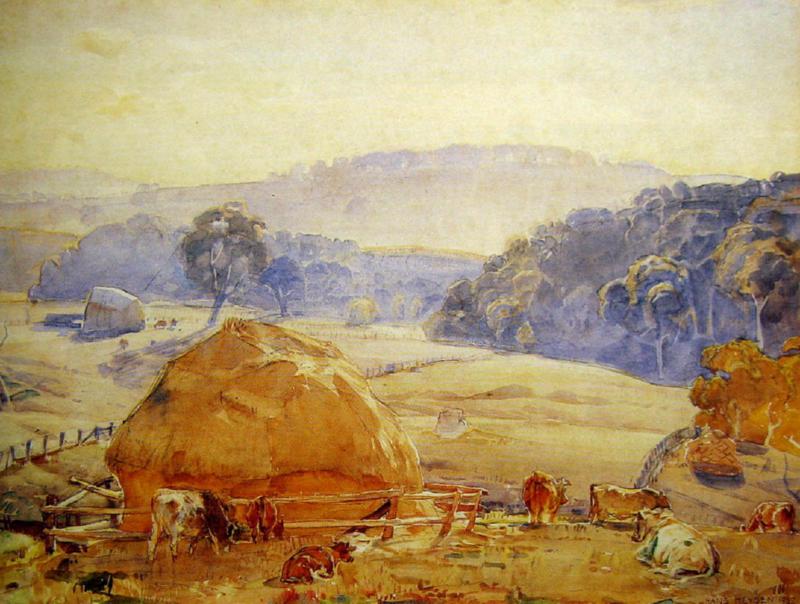
Hans Heysen (1877 – 1968) was a renowned landscape artist who spent most of his working life in and around Hahndorf, South Australia. A superb draughtsman, skilled watercolourist and accomplished painter in oils, he was famous for his unique romantic-realist representation of Australian landscape, in particular of the massive gum trees in the Adelaide Hills that he so loved.


He is considered to be the first artist to visit the outback and is known for his sensitive and penetrating vision and devotion to nature. As well as depictions of the Flinders Ranges of the north of South Australia, his pen and pencil drawings and charcoal compositions evoke the quality of light in the Adelaide Hills.

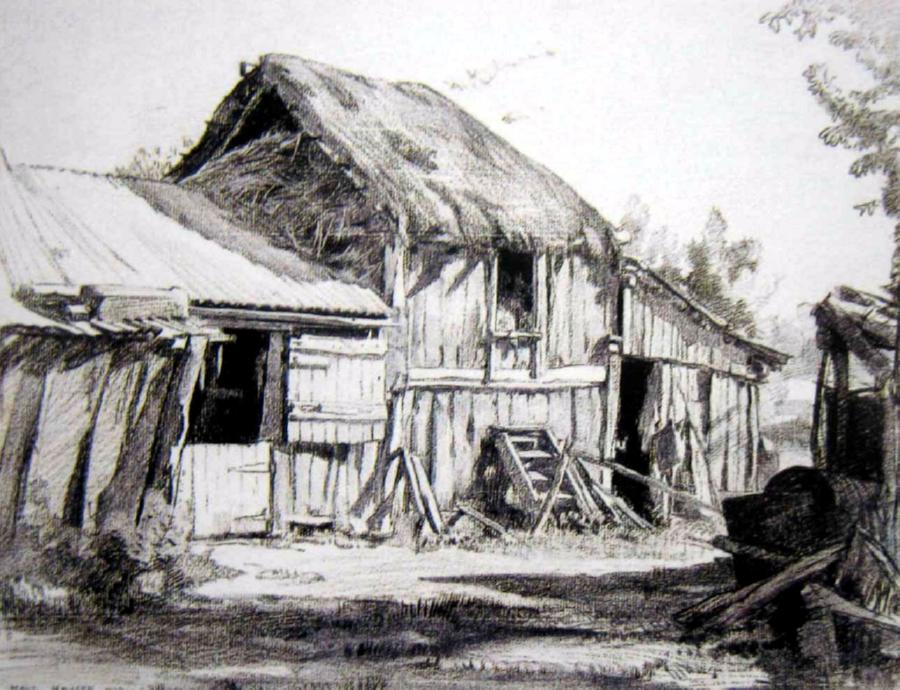
Heysen donated a selection of drawings to the Hahndorf Academy which are now on permanent display. These exquisite sketches and preparatory drawings were completed over a period of fourteen years from 1906 to 1920. They reflect the artist’s love of Hahndorf where he and his wife settled in 1908, as well as his strong support of the Academy.

The Academy was a school, established in 1857, whose purpose was to provide, “a sound and good English and German education in order to enable its pupils to enter the learned professions or to prepare for commercial life.” It became a secondary boarding school teaching in both English and German with a strong reputation for art, physical education, academic scholarship, commerce and music.

Due to various financial difficulties, the building was sold several times and served many functions, including as a Lutheran teacher’s seminary, a nursing home and hospital, council offices, military headquarters, a betting shop, a dentist’s surgery, private dwellings and flats, and a recreation centre.

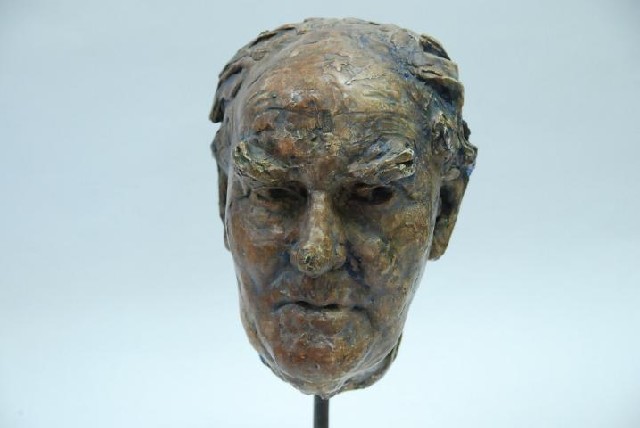
Eventually it became the Hahndorf Galleries and German Folk Museum, with an exhibition of Hans Heysen’s works to commemorate his 90th birthday. The subsequent programmes of works by emerging artists drew visitors from around the world, and the Academy also became well known for its concerts. The Heysen Room was dedicated to displaying the works that Hans Heysen had donated to help raise funds plus the bronze sculpture of his head by John Dowie.

Heysen’s sketches at the Academy include German Wagon, Cutting Chaff, Farm log roller, Haebich’s Smithy, Back Street Corner, Witmer’s Pump, Thatched barn, and The Road to Hahndorf. Heysen didn’t have the heart to finish this last painting, as the authorities felled the trees (although he offered them the selling price of the timber to try and save them).

The spiel at the Academy claims that the pictures Heysen donated are part of a visual archive. “The images are a reminder of days gone by; a lively German town filled with the sounds of horse drawn vehicles and children playing... the aroma of German sausage and freshly baked bread and the charm of the thatched cottages lining the main street.”

Monday, 12 October 2009

Natural design


As I was sitting on the village green today eating a cornish pasty, these delightful leaves fluttered down from the trees. I don't know what they are but I think they are gorgeous and I stopped to gather a handful. A small child cycled past on his tricycle and asked his mother, 'What is she doing?' The mother just looked bemused.

If I were a designer like Tamsin Coooper, I would embroider them onto fashion accessories. They would look adorable on brooches, hair-ties or coin purses.

If I were an artist, like Andy Goldsworthy, I would make some amazing temporary art-work with their tiny forms. The way they studded the grass was remarkable, and I'm sure they could be worked into a spiral or a heart or some other intricate construction.


I love the little red centres in the fragile green hearts. I think they would make amazing handmade paper for wedding invitations and the like.

But I don't have these sorts of skills. I think of the ideas but can only admire others for their practical implications.

So I look and I take pictures and I imagine. And all of these imperceptible pleasures make me happy.

Monday, 23 March 2009

Chopping down the trees

What is it with Kiwis and trees? We had a beautiful tree outside our house. It provided privacy, shelter, birdsong and greenery - with a blast of red when the flowers were in bloom. The next-door neighbours didn't like it. They have a BMW convertible which they park beneath it and the birds shat through their roof onto the leather upholstery.


I came home the other day to find it completely razed to the ground. The landlord did it. Obviously the neighbours had complained, although we weren't consulted about our thoughts. Now everyone from the cafe opposite can see directly into our bedroom window, and I can hear their screaming children with no shelter or protection.

My sister tells me there is a row of trees at the playcentre her child attends. The committee wants them chopped down because a stray branch might fall off and hit a child. My sister - bolshy little madam that she is - said she told them she would have nothing to do with their arboreal massacre. 'I simply cannot condone the chopping down of trees' she said, which may be slightly grandiose, but good for her!

Trees have history and dignity. They are romantic and poetic with gnarled roots and spreading branches. They have evocative names and curious seeds - whirling sycamore wings and glossy horse chestnuts. I love their leaves and blossoms - the colour, shelter, fruit and tranquility they provide. I'd rather have a tree than a parking-lot anyday. I just can't understand people who wouldn't. And it seems there are a lot of them in this country.


Dead Wood
As a woman of a certain age,
I am invisible to all
But advertising agencies who see me
As fertile soil for creams, treatments and poisons
To reduce wrinkles; enhance elasticity;
Stop sagging, drooping and dribbling;
Promote lustrous hair and shiny teeth,
So I can pretend I am not
The woman I am.


If I were a tree, I would be
Marked with a pink cross, spraypainted
On my spreading trunk so that
I can be removed; chopped down to size;
Cleared with the dead wood and sacrificed
On a pyre, to make way for the
Young thrusting saplings, because
I am blocking their light and
Stealing their nutrients.


Thursday, 22 January 2009

Yosemite - Part 2

Because of last night’s snow many of the roads are closed but we are able to see ‘the big trees’. Our Gracious Hosts arrived last night, so in the morning we all head off for a walk to Mariposa Grove where the giant sequoia trees grow.

These beautiful natural creations need fire to regenerate – a fact which was noticed by accident after many years of park protection when the rangers couldn’t work out why they weren’t growing. Now controlled burn-offs help these trees to germinate – this doesn’t mean they all start turning German, but the fires clear away the competing firs and cedars, and expose bare mineral soil for the seeds to take root. Only one in a million seeds takes hold and the trees only shed them once every two years – they’re not great odds. Nature can be tough!


The fabulous red trunks with their massive girth are almost too big to photograph, so Our Gracious Hostess and I play at taking macro shots of massive pine cones and bark patterns while chipmunks chatter from atop blackened tree stumps, fiercely protecting their secret stash of pine nuts.


An enormous tree has fallen on its side but used to be a tunnel. Jean and Mark carved their names into it in 1971, presumably when it was still standing. I wonder if their love is still as steadfast.

We drive to the valley floor where we attempt a scramble to the base of El Capitan. The marker says 0.3 miles but we instantly stray off the track and end up scrambling much further and higher across big boulders warmed by the sun. Climbers abseil and swing out from the cliff face, their whoops of abandon echoing around the valley.

Our Gracious Hosts’ eldest scrambles up like a little mountain goat, then Him Outdoors carries him back down on his shoulders because his little legs are weary. The view from beneath El Capitan is immense – that is one big lump of rock!

As the light plays over the rock, the view changes dramatically with gold and pinks entering the picture. John Muir sums it up succinctly – “It is by far the grandest of all the special temples of Nature I was ever permitted to enter.”

The trout that I have for dinner at the Wawona Lodge is some of the best fish I’ve ever tasted. I love the 1900s dining room with the lampshades featuring pictures of sequoia trees and pine cones dangling from the corners. People bask in comfy armchairs before a crackling fire with books and glasses of wine – fabulous stuff!