Showing posts with label unreliable narrator. Show all posts

Tuesday, 31 August 2021

Heart of Delusion: Marlow's Landing


Marlow's Landing by Toby Vieira
JM Originals
Pp. 294

Has any book had more effect on the literature of the jungle and the ‘other’ than Joseph Conrad’s Heart of Darkness? It is true that any story of a river trip into the unknown will call his novel to mind. Toby Vieira is counting on it, so much so that he names the mysterious destination to which his narrator is travelling (the title of the book) after Charles Marlow, the narrator of Conrad’s masterpiece. Vieira’s narrator is a dull accountant from Hull who is so bored with his mainstream job at an Antwerp-based gem dealer, that when Goldhaven, a man he has never met before, sidles up with promises of untold riches if he will just do a little job for him, he seizes on what he sees as an opportunity, unware that he is being played for a fool. There follows a fast-paced narrative of diamonds, deception and double-crossing.

Goldhaven is a shadowy character, and we are never sure if he is a hero or villain; chameleon or chimera. He certainly whets the narrator’s appetite. “Had I ever wondered, he said, what it would be like. To get my hands on a big pink stone. To hold what no one had held before me. To feel what no one had felt before me. To caress what no one had caressed before me.” What is it with men and their need to get their hands on something pristine? Diamonds and beautiful things come from hard and dirty conditions – mud and river beds – which lead to uncomfortable environments.

The narrator journeys up the river into the Caribbean jungle to meet with a dealer at Marlow’s Landing. The cover story is that he is a birdwatcher and he reminisces about “crammed hides and the smell of wet wool and mint cake.” He is unsure of where this place is and, despite a guide book and a real-life guide, he is none the wiser. “What does Babbon have to say about the part of the country Old Road is taking me to? Not much, since Old Road is heading into the heart of the biggest white patch on Babbon’s map. Babbon, it turns out, never made it back from the white patch. Babbon died before he could finish his book.” He is in constant fear of dangerous creatures; insects; snakes; Caymans; things that bite and sting, and his excitement does not last long. “I am sick of the tropics. Scabs come and scabs go. I have a giant blister on my ankle, the size of half a tennis ball, a neat globe, opaquely translucent, filled with liquid and with blood. Slime-covered lizards fall out of my clothes in the morning. I have strange headaches, on and off.”

The novel is written in a disorientating style, that makes the reader unsure of where we are or who is narrating and whether this is all a life-flash-before-your-eyes moment. While the story slips in and out of the reader’s grasp, it is the author’s style that keeps us absorbed, with descriptions that are vivid and chaotic. It is not just the unseen insects and nightmarish beasts that keep him up at night. The writing highlights the heat, illness, sickness, hallucinations and disease. As he gets more remote and further from known territory, he fears the lawlessness of his isolation as dead bodies riddled with bullet holes float down the river. This is a psychedelic whirlwind ride (one might call it the ambiguous definition of a trip) and perhaps a cautionary tale, suggesting that excitement might be overrated and boredom undervalued.

Wednesday, 12 May 2021

Dear John: A Room Made of Leaves


A Room Made of Leaves by Kate Grenville
Text Publishing
Pp. 319

Supposedly this novel is a memoir by Elizabeth Macarthur, “wife of the notorious John Macarthur, wool baron in the earliest days of Sydney”. It is not, and we know it is not through a variety of fictional and literary devices, not least of which is the opening admonishment to “do not believe too quickly”. Kate Grenville has examined papers and letters written by Elizabeth Macarthur, and she tries to suggest what may be hidden between the lines as she reflects upon her sentence construction, and she peppers the memoir with speculation and modern sensibilities in relation to her feelings about ‘the natives’ and gender roles. Seen in this light it is a playful exercise in historical representation.

There are echoes of Eleanor Dark’s Timeless Land trilogy, as the new arrivals to Sydney Cove and Parramatta interact with the locals. Politics and personalities are surmised in short sketches, such as the temperament of Governor Arthur Phillip, and the conflict of struggling to acquire rights to land, of which no one had rightful ownership, is a central theme in the novel.

The premise is that it is Elizabeth who knew about breeding sheep, from her past life being raised on a sheep farm, and that she hid her skills behind her husband’s bombast. It is Elizabeth who is at the centre of images of wool and breeding combined with metaphors of tupping rams and protection of lambs, rather than John Macarthur. Macarthur himself is portrayed less than favourably, as “rash, impulsive, changeable, self-deceiving, cold, unreachable, self-regarding.” His character, however, is also assessed with a modern medical understanding of mental health. “My husband was someone whose judgement was dangerously unbalanced. There was a wound so deep in his sense of himself that all his cleverness, all his understanding of human nature, could be swept aside in some blind butting frenzy of lunatic compulsion.”

Australian $2 note featuring John Macarthur and a merino sheep (designed 1965)

This contemporary approach is echoed in the understanding of gender roles. Elizabeth reflects on the sexual experience with a modern cognisance of rape within marriage. She succumbed to him back in a hedge in Devon early in their courtship when she was flattered by his attentions and interested in what she viewed as an agricultural procedure. The experience left her pregnant and, with no rich protector, marriage was the best option she could hope for. Later, when she sees the treatment of female convicts, she feels compassion. “Mr Macarthur maintained that every one of these women was a harlot who deserved nothing better, but I did not believe him. By now I had learned enough about the narrowness of a woman’s choices to guess that they were not all harlots, only less lucky than I had been.”

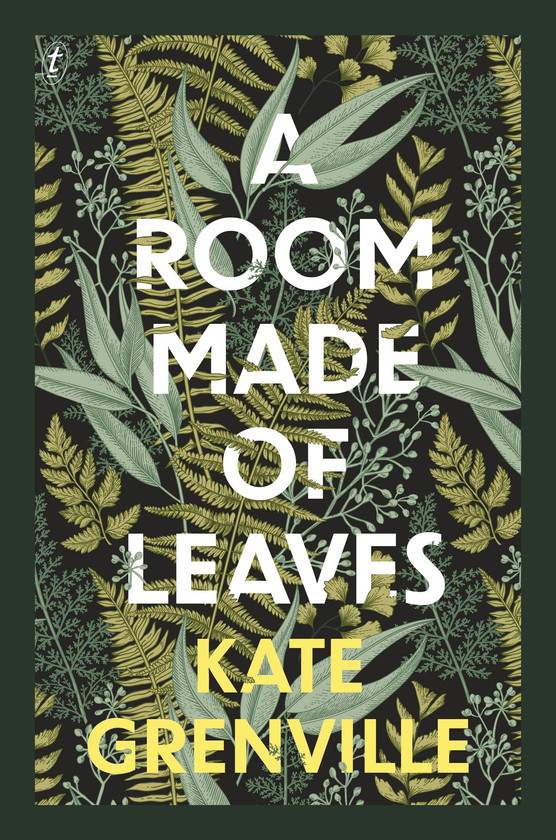
Her morals are compromised when she has a liberating sexual affair with William Dawes, the colony’s surveyor, astronomer and mapmaker. This is entirely supposition on Greenville’s part and, although it serves the narrative, one wonders what Macarthur’s descendants make of this fictional fabrication. Dawes instructs Elizabeth in scientific adventure while conducting an erotic entanglement in a secret bower; the ‘room of the leaves’ of the title and the exquisitely designed cover. The parlours and salons of this world are stifling, while the outside world is wild and permissive, which is made abundantly clear. Elizabeth abandons herself to pleasure with another man, and also with herself, exclaiming, “How much better to have your own true self for company than to be lost in the solitude of an unhappy marriage.”

In the midst of the affair, she considers her connection to the particular part of the land on which she has experienced happiness, even though she knows it is ephemeral. The tone is one of the current reflection of reconciliation and understanding of the indigenous ownership of land, which does not seem to be recorded at the time. She knows that she is on Burramattagal land, and, although she takes it from them and farms it for profit, she condemns others who do the same: “Every settler with a deed in his pocket felt entitled to chase away the tribes from the land that he thought now belonged to him by virtue of that piece of paper.” She considers the fact that they “obstinately remained” with something reflective of settlers’ guilt.

The intricate weaving of the woodland copse is reflected in the capricious construction of the narrative, as Grenville teases out fancy from the few facts available. Elizabeth writes of her letters home, “I composed a glorious romance about all this for my mother. I would not lie, not outright. I set myself a more interesting path: to make sure that my lies occupied the same space as the truth. I am reading over the copy now, decades later, with admiration for my young self.” She twists apparently finding fun in this obfuscation, as a demonstration of her wit and intellect, just as Grenville does in her own interpretation.

She addresses us directly as Elizabeth, warning us not to put too much faith in the written word. “And, if I may tease you, my unknown reader, let me remind you that you have only my word for any of this.” This is a novel rich in imagination and confident in structure, which plays with the reader in a way one may find charming or sly, or possibly both.
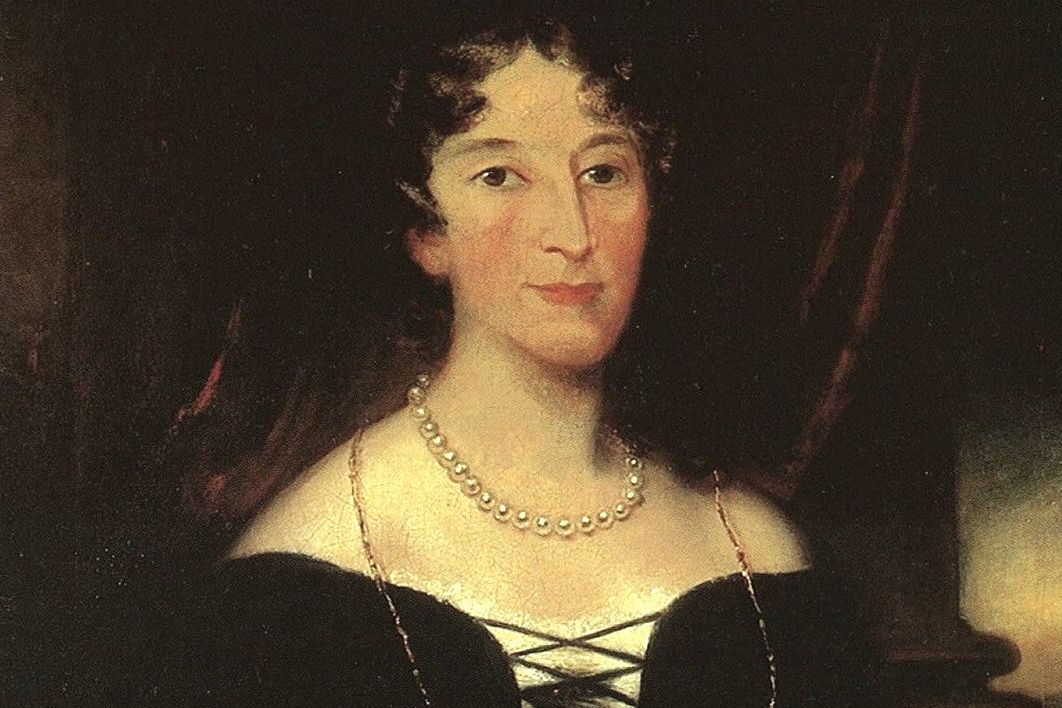
Portrait of Elizabeth Macarthur by an unknown artist

Tuesday, 17 March 2020

Second Person Singular: You


You by Caroline Kepnes
Simon & Schuster
Pp. 422

Joe Goldberg narrates this erotic thriller in a way which is intended to be claustrophobic and creepy, but just results in being tired and formulaic. Maybe it is because Gone Girl ruined everything and there have been so many imitations of the toxic controlling relationship and the unreliable narrator that we are no longer shocked by the horrible things people do to each other in the name of their warped ‘love’. Perhaps the advent of the Fifty Shades phenomenon leads us to an expectation of more dominant sexual content in contemporary novels. Whatever the reason, this novel does not surprise, titivate, nor really even register interest.

The USP of the novel is that it is narrated not only in the first person, but that it is addressed to the second, so the ‘you’ of the title is both a character in the novel, and also potentially the reader. Joe Goldberg is the owner of a bookshop, into which walks his obvious love interest, Guinevere Beck (who prefers to be called Beck, as you would). The interaction between them is what is known in the movies as the ‘meet-cute’, and it is meant to recall scenes from rom-coms such as You’ve Got Mail.

Because it is a first-person narration, the reader is drawn into his world and perspective, but alarm bells ring straightaway. Stalkers are not sexy. Joe likes to observe people without them being aware they are being watched, which is uncomfortable when he preys on Beck, stealing her phone, hacking her emails and stalking her on Twitter, analysing every message and tweet that she sends, trying to fathom hidden meanings and monitor her behaviour under the guise of being her protector. He also stalks her physically, following her home and watching her through the windows – she doesn’t close her curtains – perhaps she does know and her behaviour is intentionally that of an exhibitionist.

Joe likes to play games, but it seems that Beck does too. She leads him on and then turns away, which infuriates him, but is she really teasing him or is that just his interpretation? Beck is not an attractive character either; she seems narcissistic and self-obsessed, but is that his portrayal of her? Beck is studying for an MFA in creative writing, and thinks of herself as a writer inventing scenarios, although feedback from her fellow students suggests her short stories are thinly-disguised diary entries. Joe’s record of the relationship makes his reasoning sound acceptable, until his violence and depraved actions surface. Is it interesting or depressing to be inside the mind of a privileged, entitled predator?

Joe uses many popular culture references of disturbed minds to drop clues that all is not rosy in his world. The allusions begin innocuously enough although they rapidly get darker as elements of fantasy, delusion and mental illness creep in to the descriptions. People with mental conditions are often aware of them in others but blind to them in themselves. In mentioning American Psycho he deliberately draws attention to the artifice and the twisted imagination of certain people. We are cautioned that this may not be real (there is a cage in the basement of the bookshop; few other characters with whom he interacts etc.), but the characters are so dislikeable, and the novel appears to be derivative and playing on all the popular tropes of the recent erotic thriller glut, making it impossible to care.

Tuesday, 29 May 2018

Time Marches On


Lincoln in the Bardo by George Saunders
(Bloomsbury), Pp. 343

Although George Saunders is considered a champion of the American short story, this is his first novel. It is daring in form and subject and it won the 2017 Booker Prize. The bardo of the title is a transitional realm in Tibetan tradition where spirits mingle. From here they will either ascend to Nirvana and escape human suffering, or fall back through a series of increasingly wild and scary hallucinations until they are born again into a new body. The Lincoln of the title is either President Abraham or his son, Willie, who died of typhoid fever in 1862. The boy is interred in a Georgetown cemetery and his distraught father visits the crypt alone several times to hold his son’s body. From these slim facts Saunders embroiders a story of fantastic hyperrealism dealing with grief and loss and moments of bawdy humour.

The graveyard is populated with characters from many different eras and circumstances with a strong sense of Rabelaisian machismo; like Dantesque damned souls the spirits manifest with hideous deformities that relate to their erstwhile lives. The spirits refuse to use the word ‘dead’ and believe they are merely unwell or in a sick-box (coffin), fiercely resisting the urge to move on.

Narrated through multiple voices, the novel offers differing opinions on the same thing. Some of the quotes are from characters in the bardo; others come from books and newspapers and we cannot believe any of the accounts, no matter how scholarly they appear with their references and footnotes. On the night of a party in which Lincoln’s son became feverish, none of the eyewitnesses can agree on the presence, size, shape or colour of the moon. Similarly the colour of Lincoln’s eyes varies according to each description. These differing viewpoints extend to his involvement in the war: is he “an idiot”, “weak and vain”, a “tyrant” with speeches that “have fallen like a wet blanket”? Or is he one of the greatest presidents the US has ever known? We see what we want to see, and memory is unreliable. Saunders suggests that history is constantly reinterpreted, and portents and patterns only appear retrospectively.

The voices become a cacophony, bickering like characters in a Beckett play and retelling old tales. Saunders had originally conceived these grave-bound scenes as a play and they remain entirely rendered in speech as the narration is handed from voice to voice. We are guided through this bardo by a Greek chorus with three main narrators: Hans Vollman, a man who was about to finally consummate his marriage when he was hit on the head and so has a large erection; Roger Bevins III, a man who slit his wrists over his homosexual lover and then realised he had made a mistake as he lay bleeding on the floor, and the Reverend Everly Thomas, a man who managed to get to the Final Judgement but was sent to Hell and so ran away back here as a sort of waiting room to try and work out what he done that was so bad.

The young are not meant to tarry here, and if they do they get subsumed by Gothic-style creepers that bind them. Our heroes try and persuade Lincoln to let his boy go so that he will not have to succumb to this fate. If the deceased has truly gone to a better place, why do we grieve? We grieve for ourselves; not for the departed, and the way we remember someone after their death is not necessarily the way they really were in life. We are all in a constant state of flux from dreams to wakefulness, from life to death, and perhaps beyond. Lincoln realises that nothing is permanent.

Before people leave the bardo they flicker through all their incarnations; the people they have been but also the possibilities they have not been – their future-forms they had never alas succeeded in attaining. Every time a person leaves, the same sentence is repeated like a stanza an epic poem: “Then came the familiar, yet always bone-chilling, firesound associated with the matterlightblooming phenomenon.” Many resist this phenomenon and cling to the earth, but they cannot leave the cemetery into which they are penned by a “dreaded iron fence” which recalls something out of The Walking Dead.

What is the future for these souls? Does a terrible judgement await us all? If there is Fate or Destiny, how is anything our own fault? There is no question of return, but there is a suggestion of progress. “Time runs only in one direction and we are borne along by it, influenced precisely as we are to do just the things that we do. And then are cruelly punished for it.” This bardo combines many belief systems into one peculiar magical realism, and in the middle of it all is an attempt to come to terms with death, grief and loss, and a man’s need to mourn his son.

Monday, 26 June 2017

Frozen: Let It Go


Ice by Louis Nowra

(Allen & Unwin) Pp. 322

In the 1880s British entrepreneurs Malcolm McEachern and Andrew McIlwraith tow an iceberg to Sydney and introduce locals to ice. It goes down a treat, but as the iceberg melts, the frozen body of a young sailor is found within it. Malcolm is lost in grief for the death of his wife, Ann, and he attempts to preserve her memory. A parallel story is narrated by a young man who takes over his partner’s research work (she was writing a biography of Malcolm McEachern) after she is frozen in a coma. Images and metaphors of arresting time resound throughout the novel.

Early Sydney comes alive through the impressions of the young men as they first arrive. It is a character in itself, defying description and confounding assumptions; full of possibilities as people flee the Old World and try to reinvent themselves in a land of opportunities. Malcolm is always chasing the latest business venture: he brings refrigerated meat from Australia to London, electricity to Melbourne and order to the Tokyo electric tram system. He is attracted to what he calls Australia’s “dirty prism of classless democratic optimism” which allowed him to succeed in business.

Malcolm is clearly a man’s man, dismissing women as inferior and the representation of women within the novel is astoundingly weak. Malcolm’s mother remarries and excludes him from her life, and his second wife, Mary, is unkindly portrayed as some sort of harpy, despite the fact that his treatment of her is appalling. He mourns his first wife, Ann, building her a mausoleum – a weird subterranean world of bottled embryos – and Mary disappears into the background to lead a separate life.

The telling of Malcolm’s story is full of things that biographers could not have known but must have imagined; as the tale proceeds the narrator becomes increasingly unreliable. Ann dies, which is convenient, because live women are so messy, and Malcolm is distraught, but is the narrator talking about himself or about Malcolm? “Until he’d married her he had been unloved and she had awoken love in him, as surely as if it were a delicious, sweet emerging from melting ice. She had given him a purpose, a sense that he was human and loving, but a callous God had snatched her away from him, scooped his insides out and rendered him hollow.”

The references to being frozen in form and time are both literal and metaphoric as the lines between subject and biographer blur. The frigid purity of ice is contrasted with the warm sensuality of the body. Malcolm makes a wax effigy of Ann and keeps it in his catacombs where he builds a room for her and visits her for necrophiliac purposes. “It was as if she was frozen, like the perfectly preserved American sailor excavated from the iceberg.” The similarities with the drug – “the drug that ruined your life and mine” – are not accidental.

Malcolm’s time is one of great change and discovery and he himself is a man of science and technology. The scientific developments of the age – X-rays; atoms; telephones; electricity – become confused with spiritualism and mesmerism because “The boundaries between the possible and impossible were quickly narrowing at an astonishing pace.” Mary believes that, “Scientists belong in the darkness of their laboratories, not in the bright light of society.” Darkness and secrecy, however, lead to obsession and madness, which will always be revealed when exposed to the light.