Showing posts with label relationships. Show all posts

Wednesday, 25 March 2026

How well can you really ever know anyone? The Wife and The Widow


The Wife and the Widow by Christian White
Affirm Press
Pp. 326

In this novel Kate is the widow (husband; John) and Abby is the wife (husband; Ray), and, although this occasionally gets confusing, it is well-written and with enough suspense and intrigue to keep the reader engaged. It has a contemporary feel in that the characters frequently refer to true crime podcasts or “suburban procedural TV shows”, indicating that we have all become familiar with these, and that there is a communal enjoyment. It also explores a common theme of these novels in how secret lives are discovered after the death of a loved one (and sometimes even when they are alive), causing one character to reflect, “We all have things that ought to stay buried, things a person should keep to themselves. Things that, if they were ever dragged into the light, would change the way people saw us. I suppose my point is, how well can you really ever know anyone?”


With a wry aside to the power of fiction on susceptible minds, Kate first learns something may be amiss when she discovers her husband was skipping work and “reading horror novels by this mad American – Lovecroft? Something like that.” White examines the consequences of hiding feelings and burying emotions, suggesting that suppressed memory will never remain that way, even when counselled, “Put it someplace out of the way, in a room behind a locked door. Then all you have to do is not go in that room.” Kate remembers that John told their daughter they had to confront their fears; after all, “If they didn’t talk about the monsters in this world, then they wouldn’t be ready for them when they jumped out from under the bed.”


When Abby asks her husband why he hadn’t previously spoken to her of his fears, and dreams, he replies, “Come on Abby, I’m not one of your girlfriends. Men aren’t like that.” Later he relates his reading matter, “I started reading Tolstoy but couldn’t get into it. Vonnegut and Salinger were both pretty good. Didn’t mind Jane Austen either – bet you’re surprised to hear that one?” It’s difficult to tell whether this gender-reductive viewpoint is that of the character or the author, or both.


While appealing to the common denominator – we all consult Dr Google, right? “Her left foot ached with what the internet had diagnosed as either gout, a corn, or foot cancer.” – there are some aspects of the novel which are unoriginal or overexplained. We all know what TMI is and don’t need it spelled out. Similarly, the story of Orpheus and Eurydice is used to indicate the consequences of broken trust and looking back. This must be one of the most overworked myths in recent literature, and the fact that it needs to be explained suggests a level of disrespect for the reader.


On the other hand, the author deals well with the subject of grief. “Since John’s disappearance, such simple things had become near impossible. Preparing meals, for example, now seemed like a bizarre foreign custom, needlessly complicated.” Kate cannot easily see a way forward. “She baulked at people who said things like life’s too short and time passes in a blur and Jee-zus, is it Christmas already? Life was long, time moved too slow, and anyway fuck Christmas.” Her friend advises her how to cope with the aftermath. “You keep moving. You eat, you take a bath, you shave your legs and you keep looking forward. Guilt, fear, grief, they’re all like moss. If you slow down long enough, it’ll start to grow and it won’t stop until you’re covered.” Apart from the bit about shaving your legs – another male writing about women trope – this is an interesting metaphor.


At other times, the similes are so original as to almost be jarring. “She was quiet, like a duck slipping through a pond.” A false person speaks “words like a backdrop in a Hollywood studio, held together by balsawood and coated in cheap paint.” While waiting for news, a character smokes with attitude. “He sucked on the cigarette hard and fast, as if he was hoping to develop lung cancer before dinnertime.” The colloquial is ever-present as the ferry doors opened and “spat the Lexus out like a dislodged chunk of meat” or fact is sifted from fiction. “Around here, rumours are like holey buckets. They don’t hold water.”


The characters and setting are distinctly Australian. Abby practices taxidermy on roadkill her friends bring her, and the tools of her trade, pelts and glassy eyes are all fabulously macabre. It is set on a fictional Victorian (Australian) island out of season where, “The island represented a cold exclamation mark at the end of a sentence.” The atmosphere is frigid and grim, or as Abby puts it, “It’s colder than a fairy penguin’s pocket.”


Overall, this is an intense and compelling thriller which is hugely readable and atmospheric. It is only White’s second novel and already he is being described by The Age as a master of the art of misdirection.

Wednesday, 2 December 2020

On Shifting Sands: Celestial Bodies


Celestial Bodies by Jokha Alharthi
Sandstone Press
Pp. 243

Originally titled Sayyidat al-Qamar (Ladies of the Moon), Celestial Bodies is the third of Alharthi’s novels, but the first novel by an Omani woman to be translated into English and the first novel in Arabic to be awarded the Man Booker International Prize (which Alharthi shared with her translator, the Oxford academic Marilyn Booth in 2019). It spans several generations, from the final decades of the 19th century to the early years of the new millennium, and captures the changing mores and traditions in society, particularly in how they relate to women.

The family tree at the beginning of the book is crucial, and even with constant reference to it, the timelines can be a little hard to follow. The novel focusses on three sisters and their marriage prospects. Mayya marries Abdallah as she is told to after a heartbreak; Asma marries Khalid out of a sense of duty; Khawla rejects all offers while waiting for her beloved, who has immigrated to Canada. It is narrated by an omniscient narrator (who knows all about the women) and alternate chapters (in a different font) by Abdallah (who doesn’t).

Abdallah’s chapters are narrated as he is on a flight from Muscat to Frankfurt and he dreams fretfully of women accused of witchcraft and of the source of his father’s wealth back in his hometown of al-Awafi. Now little more than an oasis for nostalgia, it was once a hub for the slave trade, a practice that was not outlawed in Oman until 1970. It is no accident that the named narrator is not grounded as Alharthi inhabits the liminal space between memory and forgetting; the truth and the stories.

Marriage and childbirth are centre stage: customs are followed or disregarded and everyone has an opinion about how to follow them or not. Asma reads all the books and religious texts that she should, including On Matters of Purity although she finds the chapters so boring that she stops, but not before she gently mocks the highly restrictive guidelines on personal matters. Customs which are only followed for form are ridiculed, whereas those that come from logic and reason are upheld. It is still a patriarchal society, but there are social benefits to marriage. “Now she would be one of the women who sat around their coffee in the late mornings and then again at the end of the day. She would be invited to lunch and dinner, and she would issue her own invitations, since she was no longer merely a girl. Marriage was her identity document, her passport to a world wider than home.”

Women must still strive for individual recognition. When Mayya has her first child, it is a girl, which is considered lucky as it means that boys will follow. “The first one’s a girl, and a girl comes to raise her little brothers.” She calls her London, which name the family ridicule, but Mayya wants to give her a future elsewhere in the world.

The changes are occurring slowly, and the generations have different ideas and ideals. The novel is short and contains vignettes of multiple characters, such as Bedouin businesswomen, slave owners, gossips, poets and arms dealers. Celestial Bodies leaves an ethereal impression of vibrant sketches rather a chronological saga, and it provides a new and appealing voice. In a land of shifting sands, Jokha Alharthi is a shaping energy.

Jokha Alharthi and Marilyn Booth share the Man Booker International Prize for writing and translating Celestial Bodies 

Monday, 20 July 2020

Gently Hurling: After She Left


After She Left by Penelope Hanley
Impact Press
Pp. 337

This novel focusses on three generations of women and in particular the mother/ daughter relationship, but the characterisation is shadowy and they all blend into one. Penelope Hanley obviously has things that she wants to say about Irish immigrants, illegitimacy, art, Sydney, politics, and the Women’s Liberation Movement but the forced plot and the unnatural dialogue does her story a great disservice. The granddaughter, Keira, is trying to do a photo essay project on her grandmother (Deirdre Wild)’s art, but her mother, Maureen, resists saying much about her, creating a sense of mystery. It transpires she had an illegitimate child after an affair with a married man; this is not a scandal today and the consequences of it then aren’t covered well enough for it to merit the supposed shock.

There are ways of blending historical detail seamlessly into a novel, which Penelope Hanley ignores. She uses newspaper articles to fill in details, or clunky discussions about conscription and the Vietnam War; Whitlam’s speeches are transcribed. Neither does the author follow the advice given to every aspiring author of ‘show; don’t tell’. The description of Deirdre’s peripatetic lifestyle reads like a route map, and rather than trying to weave the effect of the artworks into the narrative, Hanley chooses to describe Deidre’s art in a mock newspaper review; a three-page long account of the paintings and the artistic style supposedly from the Sydney Morning Herald.

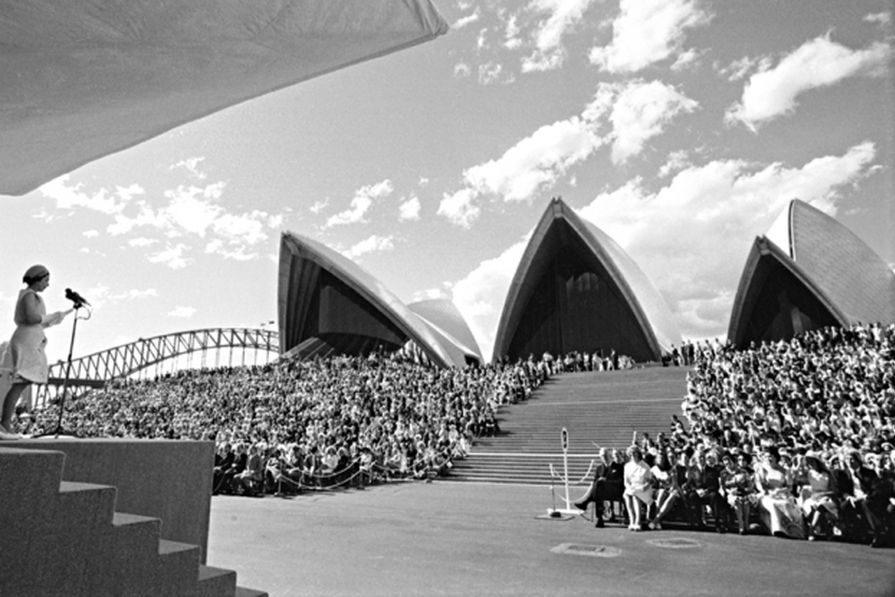
Queen Elizabeth II officially opening the Opera House on 20th October 1973
Characters discuss sexism in art, and the architecture and politics of the Opera House in a way which is simply unrealistic. Keira won’t go to the opening, because the author wants to shoehorn in her opposition to the monarchy. The frequent discussions about gender roles and how women do all of the “domestic stuff” even when they have a paid job too, are clearly important, but are presented as daughters and mothers lecturing each other with full speeches. It plays to the gallery so strongly I feel as though I’ve been hit over the head with a pop-up placard. Earnest debates about apathy and change read more like a social history textbook, and the writing is turgid as no noun is left with an adjective; no verb without an adverb. “When she let herself in, Lady, in a quick dash of woolly curls and wagging tail, hurled herself gently at Keira, barking ecstatically, her paws on Keira’s thighs.” – can a dash be anything but quick? Can one hurl gently?

Depth is implied through what the characters are reading, perhaps hoping their knowledge and ideas might be inferred; all books are mentioned from Iris Murdoch and Erica Jong to Germaine Greer and Simone de Beauvoir. Apparently constant mention of characters’ outfits is also a substitute for giving them any personality. This could have been an interesting tale but it is submerged in layers of overblown prose, excessive detail, stilted dialogue and indistinguishable characters.

Tuesday, 17 March 2020

Second Person Singular: You


You by Caroline Kepnes
Simon & Schuster
Pp. 422

Joe Goldberg narrates this erotic thriller in a way which is intended to be claustrophobic and creepy, but just results in being tired and formulaic. Maybe it is because Gone Girl ruined everything and there have been so many imitations of the toxic controlling relationship and the unreliable narrator that we are no longer shocked by the horrible things people do to each other in the name of their warped ‘love’. Perhaps the advent of the Fifty Shades phenomenon leads us to an expectation of more dominant sexual content in contemporary novels. Whatever the reason, this novel does not surprise, titivate, nor really even register interest.

The USP of the novel is that it is narrated not only in the first person, but that it is addressed to the second, so the ‘you’ of the title is both a character in the novel, and also potentially the reader. Joe Goldberg is the owner of a bookshop, into which walks his obvious love interest, Guinevere Beck (who prefers to be called Beck, as you would). The interaction between them is what is known in the movies as the ‘meet-cute’, and it is meant to recall scenes from rom-coms such as You’ve Got Mail.

Because it is a first-person narration, the reader is drawn into his world and perspective, but alarm bells ring straightaway. Stalkers are not sexy. Joe likes to observe people without them being aware they are being watched, which is uncomfortable when he preys on Beck, stealing her phone, hacking her emails and stalking her on Twitter, analysing every message and tweet that she sends, trying to fathom hidden meanings and monitor her behaviour under the guise of being her protector. He also stalks her physically, following her home and watching her through the windows – she doesn’t close her curtains – perhaps she does know and her behaviour is intentionally that of an exhibitionist.

Joe likes to play games, but it seems that Beck does too. She leads him on and then turns away, which infuriates him, but is she really teasing him or is that just his interpretation? Beck is not an attractive character either; she seems narcissistic and self-obsessed, but is that his portrayal of her? Beck is studying for an MFA in creative writing, and thinks of herself as a writer inventing scenarios, although feedback from her fellow students suggests her short stories are thinly-disguised diary entries. Joe’s record of the relationship makes his reasoning sound acceptable, until his violence and depraved actions surface. Is it interesting or depressing to be inside the mind of a privileged, entitled predator?

Joe uses many popular culture references of disturbed minds to drop clues that all is not rosy in his world. The allusions begin innocuously enough although they rapidly get darker as elements of fantasy, delusion and mental illness creep in to the descriptions. People with mental conditions are often aware of them in others but blind to them in themselves. In mentioning American Psycho he deliberately draws attention to the artifice and the twisted imagination of certain people. We are cautioned that this may not be real (there is a cage in the basement of the bookshop; few other characters with whom he interacts etc.), but the characters are so dislikeable, and the novel appears to be derivative and playing on all the popular tropes of the recent erotic thriller glut, making it impossible to care.

Tuesday, 1 May 2018

Enough to bruise a heart


The Easter Parade by Richard Yates

(Vintage) Pp. 226


Along with Revolutionary Road, this compact and expressive work is considered to be one of Richard Yates’ finest novels. His vision of all-American self-loathing and entrapment is bleak and painful to read, while his characters are well drawn with sharp outlines. The opening line sets the tone: “Neither of the Grimes sisters would have a happy life, and looking back it always seemed that the trouble began with their parents’ divorce.” From there it is all steadily downhill and increasingly out of control.

The two sisters are Sarah and Emily: “Sarah was the dark one, with a look of trusting innocence that would never leave her; Emily, a head shorter, was blond and thin and very serious.” The novel is comprised of short descriptions without excessive detail; Yates tells stories and expresses thought and emotions succinctly. Over a span of forty years the girls grow up: their father leaves; they get careers and relationships and marriage and children; their mother, Pookie, goes into a home; and they try and live a life and be happy, but they aren’t.

Sarah marries an abusive man and succumbs to suburban depression; Emily has a succession of men; Pookie constantly tries to make up for being left by a man: they are all dominated by the need for male approval and validation, which chimes discordantly in this era. They seem to only validate their existence through male eyes. When Emily questions her older sister as to why she stays with a man who beats her, Sarah answers, “It’s a marriage. If you want to stay married, you learn to put up with things.” Emily suspects there may be alternatives and goes to college to major in English.

She moves to the city and takes on a series of not-very-important jobs in advertising, losing herself in unfulfilling relationships and drink. She begins to feel disillusioned as she ages. What options were there for women? Emily tells Sarah she could leave her husband and do something else, but what? “The only thing she could picture was Sarah working as a receptionist in some doctor’s or dentist’s office. (Where did all those pleasant, inefficient middle-aged ladies come from, and how had they gotten their jobs?)”

The relationships are all full of anger and spite, and the writing reflects this nasty misogyny. Emily’s husband, Andrew, tells her in intimate detail how much he hates her body (when they have been married for less than a year) in a degrading and objectifying manner, with no consideration of her mind. “I hate your sensitive little tits. I hate your ass and your hips, the way they move and turn; I hate your thighs, the way they open up. I hate your waist and your belly and your great hairy mound and your clitoris and your whole slippery cunt.”

These women are constantly trying to numb themselves from the sharp edges of the world in which they live. They turn inward, but they don’t like what they see there either, in what is a novel of profound sadness where the omnipresence of alcohol and ill health (both mental and physical) are reminiscent of Eugene O’Neill.

When the girls are young, Sarah dresses up to participate in the Easter Parade with her beau, and they are photographed in an image which will cause Emily lasting jealousy of their frozen-in-time happiness. But, whereas Easter usually signals new beginnings and hope, this is Richard Yates, so there is only stagnation and despair. This book may be small, but it is powerful, and the punch it packs is enough to bruise a heart.

Saturday, 22 April 2017

Politics and Parenthood


Dad Joke written and performed by Mark Swivel
The Street, 21-23 April

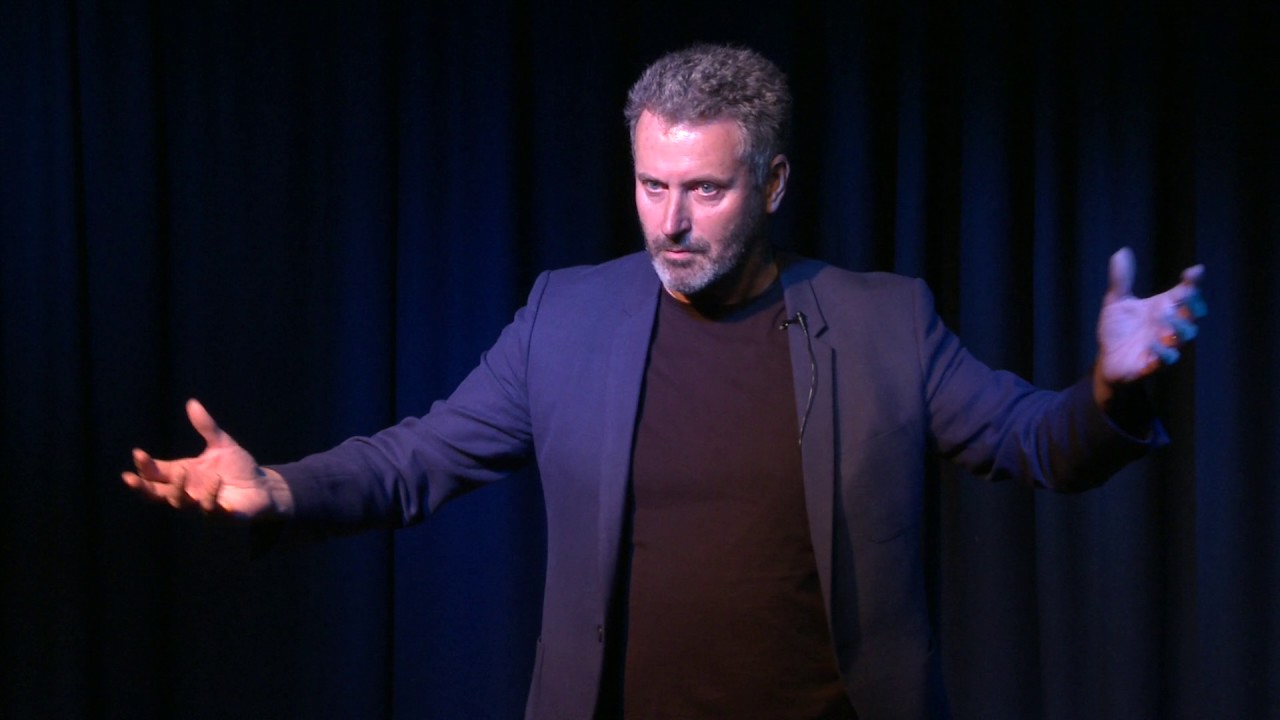
Describing himself as something between a storyteller and a stand-up comic, Mark Swivel commands the small stage of The Street 2. His premise is that he has to deliver a speech on the event of his son's 21st birthday and he is a little nervous. They have a perfectly fine relationship (about as good as a father can have with his son who lives on the other side of the world), but he claims to be struggling with the fine line between proud dad and aged embarrassment. He asks the audience to help as he runs through his rough draft, and he is so personable and charming that we all comply with his request.

Of course this is all a ruse, designed for Swivel to show off his intelligence, humour, range of subjects, and even a pretty decent singing voice. His renditions of Russian folk songs - "we have no idea what the words mean, but they sound good" - segue seamlessly into musings of political icons both Australian and British - "Anyone remember David Cameron?" He regales us with tales of his own upbringing in the days before one had to engage with one's children, and during which his dad used to drop cryptic one-liners when he came in from removing leaves from the pool "like a wistful gondolier". His reminisces are touching and remarkably poignant, especially when he talks about dealing with a parent toward the end of their life. 

There are many different styles of parenting these days: snow-plough; free-range; helicopter; attachment; cotton wool; combine-harvester... okay, I admit I made that last one up. Although the first recorded use of the word in this sense comes from the 1660s, the word 'parent' was not widely recognised as a verb until recently. It stopped being a thing one just was, and became a thing one had to do, and at which one could be judged. And boy, how we love to judge! There is so much expectation and pressure involved that the whole business (and it is increasingly a business - isn't everything?) becomes quite stressful. One of the best ways to deal with pressure and stress is to laugh at it, and ourselves, and Swivel does that expertly.

At the end of the evening we have learned a lot about Mark Swivel and his family. He cleverly polishes the poignant memories and anecdotes, mining them for the humour without discarding the essence. But this is more than just personal, or political, or even social (and there is a social justice warrior lying very close to the surface). It is an engaging evening such as you might have with your mates down the pub as they confide their hopes and fears to you. I haven't got kids; I didn't grow up in Australia and I haven't had to bury my parents (although even thinking about it brings a lump to my throat), but I was fully engaged throughout the hour-long "slightly inebriated TED talk". Mark Swivel's riffing on parenthood and politics crosses continents and generations - it's a great night out and highly recommended.