- 'It'll be different when they're your own' - no it won't, because I'm not having any, for any one of the 16,893 reasons that I've previously mentioned.
- 'Smile, it might never happen' - it probably already has; hence the reason for the glum expression. This is actually an extremely insensitive thing to say.
- 'You can achieve anything if you put your mind to it' - although I appreciate the sentiment behind this one, it's simply not true. Some achievements require money, circumstance, luck, natural talent and a number of other things that just may not line up. To promise a child (or even an adult) they can have anything through sheer will is cruel and misleading.
- 'It won't happen again' - you don't know that. You might try not to do it again, but there are no guarantees.
- 'It's more scared of you than you are of it' - I doubt that; it hasn't got boots but if it did, I'm pretty sure it wouldn't be quaking in them.
Friday, 23 November 2012
Friday Five: I Don't Believe It!
Generally I try to be positive with the Friday Five. And it's not that I'm being negative exactly, but this is a short list of things that well-meaning people say that I would rather they wouldn't.
Wednesday, 21 November 2012
Singin' in the Rain : A Smashing, Splashing Treat!
Singin’ in the Rain
The Palace Theatre, London
August, 2012
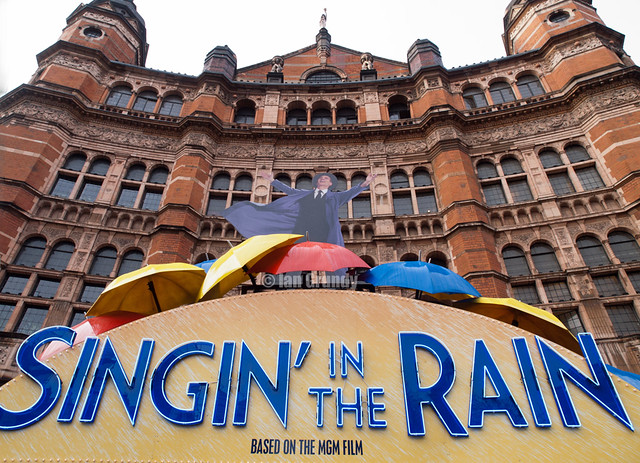
The Palace Theatre on Shaftesbury Avenue is festooned with gaily-coloured giant umbrellas to advertise its current show, Singin’ in the Rain. I got chatting to the elderly couple sitting next to me, whom it transpires come from Maidenhead. They both used to live and work in London and come to shows every week. Now they are retired and ‘only’ make it up once a month. When they heard that I’d never seen the show and didn’t know the story, they were delighted for me and, at the end, expressed joy that I should first have experienced it in ‘such an excellent version’. What lovely people!
The musical itself is joyful and exuberant, with a charming story – yes, it has one! In Hollywood in 1927 a moving picture studio is having a successful string of hits starring Don Lockwood (performed by the understudy Francis Haugen) and Lina Lamont (Katherine Kingsley). Apart from the fact that Lina is a little confused between fiction and reality, and thinks that Don is really in love with her, all is going well for Don and his best buddy Cosmo Brown (Daniel Crossley) – the best buddy role is actually very intriguing.
And then, on October 6, 1927, The Jazz Singer premiered, and the future of cinema was irrevocably altered. People wanted talking pictures. Unfortunately Lina Lamont has a ‘speaking voice that sounds like a wounded trumpet swan, and her singing voice is even worse’. No one knows what to do, despite Cosmo’s brilliant Make ’Em Laugh (ironically poor advice as the talkies ruined the careers of silent film comedians such as Harold Lloyd and Buster Keaton), while the producer RF Simpson (Michael Brandon) and his assistant Roscoe Dexter (Peter Forbes) have to placate their increasingly irascible star.
Meanwhile, high on his own success, Don bumps into a girl on the street, Kathy Selden (Scarlett Strallen), who tells him that movies aren’t everything and he’s not as great as all that. Naturally he is smitten and sings almost a musical parody; You Stepped Out of a Dream. To celebrate their latest film success, a group of chorus girls leap out of a cake and perform a fabulous number; All I Do. Don recognises Kathy, whom he has been trying to track down since their earlier encounter, and attempts to intercept her during the routine.
Eventually he gets her a job at the studio on the chorus line (after a hilarious turn with the diction coach – David Lucas – and Cosmo; Moses Supposes), but she has to be hidden from Lina on set, due to a slight altercation at the party caused mainly by Kathy’s good looks and natural talent. Problems persist (not least due to Lina’s jealousy), but the couple – as they have become – are happy. With Cosmo ever-present, they form a perfect team (Good Morning is almost impossibly good-hearted) and their happiness is infectious. Not even the rain can dampen Don’s spirits, and you know what comes next...
The eponymous song is a triumph of singing, dancing and staging. One of the lighting rigs is fitted with water jets and the shallow depression in the centre of the stage fills up with water, forming a giant puddle in which Don kicks and splashes about like an over-excitable blackbird. I was pre-warned as I had seen this segment on The Royal Variety Show, and the man in the ticket office warned me not to sit in the front four rows. Those who did got a thorough soaking. It was half time, though, so they could all dry out in the interval.
It is agreed that Kathy will dub Lina’s scenes which leads to a clever piece of film/theatre work in which Kathy sings a duet with Don – Would You? – through a sort of ventriloquist arrangement. Lina discovers the deception and is wounded. Although she sings What’s Wrong With Me? for comic effect, there is a serious side to her anguish.
As the programme notes (a touch archly), ‘It is no coincidence that the character in Singin’ in the Rain who struggles with the transition to sound is a woman. There were far more actresses whose careers suffered than there were actors. It seems that even back then, audiences were more forgiving of the imperfections of male movie stars than their female counterparts.’
This is musical theatre, however, and complexity and sympathy are eschewed in favour of sweetness and pluck. Lina threatens Kathy who agrees to perform ad her back-up for one last time in a Wizard of Oz-esque man-behind-the-curtain scene. Don and Cosmo ensure there is a happy ending, but not before Kathy flees into the audience in distress. She stood a few steps away from me in the aisle and I saw ‘real tears’.
It’s a show about dancing (The Broadway Melody by Don and Company in which he sings about how he ‘gotta dance’ is an up-tempo highlight of the second act) and the finale is a smashing, splashing treat. When Don, Kathy and Cosmo emerge in bright yellow sou’westers, the audience roars with pleasure. Some parents send their children up to the front so that they can experience the puddle stomping up close and personal.
The entire cast joins in twirling umbrellas and kicking sprays of water from the stage, casting rainbows of glee as the droplets shimmer in the lights. I’m not the only one who, after two and half hours of unashamedly feel-good entertainment, leaves the theatre with a smile on my face.
The Palace Theatre, London
August, 2012
The Palace Theatre on Shaftesbury Avenue is festooned with gaily-coloured giant umbrellas to advertise its current show, Singin’ in the Rain. I got chatting to the elderly couple sitting next to me, whom it transpires come from Maidenhead. They both used to live and work in London and come to shows every week. Now they are retired and ‘only’ make it up once a month. When they heard that I’d never seen the show and didn’t know the story, they were delighted for me and, at the end, expressed joy that I should first have experienced it in ‘such an excellent version’. What lovely people!
The musical itself is joyful and exuberant, with a charming story – yes, it has one! In Hollywood in 1927 a moving picture studio is having a successful string of hits starring Don Lockwood (performed by the understudy Francis Haugen) and Lina Lamont (Katherine Kingsley). Apart from the fact that Lina is a little confused between fiction and reality, and thinks that Don is really in love with her, all is going well for Don and his best buddy Cosmo Brown (Daniel Crossley) – the best buddy role is actually very intriguing.
And then, on October 6, 1927, The Jazz Singer premiered, and the future of cinema was irrevocably altered. People wanted talking pictures. Unfortunately Lina Lamont has a ‘speaking voice that sounds like a wounded trumpet swan, and her singing voice is even worse’. No one knows what to do, despite Cosmo’s brilliant Make ’Em Laugh (ironically poor advice as the talkies ruined the careers of silent film comedians such as Harold Lloyd and Buster Keaton), while the producer RF Simpson (Michael Brandon) and his assistant Roscoe Dexter (Peter Forbes) have to placate their increasingly irascible star.
Meanwhile, high on his own success, Don bumps into a girl on the street, Kathy Selden (Scarlett Strallen), who tells him that movies aren’t everything and he’s not as great as all that. Naturally he is smitten and sings almost a musical parody; You Stepped Out of a Dream. To celebrate their latest film success, a group of chorus girls leap out of a cake and perform a fabulous number; All I Do. Don recognises Kathy, whom he has been trying to track down since their earlier encounter, and attempts to intercept her during the routine.
Eventually he gets her a job at the studio on the chorus line (after a hilarious turn with the diction coach – David Lucas – and Cosmo; Moses Supposes), but she has to be hidden from Lina on set, due to a slight altercation at the party caused mainly by Kathy’s good looks and natural talent. Problems persist (not least due to Lina’s jealousy), but the couple – as they have become – are happy. With Cosmo ever-present, they form a perfect team (Good Morning is almost impossibly good-hearted) and their happiness is infectious. Not even the rain can dampen Don’s spirits, and you know what comes next...
The eponymous song is a triumph of singing, dancing and staging. One of the lighting rigs is fitted with water jets and the shallow depression in the centre of the stage fills up with water, forming a giant puddle in which Don kicks and splashes about like an over-excitable blackbird. I was pre-warned as I had seen this segment on The Royal Variety Show, and the man in the ticket office warned me not to sit in the front four rows. Those who did got a thorough soaking. It was half time, though, so they could all dry out in the interval.
It is agreed that Kathy will dub Lina’s scenes which leads to a clever piece of film/theatre work in which Kathy sings a duet with Don – Would You? – through a sort of ventriloquist arrangement. Lina discovers the deception and is wounded. Although she sings What’s Wrong With Me? for comic effect, there is a serious side to her anguish.
As the programme notes (a touch archly), ‘It is no coincidence that the character in Singin’ in the Rain who struggles with the transition to sound is a woman. There were far more actresses whose careers suffered than there were actors. It seems that even back then, audiences were more forgiving of the imperfections of male movie stars than their female counterparts.’
This is musical theatre, however, and complexity and sympathy are eschewed in favour of sweetness and pluck. Lina threatens Kathy who agrees to perform ad her back-up for one last time in a Wizard of Oz-esque man-behind-the-curtain scene. Don and Cosmo ensure there is a happy ending, but not before Kathy flees into the audience in distress. She stood a few steps away from me in the aisle and I saw ‘real tears’.
It’s a show about dancing (The Broadway Melody by Don and Company in which he sings about how he ‘gotta dance’ is an up-tempo highlight of the second act) and the finale is a smashing, splashing treat. When Don, Kathy and Cosmo emerge in bright yellow sou’westers, the audience roars with pleasure. Some parents send their children up to the front so that they can experience the puddle stomping up close and personal.
The entire cast joins in twirling umbrellas and kicking sprays of water from the stage, casting rainbows of glee as the droplets shimmer in the lights. I’m not the only one who, after two and half hours of unashamedly feel-good entertainment, leaves the theatre with a smile on my face.
Tuesday, 20 November 2012
Improbable Fiction, 'Unofficial Soundtrack'
Music is very closely linked to memory in my mind, so I find the 'soundtrack' a useful device and aide memoire. It picks up on certain lines or characters, and focuses my mind as I drive to rehearsals. It also manages to keep me awake as I drive home late and exhausted after rehearsals. I've not got to bed before midnight for over a week and we open on Friday so I need it.
For people unfamiliar with Alan Ayckbourn's Improbable Fiction, this playlist may seem a little odd. For those who do know the play, it may seem even more so. But these are the tracks that come to mind when I'm working on the play. "They're in order, but... well, you'll see..."
- Paperback Writer - The Beatles
- I Close My Eyes and Count to Ten - Dusty Springfield
- City Hobgoblins - The Fall
- Build Me Up Buttercup - The Foundations
- Writer's Block - Just Jack
- The Social Network Song (Oh Oh - Uh - Oh Oh) - Valentina Monetta
- I Write the Songs - Tom Jones
- Everyday I Write the Book - Elvis Costello
- Java Jive - The Ink Spots
- Oxford Comma - Vampire Weekend
- Invisible - Alison Moyet
- Thunder in the Mountains - Toyah
- Something Canged - Pulp
- Just an Illusion - Imagination
- Once in a Lifetime - Talking Heads
- We Are Detective - The Thompson Twins
- Hot Soup - Da Vinci's Notebook
- I've Committed Murder - Macy Gray
- Where's Your Head At? - Basement Jaxx
- Wasted Life - Stiff Little Fingers
- Spaceman - Babylon Zoo
Friday, 16 November 2012
Friday Five: Nicest Man in Britain
I began to wonder what makes someone 'nice'. The Concise Oxford Dictionary has it that one must be 'pleasant in manner; good-natured; kind'. I remembered a conversation with my Dad once about 'kindness' as a quality in fiction. He contended that in real life one never admired someone's kind quality as one did in literature. I begged to differ, and I still do. I've never held with that theory that nice guys finish last.
Perhaps when we were young and foolish, we preferred the wild and reckless to the polite and generous, but try watching Casablanca now and I'll bet you've changed your mind about what you would do at the end if you were Ilsa Lund.
For my own stipulations, the nicest man in Britain must not only be nice, a man, and British (which discounts Rolf Harris, who might otherwise have been a contender), but also to have achieved some sort of fame in their chosen field (random friends and relations don't count).
5 Nicest Men in Britain:
- Michael Palin (CBE)
- Sir David Attenborough
- Sir Steve Redgrave
- Hugh Laurie (OBE)
- Jamie Oliver (MBE)
Monday, 12 November 2012
British Museum: Overwhelming History
I arrived at the British Museum with only limited time to explore the building – and wow, what a building! The reading room in the centre of the great court has the second largest domed ceiling (after the Sistine Chapel) but it is being used for an exhibition and you can’t go in otherwise. There are plenty of other treasures to admire, however.
| The Great Court in the British Museum |
I only had time to look at the ground floor and I was overwhelmed by the sheer weight of history. The Assyrian gateways, black obelisks and colossal guardian lions are incredible. The Balwat Gates (858-824BC) are wooden gates covered with strips of bronze embossed with scenes from Shalmaneser’s campaigns. The statue of Amenhotep III (1350BC) from the Temple at Thebes is impressive, and the guardians of the city wall from Ashur (835BC) are immense. Even on the reliefs from doors and walls, there is simply so much history.
Of course there was a massive crowd around the Rosetta Stone and I could barely get near it. Some may be trying to decipher the meaning of the ancient hieroglyphics, hoping to grasp the key and unlock the mysteries of Egyptian culture, but most are simply pointing their i-phones and gurning at the glass case – surely they would be better suited to buy a postcard?
| The Assyrian room and the Balwat Gates - photo by Nathan Meijer |
| The Rosetta Stone at the British Museum - fascinating folk for thousands of years! |
| Horus in Roman Military Costume |
I am confronted by obelisks and sphinx; a grey granite papyrus-column (1500BC); a red granite arm from a colossal statue; the sarcophagus of Merymose (approx 1380BC); a limestone figure of Horus-falcon (600BC); a black schist sarcophagus and lid of Ankhnesneferibre; Horus in Roman military costume (AD 50-300); a red breccias figure of the goddess Taweret (664-343BC).
Panehsy (approx 1270BC) kneels, holding a shrine containing the gods Horus and Osiris, and the goddess Isis. A grandiorite figure of a Horus-falcon (600BC) has eyes of ivory and bitumen. Animals include eagles, ravens, rams and a colossal scarab beetle. Each one is amazing. All together they are overwhelming.
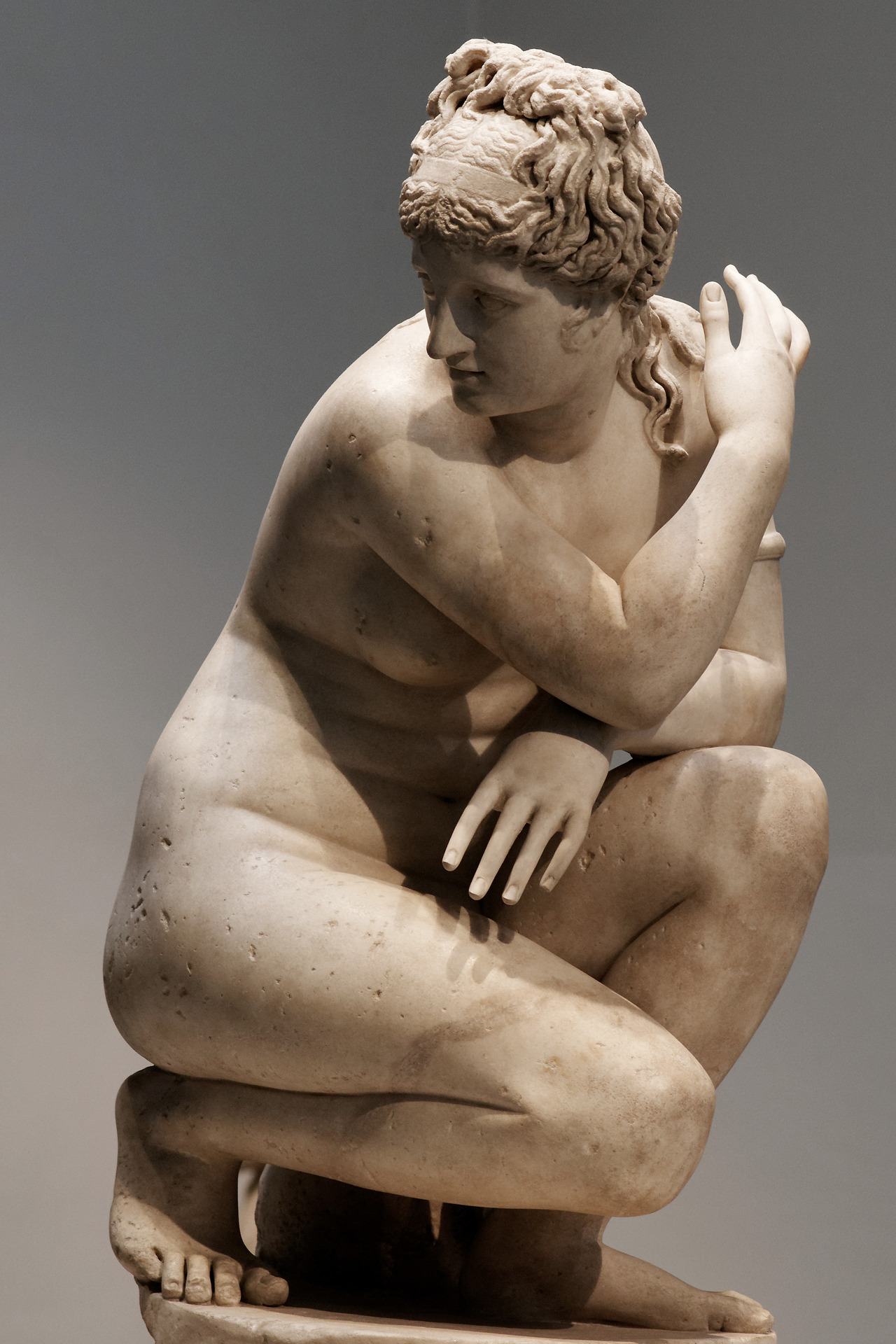
| Venus (Surprised as She Bathes) by Lely |
Everywhere are examples of horses’ heads, gods, men, centaurs and battles, and over all hangs the question of should they really be here or have we been stealing other peoples’ history? A pamphlet seeks to answer the question and, being distributed by the British Museum, obviously sides heavily with Lord Elgin and his successors. I must agree that it is fabulous these antiquities are free for all the view and admire.
| The Nereid Monument at the British Museum |
Sunday, 11 November 2012
Quote for Today: Reheasal Space
We had a technical rehearsal today for Alan Ayckbourn's Improbable Fiction, that I am performing in for Canberra Repertory Theatre. Technical rehearsals are always long and usually tedious, but totally necessary. We got through today's quite well, and, as far as I know, without too much major incident.
Dominic Dromgoole has some sage words about rehearsal rooms, although clearly he has never worked in Queenstown.
“For some, it’s a seminar room (the deadliest); for some a party (the most fun, with the most variable results); for some it’s a therapy session (avoid like the bubonic plague); and for many it’s a knocking shop (be selective). But for the best it is often a temple. Something special and magical takes place in there, and the air around it has to be carefully looked after to ensure anything is possible. This doesn’t mean everyone prays or takes off their shoes and pads around with Peter Brookish Obi-Wan faux religiosity. It means you treat it with respect and humility. And you don’t allow kids in.” - Will and Me: How Shakespeare Took Over My Life by Dominic Dromgoole, artistic director of the Globe Theatre.
Friday, 9 November 2012
Friday Five: It Will Change Me!
Australia has a lot of lotteries - there are national ones and federal ones and it seems like there's one every day of the week. They can reach pretty high stakes, and recently the prize pool topped $70million. We bought a ticket , but we didn't win. Fair enough - it is, after all, a lottery.
What does annoy me, however, is when people say, 'oh, it won't change me'. Well, clearly you don't 'deserve' to win it then - give it to me! Of course I would pay off my mortgage and that of any other of my family members who need it, I would buy an E-type Jag and another couple of houses somewhere, preferrably one in Park Crescent, and indulge myself in my dream holidays.
But I would make changes to everyday life as well. If I had unlimited funds, here are the ways I would change:
5 Lottery Winning Changes:
- I would always fly first class
- I would hire a cleaner - housework would be a thing of the past for me
- I would always get taxis home from a night out, rather than having to plan for a sober driver or leaving on the last train/bus home - or if I were in a decent city, I would just stay in a hotel overnight
- I would donate money to every charitable organisation I walked past (as long as they weren't supporting right wing politicians)
- Every time I had a health niggle, I would go straight to the relevant practitioner (doctor/ dentist/ physio/ massage therapist) rather than saving up all my ailments until I felt I had enough to justify the consultancy fee.
Subscribe to:
Posts (Atom)
+in+Singin'+in+the+Rain+at+the+Palace+Theatre.+Photo+credit+Manuel+Harlan.jpg)