Showing posts with label health. Show all posts

Wednesday, 2 June 2021

Women's Health Matters: Pain and Prejudice


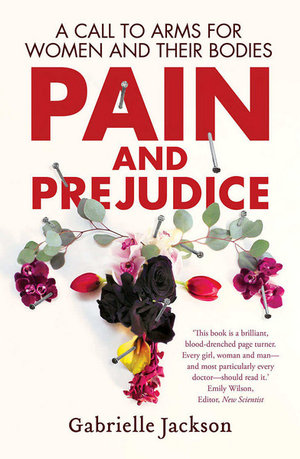
Pain and Prejudice by Gabrielle Jackson
Allen & Unwin
Pp. 321

Subtitled ‘A Call to Arms for Women and Their Bodies’, this book focuses on how women have been badly treated by the medical profession in the ‘Western World’ (there are many studies, figures and reports, all from the UK, the USA, Australia and New Zealand) and suggests that the times are ripe for revolution. It centres on the fact that medicine was traditionally a male profession and that the male was considered the default, so the difference in women was barely acknowledged let alone appreciated. In a similar line to that taken by Caroline Criado Perez in her book, Invisible Women: Exposing Data Bias in a World Designed for Men, Jackson argues that women are being ignored at best and killed at worst due to this gender bias in medicine.

In general women live longer than men, but they are in more pain. They are not taught to know their bodies or talk about their ailments; they are meant to nurture and support others before themselves. Women aren’t accustomed to discussing ‘female ailments’ – menstruation, menopause and sexual pain are still relatively taboo topics. Many women can’t identify their reproductive organs on a diagram and are certainly not meant to talk about them, as it is considered shameful. An influential study by Melissa Parker on Australian girls found that 93% of them experienced some period pain. About 20% experience severe pain, 24% say their period interferes with four out of nine life activities, and 26% miss school because of pain. “So a quarter of girls are missing school because of pain, and nobody thinks it’s a problem?”
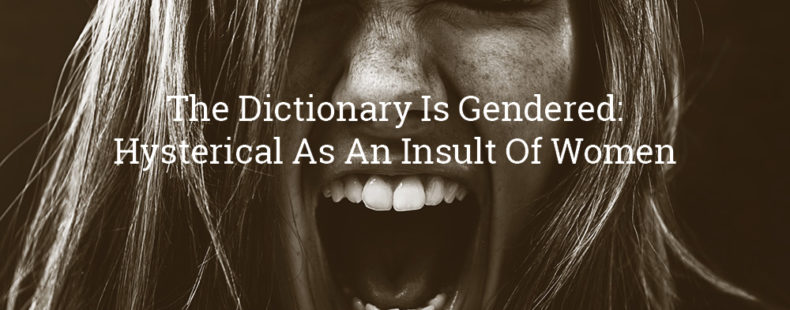
When women demand attention, over their health or issues of equality, they are often labelled as hysterical, and “As an insult, ‘hysterical is still disarmingly effective.” Yet, when men present with the exact same symptoms, it is called shellshock or PTSD. Traditionally medicine was a male profession, and women are often not believed about their own health. In the late nineteenth and early twentieth century, “medicine became an elite profession and took over from religious institutions as the primary enforcers of the social roles of women.”

Because the default case study for all ailments is male, “We assume that the ways in which women are different from men must be the ways in which women are inferior or broken or diseased when in fact it might be that women are just different.” Symptoms of heart attacks are different in women and often misdiagnosed. A World Health Organisation report explains, “It has traditionally been thought of as a man’s disease which has led to deadly consequences for women – in 2004, 7.4 million women over 60 years of age died of cardiovascular disease compared with 6.3 million men.” Stress is a factor in heart disease, but women are often dismissed as suffering from nothing but anxiety when men who present with the same symptoms are diagnosed with heart disease.

Before 1993 there was no legal requirement to include women in clinical trials 

Many clinical tests only use men in their trials, which can prove fatal to women. In 1993, the US Food and Drug Administration and the National Institutes of Health mandated the inclusion of women in clinical trials. Before then, trials were routinely carried out on men only, including: a twenty-year longitudinal study (began in 1958) to explore whether taking an aspirin every day could reduce the risk of heart disease (conducted in 22,071 men and no women); a 1982 trial looking at whether dietary change and exercise could help prevent heart disease (conducted in 13,000 men and no women), and even a trial in the 1960s to investigate whether supplementation with oestrogen was an effective preventive treatment for heart disease (conducted in 8341 men, and no women).

Women generally experience more chronic pain than men – they suffer pains that cannot be seen, so they are often discounted, and pelvic pain is “also beset by stigmas and taboos that make it difficult for women to talk about their sex organs or anything related to them.” When women are believed about experiencing pain, they are often thought to be exaggerating. “Even female doctors, after training and working in the heavily masculinised medical culture, can view this language as confronting and histrionic.”

Women suffer more chronic pain than men

There are several overlapping pain conditions and women who suffer from one are likely to also suffer from others. These include endometriosis; vulvodynia; fibromyalgia; chronic fatigue syndrome/ myalgic encephalomyelitis; interstitial cystitis/ painful bladder syndrome; temporomandibular joint disorders; irritable bowel syndrome; chronic tension-type headache; chronic migraine and chronic low back pain. “Chronic pain conditions aren’t conditions that kill us but they radically alter our opportunities to reach our full potential in life… Pain doesn’t actually kill people – it keeps women in the home and out of work, which has no effect upon the power structures of society, providing no incentive for action.”

Doctors don’t really want to see patients who are difficult to diagnose and harder to fix as it looks bad for their figures and solved statistics: they even call them ‘heart-sink patients’. Women are aware of this stigma, and when they are told they have medically unexplained symptoms, anxiety, depression or are disbelieved, they can move from doctor to doctor in order to find a diagnosis or treatment relief. “In an exasperating development, ‘doctor-shopping’ has come to be seen as an indicator that pain is made up, rather than a result of pain doctors won’t believe.”

Women’s pain is not treated as seriously as men’s pain, and Jackson suggests that women should not simply accept this, but educate themselves about their bodies and demand that they be treated with equal funding and respect. It would be a brave and/or stupid person who would argue with that.

Friday, 6 December 2019

Health Care

I'm too sexy for my socks
Yesterday I had minor surgery to remove uterine fibroids (one the size of a golf ball), hopefully saving much future menstrual agony, and leading to this oh-so-sexy surgical-socks-and-painted-toenails combo. Him Indoors was unintentionally hilarious when he said, "You look like you've been in a period drama." My, how I laughed. But I sincerely hope my period drama is over.

It has taken me 35 years of nausea, cramps, excessive bleeding, low iron counts and a general lack of energy to have this taken seriously. I'm so glad it finally has been, and I hope that by talking more to our young women we can prevent them suffering the pain that we have tolerated because we've been told things like, 'that's just the price you pay for being a woman'. Let's not even start getting into the issue that medical practitioners might be less inclined to be so dismissive if it effected men. I'll get to that elsewhere. 

What I would like to acknowledge is how well the process was handled. From the admission staff to the nurses, doctors, wards-people, surgeons, and anaesthetists, everybody was efficient, understanding and compassionate. I am impressed and awed by the service and care I received. Of course, I have some pain now (as is only to be expected after things have been scraped away from my insides), but I have been given drugs to manage it with clear instructions, a follow-up call this morning, and a routine check-up in a few weeks' time. 

Scooter
While I was in the hospital, being hooked up to machines and having all my vital signs monitored, I was of course transported back to eight years ago today, when I lost my best friend to cancer. I still miss him every day, but, although my heart aches, I am able to think of him and smile rather than cry these days. I have so many memories of happy times, and also, obviously, sad ones as we saw him lose his sparkle. But even as his physical form was shrinking before our eyes, the palliative care he received was incredible. The kindness of the medical staff who managed his pain and saw him to the end of his life was humbling. They were wonderful to him, and to his family and friends, who visited him in hospital and stayed with him when there was nothing further that could be done, except let him leave with dignity. I thank them all.

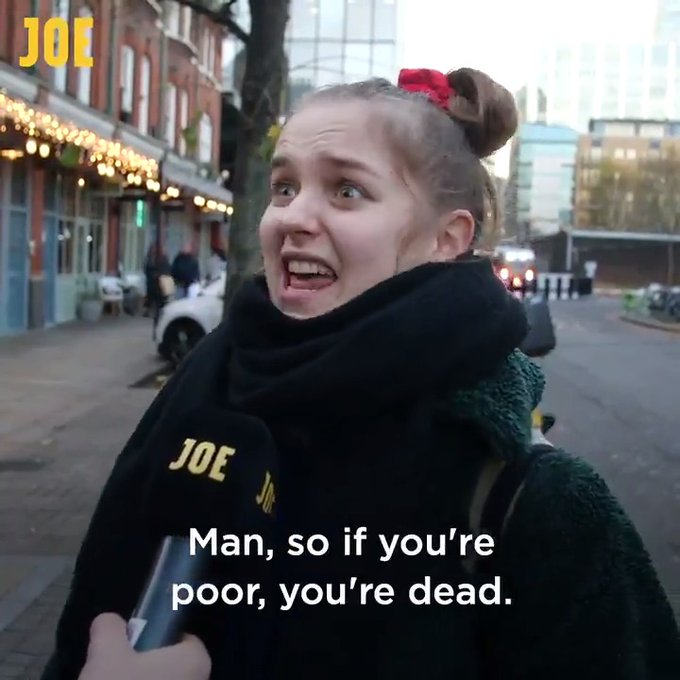
In the UK, some people want to sell off the NHS. It is baffling beyond belief that anyone would actually choose a system like the one that exists in the U.S.A. A recent video released on the Common Dreams website shows the shock with which British people heard the costs of basic healthcare (childbirth; ambulance ride; asthma inhalers) across the Atlantic. I don't want to get political here, but, seriously, how could anyone with a conscience vote for a party that would allow this to happen? Healthcare should be not be optional; it should be available to all; and it should not be monetised. 


I know the NHS is a creaking organisation and one which desperately needs funding and a massive overhaul. I'm not ignorant - I realise that people are ageing and that medical procedures are becoming more expensive and more in demand. I understand that we can't continue the way we're going as the population continues to both age and increase. What we need is measured and considered discussion and respect. What we do not need is privatisation. 

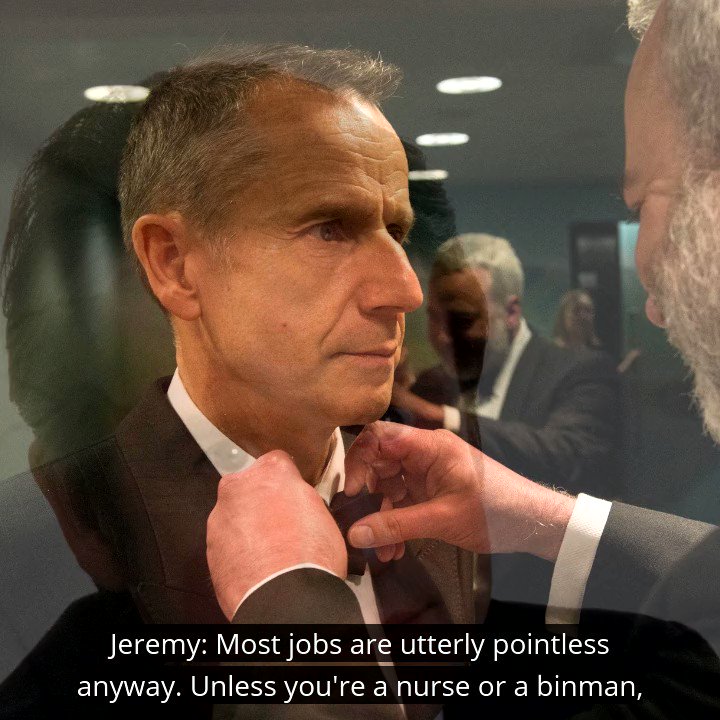
And the people who care for us; the people who listen to our complaints and assuage our pain should be respected and rewarded - not penalised, underpaid or stressed beyond breaking point. They are literally (and I don't use that word lightly) our saviours. In fact, I'll finish with a quote from the late, great Jeremy Hardy, who also passed away this year, who had an enviably incisive way with words, and is also sorely missed.

Friday, 9 November 2012

Friday Five: It Will Change Me!


Australia has a lot of lotteries - there are national ones and federal ones and it seems like there's one every day of the week. They can reach pretty high stakes, and recently the prize pool topped $70million. We bought a ticket , but we didn't win. Fair enough - it is, after all, a lottery.

What does annoy me, however, is when people say, 'oh, it won't change me'. Well, clearly you don't 'deserve' to win it then - give it to me!  Of course I would pay off my mortgage and that of any other of my family members who need it, I would buy an E-type Jag and another couple of houses somewhere, preferrably one in Park Crescent, and indulge myself in my dream holidays.

But I would make changes to everyday life as well. If I had unlimited funds, here are the ways I would change:

5 Lottery Winning Changes:
  1. I would always fly first class
  2. I would hire a cleaner - housework would be a thing of the past for me
  3. I would always get taxis home from a night out, rather than having to plan for a sober driver or leaving on the last train/bus home - or if I were in a decent city, I would just stay in a hotel overnight
  4. I would donate money to every charitable organisation I walked past (as long as they weren't supporting right wing politicians)
  5. Every time I had a health niggle, I would go straight to the relevant practitioner (doctor/ dentist/ physio/ massage therapist) rather than saving up all my ailments until I felt I had enough to justify the consultancy fee.