Showing posts with label medicine. Show all posts

Friday, 21 April 2023

Friday Five: Value Portraits

A few weeks ago I organised a workshop in Canberra for my work team. As part of a session about our organisation's values (respect, integrity, collaboration, excellence and innovation), I took them to the National Portrait Gallery, where we all chose an artwork of a person who we felt represented those values, and shared our findings with the group. These are the results:

Adam (Adam Goodes), 2014 by Alan Jones

Adnyamathanha/ Nurangga man Adam Goodes (b. 1980) is a former champion AFL footballer who played 396 games with the Sydney Swans. Recognised as one of Australia's great footballers, he is a dual Brownlow medalist, a four-time all-Australian, and a member of the Indigenous Team of the Century. With his cousin and fellow Swans star, Michael O'Loughlin, Goodes established the GO Foundation in 2009 to provide educational opportunities and mentoring for the next Indigenous generation. Awarded Australian of the Year in 2014, he has challenged endemic racism both on and off the field. After his early retirement in 2015 following repeated on-field heckling and a lack of support from the AFL, he co-founded the Indigenous Defence and Infrastructure Consortium, which helps First Nation businesses work in long-term building projects.

Goodes' pride in his cultural heritage and the dignity on his stand against racism inspired Alan Jones, a self-confessed Swans supporter, to paint this dual portrait for the Archibald Prize in 2014. "I have enormous respect for the strength and integrity he shows both on and off the field. Adam is an amazing athlete but also so much more than that; he is a son, a brother, an extremely proud Indigenous Australian... and a great role model in so many ways."

Dr Joan M Redshaw by Barbara Tribe 

Joan Redshaw AM (1921-1944), medical practitioner, graduated from the University of Sydney in 1944 before travelling to London to complete post-graduate studies in paediatrics at the Great Ormond Street Hospital. Returning to Australia in 1948, she became the first woman ship's surgeon to be employed by the Orient Line, famously performing an appendectomy on the Red Sea. On board, she met Captain Arthur Strong, whom she married in 1949. For twenty years from 1951, Redshaw was a paediatrician and general practitioner in Nabiac, on the mid-north coast of New South Wales. A member of the Women's Advisory Board to the NSW premier, she spent twelve years on the council of the Medical Association. As president of the International Women's Association, she campaigned against child marriage and female circumcision; her local community involvements included crisis accommodation for women affected by domestic violence, and alcoholic programs.

Barbara Tribe was a significant sculptor and the first woman to win the New South Wales Travelling Art Scholarship. She spent most of her career in England, exhibiting with the Royal Academy and the Royal Society of British Sculptors.

Quentin Bryce (2016) by Michael Zavros

The Hon. Dame Quentin Bryce AD CVO (b. 1942), academic, lawyer and human rights advocate, was the first woman to be appointed governor-general of Australia. Born in Brisbane, she spent her early childhood in Ilfracombe in central western Queensland. She attained degrees in arts and law at the University of Queensland, where in 1968 she became the first female member of the law faculty. By the time she retired from teaching in 1983, she was increasingly involved in human rights and advocacy work. Between 1984 and 1993 she was director of the Queensland Women's Information Service, director of Queensland's Human Rights and Equal Opportunity Commission and the Federal Sex Discrimination Commissioner. In 1997 she became principal and chief executive officer of the Women's College within the University of Sydney. Six years later she became governor of Queensland. In 2008 she was appointed Australia's 25th governor-general, and served in this role until March 2014.

Michael Zavros commenced work on this portrait in 2015, when Bryce became chair of Queensland's Special Taskforce on Domestic and Family Violence. Zavros included the proteas as the emblem of the Taskforce, but also to signify the sitter's strength and wisdom, and the dignity of her longstanding commitment to justice and human rights.

Professor Penny Sackett, astronomer and physicist (2011) by Andrew Mezei

Penny Sackett (b. 1956), physicist, astronomer and former Chief Scientist for Australia, gained her PhD in theoretical physics at the University of Pittsburgh. In 2002 she was appointed director of the Research School of Astronomy and Astrophysics at the Australian National University. Responsible for the Mount Stromlo Observatory, she had to endure its destruction by bushfires in January 2003, and negotiations for the insurance payout and rebuilding of the heritage-listed facility. Sackett was one of an international team of 73 astronomers who discovered the first known earth-sized planet orbiting a normal star other than the Sun in the inner Milky Way in 2006. Appointed the Chief Scientist for Australia in late 2008, Sackett remained an adjunct professor at ANU and continued to supervise research students. She resigned as Chief Scientist in 2011, announcing that she intended to contribute to science in other ways.

Entering this portrait in the Archibald Prize for 2011, Andrew Mezei said that he aspired to paint Sackett after hearing her speak on the radio. He wrote: 'She responded to scepticism about climate change with eloquent reasoning … I wanted to show her femininity as perfectly compatible with her impeccable focus on facts.' The setting is imagined, though informed by various images of Mount Stromlo Observatory.

Lowitja O'Donoghue (2006) by Robert Hannaford AM

Lowitja O'Donoghue AC CBE (b. 1932), Indigenous rights campaigner, is a Yankunjatjara woman. Removed from her mother at the age of two, she was raised in a mission home and worked as a nurse before joining the Department of Aboriginal Affairs in 1967. By 1975, she was its regional director in South Australia. She was Foundation Chair of the National Aboriginal Conference in 1977 and chaired the Aboriginal Development Commission from 1989 to 1990. O'Donoghue was Australian of the Year in 1984, when she became the first Aboriginal person to address the General Assembly of the United Nations. While Chair of the Aboriginal and Torres Strait Islander Commission between 1990 and 1996, she helped to draft the Mabo legislation. Currently she is Patron of Reconciliation South Australia and of the Lowitja Institute of Aboriginal and Torres Strait Islander Health.

Robert Hannaford said of O'Donoghue that he observed a 'vast understanding and sympathy in her face, a sadness', but also thought she looked 'fantastic in that light I've got in that studio'. The pair became friends during the many hours of sittings involved in creating the work.

Wednesday, 27 July 2022

A Doctor Calls: Intensive Care


Intensive Care: A GP, a Community & COVID-19 by Gavin Francis
Profile Books
Pp. 198

Gavin Francis’ memoir about the outbreak of the coronavirus pandemic provides a fascinating first-hand account of how the medical profession dealt with the infection in the face of changing priorities and conflicting information. As a GP in Edinburgh, he also writes proudly of the city’s history, particularly in terms of medical science, and how that relates to current procedures. Published in 2021, this takes a contemporary view of the situation, and certain cautionary tales have proved true in upsetting ways, such as the prioritising of physical health to the detriment of mental health, and the long-term effects of this approach.

We have become inured to the word ‘unprecedented’ – indeed a popular internet meme reads ‘I could really go for some precedented times’ – but the pace of the spread of the virus was extraordinary. Francis writes, “In the space of days, what had seemed like a surreal joke became reality.” Originally doctors were ‘assured’ there was no evidence of human to human transmission, but within weeks the guidelines changed. Doctors dealt with uncertainty, lack of clear messaging and trying to allay fears as well as treat illness.

Of course things are more obvious with hindsight (although this book is written only halfway through the pandemic), and Francis is cautious with his criticism of the politics involved, but he is clearly frustrated about the lack of guidance. He believes that social distancing measures should have been introduced as soon as it became clear that the virus could spread through contact, but understands the hesitancy. While health is his priority – he is a doctor after all – he understands that not everyone will react in the same way. While noting enforced quarantines overseas, he is aware this would be problematic at home. He further appreciates the dichotomy between the suffering of the global economy compared with the recovery of the environment.

There are one or two positives to be drawn from the response to the pandemic, as Francis clutches at straws of hope, such as the speed of the response to the homeless crisis, and the recalibration of which jobs are important, “as if all the old hierarchies were being pushed aside and new possibilities were emerging.”

Some people found that after years of agoraphobia and anxiety, they now felt better as they were not pressured into going out and doing things: introverts were more accepted and acceptable. On the other hand, however, strides taken in the advance of understanding of mental health were now being pushed back. As a GP, his job is to attend to all aspects of his patients’ health, and he finds the crisis causing phenomenal mental health consequences. “Some days every call I took was about loneliness, self-harm, anxiety, panic attacks.” The lockdown may have slowed the pace of transmission, but it provoked “a silent epidemic of despair: panic and anxiety are the virus’s dark refrains, a second pandemic leaching into everyone’s lives.”

Francis writes of the history of epidemics and how public health awareness is the greatest weapon against disease. “More lives have been saved though better housing, sanitation and vaccination than were ever saved by a surgeon’s knife or a physician’s drugs.” He also writes of the development of vaccines and the public attitude to them, both contemporary and historic: it turns out the anti-vax movement is nothing new.

Francis offers some glimpses of hope and humanity, with examples of what we can achieve when we care for each other. But he also presents us with a world that has changed and will never again be the same. How we handle this crisis or challenge depends on our viewpoint and whether we believe in the overwhelming good or bad of society – and yes, there is such a thing.

Tuesday, 22 June 2021

Cliched Romantic Claptrap: A Matter of Grave Concern


A Matter of Grave Concern by Brenda Novak
Montlake Romance
Pp.325

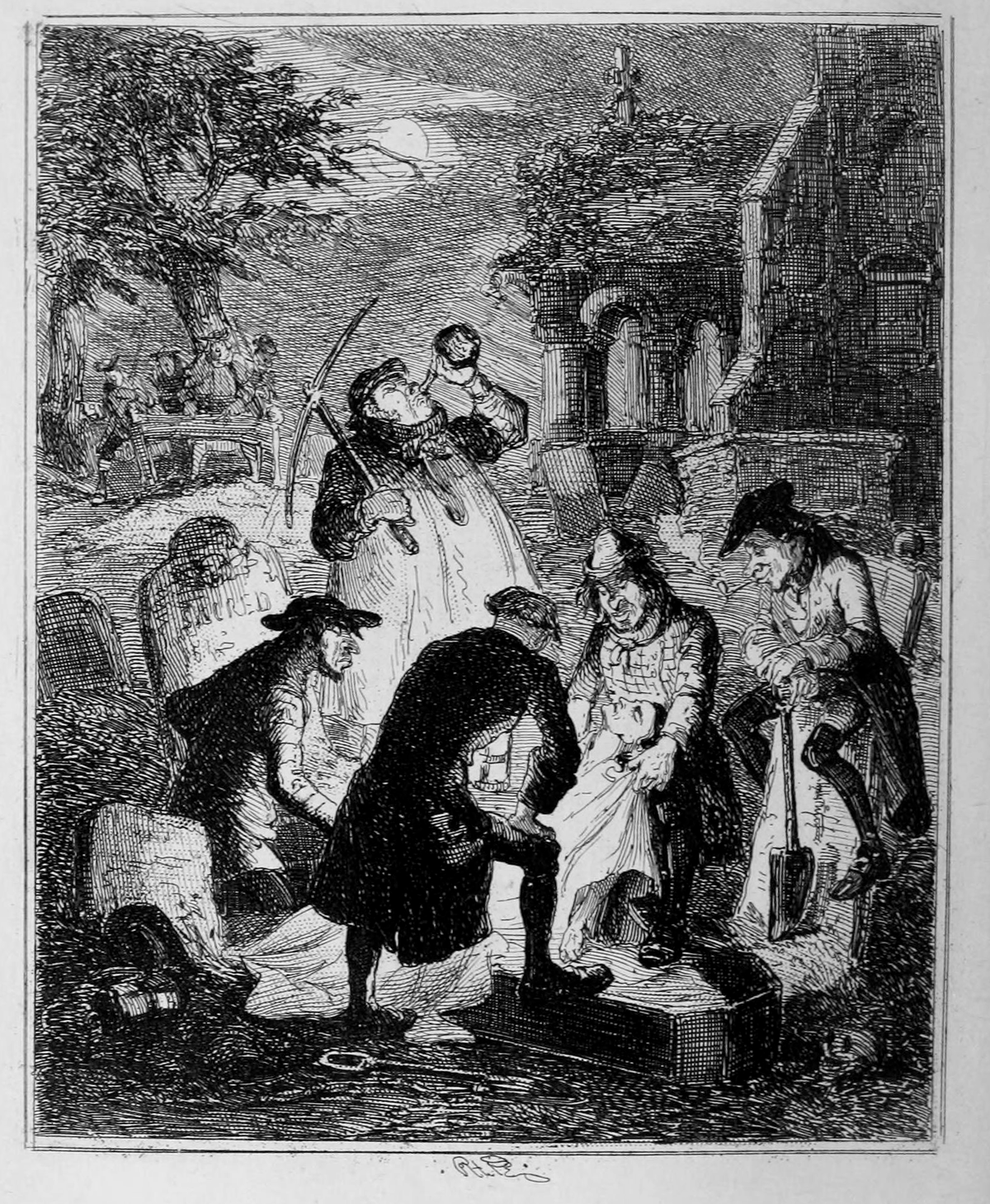
Brenda Novak has written over 50 novels and is a New York Times Bestselling Author, so she clearly has a following, although if trying to place her genre it would be somewhere on the misogynistic side of historical romance. This novel begins with an interesting premise about Abigail Hale, a woman who buys corpses to supply the medical school, run by her father, with cadavers. These corpses are often found illegally by grave robbers or, worse, people who kill in order to have a fresh stock of bodies. 

Resurrectionists by phiz

One of the grave robbers in The London Supply Company, Max Wilder, is actually a nobleman in disguise, trying to find out what happened to his step-sister who has disappeared and he fears she has been murdered. This scenario is interesting, but it all goes rapidly downhill when Abby goes to the home of the leader of the gang, Big Jack, to recover the money they took from her. She is captured and she falls in love with Max, who supposedly protects her, but also initiates her sexually while holding her captive; it’s all very distasteful and the sexual fantasy element seems misguided.

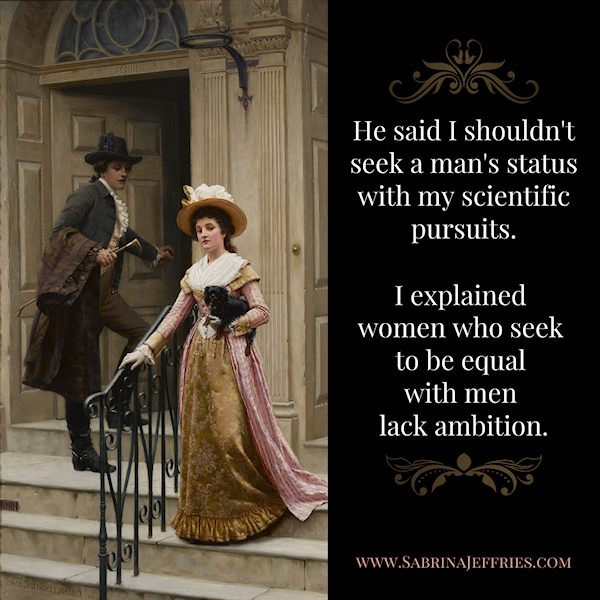
Abby dreams of being a surgeon, although women are forbidden from practicing medicine. Supposedly she has some feminist leanings, but she still likes to be dominated and falls for her captor. She refers often to the plight of women in the late Regency period, “Because she refused to adopt the role society tried to press upon her, she had always fought to fit in, even at the college. Lecturers and students alike couldn’t understand why she couldn’t be content to sit in the corner and darn socks.” Women have few options, apart from to go to the alms-houses, which “provided such a cruel and meagre existence that no one wanted to end up there”, and of course, there is prostitution.

There are offerings of historical information which do not blend with the plot, and land with a clang, such as the mention of “Sir Robert Peel’s new police force” or “the notorious gentleman’s guide to the current brothels and prostitutes in London – Harris’s List of Covent Garden Ladies.” It is as though Novak wants to educate as well as titivate, and she is far from subtle with the introduction of knowledge, but she also writes of England for an American market, as evidenced by her slips of language. Although Max is a high class noble (Lucien Cavendish, the Duke of Rowenberry), he tells Abby to, ‘Quit being so smug”, which is not an English expression of any era.

Interior with a Sleeping Man and a Woman Darning Socks by Wybrand Hendricks

Max is supposedly heroic and appealing in the way he cares for Abby, and she is drawn to his male magnetism and controlling aspect. “Max Wilder couldn’t be classified as a saint. There was something dangerous about him, something bordering on the uncivilized. From what she had seen so far, he dared more than a man should. He flouted whatever rule he chose to flout, and seemed to have no compunction about asserting his will in any given situation, regardless of how it affected others.” The novel constantly switches viewpoint, and we are meant to believe that a man so used to getting his own way is attracted to someone who might question his authority.

Abby admits her love for Max only to discover he is betrothed to another woman through an old alliance between families; of course it wouldn’t do for him to have any romantic attachment to anyone but her. Although she is now pregnant with his child (and we have been told about the consequences of unwed motherhood), she does the ‘decent thing’ by not telling him. “If she loved him, she would support him in what would make him the happiest, and she knew what that was.” This is patently ridiculous and a romance novel trope; one of many. There are long scenes of what Max and Abby feel for each other, but the actual plot hurries towards the end. In the last few chapters there are stabbings, abduction, hangings, and circumnavigations of the globe which appear to take weeks rather than months.

The sexual politics are at best uncomfortable and at worse downright offensive. As for the narrative, all of the potential interest in a story about grave robbers, medical science, and a young woman trying to negotiate a life in a man’s world is swept away on a torrent of clichéd romantic claptrap.

Wednesday, 2 June 2021

Women's Health Matters: Pain and Prejudice


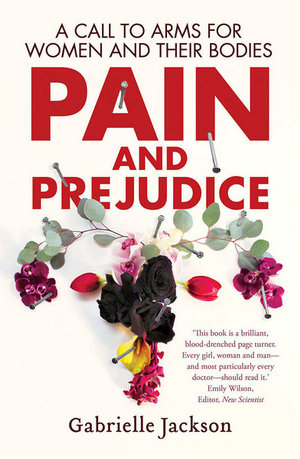
Pain and Prejudice by Gabrielle Jackson
Allen & Unwin
Pp. 321

Subtitled ‘A Call to Arms for Women and Their Bodies’, this book focuses on how women have been badly treated by the medical profession in the ‘Western World’ (there are many studies, figures and reports, all from the UK, the USA, Australia and New Zealand) and suggests that the times are ripe for revolution. It centres on the fact that medicine was traditionally a male profession and that the male was considered the default, so the difference in women was barely acknowledged let alone appreciated. In a similar line to that taken by Caroline Criado Perez in her book, Invisible Women: Exposing Data Bias in a World Designed for Men, Jackson argues that women are being ignored at best and killed at worst due to this gender bias in medicine.

In general women live longer than men, but they are in more pain. They are not taught to know their bodies or talk about their ailments; they are meant to nurture and support others before themselves. Women aren’t accustomed to discussing ‘female ailments’ – menstruation, menopause and sexual pain are still relatively taboo topics. Many women can’t identify their reproductive organs on a diagram and are certainly not meant to talk about them, as it is considered shameful. An influential study by Melissa Parker on Australian girls found that 93% of them experienced some period pain. About 20% experience severe pain, 24% say their period interferes with four out of nine life activities, and 26% miss school because of pain. “So a quarter of girls are missing school because of pain, and nobody thinks it’s a problem?”

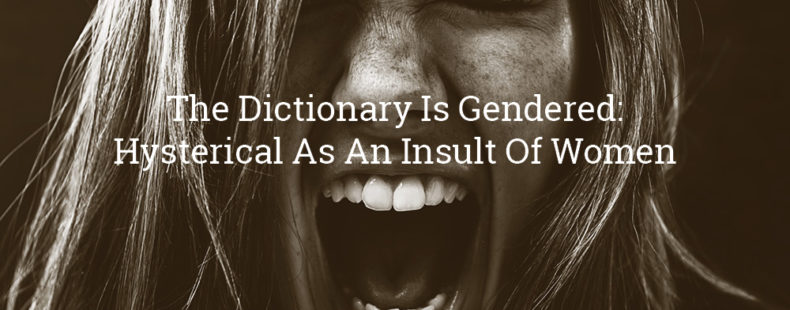
When women demand attention, over their health or issues of equality, they are often labelled as hysterical, and “As an insult, ‘hysterical is still disarmingly effective.” Yet, when men present with the exact same symptoms, it is called shellshock or PTSD. Traditionally medicine was a male profession, and women are often not believed about their own health. In the late nineteenth and early twentieth century, “medicine became an elite profession and took over from religious institutions as the primary enforcers of the social roles of women.”

Because the default case study for all ailments is male, “We assume that the ways in which women are different from men must be the ways in which women are inferior or broken or diseased when in fact it might be that women are just different.” Symptoms of heart attacks are different in women and often misdiagnosed. A World Health Organisation report explains, “It has traditionally been thought of as a man’s disease which has led to deadly consequences for women – in 2004, 7.4 million women over 60 years of age died of cardiovascular disease compared with 6.3 million men.” Stress is a factor in heart disease, but women are often dismissed as suffering from nothing but anxiety when men who present with the same symptoms are diagnosed with heart disease.

Before 1993 there was no legal requirement to include women in clinical trials 

Many clinical tests only use men in their trials, which can prove fatal to women. In 1993, the US Food and Drug Administration and the National Institutes of Health mandated the inclusion of women in clinical trials. Before then, trials were routinely carried out on men only, including: a twenty-year longitudinal study (began in 1958) to explore whether taking an aspirin every day could reduce the risk of heart disease (conducted in 22,071 men and no women); a 1982 trial looking at whether dietary change and exercise could help prevent heart disease (conducted in 13,000 men and no women), and even a trial in the 1960s to investigate whether supplementation with oestrogen was an effective preventive treatment for heart disease (conducted in 8341 men, and no women).

Women generally experience more chronic pain than men – they suffer pains that cannot be seen, so they are often discounted, and pelvic pain is “also beset by stigmas and taboos that make it difficult for women to talk about their sex organs or anything related to them.” When women are believed about experiencing pain, they are often thought to be exaggerating. “Even female doctors, after training and working in the heavily masculinised medical culture, can view this language as confronting and histrionic.”

Women suffer more chronic pain than men

There are several overlapping pain conditions and women who suffer from one are likely to also suffer from others. These include endometriosis; vulvodynia; fibromyalgia; chronic fatigue syndrome/ myalgic encephalomyelitis; interstitial cystitis/ painful bladder syndrome; temporomandibular joint disorders; irritable bowel syndrome; chronic tension-type headache; chronic migraine and chronic low back pain. “Chronic pain conditions aren’t conditions that kill us but they radically alter our opportunities to reach our full potential in life… Pain doesn’t actually kill people – it keeps women in the home and out of work, which has no effect upon the power structures of society, providing no incentive for action.”

Doctors don’t really want to see patients who are difficult to diagnose and harder to fix as it looks bad for their figures and solved statistics: they even call them ‘heart-sink patients’. Women are aware of this stigma, and when they are told they have medically unexplained symptoms, anxiety, depression or are disbelieved, they can move from doctor to doctor in order to find a diagnosis or treatment relief. “In an exasperating development, ‘doctor-shopping’ has come to be seen as an indicator that pain is made up, rather than a result of pain doctors won’t believe.”

Women’s pain is not treated as seriously as men’s pain, and Jackson suggests that women should not simply accept this, but educate themselves about their bodies and demand that they be treated with equal funding and respect. It would be a brave and/or stupid person who would argue with that.

Tuesday, 13 April 2021

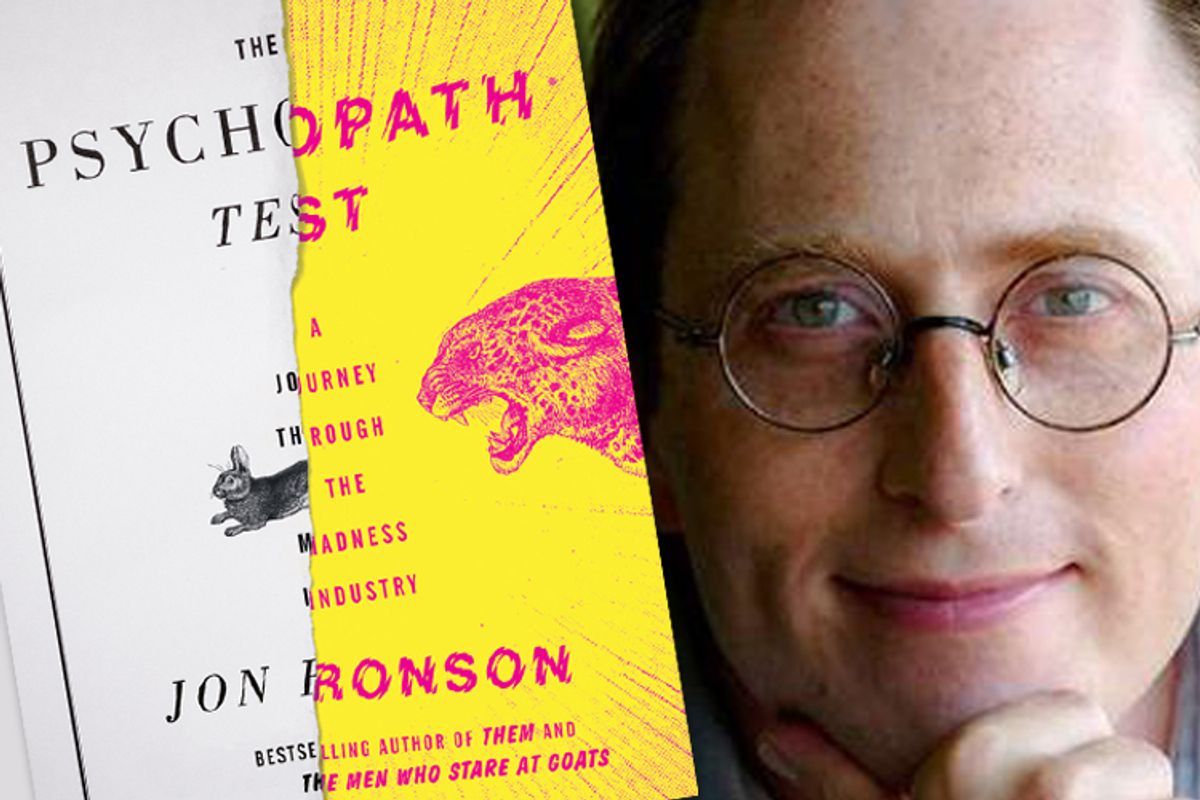
There's Method in It: The Psychopath Test


The Psychopath Test: A Journey Through the Madness Industry by Jon Ronson 
Riverhead Books
Pp. 272

We have a lot of examples in popular culture of what it looks like to be ‘mad’. The mental health industry has become increasingly prevalent and topical. Journalist Jon Ronson explored this phenomenon through a series of interviews and other research methods to publish this highly accessible study in 2011. While many people now self-diagnose, due to the availability of tests and checklists, others exhibit psychopathic behaviour almost undetected, and often end up running companies or countries.

He begins with the premise that it can be harder to persuade people you are ‘sane’ than it is to convince them you are ‘mad’. Ronson is allowed access to one of the most notorious psychopaths, incarcerated in Broadmoor Clinical Lunatic Asylum, Tony, who is allowed to read his own medical files and pass them on to Ronson. Tony claims that he faked madness and now no one believes he is sane when he tries to deny it. “Tony said faking madness was the easy part, especially when you’re seventeen and you take drugs and watch a lot of scary movies. You don’t need to know how authentically crazy people behave. You just plagiarize the character Dennis Hopper played in the movie Blue Velvet.”

Often psychopaths can present as totally charming, which makes it difficult to detect. Ronson says, “The moment I’d first seen Tony, he had strolled purposefully across the Broadmoor Wellness Centre in a pin-striped suit, like someone from The Apprentice, his arm outstretched.” (That particular TV reference is unintentionally relevant). Dressing smartly and being personable (“Glibness/ Superficial Charm”) is the first indication on the most available test; the twenty-point Hare Checklist, devised by Canadian psychologist Bob Hare, “the gold standard for diagnosing psychopaths.” The checklist is included in the book , so that readers can take it for themselves. Find it here: http://www.clintools.com/victims/resources/assessment/personality/psychopathy_checklist.html

It is common to redefine the psychopathic traits on the checklist as Leadership Qualities and the crossover can be a very fine line. In examining ‘lack of remorse or guilt’ and ‘callous/ lack of empathy’, Ronson highlights CEO Al Dunlap, formerly of Sunbeam. It is evident that if this book had been published ten years later, Donald Trump and Jeff Bezos would have been prime case studies. Ronson wonders whether highly driven and successful people are actually insane, and if what makes psychopaths so scary – no fear, filter, no conscience – also makes them good executives. Hedge funds, pension funds and investment banks advise their clients which companies to invest in, and they rejoice in job cuts and applaud as research facilities, tech areas and training centres get destroyed. Psychopathic behaviour is on prominent display on Wall Street.

Mental health disorders are listed in the DSM (Diagnostic and Statistical Manual of Mental Disorders), which lists mental disorders. It is used by clinicians, researchers, psychiatric drug regulation agencies, health insurance companies, pharmaceutical companies, the legal system and policymakers. Robert Spitzer, who worked on DSM-III explained that the idea was to list potential new mental disorders and a checklist of their overt characteristics. “It seemed a foolproof plan. He would eradicate from psychiatry all that crass sleuthing around the unconscious. There’d be no more silly polemicizing… Instead it would be like science. Any psychiatrist could pick up the manual they were creating – DSM-III – and if the patient’s overt symptoms tallied with the checklist, they’d get the diagnosis.”

DSM-III sold more than a million copies, mainly to civilians rather than professional psychiatrists. “All over the western world people began using the checklists to diagnose themselves. For many of them it was a godsend. Something was categorically wrong with them and finally their suffering had a name. It was truly a revolution in psychiatry, and a gold rush for drug companies, who suddenly had hundreds of new disorders they could invent medications for, millions of new patients they could treat.” As one psychiatrist Ronson interviewed confirmed, “A surfeit of checklists, coupled with unscrupulous drug reps is a dreadful combination.”

Ronson can’t help but test himself and starts to worry that, as a journalist, he might meet some of the criteria. One of his interview subjects tells him, “Finding patterns is how intelligence works. It’s how research works. It’s how journalism works. The search for patterns.” He also considers that in the very act of researching and writing this book, he might be contributing to the way that madness is packaged and presented for entertainment. “I was writing a book about the madness industry and only just realizing that I was a part of the industry.” He probably doesn’t think about the paradox too deeply. After all, that way madness lies.