Showing posts with label journalism. Show all posts

Tuesday, 30 May 2023

Newspaper Analysis - The Weekend Australian Inquirer 27-28 May


When I returned to Australia after five weeks in Europe, I thought I would have a slow Sunday of reading the paper in the pub and catching up with local news and events. I forgot that the selection of Sunday papers in this country is strictly limited to a tabloid gutter-press and right-wing Murdoch-owned subsidies of an American mass-media cartel. 

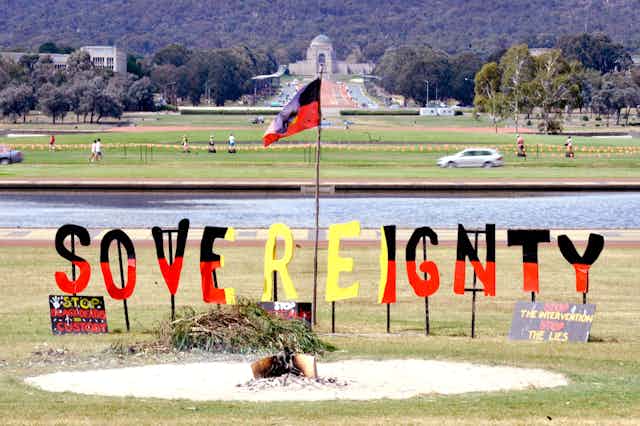
So, I was stuck with The Weekend Australian from which I learned that the country is up in arms over The Voice referendum, which seeks to give Indigenous Australians representation in the constitution. Apparently it is divisive and unclear, although how they reach that conclusion is difficult to say as they also argue that the government has not released enough detail about something which will make the people 'bound in perpetuity'. 

Many other articles criticise Stan Grant, who questioned the role of the monarchy in contemporary Australia during the coverage of King Charles III's coronation on the ABC network, the country's national broadcaster, principally funded by direct grants from the Australian Government and  administered by a government-appointed board. Opinion pieces opine that Stan Grant is out-of-step with public opinion and this six-and-a-half-hour broadcast was not the place to raise this issue. It doesn't help The Australian's cause that the multi-award-winning journalist Stan Grant is a proud Wiradjuri man. He has since quit television-hosting duties in response to online racist abuse over his coronation comments about historic Aboriginal dispossession. The Australian does not suggest when would have been a good time to make these comments. 

Without a hint of irony or awareness of hypocrisy, other articles claim that police tactics over COVID-19 were regressive as they shut down free speech based on questionable science. The Australian thinks there should be an inquiry into why people's Twitter comments were shut down. Speaking your mind in a time of great uncertainty in the midst of a pandemic with the potential of whipping up hysteria and pandemonium is clearly fine - as long as your view is individualist and supports capitalism. 

There is much frothing at the mouth about body dysmorphia, transgender popularity, and the discomfort of listening to women when they tell their stories. Brittany Higgins (a Liberal party junior staffer who alleged that she she was raped by a Minister in Parliament House) is a particular target for villification.

According to journalist Janet Albrechtsen, Brittany Higgins had a 'strategy' to go to the media first and the police second. She is the face of the #MeToo movement and, as a role model for other women, her 'tactics' 'may be mimicked by other women'. Albrechsten claims that, "Decisions by her and those around around her to air her allegation in the media have undermined key features of our criminal justice system." She continues, "The more times Higgins gave her version of events to the media, the more likely there may be inconsistencies in what she said happened."

Of course it helps The Australian to have a female reporter discrediting the words of an alleged rape victim. Albrechsten takes pot shots with sneering comments such as, "On more than a few occasions, the normal rules and sound judgements appear to have been discarded for Higgins." And she affirms this position with, "So many people in positions of power who were caught up in the hype of the Higgins media storm appeared to have made more decisions." Albrechsten appears to pander to the notion that size matters in the hunt for more column inches, and whereas I believe we should listen to women and take their accounts of abuse seriously, this article has me agreeing with one thing at least: #notallwomen
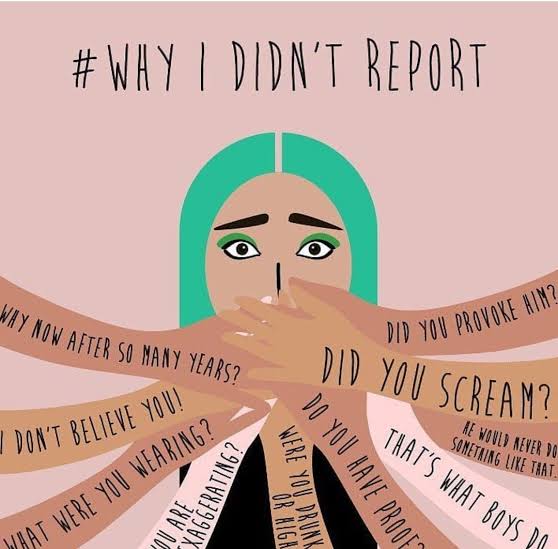

Richard Guilliatt weighs in on the debate (how is it even a debate?) by trashing as unreliable the memories of abuse victims after recovering repressed memories of trauma through a counselling technique called eye movement desentsitisation and reprocessing (EMDR) conducted by "so-called experts." He argues that, "sexual assault allegations were no taken as seriously as they should have been in the past but the public mood has shifted towards believing an allegation must be the truth." While neatly glossing over all that messy trauma, Guilliatt is upset that, "prosecutors in the current climate appear to see their role as supporting claimants rather than assessing cases on their viability." Heaven forfend any abuse victim might actually receive support as well as justice. 

More examples of the smug, patronising, sexist, ageist, scaremongering, homophobic, racist tone of the paper follow. But that's just my opinion. 

Dangers of AI risk smothering its benefits by Natasha Bita

I'm not saying it's alarmist but, "Like Siri on steroids, AI super-intelligence is rapidly disrupting the world of teaching and learning in ways that threaten to make reading and writing redundant." OK, so I am saying it's alarmist. The danger is, according to Bita, that "AI has caught most educators unprepared for its potential to turbo-charge teaching while giving lazy students an easy opportunity to cheat." She goes on to ask, "Will AI make students so lazy that they don't learn to think for themselves? What if AI re-writes history, spouts propaganda or 'hallucinates' by generating the wrong information?" What, like certain newspapers do now? 


She warns that "schools and universities will need to change assessment methods, relying less on take-home assignments and more on supervised exams, spoken tasks, and video assessments". It's almost as if educational institutions haven't been constantly adapting and changing their assessment methods every single year anyway. While one might think that drawing attention to the digital divide is a left-wing concern and an opportunity to talk about class and wealth inequality. "All state governments have blocked ChatGTP in state schools but many private schools are embracing its use, potentially giving their students an academic headstart." However, the example used of the school that is reaping the rewards of this unfair advantage is the Islamic Collage of Brisbane, because of course, why would you miss an opportunity for ramping up a touch of Islamophobia?

Left Dangling in a climate protest crackdown by David Penberthy

David Penberthy writes about the new laws in South Australia which impose greater financial accountability on protestors, or "those causing the mayhem", His language includes describing some of said protestors as, "retiree revolutionaries", "a small but crafty band of elderly 'rebels', as the XR activists call themselves", and "XR rebel Meme Thorne, a 69-year-old actor from the hippie haven of Willunga." 

Thorne abseiled down a bridge and "dangled above the traffic" in Adelaide as part of a protest against the Australian Petroleum Production and Exploration Association conference. While Penberthy makes no mention of the political motivation of this group, apart from the glib "in defence of Mother Earth", he expands upon the potential threat to the good citizens of Adelaide. "Her actions brought the city to a halt for an hour, even preventing some patients from making appointments at the Royal Adelaide Hospital".

The tone is exasperated and patronising, hiding a credible death threat behind an attempt at blokish banter. "Capturing the frustration of South Australians, Police Commissioner Grant Stevens spoke for many when he said dryly: 'The ropes are fully extended across the street so we can't, as much as we might like to, cut the rope and let them drop.'"

In response, Opposition Leader David Spiers, announced on talkback radio proposed amendments to the Summary Offences Act, increasing fines for such protests from $750 to $50,000 or three months' imprisonment. "It was a hitherto unseen moment of gut-instinct politics from the new SA Liberal leader and was lapped up by talkback listeners, many ringing in with messages of support from inside their stationary cars." Do we really want policy to be decided by knee-jerk reactions and people who lap things up like dogs and make phone-calls while driving?

Surprising life of the accidental president - review by Troy Bramston 

In an article about a new book, An Ordinary Man: The Surprising Life and Historic Presidency of Gerald R Ford by Richard Norton Smith (in which Smith describes Ford as being "charismatically challenged"), the reviewer, Troy Bramston adds this reflection:
"You can pass judgment on Ford or any other president by any standards you want, including contemporary standards. But it seems to me that you can only understand Ford or any other president or any other difficult decision, by immersing yourself in the context of the time."
Harpy Daniels wants YOU: US military goes for woke by Adam Creighton, Washington Correspondent

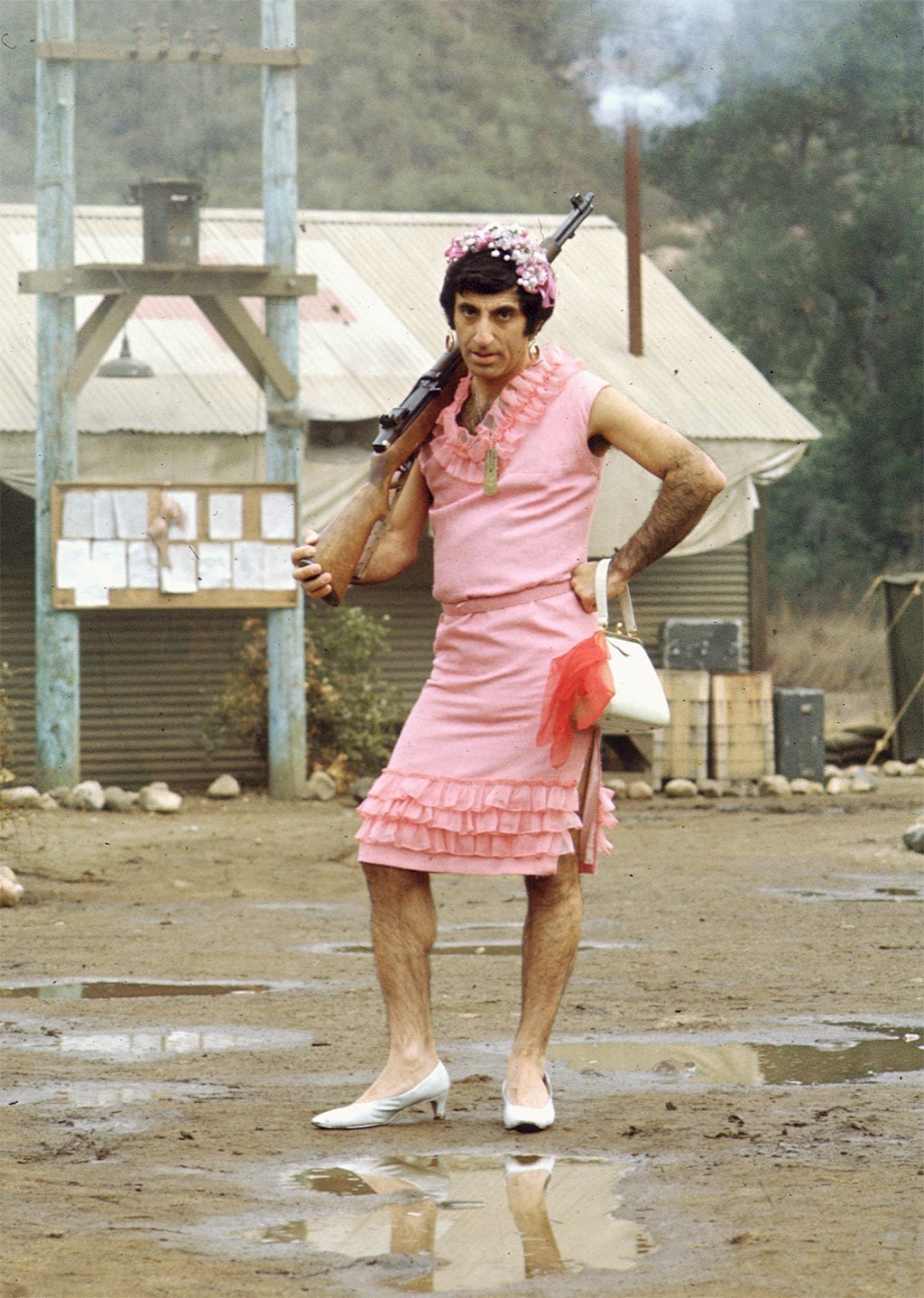
US Navy Yeoman 2nd Class Joshua Kelley appeared in persona as drag queen Harpy Daniels in a TikTok video encouraging young Americans to join the service. Creighton reports that, "Republican senators, former marines and much of the American public were shocked that the navy employed drag queens, let alone endorsed them to boost recruitment." Except, it doesn't. Kelley may be employed by the US Navy but, as the articles admits, this was not a sanctioned video. "The navy, which at first defended the promotional decision publicly, later denied Kelley was part of any formal program."

It transpires that the US military is struggling to meet its recruitment targets. "The US military, which has about 1.35 million active-duty personnel spread across the navy, air force, army, marine and space forces, requires more than 155,000 new recruits this year to replace departing personnel." Apparently this tough recruitment environment is comprised of "a perfect storm of low unemployment and steadily declining patriotism, fitness and interest among young Americans. Covid-19 made all this even worse."

Many young people are rejecting active military service because they don't see a need to ask what they can do for their country. "A prominent survey of Americans published in the Wall Street Journal in March revealed a huge drop in traditional values - patriotism, religion, family, community service - since 1998, especially among young people. Overall, only 38 per cent of respondents said patriotism mattered, down from 70 per cent."

In an outstandingly hypocritical swipe at the audacity of young folk to want decent compensation for their labour, the article goes on, "The only priority the Journal tested that has grown in importance in the past quarter-century is money, which was cited as very important by 43 per cent in the new survey, up from 31 per cent in 1998, the paper said, in what was a depressing read for anyone with traditional values." Well, curse those young people for needed money to survive in a consumerist world of high rent, fuel and commodities of someone else's making.

Could it be possible that environmental factors and toxic politics have leached the sense of service from young men?  Being told what to do without rhyme or reason is unappealing. This would indicate that the conservative role model is failing to attract young folk, and the 'values' of docile following of a capitalist construct is no longer something towards which they slavishly aspire. But sure, blame the drag queen. Perhaps Kelley should change their moniker to Red Herring.

Urban planning design transformed post-COVID by Bernard Salt

It's well written and well argued, and it definitely wants to give power to the individual and wrest it away from the 'nanny state'. Might that be because individuals can be persuaded to do what they are told, while collectives can stir up trouble for corporations? It starts out well, as Salt claims, "It makes sense that Australia, a nation largely founded on immigration [once again, the Indigenous contribution to nationhood is completely overlooked, but that's a whole different Stan of Grants], should evolve as a proving ground for town planning. Since European settlement we have created new cities and accommodated urban growth on a vast scale. And there is every reason to expect our cities to grow further in the years ahead." 

He can't resist a dig, however; "Modern homes typically have water tanks which (notionally) reduce demand for municipal water supplies. Solar panels and battery storage also shift responsibility for power generation and storage from the collective to households. It's all done to help the environment, of course, but it also has the advantage of freeing up funds that in a previous era would have been directed to creating public assets." This is a hugely selfish way of looking at things that supports the wealthy individual who can, and leaves those who can't afford such modifications out in the cold.

We can make people responsible for their own amenities and claim it is all in their best interests. "Knowledge workers living and working together in the dense inner city generate a frisson that creates entrepreneurial and/or economic activity. This idea supports the argument for density. But the pandemic unleashed powerful new forces that challenge the logic of how a city should operate. The reign of the knowledge worker is giving way to new roles such as carers, who live and work mostly in the suburbs. Plus there is a proportion of people who will work from home several days a week." Yes,this doesn't mean they don;t want city amenities or public transport, and it doesn't support any user-pays theory. If you can't pay; you can't use them. That doesn't mean you don't want to. 

"I think the narrative of city life is changing in the post-pandemic era. Our priorities have shifted towards security and the home, and our tolerance for commuting has lessened... It suggests a rising empowerment of moderately skilled workers based in the suburbs and regions, who, therefore, should have a greater say in how collective resources might be allocated." In other words, keep people in their homes, don't encourage them to become involved in community enterprises, and you won't have to build any facilities or infrastructure, unless people are prepared to pay for it themselves. Sorted. 
Tuesday, 13 April 2021

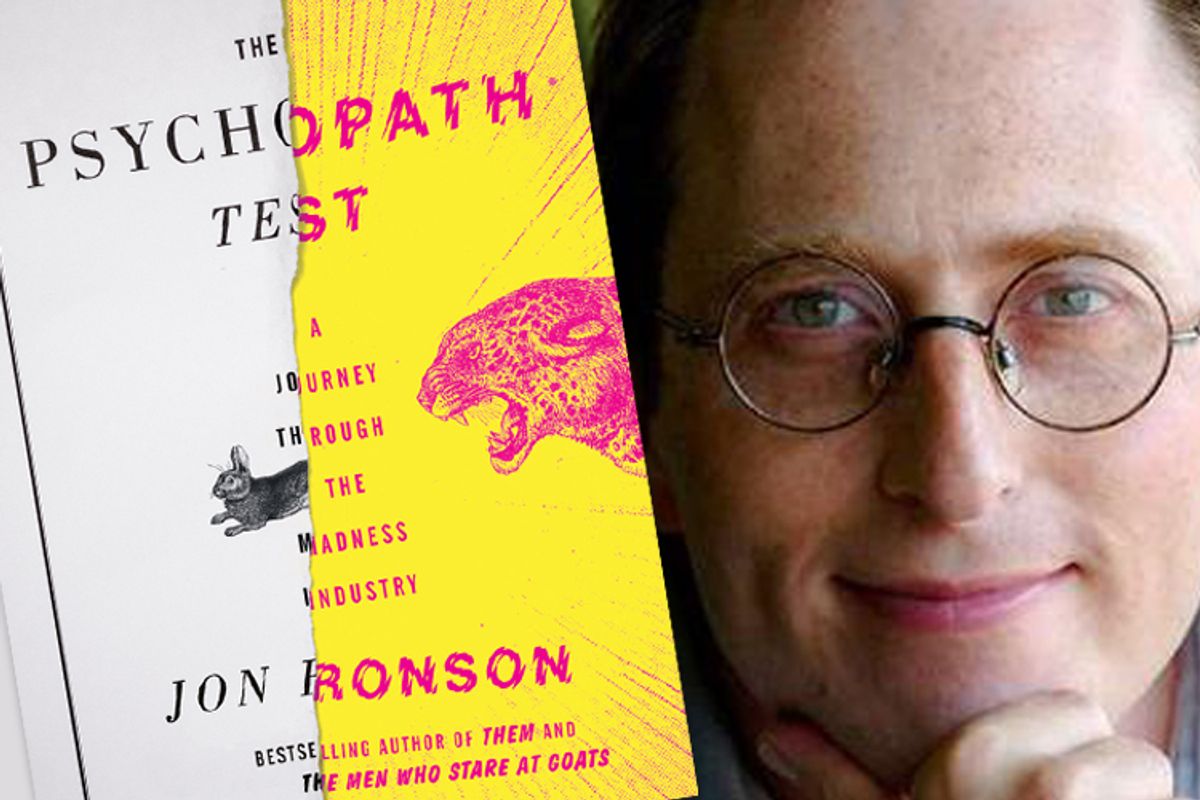
There's Method in It: The Psychopath Test


The Psychopath Test: A Journey Through the Madness Industry by Jon Ronson 
Riverhead Books
Pp. 272

We have a lot of examples in popular culture of what it looks like to be ‘mad’. The mental health industry has become increasingly prevalent and topical. Journalist Jon Ronson explored this phenomenon through a series of interviews and other research methods to publish this highly accessible study in 2011. While many people now self-diagnose, due to the availability of tests and checklists, others exhibit psychopathic behaviour almost undetected, and often end up running companies or countries.

He begins with the premise that it can be harder to persuade people you are ‘sane’ than it is to convince them you are ‘mad’. Ronson is allowed access to one of the most notorious psychopaths, incarcerated in Broadmoor Clinical Lunatic Asylum, Tony, who is allowed to read his own medical files and pass them on to Ronson. Tony claims that he faked madness and now no one believes he is sane when he tries to deny it. “Tony said faking madness was the easy part, especially when you’re seventeen and you take drugs and watch a lot of scary movies. You don’t need to know how authentically crazy people behave. You just plagiarize the character Dennis Hopper played in the movie Blue Velvet.”

Often psychopaths can present as totally charming, which makes it difficult to detect. Ronson says, “The moment I’d first seen Tony, he had strolled purposefully across the Broadmoor Wellness Centre in a pin-striped suit, like someone from The Apprentice, his arm outstretched.” (That particular TV reference is unintentionally relevant). Dressing smartly and being personable (“Glibness/ Superficial Charm”) is the first indication on the most available test; the twenty-point Hare Checklist, devised by Canadian psychologist Bob Hare, “the gold standard for diagnosing psychopaths.” The checklist is included in the book , so that readers can take it for themselves. Find it here: http://www.clintools.com/victims/resources/assessment/personality/psychopathy_checklist.html

It is common to redefine the psychopathic traits on the checklist as Leadership Qualities and the crossover can be a very fine line. In examining ‘lack of remorse or guilt’ and ‘callous/ lack of empathy’, Ronson highlights CEO Al Dunlap, formerly of Sunbeam. It is evident that if this book had been published ten years later, Donald Trump and Jeff Bezos would have been prime case studies. Ronson wonders whether highly driven and successful people are actually insane, and if what makes psychopaths so scary – no fear, filter, no conscience – also makes them good executives. Hedge funds, pension funds and investment banks advise their clients which companies to invest in, and they rejoice in job cuts and applaud as research facilities, tech areas and training centres get destroyed. Psychopathic behaviour is on prominent display on Wall Street.

Mental health disorders are listed in the DSM (Diagnostic and Statistical Manual of Mental Disorders), which lists mental disorders. It is used by clinicians, researchers, psychiatric drug regulation agencies, health insurance companies, pharmaceutical companies, the legal system and policymakers. Robert Spitzer, who worked on DSM-III explained that the idea was to list potential new mental disorders and a checklist of their overt characteristics. “It seemed a foolproof plan. He would eradicate from psychiatry all that crass sleuthing around the unconscious. There’d be no more silly polemicizing… Instead it would be like science. Any psychiatrist could pick up the manual they were creating – DSM-III – and if the patient’s overt symptoms tallied with the checklist, they’d get the diagnosis.”

DSM-III sold more than a million copies, mainly to civilians rather than professional psychiatrists. “All over the western world people began using the checklists to diagnose themselves. For many of them it was a godsend. Something was categorically wrong with them and finally their suffering had a name. It was truly a revolution in psychiatry, and a gold rush for drug companies, who suddenly had hundreds of new disorders they could invent medications for, millions of new patients they could treat.” As one psychiatrist Ronson interviewed confirmed, “A surfeit of checklists, coupled with unscrupulous drug reps is a dreadful combination.”

Ronson can’t help but test himself and starts to worry that, as a journalist, he might meet some of the criteria. One of his interview subjects tells him, “Finding patterns is how intelligence works. It’s how research works. It’s how journalism works. The search for patterns.” He also considers that in the very act of researching and writing this book, he might be contributing to the way that madness is packaged and presented for entertainment. “I was writing a book about the madness industry and only just realizing that I was a part of the industry.” He probably doesn’t think about the paradox too deeply. After all, that way madness lies.

Friday, 28 August 2020

Friday Five: More Podcasts

Back in May I wrote a blog post about the podcasts to which I was listening in COVID-19 times. Well, it's still going on, and I'm still listening. I just keep adding them to the list, and they roll around and keep me entertained alongside my regular favourites. Here are five more recently-listened-to podcasts.

5 Recent Podcasts:

  1. The Guilty Feminist (Patreon) - Deborah Frances-White hosts this podcast which ranges from stand-up comedy to interviews about hard-hitting topics such as domestic abuse and genital mutilation; recent episodes have covered Justice, Satire, Rebellion, Shame, Education and Credibility. Every episode kicks off with a round of  'I'm a Feminist, but...' as hosts and guests confess to 'shameful' double standards which we can all recognise. While mixing up the tone, the message remains firmly to fight for gender equality, and this is also the podcast that introduced me to the wonderful protest folk music of Grace Petrie. 
  2. The Anfield Wrap (TAW Player) - Yes, it's all about Liverpool F.C. and yes, it has over 28 million downloads worldwide. Neil Atkinson hosts a group of blokes (and it is nearly always blokes, unfortunately) who sit around discussing the highs (of which there are many lately) and lows of the club. There are a number of levels to which one can subscribe, but the free content is sufficient for me, covering transfers, signings, matches (both before and after), player interviews and a plethora of awards. Bonus 'cup of tea' episodes address current issues and how they affect the club from supporting foodbanks to LGBTQI rights and kicking racism out of football. 
  3. The lads of The Anfield Wrap with the manager of the Anfield team
  4. No Filter (Mamamia) - If interviews with interesting folk are your thing, then this Australian podcast hosted by Mia Freedman might be for you. With a fresh approach and a candid attitude she chats to well-known celebrities (Julia Gillard and Osher Gunsberg) and 'ordinary people' with incredible stories, such as a mother of a trans child or the bloke whose wedding sparked a COVID outbreak. 
  5. Have You Heard George's Podcast (BBC Sounds) - George Mpanga (aka George the Poet) delivers a highly individual take on societal issues through a mixture of music, poetry and storytelling. The first series, which came out in 2018, won four gold awards at the British Podcast Awards, plus two silvers and the podcast of the year.  His subjects included blaxploitation films, Reaganomics and why drug dealing and murder can seem the only options for black youth, whether in the 1970s and 80s US or contemporary UK.
  6. Newscast (BBC News) - I started listening to this when it was Brexitcast, then it became Newscast, then Coronaviruscast, and now I think we're back to Newscast. It might be tricky to keep up with the title but the premise is the same - intelligent, topical political and social issues introduced by Adam Fleming, and discussed 'with the BBC's best journalists and other people who know what they're talking about'. It's basically how I check in with what's going on back in Blighty; it's interesting informative and measured with lots of heft and a touch of levity.

Wednesday, 11 September 2013

Stop the Press (Gallery)

And then I went up to the Press Gallery, which was my favourite part of the entire building. It retains its original decor – rather nasty mushroom-coloured walls – and is very shabby compared with the rest of the building.

Audio recordings are available for the public to listen in on some past interviews, such as this one from press journalist Gay Davidson, “In general I don’t think journalists should play God, but I see no reason why they shouldn’t comment and interpret and the more of that there is in newspapers, the better.”

 
The tiny corridors and soundproofed rooms are empty now, but it is easy to imagine them resounding with footsteps and the chatter of typewriter keys. The space in which all the journalists worked was minimal, and the press gallery members and politicians all worked together intimately. Press Gallery journalist, Fred Brenchley wrote,
“One of the joys of working around here was that you were so close... you felt always that you were a part of public policy making because you were working so close to ministers... and you could write things that you felt perhaps influenced the debate here and there. Journalism after all is the first rough draft of history.”
 
The press boxes at the top of the stairs would have been the main site of all the action. Members of the foreign press such as The Guaming Daily (China), Pravda Tass (USSR) and The Times (UK) were accredited members of the gallery with a press box, although they did not have offices here. Yuri Yasnev, a journalist with Pravda, said in 1965, “We’re covering Australia because it’s [becoming] more important in covering international affairs.”

Canberra was very small and the press and politicians alike missed the familiar surroundings of the bigger cities. They spent time socially together and built up camaraderie on trains between Canberra and state capitals. They stayed in the same hotels, drank in the same bars, and even played cricket together, although that rivalry may not always have been entirely friendly. 
 
Prime Minister Bob Hawke hit in the face while batting in the annual cricket match against the Federal Parliamentary Press Gallery in 1984. The bowler was ABC journalist Gary O'Neill
 It was clearly cramped and there was no sense of privacy, but there must have been an element of excitement about the place. Colin Parkes, Press Gallery journalist, explains,
“The nature of this building was that the whole building and everyone in it was a source. You could walk in this building at nine in the morning and you could sniff something. You could feel an atmosphere that something was going on. It was a quickened pace or, ‘What are those two talking about? Those people are enemies, why are they talking? ...You could hide nothing. You couldn’t have secret Cabinet meetings. You couldn’t have secret committee meetings. If a minister was summonsed to the Prime Minister’s office, the odds were he’d pass six journalists on the way.” 
Paul Malone agrees, “There was a buzz about this place. You could be sitting in my little office and you would suddenly hear footsteps in the corridor and people rushing. And the common greeting was, ‘What’s happening?’ Nobody ever said, ‘Hello’ or ‘Good day’ or anything. It was always ‘What’s happening?’”

 
The equipment was clearly archaic, but the reporters loved it, especially as they began to be taken seriously for their work. Press Gallery journalist Alan Ramsey explains that reporters rarely got by-lines in those days and their articles were headed, ‘by our political correspondent’, but The Australian changed that, building up its staff and promoting its journalism.
“They introduced not only a degree of competition, but also the worth of the journalist himself. That somehow the person writing the story was as important as the story they were writing.”  
It appeared that not everyone agreed, and there was a little friction between some of the politicians and the press. J.S. Rosevear, Speaker of the House of Representatives was keen to point out in 1947, “After all, the press has no right to be here. The only right the press enjoys here is the privilege bestowed upon them by the Parliament.”


In one of the sound-booths, you can have a go at recording your own interview from an autocue and then listen to it played back, if you can bear the excruciating embarrassment.

 
In 1945, the ABC broadcast from the House of Representatives, and you can see the room set up as it would have been, with bench-boxes in place of the desks. Everyone sat in this office: Chief of Staff; Reporter; TV News Reporter; News Reporter; AM and PM desk; Radio News Reporter; Radio Australia's Desk; TV Producer; Nationwide Desk; TV News Correspondent. Note the importance of the position of the beer fridge!

Not everyone was happy with this development, and the new technology, with war correspondent and Press Gallery journalist Ian Fitchett bemoaning the loss of the romance and acumen of the newspaper journalist.
“Television has ruined, to me, political reporting. It’s become political comment, because today the politician can beat the pressman, the Gallery man, to the box. He’ll get on the box. He can either, the Minister, tell the truth, tell a half truth, or tell a lie, but he’s gone nationally. All the pressmen can do is follow and make a comment. The idea of being of being able to break what the Minister’s going to tell the nation and get a beat, is gone.”
It’s an interesting distinction between reportage and commentary. And he would be horrified if he could see the glib dross that passes for news on today’s TV shows. The Press Gallery provides a fascinating insight into the relationship between media and politics. I was thrilled by this slice of recent history, and I’m not even Australian. If you are, and even if you aren’t, I highly recommend visiting.