Showing posts with label music. Show all posts

Thursday, 2 April 2026

Eurovision 2026 - Just the Songs


I know we all know that Eurovision is all about the staging and the politics and the personalities and the drinking games, but let's imagine just for a moment that it is actually a song competition and purely about the songs themselves. In that vein, I listened to them all without pictures (moving or otherwise), or without knowing which country they were representing, and this is my honest commentary on what I heard (in the order in which they appear on the official Eurovision Song Contest 2026 playlist).

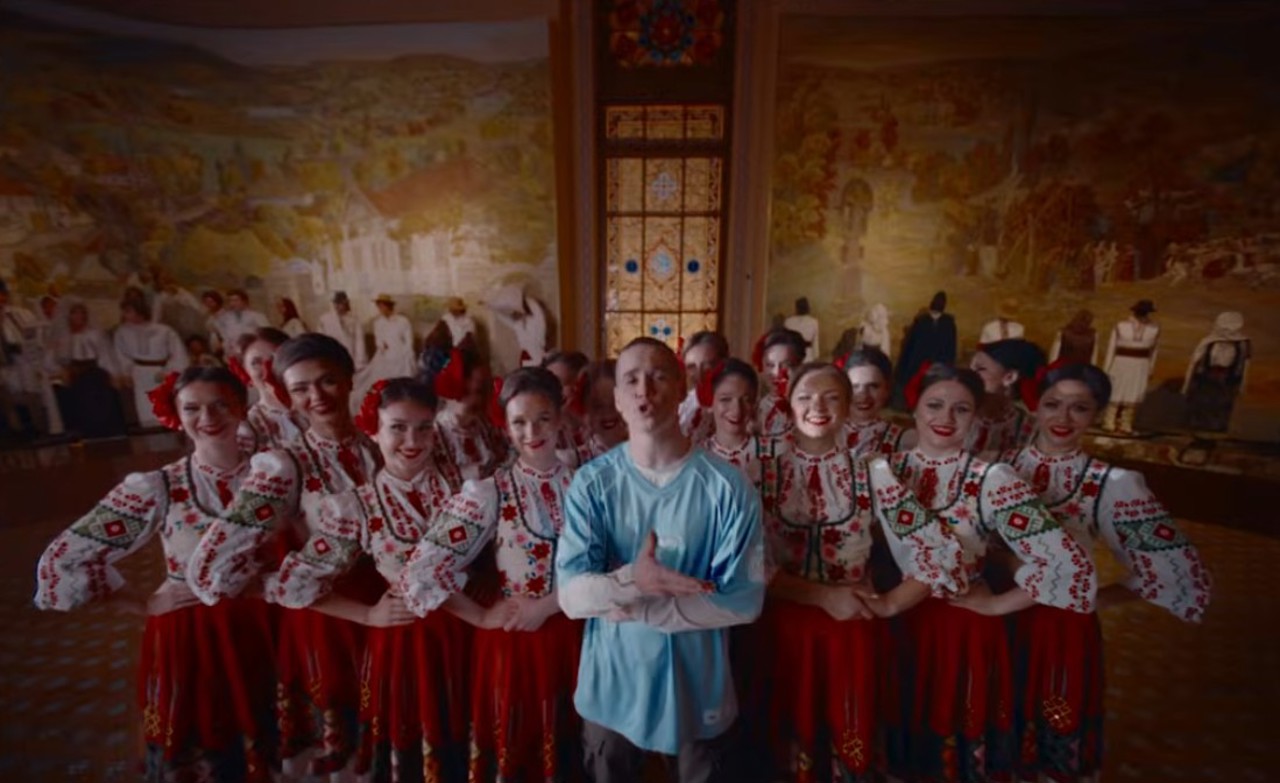
Viva Moldova!
  1. Dara - Bangaranga: I don't think they're referring to sexual relations with ginger-haired folk; it's got house beats, changes in tempo and a female-Prodigy energy. 
  2. Felicia - My System: Kylie Minogue meets The Pet Shop Boys in this disco rave beats banger. Sample lyric: "You're in my head, my heart, my body parts; I can't get you out of my system."
  3. Soren Torpegaard Lund - For Vi Gar Hjem: The pretty, boring ballad with the obvious chord progression, which will probably live rent free in the head.
  4. Linda Lampenius, Pete Parkkonen - Leikinheitin: It's way too busy, but I like the violins.
  5. Antigone - Jalla: More dancing and exhortation to hear the beat of the drum, shake your hips, dance on the table and get lost in the rhythm (or something like that). There's a smattering of ethnic styling and I imagine up-tempo belly dancing.
  6. Sarah Engels - Fire: Is this Cyprus trying to be Destiny's Child complete with the earthy growl/ grunt ting and lyrics such as 'Boy, I'm out of your league.' There will doubtless be accompanying hair flicking and gratuitous crotch flashing.
  7. Alexandra Capitanescu - Choke Me: Are you f*^king kidding me? It's probably supposed to be empowering and dark emo and all that, with a touch of Shakespeare's Sister-lite odd trills and screams, but the sub-dom lyrics are deeply unpleasant. 'All I need is your love. I want you to choke me.'
  8. Satoshi - Viva, Moldova!: They clearly don't want to win the competition with this song - they haven't even got the budget for lyrics or tune. With ethnic instruments and unmelodic chanting, this had better have fun staging.
  9. Akylas - Ferto: I'd dance to this down the clerb. Did he mention rally cars? It's got limited lyrics, but it feels pretty inclusive. I hope they have a gimmicky dance.
  10. Jonas Lovv - Ya Ya Ya: It's got guts, broken bones (lyrically speaking) and an Arctic Monkeys/ White Stripes vibe, so I really like it but it won't get to the final. I'm also terrible at predicting these things so it may go on and win this thing. Or neither.
  11. Sal da Vinci - Per sempre si: Sounds like a 1980s-style holiday music; there's probably one of those awful choreographed YMCA-type dances associated with it.
  12. Monroe - Regarde!: This is outstandingly Fench hitting soaring operatic vocal highs and completing the gamut down to the spoken word. One could say Le chanson va partous. 
  13. Veronica Fusaro - Alice: I really like this Amy Winehouse-style offering.
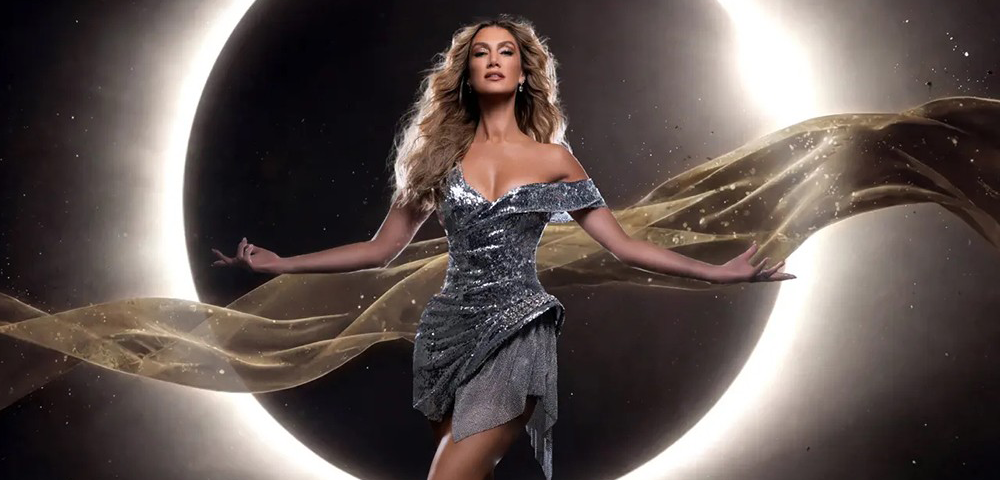
  14. Eclipse by Delta Goodrem
  15. Delta Goodrem - Eclipse: Obviously I know this is the Australian entry because I live here, and not under a rock. It's a strong commercial Euro-pop ballad with simple chords, mentions of astronomical love and those shouty vocals they seem to favour, plus she has an international profile since her Neighbours days, so it is perhaps in with a chance, although I question the lyric, 'We've only just begun'. I would say, it's been 11 years, Australia; you've had your fun; time to give it a rest now.
  16. Cosmo - Tanzschein: This fills the dull dance number slot. 
  17. Noam Bettan - Michelle: Ma Belle it is not, although the heartfelt sincerity is almost unbearable. Apparently this is Israel's representative so the crowd will hate it but it will mysteriously get lots of votes.
  18. Lelek - Andromeda: Great vocal harmonies create a wall of sound combining traditional ethno and modern pop.
  19. Essyla - Dancing on the Ice: Has Justin Trousersnake got a sister, because that's what this sounds like. 
  20. Eva Marija - Mother Nature: I could have sworn that was Regina Spektor. It's quite clever with an appealing arrangement including some violin string plucking. They sing in English and sound pretty cute, so I'm guessing this is Luxembourg.
  21. Bzikebi - On Replay: Typical bland boring Euro fare.
  22. Tamara Zivkovic - Nova Zora: Military opera with a Euro beat and a voice changer. My printer was making weird noises, or was it the song?
  23. Alis - Nan: A touch military and builds with good backing vocals but a fairly pedestrian lead and arrangement.
  24. Vanilla Ninja - Too Epic to Be True: This is quite charming with an innocent Kim Wilde feel (I know a few folk who'd like that...); a disco/pop number with a fun spoken word section.
  25. Look Mum, No Computer
  26. Look Mum No Computer - Eins, Zwei, Drei: If I didn't already know this was the U.K., the piss-taking posturing nihilism and novelty-song elements with the post-modern refrain, "I'm s bored with it; what's the point of it?" No one will appreciate this disrespectful take on the contest.
  27. Aidan - Bella: The highlight is the soaring James Bond-esque opening, and then there are some powerful strings but it descends into weak plinky plonky nonsense.
  28. Simon - Palmoa Rumba: This is the hardcore club sound that leads to a great light show and no votes.
  29. Senhit - Superstar: Not bad but not distinctive; a general disco dance tune.
  30. Daniel Zizka - Crossroad: A bloke just shouting and wailing isn't music. I blame The Voice.
  31. Alicja - Pray: An interesting mix of genres with some gospel energy and then some hip-hop rap.
  32. Lavina - Kraj mene: The gloomy death metal number with dark sounds and screams. I like it, whihc I believe is the kiss of death.
  33. Leleka - Ridnym: This is the sort of breathy tune I would expect from musical theatre, so it's fine if you like that sort of thing. I don't. A note on the high pitch squealing: just because you can, doesn't mean you should.
  34. Lion Ceccah - Solo Quiero Mas: This one is the Euro filler; time to put the kettle on. 
  35. Atvara - Ena: This means something to someone; it seems incredibly earnest with sudden spikes and heaps of emotion. I like the piano and the backing vocals. 
  36. Bandidos do Cante - Rosa: It's quite bad when it strats out a cappella, and then the ethnic strings join in and it gets even worse. This might have done quite well in 1976. I think we've moved on. I hope we have, anyway. 
  37. Jiva - Just Go: Imagine I Will Survive at half tempo. You're strong, well done, we get it, get off.
Alicja 

Friday, 11 October 2024

Friday Five: BorrowBox

I don't usually listen to audiobooks - I prefer the tactile nature of reading a book and will never ceased to be amazed by the fact that printed words on a page can conjure precise worlds in the mind. However, a friend introduced me to BorrowBox, an app affiliated to my local library, where I can borrow books to listen to, and I decided to give it a go. 

I am particularly intersted in autobigraphies and other works in which authors read their own words and tell their own stories. Here are five I have listened to and enjoyed so far. 


Candid and amsuing autobiography from a young woman who suffered a traumatic childhood, fragile mental health, the death of her son and a terrifying stalking incident that culminated in a home invasion. her voice is authentic as she describes learning about the highs and lows of the music industry (number one singles and mainly male media backlash) in a very public spotlight. Her father, Keith Allen, does not shine through this account despite his obvious assistance in her career - he gave her a recording contract and abandoned her to take drugs at Glastonbury. She is aware of her position of privilege, but also that she has worked hard for her success.


Gabriel Byrne has one of those voices that I could listen to reading the phone book. This is much more interesting than that. He speaks a lot of his youth and his training to be a priest and then a plumber, before trying acting, which he quickly discovered was his true vocation. His is a story of searching for acceptance and finding it in a passion rather than a place. Although he is occasionally sentimental and whimsical about the Ireland he has left behind, he is thankful for his chance to escape and create a life for himself, which he guards against the frivolities of fame.


Not just an amazing footballer, Megan Rapinoe is also a firm advocate of women's rights and social justice. She had a fairly typical loving family upbringing in the semi-rural town of Redding, California, the youngest (with her twin sister, Rachael) in a family of eight. She and her sister chose football - it pains me to read soccer, but she is American so I have to get used it - as an early means of self-expression. She talks of training, of games, of injuries and triumphs as one would expect from a sport memoir. She also talks of the drug epidemic, the penal system, the understanding that she was a lesbian, the reaction to her coming out, and the fight for equal pay. Her stand on taking the knee made her an outcast in her own team and to the likes of Donald Trump and those who want to 'keep politics out of sport' when it suits them to do so. She denies she is unpatriotic - she is proud to captain her country - but is still prepared to call out injustice, which makes many of the target white republican audience mad. "I know what it means to look at the flag and not have it protect all of your liberties." She has a strong work ethic and believes in learning from mistakes and trying to do better. It may sound simple, but it is sadly unfashionable. She also believes in using her platform (and as an olympic gold-medal and two-time World Cup winner, she has a pretty big one) to speak up for those who don't have a voice. 


Another beautiful voice, coupled with a love of food and family - this was music to my ears. Stanley Tucci relates his life through important gastronimical touchstones which invoke memories and discoveries as he learns about his culture and his past and relates it all to his present and his career. He has a delightfully sardonic style and a dry humour, which is unusual for Americans, and he tends to steer clear of hyperbole, which is frankly refreshing. Through film narratives, health scares, loss of a sense of taste, and a delight in family and friendships, he shares anecdotes and recipes in a way that has the listener drooling - only partly for the food.


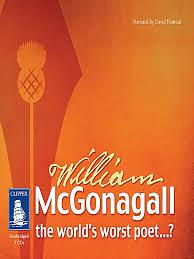
William McGonagall is often lampooned as the world's worst poet. That is a pretty bold claim and I have been insterested as to why he is so called. His poems are bad - they feature endless repetition, deridable rhymes, irrelevant details, poor scansion and weak metre. The mockery existed during his lifetime (1825-1902) and continues today with his work being celebrated with an Ig Nobel award in 2011. (He was also J.K. Rowling's inspiration for the name of her beloved character Minerva McGonagall.) He had no idea of this ridicule and fancied himself as having a calling to write, announcing himself as The Queen's Poet. Despite Queen Victoria refusing him patronage, he walked almost 100 kilmoetres from Dundee over mountainous terrain and through a violent thunderstorm to present himself at Bamoral where he was refused entry and had to return home. He made some money reciting his poems in pubs (the anti-drinking ones were particularly ill-advised), theatres, and the streets. As his reputation grew, his performances were attende by raucous crowds who drowned out his recitations and occasionally forcefully carried him out of venues. He found lucrative work performing his poetry at a local circus where he was pelted with eggs, flour, herrings, potatoes and stale bread. His story has many parallels with that of Florence Foster Jenkins, and one could perhaps feel great discomfort at his treatment (he was very probably on the autism-Apserger's spectrum), were it not for the fact that his self-aggrandising writings are incredibly pompous and dismissive of others. His poems, biography and other works are read by Scottish actor David Rintoul in brilliant fashion. He allows the unintentional humour to shine forth and reveals the terrible poetry in all its magnificent awfulness. It is a thing of unimaginable joy.

Friday, 3 May 2024

Friday Five: Music Vibes

These are the latest designs by Spruce Craft, this month on a musical theme. I know they are sometimes cheesy and relatively easy, but I do enjoy them. I can turn them into gifts, they indulge a part of my crafty side, and they keep my hands busy while I'm watching TV, which is one way not to drink too much! And, once again, there are only four for the Friday Five, but who's counting... apart from me... and you. 
 
I really love the fabric included with this one

Wednesday, 1 March 2023

My Newest Favourite Thing: Relay League by Angelica Mesiti

"Appel à tous. Ceci est notre dernier cri avant notre silence éternel." - Calling all, this is our final cry before our eternal silence

A few years ago when I was at the Orange Regional Art Galley, I came across this fascinating artwork comprising music, movement and sound. Initially I didn't understand it at all  but found it intriguing, so I read the information panel that accompanied the artwork. I discovered it to be about Morse code and other forms of communication - a subject that interests me deeply, so I spent some time in the gallery interacting with the artwork. The following words are from the information panel. 
Relay League, a term for a telegraphic transmission from one receiver to the next, takes as its departure point a Morse code message transmitted by the French Navy on 31 January 1997 to signal the imminent demise of this communication method. Morse code, a system of dot and dash radio signals, often utilised as a language of distress at sea, was phased out after 130 years in favour of new digital communications. Inspired by this final poetic phase, Mesiti interprets its original dots and dashed through music, choreography, and non-verbal communication.


The first of the three-channel works features the musician-composer Uriel Barthélémi translating the Morse code message into a percussive score that permeates throughout the gallery. The second shows a unique form of dialogue and exchange between two dancers, Emilia Wibron Vesterlund and vision-impaired Sindri Runudde. Together the pair has developed an intimate and corporeal language that communicates movement and gesture. Emilia guides Sindri's understanding of choreography through the touch and feel of her body against his. 
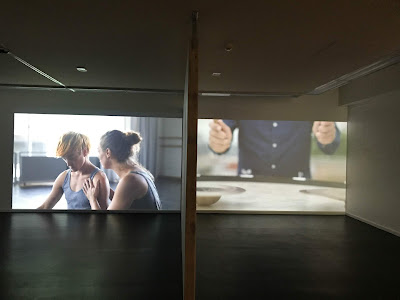
 

The third depicts the dancer Filipe Lourenço interpreting Uriel's percussive sounds in a new  choreography that directly references silence and vision through gestures loosely drawn from the vernacular of folk dance. This final work reveals a dialogue playing out between each of the performers, and the dots and dashes transmitted throughout the gallery produce a subtle dissonance so that the work continually slips back and forth between cohesion and dissolution. Relay League leaves a sensory impression of a language that has been transformed into a code, which in turn iterates as a score, a performance and a haptic exchange, enabling multiple acts of translation across time and space. 


Mesiti's practice chronicles our present condition. She continues to grapple with experiences such as crisis and displacement - whether economic, political, social, cultural, or otherwise - and confront the emotional states of distress, vulnerability and uncertainty. Relay League involves a fundamental humility, bringing to the surface aspects of human subjectivity that are often obscured from view. To this end the work offers a counterpoint: more than simply making visible the forms through which language and expression are silenced, she allows these complex and vital tools of human relations to materialise in ways that emphasis our need for empathy, compassion and connection.
Morse code was used as an international standard for maritime distress until 1999 when it was replaced by the Global Maritime Distress and Safety System. The final commercial Morse code transmission in the United States was on July 12, 1999, signing off with Samuel Morse's original 1844 message, 'What hath God wrought'. Everything sounds better in French (the distress signal Mayday comes from the phonetic equivalent of them asking for help, after all). And for those wanting a proper review of the art installation, there is one here, written by an art critic who understands these things.

Tuesday, 8 November 2022

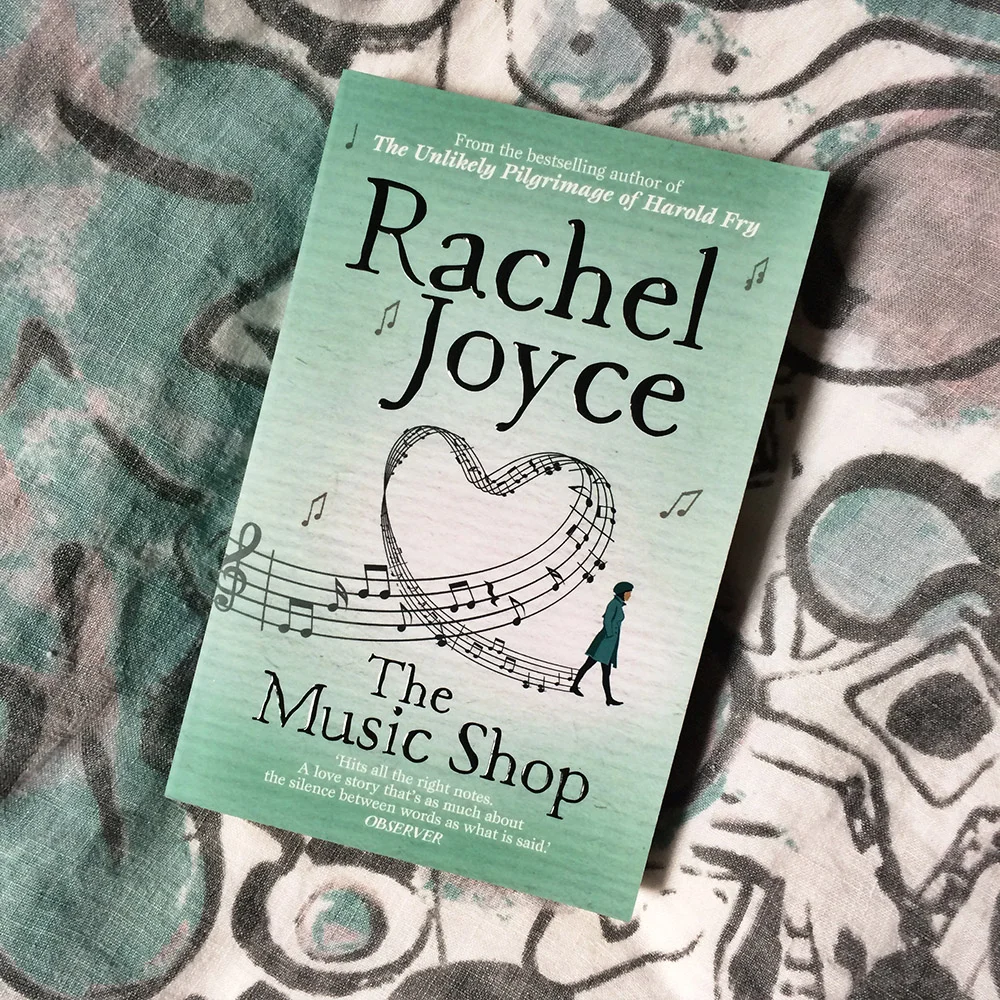
You Spin Me Right Round, Baby: The Music Shop


The Music Shop by Rachel Joyce
(Black Swan)
Pp.354

Frank owns a music shop which only sells vinyl, and he has the gift of being able to find the right music to soothe a person’s soul or mend their marriage. One day a beautiful woman, Ilse Brauchmann (manic pixie dream girl in a pea-green coat), faints outside his shop and they have a relationship. She says she doesn’t listen to music so he teaches her how to hear it. It turns out she was a highly proficient violinist but now has arthritis and can no longer play. And she is engaged to someone else. Of course she cares for him, but the author introduces deliberate (and illogical) stumbling blocks to draw out the story. Frank is not actually all that nice but he’s got lots of friends who encourage him in his romance (Richard Curtis style) including Maud, the tattooist, a woman who has always been inexplicably in love with him, and Kit, an incapable but passionate assistant. It’s very light and fluffy and employs every trope known to rom com, and yet the added appeal comes from the music and nostalgia.

Frank’s finest characteristic is his sense of community with the other shopkeepers. “Here they were, living together on Unity Street, trying to make a difference in the world, knowing they couldn’t, but still doing it anyway.” Ilse is supposedly cute, but immensely irritating. They meet for the lessons about music, in a café called The Singing Teapot, and the waitress becomes involved in their story too, which is charming, delightful, twee and completely unrealistic. Meanwhile, the author tells us everything so there is no room for mystery or suspense.

Music has magical properties, and listening to it can release oxytocin – books are written like this about cookery all the time; all the chapters are named after songs and there is an accompanying soundtrack. The novel contains frequent time shifts as we are cast back to Frank’s relationship with his mother, Peg, who taught him how to really appreciate music. This rapport is more interesting than that with the girl.

Music, especially vinyl, is part of the nostalgic focus of the novel, and it should be enjoyed as an experience. He uses the difference between CDs and records as a metaphor for life (God only knows what he’d make of music-streaming services), refusing to accept that he and his music shop are out of date although several reps and customers stop calling. He maintains that vinyl is messy and fragile, and therefore, more human.

The novel is Notting Hill meets Black Books; it is obviously written with one eye on the film rights, but it will doubtless be taken over by an American company who will change the setting and ruin it (see High Fidelity). Music is closely aligned with memory because it stimulates emotions, and that is what matters. Ilse remembers Frank because, “You didn’t talk about the technique of music. You told me how it felt when you listened.” Love may tear us apart, but music is best experienced together.

Friday, 15 April 2022

Friday Five: Autumn Arts Part Two


Following on from last week's Friday Five, here are the rest of the questions from the Autumn Arts section of the quiz, with answers at the end.

5 more Autumn Arts questions:
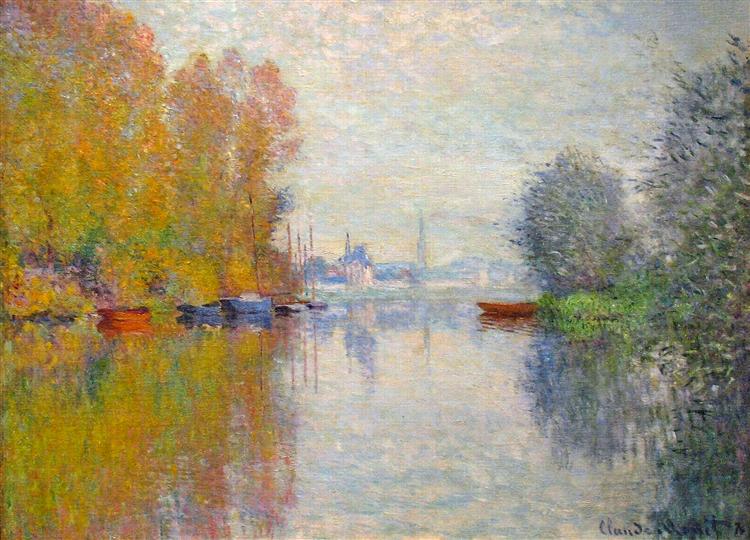
  1. Description of a painting from Wikipedia: “This painting captures the moody atmosphere of an autumn day on the Seine River, also known as La Seine. The sky is dark and cloudy, but there are spots where light shines through to illuminate the water and buildings that line its banks. There are a few trees on either side of the river that have not yet lost their leaves, while others have already turned brown and orange. It is a beautiful painting that captures the mood of a late September day in the region, with its changing light and gentle breezes. The river, which is usually so busy, becomes calm and reflective. The reflection of the trees and buildings on the water’s surface can be seen in full detail as well as their reflections in the windows of houses near by.” What is the name of the painting and the artist?
  2. Dictionary definition of a word beginning with 's': “A rustle or soft, whispery sound, particularly of leaves in the wind” What is the word?
  3. The publisher's blurb from the fourth book in a series: "What if you knew someone you loved was going to die? What if you thought you could save them? How much would you risk to try? How far will a woman travel to find a father, a lover a destiny? Across seas, across time – across the grave itself?” What is the name of the book, the series and the author?
  4. Description of an English post-punk group formed in 1976 band by music critic, Simon Reynolds in the NME: "A kind of Northern English magic realism that mixed industrial grime with the unearthly and uncanny, voiced through a unique, one-note delivery somewhere between amphetamine-spiked rant and alcohol-addled yarn." What is the name of the band and the lead singer?
  5. Description of a film from Wikipedia:  “A 1994 American epic Western film directed by Edward Zwick and starring Brad Pitt, Anthony Hopkins, Aidan Quinn, Julia Ormond and Henry Thomas. Based on the 1979 novella of the same title by Jim Harrison, the film is about three brothers and their father living in the wilderness and plains of Montana in the early 20th century and how their lives are affected by nature, history, war, and love.” What is the name of the film and what Oscar did it win that year?

  6. Answers: 1. Autumn on the Seine at Argenteuil by Claude Monet 2. Sussuration 3. Drums of Autumn from the series Outlander by Diana Gabaldon 4. Legends of the Fall; Best Cinematography (John Toll); 5. The Fall; Mark E. Smith

Friday, 8 April 2022

Friday Five: Autumn Arts Part One


We had a party to celebrate the autumn equinox, for which I wrote a quiz. One round was called 'Autumn Arts' in which I described a thing and the guests had to guess what it was. Here are five of them (with the answers at the end):

5 Autumn Arts questions:
  1. Description of a painting on Wikipedia: "Exhibited at the Royal Academy in 1856, it was described by the critic John Ruskin as 'the first instance of a perfectly painted twilight'. The painter's wife Effie wrote that he had intended to create a picture that was 'full of beauty and without a subject'. The picture depicts four girls in the twilight collecting and raking together fallen leaves in a garden. They are making a bonfire, but the fire itself is invisible, only smoke emerging from the between the leaves. The painting has been seen as one of the earliest influences on the development of the aesthetic movement." What is the name of the painting and the artist? 
  2. Description of a TV series on IMDb: "The psychological thriller examines the lives of two hunters - one is a serial killer who prays on victims in and around Belfast, Northern Ireland, and the other is a female detective drafted from the London Metropolitan Police to catch him." What is the name of the TV series and the actors who play those characters?
  3. The first lines from the translation of a novel: "May I monsieur, offer my services without running the risk of intruding? I fear you may not be able to make yourself understood by the worthy ape who resides over the fate of this establishment. In fact, he speaks nothing but Dutch." What is the name of the novel and the author?
  4. Description of some music on Classic FM: "Like the other concertos [this] has three movements; the first is energetic and rhythmic, and depicts a harvest festival dance. The second is a slow movement that seems to usher the cool air and reflective crisp mornings well and truly in. And the third movement is a lively and jaunty affair, setting to music an autumn hunt taking place atop a layer of crispy settled leaves." What is the name of the concerto, the suite from which it is taken and the composer?
  5. Description of a film by Variety film critic Emanuel Levy in 2000: "Utterly banal, Joan Chen's tediously sappy romance is a kind of modern-day Love Story (a better film!) with a 'twist': Richard Gere's suave lover is old enough to be Winona Ryder's father." What is the name of the film?

Answers: 1. Autumn Leaves by John Everett Millais 2. The Fall, Jamie Dornan and Gillian Anderson 3. The Fall (La Chute) by Albert Camus 4. Autumn from Four Seasons by Antonio Vivaldi 5. Autumn in New York

Friday, 19 March 2021

Friday Five/ My Newest Favourite Thing: Belly Dancing


This is a cross-over post (of both Friday Five and My Newest Favourite Thing), as for the past six weeks I have been trying something new: namely bellydancing. Let me begin by saying I will never be a bellydancer. I haven't got the grace or the coordination, or the want/ need to shake my bits in front of an audience of strangers (in other words; I've got the belly but not the dancing bit down pat) but I have very much enjoyed my brief introduction to the art.

Our instructor, Brooke Thomas, is amazing. She is talented and professional (and has a proper dance troupe - Quake Bellydance) with warmth and humour to accompany her style. While she teaches serious and capable dancers, she is equally adept at dealing with incompetent, uncoordinated people with two left feet (i.e. me). She gives us moves to develop into a routine and introduces us to fun techniques, with plenty of warm up and cool down stretching, and some technical and historical background for those interested in the art. 

5 Favourite Things about Bellydancing
  1. Camaraderie/ body acceptance - bellydancers come in all shapes and sizes and they are meant to jiggle. The body is an amazing thing and this type of dance celebrates that. Shimmies and hip movements isolate and highlight groups of muscles, and arm placement draws further attention to parts of the body and indicates their vibrancy and versatility. You don't have to be a supermodel to bellydance; you just have to learn to embrace your curves and enjoy the way your body feels when it moves.
  2. Work-out/ flexibility/ stretching - Isolating muscle groups provides a great workout - it can be as high impact as you want to make it, and you really get to move, stretch and tone. The names of the moves are descriptive and evocative: there are hip drops, lifts, flicks, bumps, and rotations, snake arms, ribcage slides and circles, Maya, butterfly catch, envelope, Roman flame. The feeling afterwards is of a contented glow (much like you might experience with yoga or Pilates), and the week after we concentrated on snake arms, I really knew about it!
  3. Music/ Rhythm - I love music and dancing for fun, even if I'll never be any good at it. Brooke makes the choreography fit beautifully to the beats and the ambiance of the music. We listened to some great Turkish songs and compositions, which were uplifting and fulfilling. I will admit to not being a fan of Shakira, although I now have Whenever, Wherever as an uninvited ear worm lodged in my brain.
  4. Costumes - Brooke makes all her own costumes and she looks spectacular (did I mention she is ridiculously talented?). We danced in shorts or leggings and exercise tops. We did, however, get to play with the coin belts and veils. Coin belts are great fun: they jingle as we jiggle and we are literally present with bells on, but they are also tell-tale alarms for when the lower body is meant to be still as the upper body is meant to be directing the action. Veils are just great fun to drape, twirl and float about with. 
  5. Learning new things - it's good for mental as well as physical health. I have a whole new appreciation of the artform. And, most importantly, I had a lot of fun!
Graceful shape framed by a veil

Wednesday, 15 April 2020

COVID-19: We Aren't Gathered Here Together


Last weekend it was Easter. I am a 'wishy-washy Anglican' (not actually my words, but I have been called thus) and only really attend Church at the major religious festivals - Christmas, Easter and Whitsun being the big dates in my calendar. Of course, this year I could not go to Church - no one can - and I missed it. I missed singing the songs and saying the prayers; I missed turning to my fellow members of the congregation and wishing them peace and good will. And I missed them doing the same for me. I missed that communal feeling.

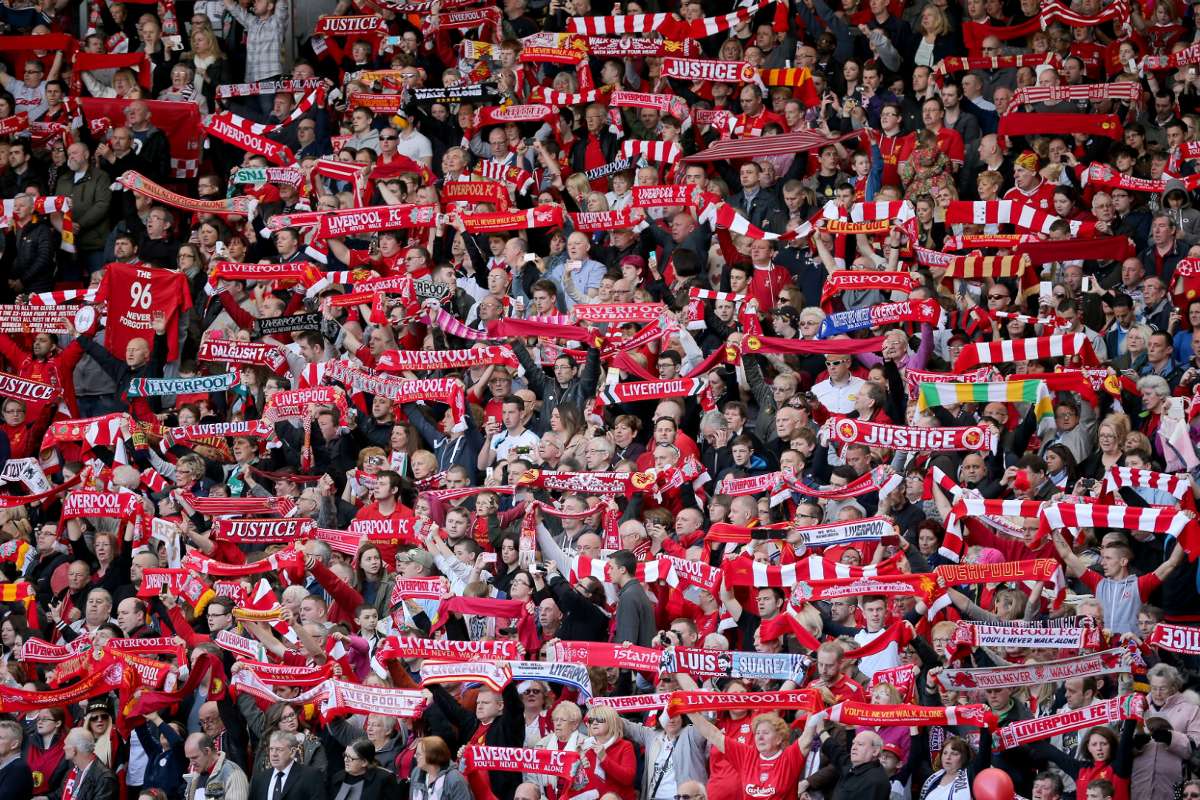
For the same reason, I love watching sports and theatre; I enjoy a shared experience. Knowing that you feel the same thing as others is a wonderful thing. When I breathe in the hallowed turf of Anfield, it is a spiritual moment; all the home players and supporters know what I mean - we stand and sing together and no one cares how out of tune we are; we are in time. Our time. Any true fan will tell you the same (although they will worship at a different shrine). 


When the curtain raises on the stage and everyone takes a collective breath, we are all waiting to see what unfolds together. This moment will never be repeated - every performance is different - and we know we are privileged to witness it. And when the curtain falls and people applaud, they do it together. I have been part of a cast that received a standing ovation. It was magical and unforgettable. We did it for the audience and the audience appreciated us; and we were one. It was incredible.

I like listening to a band, but I prefer going to a gig or a festival. I don't need to then hear this gig again; I'm not a fan of live albums because generally the sound quality isn't as good, and the whole point is the being there. I am pleased the National Theatre, The Globe and the RSC are screening some of their performances so we can all enjoy things that we couldn't otherwise see - but we are still watching them alone. The roar of the greasepaint and the smell of the crowd is missing. (Yes, that was deliberate.)

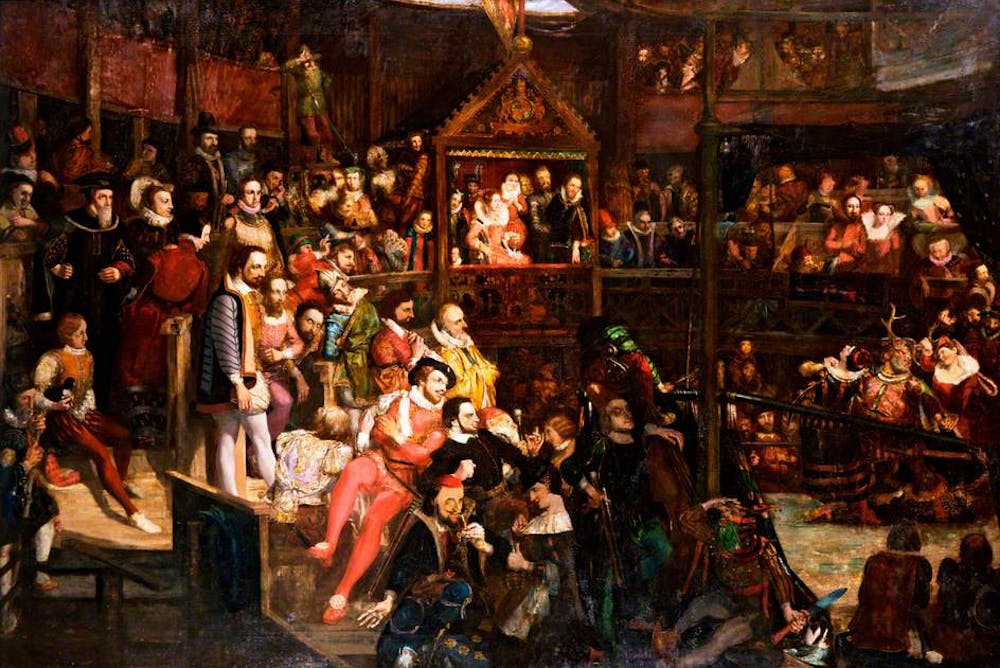
'Queen Elizabeth viewing the performance of The Merry Wives of Windsor, at the Globe in Merrie England' by David Scott
I like a drink as much as the next person. But there's a reason I go to pubs and clubs, even if the beer is often ridiculously overpriced. I like the atmosphere of sharing things with like-minded folk. Restaurants and cafes are better when they're busy (not cramped and heaving full, but with a low-level hum of noise). Silence is good when it is shared. Have you had a moment's silence in public? Then you know what I mean: there is nothing more moving than a collective memorial. 

Over the last few weeks I have held many on-line conversations and 'attended' conferences and meetings; I have done group trivia quizzes and play readings; I have watched re-runs of football matches and 'live' theatre. But I have missed the physicality. I will stay at home, and I will practice the physical distancing, because it saves lives and that's what matters. But when all this is over, I will find my flock and I will join them again, and we will sing our songs. 

Because it may be elitist; it may be exclusive; but being there is everything.


Friday, 23 August 2019

Friday Five: Strong Female Lead


Last night I went to see a show at Smith's Alternative. It was called Strong Female Lead and it featured six acts of fabulous female talent. The atmosphere was warm, welcoming and overwhelmingly supportive. Comperes Lou Maconachie and Amy Crawford encouraged us all to turn to the person next to us and pay them a compliment. As I was seated next to the bright, vibrant, intelligent and compassionate Purple Patch, this was not a hardship. It was, in fact, a wonderful way to start the evening and celebrated the supportive side of performance. It must also be mentioned that (although the audience was predominantly female), there were men in attendance too, and they were equally generous: not all men are threatened by strong women.
  1. Chris Ryan kicks off proceedings with a great stand-up comedic set. She has a confident and likable presence, drawing us into her world and telling stories of family, friendships, and what she would like to do when she grows up. She may be ageing gracefully - she admits to being 'openly gray' - but she doesn't consider herself to be an 'adult' yet. Her riff on all the expectations levelled at women - from appearance to empathy; from exercise to social conscience; from sexual experimentation to professional development - is clever, cutting and concise. Imagine an ironic female version of Renton's 'Choose Life' speech from Trainspotting and you're halfway there.
  2. Ruth and Friends - Ruth Oettle is the Ruth in question, and she presents a genre-challenging rap about science which manages to be informative as well as entertaining. She's good at including her audience and adapting her material, introducing verses specific to the venue. Her casual laconic style masks the artifice behind the art, and she makes everything look effortless. She invites her friends to the stage and sits with them to sing an original love song, I Love You to Launceston and Back, which is utterly charming. Her smile is infectious and the trio make you want to sing along even though you don't know the words yet. It's like woke folk music, but without the wankery that implies.
  3. Liz St Clair Long performs a piece by local playwright Harriet Elvin, Shopping for Underwear. It’s an age-old story where a retired schoolteacher from England makes a profound discovery about herself when she goes into an Adelaide department store. Liz is a consummate actor and she lights up every stage she graces in a variety of roles. She flexes her acting muscles displaying a range of expression, and seeing her own the space with confidence and comedy is an absolute treat.
  4. Ali Clinch presents 'Mothering Father', a one-woman show that she has written about extremely personal experiences. Using a sparse soundscape and projected images, she shares the story of her particular circle of life, celebrating birth while dealing with palliative care and grief. It is a familiar female story, as women bear the weight of caring for the young and elderly family members, often at the same time. Her honesty and candour make the scene powerfully touching and the fact that it doesn't seem self-indulgent is due entirely to her generosity of performance.
  5. Virginia's Wolf are a trio who met while studying at the Canberra School of Music. Caley Callahan (vocals), Monica Lindemann (drums) and Tammy Pinto (guitar) seem to have disparate presentation styles, but they clearly all love music and they are keen to share this passion. Their energy is friendly rather than furious, and their timing is tight. It's enjoyable to hear them run through a series of covers, including the perennial favourite, Creep, which brings appreciative cheers from the audience when Callahan hits all the right notes of anguish and frustration. They do belong here.
  6. Helen Way is different, as in original. She stands out from a crowd with her almost interrogatory approach and informative content. She's also a confident piano player, and her demonstration of why Beethoven's 'Fur Elise' is a terrible piece of music is brilliant. Her combination of musical and comedy talent is in a similar vein to Tim Minchin or Bill Bailey. I will never hear this piece in quite the same light again, but I will probably laugh whenever I hear it cranking out of an ice-cream van.
Strong Female Leads - photo by Lightbulb Improv

Friday, 25 September 2015

Friday Five: The Mesmeric Magic of Crowds


Following on from last week's Friday Five, I've been thinking about the mesmeric influence of dancing in a club; of the wonderful vibe experienced at a rave. A lot has been written about the brutality of the mob; about how being part of a crowd can make a person lose their individuality and behave in an ugly and anti-social manner. At this point some sort of reference is made to riots, hooliganism and/or the French Revolution. But I think that sometimes crowds can have a beatific influence, and their collective nature can be a force for good. And please stop waving your phone/tablet about and ruining it for everyone else. Aren't you capable of remembering stuff?

5 Times it's good to be part of a crowd:
  1. Music/ dancing - as discussed. Of course one can dance with oneself, but the experience is a lot different if there are 'twenty thousand people standing in a field'
  2. Theatre/film/sport - A live audience is a wonderful thing. The shared emotion makes a film even more memorable - watching Silence of the Lambs in a cinema where the code of conduct was impeccably observed and everybody jumped at the same instant was unforgettable
  3. Battle - That speech of Henry V wouldn't have been so inspiring if no band of brothers were there to listen
  4. Church/vigil - Whatever your belief or religion, if you share it publicly with others through song, prayer, or silence, the feeling of togetherness is indescribable
  5. Rally/ threat - There is power in a union: The people united will never be defeated

Friday, 13 February 2015

Friday Five: Ramones on Repeat

C J Ramone
Feeling rather old and a little bit foolish, we went to see C.J. Ramone at the Transit Bar. Although not one of the original Ramones, he did play with remnants of the band for several years, so is perfectly entitled to play their music. It's not all nostalgic cover versions, however, as he has released a few albums in his own name, and they are packed full of short, punchy, punky numbers with rock influences.

As it was part of my non-drinking month, I was driving. It wasn't unpleasant to be totally sober at a gig, although  I didn't feel like moshing and getting all sweaty and beer-soaked. Despite the obvious youthful element (who have no idea how to mosh), we didn't feel too out of place. The support bands (Hard-Ons and No Assumption) were enthusiastic and suitably loud. In fact, the whole gig was loud and I couldn't hear a word that Him Outdoors was trying to say to me, but that's sort of the point, isn't it?

I really enjoyed the mix of C.J.'s new stuff with the old favourites, interspersed with a few anecdotes about the characters of The Ramones and the dynamics between them. Apparently none of the band except Joey liked 'Baby I Love You' (used ironically - I think - in a Cialis advert), so they never played it live - we heard it here tonight. And 'I Wanna Be Your Boyfriend' was rather contentious as it was written by Johnny about Joey's girlfriend (whom he later went on to marry). Watching a 49-year-old bloke sing these songs with his NY baseball cap on askew and his tongue poking out sarcastically was kind of funny, but he still treated the material with respect and energy. 

5 Favourite Songs from the C.J. Ramone Gig (in no particular order):
  1. Blitzkrieg Bop
  2. Judy is a Punk
  3. Carry Me Away
  4. R.A.M.O.N.E.S. (by Motorhead)
  5. Last Chance to Dance

Friday, 15 August 2014

Friday Five: Songs about Stealing

This is a week late, so I apologise for that, but I wasn't aware that last Friday (8th August) was the 34th anniversary of the release of Bankrobber by The Clash. Having discovered that, I felt I had to dedicate a post to that marvelous song, and others of its ilk.

5 Best Songs about Theft:
  1. Bankrobber - The Clash

  2. Thick as Thieves - The Jam

  3. Stand and Deliver - Adam and the Ants


  4. Shoplifters of the World, Unite - The Smiths


  5. Been Caught Stealing - Jane's Addiction

Friday, 31 January 2014

Friday Five: Music to my ears

The last ice cream van at the edge of the world by Curly
The other weekend we went for a run in what turned out to be the heat of the midday sun. We weren't deliberately being Mad Dogs and Englishmen, but various events meant that was just the way it was. It was the middle of a heatwave (five days of temperatures over 37 degrees) and we ran out of water. It wasn't meant to take so long, but the last two kilometres took me 20 minutes. I was breaking out in a cold sweat and felt nauseous and dizzy. 

When we returned to the carpark I was guzzling the water we had in the car when I heard the tinkling of an ice-cream van. At first I thought I was hallucinating but no, the vehicle appeared playing a distorted version of Greensleeves and I was soon eating a cool, sweet treat that picked me back up and refreshed me after my endeavours. Never before have I been so happy to hear that ghastly tune, and it made me think there are certain musical interludes which have special connotations and for which I will always be grateful.

Yes, the photographer chopped our heads off, but see how we look like we know what we're doing!
5 Tunes I will never tire of hearing:

  1. The Gay Gordons - I'm not a fan of bagpipes unless they're played in Scotland and played well. This, however, was the first dance I ever danced with Him Outdoors as we met in Edinburgh and went to a ceilidh at Hogmonay, and so it was our wedding dance. I insisted that my sisters get everyone up dancing as soon as possible as we didn't want to be left out there like a pair of numpties and I figured that however drunk you are, you can dance to this, even if your waltzing is appalling.
  2. You'll Never Walk Alone - goosebumps for obvious reasons
  3. The British National Anthem - when they play that as they raise the union flag, my heart stirs. I know some people (i.e. Billy Connolly and all his disciples) think it's a dirge and would prefer the theme tune to The Archers, but I feel pride in my country when I hear it from military honours to medal ceremonies.
  4. The theme tune to The Archers - reminds me of my mum and the happier aspects of my childhood.
  5. Debaser by The Pixies - my best mate and I had a pact at university - whenever this came on in the club we would have to dance no matter what we were doing. I got so much whiplash from that song and I love it!

Friday, 6 September 2013

Friday Five: Running sounds

On Sunday I shall be running my first 10km race since rupturing my calf muscle nearly two years ago. It has been a long and sometimes painful recovery, but I have trained sensibly for once – the things you have to do when you’re over forty…

I know that many people run to music, and create dedicated soundtracks to motivate themselves. A friend even told me she had an app on her phone that made it sound like zombies were chasing her and would catch her if she slowed down. This sounds pretty traumatic to me, although each to their own, of course.

I never run with headphones. I can understand why you might want to at the gym, as it is incredibly tedious in there and some of the tracks they pump out are just awful. But when I’m running in the ‘great outdoors’, I actually like running and don't wish to be distracted from it. I want all my senses on full alert, and I like to listen to the world around me.

5 Things I Listen to when Running:
  1. My breathing – the rhythm of your breath, your heel strike and your heartbeat are very important to running, (and to breathing). As a person prone to anxiety attacks I was encouraged to be aware of my breathing and control it through running, swimming and yoga.
  2. Possible danger – I don’t just mean cars and out-of-control dogs, but having lived in Manchester, there is no way I would ever run down an alleyway without being able to hear exactly what or who is behind me. Wearing headphones tends to make you disconnected from your circumstances, thus compromising your own safety and that of those around you, and there’s a very good reason why they’re banned from many races.
  3. Wildlife – With approximately 250 species, Canberra has the richest bird life of any city in Australia. From screeching and squawking to twittering and even laughing, they sound great and I wouldn’t want to miss that. Rustlings in the undergrowth alert me to lizards, possums and even snakes. I’ve yet to encounter a wombat while out running but Him Outdoors has and my time will surely come.
  4. The elements – Whether it’s the wind in the wind in the trees, the trickling of a stream, or the lapping of the waves, nature doesn’t just look beautiful; it sounds it too. Running is a relaxant and a way to avoid the over-saturated stimuli of a media-concentrated world. An hour of peace and relative quiet is essential for my mental health.
  5. Other people – it’s just sociable to reply when someone says hello to you as they run past.

Tuesday, 20 November 2012

Improbable Fiction, 'Unofficial Soundtrack'

Whenever I 'do' a play (act, direct, crew), I compile a soundtrack for it. This excludes musicals, obviously, which have kindly provided their own. 

Music is very closely linked to memory in my mind, so I find the 'soundtrack' a useful device and aide memoire. It picks up on certain lines or characters, and focuses my mind as I drive to rehearsals. It also manages to keep me awake as I drive home late and exhausted after rehearsals. I've not got to bed before midnight for over a week and we open on Friday so I need it.

For people unfamiliar with Alan Ayckbourn's Improbable Fiction, this playlist may seem a little odd. For those who do know the play, it may seem even more so. But these are the tracks that come to mind when I'm working on the play. "They're in order, but... well, you'll see..."
  1. Paperback Writer - The Beatles
  2. I Close My Eyes and Count to Ten - Dusty Springfield
  3. City Hobgoblins - The Fall
  4. Build Me Up Buttercup - The Foundations
  5. Writer's Block - Just Jack
  6. The Social Network Song (Oh Oh - Uh - Oh Oh) - Valentina Monetta
  7. I Write the Songs - Tom Jones
  8. Everyday I Write the Book - Elvis Costello
  9. Java Jive - The Ink Spots
  10. Oxford Comma - Vampire Weekend
  11. Invisible - Alison Moyet
  12. Thunder in the Mountains - Toyah
  13. Something Canged - Pulp
  14. Just an Illusion - Imagination
  15. Once in a Lifetime - Talking Heads
  16. We Are Detective - The Thompson Twins
  17. Hot Soup - Da Vinci's Notebook
  18. I've Committed Murder - Macy Gray
  19. Where's Your Head At? - Basement Jaxx
  20. Wasted Life - Stiff Little Fingers
  21. Spaceman - Babylon Zoo

Monday, 29 October 2012

Billy Bragg - Singing His Own Tune

Billy Bragg
Ain’t Nobody That Can Sing Like Me Tour
Canberra Theatre Centre
23 October, 2012

Billy Bragg has apparently been recognised in Britain as a national treasure. I remember him as a protest singer who got me into deep trouble in early-80s America when I played his pro-union, anti-capitalism cassette tapes in Conservative America. On the evidence of Tuesday night’s concert in Canberra, he is both.

Some things have changed: for one thing, he’s older, as are we all – approx 90% of the audience is over 40 – and I’ve never sat down for a Billy gig before. He still commands the same devotion, particularly among men; 70% of the audience is male and sporting a fine array of t-shirts. He exhibits more humour than previous incarnations (I last saw him in 1996) but his enthusiasm and passion remain; this Billy still comes to the boil.

The evening is divided into two sets. First he plays the music of Woody Guthrie, intending to evoke the spirit of ‘little guy’, and after a short interval he is back to bring us the essence of Mr Bragg. For the Woody set he sits with an acoustic guitar chatting about the process of developing these tunes as though he were some cool scout leader (not the creepy kind) around a camp fire.

Woody Guthrie (who died prematurely of Huntington’s disease) left 3,000 songs behind. Billy says he’s been writing songs for over 40 years and hasn’t written close to 1,000. Nora Guthrie, Woody’s youngest daughter, allowed him access to the manuscripts after seeing him struggle through a Woody Guthrie musical workshop at Okemah, Oklahoma, Woody’s home town.

Billy says he thought he could blag his way through it – he knew three songs, although he knew if anyone played one of the ones he was counting on, he’d be stuffed. He was alarmed to find the other participants in the workshop were Pete Seeger, Ramblin’ Jack Elliott and Arlo Guthrie (Woody’s son) – “Dylan couldn’t make it”. Pete Seeger had a whole load of notes stuck to his guitar with titles of Woody Guthrie songs and Billy was amazed to realise how many he knew.

He was doing alright until they came to play This Land is Your Land and they each got up to play a verse. When he came to his turn he tried to bluff his way through, explaining that as a Brit, it wasn’t really his land so he didn’t feel he could sing it – it was soon apparent, however, that he didn’t know the words and was busted, although he claims Nora took pity on him.


He explains that although the sheets say ‘words and music by Woody Guthrie’, there is no music – just words. This suits Billy just fine as he can’t read or write music himself. He says a proper musician is one who plays the piano, whereas he just makes it up in his head as he goes along. Woody’s words, he says, have an implicit rhythm that indicates how the song should be sung. Some even, as he self-deprecatingly remarks, “deserve more than the three major and one minor chord I usually throw at things”.

He intersperses this instruction with several great songs including Way Over Yonder in a Minor Key and Against the Law. He ranges from the powerful Slipknot, a racially charged number about the knot on the hangman’s noose, to the none-too subtle Volcanoes, in which a metaphoric volcano explodes in a song about Ingrid Bergmann.

A poignant and poetic song Go Down to the Water is explained as the result of Woody’s wish for his wife Marjorie to write words in the sand on ‘their’ beach at Coney Island, which would be carried by the waves to him on his ocean ship during WWII. Billy melds music based on a traditional Irish folk song and it works beautifully.

Billy makes references to academics who want to know the deeper meaning behind everything and says they are willing to rummage through bins to look for evidence. His own lyrics are probably scrutinised in modern universities and he comments that all his songs are about nothing more than shagging – “Yes, even Between the Wars” – which suggests he is tired of being asked.

Woody Guthrie is famously known for three things. Firstly he wrote This Land is Your Land; secondly he inspired Bob Dylan. He also inspired Joe Strummer (who used to call himself Woody), and Billy in turn refers to himself as a child of the Clash. The third thing is that his guitar had ‘This machine kills fascists’ written on it. This is clearly Billy’s favourite Woody fact as he finishes the first set with a raging rendition of All You Fascists, raw with emotion and pulsing with hope.

After a 20 minute break, (where people were drinking wine in the foyer!) he comes back on as Billy Bragg, standing and with an electric guitar. He immediately breaks a string in the first song (Sexuality) through playing ‘in anger’ but he is consummately adaptable (even supplying his own backing vocals at one point) and swaps guitar as the other one is re-stringed.

When it is returned to him he constantly re-tunes it, to his own amusement, building this into his set as he asks “does anyone know any jokes?” He is comfortable on stage and has a great rapport with his sound engineer/ producer Grant Showbiz who sits twiddling the knobs on the sound desk - they have worked together for the past 20 years so it's touching to see their easy interactions.

Naturally, Billy talks a lot between songs, like a stand-up comic linking comments from earlier and coming full circle with his rants and tirades. He has a fair understanding of Australian politics (having appeared on the televised political debating programme Q&A) and he has a lot to say about Scott Morrison and Tony Abbott, none of it complimentary.

He retains his anger for British politics, commentating that the country is in the worst state since Thatcher was in power, but people are numbed by X-Factor into not caring about the big picture. He admits he made a mistake with tactical voting for the liberals, so that he ended up voting for a party he doesn’t support against a party he despises, and they joined forces together anyway and are ripping his country apart.

Moving easily between the specific and the general, he argues that Socialism is nothing unless it is organised compassion. He sings There is Power in a Union (my favourite) with as much passion and power as ever; although it is hard to stand and make the solidarity fist while trying to play guitar, and he doesn’t get much support from the crowd. In fact the audience seems a little embarrassed by the socialist stance, but what were they expecting? Billy said he thought they would be “more political down here”, but senses they are “all softies”.

He has a range to suit all tastes, however, and plays old hits and new songs, while also adding new lines to well-known favourites – “Why not?” – and revamping the classic Great Leap Forward with lyrics to suit the current political crop. A new tune, Scousers Never Buy The Sun, confronts the phone-hacking scandal, the Murdoch Empire, the disgusting lies told about the Hillsborough disaster, and the scurrilous scaremongering of the media.

His strongest ire is reserved for cynicism, which he rates as a greater enemy than capitalism or consumerism. He believes (yes, he still believes) that the internet is the worst source of this scourge, and shares a tweet he received, which he felt was awful and amazing at the same time. “The great thing about Twitter is that all your life you thought Billy Bragg was a cunt, and now you can tell him”.

He can laugh about this but knows there is a serious side that could destroy young people trying out their ideas and ethics in public for the first time, and urges us to confront the racism, sexism and homophobia on the internet. Freedom of speech is not the freedom to be abusive, and he counsels against feeding the trolls, “Starve the bastards”.

All of which leads nicely into his anti-cynicism campaign song, and he sings Tomorrow’s Going to be a Better Day. He warns that it does contain whistling, in the way that people with nut allergies need to be warned beforehand, as some people are allergic to whistling, “but if it makes you feel better, it’s ironic whistling”.

Again, during this set he intersperses new material with old favourites, and it’s great to hear Levi Stubbs Tears and Must I Paint You a Picture? delivered with all the panache of old. Greetings to the New Brunette gets a new slant with a dedication to Tony Abbott, and, although he suggests the crowd sing along, they don’t, perhaps not wanting to miss anything. It could also be that they are chastened from being laughed at for interrupting an earlier song, “That was my dramatic pause: this is a theatre!”

If the atmosphere is a little subdued, he is still the master of it, and he informs us jokingly, “Pete Seeger told me to be a folk singer you had to tune up on stage and finish with a sing-song”. He obliges by closing his set with New England and when he asks, “Shall we sing a verse for Kirsty McColl?” the audience resoundingly reply with the one about waiting for someone to pull me through. I think it is him, after all. He certainly injected some much-missed motivation back into music.