Showing posts with label sport. Show all posts

Monday, 9 February 2026

2026 Winter Olympics Opening Ceremony


Because I actually enjoy these things, I watched the Winter Olympics Opening ceremony and listened to the Stan Sport coverage including Ally Langdon, Todd Woodbridge and Lydia Lassila. Sometimes the commentators sounded as though they were reading out words provided to them by a scriptwriter whose first language was not English, and their AI content had been put through Google Translate. For example, they commenced the Opening Ceremony with the words:
"Human potential is revealed through movement. The Olympic Winter Games is not just a competition; it's a bridge between preparation and performance - between individual ambition and shared celebration. Sport distils life to its essentials: discipline; courage; respect. This is where, in a few fleeting seconds, years of training could be validated; it's where focus meets pressure and where determination turns into possibility, and Italy, this country shaped by craft and creativity, is the natural home for such moments: a passionate place that understands that greatness is built, not rushed."
All this makes me wonder how that equates with the young schoolkids doing their flicks and tricks on snowboards, some of whom only got the call-up the week before - they giggle and snort and roll their eyes and use their youth jargon, which is all very well in the X-games, but is it the equal of a talented and determined Olympian who has trained for years? Mine is not to reason why, etc.


So it begins at the San Siro, as these things often do, with graphics and a video montage. We are treated to classic Italian images: a single skier carving a track down a mountain through pristine snow; alpine horns, traditional garb and stunning backdrops; food, wine and coffee; goatherds (thankfully of the non-yodelling variety); design and fashion in everything from cars to architecture.
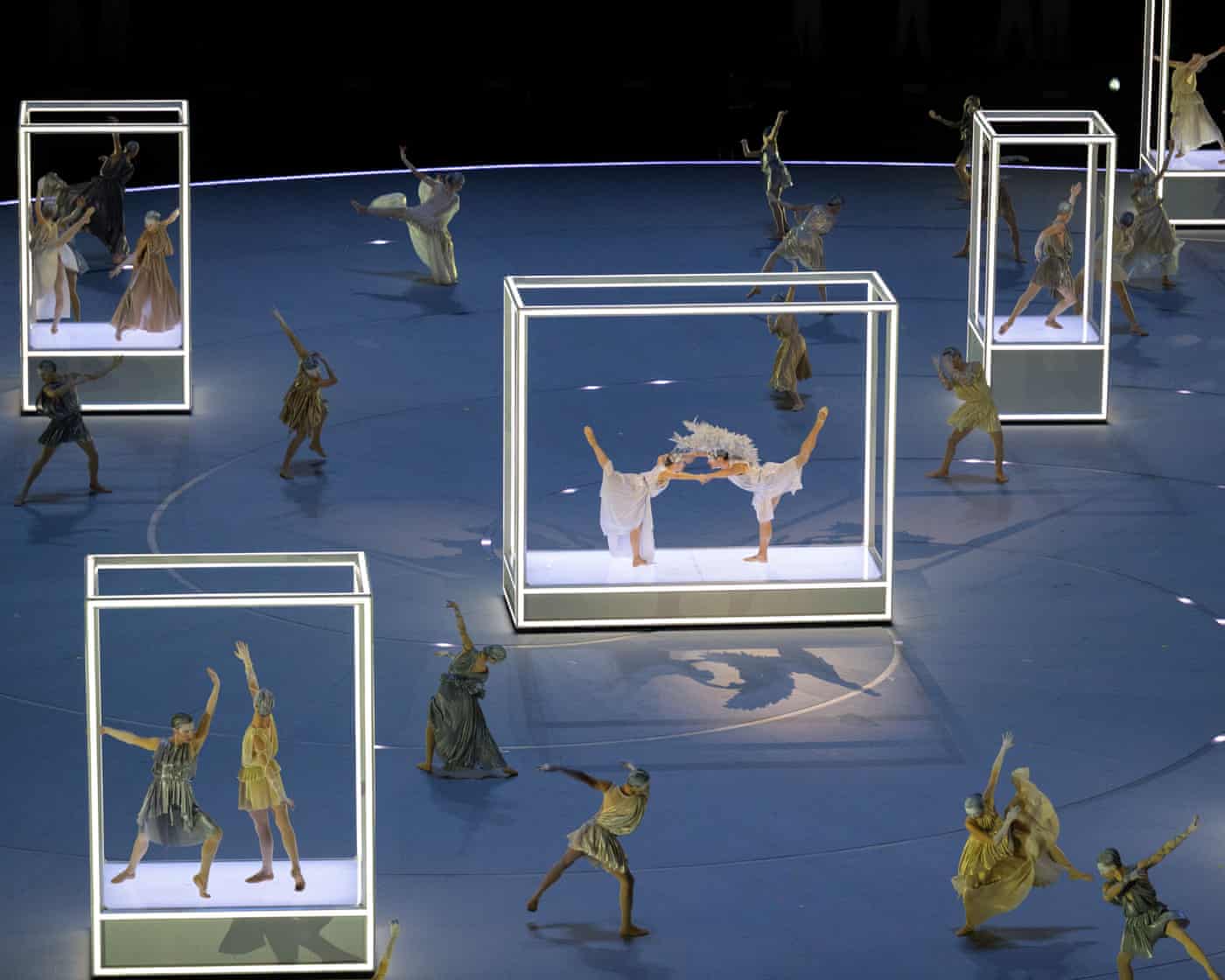

The opening live number is of people dressed as marble statues in light boxes. This is titled Armonia (harmony) and is apparently a narrative designed to unite territories, people and values with a shared vision or 'bringing together what is different'. It is an homage to neo-classicist 18th century sculptor Antonio Canova, who is known for his skill in bringing marble to life. There is something about Cupid wakening Psyche with a kiss, and then the statues become ballet dancers pirouetting and plie-ing about the stage. I learn that they are dancers from La Scala choreographed to evoke the fluid, dynamic movements of winter sports.  


Men in suits with cameras surround a woman on a catwalk (I guess Italians invented the paparazzi too) in a chic velvet gown with shoulder ruffles inspired by piano keys, waving a conductor's baton about. She is 'famed Italian actress' Matilda De Angelis and she leads another set of dancers cald in black and white bodysuits, representing 'dancing notes in a kaleidoscope of Italian imagination' This is a reference to Guido d'Arezzo, an 11th-century monk from the Order of Saint Benedict and musical theorist who is regarded by many as the inventor of modern staff notation. These games will often to be referred to as the most gender equal as women are represented as much as men for the first time. The NBC commentator calls multi-award winning 30-year old actor De Angelis a 'starlet', so we clearly have some way to go with that then. 


She is joined by three men with giant bobble heads for a Fantasia section inspired by three greats of opera: Verdi, Puccini and Rossini. They do a dance which is incredibly naff and apparently one of the repeated motifs of these games. The phrase 'rivoltarsi nella tomba' springs to mind.
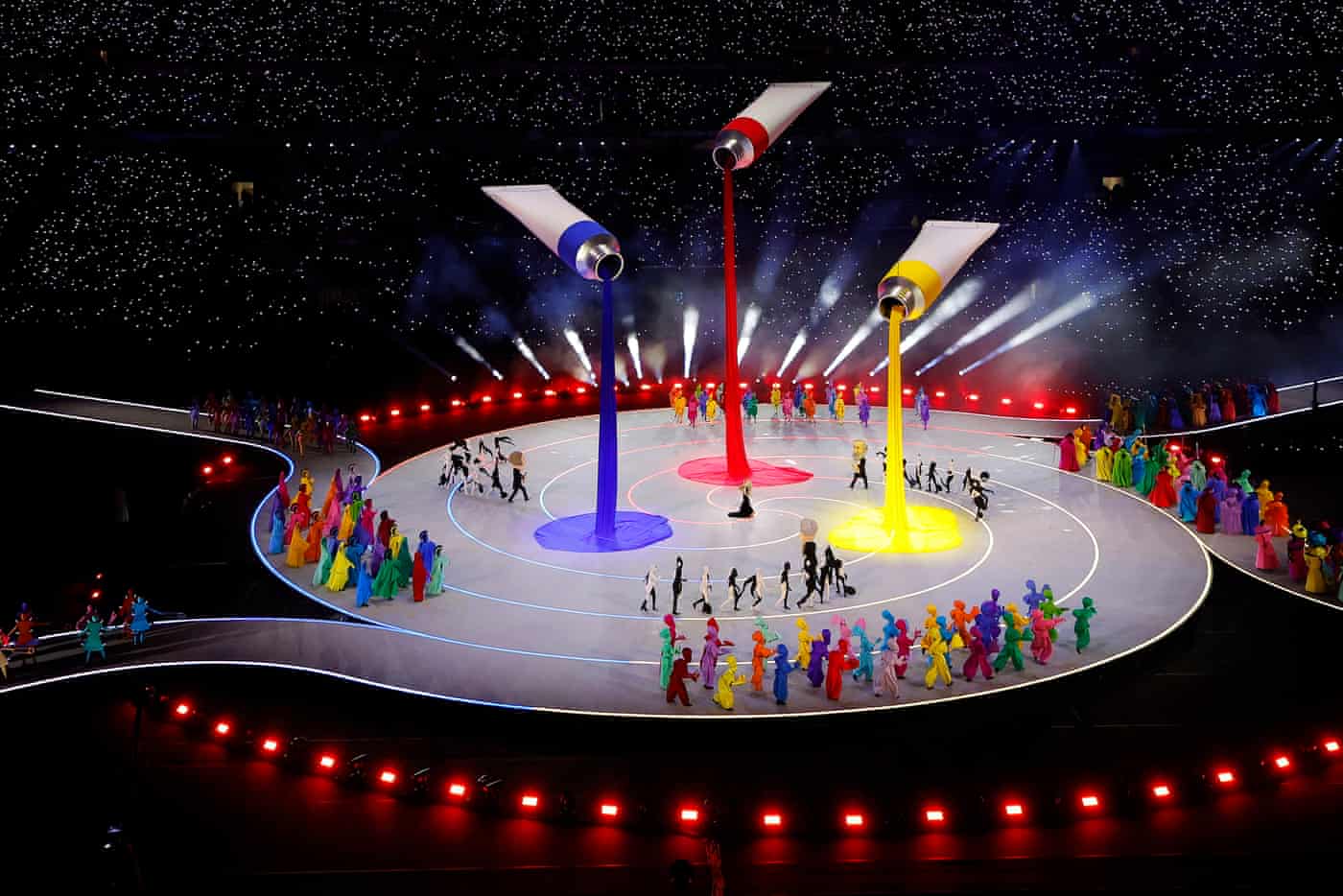

Paint tubes appear from the ceiling in the primary colours of cyan, magenta and yellow, and they 'drip' sheets of cloth which combine to make every colour in a rainbow swirl on the stage. There is now a giant parade of characters from Ancient Rome to the Renaissance who traverse in a grand Passeggiata. We have walking colosseums, coffee pots, picture frames, cut-out pattern dresses, chefs, gondoliers, figures from literature and opera singers in a tribute that combines the beauty and function of Italian design. They all form into a colour wheel and the segment ends with fireworks and the final notes of Nessum Dorma.
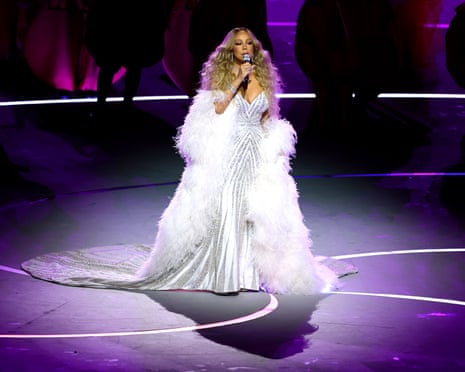

Mariah Carey for no apparent reason pops up and warbles and screeches her way through Volare and some drip-fest called Nothing is Impossible. she is redundant, sorry, I mean resplendent in a sparkly white gem-encrusted frock and draped in feathers and waves of hair. Why is she even here? If we are going to have an Italian-adjacent American, I'd much rather see Stanley Tucci. Anyway, she's presumably wheeled off, and we get to continue.

There is another video montage with shots of trams, fountains, families and illuminated buildings at night. Various Olympians get on a tram and a kid drops a mascot (I'm not surprised; those weasel things - named Milo and Tina after the host cities - are weird), which is handed back to them by a twinkly old gentleman who turns out to be the president of the Republic of Italy, Sergio Mattarella. And it transpires that the tram was being driven by Valentino Rossi, presumably at 46kph.
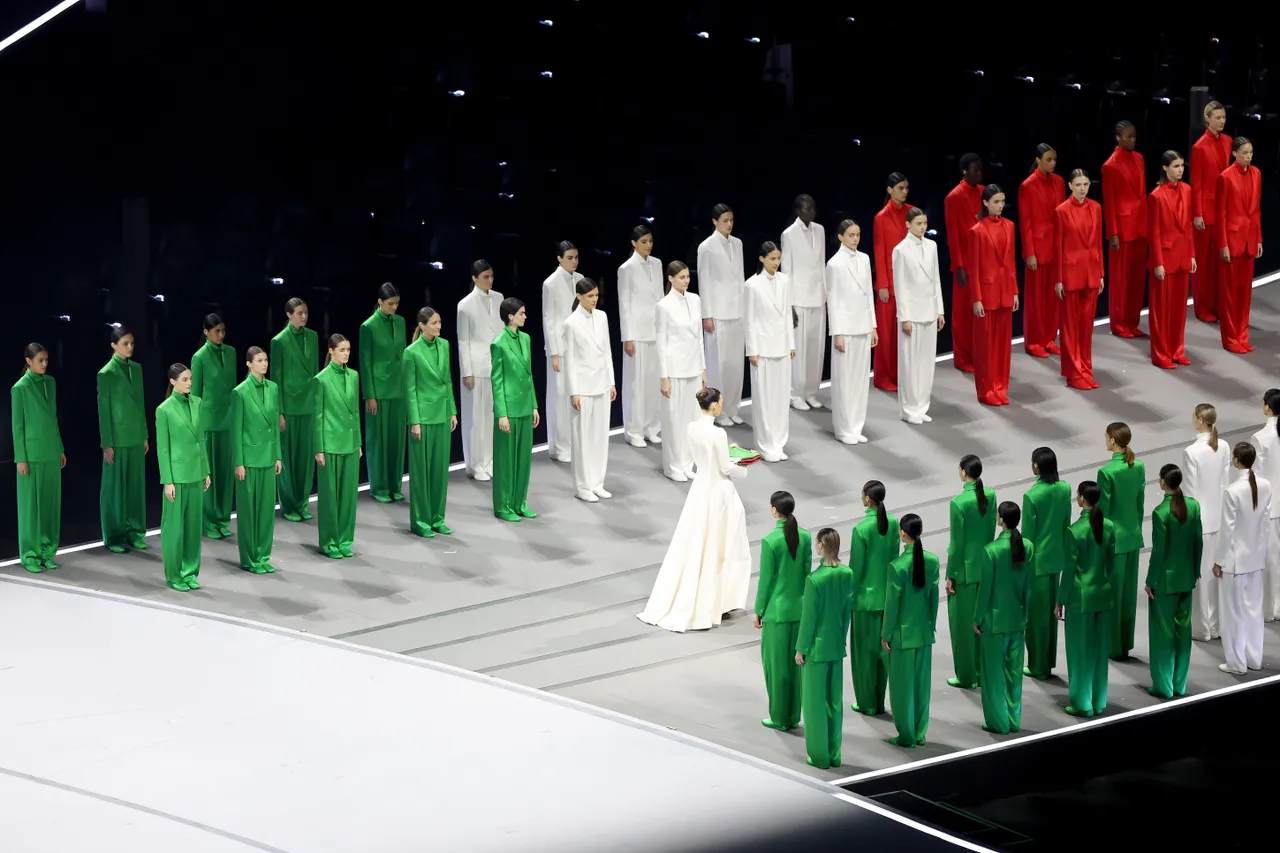

We now have a tribute to fashion icon Giorgio Armani, longtime designer of the Italian Olympic uniform and internationally-renowned Milanese, who died last year. Female models clad in suits of either red, white or green stalk down a catwalk to represent the Italian flag in human form. Armani design is said to embody simplicity over trend as the flag becomes a living expression of his style. Supermodel Vittoria Ceretti, the face of the last Armani collection carries the flag and hands it to a bloke in a plumed helmet - a member of the Corazzieri, the Italian Corps of Cuirassiers, to be precise - to raise it up the pole. 

Because the Games are spread out across Italy, certain elements of the opening ceremony (including the raising of the flag and the parade of athletes) are being held over four venues: Milan (ice-hockey; figure skating; speed-skating) Cortina in the heart of the Dolomites (men's alpine skiing, curling and sliing events), Livigno in the Italian Alps (snowboarding; freestyle skiing; men's alpine skiing; ski mountaineering) and Predazzo in Trento (ski-jumping; Nordic combined; cross-country skiing). Meanwhile, back in Milan, Laura Pausini performs a stirring version of the national anthem.
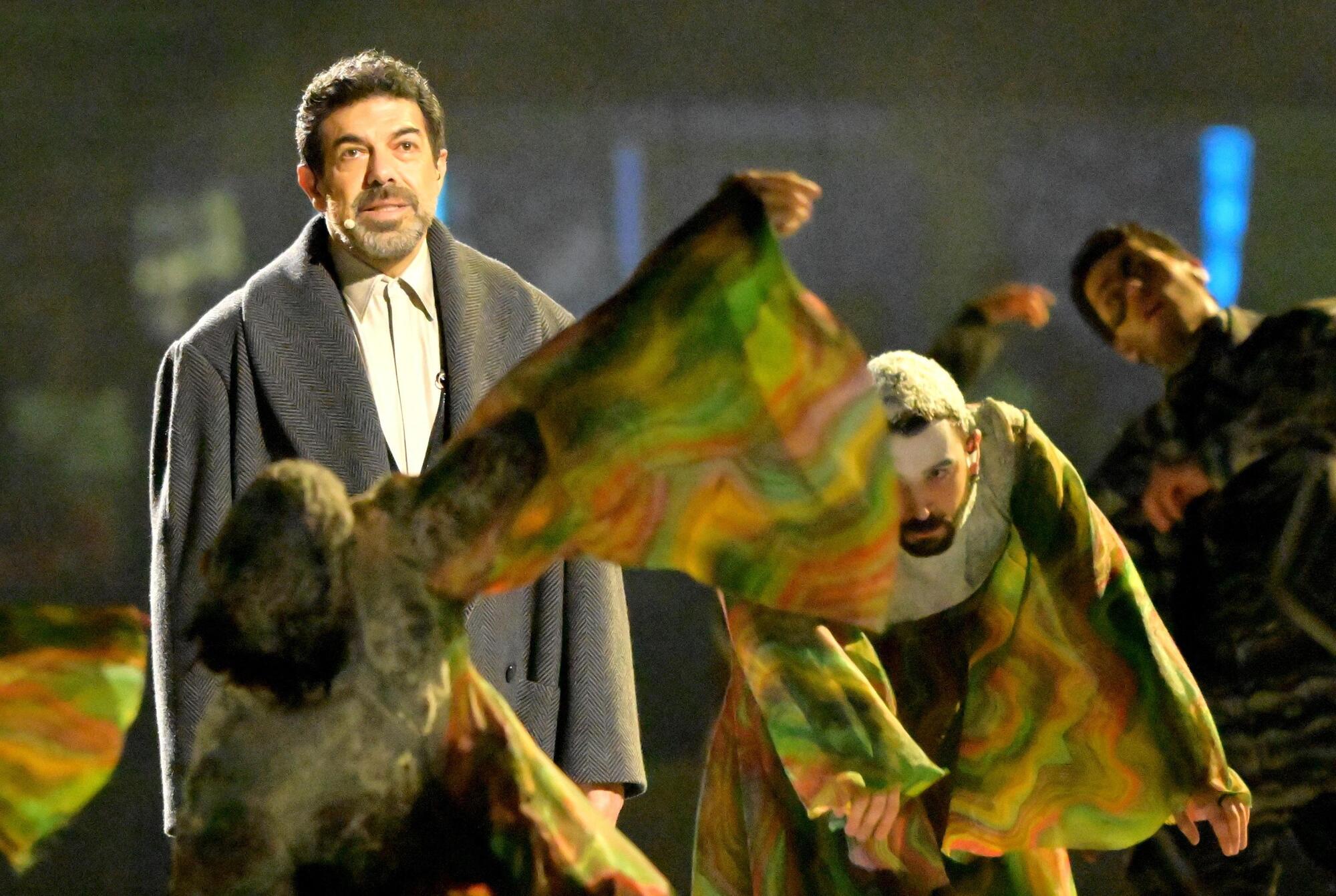

Then a chap in a suit recites a poem. It turns out (from a quick look on Google) that this is renowned 56-year-old Italian actor and film producer, Pierfrancesco Favino (I wonder if NBC referred to him as a starlet) wearing Armani and the poem is Giacomo Leopardi's L'infinito. The poem embodies a yearning to travel beyond restrictive borders and to experience more of the world of wonder. He is accompanied by a violinist (Giovanni Zanon) with an original composition, in the start of a section about how to balance human ambition and the natural world, incorporating performers representing the mountains and the city to show the harmony between them.
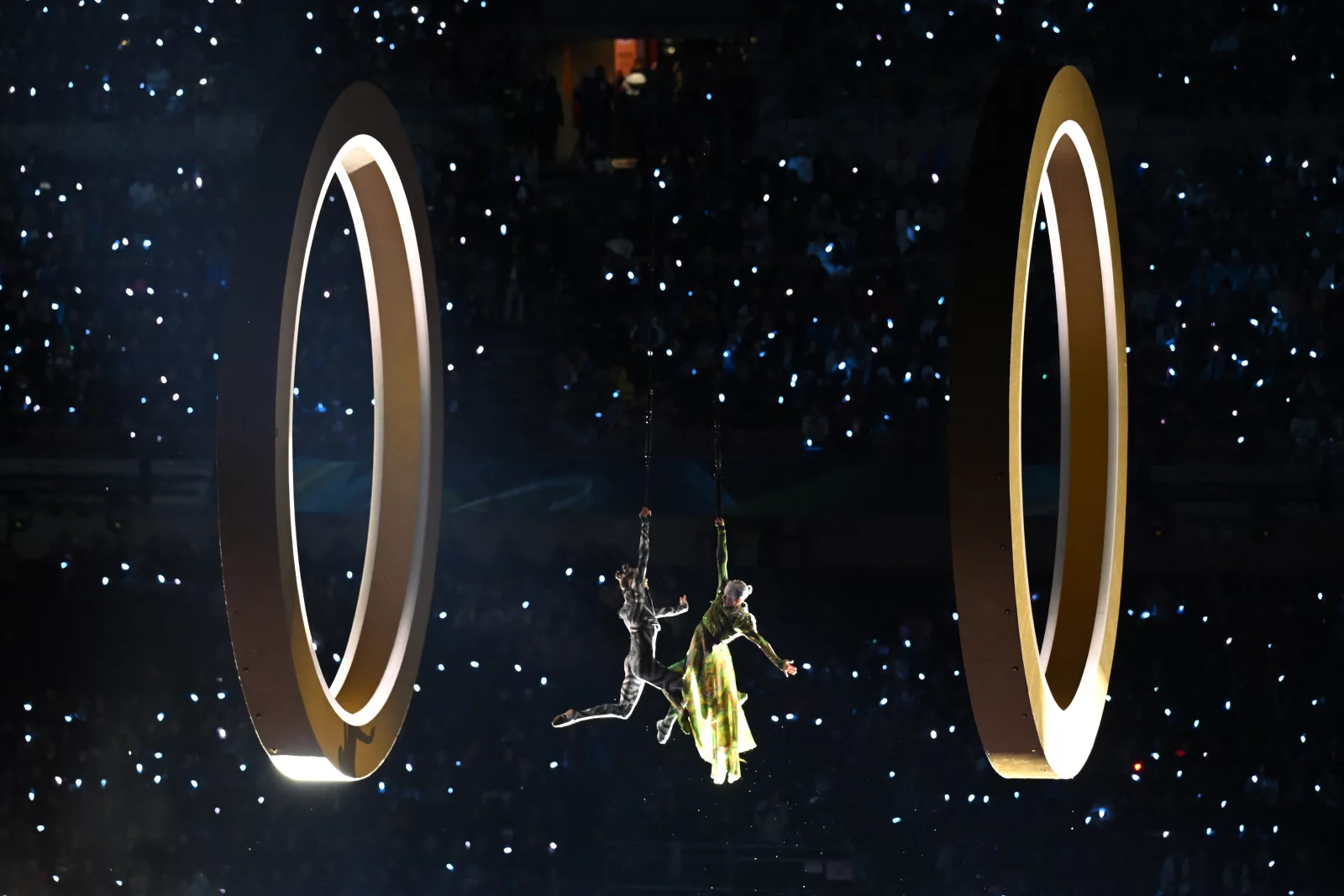

The harlequin-esqe dancers in earthy green tones dance around a couple of large rolls which are soon hoisted aloft to become two of the Olympic rings. These two represent the coming together of Milano and Cortina, and there are aerials as each ring contains one of the performers and they meet mid-air. The other rings join in until all five are up there united in harmony and pyrotechnics.
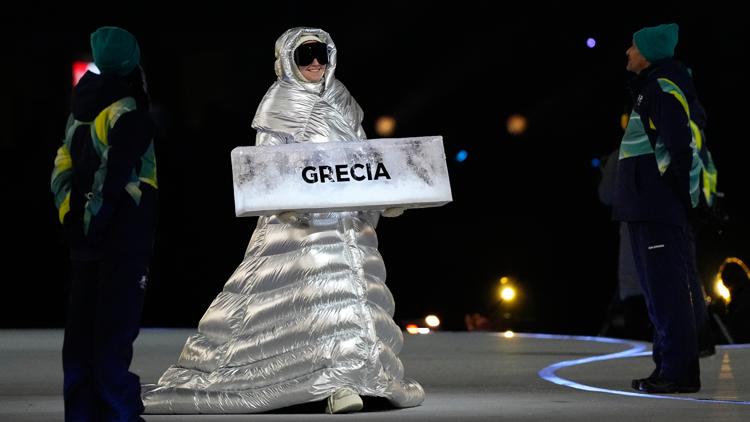

And so we come to everyone's favourite fashion parade as the nations all march in at their various venues - as noted above. Each nation follows a person dressed wrapped in padded tin foil and holding a iceblock etched with the country's name into the stadium, except sometimes the nation's athletes aren't in Milan and the name-bearer enters alone like they've been trapped in a walk-in freezer. Apparently this was the case with Australia's flag-bearer Matt Graham, whose parents were so excited when they heard he would lead the parade that they bought tickets to the opening ceremony in San Siro, and he proudly waved his national flag... in Livigno. Ooops.

Beceause I clearly know heaps about this fashion malarky, I shall be going into detail about these outfits elsewhere, but for now, let's progress with the rest of the ceremony, which continues with a section introduced by a montage summarily dismissed by the internet cognoscenti (another Italian word - see what I di there?) as AI slop. An actor (Sabrina Impacciatore) appears to be sitting on a sofa when disturbed by giant Olympic mascots (I have mentioned before - they are pretty disturbing) before morphing into an anime character who skates, skis, boards, slides and jumps her way through different art deco style former Olympic locations before arriving as herself at the stadium in an oddly-conceived white and gold spandex number.


She then dances through the decades with backing dancers beginning with jazz hands, wool and tweed, segueing into bold colours and 60s/70s funk and frug, through the best-forgotten 80s pastel and dayglo shellsuit combo (although I did like the elcetronica version of 'faster, higher, stronger' - music provided by green-haired DJ Mace, who had previously accompanied the athetes' parade), and culminating in a time-travel triumph to modern dance and techno, accessorising with a shaggy jacket, fluffy hat and big boots.  
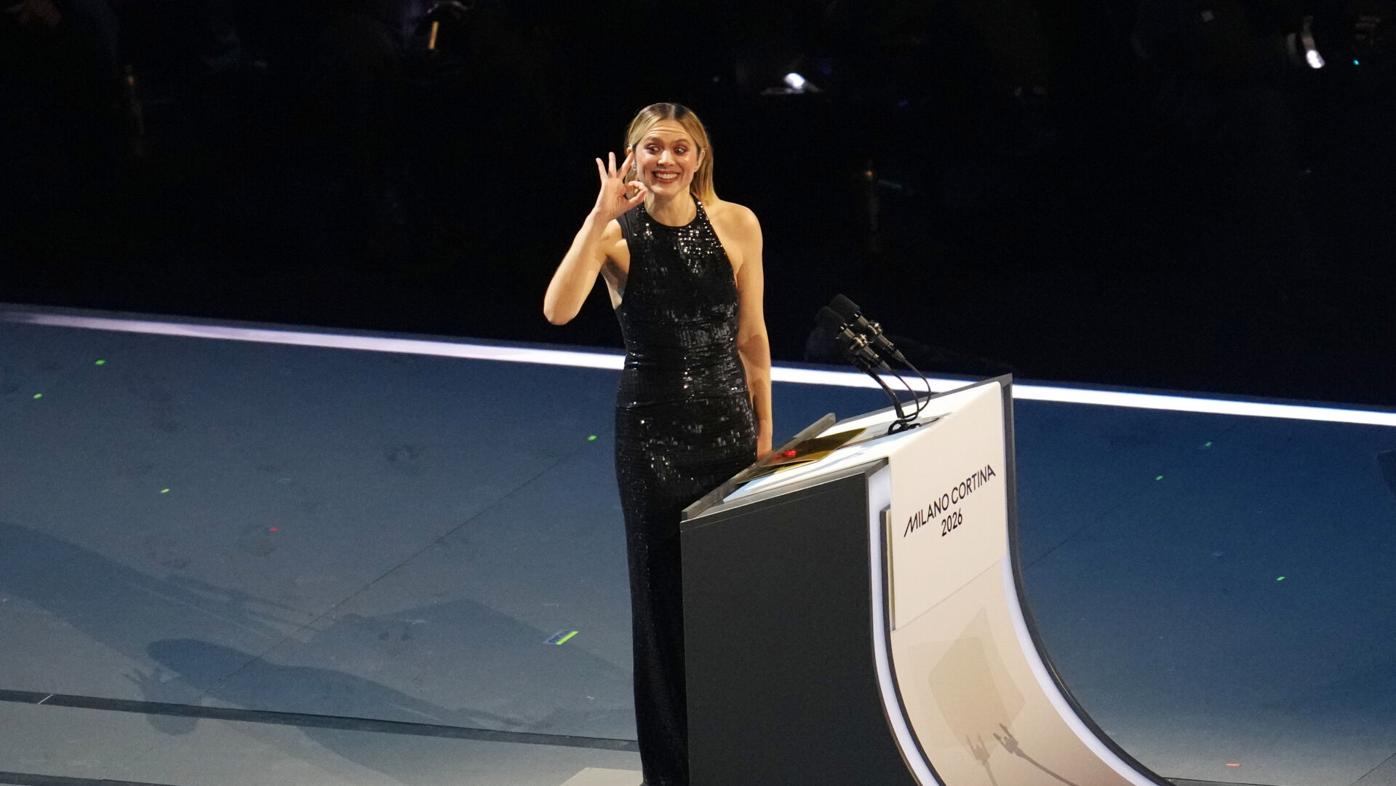

The tricky trifecta of long dress, high heels and desending steps is hard to watch but it transpires it is a comedy skit performed by Brenda Ladigiani in homage to Italian hand gestures as she attempts to get someone to switch on her microphone. It's sweet, funny, and succinct, and a great way to welcome us to Italy before all the nations' flags are raised in unison and the offical speeches get underway.

This bit is usually well-meaning but tedious, and we hear from the president of the Milano-Cortina organising committee, Giovanni Malago, the first female IOC president, Kirsty Coventry, and Italian president Sergio Mattarella (the twinkly bloke from the tram). Quotes include, "I love my country, I love sport, and I love the Olympic movement", and, "United by sport, the universal language'. It's practically Eurovision! My favourite is "It's not just about winning. It's about respect, empathy, courage and heart." But mostly, it's about winning.


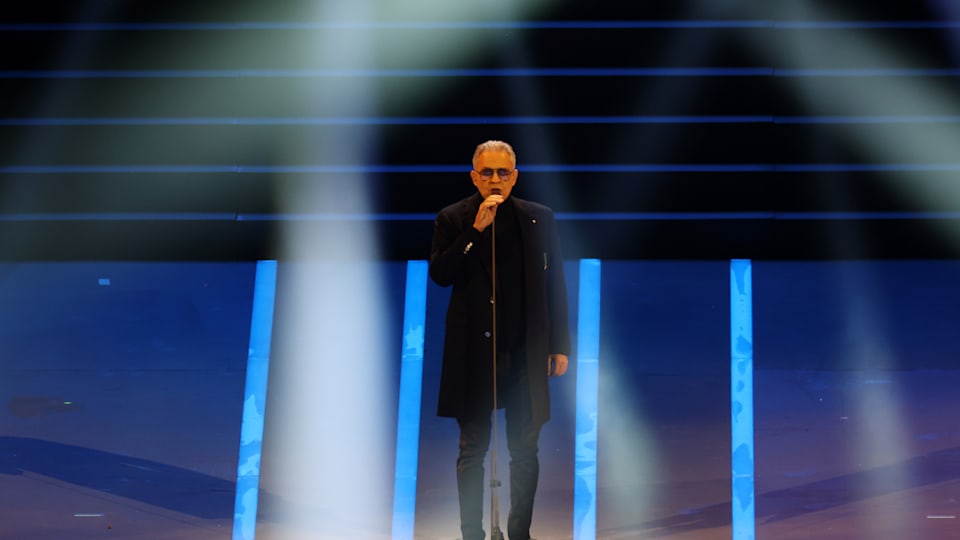
Thankfully Andrea Bocelli takes to the stage and shows how it's done (take note, Mariah - just the one and stick to it) with a spine-tingling rendition of Nessum Dorma. At the literal high point, the Olympic torch makes an appearance carried by footballers Franco Baressi and Beppe Bergomi who both captained Italy and AC Milan and Inter Milan respectively - a nice touch as we're kicking about a harmony theme.
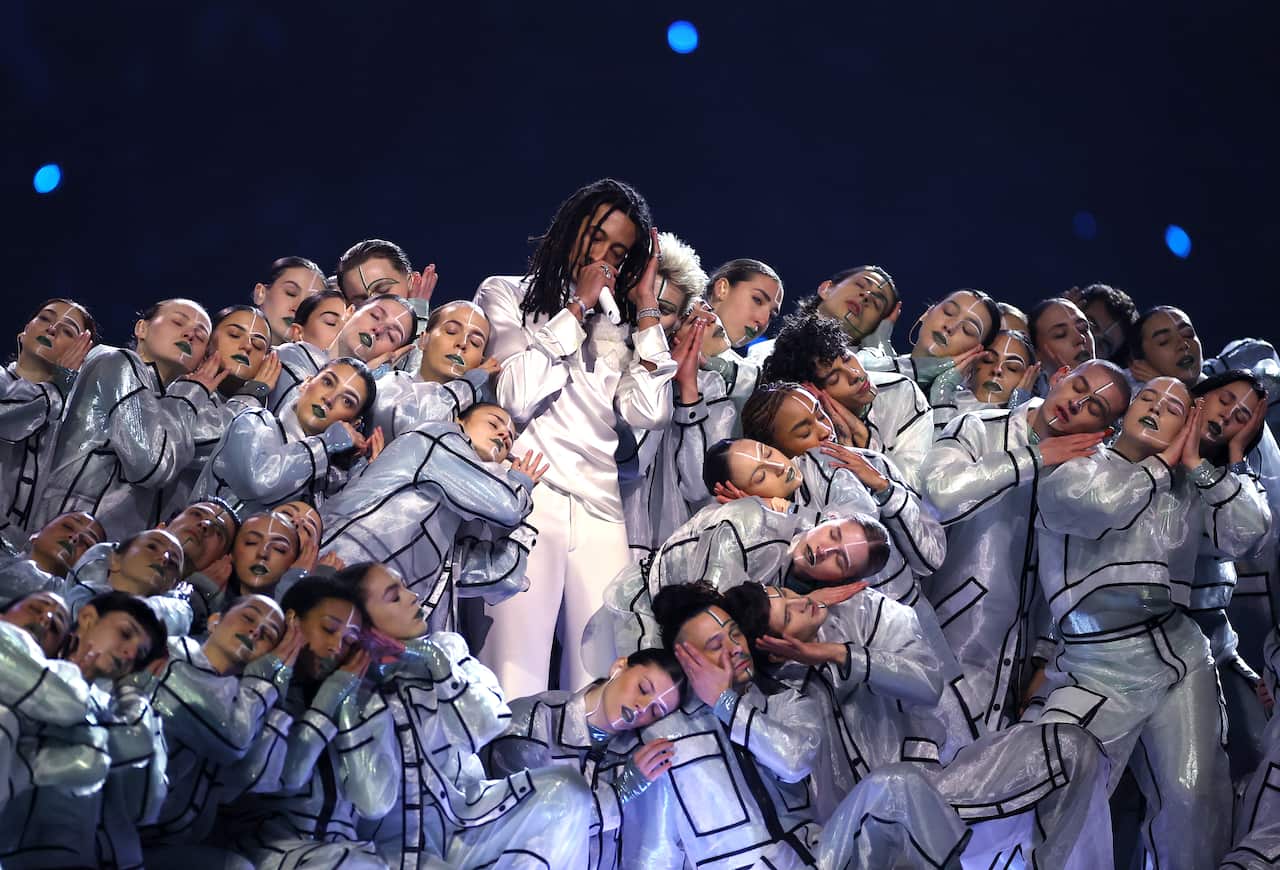

We move into the peace bit and nothing says Olympic Truce like a troupe of dancers in plastic macs and black and white facepaint. There are violins and strobe lights as Milanese rapper Ghali performs Gianni Rodari's Memorandum in four different languages, including a line about, "There are things you must never do. For example, war". I hope JD Vance is feeling uncomfortable. We get a peace dove juxtaposed against a pile of bodies, and I'm sure everyone must be feeling uncomfortable.


And then Charlize Theron pops out as the UN Ambassador for peace and quotes some words from her fellow countryman, Nelson Mandela, "Peace is not just the absence of conflict. Peace is the environment where all can flourish".

In all the venues, we now have the passing on of torches and flags. In Milan the Olympic anthem is sung rather wonderfully by mezzo-soprano Cecilia Bartoli accompanied by a children's choir and Lang Lang on keys (Chinese pianist because apparently Italians don't play piano...?). In Predazzo they are probably all down the pub by now singing along with Joe Dolce (because they gotta no respect and it's flippin freezing standing about in the cold night air). The theme of the European union (Ode to Joy) is belted out and the stars of the European Union is projected ont the Arco Della Pace. 


While we wait for the torch bearers to arrive at their cauldrons (there are two this year, in a first for the Olympics), there is some palaver about a small child experiencing the wonder of the galaxy with a model of the solar system, before she is joined by Samantha Cristoforetti (the first woman to command the space station) who is supposedly symbolically bringing a bright sun to the stage, highlighting the need to "care for the planet, bridging scientific curiosity with environmental responsibility". There are more dancers who apparently create the Milky Way, but unfortunately, close up, they look like they are trapped in condom-clad trombones. Apparently the 108 dancers are a variation on NASA's Golden Record from the Voyager probes. (You can learn a lot from the internet if you know where to look). 


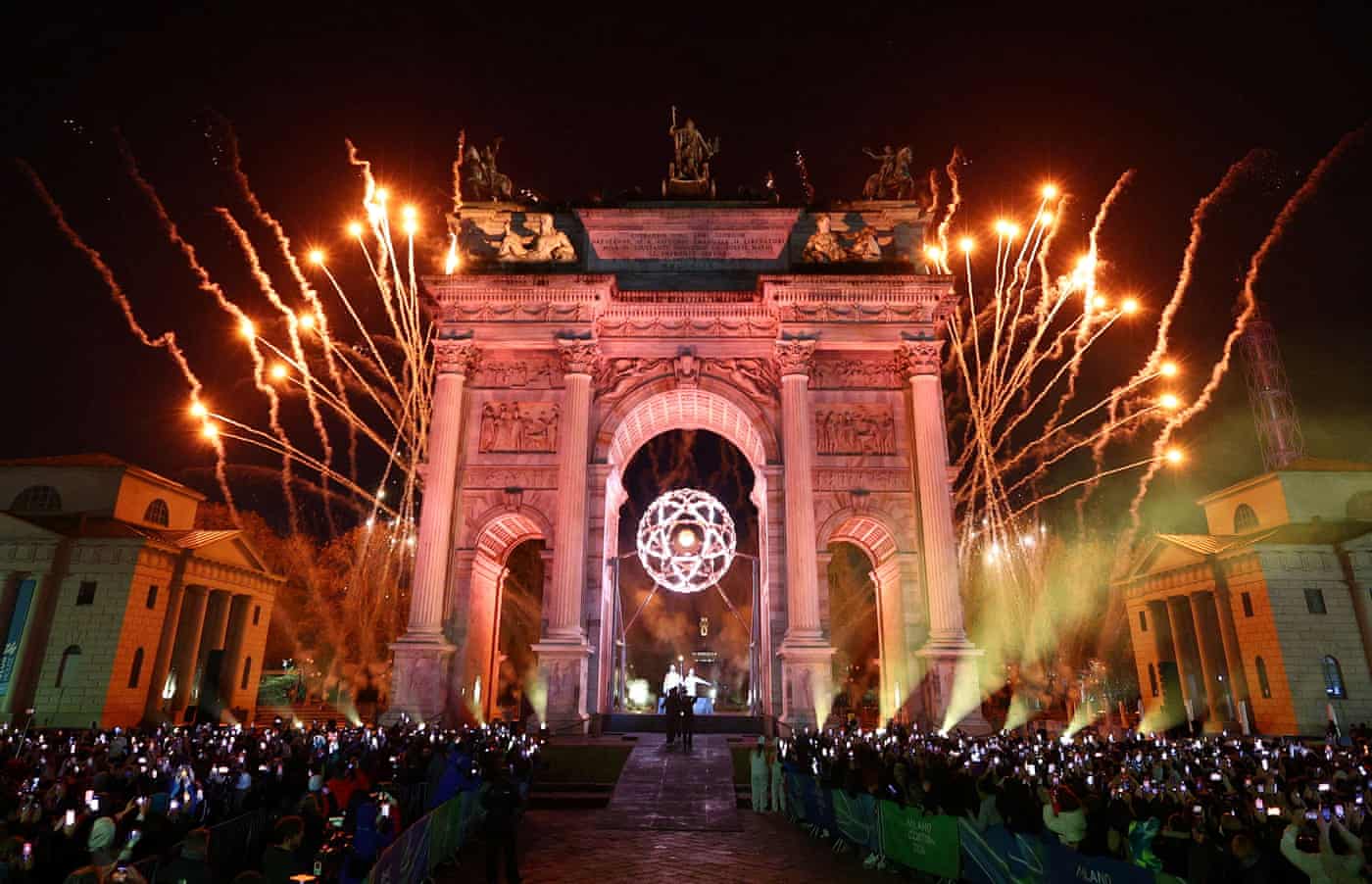
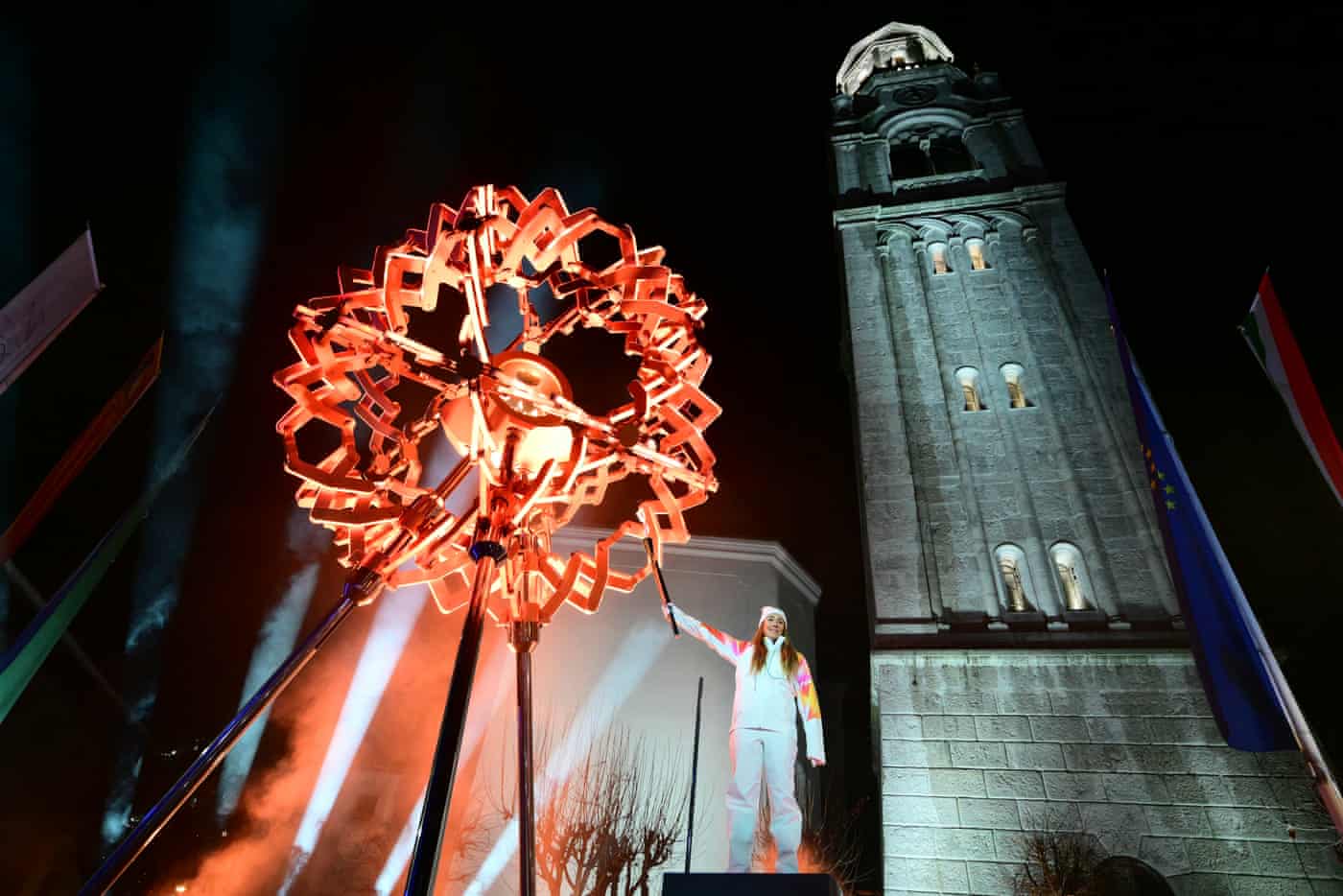
And finally the cauldrons, designed by Marco Balich and inspired by Leonardo da Vinci's geometric studies, are lit at the Arco della Pace in Milan and Piazza Angelo Dibona in Cortina. The former is lit by past gold medal winning alpine skiers Alberto Tomba and Deborah Compagnoni, while current hopeful Sofia Goggia does the honours in Cortina. More fireworks; more cheers; more bright lights, and everyone heads off for some hearty Gluhwhein - except for those in Predazzo and Livigno who are probably well on their way. And that's it for tonight. Let the Games begin (apart from the curling, which has already been going for the last couple of days and in fact goes for every day of the Winter Olympics, but let's not quibble)!
 

Wednesday, 15 April 2020

COVID-19: We Aren't Gathered Here Together


Last weekend it was Easter. I am a 'wishy-washy Anglican' (not actually my words, but I have been called thus) and only really attend Church at the major religious festivals - Christmas, Easter and Whitsun being the big dates in my calendar. Of course, this year I could not go to Church - no one can - and I missed it. I missed singing the songs and saying the prayers; I missed turning to my fellow members of the congregation and wishing them peace and good will. And I missed them doing the same for me. I missed that communal feeling.

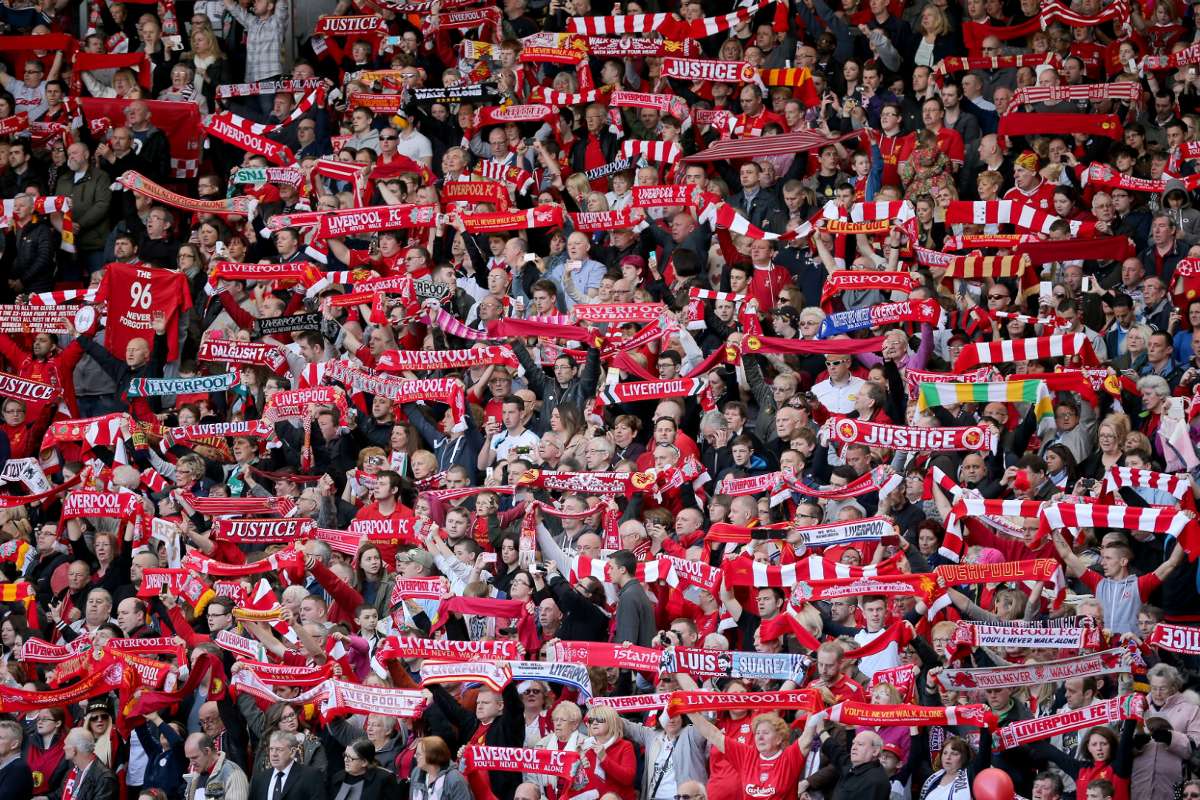
For the same reason, I love watching sports and theatre; I enjoy a shared experience. Knowing that you feel the same thing as others is a wonderful thing. When I breathe in the hallowed turf of Anfield, it is a spiritual moment; all the home players and supporters know what I mean - we stand and sing together and no one cares how out of tune we are; we are in time. Our time. Any true fan will tell you the same (although they will worship at a different shrine). 


When the curtain raises on the stage and everyone takes a collective breath, we are all waiting to see what unfolds together. This moment will never be repeated - every performance is different - and we know we are privileged to witness it. And when the curtain falls and people applaud, they do it together. I have been part of a cast that received a standing ovation. It was magical and unforgettable. We did it for the audience and the audience appreciated us; and we were one. It was incredible.

I like listening to a band, but I prefer going to a gig or a festival. I don't need to then hear this gig again; I'm not a fan of live albums because generally the sound quality isn't as good, and the whole point is the being there. I am pleased the National Theatre, The Globe and the RSC are screening some of their performances so we can all enjoy things that we couldn't otherwise see - but we are still watching them alone. The roar of the greasepaint and the smell of the crowd is missing. (Yes, that was deliberate.)

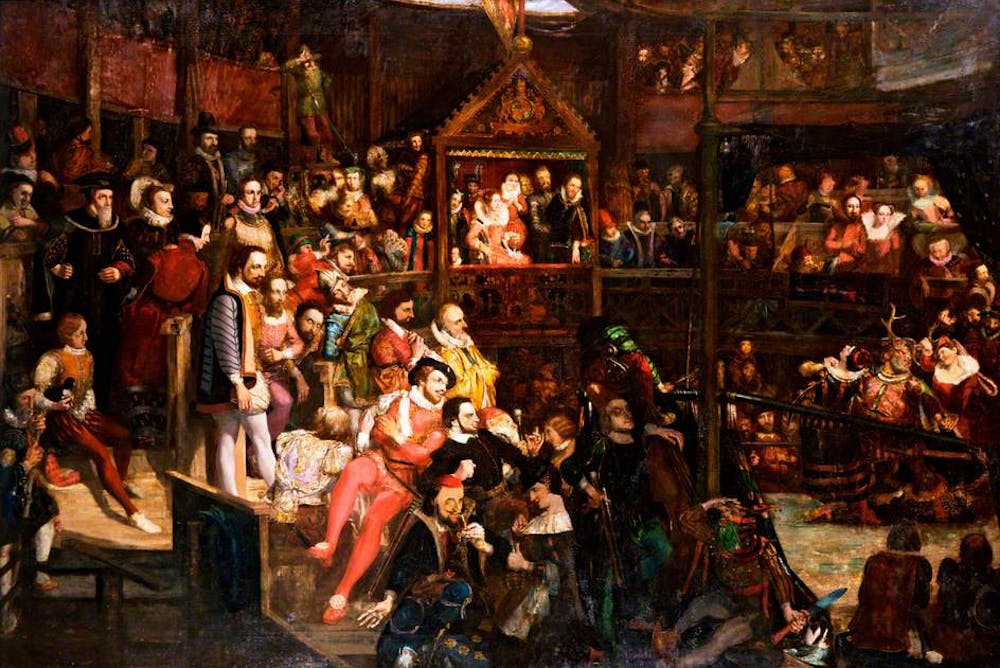
'Queen Elizabeth viewing the performance of The Merry Wives of Windsor, at the Globe in Merrie England' by David Scott
I like a drink as much as the next person. But there's a reason I go to pubs and clubs, even if the beer is often ridiculously overpriced. I like the atmosphere of sharing things with like-minded folk. Restaurants and cafes are better when they're busy (not cramped and heaving full, but with a low-level hum of noise). Silence is good when it is shared. Have you had a moment's silence in public? Then you know what I mean: there is nothing more moving than a collective memorial. 

Over the last few weeks I have held many on-line conversations and 'attended' conferences and meetings; I have done group trivia quizzes and play readings; I have watched re-runs of football matches and 'live' theatre. But I have missed the physicality. I will stay at home, and I will practice the physical distancing, because it saves lives and that's what matters. But when all this is over, I will find my flock and I will join them again, and we will sing our songs. 

Because it may be elitist; it may be exclusive; but being there is everything.


Friday, 25 September 2015

Friday Five: The Mesmeric Magic of Crowds


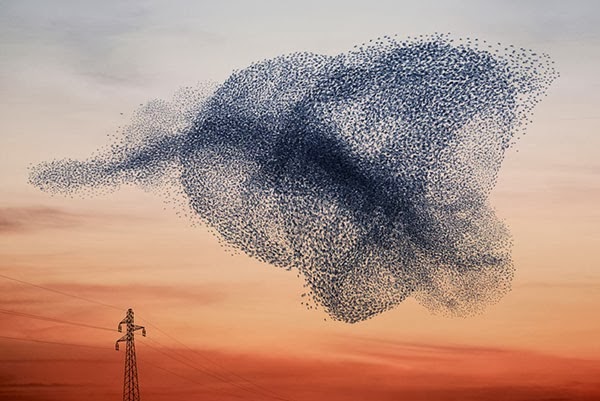
Following on from last week's Friday Five, I've been thinking about the mesmeric influence of dancing in a club; of the wonderful vibe experienced at a rave. A lot has been written about the brutality of the mob; about how being part of a crowd can make a person lose their individuality and behave in an ugly and anti-social manner. At this point some sort of reference is made to riots, hooliganism and/or the French Revolution. But I think that sometimes crowds can have a beatific influence, and their collective nature can be a force for good. And please stop waving your phone/tablet about and ruining it for everyone else. Aren't you capable of remembering stuff?

5 Times it's good to be part of a crowd:
  1. Music/ dancing - as discussed. Of course one can dance with oneself, but the experience is a lot different if there are 'twenty thousand people standing in a field'
  2. Theatre/film/sport - A live audience is a wonderful thing. The shared emotion makes a film even more memorable - watching Silence of the Lambs in a cinema where the code of conduct was impeccably observed and everybody jumped at the same instant was unforgettable
  3. Battle - That speech of Henry V wouldn't have been so inspiring if no band of brothers were there to listen
  4. Church/vigil - Whatever your belief or religion, if you share it publicly with others through song, prayer, or silence, the feeling of togetherness is indescribable
  5. Rally/ threat - There is power in a union: The people united will never be defeated

Tuesday, 1 September 2015

My Newest Favourite Thing: Charles Billich

When we were last in Sydney, we saw a beautiful building near the Harbour Bridge. It used to be a place for sailors to sleep; now it houses some spectacular art by Charles Billich. The canvases are crowded with images, real and imagined from the past, present and future. Cityscapes of Sydney, London, Paris, or Shanghai are vibrant and busy, juxtaposing iconic representations in a playful pastiche. As the official artist of Regatta Day, he delights in painting the Sydney waterfront, and as he is so close to it, it would seem contrary not to.

The gallery owner tells me that that the pictures don't date because they are often not real anyway. On hearing we lived in Canberra, she rushed to show us a print he had created of the capital. 


As well as cities and architecture, Billich's subjects include theatrical pursuits such as drama, ballet and orchestras, and sport - lots of sport. He was named the artist of the 1996 Olympic Games and in 2000 was the recipient of the Sport Artist of the Year Award presented annually by the American Sport Art Museum and Archives. The sports most represented in this gallery are racing, both of horses and motor cars. Billich captures the proud equine spirit brilliantly, and the paintings seem to burst to life; The World of Polo is a study of movement as realism melds into fantasy.


His Olympic portraits are stunning and often incorporate gold leaf, which shimmers from the walls and (I am assured) have no need for special gallery lighting to enhance their visual charms. Inspired by his work, The Beijing Cityscape, the official image for the successful Beijing bid to host the 2008 Olympic Games, Billich conceived a series of images based on the Bing Ma Yong Terracotta Warriors, engaged in sporting pursuits including fencing, rowing and archery.


Chinese masters also indulge in a series of games such as chess and other contests of skill in Billich's art. He also paints humanitarian pieces and works of religious significance. From landscapes to portraiture, classicism to eroticism, Billich has a wide and varied range of subject matter, to which he brings his inimitable style. The canvases are large and impressive, as are their price tags. A print of the Sochi Olympics is $200,000. At least looking is free.

Tuesday, 1 July 2014

World Cup 2014: Today's Talking Point - The Heat!


It's hot in Manaus. And Fortaleza. And many (but not all) other Brazilian cities where World Cup games are being played. It's humid too, with 80% humidity recorded at the Italy v England game, creating extremely unpleasant conditions. Especially if you're not used to them. 

Of course, these footballers are professional athletes and most of the European teams have an entourage of fitness experts to help them to acclimatise. Apparently the Italian squad prepared by running on treadmills in the sauna, and the English 'wore extra layers', which admittedly isn't particularly high-tech and something my Dad used to recommend when we ran out of heating.

It's no surprise then, that the teams who have had their group stage matches in the hotter and more humid locations have suffered unduly high incidents of heat-related ailments from heat exhaustion to cramp and dehydration, all of which take time from which to recover. Predictions were that the European teams who played here would particularly struggle, and this proved to be the case. Italian midfielder Claudio Marchisio claimed he had been hallucinating during his team's clash with England in Manaus.

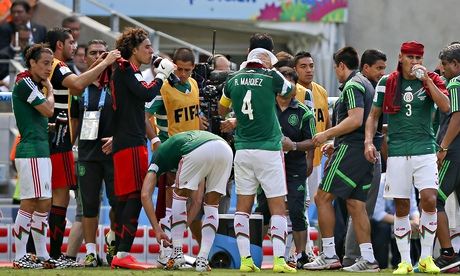
It was also outrageously hot at USA 94, when FIFA banned water breaks despite the temperatures soaring to 46 degrees Celsius. John Aldridge had a famous meltdown on the touch-line as players were refused refreshments during the game between Mexico and Ireland. Since then the rules have changed, and FIFA now allows water breaks 'if health professionals deem conditions to be dangerous'.


These breaks are not mandatory, but a Brazilian judge has ruled that the referee must give a water break if any game is played in a temperature above 32 degrees Celsius in the Wet Bulb Globe Temperature index, which takes conditions such as wind speed (or chill), cloud cover, humidity, and UV radiation into account.

To switch sports for a moment, nearly every year there is controversy at the Australian Open as tennis players in Melbourne struggle with blistering heat. In 1998 an Extreme Heat Policy was introduced, with measures such as the ability to close roofs, longer breaks between games and sets, and the possible suspension of matches. In 2007 on-court temperatures reached 50 degrees, and this year not only the players were affected; a ball boy fainted and more than a thousand spectators were treated for heat exhaustion.

So why is this controversial you ask? Because some people say they should just get on with it. Their argument goes that these people are paid (and paid phenomenally well) to entertain us. The conditions are the same for everyone, so no-one has an advantage. 


My refutation is partly that the audience or spectators are denied the peak performance of these athletes, because no-one can achieve physical excellence in such heat. Also, basic humanity should stop you from wanting to torture people by forcing them into oven-like situations. They are sports-folk, not gladiators. Surely we don't want to watch them harm themselves? That's not sport; it's sadism.

Thankfully common sense has prevailed, with the introduction of three-minute cooling breaks used for the first time in the game between Mexico and The Netherlands. And officials have clearly realised that it is absolutely ridiculous to host games in places where it is too hot for comfort. Oh, wait... did someone say Qatar?


Friday, 15 March 2013

Fiday Five: Exceptions

I have a slight confession to make after yesterday's post. I know I wrote you should always read the whole thing before forming an opinion - or at least broadcasting one - but there a couple of occasions when I haven't. These are exceptions to the rule. I remember there were always plenty of those in English, and French, and Latin, and things my mum told me I couldn't do. So here are some of mine:


Friday Five: Exceptions
  1. If I start a book I will always finish it - with the exception of The Hobbit and Ivanhoe. I found both of them deadly dull.
  2. I never patronise McDonald's - apart from that time in the Philippines when I had the world's worst diarrhea and I knew they would have clean toilets and sanitised food.
  3. I dislike all American soft rock/ anthemic ballad music - but I will sing along and even dance to Guns N' Roses. I know; it's simply inexplicable.
  4. I never drink cold fizzy lager - unless I'm on holiday somewhere hot. You know who you are, Fiji Bitter.
  5. I will support all English teams in global sporting competitions - apart from Manchester United.

Friday, 14 December 2012

Friday Five: Non-competitive pursuits


I think it's fair to say that I don't like reality TV. I have mentioned this before. One of my least favourite sub-genres is the competition variety. You know the type of thing, where people are pitted against each other to paint a room or build a wall and then someone wins and everyone at home thinks they could have done the same and the real decorators and stonemasons go out of business while general standards plummet.

Although I like the celebrity dancing ones (especially the ice-dancing one), I know I am no expert. This is not true of the people who routinely watch the singing shows and then feel free to critique performances about which they know nothing. It also means that we are left with chanteurs who think that to belt and warble is the epitome of 'singing' and we are left without subtlety, nuance or character. Bob Dylan or Florence Welch wouldn't make it through the first round.

With performance and artistic pursuits, a lot is left to personal preference - A might like sci-fi or farce; B might prefer romance or Jacobean drama; C might swoon at ballet and metaphysical poetry and so on. It doesn't mean any one is 'better' than the other - it just means they shouldn't be judged against each other. In 'pure' sport if you run fastest, jump highest or throw something furthest, you win. You are the best at that particular thing. Don't get me wrong, some things lend themselves to competition and this is a good thing (not keeping the score during football games because 'it's all about participation' is ridiculous!) but when subjectivity creeps in, nothing is so clear.

Acting, comedy and writing awards are often suspect. Yes, they are worth something when awarded by your peers, but often they are voted for by a partisan panel - the more friends you have in the audience; the more likely you are to win. These tributes might provide a feel-good factor, but they are relatively worthless. Entertainment is not a science; nor should it be a competition.

5 Things that should never be a competition:
  1. Cooking - as far as I am concerned you either cook because it is your job and you are paid, or because it is a way of expressing love and friendship to those around you. Eat with me and know you are welcome. Do not judge the temperature of the soup or the slicing of the vegetables. I have prepared this gift for you in my own way.
  2. Surgery - there will come a day when cameras go into operating theatres and viewers vote on who best wields the scalpel. I'm surprised it hasn't happened already. Health is personal, although you wouldn't know it from those shows which 'expose' physical deformities and laugh at fat people. Some things should be conducted behind the curtained cubicle - pull yourself together.
  3. Sex - it's personal and not up for discussion apart from between the relevant parties. According to late-night phone-ins (you hear a lot driving home from rehearsals) many people seem to be concerned about whether or not their sex-life is 'normal'. As long as you and your partner are happy with it, whatever you're doing, or not doing, is fine.
  4. Raising children - I hate the use of nouns as verbs, so have resisted the urge to call it parenting. I'm sure it's pretty difficult to raise a child to be a reasonable and responsible human being. Just do your job and stop comparing yourself and your child to others. In some respects they're all the same; in others they're all different - don't bother worrying or boasting, and if you must do either, do it to yourself as no one else cares. Really.
  5. Friendship/love - when I was little I used to refer to 'best friends'. Now I know that best is a superlative meaning 'of the most excellent or outstanding or desirable kind' there can only be one, by definition. I would now say I have many good or close friends - all of them special to me in individual ways and I love and admire them for their specific qualities. I would never try to rank one above the other. That's not how this love thing works.

Friday, 9 March 2012

Friday Five: Sleep No More

I've been having quite a few sleepless nights recently. It's not that I've got a guilty conscience (at least I don't think I have) or that I've been eating cheese before I go to bed (is that even a real excuse, or just propaganda from the anti-cheese board?) but I have got a lot on my mind, and between that and the only-just-this-side-of-psychotic cat, I keep waking up around 3am. So this seemed appropriate:

5 Things I Do When I Can't Sleep:
  1. Lie awake thinking, 'why can't I sleep? This is so annoying!' - that's really annoying
  2. Watch sport: football; cycling; cricket; tennis; rugby - there's usually something interesting being played on the other side of the world
  3. Drink herbal tea - I find it goes well with cheese (Ha!)
  4. Make lists of things I need to do - not sure it helps as I am often just about to drift off back to sleep when I remember something I forgot to put the list and then lie awake worrying about that instead
  5. Blog!

Friday, 10 February 2012

Friday Five: Darts

Just before Christmas, when I was doing a lot of sitting around with my leg in plaster, I 'discovered' darts. Of course I can't claim first knowledge of this pub pastime (I am still loath to call it a sport) as it has been around for some considerable time, but I have never really paid attention before. And I confess now, that I found myself totally hooked. And I'll tell you why...

5 Things I Like About Darts:
  1. The tension - it may not be played by perfect physical specimens (and the close-ups on the throwing arm don't exactly highlight the peak of athleticism) but there is intense concentration, accuracy and skill going on up there
  2. The crowd - they love it! Chanting along with the cheerleaders (who only know how to perform one 'dance') and entrance music (yes, really, like boxers, albeit in sumo suits), drinking copious quantities of amber liquid, encouraging every throw and feeling every miss, and waving signs declaring 'we're supposed to be at work', they are raucous and jovial and clearly having a great time
  3. The pace - it's quick, scarcely has one leg finished before the next begins, and there is barely time to go to the bar. It's certainly fast, if not particularly furious
  4. The jargon - there are legs and sets (indeed, just like tennis) and triple tops and you have to finish on a double and you can do it in five and be on a finish - it's not quite silly mid-on and daisy-cutters, but we're getting there
  5. The pyschological drama - players can win or lose on body language alone, and they stand very close to each other for quite a lot of the tine

Wednesday, 14 December 2011

Just Plain Stupid

Jacob Palmer (Ryan Gosling) instructs Cal Weaver (Steve Carell) in the art of looking fine
I watched Crazy, Stupid Love. on the way home from Sydney. It was perfect plane viewing – pretty obvious and not at all demanding with some good solid acting and snappy dialogue. The official blurb is, “A middle-aged husband's life changes dramatically when his wife asks him for a divorce. He seeks to rediscover his manhood with the help of a new-found friend Jacob, learning to pick up girls at bars.” Actually, it is more complex and subtle than that, but for the purposes of this post, let’s go with that.

Jacob, played by Ryan Gosling, is the highlight of the film. His arrogance and assurance (all of which turn out to be built on image and lacking in substance) are delivered with panache and one-liners Oscar Wilde might have written were he alive today. As he gives Cal (the husband) dating advice, he says cynically, “The war between the sexes is over and we won. We won the minute they started doing pole dancing as exercise.”

I spluttered with indignation over this line, because the first part is just so wrong and the second part so sadly true. A friend of mine, whom I considered liberated, educated and of above-average intelligence, recently told me that she had begun pole dancing lessons for fitness. My jaw dropped. I was lost for words – not something that happens to me too often. “Why?” It was all I could ask.

Her answer was highly unsatisfactory. For the record it was something along the lines of having a bit of fun and trying something new. Fair enough. Is it necessary to do it in a skimpy bikini? Apparently yes – it helps you grip the pole better – the tassels on your nipples are optional. A pathetic excuse: I have seen people hold onto lamp-posts at a perpendicular angle while fully clothed and, yes, admittedly, half-intoxicated. There are a gazillion sports she could have chosen to help her get fit and strong that wouldn’t have upset me the least. Actually, I don't particularly like netball, but at least it isn’t aimed firmly at the sleaze market.

I know there is much popular psychobabble about reclaiming negative sexual stereotypes. This is apparently why women choose to dress in tiny tube dresses and ankle-breaking stilettos, or why teenagers wear pink sparkly Playboy t-shirts – not because they are desperate to get men to notice them, honest! I’ve heard people pontificate about empowerment, control and turning the male gaze in on itself, but that’s basically crap.

If pole dancing is really so liberating and aerobically challenging, why don’t men do it? If a woman wants to develop her upper body and core strength she could try gym-work, water-skiing, wind-surfing, X-country skiing, swimming, yoga, rowing, athletic field events, gymnastics, rugby, basketball… The list is endless. If she wants to dance then there are infinite varieties she could attempt from ballet to tap, ballroom to hip-hop. Pole ‘dancing’ is a very limited form of movement all things considered. If she wants to support the male-dominated sex industry and present herself as a hooker (albeit a flexible one) then she should consider pole dancing.

It may just be the latest craze, but it is one that debases women (or, worse, makes them debase themselves) by objectifying themselves and creeping back to a misogynistic past. It’s not just a bit of fun; it’s dirty, filthy dancing on the graves of the women who fought (in some instances with their lives) for our right to be equal. Women have a responsibility not to trample on this right so carelessly.

Friday, 2 December 2011

Friday Five: Summer

Apparently it's official: summer is here. It starts on the 1st of December, so I am told. So it seemed appropriate to do this:


5 Best Things About Summer:
  1. Long evenings - it doesn't matter what you do with them (go for a bike ride; take the dog for a walk; meet friends in a beer garden; sit on the patio with a good book) - it's just nice not to come home from work and straight-away have to light the fire, close the curtains and turn the lights on. It feels like a time for leisure
  2. Summer fruit - strawberries; raspberries; cherries; peaches; apricots; nectarines; plums - even better when you live in Central Otago!
  3. Summer sport - although I now live in New Zealand, summer sport to me is always the sound of Wimbledon tennis on the tele (of course, it's shown in the middle of winter here) and test cricket. Every two years we alternate between the Olympic Games and the World Cup, so we get festivals of sporting passion - love it
  4. Parliamentary Recess - at least a month without having to listen to pontificating politicians pretend to give celebrity soundbites - 'news' stories about kittens stuck up trees and the world's largest knitted rabbit are a small price to pay
  5. Outdoor swimming - rivers; lakes; sea - it's so much better than swimming in a pool

Friday, 11 February 2011

What Achievement!/?


Depending on your point of view, the punctuation after that headline is an exclamation or a question mark. The All Whites (New Zealand's football team, because they have to give everything nicknames here) won this country's highest sporting/ popularity vote at the Halberg Awards.

Their coach, Ricki Herbert won coach of the year for getting his team to the World Cup and ensuring that they didn't lose a game. They achieved more than New Zealand has ever done before in this global competition, contested by almost 200 countries (ten times more than play rugby world-wide). They had previously never got a point at the World Cup.

However, neither did they win a game - and therein lies the problem. There has been controversy stirred up by the awarding of the team of the year accolade to a team that didn't win anything. One of the members of the judging panel has resigned in protest - he is a rugby supporter. The All Blacks were also nominated (they have won all but one test this year) Hamish Bond and Eric Murray were finalists in the team award (they won gold at the world rowing championships) as were the Kiwis (the Rugby league team who beat Australia in the final of the four nations) and the Silver Ferns (gold medal in netball at the Commonwealth Games).

Many of the comments on news and sporting blogs have become quite snide and spiteful, such as the following sample:

"The All Whites shouldn't have even been there. Giving them the team award is an insult to all the sports men and women who actually won something - not get knocked out of the first round of a multi-round competition."

"I don't know how a team that didn't win anything can scoop the awards."

"Congratulations New Zealand for rewarding mediocrity, Way to show the youth of today that participation is the key."

It all begs the question - what are the criteria? If it means winning above all else, then no, the All Whites didn't do that. If it means achieving more than your country has ever achieved, then yes, they did. Incidentally, Julian Dean would have been my sportsman of the year - he completed every one of the UCI World Tour events, a phenomenal achievement which no New Zealander has ever done before.

If it means capturing the attention of the nation and bringing the sport to national recognition, then they have certainly done that. Football is the most popular (both player and spectator) sport in the world and New Zealand's fastest-growing sport. Apparently winning is not explicitly mentioned in the voting criteria, whereas showing 'sporting excellence on a world stage against high-quality opposition' is.
 
The decision was reported in USA Today - "Rugby-mad New Zealand has awarded its highest sporting honor to its national football team which was unbeaten at last year's World Cup in South Africa." It's a big talking point it seems. Don't hold your breath, but they might even stop calling it soccer. So, what are your thoughts?

Tuesday, 31 August 2010

Hebden Sports Day

There were a couple of major festivals on Bank Holiday Weekend including the Leeds and Reading Music Festivals. I’ve been to them before and they were great. We decided not to go this year (I’ve seen New Order; The Pogues; Chumbawamba; Blur; New Model Army; Billy Bragg; The Men They Couldn’t Hang; James; Rage Against the Machine; The Prodigy; The Beastie Boys; Carter the Unstoppable Sex Machine and Catatonia at these festivals before – somehow this year’s headliner of Guns n’ Roses wasn’t going to do it for me; I saw them 23 years ago when they were fresh).


Instead, we went to Hebden Sports Day and it was fantastic. Driving a diesel Ford Mondeo through the wall-lined single-track lanes of the Yorkshire Dales was a little hairy, but after I turned in through the narrow gate and parked in the field, things were great. I met the lads who have cycled over and are replenishing themselves with Victoria sponge cake and steak burgers from the entirely reasonably-priced food stalls.


The highlights and amusements are varied, and all cost the princely sum of 20p. I am entertained by ‘bat the rat’ in which a bloke drops a beanbag down a drainpipe and you have to pinion it with a baseball bat; all very educational I’m sure. Only slightly less politically incorrect is the ‘knock over a ginger’ stall where you can lob things at wooden panels painted as people and given red wigs to try and topple them.


Folk contested the skittles and grown men who really should know better tried to kick balls through cut-outs in a penalty shoot out game. Throwing things through different holes to reach the highest score was also on offer – at last look the prize of £2 was being shared among 20 people; so that’s the entry fee back, then!


The highlights of Hebden Sports Day were the fell-racing and the egg throwing. First, the kids raced around a tree in the field with push parents egging them on (pun entirely intended). Then the ‘seniors’ (which in this instance means people over 18 rather than 65) pelted through the tiny village and straight up the nearest steep incline.

We clambered our way up it (battling the voracious midgies) to a vantage point where we could watch them leaping over dry stone walls and hurling themselves down a rock-strewn hill. Him Outdoors perched reflectively on a rock, itching to participate (whereas I was just itching from the midgies) but knowing that it would be foolish to risk injury before his big event next week.


As we escaped the rigours of the outdoors (I’ll never make a rural girl) we walked past a more professional photographer with a big lens and a floppy hat. ‘That’s just what I wanted,’ he intoned, ‘You in my shot’. I believe this is what is known as Yorkshire wit – you’re not quite certain if the speaker is serious or not so are unsure whether to take offence, and they really don’t care if you do or you don’t. ‘I speak as I find’, they like to say, usually as a defence of their unspeakable rudeness.


When the mood takes them they can also have a generous spirit and a wonderfully warm sense of humour (and of course, these are sweeping generalisations). The egg throwing (and catching) is a fine example of their ‘playful’ attitude. Couples line up facing each other on either side of a rope and throw an egg between them. At each catch the lines get further apart until the field is littered with egg shell and albumen.

Children of all ages show off their cricketing techniques with the invariable ‘You could play for Yorkshire/ Lancashire/ England with a catch like that’. It’s a simple amusement and highly entertaining. Expect to see a version of it soon at a Blackhurst Party! Pictures below: