Showing posts with label Lincoln. Show all posts

Saturday, 16 March 2019

Rolling Sculpture: The Shape of Speed


I'm not particularly a fan of vintage or classic cars, or any cars come to that - they're a fine mode of transport, but if it's not an E-type Jag; it's just a car. The exhibition at the Portland Art Museum, however, intrigued me. It was called The Shape of Speed and it featured nineteen rare streamlined vehicles. These models are shiny and glorious with many Art Deco features and precision details but, as with anything new, they took a while to catch on with the public at a time when people wanted something that looked like everything else. 

The concept of streamlining has fascinated people for generations. The years between 1930 and the outbreak of World War II saw rapid advances in the design of aircraft, trains and highways. These changes, along with global events like the 1939 World Fair in New York spurred automotive designers and engineers to create streamlined cars that were aerodynamic, fast, and increasingly fuel-efficient.

The 1934 Chrysler Imperial Model CV Airflow Coupe was miles ahead in safety and strength, and its 'dramatically different shape' was influenced by the fastest railroad locomotives of its time. Unfortunately, however, people purchasing cars wanted something more conservative, and 'its unconventional design was also miles ahead of public acceptance'. Sales figures were 'disappointing'. A less radical and simplified style was brought out the following year, which proved to be 'more marketable to the car-buying public'.

1934 Chrysler Imperial Model CV Airflow Coupe
The cars on display, presented as kinetic art, are indeed rolling sculpture, yet they are eminently capable of dynamic function. As guest curator, Ken Gross, former executive director of the Petersen Automotive Museum in Los Angeles notes,
"The seventeen cars and two motorcycles in this exhibition were designed without the myriad safety and crash-absorbing constraints that affect the look and form of the modern automobile. The operative charge was that they be sleek and streamlined. We will not see their like again."
The Spirit of Motion, more popularly known as the 'Sharknose Graham' appears to be moving while at rest. Its massive headlights are Art Deco-inspired with elaborately scribed lenses and a squarish-shape that must have encouraged considerable comment in the day. The styling was a complete flop in sales.

Graham Spirit of Motion
The 1937 Lincoln-Zephyr Coupe is considered to be 'the first successful streamline car in America'. It sold more than 180,000 units (finally ending production in 1942), saved the faltering Lincoln brand from oblivion, and helped pave the way for more aerodynamic successors. I like the back of it; it looks like there's speed and power in those curves.
1937 Lincoln-Zephyr Coupe
These automobile designs were organic, with many of them emulating the teardrop shape then considered to be perfect for cheating the wind. The results were brought to life in cars whose startling shapes seemed to invite them to be embraced and caressed. Even if they weren't noticeably faster than their predecessors, they looked fast.

American Paul M. Lewis planned an affordable, lightweight, aerodynamic and distinctive-looking car of the future. The museum catalogue informs me that, 'The Airmobile's independent front suspension was composed of tubular shock absorbers, coil springs and control arms. The odd car's single rear wheel, which was smaller than the two front wheel, was supported by a longitudinal, semi-elliptic leaf spring, a lone trailing arm, and a single hydraulic shock absorber.' No, I don't know what any of that means, but it looks like an inverse Reliant Robin from The Jetsons. And it's bright orange.


This shape of speed found prominence in countless other designs of the period, ranging from the architecture of Streamline Moderne to kitchen appliances, radios, and pencil sharpeners. The automobile, however, became the perfect metal canvas for streamlined design. 

The Cord 812 Supercharged is an impressive machine. It was the first American front-wheel-drive car with independent front suspension. New features included hidden door hinges, petrol cap, and headlights (obviously these were visible when they were turned on), rear-hinged bonnet (rather than the side-opening one more usual at the time), and variable speed windscreen wipers. 

The most famous feature was the 'coffin nose', a louvered wraparound grille, which came from designer Gordon Buehrig's desire not to have a conventional grille. The supercharged models were distinguished from the ordinarily-charged models by the brilliant chrome-plated external exhaust pipes mounted on each side of the bonnet and grille. 

As we've established, when it comes to cars, I'm more interested in the design than the details, and I think this looks pretty distinctive. I'm not alone; in 1996 American Heritage magazine proclaimed it, 'The Single Most Beautiful American Car'. In 2006, the 'Classic Cord' Hot Wheels toy car of the 1960s, a convertible coupe, was one of the most valuable and commanded up to US$800 if still in an unopened package. 

Cord 812 Supercharged

The 1938 Mercedes-Benz 540K Streamliner was specially built as a test vehicle for the German branch of the Dunlop tyre company. It was a unique vehicle, used by a US serviceman after the war and then returned to Mercedes-Benz in the 1950s, whereupon its bodywork was removed and most of its mechanical components were taken off and lost. Following the rediscovery of the chassis, restoration technicians at Mercedes-Benz elected to build a new body using traditional methods. Car enthusiasts were suitably enthused. 

Mercedes-Benz 540K Streamliner
Motorbikes are often romantic pieces of engineering design - unless they are those ones where the rider sits back like they're in an armchair: those may be comfortable, but they're ugly and don't really seem to be playing the game. This one is glorious - if probably impractical. The Henderson KJ Streamline Motorcycle from 1930 is a one-off, built by craftsman Orley Ray Courtney. The catalogue notes that it had a 'power hammer-formed steel body and a rear end that looked like it belonged on a speedboat.' Probably.

Henderson KJ Streamline Motorcycle
The catalogue notes, 'Chrysler confidently touted the 1941 concept car, the Thunderbolt, as 'The Car of the Future'. Sporting a smooth, aerodynamic body shell, hidden headlights, enclosed wheels, and a retractable, one-piece metal hardtop (an American first), the roadster was devoid of superfluous ornamentation, with the exception of a single, jagged lightning bolt on each door. It stood apart from everything else on the road, hinting that tomorrow's Chryslers would leave their angular, upright, and more prosaic rivals in the dust.'I think it looks like a liquorice torpedo.

Chrysler Thunderbolt

This 1938 Talbot-Lago T-150-C-SS has lots of numbers and letters in its name, so it must be highly qualified. Or something. Apparently it was the first one of three built with aluminium alloy coachwork and is unique in several ways, thanks to its lightweight body, fold-out front windscreen, and competition-style exhaust headers. It's also pretty and shiny with nice curves and a gorgeous glossy shine.
Talbot-Lago T-150-C-SS
The Bugatti Type 57 Aérolithe is one of my favourite models on the car-walk. Designed by Jean Bugatti, the Aérolithe (French for Meteorite) was a one-of-a-kind model that was built by Bugatti to star at the 1935 London and Paris Auto Salons. After the touring continental show circuit, the one-off Aérolithe disappeared. The one on display is an exact re-creation of the earliest known Type 57 chassis.

Bugatti Type 57 Aérolithe

It may be partially that mint green colour, but it is such a dramatic example of Art Deco styling. It may be reminiscent of luggage or a sofa, but those sloping lines and rivets are glorious. According to the catalogue, 'the avante-garde couple was sensually curvaceous, with a flowing sculptural body that was in marked contrast to the era's square-rigged competitors'. This is not something I would usually say, but just look at that rear end!


Joseph Figoni (French, born in Italy, 1894-1978) and Ovidio Falaschi (French, born Italy, unknown-1978), renowned Paris-based carrossiers (coachbuilders) were noted for their swoopy, elegant custom coachwork in the mid to late 1930s.

Richard Adatto,  resident of Seattle, author and expert on pre-World War II French aerodynamic cars wrote, "Joseph Figoni took modern streamlining to the next level by allowing the optimal aerodynamic shape to dictate the styling. Instead of two pontoon fenders that protruded from the car's body, Figoni found a way to incorporate them into the body, heightening the impression of a singular, flowing form."

1938 Delahaye 135M Roadster

"These sensuous curves are considered the quintessential expression of 1930s luxury European automobiles. Often described as 'rolling sculptures' or 'Paris gowns on wheels', Figoni and Falschi's voluptuous creations were the epitome of Art Deco automobile elegance." It is believed that only eleven of these roadsters were built.

Tuesday, 22 October 2013

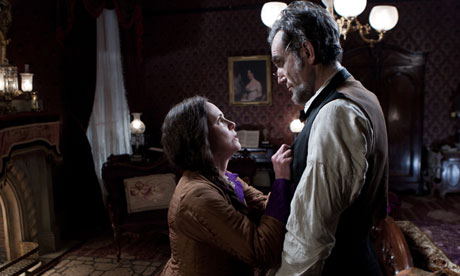
Daniel Day-Lewis IS President Lincoln


In Britain we have a royal family to obsess over. America has their presidents. Some have achieved legendary status for good or bad, but the good can barely be questioned. Abraham Lincoln is among these monolithic myths, and, with his latest film, Steven Spielberg has added to the general hagiography.

Just over twenty years ago Oliver Stone made a film about JFK which was equally reverential and full of similar examples of good actors struggling with a tedious script. In other words, it is incredibly worthy and desperately dull. Sally Field, Tommy Lee Jones, James Spader, David Strathairn and, indeed, the entire supporting cast are excellent, but this is a star vehicle for one man only, and Daniel Day-Lewis embodies the eponymous character to a frightening extent.


DDL (as he is referred to in the Hollywood press) is a notorious method actor and apparently he didn’t drop his assumed accent or stoop for three months of filming. The physical similarity is remarkable and when he stirs in his chair in the opening scene, it is as though the great Lincoln memorial has come to life. His voice is almost atonal and though there is fire in his argument it is not apparent in his delivery. He shuffles, looks down when he talks, chuckles to himself and presents as a shambling and slightly delusional drunkard.

He is also constantly telling anecdotes, gathering his staff around him like a luvvie director holding court before his sycophantic crew. His wife (the indomitable Sally Fields) reflects, “How the people love my husband. They flock to see him on public events”. However, great sympathy is shared with the Secretary of War, Edwin Stanton (played by Bruce McGill) who rails, “I don’t believe that I can bear to listen to another one of your stories!”

Lincoln must be impeccably researched and the ponderous dialogue is probably taken from transcripts – there is such a lot of it. Lincoln was a lawyer, and there are plenty of lectures which would feel at home in a courtroom. We are reminded that he was a political genius and favoured rational justice and stirring speeches rather than flamboyant gestures or theatrical fanaticism. He frequently repeats his salient points and resorts to Euclidean geometry to strengthen his message – “Things that are equal to the same thing are equal to each other – this is self evident”.


Doubtless there is meticulous attention to detail and the beautifully-framed set pieces would make an excellent stage for a play. The interior décor almost certainly suits the period (1865) perfectly, but it’s very stuffy and there are a lot of dark rooms, which makes it tiresome to view. Titles appear across the screen as each member of the confederacy or other important political figure is introduced, highlighting the documentary feel.

Lincoln attempts to do anything to win support for his 13th Amendment, which will abolish slavery and involuntary servitude, except as punishment for a crime, and is not above boardroom deals. Despite a tense voting scene, the action is severely limited for a film set in the midst of the bloodiest period of American history – more American men died in this conflict than in all other American wars combined.


We are also presented with a very simplistic view in which the Civil War was fought entirely over slavery between the Slave South and the Free North. While Lincoln preaches, “We begin with equality. That’s the origin isn’t it? That balance, that’s fairness, that’s justice” his detractors counter, “Congress must never declare equal those whom God created unequal”. There is hours of this stuff, as the debate drones tireless on. While we modern enlightened viewers clearly know which side is right, we cheer to Thaddeus Stevens’ (Tommy Lee Jones) interjection wishing to know when we can see an end to this “interminable gabble”.


As one of his black and white treatises on slavery, I prefer Spielberg’s Amistad. Watching Lincoln, the viewer may be forgiven for imagining they are back at school and being forced to sit through a fairly elementary history lesson. Lincoln himself confirms, “I could write shorter sermons but when I get started I'm too lazy to stop”.

Apparently the fear is that if slavery is abolished the men will have to be enfranchised. Whatever next; votes for women? They needn’t have worried – another 100 years had to pass before emancipation. Lincoln claims, “I’ve found that prophesying is one of life’s less profitable ventures,” which was perhaps just as well.

With the war over and the amendment passed, it remains to Lincoln to lead the country “with malice toward none; with charity for all... to bind up the nation’s wounds”. Of course, he will have far more personal wounds with his assassination (not shown on screen as the viewer is in another theatre when the fatal shot is fired), but he will belong to history.

To a score by John Williams, Lincoln strides into the dust to cast a shadow like a spectre over all American politics. References resound of George Washington, John Quincy Adams, James Monroe, and Thomas Jefferson throughout the film. It is self-evident that Abraham Lincoln takes his rightful place in this sparkling quintet. It is also obvious from the opening credits that DDL will earn an Oscar for his character portrayal. It is less clear whether the film is as assured.

Friday, 17 June 2011

72 Hours in Christchurch


Saturday

2pm - Today was going to be the first time I had flown with Jetstar. Problems with checking in our bags proved to be problems with checking in at all – the flight was cancelled because ‘your plane is broken; it can’t fly’. Not terribly reassuring, but the staff at the desk (and at the Air New Zealand desk, where we booked a flight later in the day) were very helpful and pleasant. That can’t be easy when everyone is moaning at you.

3pm – After checking our bags onto the Air New Zealand flight, we went to a café over the road and had coffee and cake – carbo-loading for the race tomorrow. Or maybe just an excuse to pass the time with coffee and cake.

5pm – We arrived in the new bit of Christchurch Airport to be met by Wide Boy Steve. We had less than an hour to find the Horticultural Society (‘somewhere on Riccarton Ave’ according to Him Outdoors) and collect our race packs. WBS drove us in laps round Hagley Park – his attempts to ‘dive down this side road’ being thwarted by the fact that said side road was closed due to piles of earthquake rubble and unsound buildings. We got there with seconds to spare and collected our race packs containing our number and packets of goo.

7pm – Back at Lyttleton for dinner with our friends. Witch 3 had previously sent me a text asking, ‘Apart from beer, do you need anything special for dinner?’ She must be under the mistaken impression that we are athletes and take these race things seriously. We said no and so we had a delicious roast followed by pear halves and ice cream. And lots of beer. The scarlet reptile (their teenage daughter) is very vocal about her dislikes – pumpkin; pears; carrots; etc – but not so forthcoming about what she does like. When (if ever) does this change?

Sunday

7am – This is not a normal time on a Sunday for me. Him Outdoors woke me up with a cup of tea and two slices of toast; then bundled me into the car and drove me to Lincoln. I tried to navigate but it wasn’t easy with half of the roads blocked off. Christchurch hasn’t got many landmarks, but the few there were and now destroyed. In the daylight you can see the scale of destruction and it’s really quite depressing.

The Christchurch Marathon, Half Marathon and 10km used to follow a pretty pleasant route along the Avon. It can’t now, of course, and has been re-routed to Lincoln. The roads are long and straight and (most crucially) unimpeded by rippling concrete, liquefaction, and other earthquake consequences that the rest of the city displays. It has been a massive task getting this event up and running, as it were, and the organizers are to be commended for continuing. Traffic management is a bit of a problem as there is limited access to the university campus where the race begins, so the start is delayed by half an hour to let everyone arrive. Damn, foiled in that plan, then!

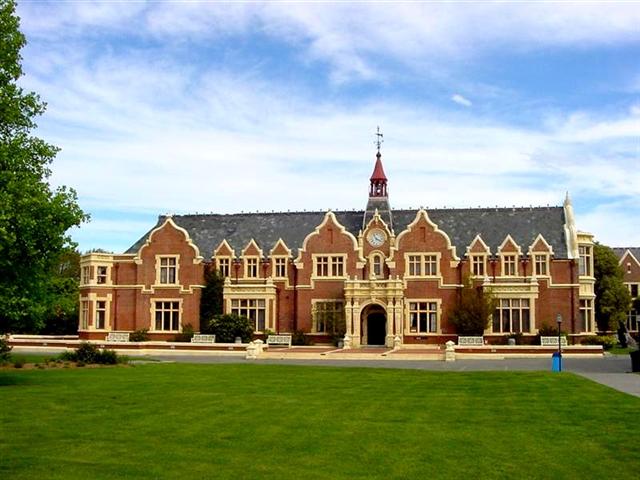
10am – Lincoln University has some impressive buildings – we scuttled around them looking for the start. Pre-race the talk was tough (‘Christchurch is back on its feet’; ‘We are up and running’ etc.) but the queue for the toilets was tougher!

11.30am – due to the staggered start times and the fact that he ran twice as far and almost twice as fast as I, Him Outdoors and I finished at about the same time. I was really just interested in making sure my knee held up to the distance (it’s the first race I’ve done since I damaged my knee about a year ago), and was going to run without a watch because the time wasn’t important and I knew it would only depress me. I couldn’t do it, though – I had to know my time (a very slow 1:02:57 if you’re interested) – what’s that about? At least I now know that if I carry on with all this boring gym and intensive physio stuff, I can run 10km again.

12pm – While waiting for prize-giving we went off to Hillyer’s Café to read the Sunday papers. It’s a pleasant wee spot which appears to be cycle-friendly (judging by the jerseys hanging outside and the pictures on the walls) and does great pies. Moving on for a change of scenery, The Bridge in Prebbleton had a warm fire, a comfy sofa and Speight’s Distinction.

4pm – Prize-giving was full of emotional speeches (Brian Taylor, a former race director and the chairman of the Christchurch Marathon Trust Board, was killed in the February earthquake) and seriously good holidays as spot prizes. We didn’t win any, although Him Outdoors picked up a rucksack for being second old git and 24th overall.

6pm – Once more back to Lyttleton where Witch 3 fed us pumpkin soup. After that and a bath I felt warm on the inside and the outside, so we headed out into what’s left of the town to celebrate. Keeping the local economy afloat we spent money in the Loons (drinking up their selection of good bottled beers) and the only recently re-opened Wunderbar. Apparently tonight is cross-dressing Sunday. The bloke behind the bar had gone to some effort (well, he’d put lipstick on, although he hadn’t shaved his beard) and informed us, ‘I’m a lady’. But of course you are.

Monday

10am – Witch 3 and Wide Boy Steve took us for a walk with their dopey dog. They can’t walk in the hills on their usual route because boulders and liable to come tumbling down. The buildings are all skewiff with leaning porches, broken brickwork, toppled chimneys and shattered windows. It felt wrong to catalogue this misery so instead WBS pointed out the yachts on the water, loosely tethered and free to escape. My knee began to hurt a little (clambering over the rocks probably isn’t the best exercise for it) so we walked back along the road through abandoned subdivisions full of previously desirable residences where no one wants to live anymore.

2pm – Met some friends in Becks Southern Alehouse. We had been going to somewhere else but it was closed; this is how you arrange to meet people in Christchurch now. Over a couple of beers and a bowl of wedges we discussed the damage to people’s homes, their access to fresh water, and the council’s job of keeping everyone informed with the most recent information while various departments bicker over supremacy and protocol. There is no other topic of conversation up here. My friend told me she was almost as fed up with talking about it as she is with the constant aftershocks.

6pm – The boys went out to get Chinese takeaways and fish and chips while we stayed in to talk more nonsense, of which there seems to be an endless supply. We ate dinner while watching the final episode of Sherlock, which we taped last night. Benedict Cumberbatch is brilliantly self-interested as Holmes and Martin Freeman (somewhat of a favourite of mine) is a powerfully under-stated Dr Watson. I wasn’t sure about dragging this classic drama into the present with all the technical gizmos and flash filming techniques, but I have thoroughly enjoyed this miniseries – and am more than slightly disappointed that it’s over.

We had an early start in the morning (when we finally flew Jetstar after all) so we took ourselves off to bed for another shaky night. Yep, the earth moved for us, but I’m sure that ‘joke’ has worn very thin in Christchurch. We were only there for three days and although I was happy to catch up with friends, I was also glad to leave it all behind.