Showing posts with label murder. Show all posts

Wednesday, 29 April 2026

Horror in Another Dimension: Strange Houses


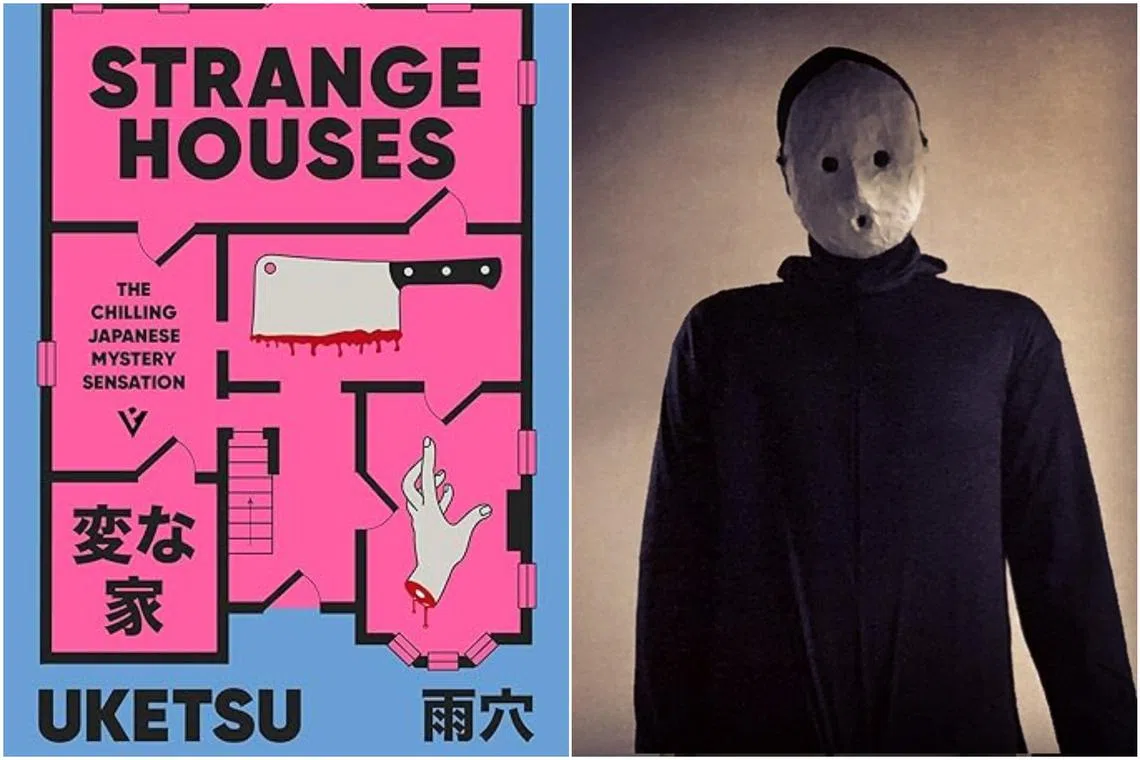
Strange Houses by Uketsu
Pushkin Vertigo
Pp.197
 

This is the first of three (so far) short novels by Uketsu, translated to English from the original Japanese by Jim Rion. According to the publisher’s blurb, the author, Uketsu, is “an enigmatic YouTuber and author, specializing in horror and mystery, who has exploded onto the literary scene in Japan, where his books have sold millions of copies. He only ever appears online, wearing a mask and speaking through a voice changer. His true identity is unknown.” A sort of viral Banksy if you will.


The story begins with the narrator explaining, “I’m a freelance writer, my speciality being stories of the macabre. Given this line of work, lots of people approach me with their personal experiences of the eerie and the unpleasant.” He goes on to tell a story with a blanket level of detail, in which floor plans and family trees take up half the book – refreshingly, there is no need to flick back to the beginning pictures to follow along. The floor plans reveal hidden passages and secret rooms for nefarious business. Most of the text is written as play dialogue, which contains all the exposition so there is very little description. There is an element of Edgar Allen Poe’s short stories; thrilling creepy tales that can be read in a day or two.


In keeping with detective fiction rules that all clues must be mentioned, there are plenty of apparent irrelevancies, but also deliberate omissions. Despite exhuming some standard tropes, the Japanese horror story is certainly different. Sub-headings within chapters are almost like a child’s first reader: A Message from a Friend; An Unexpected Email; The Mysterious Space; Daydream; Two Bathrooms; The Article; A Grisly Discovery; Differences; The Letter; The Hidden Room; The Sign. The tale deals with dismembered bodies, curses, murderous children, blackmail, and the importance of succession and illegitimacy. One character fairly remarks, “I can see how it all fits together, but… isn’t it all a little far-fetched? It’s so convoluted.” Japanese horror is built on this sort of thing, and there is already a film - released in Japan in 2024.


The murders themselves seem quite matter of fact. “The Katabuchi family has been murdering people for generations. I don’t know why, but it has become a tradition.” When a character suspects her father is involved, the narrator notes, “It was not the kind of truth that most people could have accepted so calmly, but she seemed surprisingly untroubled.” He, himself, hardly seems more disturbed, as he ponders where a child was killed, but not why they were killed at all. He casually discusses horrific customs, such as, “Mabiki. ‘Thinning the garden’. In Japan, there was once a tradition of aborting babies or even killing children to keep down the number of mouths to feed. The practice lasted into the late nineteenth or even early twentieth century in some communities.” When the ending appears to be inconclusive, and his colleague “flashed a broad grin”, he allows himself to feel “a twinge of irritation at his total lack of concern.”


Training children in macabre cults and brainwashing them into murder adds a particularly chilling element. “He had an unhealthy pallor, and his expression was as blank as if it had never known emotion… He never took any action of his own volition and never expressed any of his own feelings or desires.” The whole scenario is highly implausible, but this is the breeding ground for horror. “It sounds wild, but we already know the Katabuchi family is not a normal one.” Investigating murder by looking into floor plans brings a new angle – in many dimensions – to a standard genre. They may be compact crimes, but they are far from cosy.

Wednesday, 17 April 2024

An Obsession with Birds: A Bird in the Hand


A Bird in the Hand by Ann Cleeves
Pan Books
Pp. 214

The author of the books on which the series Vera and Shetland are based, Ann Cleeves wrote the first in this George and Molly Palmer-Jones series in 1986. The couple in question are retired, happy to travel the British Isles birdwatching, and solving the murders which invariably occur. George used to work at the Home Office (doing secret business), is good with details and has bouts of depression; Molly is a retired social worker who is good at listening and brings out the best in people. Naturally, they make a great couple. Both are restless with their current life and enjoy a new challenge.

A birdwatcher is found dead on a marsh with his head bashed in and his binoculars still around his neck. This is a great surprise to everyone in the small community because everyone loved him. Or did they? Of course, they didn’t, as this is an old-style mystery and secrets soon come to light complete with multiple suspects, red herrings, precise timings of the murder, poison pen letters, and suspicious alibis. At one point when discussing how the “smooth and cylindrical” murder object might be a telescope, they admit, “It had become something of a game.” After noting the sincere concern of a potential victim, however, George realises it is not so cosy. “Her fear had been wild and irrational. So was murder. He would not find his answers through reason and intellect. This was no crossword to be solved by a gentleman in an armchair. Murder was mad and unreasonable, and gentlemen had no part in it.”


The novel contains lots of interesting birdwatching information – who knew twitchers were such addicts or that they had great rivalries with ringers? Twitching is a way of life, which affects people in dramatic ways when a ‘rarity’ is discovered, and news of which sighting is shared among the community. The impulse nature and attraction of twitching is highlighted, and George considers how far one might take this addiction. “He had always considered his obsession for birds to be relatively harmless, but now his own experience showed that it could alter mood, sense, even personality, like a drug. Did it also have the power to make a person mad enough to commit murder? Twitching was a desire for possession and that was always dangerous.”


The novel offers an interesting approach to retirement, as Molly admits to an unexpected bereavement at giving up her job. “She had thought that she would enjoy a time of quiet, enjoy having the time to do things well. But she had missed work desperately. It was not just that she missed feeling useful, although that was important. It was that she missed meeting people who were different, unusual, unconventional.” Although she has no real interest in the birds, she studies the passions of the people that chase around the country from the Scilly Isles to Scotland.


These two make an interesting couple, and with a background of birdwatching to add colour to the murder scenes and motivations, this could be an engaging series to follow.

Tuesday, 4 January 2022

Cold as Marble: A Likeness in Stone


A Likeness in Stone by J.Wallis Martin
New English Library
Pp. 361

In the powerful opening scene of the novel, two divers exploring an old flooded house at the bottom of a reservoir find a decomposed body in a wardrobe. We soon discover it is that of Helena Warner, an undergraduate reading English at Somerville College, Oxford, who went missing twenty years ago. At the time, Thames Valley Chief Inspector Bill Driver, was convinced that she had been killed by her lover, Ian Gilmore, but with no body, the case was never solved. Now it is re-opened by the new policeman on the job, Detective Superintendent Rigby, who works with Driver to try to bring Gilmore to justice. It may be set in the same cosy world as Morse and Midsommer Murders (and it was made into a miniseries starring Andrew Lincoln and Ruth Jones) but it is far more grim than that, because, “horror wasn’t choosy. It manifested in the most unlikely of places, and in various guises.”

Of course, this is a mystery, so nothing is as it initially appears, and submerged secrets rise to the surface, as the timeline shifts back and forth. Helena was part of a group of friends who don’t actually like each other very much and still have affiliations and implications many years later. These three university associates are all implicated in a very dark world which includes sadism and psychopaths.

Rigby and Driver must work together to solve the case despite their different methods. Driver looks down upon Rigby whom he dismisses as, “Well-dressed, intelligent-looking; no doubt the product of one of these new-fangled schemes that sends graduates shooting up a ladder Driver had to climb rung by painful rung, year after frustrating year.”

Women are victims; objects to be possessed and preserved in youth before they age and supposedly lose their beauty. Other examples of casual sexism and lazy stereotypes are scattered throughout the novel. Artists are troubled and odd; mental health facilities are a comfortable alternative to a hard life; computers are new (it was published in 1997) and, apparently, the police one is female, “What’s more, this little sweetie was a redhead. One false move and she could go off on one, no trouble.”

This gripping and clinical, fast-paced police procedural has been likened to the work of Ruth Rendell or Minette Walters. It is certainly dark and moody with a chilling aspect. “Real evil, unlike the romanticised fantasy of evil, was merely gloomy, monotonous and boring… The majority of murders were committed not with malice, but with indifference, by people who lived in the type of environment that deadened the soul.” It is eerie, creepy, and a thoroughly captivating thriller.

Tuesday, 6 July 2021

Ham and Pea Soup: A Rare Interest in Corpses


A Rare Interest in Corpses by Ann Granger
Headline
Pp. 410

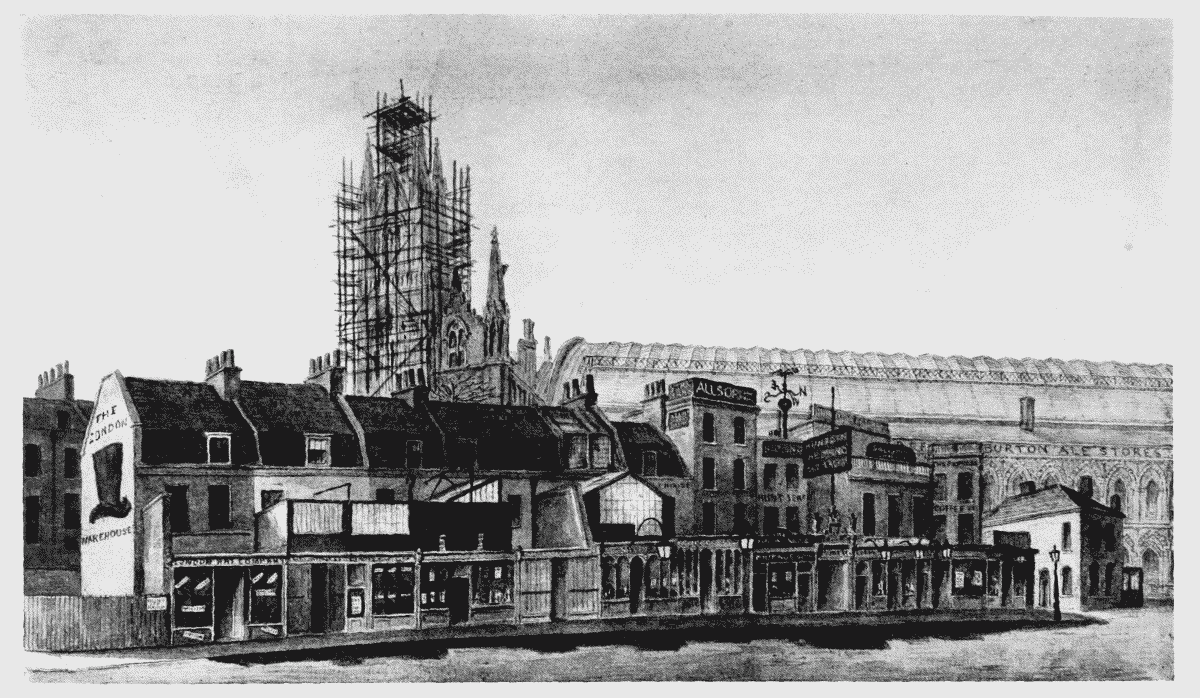
Marketed in some territories as The Companion, this is the first novel in what becomes a historical crime series set in Victorian London. After her father’s death in 1864, the penniless Elizabeth (Lizzie) Martin takes up a position as companion to Mrs Parry, her god-father’s wealthy widow, only to find that her predecessor, Madeleine Hexham, who had supposedly run off with an unknown man, is dead (and pregnant). Madeleine’s body is discovered in the recently-demolished slums around the prestigious new railway station at St Pancras, and Inspector Benjamin Ross is in charge of the investigation. Lizzie realises that she knows Ross from her childhood (her father sponsored his education) and that ‘Aunt’ Parry, as she is encouraged to call her, was a landlord for the housing development, causing several elements to build up into a classic detective mystery.

Through the use of alternating chapters between Lizzie and Ross, we are drip-fed information about the developments and social mores of the times, ranging from scientific progress to insights into the working of and attitudes to the police force, and personal relationships.

London is changing and the era is one of rapid development: the capitalist society dictates the rich will get richer while the poor are further oppressed. Mr Fletcher runs the construction company which is building the station on the grounds of the housing Mrs Parry sold to the railway for development. He doesn’t want the police involved on his worksite, because people are fascinated when a body is found. Mrs Parry is equally uncomfortable. “No one wants to be known as a slum landlord and after Madeleine’s body was found there, she liked even less the idea that people would associate her with the place.”

St Pancras Station in the course of building (1871)

Morals and attitudes to women are also questioned. The supposedly religious and upstanding Dr Tibbett expresses his conservative reactionary views to Lizzie in a manner that demonstrates the constraints within which she must work. “I am sorry to say I find increasingly that there is a type of modern young woman who fancies she may speak as freely as a man. I am an old-fashioned fellow who believes that woman is the greatest ornament to her sex when she realises the boundaries Nature has set for her.” He, and others, blame female victims when they are exploited and abused. “We did not know the circumstances of Madeleine’s death. Whatever Tibbett had to say it would amount to declaring that it was all her own fault.”

This is a world in which class distinctions are rife and supremely hierarchical. Inspector Ross comes from mining stock and has risen through the ranks; his superiors dislike him because he is working class. He notes that the social strata extends to the upstairs/ downstairs milieu of the masters and servants. “I reflected that below stairs there existed a world which, in true Darwinian fashion, had evolved quite differently to society above. Had the great naturalist set himself to study it, he might have found as much of interest there as he had in Terra del Fuego.” Although this is the first in the series about Benjamin Ross and Elizabeth Martin, it is evident that there will be more, and that Lizzie and Ben will end up together; they are both honest and self-aware with a strong moral backbone.

The novel is full of the classic features of the Victorian detective drama. The dim-witted Dunn (Ross’s superior officer) struggles to solve the mystery, announcing, “This is turning into a dashed complicated business, regular cat’s-cradle of possible motives.” There is a dressing table with a hidden drawer in which Lizzie conveniently finds a diary written by the dead woman. Thick Victorian fogs made of coal fire smoke and freezing atmospheric conditions add to the ambience and there is even a standard chase through the pea-souper. It is satisfying without being too demanding and a thoroughly enjoyable addition to the genre.
George du Maurier cartoon in Punch, 1889

Tuesday, 15 June 2021

Misfortune; Carelessness; and...: My Sister, The Serial Killer


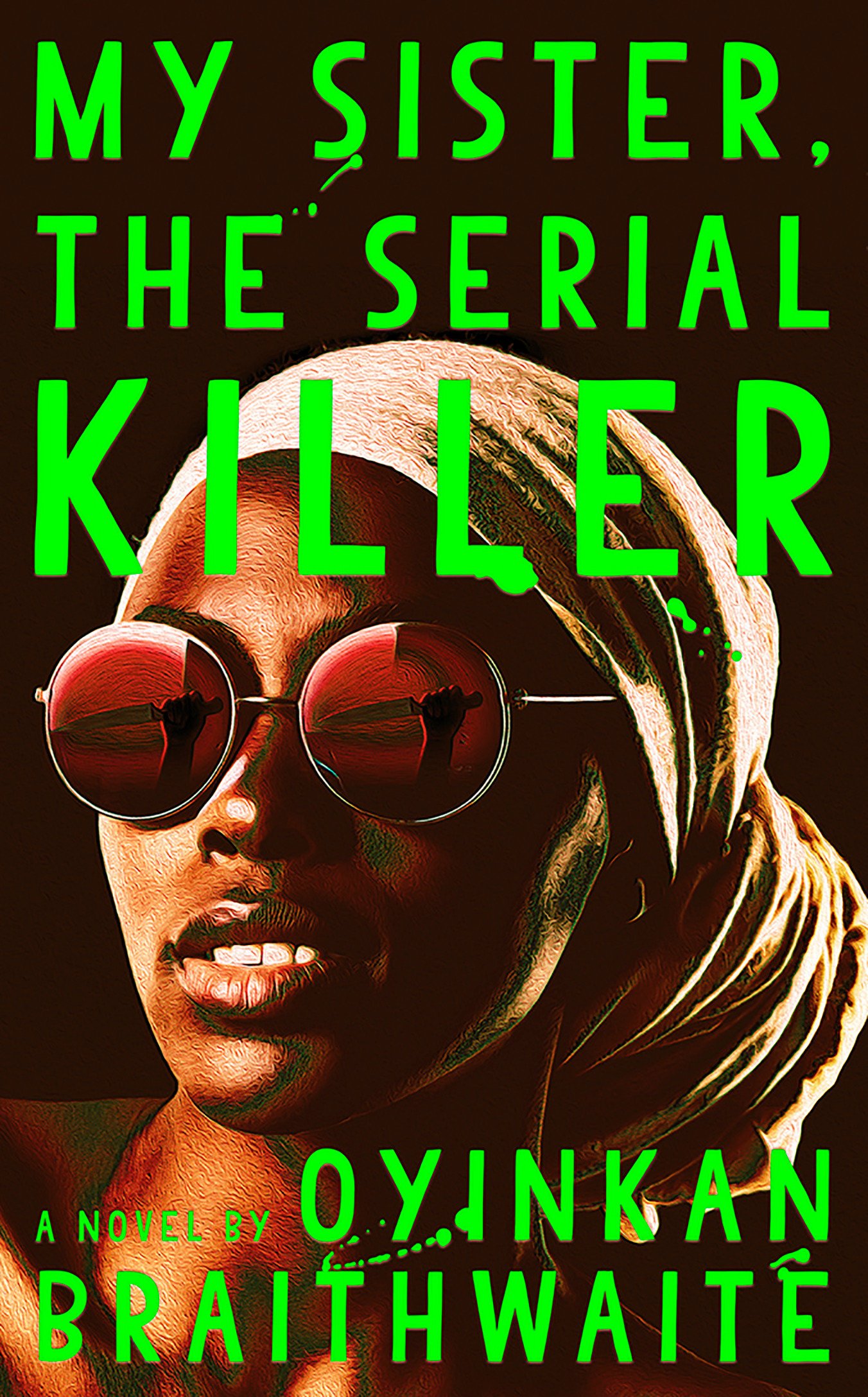
My Sister the Serial Killer by Oyinkan Braithwaite
Atlantic Fiction
Pp. 226

The novella begins, “Ayoola summons me with these words – Korede, I killed him. I had hoped I would never hear those words again.” Immediately we are in familiar but foreign territory. The structure is reminiscent of Charlotte Brontë’s, “Reader, I married him”, from Jane Eyre, but the shocking content is a lot less comforting. Originally published in Nigeria as an e-book entitled Thicker than Water, this tale of two sisters crosses genre lines from thriller to black comedy and socio-political commentary. As Richard Lea writes in their interview with the author (published at the end of the novel), “A novel that puts the relationship between two sisters at its heart, with men as supporting characters who may or may not make it to the final act, has been greeted as a riposte to crime fiction where the plot is so often set in motion by the gruesome death of young women.”

It clearly strikes a chord as it won the 2019 Los Angeles Times Book Prize for Best Mystery/ Thriller, the 2020 British Book Award for Crime & Thriller Book of the Year, and it was longlisted for the 2019 Booker Prize. As well as being critically praised, it is also popular with the public, and won the 2019 Amazon Publishing Reader’s Award for Best Debut Novel. It is certainly easy to read with short chapters (all with a one or two word title) and a fairly universal theme – we may not all have murderous siblings, but many of us understand sibling rivalry and family dynamics.

As the oldest, Korede is obliged to care for her younger sister, Ayoola, and now, she literally cleans up her sister’s messes. It doesn’t help Korede’s mental state to feel that her sister is outstandingly good-looking, and to constantly compare herself unfavourably. “The resemblance is there – we share the same mouth, the same eyes – but Ayoola looks like a Bratz doll and I resemble a voodoo figurine.”

Ayoola carries a knife on dates and she seems to have little compunction in disposing of her suitors, she claims in self-defence. Korede wants to believe her, but there is a touch of the Oscar Wilde loss of parents about her narrative; after all, she has killed three people; “Three, and they label you a serial killer”. Ayoola is seemingly remorseless and is back partying and posting on Instagram and Snapchat straight after she has killed her partner. She apparently believes that she is entirely innocent: “Her actions were the fault of her victims and she had acted as any reasonable gorgeous person would under the circumstances.” The implication is that she is excused because of her looks – it’s different if you’re beautiful.

When Ayoola shows interest in the doctor with whom Korede works, he of course reciprocates it, despite never having noticed Korede’s passionate feelings towards him. This might inform her questioning her sister’s version of events, at which Ayoola accuses her of victim shaming. “Victim? Is it mere coincidence that Ayoola has never had a mark on her, from any of these incidents with these men; not even a bruise?” At a time when we are struggling to believe women, this seems irresponsible, but education is not the duty of the author. Indeed, in her interview, Braithwaite contends, “I like to have fun. The books where I can tell I’m being taught something are a trial in the reading. If there’s a story and you learn something along the way; it’s a bonus.”

It transpires that the girls’ father subjected them to traditional and tribal cruelty, and Korede is concerned that Ayoola may have inherited some of this inherent brutality. “More and more, she reminds me of him. He could do a bad thing and behave like a model citizen right after. As though the bad thing had never happened. Is it in the blood? But his blood is my blood and my blood is hers.”

There are some things which may seem a little far-fetched for a genuine crime thriller – how could they possibly not get caught? One explanation is that the police force is highly corrupt, as are many other institutions in Nigeria, and they can be bribed to look away. Another consideration is that this is not meant to be forensically accurate. The page numbers are in a font that looks as though letters have been cut from newspaper print, or perhaps a graphic novel where all the information is condensed into one frame. It is currently being considered for film, which will be dramatic but not exactly realistic.

Oyinkan Braithwaite has provided us with a fast-paced, high-actioned, black-comedy crime thriller. It covers a lot of genres and is a terrific story. It seems churlish to expect more from her and we should be grateful for this offering and the knowledge that there are authors who can still deliver a gripping novel.

Tuesday, 27 October 2020

An Age Old Question: The Devil and Miss Prym


The Devil and Miss Prym by Paulo Coelho
Thorsons
Pp. 201

Leo Tolstoy is said to have said, “All great literature is one of two stories; a man goes on a journey or a stranger comes to town.” This is the latter of those two options, and its claim to great literature is subjective, but the author has sold over 175 million of his books worldwide. One day a stranger comes to the town of Viscos (spoiler alert: he is the devil of the title) with a backpack containing twelve bars of gold. He offers one of them to Chantal (the Miss Prym of the title) on the condition that she communicates to the villagers that they will receive the other eleven if they commit a murder.

In essence it is a very simple morality tale; are people intrinsically good or evil? The basic prose may be a matter of translation from the original Portuguese (Coelho is Brazilian) but it suits the elements of fable, incorporating many parables. As it is a philosophical conceit, the narrator is omniscient, the characters are ciphers, and the events are unrealistic. It is cerebral rather than emotional; designed to make the reader think rather than feel.

The village of Viscos is remote and irrelevant, chosen deliberately by the stranger for his experiment. He wants to pit the villagers against each other, knowing that they are all in desperate financial straits and would welcome a windfall. It does not matter to the stranger whom the villagers choose to murder, only that they commit the act, and therefore, this is also an exploration of the conflict between the individual and society. “The story of one man is the story of all men. I need to know if we are good or evil.” Most cultures and religions have tales of the eternal struggle between good and evil. A Native American myth posits that we all contain two wolves; a kind and gentle one and a fierce and vicious one. The one that survives is the one we feed. This is incorporated into the metaphor of the rogue wolf which stalks the forest and terrorises the villagers, keeping them afraid. Many religions also have “a place of punishment, where the immortal soul goes after committing certain crimes against society (everything seemed to be in terms of society, rather than of the individual).”

The fundamental question is whether we are intrinsically good or bad, and what makes us this way. Coelho suggests that we are only good due to the fear of consequences. The stranger says, “I am a man who walks the earth with a devil at his side; in order to drive him away or accept him for once and for all, I need to know the answers to certain questions.” He chose Chantal because she is orphaned and searching for a way to escape her dull life in the village, but she wants someone to rescue her rather than acting for herself. She has several meetings with the stranger – as a single woman these may cause consternation but she has no one to protect her morality and can do as she please. She realises, however, that she too is bound by the fear of the future.

The metaphysical problem is described as game theory – gambling on the actions of others in order to protect yourself. It’s an old conundrum and one that doesn’t really have an answer. Chance exists and bad things happen to good people (the story of Job from the Old Testament is included along with many other myths and legends); perhaps we need the hope to carry on, like the widowed Berta, who sits outside her house every day watching the villagers and commenting on their action with her dead husband. The problem with the severely pedagogic tone is that it leaves little for the reader to do. Just as Chantal is trapped in the village, we are trapped in this narrative and will only be released when Coelho has finished with his lecture.

Sunday, 12 May 2013

Count Down Quotes to 'The Hollow' 10

"If you know all about a man, you can guess who would have wanted to murder him." - Inspector Colquhoun, C.I.D.

Friday, 10 May 2013

Friday Five: Merry Murders


As part of my research into the role I am playing in Agatha Christie's The Hollow, (Tempo Theatre, May 17-25), I have been reading lots of murder mysteries. Not the gory forensic ones or the grisly serial killer twisted psychopathic ones (often set in Scandinavia and clearly doing wonders for those country's tourism boards) but the ones set in country houses (or, disturbingly, theatres) where everything is very jolly and people gather patiently at the end to learn whodunit from the brilliant detective.

There's always an assortment of folk with motives and alibis - everyone is a suspect except (although not always excluded from the list) the victim. When the person has been murdered, there is never any real grief or emotion; just a curiosity as to the perpetrator. And all ends are neatly tied up with a pleasant reassurance.

Some people inherit or even get married and it's all happily ever after - except, of course, for the victim and the murderer who either gets meekly led away to face justice (they never get off on a technicality) or conveniently kills themself, thus sparing everyone else the trouble of a trial. Lovely!

5 Murder Mysteries I've Recently Read:
  1. The Hollow/ Three Act Tragedy/ The Seven Dials Mystery - Agatha Christie. Classics.
  2. Death at the Dolphin/ A Man Lay Dead - Ngaio Marsh. Not the most pleasant of detectives in Roderick Alleyn, but he always gets his man, or woman.
  3. The Full Cupboard of Life - Alexander McCall Smith. The fifth in the No 1 Ladies' Detecive Series. I've read the others and enjoyed them, so this was really just an excuse. There is barely any detection but quite a lot of bush psychology and tea-drinking.
  4. The Murder Room - P.D. James. A modern-ish take on the genre and there is a serial killer, but the other stuff is all present and correct.
  5. Gaudy Night - Dorothy L Sayers. A murder mystery without a murder. Curious. But it's set in Oxford so one should expect high-brow existentialism.