The list is fairly self-explanatory, but a couple of things to note are that I'm only including films that were actually released in 2014. I saw Still Life in 2014 and it is excellent, but its release date was 2013 (even 2012 in some places) so it can't qualify for the list. It was too hard to whittle it down to five, and, as it's my blog and I can do what I like, I kept it at seven. And they're in alphabetical order because I couldn't pick the very best.
7 of the best films from 2014:
- 20,000 Days on Earth – Not only a fascinating insight into the more-than-mildly-bonkers mind
of Nick Cave, but also a discourse on the transformative power of performance.
Sharply directed by Iain Forsyth and Jane Pollard, the fusion of documentary
and drama with talking heads and concert footage is absolutely excellent. It
won the directing award at the Sundance Film Festival; it deserves to win many
more at many more.
- Calvary – Written and
directed by John Michael McDonagh, and starring Brendan Gleeson as a good
priest, this film has all the commanding scenic shots, black humour, depth of
plot and characterisation you would expect. Its combination of deeply
disturbing morality and theatrical reverence is both subtle and shocking,
reverberating long after its short (1hour 40mins) running time.
- The Grand Budapest Hotel – Sort of like a combination of Fawlty
Towers, Allo Allo, and a bumbling
prison escape/ murder mystery/ chase-sequence thriller: wonderfully weird,
impeccably acted and every scene fantastically framed – I love this sort of
description-defying stuff! Wes Anderson directs the tale of the adventures of
Gustave H (Ralph Fiennes), the legendary concierge of a famous European hotel
between the wars, and exceptional actors fall over themselves for a bit part.
- Mr. Turner – Timothy Spall is brilliant in Mike Leigh’s earthy and grimy biopic in
which humanity is ugly, and the only beauty is found in the paintings and the
scenery. The film is as much about the nature of fame and celebrity as it is
about art and the passing fads in the cultural consciousness. While J.M.W. Turner
is the major planet around which all the other actors orbit, they all shine
brightly in this firmament.
- Nightcrawler – Excellent and disturbing film about how we get the news delivered to
us in the way we deserve. Jake Gyllenhaal gives a chilling performance, Rene
Russo mines the emotions behind the cut-throat news service industry, and writer/director
Dan Gilroy offers up a lot to think about.
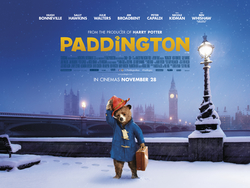
- Paddington – Paddington Bear was one of
my childhood favourites, along with Bagpus,
The Clangers, The Magic Roundabout and The
Herb Garden. I loved the books, I loved the TV series, and now I love the
film – feel-good film of the year. Everyone gives a top-notch performance from
Ben Wishaw as the voice of the bear, to Hugh Bonneville and Sally Hawkins as Mr
and Mrs Brown. Whereas Disney would have ruined it, Heyday Films, you looked
after my bear. Thank you.
- The Trip to Italy – Steve Coogan and Rob Brydon are back and as brilliant as ever. Their
(largely unscripted, as is director Michael Winterbottom’s wont) blokish banter
of insults and continuous non-sequiturs is reminiscent of the rambles you used
to have down the pub in the good old days before someone would whip out their
smart phone and kill all creative discussion. The back-drop of scenic Italian
countryside, gourmet meals and plush hotels is merely a bonus.

I have a morning in London to play with but I also have bags that I don’t want to carry around with me all day, so I decide to go to the National Gallery, check them into the cloakroom and admire some art. The building itself with its high cupola ceilings exudes calm and a sense of peace in one of the busiest cities in the world. I head for the 18th to early 20th Century paintings, as I know I’m not interested in fat Italian cherubs or dark Dutch masters.
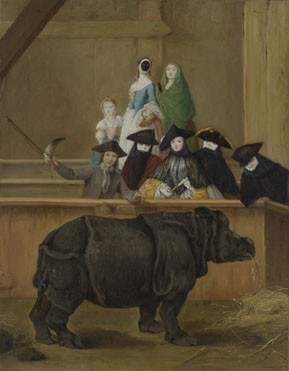
Straight away I am impressed by Exhibition of a Rhinoceros at Venice (1751) by Pietro Longhi. It really is a spectacle as the masked ladies stand out against the bare background. The keeper holds the rhino’s severed horn drawing attention to the degradation and suffering inflicted in the name of beauty and exoticism.
I’ve never admired Canaletto particularly so this is something of a conversion for me as I gaze at his massive canvases. Venice: A Regatta on the Grand Canal (circa 1740) is busy with gondolas and spectators – many wearing masks for the carnival. His handling of perspective is masterful, as it is in Venice: The Upper Reaches of the Grand Canal with Saint Simeone Piccolo (circa 1738) with its incredible use of light, reflections and ripples on the water. It is full of detail, right to the corners of the canvas. So too, Venice: The Basin of San Marco on Ascension Day (1740) in which Canaletto captures all the glittering excess of the festival to commemorate the marriage of Venice to the sea. I am now a fan. It’s a sort of awakening – no reproductions can do these justice.


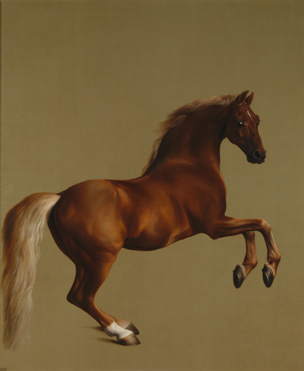
 The commanding life-sized painting Whistlejacket (1762) was painted by George Stubbs for the racehorse’s owner – the second Marquess of Rockingham. His interest in classical sculpture may have inspired the unusual presentation of the Arabian stallion with its superb proportions and beautiful appearance against a blank background.
Back to Hogarth with his moral interpretations: The Graham Children (1742) features a cluster of infants including a baby, being pulled in a cart, who was dead before the painting was finished. The inclusion of a cat watching a bird and a statue of Father Time with a scythe draws attention to the fact that life is fleeting.
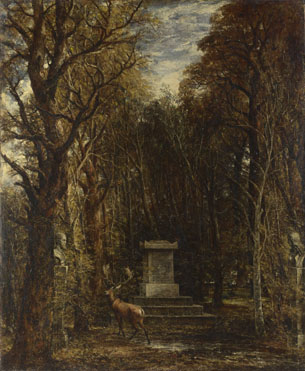
Constable is represented by several paintings – Salisbury Cathedral from the Meadows (1831); The Haywain (1821); The Cornfield (1826) amongst others. He revels in landscape and clouds, capturing the immediacy of effects produced by light and weather. I’m not a great admirer, but my favourite would have to be The Cenotaph to the Memory of Sir Joshua Reynolds (1833-6) where a stag stands in the foreground of an autumn scene before a monument to Sir Joshua Reynolds, flanked by busts of Michelangelo and Raphael.