Friday, 6 March 2026

Friday Five: Books Read in February

  1. The Deep Blue Sea by Terrence Rattigan (Nick Hern Books) - A very fine play set over the course of a day in a shabby London flat in the 1950s. The play begins with the discovery of Hester by her neighbours and landlady after she has failed in an attempt to take her own life by gassing herself. It soon becomes apparent that the source of her anguish is her relationship with Freddie, a former RAF pilot, who cannot love her as she wishes to be loved. Her husband, Sir William, a respectable judge, is reluctant to grant her a divorce on the grounds that he now cares for her more than ever. But is it enough or is it just because she is "simply a prized possession that has now become more prized for having been stolen."? While others tip-toe around her predicament, it is the straight-talking struck-off doctor, Mr Miller from upstairs, who is able to force her to face reality. The play is a great expose of social mores across ever-widening chasms of class and culture.  
  2. The Wife and the Widow by Christian White (Affirm Press) - A well-written, suspensful and engaging novel with plenty of intrigue that examines the consequences of hiding feelings and burying emotions. When Kate's husband, John, dies, part of her grieving process is to return to their holiday home on a fiction island (which seems remarkably like Bruny Island), that "represented a cold exclamation mark at the end of a sentence." As the title suggests, there is another viewpoint from which the story is narrated, that of Abby, the wife, with husband Ray. There is of course the secret life aspect that is no surprise when it surfaces, some aspects of the novel are unoriginal and over-explained, and it’s difficult to tell whether the occasional gender-reductive viewpoint is that of the character or the author, or both. Overall, however, sharp writing, original similes and colloquial appeal make this an intense and compelling thriller which is hugely readable and atmospheric.
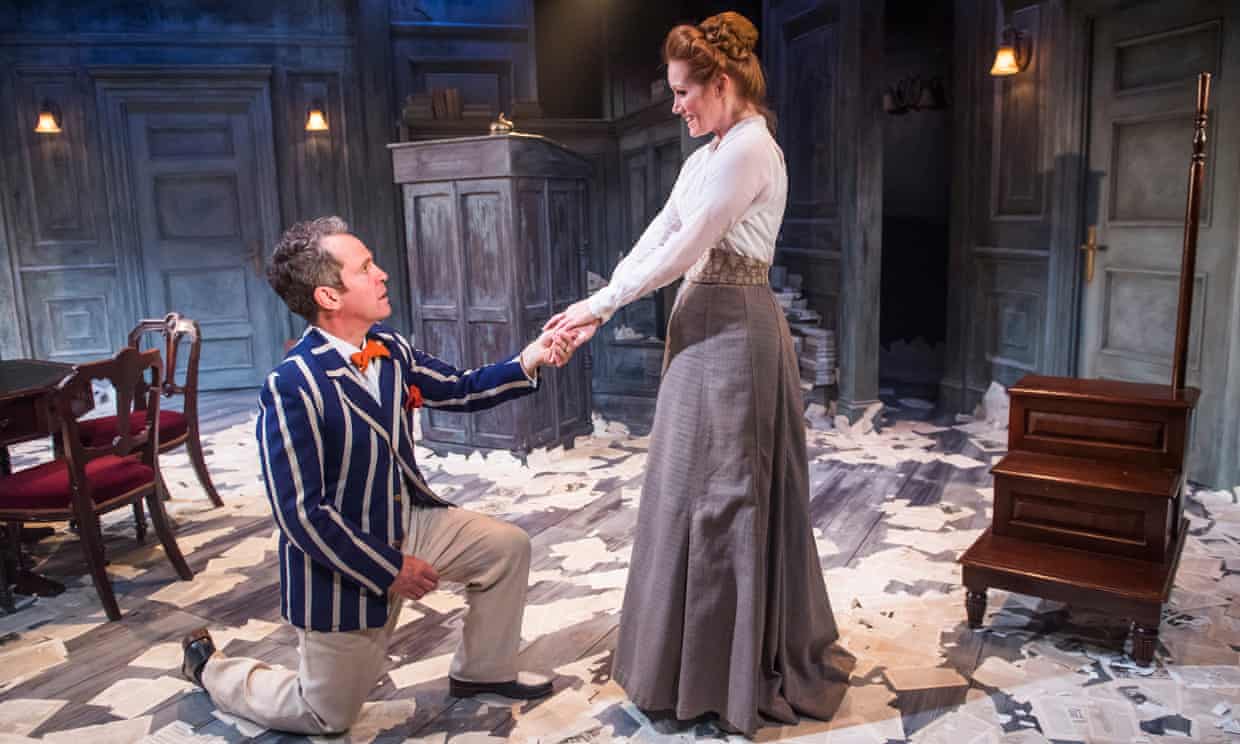
  3. Tom Hollander as Henry Carr and Clare Foster as Cecily in Travesties, directed by Patrick Marber in 2016
  4. Travesties by Tom Stoppard (Faber) - The characters in this sublime play include Tristan Tzara (Dadaist who wears a monocle), James Joyce, Lenin, and Henry Carr – based on a real character from history who performed in The Importance of Being Ernest, directed by Joyce when they all live in Zurich. Carr then sued and was counter-sued by Joyce over nonpayment of tailor’s bills due to Carr’s insistence on wearing sartorially elegant trousers for the production, and Joyce believing he had not been reimbursed for ticket sales. This is mentioned in a minor footnote in Ulysses, and Stoppard picked it up and turned it into a play. In much the same way as in Rosencrantz and Guildenstern are Dead, the characters of Gwendolyn and Cecily from Ernest come to the fore, and in similar fashion to Arcadia, time and place overlap – like a derailed toy train that must be set back on its rails – this is also in part due to Henry Carr being old and senile (we see Old and Young Carr, both played by the same actor), and an entirely unreliable narrator – he may not even have been the consulate he believes he was/is. There are so many layers of understanding and allusion – recycling and reappearing like the Dadaist anti-structure which removes meaning, context and cause – that it needs to be read and deserves to be seen.
  5. The Good Husband of Zebra Drive by Alexander McCall Smith (Abacus) - As with all the novels in the No. 1 Ladies' Detective Agency series (this is the eighth), the crimes themselves - a person stealing stationary supplies, three suspicious deaths in a hospital at the same time in the same bed - are secondary to the characters, their development (or otherwise) and relationships to each other. Mma Makutsi is greatly looking forward to her future life with her fiancé, and she bridles at her apparent lack of authority with Mma Ramotswe. Meanwhile, Mr J. L. B. Matekoni is bored with his job and asks to take on some detective work. He lands the role of investigating for Mma Botumile, who suspects her husband is having an affair. She is the “rudest woman in the whole of Botswana” so he wouldn’t be surprised, although he tells himself he must not judge. He asks what car her husband drives so he can follow him after work and see where he goes, but she only tells him it is a red car, which horrifies him – how can she not know the make and model? Of course, he follows a different red car and investigates the wrong man. Charlie, the apprentice, buys a Mercedes Benz and leaves Mr J. L. B. Matekoni’s garage to become a taxi driver. He is distracted by dreams of greatness and girls, and his fledgling business fails to launch. And, once again, we return to the comforting bush wisdom of Mma Ramotswe, who believes that women make better detectives because they observe more detail and have natural intuition. “There was room in this world, Mma Ramotswe thought, for things done by men and things done by women; sometimes men could do the things done by women, sometimes not. And vice versa, of course."

Wednesday, 4 March 2026

...and Ice.


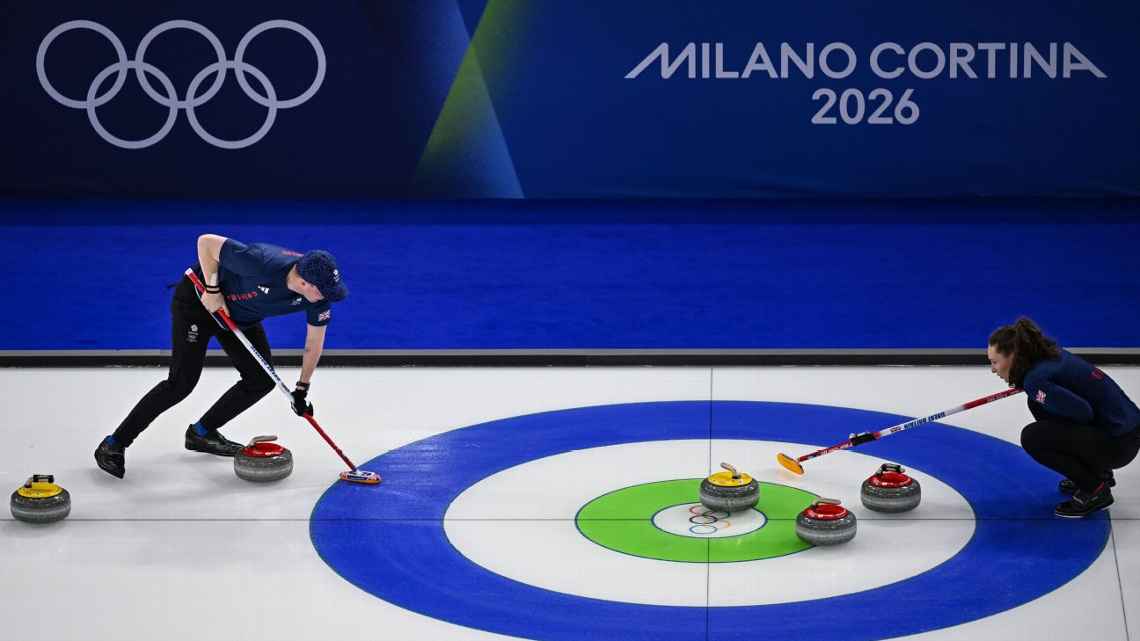
Curling is the only event that is on every day of the games, and what a delight it is to watch. Who knew you could get so excited by people brushing the ice and sliding stones along a chute? For a few weeks every four years, I am glued to the ice like a kid licking a frozen railing. 

The mixed doubles (featuring Mouat and Dodds for GBR) are gripping stuff. The Brits get through to the semi finals where they lose to Sweden, and then they lose the bronze medal match to Italy and wind up fourth, which is exactly where they came last time round. Jen Dodds is also in the Women's Team (they come sixth overall) and Bruce Mouat is a part of the silver-winning Men's Team (who lose their final match to Canada). 

Incidentally, the mixed doubles teams of Canada, Norway and Switzerland are all represented by married copules. There is controversy when the Swedes accuse the Canadians of cheating (by double touching the stone after it has been released) in the Men's Team event, and the Canadian in question, Marc Kennedy, responds 'with an expletive-laden outburst'. The Women's team are accused of the same thing (this time by the umpire) and play is stopped immediately as the offending stone is removed. 


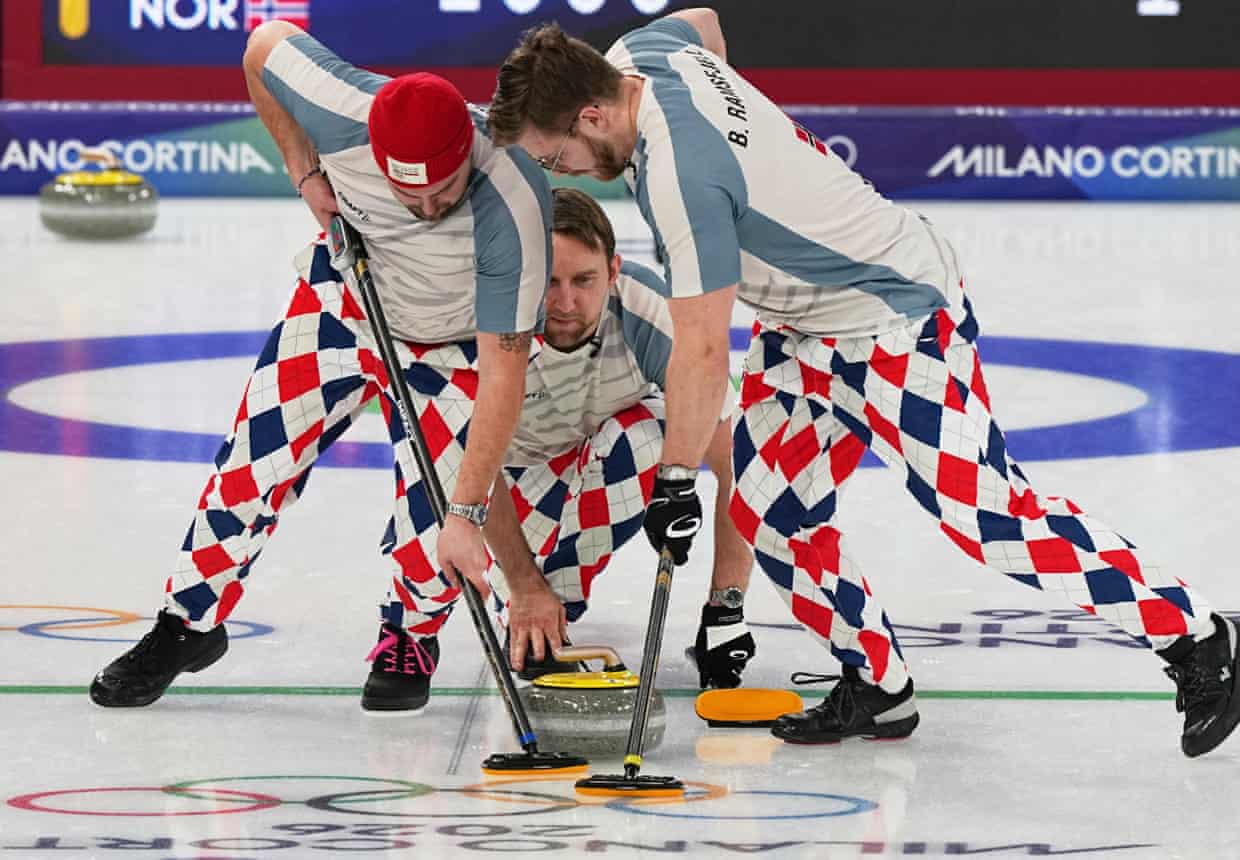
The Norwegians 'delight supporters' by bringing back their famous red white and blue checkered 'party pants' for one match against Sweden to honour their late skip Thomas Ulsrud. As the shouts echo round the rink, "Curl!", "Don't Curl", and everybody's favourite, "Hard!"


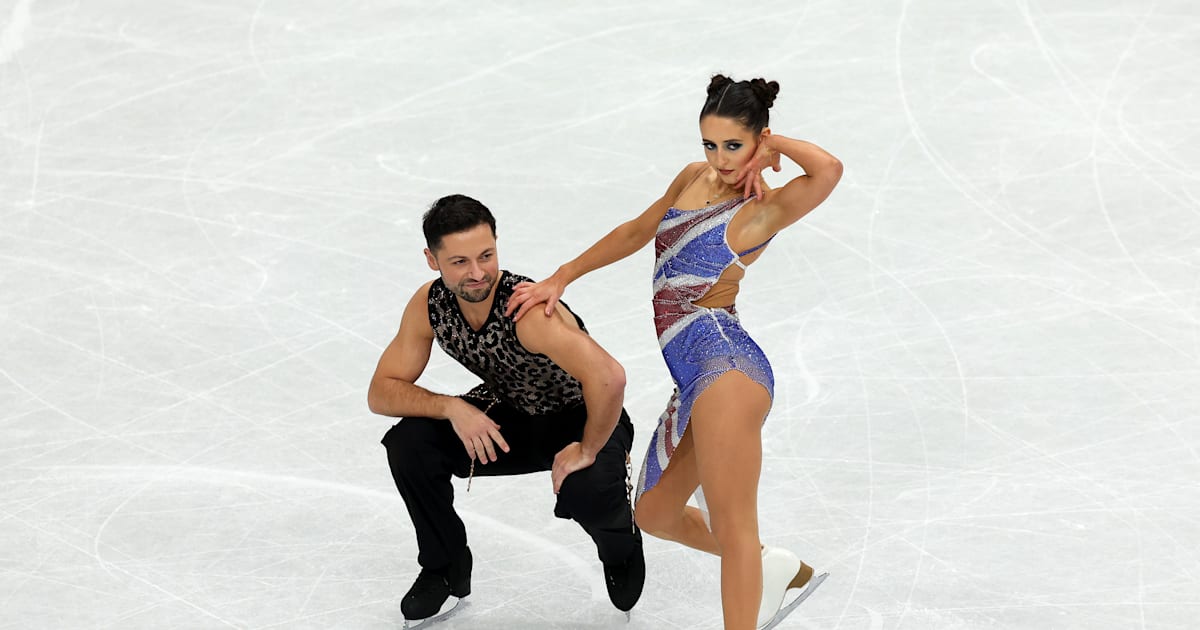
There are so many disciplines and medal available in the Team Iceskating, I don't know how it all works, but I like the Lilah Frear and Lewis Gibson (Team GB, obviously) Spice Girls number. For various reasons I end up wtching the Ice Dancing on the TV at work with the sound off and the subtitles on. It makes for an interesting juxtaposition between the commentators, the lyrics to the song selection, and the transcription services. Guess the tune is a fun game to play. "Everybody rock your body - midline step - am I sexual? - great extension - that's the way I like it - so, so good today."


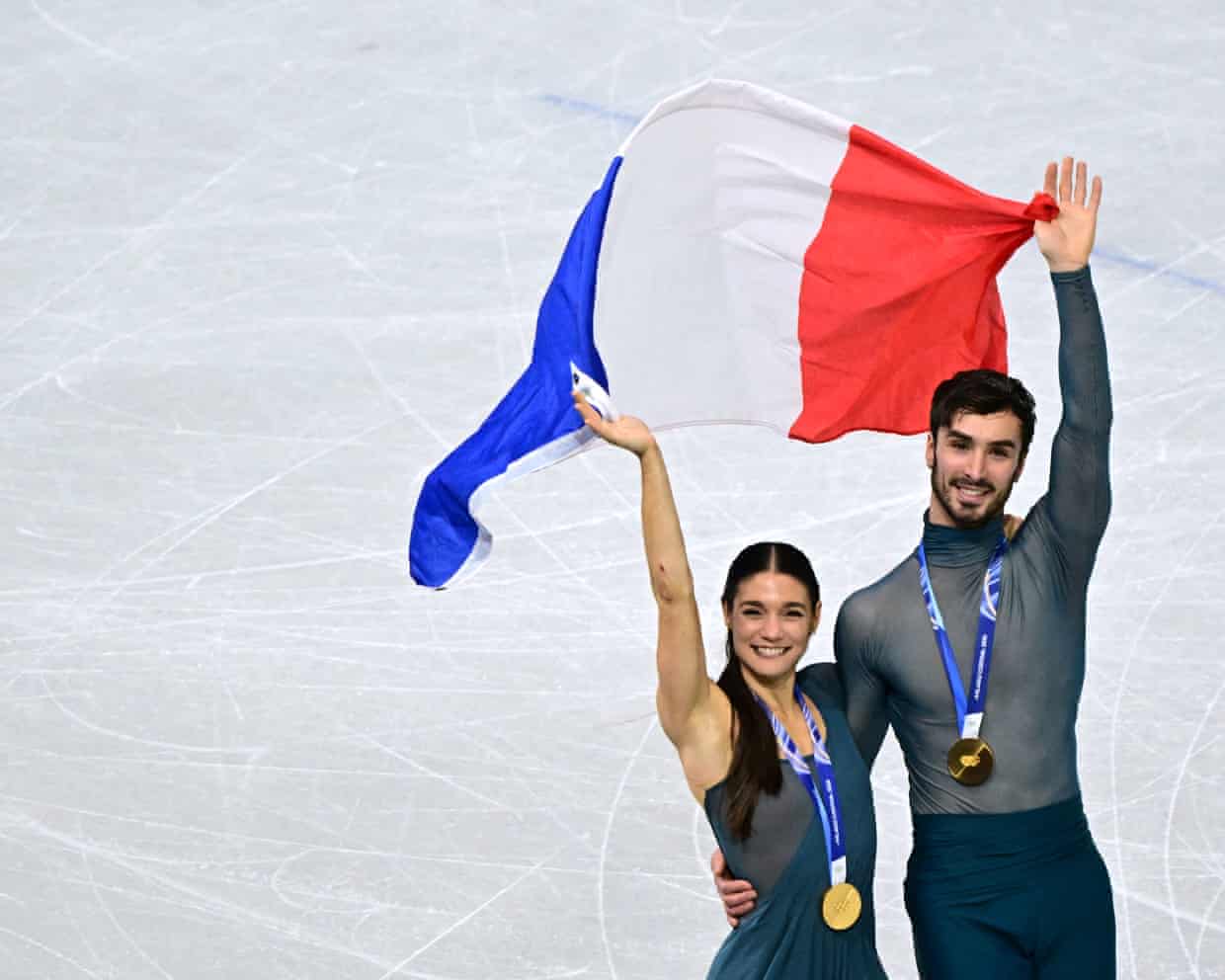
There is some top scandal in the Figure Skating Ice Dance (won by France); the skating rink is a hot bed of controversy! Despite being favourites, the American married couple, Madison Chock and Evan Bates come second in the free dance with a flawless routine. There are nine judges for the event who allocate points in two categories: technical elements and program components. They don't have to explain or justify these marks. Unsurprisingly, then, the French judge, Jezabel Dabouis, gives their highest score to France (and lowest to USA) and the U.S. judge, Janis Engel, awards the American top marks (with France third-lowest). 

Of course it's all as political as the Eurovision Song Contest (I'm looking forward to that in a few months!) and the Americans claim later in a press conference that their silver was "bittersweet", as they had twice won gold in the team event and this is their fourth and (probably) last Olympics. They go on, "We put out our very best skates every time we took the Olympic Ice. All four performances we had here at the Olympics, we're very proud of. They were flawless for us. We couldn't have skated any better, and we're super proud of how we took the ice, how we handled ourselves every time. The rest is out of our hands." God bless their cute little humble hearts.
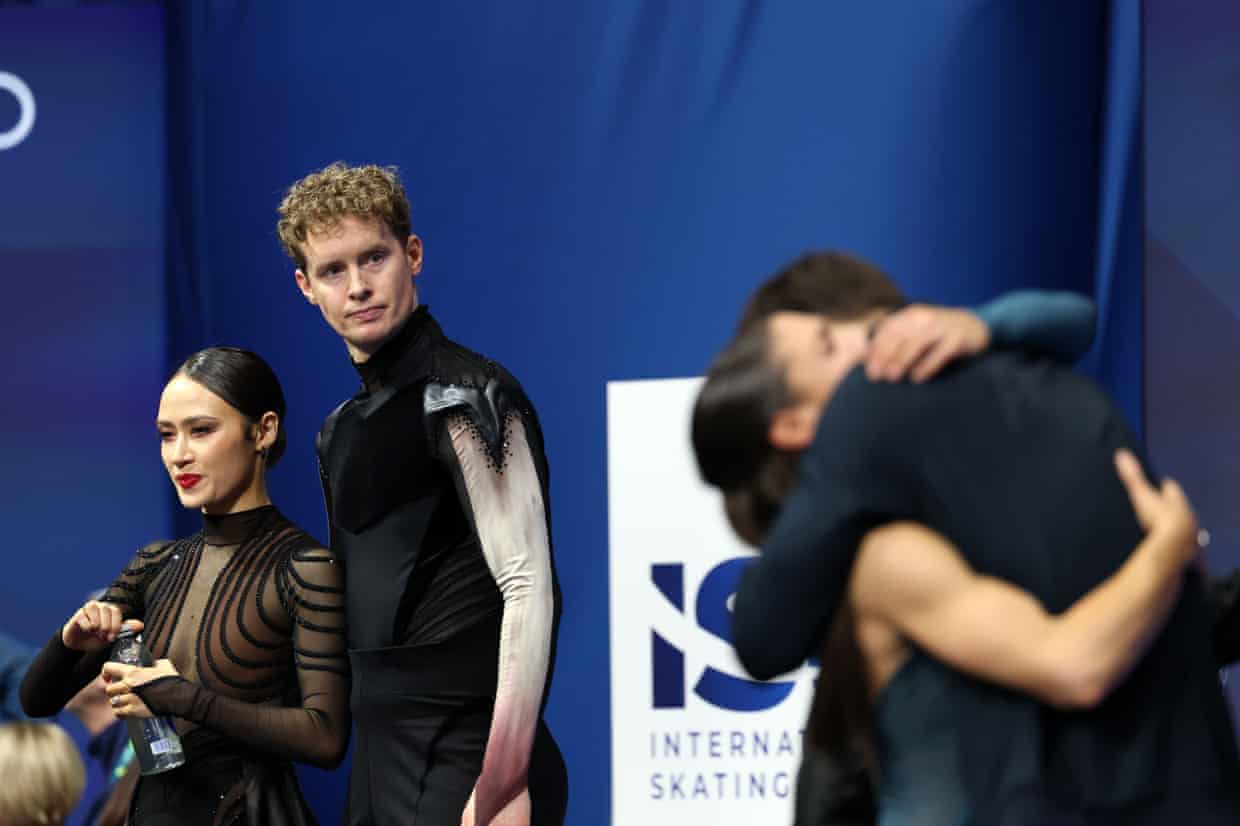

The French team are Laurence Fournier Beaudry (born in Montreal) and Guillaume Cizeron. Cizeron also won the ice dancing competiton at the 2022 Winter Olympics with former skating partner, Gabriella Papadakis, and he now becomes the first ice dancer to claim gold in the discipline twice at the Winter Games with two different partners. Papadakis has since accused Cizeron of being "unbalanced", "controlling" and "demanding". He has accused her of a smear campaign and has got his lawyers on the case. 

Meanwhile, Beaudry's boyfriend and former ice dancer, Nikolaj Sørensen was banned by the Canadian skating body for at least six years in 2024 for 'sexual maltreatment' related to allegations that he sexually assaulted an American coach and former skater in 2012. He denied the accusations and the suspension was overturned in 2025 on a technicality. Beaudry has consistently supported Sørensen, leading to much opprobrium from the skating community (particularly the female element). She claims that when he was suspended, her career was also over because, "it was not only about skating, it was about my integrity, it was about his integrity." 


If this sounds like TV drama fodder, rest assured there already is a Netflix documentary series, Glitter & Gold about the stooshie, and I shouldn't be surprised if there were to be a film to rival the Harding/ Kerrigan fandango. I'd watch that.

The luge is conducted at a venue imaginatively named the Cortina Sliding Centre. The sport is utterly insane; I can barely watch those forces on the neck, but of course I do. The team relay is fun, involving four events: women's singles, men's singles, women's doubles and men's doubles. The women's luger goes first, with the athlete hitting a hanging touchpad at the bottom of the track. Once the touchpad is hit, the gate for the next sledge (men's single) opens. We are told this is crucial, obviously one can't miss the pad, one has to be central and not sit up too early. After all four crews have crossed the line, the team with the fastest cumulative time wins, or, as the commentator expresses it, "Be faster - it's a simple solution." 


The Romanian men's double team slam into the sides; Poland's men's single goes sideways up to the top; Latvia are 0.3 seconds down on the USA until the last run (women's doubles), when they claw back time to finish 0.03 seconds ahead of them; Austria's men's single slides down the track at 125kph! Times are tight, but the podium is filled with Germany (gold), Austria (silver) and Italy (bronze). It doesn't actually look all that glamorous, as the role of the person at the bottom of the double team must be about as sought after as the arse end of the patomime horse.

Britain hasn't got any competitors in the luge, but we make up for it in the skeleton, which, if possible, is even more bonkers as the competitors do a similar sort of thing, but head-first. There are three Brits in the women's event, two in the men's and two in the mixed team. The athletes slide their sleds along the top of the runway then leap aboard and lie on their stomach, guiding the tea-tray with their shoulders, knees and toes (but hopefully not head) only occasionally looking up to see where they are going, otherwise they navigate by feel.


There's a lot of talk about the helmets, and helmet art is definitely a thing in these Olympics - skeleton is a sport mainly made for TV; you can't see a lot at as the athletes whizz by face-down at literally break-neck speeds. Naturally, there is also controversy. Team GB's new, highly aerodynamic and potentially safer helmets are banned for having a 'signifcantly protruding' rear (I know that feeling), and Ukranian pilot, Vladsylav Heraskevych is disqualified for wearing a 'helmet of memory' honouring war victims, which violates the IOC  rules on political statments.


Matt Weston wins the Men's event for GBR, becoming the first Brtish man to be an Olympic Champion in the sport, with Germans Axel Jungk and Christopher Grotheer taking second and third for Germany. (Marcus Wyatt, our other Brit, comes ninth). Weston's victory is the first by a British man in an individual event since Robin Cousins won gold in 1980, and the first gold by a British man in any event since Christopher Dean's victory in the ice dance in 1984. In the Women's event, the Austrian Janine Flock is first with silver and bronze going to Germany again with Susan Kreher and Jacqueline Pfeifer repsectively. Germany also come fourth and all the Brits finish inside the top ten: fifth (Tabitha Stoecker), seventh (Freya Tarbit) and ninth (Amelia Coltman). 
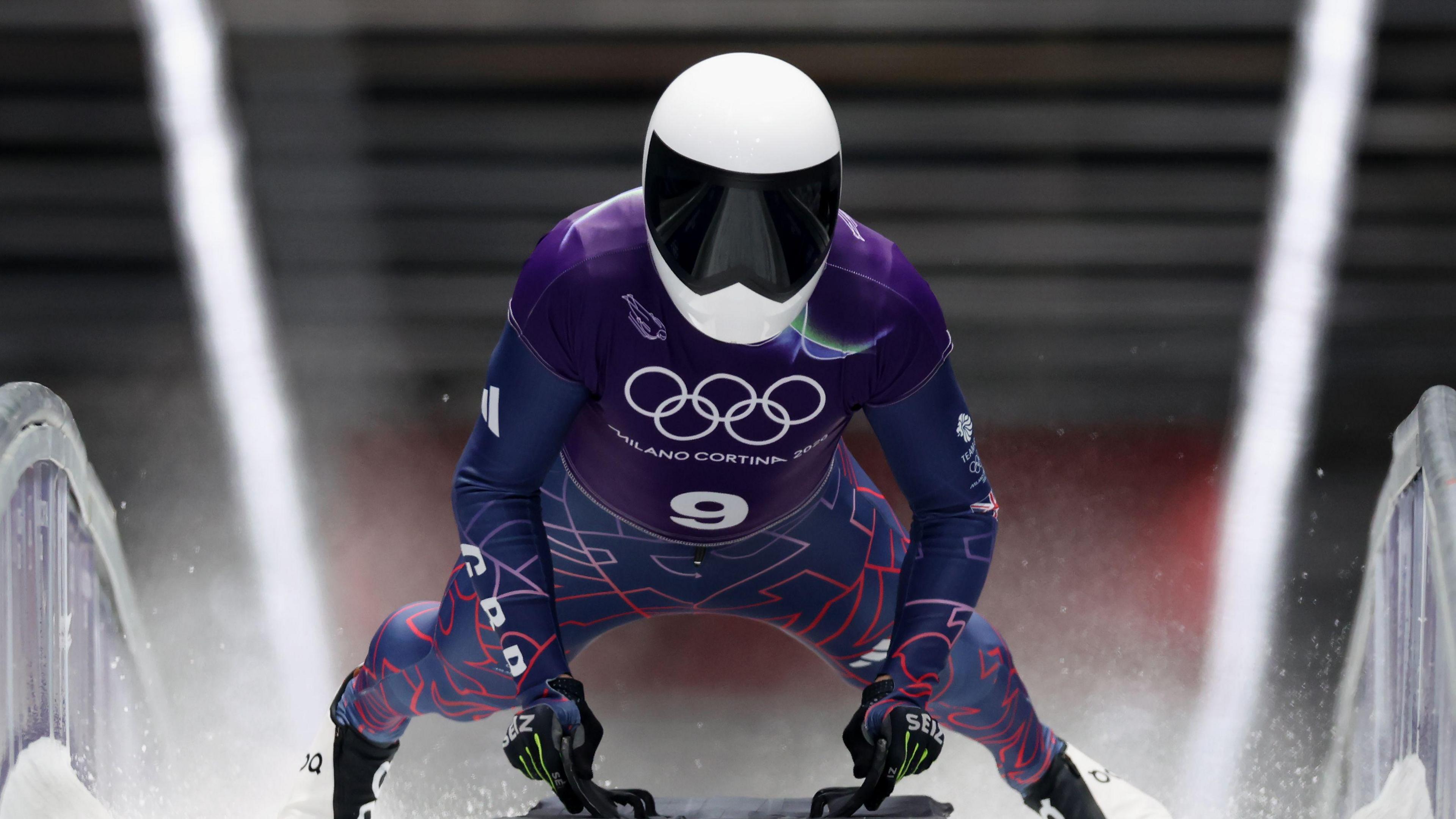

The Mixed Team event is therefore hotly contested (if you can be hot on ice), and consists of a combined time for the male and female athlete with the woman going first. The reaction start is based on a random delay (0.3 to 1 second) after five flashing red lights, with plenty of scope for time penalties should an athlete start before their due (as happened to Flock from the Austrian team). When the woman finishes a green light signals for the man to begin his run, and the teams start in reverse ranking order. It's (white) knuckle biting viewing, and the results are GB fourth (Tarbit/ Wyatt), Germany third (Pfeifer/ Grotheer) and second (Kreher/ Junck) and GB take gold with Stoecker and Weston. Weston thus becomes the first Briton to win two gold medals at a single Games and the second Briton to have won two career gold medals at Winter Olympics, after Lizzy Yarnold who won gold in 2014 and 2018, also in skeleton. What is it with the Brits and their reckless attidue to sliding down ice chutes?
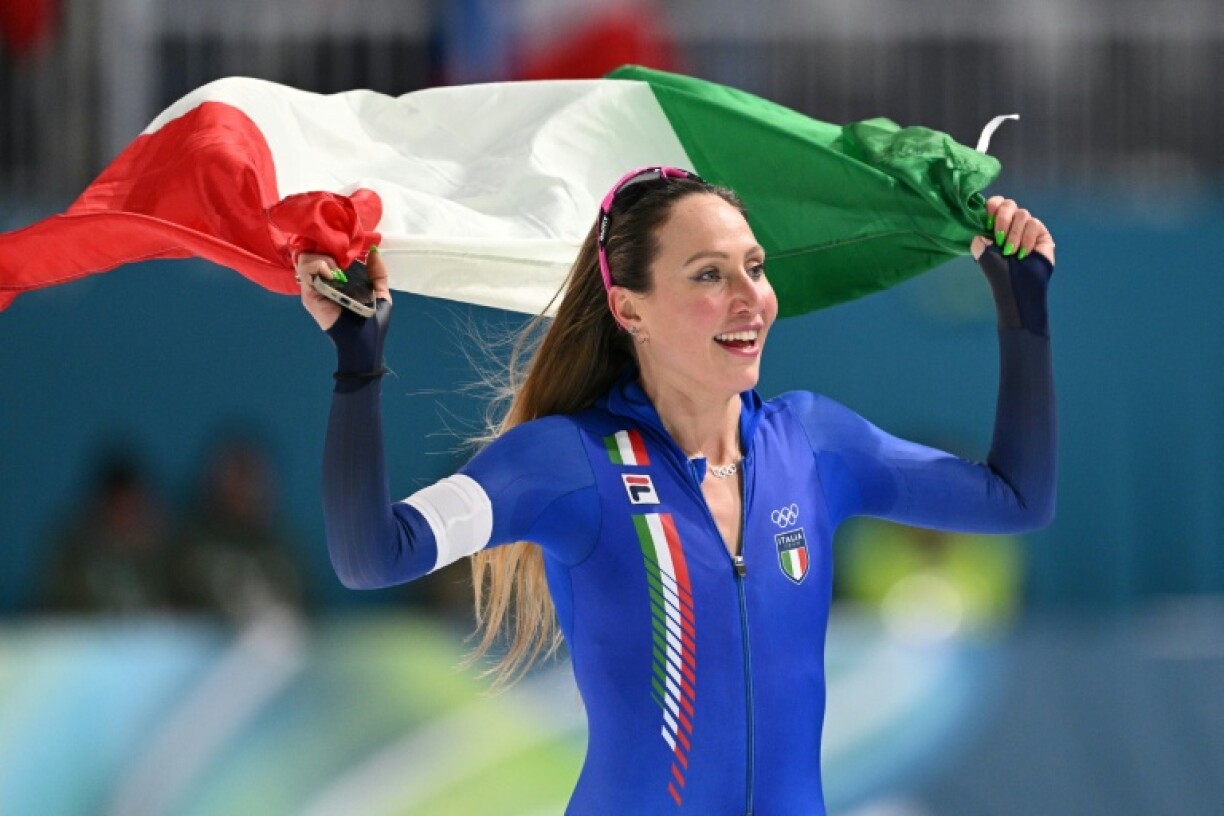

In the Speed Skating the athletes switch from the inner to outer lane, and can get drafting on the back strait. The commentators tell us that the first four laps are to 'set yourself', although it looks hectic from the start and the drone shots (available for the first time) bring us frighteningly close to the action. The Women's 3,000m results in the first women's speedskating medals for Italy (Gold) and Norway (silver). Francesca Lollobrigida wins gold again in the 5,000m. With her green fingernails, home support and small child, she is extremely popular. Incidentally, yes Gina Lollobrigida is her great aunt. The commentators seem surprised that she can even dress herself at the grand old age of 35. She sets a new world record, 0.1 seconds ahead of the second place getter, Merel Conijin from the Netherlands. Conijin seems very happy with her silver medal, less so the Belgian Sandrine Tas in fourth.


Short Track Speed Skating Mixed Team Relay is utterly bonkers and total chaos, like a Madison on ice with amazing changeovers involving shoving the bottom of your relay partner as they take off. The commentators keep saying sentences starting with, "don't count out..." or "Don't underestimate..." Believe me, I'm not! It finishes with a win for Italy, followed by Canada and Belgium - the Belgian speed skating outfits are much better than their parade atire. 

The judge bloke walks into the middle of the rink to announce results and give his verdict on challenges and disqualifications -there are a lot of these as the crashes pile up and decisions must be made as to who is at fault. He looks like a Hungarian Rory Kinnear with a matter-of-fact delivery and a wry smile, and he seems to be enjoying his part in proceedings.


In the mens' short-track speed skating 500m there are wipeouts aplenty in every heat. It's like the Wacky Skaters - they're all going to get splattered! - an analogy that is only strengthened by the fact one of the skaters is called Pigeon and they are all trying to catch him in Heat 4. Everyone falls behind the  Canadian, William Dandjinou, in Heat 1, but there are advancements to the final (if the athlete is brought down by another competitor and it is deemed that they might have progressed otherwise). In Heat 2, the Italian Pietro Sighel crosses the line backwards after a tangle of skates, but he still secures an automatic qualifying spot. 
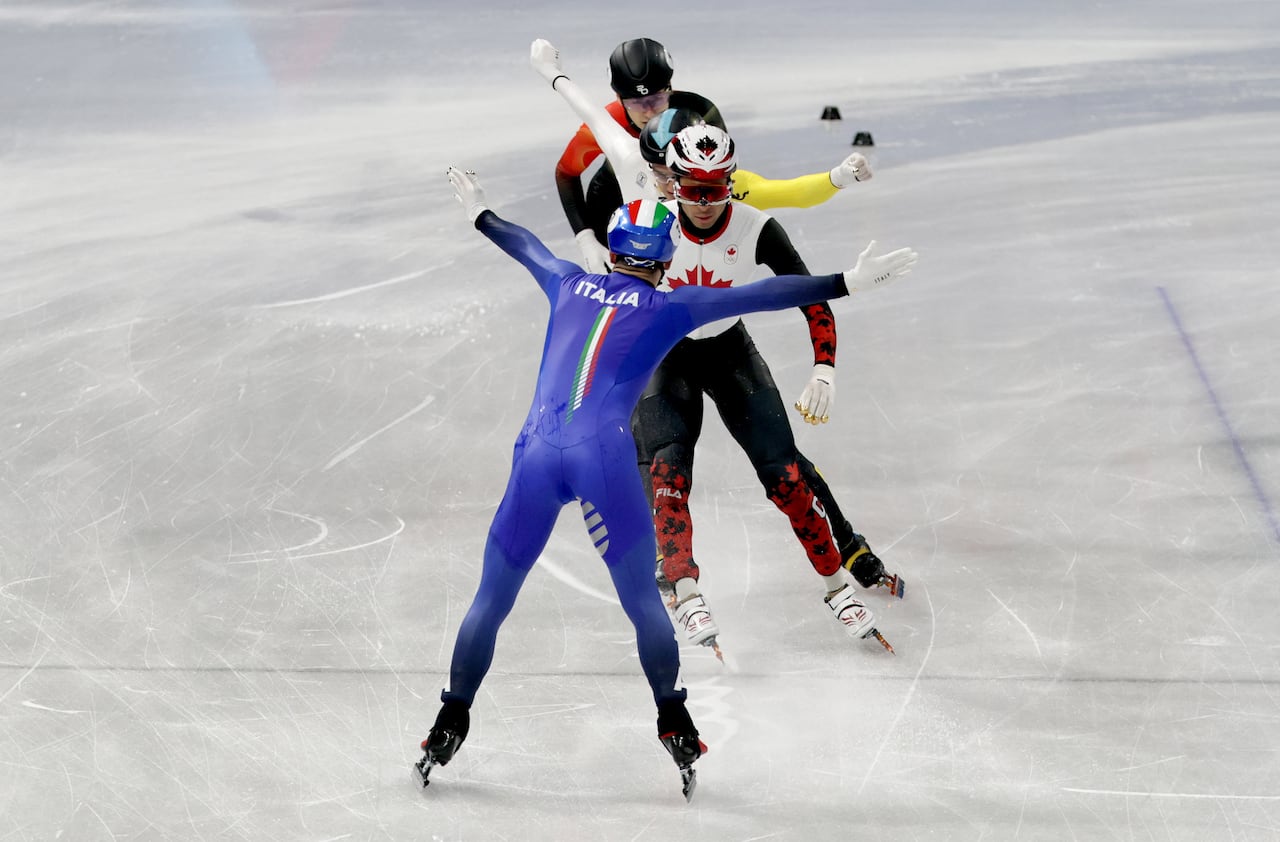

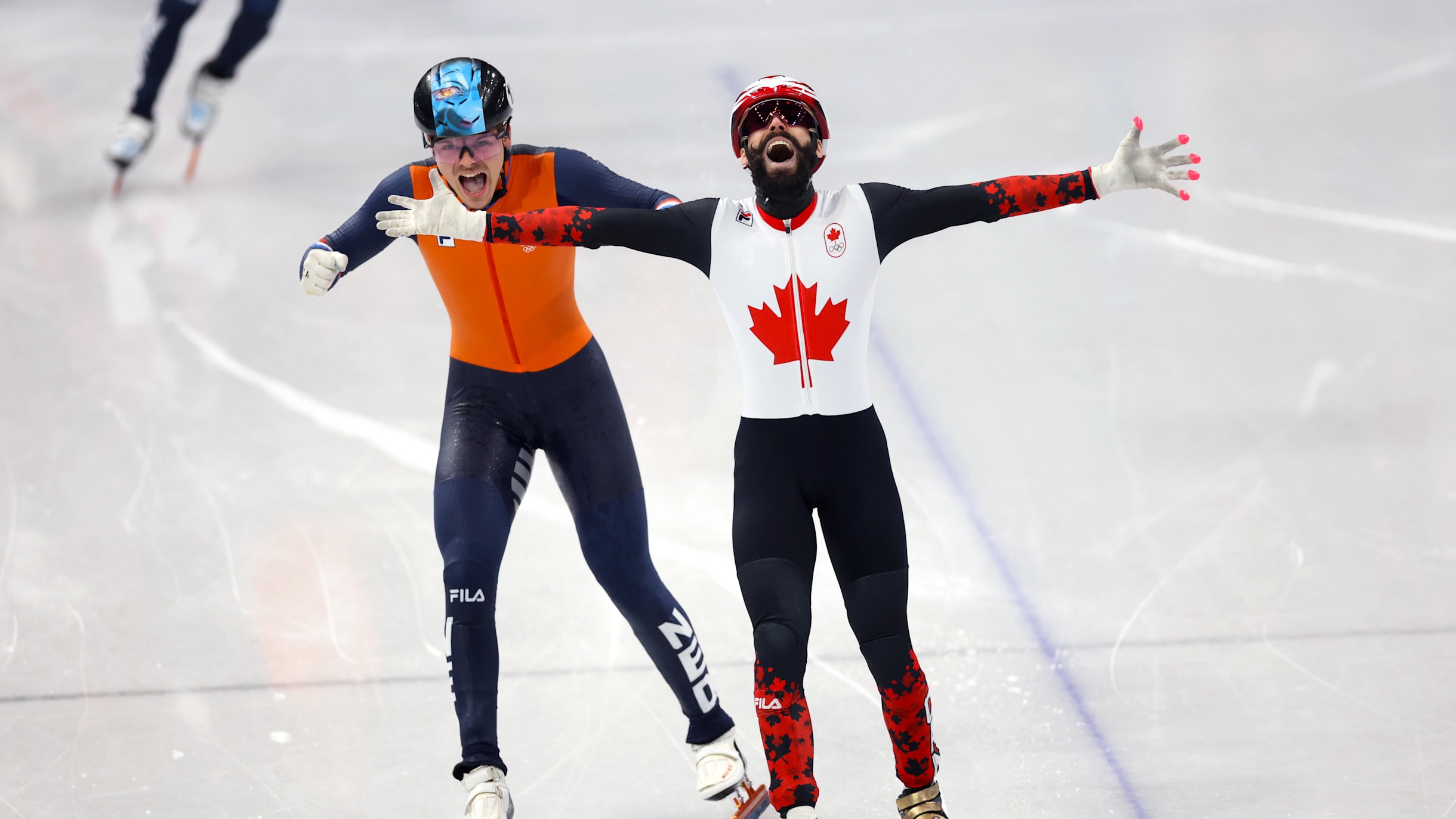
The British athlete, Niall Treacy, wipes out another contestant in Heat 8 before they even reach the first bend, so the race is restarted. He ends up in another slip and slide, so finishes last in the heat and doesn't go any further in the event anyway. By the time we get to the final, we are left with Canadians (two) and Dutchmen (three). There are two van 'T Wouts, which makes the child in me snigger. Steven Dubois (apparently called the hairy Canadian due to his spectacular beard and mo combo) is clearly leading from the front, skating at 50kph. When Dandjinou attempts to pass the Dutchie on the left hand side it is considered an illegal move and he is given a penalty. The race finishes with Dubois taking gold for Canada and the van 'T Wout brothers (snort) in silver and bronze position.

Monday, 2 March 2026

Reflections on Snow...

Here are some random thoughts on the snow events at the Winter Olympics - stream of consciousness style as they occured to me in no particular order.


Alpine Skiing - I watch men's and women's downhill, Super-G and slalom. The speed! The turns! The air! The drones! The events appear to be dominated by Swiss, Germans, Italians, Americans and Canadians (This may be a huge generalisation - but Scandianvians appear to stick to the cross-country events). 

In the Women's Downhill there are multiple stories of broken and fractured bones along with torn and rupputed ACLs. Lindsey Vonn is airlifted/ stretchered off. Breezy Johnson (USA - natch - born Breanna; changed her name just before her high school graduation, legally adopting the nickname given to her by her grandmother) was previoulsy out for 14 months with a broken leg and shattered knee. She makes a big mistake, coming from .03 seconds down to be up by .84, and finally leading by over a second. Snoop Dogg is there and loving it. Emma Aicher (Germany) is 'loose on all the jumps' but still takes silver. The Italian, Sofia Goggia takes bronze to the delight of the home crowd. 'Throwing it down' seems to be the expression of choice. When Frederica Brignone wins the women's Super-G for Italy, the equivalent of the red arrows fly overhead.


There are various 'combined' events, some of which are new to the Olympics, in which athletes perform a couple of disciplines, and sometimes they pair up for no apparent reason (other than it creates an extra medal possibility) and compete as a team. In this manner people do combinations such as downhill and slalom or ski jumping and cross-country.

Incidentally, there are two ski jumps, one called the 'normal' hill and one the 'large hill'. The 'normal' hill looks pretty large to me, and it's an amazing feat full of noise from drones, crowds and the skis on the ramp, and then... wheeee! Look, ma, I'm flying! There is a scandal over the ski-jumping suits, some of which are modified to increase lift by expanding the crotch area. When this was discovered, it led to a rule change at the Olympics including the use of microchips in suits to prevent further cheating, and major scrutiny of the competitors' nether regions.  Obviously, this quickly becomes known as 'penisgate' and delights all the media.


In the skiathlon, the athletes start all together for 10km of classic (in the grooves) and then switch skis for 10km of free (or skate). They push themselves to the edge of their limits, and the race is dominated by Scandinavians with a couple of Canadians and Americans. It ends with gold and silver to the Swedes with Norway taking third place. This is the first of many snow-based battles between these two-nations.

The athleticism on display at the Biathlon Mixed Team Relay is exceptional - how they can sprint that hard and then calm their heart rate that quickly in order to fire that accurately is phenomenal. The event is marred, however, by possibly the most annoying commentator I have ever heard. She sounds like a Kiwi, so her accent is irritating to start with, and then she insists on placing equal emphasis on every single syllable. She may think this makes her sound more dramatic, but as she is simply repeating inane drivel, it is excruciating. 


There is stunning shooting from the biathletes in the women's 7.5km sprint. The winner, Maren Kirkeeide (NOR) and the runner-up, the fabulously named Oceane Michelon (FRA) both shoot completely clean, and there are huge cheers from the crowds for local hero Liza Vittozzi (ITA), who also shoots clean but is 40 seconds behind the leader and ends up in fifth position - Lou Jeanmonnot, also of France, takes bronze. It is tough conditions, snowing hard and very misty; the floodlights are on, sining through the gloom. There are lots of what we used to call French plaits on show (I don't know if they have another name now) and Lithuania have the best outfits. There are 91 finishers in this event including an Aussie, Darcie Morton in 87th place, and a Brit, Shawna Pendry, who comes in at 89th.

In the men's 20km biathlon, the commentator is back and even more annoying than ever. There is drama after third-placed Sturla Holm Laegreid (NOR) uses his post-race interview to confess to cheating on his girlfriend. While the rest of Norway is celebrating their medals in the event - Johan-Olav Botn took gold, while silver went to Eric Perrot from France - Laegreid tells a reporter that he feels he has made the mistake of his life and that he is deeply regretful. He weeps, "I'm taking the consequences for what I've done", and when asked what on earth possessed him to out himself (and her) thus on live TV, he says, "I hope that committing social suicide might show how much I love her." It doesn't. The lady in question replies that the day should have belonged to gold medallist, Botn and that, "It's hard to forgive him. I didn't choose to be put in this position, and it's painful to have to endure it." Personally I feel there are questions to be asked about putting guns into the hands of incredibly fit, accurate, and emotionally volatile young men.

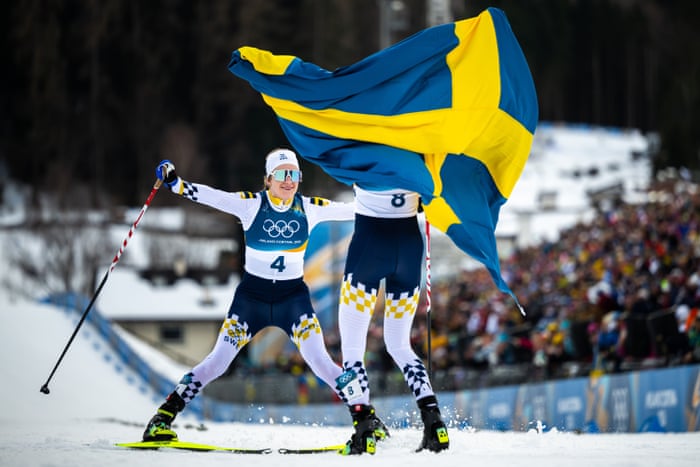
The Nordic Combined Team Sprint has great potential for chaos in the transition/ exchange zone, especially due to the heavy snow conditions and low light. There are wax technicians in the middle of the course and volunteers are sweeping snow off various areas so the athletes can see the coures. People are slipping and falling all over the place, and it looks so cold! In the Women's 4 x 7.5k relay, the Swedish frontrunner on leg 2 trips and breaks her ski - she has to run/ single skate to a pitstop where she can get a new ski. Her team powers back through the field to finish second, with Norway winning and Finland coming third. 


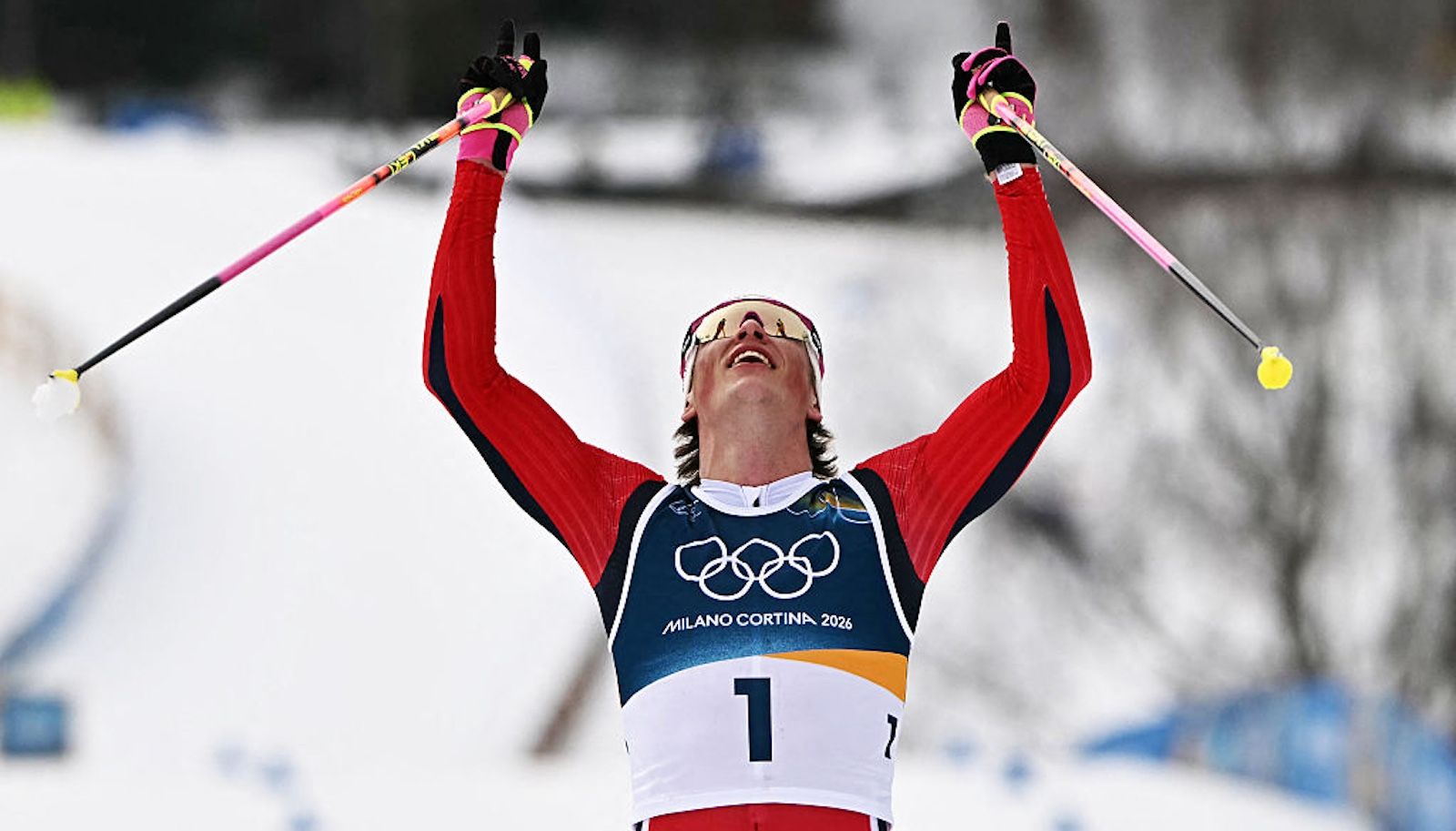
The qualifications, quarter finals, semifinals and final of the X- Country Sprint Classic are all within 4hrs, making this seem like a great event to watch live at the venue. It's a brutal course involving double poling, uphill running, downhill cornering, and throwing one's body to the line. Norwegian Johannes Hosflot Klæbo is a legend of the snow; only three male athletes have more medals than Klæbo at the Winter Olympic Games and they are all Norwegian. He wins another one here, and Norway also get the bronze through Oskar Opstad Vike. Ben Ogden from the USA comes second, making him only the second American man to win an Olympic medal at Winter Games.Klæbo also wins the X-Country Skiing Men's 10km + 10km Skiathlon, and a Brit (Andrew Musgrave) comes 10th, which is very exciting.


In the X-Country Skiing Men's Team Sprint, the Swiss bloke on leg one looses a pole. He calls for one from the technical team; it also breaks and he tosses it aside. The event has two team members who race three laps each. Pueyo from Spain has the second fastest time on the first leg, but his team finishes in last place, 37 seconds behind the leaders. Britain and Australia are still in it after lap one, and Team GB finish in 5th place, which is their best ever result - the Australians come second last. The French bloke looses a pole too and everyone is still close together halfway through lap three when the French bloke looses another pole and gets a yellow card (I'm not sure why). Norway win gold - guess who's in their team. Yep, Klæbo. He powers up the final climb to his tenth gold medal in a phenomenal fashion, and the commentator gushes, "People will forget what you said; they will forget what you did; but they will never forget how you made them feel, and I have just got goosebumps."

King Klæbo goes on to take his sixth gold medal at this Olympic Games in the Men's 50km Mass Start Classic (in which all the podium spots are filled by Norway). This makes him the first man ever to achieve this record, and it is also the most career gold medals (11 in all) won by any Winter Olympic athlete. He now trails only Olympic swimmer Michael Phelps on the list of athletes with the most all-time Olympic gold medals.


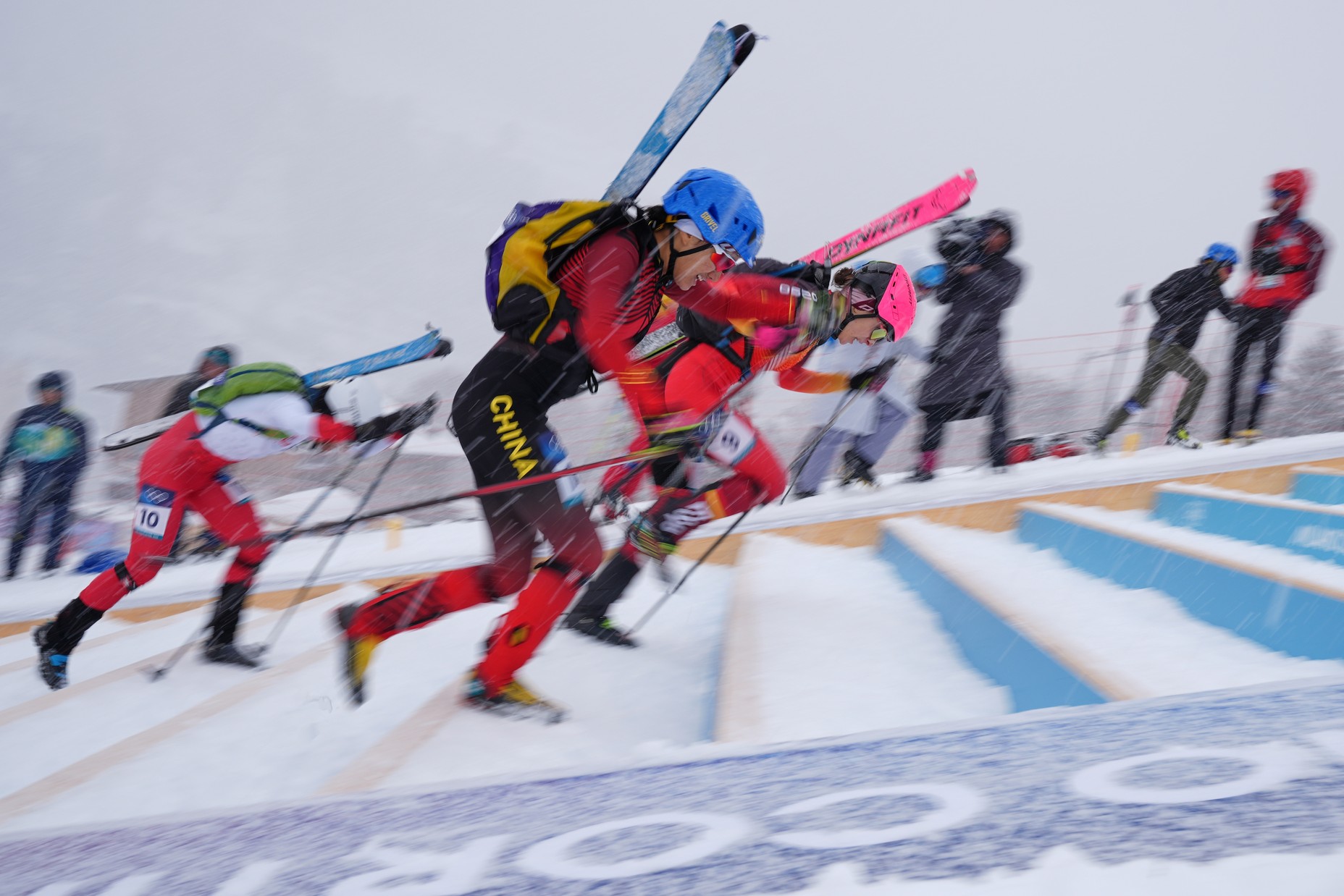
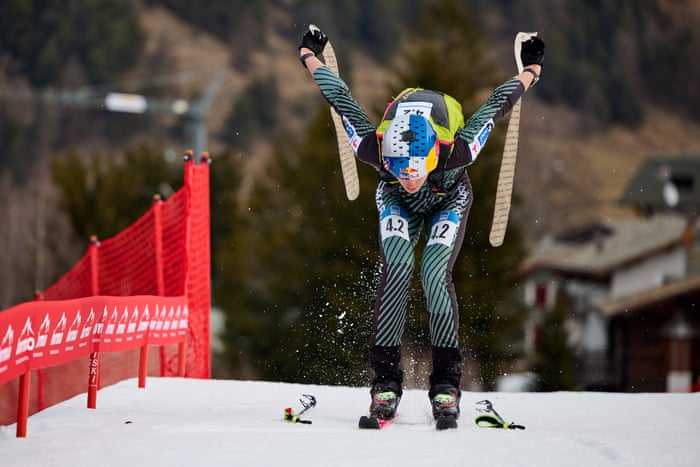
The Ski Mountaineering - inevitably shortened to 'skimo' - makes its official Olympic debut here. It looks like fun and extremely hard work, involving climbing 'mountains' (in this case, a technically constructed course) on skis and by foot. The athletes climb rapid ascents using climbing skins, which they them whip off in an unweildly jumping move like some crazy frozen c-rate stripper, to release the sliding ability to get downhill fast. Their ski suits have special pouches, like marsupials, in which to stuff the skins until they are next required. There are also sections on the course where the athletes clip their skis into a backpack and run up steps.

There is no Klæbo in this event so there is a chance for someone else to win a medal. The women's sprint final is won by Marinne Fatton from Switzerland follwed by Emily Harrop from France then Ana Alonso Rodriguez from Spain, while the men's sprint final is won by Oriol Cardona Coll from Spain followed by Nikita Filippov from Russia (sorry, Neutral Athlete) then Thibault Anselmet from France. Unsurprisingly then, the mixed relay is France - gold, Switzerland - silver, and Spain - bronze. There is an Australian chap, Phillip Bellingham, who makes it through to the semi-finals and posts by far the slowest time. The Australian team of Bellingham and lara Hamilton (who came last in her heat) are also the final finishers in the mixed relay. They may look a long way off the pace, but they must be remarkably fit - these athletes are all truly world class.