Due to the presence of Israel in the Eurovision Song Contest, despite their 'participation in the conflict in Gaza', five countries have boycotted the event - not sending a contestant or televising the spectacle - complaining about the hypocrisy of banning Russia while allowing Israel to compete. So, here's the who's who of who's not.
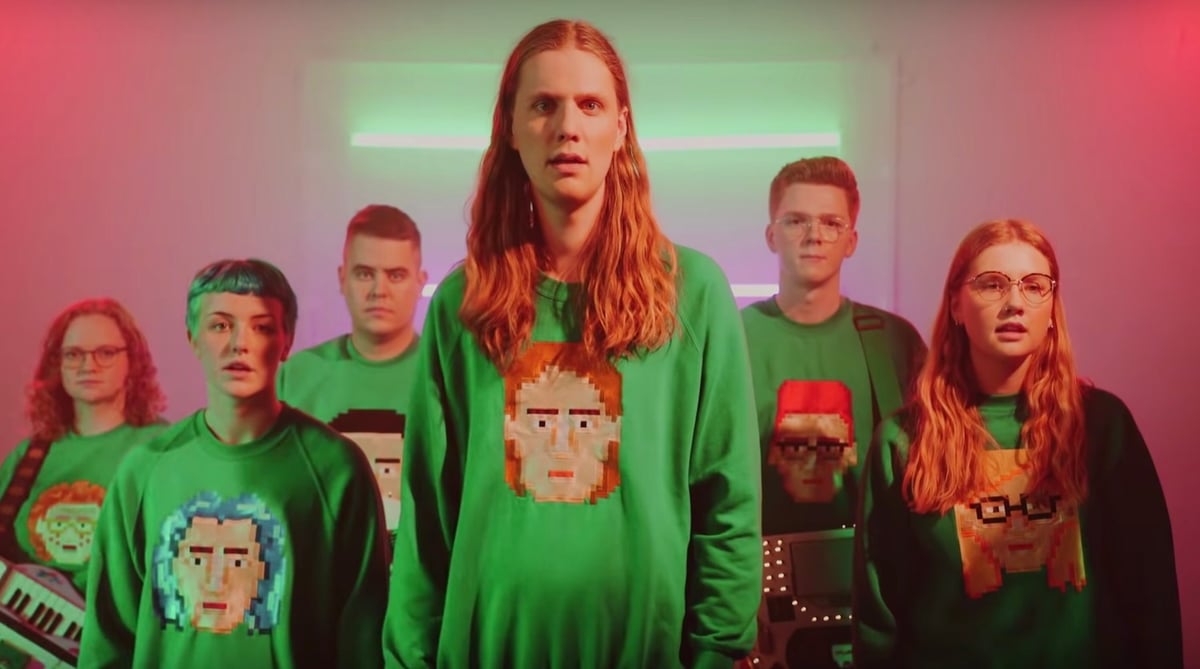 |
| There's no danger of getting the wrong outfit for Daði Freyr & Gagnamagnið |
- Iceland - Iceland have been represented at the Eurovision Song Contest 37 times since its debut in 1986. Since the introduction of the semi-final round (in 2004), Iceland has failed to qualify for the final nine times, including four years consecutively (2015-2018). To date, Iceland is the only Nordic country not to have won the contest. They have quite an odd record, actually, having achieved second place twice (in 1999 and 2009), losing out to Sweden and Norway respectively, but also having finished in last place four times, including 1989 when they received the dreaded nul points. Most recently they are best known for the banger of a single, Think about Things by Daði Freyr og Gagnamagnið, which was all set to represent Iceland in 2020 until the contest got cancelled due to COVID. It might have been their best attempt at the top spot as the song was a viral sensation and the band were adored for their catchy electropop, standout dance moves, awkward adolescent vibe and quirky personalised sweatshirts.
- Ireland - It should be no surprise that Ireland have boycotted the contest this year, as they have form at protesting over this issue - down with this sort of thing. In 2024 Bambie Thug (who was one of my favourites) came sixth overall and was only allowed to perform after they removed make-up from their body which spelled out 'Ceasefire' in a Medieval Celtic script. The national broadcaster, RTE, which would normally televise the competition, has announced it will screen the satirical Father Ted Eurovision episode of 1996 instead. They are quite a big omission as along with Sweden, they have won the competition the most times (seven), although not since 1996. To be honest, I'm still traumatised by Johnny Logan's What's Another Year? from 1980.
- The Netherlands - Along with France, Luxembourg and the United Kingdom, the Netherlands have won this contest five times previously, most recently in 2019 when, incidentally, the contest was hosted by Israel in Tel Aviv. In 2024 Joost Klein qualified for the final with the relentlessly poppy Europapa, which came second in its semifinal and was hotly tipped to win the competition. However, following a backstage incident between Klein and a production staff member shortly after the semifinal performance, the Netherlands was disqualified from the final. The investigation into the incident was closed on 12 August due to a lack of evidence. This is the only time that an entrant has been disqualified during the contest.
 |
Duncan Laurence wins Eurovision for the Netherlands in 2019 despite seemingly hand-syncing his keyboard playing
|
- Slovenia - Slovenia debuted at the Eurovision Song Contest in 1993, and since the introduction of the semi-finals in 2004, they have qualified for the final eight times. They have not made it into the top ten since coming seventh in 2001. In 2025 they stated they would reconsider participation in the contest if the European Broadcasting Union did not respond adequately to concerns surrounding the 'transparency of the vote', referring to Israel's televote win n 2025. Obviously, no such assurance was received, and the general director of Slovenia's national broadcaster stated that their questions were ignored and, "we clearly won't be going to the Eurovision Song Contest'. With all due respect, I'm not sure anyone will particularly notice their absence.
- Spain - Now, Spain, on the other hand... They are one of the Big Five (along with France, Germany, Italy and the United Kingdom), so now it is a Big Four. The aforementioned countries are the ones who contribute the most money to the European broadcasting Union and it is arguable that without these contributions, the contest would be financially unable to proceed. In return for this, they receive automatic entry into the final. This can actually work against their entry, with other countries feeling sour about giving them votes, or it might just be that their songs aren't all that good. (The UK entries for 2024 and 2025 both received no points from the public vote, although the juries brought them out of last place). Spain are no strangers to Eurovision controversy - they have two of only three non-winning entries who have been allowed to perform a second time. In 1990 the orchestra and backing track began the song out of synch, causing the singers to miss their cue, and in 2010 their performance was interrupted by a chap named Jimmy Jump known for pitch invasions and disruption of other entertainment events in order to show Catalan support.
 |
| One of these people was not part of the act, although it made no more or less sense of the song. |

