Showing posts with label Ireland. Show all posts

Friday, 10 April 2026

Friday Five: Boycotting Eurovision


Due to the presence of Israel in the Eurovision Song Contest, despite their 'participation in the conflict in Gaza', five countries have boycotted the event - not sending a contestant or televising the spectacle - complaining about the hypocrisy of banning Russia while allowing Israel to compete. So, here's the who's who of who's not.

There's no danger of getting the wrong outfit for Daði Freyr & Gagnamagnið
  1. Iceland - Iceland have been represented at the Eurovision Song Contest 37 times since its debut in 1986. Since the introduction of the semi-final round (in 2004), Iceland has failed to qualify for the final nine times, including four years consecutively (2015-2018). To date, Iceland is the only Nordic country not to have won the contest. They have quite an odd record, actually, having achieved second place twice (in 1999 and 2009), losing out to Sweden and Norway respectively, but also having finished in last place four times, including 1989 when they received the dreaded nul points. Most recently they are best known for the banger of a single, Think about Things by Daði Freyr og Gagnamagnið, which was all set to represent Iceland in 2020 until the contest got cancelled due to COVID. It might have been their best attempt at the top spot as the song was a viral sensation and the band were adored for their catchy electropop, standout dance moves, awkward adolescent vibe and quirky personalised sweatshirts.
  2. Ireland - It should be no surprise that Ireland have boycotted the contest this year, as they have form at protesting over this issue - down with this sort of thing. In 2024 Bambie Thug (who was one of my favourites) came sixth overall and was only allowed to perform after they removed make-up from their body which spelled out 'Ceasefire' in a Medieval Celtic script. The national broadcaster, RTE, which would normally televise the competition, has announced it will screen the satirical Father Ted Eurovision episode of 1996 instead. They are quite a big omission as along with Sweden, they have won the competition the most times (seven), although not since 1996. To be honest, I'm still traumatised by Johnny Logan's What's Another Year? from 1980. 
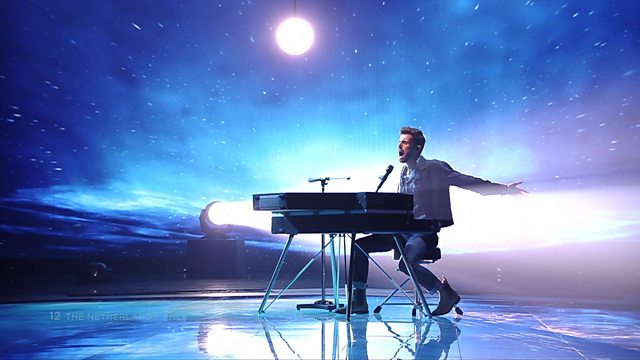
  3. The Netherlands - Along with France, Luxembourg and the United Kingdom, the Netherlands have won this contest five times previously, most recently in 2019 when, incidentally, the contest was hosted by Israel in Tel Aviv. In 2024 Joost Klein qualified for the final with the relentlessly poppy Europapa, which came second in its semifinal and was hotly tipped to win the competition. However, following a backstage incident between Klein and a production staff member shortly after the semifinal performance, the Netherlands was disqualified from the final. The investigation into the incident was closed on 12 August due to a lack of evidence. This is the only time that an entrant has been disqualified during the contest.
  4. Duncan Laurence wins Eurovision for the Netherlands in 2019 despite seemingly hand-syncing his keyboard playing
  5. Slovenia - Slovenia debuted at the Eurovision Song Contest in 1993, and since the introduction of the semi-finals in 2004, they have qualified for the final eight times. They have not made it into the top ten since coming seventh in 2001. In 2025 they stated they would reconsider participation in the contest if the European Broadcasting Union did not respond adequately to concerns surrounding the 'transparency of the vote', referring to Israel's televote win n 2025. Obviously, no such assurance was received, and the general director of Slovenia's national broadcaster stated that their questions were ignored and, "we clearly won't be going to the Eurovision Song Contest'. With all due respect, I'm not sure anyone will particularly notice their absence.
  6. Spain - Now, Spain, on the other hand... They are one of the Big Five (along with France, Germany, Italy and the United Kingdom), so now it is a Big Four. The aforementioned countries are the ones who contribute the most money to the European broadcasting Union and it is arguable that without these contributions, the contest would be financially unable to proceed. In return for this, they receive automatic entry into the final. This can actually work against their entry, with other countries feeling sour about giving them votes, or it might just be that their songs aren't all that good. (The UK entries for 2024 and 2025 both received no points from the public vote, although the juries brought them out of last place). Spain are no strangers to Eurovision controversy - they have two of only three non-winning entries who have been allowed to perform a second time. In 1990 the orchestra and backing track began the song out of synch, causing the singers to miss their cue, and in 2010 their performance was interrupted by a chap named Jimmy Jump known for pitch invasions and disruption of other entertainment events in order to show Catalan support. 
One of these people was not part of the act, although it made no more or less sense of the song.

Friday, 6 February 2026

Friday Five: Books Read in January


The Secrets She Keeps by Michael Robotham (Sphere) - Male authors seem to think that all women want babies and will do anything to have them. Apparently, baby fever drives us crazy, which must be comforting for them to think that it isn't their oppressive patriarchal behaviour which has this effect. Meghan has a baby and Agatha wants it, so she befriends her to steal it (not a plot spoiler because it's obvious from the cover design). Despite being from supposedly different cultural backgrounds and socio-economic circumstances, the two women are written interchangeably in the first person, and its fortunate that each alternate chapter is introduced by their name or there would be no distinction between the two. Apart from the fact that one has a baby and one doesn't. Because, lest we forget, it is motherhood, or lack thereof, that defines the status of women. One of the characters, let's call her Megatha, literally says, "I am not a real woman because I cannot have a baby." Tedious. 
Hamnet by Maggie O'Farrell (Tinder Press) - Maggie O'Farrell has written a story about grief at the death of a child. That's a tricky subject and one she addresses well. She has made the child the son of William Shakespeare, although her refusal to name him as such and refer to him as the playwright in London or the Latin tutor or the son of a glove-maker seems perverse and artificial. There are wildly overblown sections of prose as she tries to talk about Shakespeare without talking about Shakespeare, including descriptions of the layout of the home of his birthplace, the attitude to ghostly figures, the very essence of iambic pentameter. The novel includes several quotes and themes from Shakespeare's plays and is written in the present tense, which becomes cloying as many things are revealed that are obvious with contemporary hindsight. In trying to diminish William Shakespeare and elevate Anne (called Agnes here) Hathaway, Maggie O'Farrell has done a disservice to both them and us in what feels like little more than fan fiction.
We Solve Murders by Richard Osman (Penguin)Richard Osman created the wildly popular Thursday Murder Club, and now he has published a standalone novel, We Solve Murders, which looks perfectly set to be the beginning of a new series. The main characters are Amy Wheeler, an assassin/ private security officer to billionaires and her father-in-law, Steve Wheeler, who used to be in the business but now likes spending time with his cat, Trouble, and his quiz team down the pub. It is a fast-paced thriller packed with guns and humour. Influencers are being murdered in a spat between money launderers, but no one really cares about influencers because they are so shallow, until we meet Bonnie Gregor, one with a family and a conscience. Amy is meant to be protecting famous author, Rosie D’Antonio who loves flirting – with danger and men – as they encounter lots of action in multiple locations. There is a cast of hundreds and it’s quite hard to keep track of who is whom. It doesn’t really matter though, as the action, locations and opportunity for cameo roles all combine to make this novel a dying-to-be-made-into-a-film script, with actors queuing up to play the characters. It’s a very decent book with a central character who talks to his dead wife while sitting on a small bench by a quiet pond and is trying to come to terms with his grief and her absence.
Small Things Like These by Claire Keegan (Faber) - There is so much weight in such a small book (114 pages) as Claire Keegan questions, what is decency and humanity? "Was there any point in being alive without helping one another?" Bill Furlong is a coal and timber merchant trying to do the best he can for his family in a small, rural Irish town where half the population is emigrating. The Catholic Church dominates the village, the schools and the workforce, and folk turn a blind eye to some of their more insidious practices, such as the Magdalen laundries. With a solid nod to Dickens' A Christmas Carol, Bill has his eyes forced opened just before Christmas, and he has to make a decision rather than merely going with the flow. The language is exquisite as it settles into natural rhythms and their inevitable outcomes, with a beautiful Irish tilt. "So many things had a way of looking finer, when they were not so close. He could not say which he rathered: the sight of the town or its reflection on the water." In this instance less is definitely more.


Friday, 1 November 2024

Fiday Five: Books Read in October

  1. Medusa by Jessie Burton (Bloomsbury) - Supposedly a feminist retelling of the Greek myth from Medusa's perspective, this is fairly simplistic and reads as young adult fiction. Medusa meets Perseus on an island; they talk from either side of a rock, tell each other their stories and fall in love. They hold hands but never see each other, indicating that beauty is in the eye of the beholder. Medusa wonders, “I thought of what it might mean to have a boy admire you, not for how you looked, but for who you were. For your thoughts and your deeds, your fears and your dreams. Was such a miracle to be my inheritance?” It’s what every young adult wants to hear, but it is not achievable. She also claims, “When beauty’s assigned you as a girl, it somehow becomes the essence of your being. It takes over everything else you might be. When you’re a boy, it never dominates who you can be.” This is true, in a world of binaries, and the pair assert agency over their own ‘myth’. Both Medusa and Perseus have been manipulated by the Fates and gods, questioning how much control does one have over one’s destiny? Medusa claims her name is Mirena, which means both duality and strength (and is also the name of the Queen of the Amazons and a contraceptive device). The novella is an introduction to telling one's own story, creating an identity, and learning that an individual can be more than one thing. Medusa revels in the new-found knowledge, “I was growing accustomed to this new sensation of uncomfortable compromises, of living in the grey areas of life, rather than the starker strips of black and white I’d believed in as a child.” It's an entertaining read of self-discovery more akin to the Percy Jackson novels than Natalie Haynes' works.
  2. Frogkisser! by Garth Nix (Allen & Unwin) - This is a fantasy/ fairytale mash-up in which young Princess Anya has to go on a quest to restore the kingdom and save her sister, Morven. There is a lot of hokum about collecting ingredients such as a pint of witches' tears and three-day-old hail stones to make a Reversal Lip Balm. With this balm she can kiss the frogs that have been transformed by her evil stepstepfather (her stepmother remarried after her father died) back into their original shape, including the hapless Prince Denholm, with whom Morven has fallen in love. She sets out accompanied by a loyal dog, Ardent, who is easily distracted by food, and falls in with an apprentice thief, Shrub, who has been transformed into an orange newt, and Bert, short for Roberta, leader of the Association of Responsible Robbers who steal from the rich and give to the poor. Bert tells Anya that their ethos is about "making sure that those who have too much do some sharing with those who have too little, and it isn't always just about valuable things like money or even basic things like food. It is also about sharing power and opportunities." Anya doesn't understand this as she is a princess and has always had unrecognised privilege. This is clearly a Life Lesson, and is handled in a rather clunky fashion. As Anya completes her quest, meeting several characters and learning self-awareness, there are nods to Narnia and the Discworld novels but without the complexity of the former or the satirical light touch of the latter. It's fine, but largely forgettable. 
  3. Hagitude by Sharon Blackie (September Publishing) -From the author of If Women Rose Rooted, which examined women’s connection to the natural world, comes Hagitude, a reimagining of the second half of life; menopause and how it affects women along with society’s expectations. As with the previous book, Blackie uses the archetypes of Jungian philosophy, and mythical tales to explain her theories. She begins by explaining the negative portrayal of ageing in Western culture. “Older women, when they’re not rendered completely invisible, are still trivialised and marginalised, and often actively ridiculed.” Unlike some of the legends from cultures which revere and respect elders with their gifts of wisdom, our tales of old women suggest they are something to be shunned, and the ageing process must be avoided at all costs. Much of this fear of the old woman can be ascribed to the ‘witch wound’ as many  women fear not conforming to the narrow expectations of society. Due to the witch trials and their associations, many women were culturally oppressed and modified their behaviours to escape unwanted and dangerous attention, and “to avoid being overly visible. Young women are enamoured with sparkly witches and spooky glam, but that is not the connection to nature and the earth that appeals to menopausal women. Blackie makes an interesting case for menopause being like a crucible in which the fire burns through to the heart and essence of the human, just as she quotes Michaelangelo talking of his sculpture, “I saw the angel in the marble and carved until I set him free.” By considering the body as a thing that carries us, rather than the totality of who we are, she raises some thoughtful propositions and encourages a refreshing outlook.
  4. So Late in the Day by Claire Keegan (Faber) - A very short work (a mere 47 pages) in which Cathal, at the end of his working day, reflects on his relationship with his ex-fiancée, Sabine, a French gallery worker. The economy and efficiency of language is remarkable as it paints pictures that lodge in the brain far more than wordier works of fiction. From the opening sentence - “On Friday, July 29th, Dublin got the weather that was forecast.” - with its hints of mundanity and brilliance, we know what to expect. Like Joyce, Proust or Woolf, the commonplace is juxtaposed with the specific in a slightly unsettling way. The construction of sentences and the use of verbs to shorten actions - “He took up the coffee, leaving before he sugared it" - gives it a lyrical lilt and an immediacy I also noticed recently in Paul Lynch’s work – it is an Irish thing? Keegan introduces feelings and emotions in the description of events. We learn that the narrator is mean and petty as he remembers an evening with Sabine in terms of value. “She took a long shower then and changed and drank a full litre of Evian over a Chinese which he’d had to order, over the phone. The restaurant charged four euros for delivery." He expects some reward for being kind – “Did I not order your dinner tonight and pay for it? Did I not buy all those cherries for your fancy tart? And haven’t I helped you here all day, moving all your stuff?” It is powerful to make the narrator so unsympathetic halfway through the novella, noting that the story was originally published in French under the title Misogynie. This is a tense tale without hyperbole or dramatic effects, but it resonates in a disturbing way as it questions what men really want from women and whether we have made any significant progress in gender equality.
  5. Dark Queen Rising by Paul Doherty (Crème de la Crime) -Dark Queen Rising is billed as a murder mystery with a meticulously researched political and historical setting. In the later fifteenth century, while the House of Lancaster is in disarray (King Henry VI is locked in the Tower of London; his wife Margaret of Anjou and their son, Prince Edward are captured and imprisoned), the House of York is rampant and the three brothers Edward (later King Edward IV), George (Duke of Clarence), and Richard (Duke of Gloucester, later King Richard III) are at war amongst themselves. The novel is full of set pieces and action; double crossing and espionage; smuggling and disguises; secret passages and hidden doorways. The immediate mystery is that people are found dead in room locked and bolted from the inside with the key turned. This leads to the search for a document - the Titus Regulus - containing secret ciphers, that could change attitudes to the right of succession. The problem is that “No one really knows what the ‘Titulus Regius’ truly is, where it’s hidden, or what form it takes.” It falls to Christopher Urswick, the personal clerk of Margaret of Beaufort (married to Edmund Tudor, half-brother to Henry VI of England – due to having the same mother, Katherine of Valois) to solve the mystery. Doherty writes in his notes that, “Some people even regard Urswick as the founder of the British Secret Service", and there is plenty of chaos and suspicion as people are constantly swapping loyalties, and death is everywhere.

Friday, 11 October 2024

Friday Five: BorrowBox

I don't usually listen to audiobooks - I prefer the tactile nature of reading a book and will never ceased to be amazed by the fact that printed words on a page can conjure precise worlds in the mind. However, a friend introduced me to BorrowBox, an app affiliated to my local library, where I can borrow books to listen to, and I decided to give it a go. 

I am particularly intersted in autobigraphies and other works in which authors read their own words and tell their own stories. Here are five I have listened to and enjoyed so far. 


Candid and amsuing autobiography from a young woman who suffered a traumatic childhood, fragile mental health, the death of her son and a terrifying stalking incident that culminated in a home invasion. her voice is authentic as she describes learning about the highs and lows of the music industry (number one singles and mainly male media backlash) in a very public spotlight. Her father, Keith Allen, does not shine through this account despite his obvious assistance in her career - he gave her a recording contract and abandoned her to take drugs at Glastonbury. She is aware of her position of privilege, but also that she has worked hard for her success.


Gabriel Byrne has one of those voices that I could listen to reading the phone book. This is much more interesting than that. He speaks a lot of his youth and his training to be a priest and then a plumber, before trying acting, which he quickly discovered was his true vocation. His is a story of searching for acceptance and finding it in a passion rather than a place. Although he is occasionally sentimental and whimsical about the Ireland he has left behind, he is thankful for his chance to escape and create a life for himself, which he guards against the frivolities of fame.


Not just an amazing footballer, Megan Rapinoe is also a firm advocate of women's rights and social justice. She had a fairly typical loving family upbringing in the semi-rural town of Redding, California, the youngest (with her twin sister, Rachael) in a family of eight. She and her sister chose football - it pains me to read soccer, but she is American so I have to get used it - as an early means of self-expression. She talks of training, of games, of injuries and triumphs as one would expect from a sport memoir. She also talks of the drug epidemic, the penal system, the understanding that she was a lesbian, the reaction to her coming out, and the fight for equal pay. Her stand on taking the knee made her an outcast in her own team and to the likes of Donald Trump and those who want to 'keep politics out of sport' when it suits them to do so. She denies she is unpatriotic - she is proud to captain her country - but is still prepared to call out injustice, which makes many of the target white republican audience mad. "I know what it means to look at the flag and not have it protect all of your liberties." She has a strong work ethic and believes in learning from mistakes and trying to do better. It may sound simple, but it is sadly unfashionable. She also believes in using her platform (and as an olympic gold-medal and two-time World Cup winner, she has a pretty big one) to speak up for those who don't have a voice. 


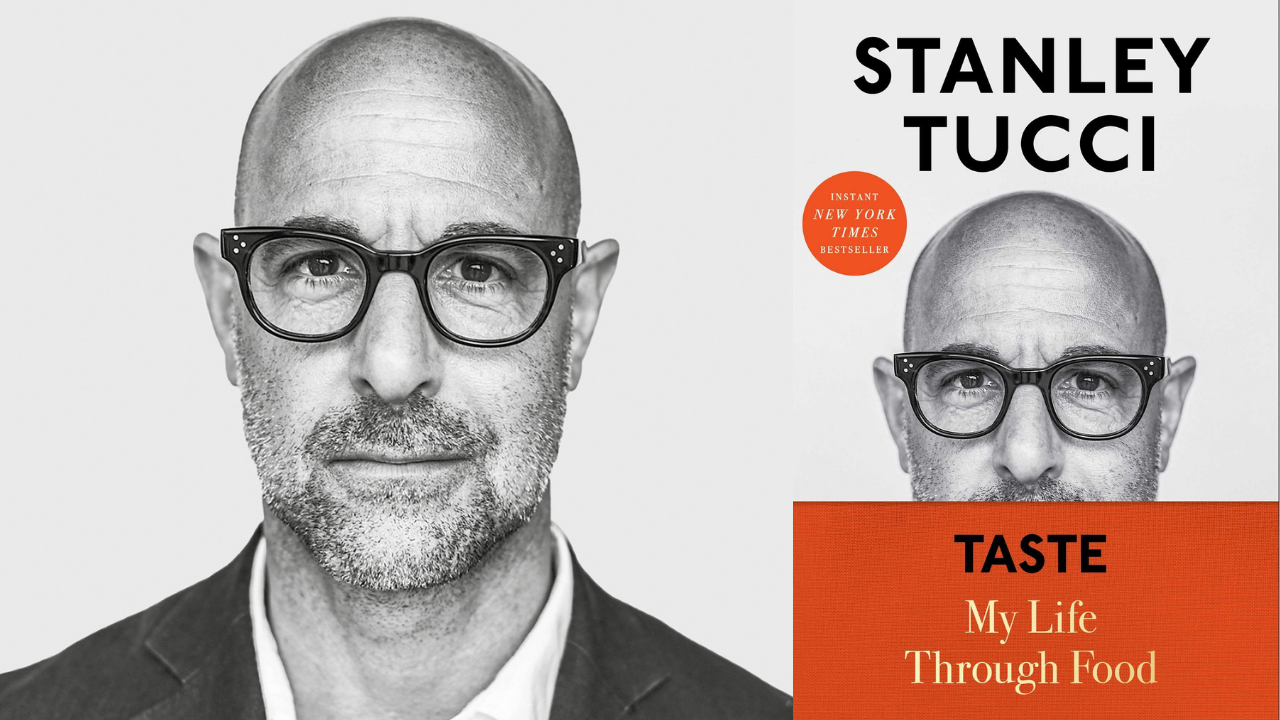
Another beautiful voice, coupled with a love of food and family - this was music to my ears. Stanley Tucci relates his life through important gastronimical touchstones which invoke memories and discoveries as he learns about his culture and his past and relates it all to his present and his career. He has a delightfully sardonic style and a dry humour, which is unusual for Americans, and he tends to steer clear of hyperbole, which is frankly refreshing. Through film narratives, health scares, loss of a sense of taste, and a delight in family and friendships, he shares anecdotes and recipes in a way that has the listener drooling - only partly for the food.


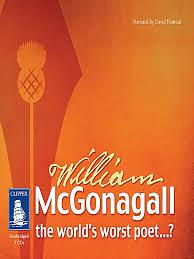
William McGonagall is often lampooned as the world's worst poet. That is a pretty bold claim and I have been insterested as to why he is so called. His poems are bad - they feature endless repetition, deridable rhymes, irrelevant details, poor scansion and weak metre. The mockery existed during his lifetime (1825-1902) and continues today with his work being celebrated with an Ig Nobel award in 2011. (He was also J.K. Rowling's inspiration for the name of her beloved character Minerva McGonagall.) He had no idea of this ridicule and fancied himself as having a calling to write, announcing himself as The Queen's Poet. Despite Queen Victoria refusing him patronage, he walked almost 100 kilmoetres from Dundee over mountainous terrain and through a violent thunderstorm to present himself at Bamoral where he was refused entry and had to return home. He made some money reciting his poems in pubs (the anti-drinking ones were particularly ill-advised), theatres, and the streets. As his reputation grew, his performances were attende by raucous crowds who drowned out his recitations and occasionally forcefully carried him out of venues. He found lucrative work performing his poetry at a local circus where he was pelted with eggs, flour, herrings, potatoes and stale bread. His story has many parallels with that of Florence Foster Jenkins, and one could perhaps feel great discomfort at his treatment (he was very probably on the autism-Apserger's spectrum), were it not for the fact that his self-aggrandising writings are incredibly pompous and dismissive of others. His poems, biography and other works are read by Scottish actor David Rintoul in brilliant fashion. He allows the unintentional humour to shine forth and reveals the terrible poetry in all its magnificent awfulness. It is a thing of unimaginable joy.

Tuesday, 18 April 2023

Grimly Compelling: The Good People


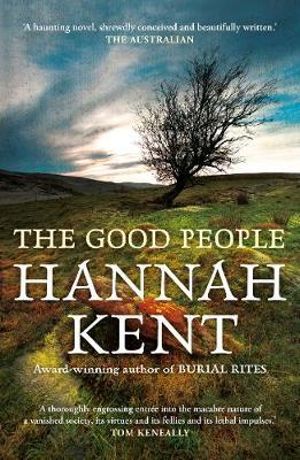
The Good People by Hannah Kent
Picador
Pp. 380

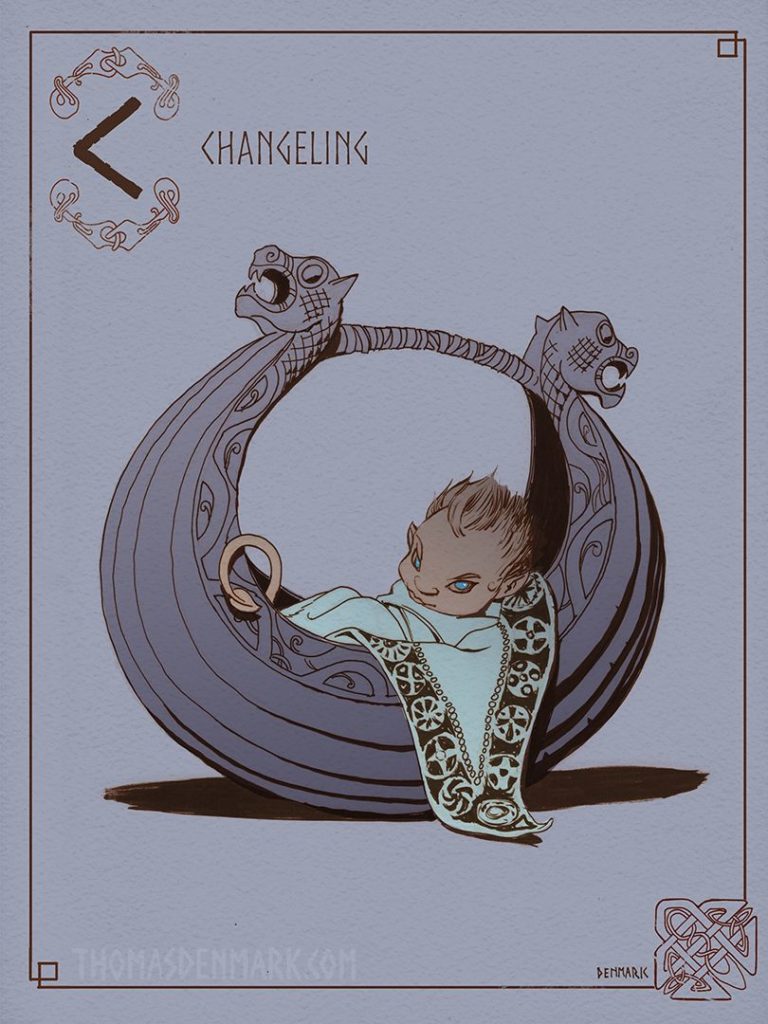
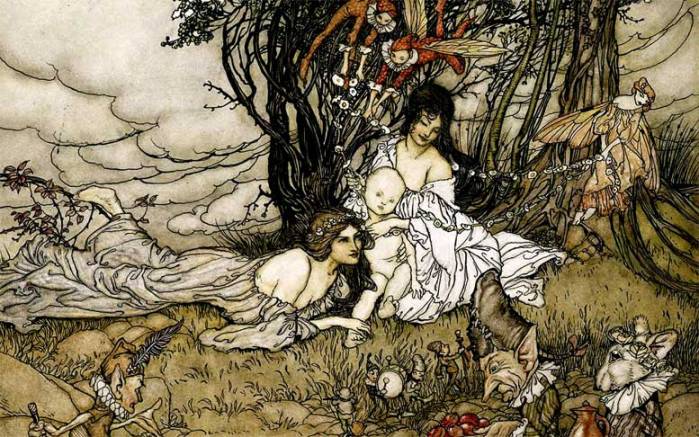
Set in 1825 in South-West Ireland, this novel explores liminal spaces and inexplicable things. In this world many follow the ‘old’ beliefs that children (and adults) could be stolen (swept) by the fairies to be replaced by changelings. Folklore and superstition are important here; herbs and flowers have healing and harmful powers; each chapter is named for one and begins with a botanical pen and ink drawing.

Nóra is caring for her daughter’s child, Micheál, after her own daughter has died. The boy has a disability which prevents him from speaking or walking and, after her husband Martin’s mysterious death at a crossroads (a place of magic), rumours abound that something may be not quite right with child. Nóra hires a servant girl, Mary, to help her to care for Micheál, and when Mary hears gossip from the women at the well that Micheál may be a changeling, she and Nóra enlist the help of Nance, the wise woman in the woods, who is believed to consort with the fairy folk, or the Good People, as they are also known.

This is a traditional battle between female and male energy, where women with knowledge are punished as witches, while men and priests hold all the power. There are glimpses of domestic violence and mental and physical cruelty in the community as the women cower to their husbands. Nóra is isolated in this society and, when there is cold and hunger, she is the last to be considered, leaving her to make wild choices.

We first meet Nance when she turns up at Martin’s wake and begins keening. The new priest, Father Healy, takes an instant dislike to Nance and lectures, against “the old ways that keep Irishmen at the bottom of the pile. ’Tis a new age for Ireland and for the Catholic Church. We’re to be paying our pennies to the Catholic campaign, not to unholy keeners.” Depending on who’s telling the story, Nance is either the “handy woman” or the “interfering biddy” who believes in the potency of the old ways and receives several visitors “mainly the men... who did not trust the doctor or could not afford his labelled tinctures” to whom she supplies herbal remedies.

Brimming with Hardy-esque pathetic fallacy, the novel credits the seasons with paramount importance in an agricultural community. Life is cyclical in its natural rhythms: Nóra and Nance both believe that all is connected in ways the Catholic Church doesn’t encompass. Under the instruction of Nance and with the reluctant assistance of Mary, Nóra tries to return the changeling child to the fairy world by submerging it in the river.

The novel is based on a true story of infanticide in 1826 where an old woman of advanced years known as Anne/Nance Roche was indicted for the wilful murder of Michael Kelliher/Leahy, who had been drowned in the river Flesk. In this version, the final chapters take place in a courtroom, which opens a completely new world, and exacerbates the claustrophobic nature of the valley community. The characters are trapped in crucible of superstition, poverty and geography, with no way out except for torturous ordeals of fire and water.

Hannah Kent writes a grim and atmospheric tale with a compelling style. Both deeply sad and historically interesting there is a lot to appreciate, preferably when read by a warm fire with a tot of strong drink to keep out the cold weather and the bleak spirits.

Friday, 18 March 2022

Friday Five: My Week in Theatre

This has been a busy week. Theatres are back and I'm thrilled! It does mean that all the shows are coming along at once, so here are some brief notes on the things I have seen in the last six days.

  1. In Their Footsteps - Ashley Adelman and Infinite Variety Productions, Courtyard Studio: The blurb for this play reads, ‘Based on the true accounts of five extraordinary women, In Their Footsteps explores the experiences of women working in war zones, their struggles to be recognised heroes, their loss of faith, and the friendships they forget in the face of trauma. More than anything, it reminds us of the histories we hear… and importantly, the ones we don’t.’ The five women are engaging and sympathetic with their verbatim accounts of their service in different capacities from nursing to morale boosting (donut dollies) to intelligence work and librarians. Even though the accents are greatly variable (I'm pretty sure one of them isn't even trying), it is still poignant and powerful. We will remember them.
  2. Fly By Night - ANU Musical Theatre Collective, Kambri Drama Theatre: I’ve never even heard of it before, but, due to a friends' involvement, I went along to see it. The musical is set around the incident of the mass black-out on the northeast of the USA and Canada in 1965. The structure is based on a narrator who makes several false starts with the story and skips back and forth through time to tell the tale of a love triangle within a circular orbit. It's quite cute and charming and achingly self-aware with songs about becoming a star... or not. Of course I'm biased but my friend (Samuel Farr) was superb and his number, Cecily Smith, about how he met his dear departed wife is a highlight of the show. "Life is not the things that we do; it's who we're doing them with."
  3. Keating! - Queanbeyan Players, Belconnen Community Theatre: So, I don't particularly like musicals and I don't know a lot about Australian politics, having moved here in 2012 (all I knew about Paul Keating was that he 'inappropriately' touched the Queen in 1992), so I'm probably not the target market for this. But I loved it. Sarah Hull directs a deceptively simple character-driven cabaret-style show with each performer hitting all the right notes, and my goodness, I could even hear all the words, which is rare enough in a play these days, let alone a musical. From rock to rap, jazz to hip-hop and tango to calypso, the band plays to perfection and the genres and styles are all delivered with respect and ridicule in equal measure. Steven O'Mara oozes charisma and miasma as the titular role, and all the rest of the cast play the supporting and undermining ensemble with chutzpah and panache. This is bloody brilliant!
  4. Swansong - Canberra Theatre Centre, Courtyard Studio: Andre de Vanny delivers a powerful performance as Austin 'Occi' Byrne, the illegitimate child of a single mother in the Catholic west of 1960s Ireland. The one-man show draws the audience into his world of explosive emotion and violence. Written by Conor McDermottroe and directed by Greg Carroll, the drama reeks of misplaced testosterone. It is deeply uncomfortable as the audience is encouraged to side with Occi, a man who stalks and punches women, and callously commits murder because he doesn't like a name he is called. The brutal bravado is tempered with charm, humour, and severe undiagnosed mental health issues. Andre de Vanny is excellent at telling his story, but it's not one that should have any excuses.
  5. Ruthless! - Echo Theatre Company, The Q, Queanbeyan: What a delight to see a musical featuring six strong roles for women, who each get to shine and compete for the limelight. Eight-year-old Tina Denmark (Jessy Heath) has talent and she is desperate to use it. Her mother Judy (Jenna Roberts) is horrified when she discovers the lengths to which her daughter will go to secure a part in the school play (aided by talent-spotter Sylvia St. Croix played by Dee Farnell), until she discovers it's not just a part; it's the lead! Director Jordan Best brings out the high camp and stereotypical bitchiness of musical theatre performance in this dark comedy homage which is as fun as it is twisted. The vibrant set design by Ian Croker makes us feel like we're in a 1950/60s pop art/ TV sitcom, but there is nothing canned about this laughter. The vocals are stunning; the choreography humorously self-aware; the harmonies are on point; and the Bechdel Test is passed with flying colours.
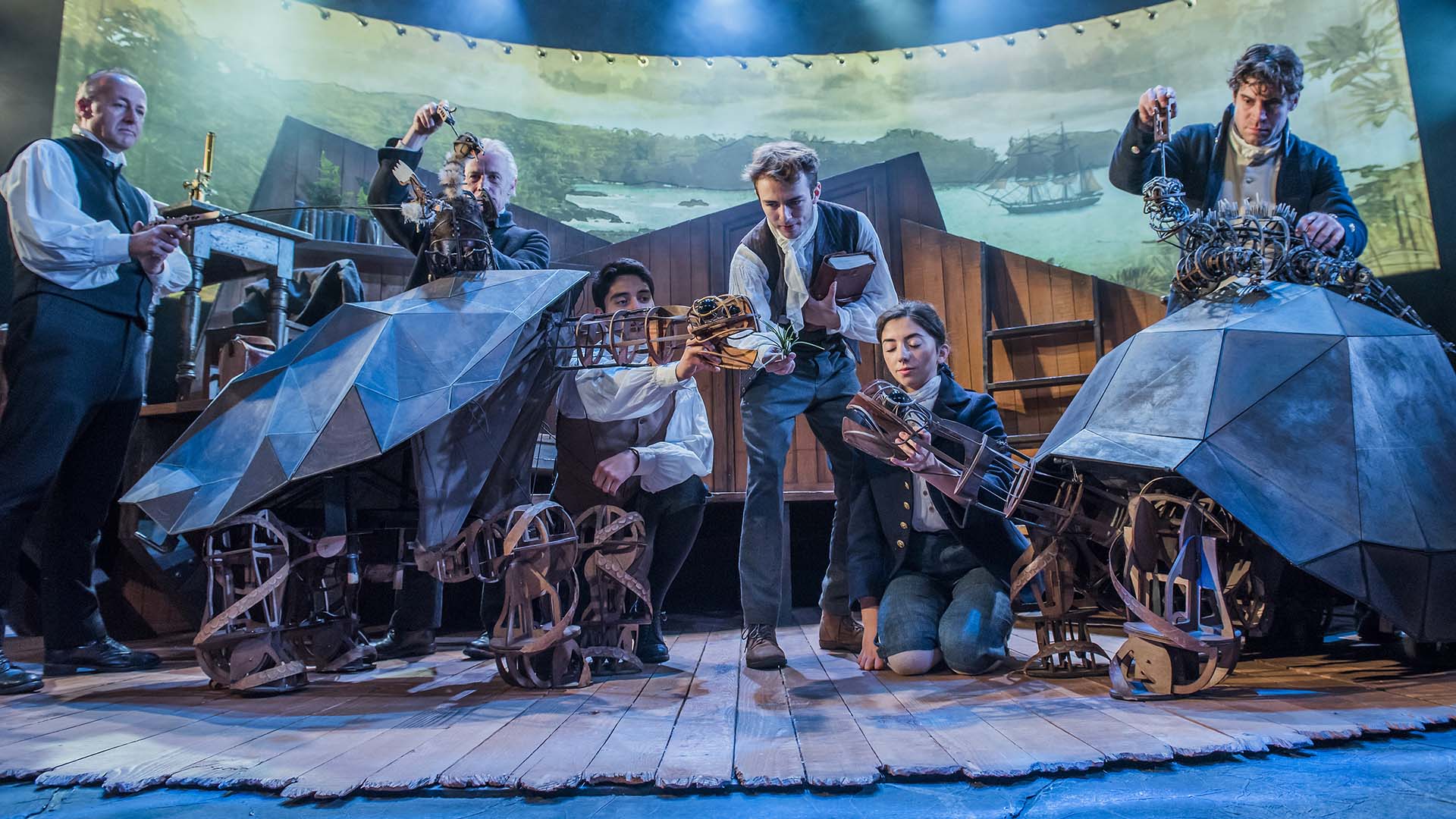
  6. The Wider Earth - Dead Puppet Society, Trish Wadley Production and Glass Half Full Productions, The Playhouse: Charles Darwin's voyage of biological and self discovery aboard HMS Beagle (begun in 1831) is stunningly portrayed in this outstanding production. The ensemble cast moves the story and the scenery forward with aplomb as offices, ships, jungles and downs are conjured up with projections and simple on-stage effects. Finches, giant Galapagos tortoises, fireflies, butterflies, iguanas, turtles, sharks, shoals of fish and a scene-stealing armadillo are represented by skeleton puppets with incredible personality. Tom Conroy leads the cast as the young Charles Darwin full of questioning wonder and wrestling with the science and/or faith dichotomy which still continues to trouble civilization. This is a thoroughly engaging and immersive theatrical experience: highly recommended as a spectacle for all ages to enjoy. 
The Wider Earth

Monday, 20 July 2020

Gently Hurling: After She Left


After She Left by Penelope Hanley
Impact Press
Pp. 337

This novel focusses on three generations of women and in particular the mother/ daughter relationship, but the characterisation is shadowy and they all blend into one. Penelope Hanley obviously has things that she wants to say about Irish immigrants, illegitimacy, art, Sydney, politics, and the Women’s Liberation Movement but the forced plot and the unnatural dialogue does her story a great disservice. The granddaughter, Keira, is trying to do a photo essay project on her grandmother (Deirdre Wild)’s art, but her mother, Maureen, resists saying much about her, creating a sense of mystery. It transpires she had an illegitimate child after an affair with a married man; this is not a scandal today and the consequences of it then aren’t covered well enough for it to merit the supposed shock.

There are ways of blending historical detail seamlessly into a novel, which Penelope Hanley ignores. She uses newspaper articles to fill in details, or clunky discussions about conscription and the Vietnam War; Whitlam’s speeches are transcribed. Neither does the author follow the advice given to every aspiring author of ‘show; don’t tell’. The description of Deirdre’s peripatetic lifestyle reads like a route map, and rather than trying to weave the effect of the artworks into the narrative, Hanley chooses to describe Deidre’s art in a mock newspaper review; a three-page long account of the paintings and the artistic style supposedly from the Sydney Morning Herald.

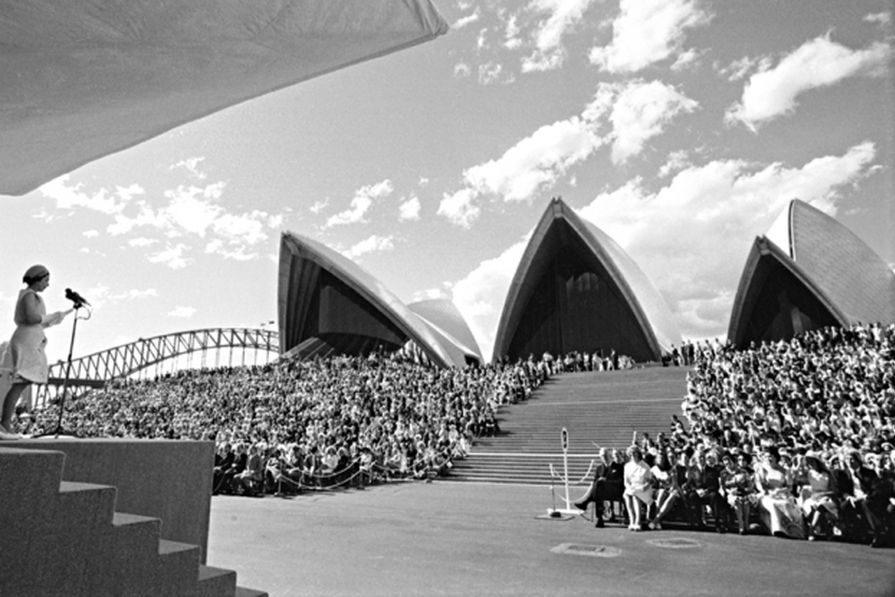
Queen Elizabeth II officially opening the Opera House on 20th October 1973
Characters discuss sexism in art, and the architecture and politics of the Opera House in a way which is simply unrealistic. Keira won’t go to the opening, because the author wants to shoehorn in her opposition to the monarchy. The frequent discussions about gender roles and how women do all of the “domestic stuff” even when they have a paid job too, are clearly important, but are presented as daughters and mothers lecturing each other with full speeches. It plays to the gallery so strongly I feel as though I’ve been hit over the head with a pop-up placard. Earnest debates about apathy and change read more like a social history textbook, and the writing is turgid as no noun is left with an adjective; no verb without an adverb. “When she let herself in, Lady, in a quick dash of woolly curls and wagging tail, hurled herself gently at Keira, barking ecstatically, her paws on Keira’s thighs.” – can a dash be anything but quick? Can one hurl gently?

Depth is implied through what the characters are reading, perhaps hoping their knowledge and ideas might be inferred; all books are mentioned from Iris Murdoch and Erica Jong to Germaine Greer and Simone de Beauvoir. Apparently constant mention of characters’ outfits is also a substitute for giving them any personality. This could have been an interesting tale but it is submerged in layers of overblown prose, excessive detail, stilted dialogue and indistinguishable characters.

Wednesday, 11 January 2017

Menacing McCabe

Hello and Goodbye by Patrick McCabe
(Quercus) Pp. 272


The two stories, Hello Mr Bones and Goodbye Mr Rat, share many similar themes and horror tropes. They can be read in either order and they meet in the middle, both literally and metaphorically.  Hello Mr Bones concerns a man who was abused as a boy and later becomes a Christian Brother, only to still be haunted by the undead spirit of his former tormentor. In Goodbye Mr Rat a woman takes the ashes of a man back to his hometown in Ireland to be met by a very unwelcoming committee who cannot forgive his perceived deception and execute their revenge on the hapless woman.

The tales are both narrated by the unhappy dead, who are pursuing and tormenting the living; they have selective, ‘convenient amnesia’ and are highly unreliable. Religion, priests and angels also feature prominently – these are Irish tales, after all. Naturally where there are angels, there is evil and abuse. In Goodbye Mr Rat, Beni Banikin is raised Amish; her mother warns her, “Beware of rogue angels”, and then she meets Gabriel King, former IRA soldier. But although they are heavy on religion, the stories are light on faith: bad things happen to good people for no reason. People act ‘out of character’ and are ‘influenced’ by an evil presence.

Childhood innocence is destroyed through physical abuse, and the perversion of innocent pop culture references. The image of the evil clown and the malignant puppet is equated with the torture of children and Ian Brady. From Sooty and Sweep to Toy Story, the puppets are pulled by strings of malevolence. In a nightmare relating to previous traumatic event, Beni sees grimacing figures as though in masks, “As the commedia dell’arte pictures began to form.”

Shannon Valentine escapes Ireland to live in Manchester in Hello Mr Bones, where he works as a teacher and tries to rebuild his life. Gabriel King heads to America where he lives until dying of prostate cancer in Goodbye Mr Rat. But one can never leave the past behind. Gabriel is warned that ‘A frightful fiend doth close behind him tread’. Poetry from Coleridge, Milton, and particularly Yeats runs through both narratives. 

In mid-life, Yeats became obsessed with Japanese Noh, a form of theatre which utilises a dialogic process between reality and illusion, the living and the dead, artifice and nature, and he adopted this style to reinterpret Celtic myths and ancient symbols. After her mentor explains how, “Noh plays often focus on ghosts seeking release from passionate sins or errors of judgement committed when living”, Beni writes a successful drama based on Yeats’ Noh plays.

The masks of Noh theatre are a recurring theme, and the sense of paranoia is pervasively chilling. Gabriel writes, “There indeed can be few sensations to compare with that of being watched.” Beni is watched by the people inside her head and those who break into her room; Valentine Shannon is watched by Balthazar Bowen, both when he was alive and now he is dead. Balthazar killed himself after Shannon informed on him, Gabriel turned informant, and there is a terror in coming forward and telling the truth.


McCabe is certainly macabre. These tales are as psychologically disturbing as his novel, Winterwood. It seems that he has an extremely bleak outlook on life, so it is calculated and creepy when he expresses, “What a magnificent place, I really have to say, this wondrous world in which we all wander.”

Wednesday, 8 June 2016

A Stranger Comes to Town


Astray by Emma Donoghue
(Picador)

Emma Donoghue’s collection of fifteen short stories is all about changing situations; leaving places and immigration. In her afterword she explains, “By long tradition, Irish writers emigrate. Not always, of course, not nowadays – but still, many of us fly the coop. It’s a small island, after all. It’s rare to find Irish writers who haven’t spent at least a few years abroad or who don’t pass half of their time at foreign universities.”

Whether it is the elephant handler in Man and Boy who has to take his charge from a zoo in England to a performing circus in America, or the woman in The Widow’s Cruse who pretends her husband is dead and presents his will, allowing her to come into a fortune and emigrate as a widow; all of these characters explore new worlds. 

All of these people, and they are usually women, remain outcasts in their new country. In Last Supper at Browns a white woman in Texas kills her abusive husband and goes on the run with her slave. In The Long Way Home a nomadic woman returns straying husbands to their wives who are trying to raise their families.

A man is tortured by paranoid hallucinations in The Lost Seed, and accuses others of lewd acts in a puritan community (Cape Cod 1639) in which he is despised. A boy becomes a ‘man’ in The Hunt when he is forced to rape a girl he has befriended as a casualty of war. Emma Donoghue explains the dual meaning of her collection: “Straying has always had a moral meaning as well as a geographical one, and the two are connected. If your ethical compass is formed by the place you grow up, which way will its needle swing when you’re far from home?”

All of the tales are based on true records, whether from diaries, letters, or newspaper cuttings, from the bunch of counterfeiters whose party is infiltrated by an undercover agent when they break into Lincoln’s tomb in The Body Swap, to the woman in The Gift who gives her child into what she thinks of as foster care until she can afford to support her, but meanwhile the family with whom she is placed adopt her as their own. No one wins in this heartbreaking situation, told through letters to the agency from both sides.

Emma Donoghue explores all these disparate tales and draws them together with themes of belonging, alienation and difference. Everyone is a traveller through life; we are all a little bit strange; and we all deserve compassion and to grant it to others. We may all be straying sheep, biblical or black, but hopefully there is a welcoming fold for all of us.

Friday, 21 March 2014

Friday Five: Not at home


It was St Patrick's Day earlier this week. If you live in an English-speaking country, you will have noticed by the plethora of plastic Paddies pouring into and stumbling out of fake Irish bars. It is romantic to claim Irish ancestry and to hark back to the Emerald Isle. Statistically, many more people have English heritage, and yet they don't bang on about it as it isn't trendy, and far fewer people know the date of England's patron saint Day. 

Don't get me wrong; there are a lot of true Eireann folk out there (or here) and they do indeed celebrate their national day, as well they should, but they are the ones who don't wear stupid hats exhorting strangers to kiss them by dint of their ethnicity, or put green food dye into everything. The population of Ireland is apparently 6.3 million, but there are an estimated 80 million people around the world with Irish forebears. In Australia, those of Irish descent are of a higher percentage of the population than in any other country.

Similarly, when hordes of uncouth Aussies drape themselves in flags while overseas and insist  that their country is the best in the world, one wonders why they are all working in pubs in London then. Brits abroad also have a terrible reputation for boorish behaviour. There seems to be a need to flee your own country and then assert its supposed superiority elsewhere. While this is admittedly highly annoying, it is worth remembering that many of these people were originally displaced due to horrific events such as famine, conflict, poverty and persecution.

When I became a New Zealand citizen, I did not have to renounce my British citizenship. I wouldn't have done that. Other nationalities (particularly those from African countries) did have to relinquish their birth nationality for their chosen abode. For them this must have been a huge deal as they stood solemnly in national dress and took an oath of fidelity, investing in their new future. 

I respect their decision and their dignity and can only imagine how hard it must be to leave a country irrevocably behind. I am forever grateful that I did not have to and I may travel the world with my citizenship unquestioned. I know that my decision to travel is based on choice rather than necessity, and I do not have to shout this from the rooftops.

At a co-ordination meeting on international migration in 2012, Jean Christophe Dumont delivered a paper entitled Global profile of diasporas. These figures relate to that paper.

5 Highest percentage rates of emigration in OECD countries:
  1. Jamaica (32.8%)
  2. Albania (26.5%)
  3. Trinidad & Tobago (23.3%)
  4. El Salvador (20.1%)
  5. Ireland (16.2%)
NB: Puerto Rico, although not in the OECD had a 30.2% rate of emigration, and New Zealand comes in at ninth with 12.2%