Showing posts with label travel. Show all posts

Saturday, 21 March 2020

COVID-19: Make Sure You're Connected

A lonely vapour trail
This morning I received a message from a friend in the UK - inviting me to drinks in their mum's kitchen, due to the fact that the country was closing all pubs and clubs, disrupting usual Friday night plans. It was a Zoom invitation, and I joined in. Due to the wonders of technology I could see friends on the other side of the world and I shared a drink with them (tea for me as it was 8am, my time). They had a beer or a wine and we all shared stories and a laugh while checking in on one another, with lots of support, and a healthy dose of ridicule; we're all originally British after, all. There were ten of us on-line, and it felt like old times.  

But these are modern times. As we cannot make physical contact with others, it is still really important to connect and chat - naturally there will be conversations about the virus, but there should also be talk of family events, books read, scents smelled... we need reality in our virtual lives. There are of course, many platforms we can use to stay connected, but many of us have been using Zoom for work meetings and conferences for some time; this step is just the natural progression for more casual communication. 

According to the New York Times, last week 600,000 people downloaded the app, its biggest day ever. While the stock market crashes, Zoom shares have soared this year, valuing the company at $29 billion. That's more than airline companies, even before they were grounded. We had planned a holiday to the UK and France in July - it certainly doesn't look like that will be happening now, as international travel is cancelled until further notice. 

I am sad, because I was looking forward to seeing my family and friends. I still can. Obviously it's not the same as having them in the room, but technology is very powerful if we use it for good. We are fortunate to live in these times. There is a silver lining. Let's stay connected. 
"If you make sure you're connected
The writing's on the wall
But if your mind's neglected,
Stumble you might fall." - Stereo MCs

Friday, 16 January 2015

Friday Five: Apps


We have got a long trip coming up. There is an awful lot of nothing in Australia and we are driving across about 1,000km of it (a mere fraction, I know). To help us on this journey we have a few apps for our listening pleasure. Since getting a phone which allows me to, I have listened to many of these diverting entertainments. These are my current favourites (blame my mother for the last one):

5 Apps on my Phone:
  1. Mark Kermode and Simon Mayo's Film Reviews
  2. Friday Night Comedy (The News Quiz/ The Now Show)
  3. Great Lives
  4. BBC Radio 3 Arts and Ideas: Free Thinking
  5. The Archers Omnibus

Friday, 21 March 2014

Friday Five: Not at home


It was St Patrick's Day earlier this week. If you live in an English-speaking country, you will have noticed by the plethora of plastic Paddies pouring into and stumbling out of fake Irish bars. It is romantic to claim Irish ancestry and to hark back to the Emerald Isle. Statistically, many more people have English heritage, and yet they don't bang on about it as it isn't trendy, and far fewer people know the date of England's patron saint Day. 

Don't get me wrong; there are a lot of true Eireann folk out there (or here) and they do indeed celebrate their national day, as well they should, but they are the ones who don't wear stupid hats exhorting strangers to kiss them by dint of their ethnicity, or put green food dye into everything. The population of Ireland is apparently 6.3 million, but there are an estimated 80 million people around the world with Irish forebears. In Australia, those of Irish descent are of a higher percentage of the population than in any other country.

Similarly, when hordes of uncouth Aussies drape themselves in flags while overseas and insist  that their country is the best in the world, one wonders why they are all working in pubs in London then. Brits abroad also have a terrible reputation for boorish behaviour. There seems to be a need to flee your own country and then assert its supposed superiority elsewhere. While this is admittedly highly annoying, it is worth remembering that many of these people were originally displaced due to horrific events such as famine, conflict, poverty and persecution.

When I became a New Zealand citizen, I did not have to renounce my British citizenship. I wouldn't have done that. Other nationalities (particularly those from African countries) did have to relinquish their birth nationality for their chosen abode. For them this must have been a huge deal as they stood solemnly in national dress and took an oath of fidelity, investing in their new future. 

I respect their decision and their dignity and can only imagine how hard it must be to leave a country irrevocably behind. I am forever grateful that I did not have to and I may travel the world with my citizenship unquestioned. I know that my decision to travel is based on choice rather than necessity, and I do not have to shout this from the rooftops.

At a co-ordination meeting on international migration in 2012, Jean Christophe Dumont delivered a paper entitled Global profile of diasporas. These figures relate to that paper.

5 Highest percentage rates of emigration in OECD countries:
  1. Jamaica (32.8%)
  2. Albania (26.5%)
  3. Trinidad & Tobago (23.3%)
  4. El Salvador (20.1%)
  5. Ireland (16.2%)
NB: Puerto Rico, although not in the OECD had a 30.2% rate of emigration, and New Zealand comes in at ninth with 12.2%

Friday, 14 March 2014

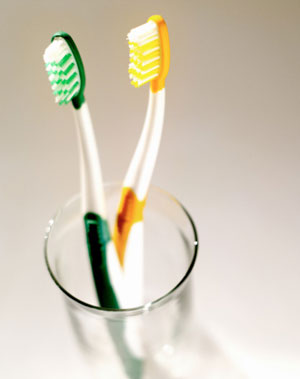
Tooth be told


When I am feeling poetical (and it happens), I find inspiration in all sorts of weird and wonderful things. It seems toothbrushes are enough to set me off on random trains of thought.

5 Toothbrush Musings:
  1. There are few sights that make me feel more lonely than a lone toothbrush. When Him Outdoors had true to go away on business, I missed him, obviously, but the look of my toothbrush in the mug all on its lonesome went near to breaking my heart!
  2. Following on from this, the toothbrush is such an intimate toiletry item, that one wouldn't share it with anyone. Would you? To lend someone your toothbrush is possibly the ultimate gesture of affection. Conversely, there is that 'classic joke' about a husband asking his wife how she controls her anger in arguments with him. When she replies that she cleans the toilet, he asks how that helps, and, yes, you guessed it, she says she uses his toothbrush. Now you see why there are inverted commas around the words 'classic' and 'joke'.
  3. I never thought I would fall victim to gender-specific marketing but, when I replaced my toothbrush with a blue one, I was confused because Him Outdoors was using a red (claret) one, and I returned to a pink (girly) shade. In my defence, I clean my teeth when I first get up, and I'm not a morning person.
  4. The humble hygiene implement is an absolute essential item. When people travel, even overnight, they tend to take a clean pair of underpants and a toothbrush. Chris Evans spawned an entire TV game show on this premise.
  5. It's a very simple way to win customer loyalty. I know people who flew with a certain airline because they gave them a miniature toothbrush with a tube of toothpaste in a small toiletries bag for long haul flights. How much can that have cost? When the airline scaled back on this tiny concession, these people switched airline. Their smiles might not be quite so bright now!

Tuesday, 18 February 2014

I think we're lost...


The Voyage by Murray Bail
Published by Text Publishing Company
Pp. 200

Murray Bail is a fan of the experimental novel. Some may call it modernism; others stream-of-consciousness; still others pretentious nonsense. The eponymous voyage is the journey taken by ship of Frank Delage on his return from Vienna to Sydney. He travels to Old Europe to seduce the musical community with his new piano, which has a radically clear sound, but he fails to generate much interest. An appallingly bad salesman or promoter, he blames others for his shortcomings even though he achieves an introduction to a modern composer through a rich and influential couple (the Schallas). He falls for the mother, Amalia, but returns to Sydney with the daughter, Elisabeth.

On the ship, Delage talks to the other passengers and hears their stories, while reminiscing about his own experiences. These stories overlap and interweave, often in the space of a sentence, as when he journeys from the boat to the von Schalla drawing room in his thoughts which are mirrored in the prose. “Wherever he looked there was another wave of different shape, different size, lengths of dissolving foam drawing the eye, the pink sofa obscenely dented with buttons he couldn't avoid, striped maroon armchairs by the fireplace...” An absence of chapters, paragraphs that extend over several pages, and constant switches in time can become wearisome.

The trip from the New World to the Old and back again proves ultimately meaningless, as his influence is superficial and his piano sinks without trace. “The ship continued pushing across the surface, a path of creamy-white in its wake, which was almost immediately erased, leaving no sign – an easy mockery of the ship’s mighty engines and propellers.” He believes he is at a disadvantage in Vienna due to his piano being “nicotine brown” in the land of tradition where all the other pianos are black. “It was like his cousins from the sticks the year they’d gate-crashed a family wedding in Sydney, wearing loud neckties.” He thinks he will, 
“paint a scene of native trees, eucalypts, on his piano which would rear up into a forest when the lid was raised (notes flitting like birds through the smooth trunks?). If not to everybody’s taste it would at least declare where it was manufactured, a graphic reminder of the differences between his piano and the antiquated, established pianos, he needed as much help as he could get, from anywhere.”
Delage imagines that the problem is with Vienna rather than his piano and he wonders frequently why he didn't try Berlin instead. He accuses Vienna of being stuffy and resistant to progress. “I don’t know what’s the matter with the people in this place. Have their imaginations come to a grinding halt? Fossilised.” It’s not that he prefers anywhere else: he is equally scathing of Perth, “which has a history of visitors setting foot on the place and immediately wanting to turn around, a reaction which continues to this day” and Sydney, where he attacks the architecture of the iconic Opera House; “an overrated piece of architecture, if ever there was, a sacred building in Sydney, in all of Australia, based on a white handkerchief, in the glare of daylight it shouts out ‘over-emphasis’, and therefore ‘provincial’, anything to catch attention, softer, more complex, thoughtful at night, and the acoustics are terrible.”

In fact, it is difficult to find anything that Delage does like in this whingeing barrage of bitterness. Everything is linked in his mind, which flits about with the attention span of a flea. “His life had been a confusion, he found it difficult to express his views, let alone hold onto them, information and adjustments came in from all directions.” He has an opinion on everything, although it is rarely a positive one. From central heating, which has caused to families to become dispersed, to diplomats – “Mediocre people like nothing better than to work in embassies. Their most accomplished skills are pouring cocktails and stamping passports” – he barely has a good word to say about anyone or anything. He even criticises smiles, which are insincere and “have no meaning”.


He dislikes cities – “There is always something wrong with a city, your only hope is to choose one with the smallest number of faults” – and the countryside equally. “The Australian countryside actively discouraged walking of any kind, except as an endurance test, the example set by the early explorers who mostly died of thirst or exhaustion, some were speared, the difficulty being the heat, also the insects, the drooping khaki trees and bushes hardly help.” The heat is harmful to his piano, “In hot countries, the weather favours drums and single-string instruments, and their repetitious melancholy, a grand piano would require tuning every other day”, although he reveals rare pleasure in the cessation of rain, “which was a precise moment he always liked. The many different kinds of grey, of black, patches of grey-black reflected, laid out on and at angles to the streets, rectangles of it tilted and glistened, glass had turned as dark as mirrors, mixed with what was rounded.”

The only conclusion to be drawn is that Bail fears he has been treated unfairly by critics, as he reserves his strongest vitriol for this profession. “Critics have an absurd sense of their own superiority... they suffer from a constant psychological condition which constantly prompts them to be critical – nothing can be done about it, a critic begins as a failure.” He evidently thinks he is an expert novelist. He (or his central character; the constant asides are inseparable from authorial intrusion) claims that modern novels display a lack of invention and are “more and more an author’s reaction to nearby events, a display of true feeling.” He tells the reader, 
“We should not be disapproving of repetition. Each day we see the same things, eyes, noses and legs, the trees and clouds, and each day we repeat the same words. And we never stop doing the same things over and over again, every day, sleeping, cleaning our teeth, shaking hands, drinking tea, sitting on a chair, which give stability to our lives. It is necessary.”
It may be necessary, but it isn't necessarily interesting. With his interconnections, he sees music as an analogy for literature – exactly what he accuses critics of doing. “All art, he said, including the playing of pianos, was imperfect... As listeners, we actually want an imperfect result. It is human, and therefore closer to human understanding. Otherwise, it is beyond understanding.” Not so. I understand this; I just don’t like it.

Friday, 24 October 2008

Travels and Tribulations

LAX is a nightmare as usual. Why do you have to pick up the bags anyway? If they don’t enter the terminal, they can’t do any harm; they’re checked right through! We were supposed to be able to check the bags through transfer, but the bike is too big and we have to take it to our airline to check it back in – no time; spectacularly unhelpful staff; running around changing terminals; hot and sweaty; no signage or information; lengthy queues. I am checked for explosives and the woman in the row ahead on the flight is sick – all in all, a terrible experience.

Frankfurt airport, by contrast, is clean, bright, grey, efficient and tidy – everything you would expect from Germany. There are glamorous shops selling beer steins and Steiff bears (a lion on wheels will set you back a mere 700 euros). I have a laugenbrezen mit sonnenblumenkernen (sunflower seed Bavarian soft pretzel) and Him Outdoors a nusshornschen (praline croissant). Suddenly I feel grubby and dowdy around all these immaculately dressed, shod and coiffured Europeans. Men cycle about the terminal on sit-up-and-beg bikes. A bus takes us to the plane and the captain announces ‘Take of in 30 seconds’ and we do.

How wonderful to be surrounded by foreign accents and languages – immersed in a continental sea of French, German and Italian, the sharp tones of Kiwi and American are gradually fading away. On the train from Bologna, racing through the countryside it is dry and flat with rolling hills in the distance. Blue sky with some fluffy white clouds. Rows of overgrown vines and olive trees interspersed with tumbledown farmhouses and quintessential villas – dots of cream, faded pink or golden yellow with genteel green or brown wooden shutters and terracotta tiled roofs.

The boys on the train have white shirts tucked into jeans and soulful brown eyes. Cell phones ring and are answered with rapid fire Italian – ‘Ok, ok, ciao Mama.’ Not having validated our tickets at the station we are reprimanded by the stern conductor who writes an essay on our tickets while the doe-eyed boy looks serene. The women are in tight white trousers, high heels, lots of gold jewellery and boxy white leather jackets, looking immaculate and so clean – how do they not get dirty?

We walk the kilometre from the station to our hotel through the promenading throng. Families are out on post-prandial perambulations; mother pushing pram and father with infant atop his shoulders. Folk weave crazily on bicycles along the pavement, calling out ‘buonjiorno’ and ringing their bell. Men stroll casually with smouldering eyes and cigarettes; women in killer heels and wicked make-up totter along the cobblestones with miniature dogs – tiny terriers, poodles, Pomeranians and one with three pugs, each with an individual plastic bag tied to its leash in the shape of a bow: a stylish poop collector Italian style.

At the Grand Hotel, Rimini the fountains are lit and the tables are spread with white linen cloths and glassware. There is some kind of car rally and the square is full of Lamborghinis, Porsches, MGs and Jaguars – all vintage models and some looking as though they have come directly from the Wacky Races. They are stunning machines and spectators admire and murmur as the smell of leaded petrol hangs in the air.