Showing posts with label changelings. Show all posts

Tuesday, 18 April 2023

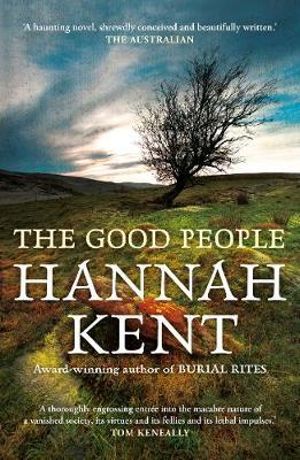
Grimly Compelling: The Good People


The Good People by Hannah Kent
Picador
Pp. 380

Set in 1825 in South-West Ireland, this novel explores liminal spaces and inexplicable things. In this world many follow the ‘old’ beliefs that children (and adults) could be stolen (swept) by the fairies to be replaced by changelings. Folklore and superstition are important here; herbs and flowers have healing and harmful powers; each chapter is named for one and begins with a botanical pen and ink drawing.

Nóra is caring for her daughter’s child, Micheál, after her own daughter has died. The boy has a disability which prevents him from speaking or walking and, after her husband Martin’s mysterious death at a crossroads (a place of magic), rumours abound that something may be not quite right with child. Nóra hires a servant girl, Mary, to help her to care for Micheál, and when Mary hears gossip from the women at the well that Micheál may be a changeling, she and Nóra enlist the help of Nance, the wise woman in the woods, who is believed to consort with the fairy folk, or the Good People, as they are also known.
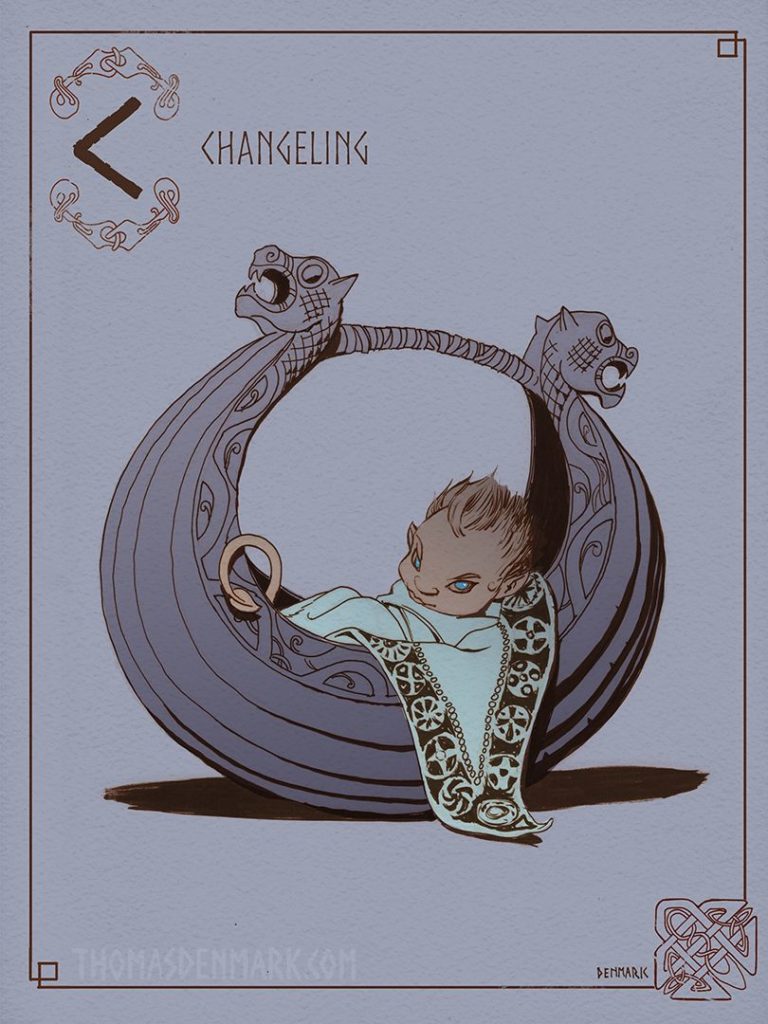
This is a traditional battle between female and male energy, where women with knowledge are punished as witches, while men and priests hold all the power. There are glimpses of domestic violence and mental and physical cruelty in the community as the women cower to their husbands. Nóra is isolated in this society and, when there is cold and hunger, she is the last to be considered, leaving her to make wild choices.

We first meet Nance when she turns up at Martin’s wake and begins keening. The new priest, Father Healy, takes an instant dislike to Nance and lectures, against “the old ways that keep Irishmen at the bottom of the pile. ’Tis a new age for Ireland and for the Catholic Church. We’re to be paying our pennies to the Catholic campaign, not to unholy keeners.” Depending on who’s telling the story, Nance is either the “handy woman” or the “interfering biddy” who believes in the potency of the old ways and receives several visitors “mainly the men... who did not trust the doctor or could not afford his labelled tinctures” to whom she supplies herbal remedies.

Brimming with Hardy-esque pathetic fallacy, the novel credits the seasons with paramount importance in an agricultural community. Life is cyclical in its natural rhythms: Nóra and Nance both believe that all is connected in ways the Catholic Church doesn’t encompass. Under the instruction of Nance and with the reluctant assistance of Mary, Nóra tries to return the changeling child to the fairy world by submerging it in the river.
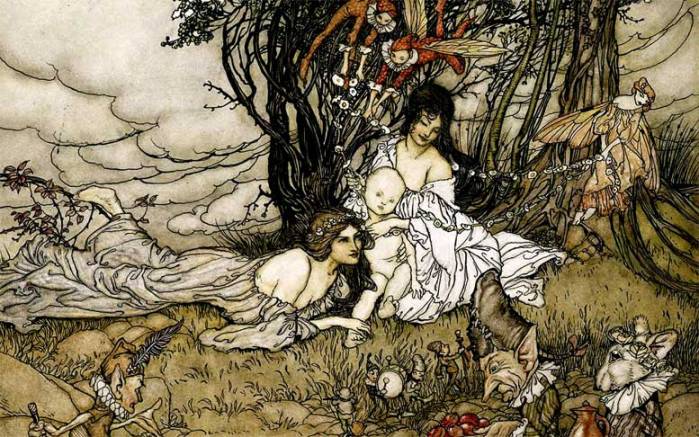
The novel is based on a true story of infanticide in 1826 where an old woman of advanced years known as Anne/Nance Roche was indicted for the wilful murder of Michael Kelliher/Leahy, who had been drowned in the river Flesk. In this version, the final chapters take place in a courtroom, which opens a completely new world, and exacerbates the claustrophobic nature of the valley community. The characters are trapped in crucible of superstition, poverty and geography, with no way out except for torturous ordeals of fire and water.

Hannah Kent writes a grim and atmospheric tale with a compelling style. Both deeply sad and historically interesting there is a lot to appreciate, preferably when read by a warm fire with a tot of strong drink to keep out the cold weather and the bleak spirits.

Friday, 5 August 2022

Friday Five: Books Read in July

By sheer coincidence it appears that I have read five books in July, and that red features quite prominently in the covers. Here, then, are brief overviews (full reviews to follow later).

5 Books Read in July:
  1. To Calais in Ordinary Time by James Meek (Canongate) - Mixing elements of The Canterbury Tales and Shakespearean comedy, this story takes place in South-West England in 1348 as a group of bowmen travel through the country from Outen Green in Gloucestershire to Calais to fight the French, while the plague is advancing steadily towards them. As the novel was published in 2019 all the reviewers drew contemporary parallels with Brexit and the existentialist threat of the climate crisis, but anyone now would automatically think of the Covid pandemic. The novel is narrated from three different people’s perspectives, and the voices are clearly different - there is much merit in juxtaposing the courtly language and behaviour of French romance with the idioms and earthy attitudes of the English soldiers, and the novel was unsurprisingly on many newspapers' 'Books of the year' lists. 
  2. An Anonymous Girl by Greer Hendricks & Sarah Pekkanen (Picador) - this is one of those currently fashionable psychological thrillers about women behaving badly. New York psychologist, Dr Shields conducts an experiment on morality and ethics which make-up artist, Jessica wangles her way onto - fraudulently taking the place of the 'real' subject. It soon transpires that all is not as it seems (surprise!) and that everyone is manipulating each other. The two characters are meant to be written individually but they sound exactly the same, apart from one of them refers to 'you' throughout, which soon becomes intensely irritating. We are meant to find the vapid minutiae of their existence fascinating - from how they dress to what they eat - and it won't be long before someone snaps up the rights and makes another tediously glib and glossy film.  
  3. Breath: The New Science of a Lost Art by James Nestor (Riverhead Books) - Every living body breathes, but it turns out that half of us are doing it wrongly. Ancient humans and Eastern mystics knew the correct methods, but modern lifestyles have ignored them leading to multiple health issues including tooth decay, sleep apnoea, anxiety, asthma, and the preponderance of choking. It may be skewed towards anecdotes and storytelling rather than academia and science (think popular American documentary podcast) but there's enough insight to challenge conventional wisdom and make the case for nasal breathing over mouth breathing.
  4. The Good People by Hannah Kent (Picador)Set in 1825 in South-West rural Ireland, this novel explores liminal spaces and inexplicable things: “The strange hinges of the world, the thresholds between what was known and all that lay beyond”. In this world many follow the ‘old’ beliefs that children (and adults) could be stolen (swept) by the fairies to be replaced by changelings. It is dripping with pathetic fallacy as the female power (herbs and agricultural lore represented by the Wise Woman) is challenged by that of the male (a priest with punishments and preaching of sin). A great one for book clubs, it gives rise to much discussion, but - as to be expected - things are pretty grim. 
  5. Briar Rose: A Novel of the Holocaust by Jane Yolen (Tor) - Jane Yolen has form for taking mythical legends and fairy stories, and twisting them into contemporary tales with relevance and meaning. In this YA novel of a young woman, Becca, trying to find out more about her grandmother's mysterious past; the castle is a concentration camp; the sleeping beauty is gassed; and the prince's kiss is the breath of life. That's not a spoiler, because all of that is obvious from the title, but Yolen believes it is not the past that makes us who we are, but the way we tell our histories. Every other chapter returns to the recounting of the familiar fairy tale interspersed by Becca's explorations into the unknown; a way in which ritual can help us comprehend the horrific and inexplicable truth.