Showing posts with label Charles Darwin. Show all posts

Wednesday, 17 May 2023

Debunking the Myths: Inferior


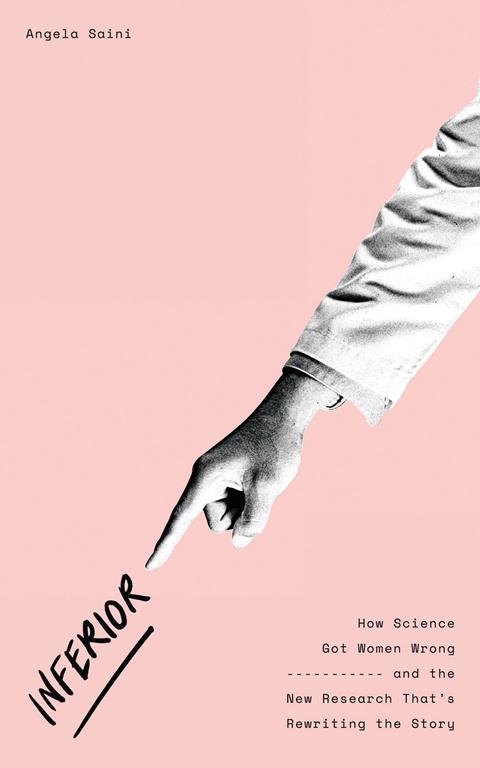
Inferior by Angela Saini
4th Estate
Pp. 237

Angela Saini contends that the so-called science which has labelled women as ‘the weaker sex’ is biased and influenced by politics, history, and social culture. Sick of people (men) telling her that women are inferior to men based on dubious scientific data, she wrote this book in an attempt, “not to lose control but to have at hand some hard facts and a history to explain them”. She challenges myths and provides explanations as to why some assumptions were made in the first place. Even though science is perceived to be neutral, women have historically been excluded from research, experiments, and theories. “Women are so grossly under-represented in modern science because, for most of history, they have been treated as intellectual inferiors and deliberately excluded from it.”

Darwin in his The Descent of Man believed that women were inferior because he couldn’t see any women doing the same intellectual things. “The evidence appeared to be all around him. Leading writers, artists and scientists were almost all men. He assumed that this inequality reflected a biological fact.” In evolutionary terms, drawing assumptions about women’s abilities from the way they happened to be treated by society at the moment is narrow-minded and dangerous.

Those ‘Men are from Mars; Women from Venus’ type ‘theories’ remain popular because anything that claims to explore sex differences is highly sought-after by media outlets looking for clickbait articles. People who counter that differences are not wholly due to genetics are often labelled sex difference deniers, in a way that would never be introduced in debates about race or colour; not since the 1950s, anyway. Sexual selection theories which were proven to be incorrect and unscientific, however, are making a popular comeback.

People are messy and come with preconceptions and prejudices. Saini argues that it is impossible not to politicise scientific data and that neuroscience has profound repercussions for how people see themselves. Humans are bound to pick up attitudes and adopt behaviours based on societal expectations rather than independent biological factors or sex chromosomes. We are also able to change and adapt as recent research into neuroplasticity confirms that the brain isn’t set in stone in childhood but is in fact mouldable throughout life.

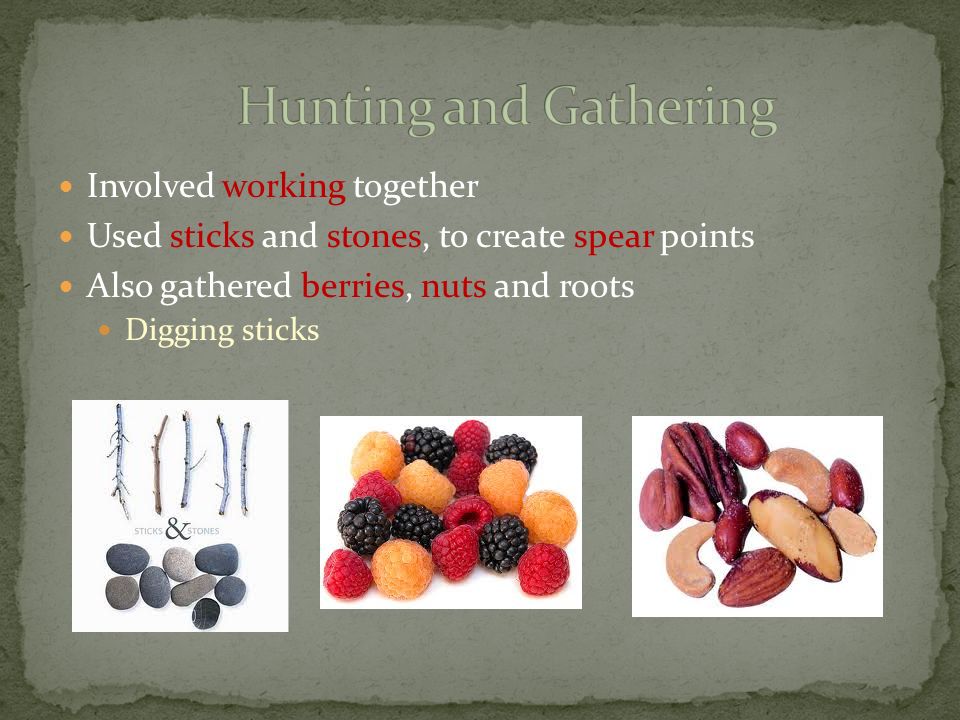
Saini also debunks several myths, such as the one that women are better at multi-tasking than men. The paper that was published on this subject, actually never reported this claim, but the cultural and gender stereotypes were stressed in the press release. A further belief is that in previous cultures men went hunting while women gathered, making the males dominant. Research by Bion Griffin and Agnes Estioko-Griffin into the Nanadukan Agta refutes this assumption, suggesting that males did some tasks and females did others. “By and large people did whatever they wanted to do. There was no sphere of work that was exclusively male or female – except perhaps the killing of other people.  Women would stay back when groups of men went out on raids of their enemies”.

Hunting was not the primary source of nutrition anyway, so the group that hunted did not have the most crucial task. While studying the !Kung hunter-gatherers in southern Africa in 1979, Richard Borshay Lee noted that women’s gathering provided as much as two-thirds of food in the group’s diet, so gathering was arguably a more important source of calories than hunting. It is also likely that the first tools were digging sticks and containers for the food, which, being made from wood, skin or fibre, would break down and disappear over time leaving no record, unlike the hard-wearing stone tools that archaeologists have assumed were used for hunting. “This is one reason that women’s invention, and consequently women themselves, have been neglected by evolutionary researchers.” Many of these myths began because they fitted the dominant – male – narrative that positioned women as inferior.
Humans are not automatically the same as other animals, and much of our behaviour is more likely due to societal pressure than biological expression. Women are not inferior, and the science that seeks to suggest this is the case is inevitably flawed. It is time for this to be recognised and stopped. Sarah Hrdy argues, “A feminist is just someone who advocates for equal opportunities for both sexes. In other words, it’s being democratic. And we’re all feminists, or you should be ashamed not to be.” This is the science we should all follow.

Friday, 18 March 2022

Friday Five: My Week in Theatre

This has been a busy week. Theatres are back and I'm thrilled! It does mean that all the shows are coming along at once, so here are some brief notes on the things I have seen in the last six days.

  1. In Their Footsteps - Ashley Adelman and Infinite Variety Productions, Courtyard Studio: The blurb for this play reads, ‘Based on the true accounts of five extraordinary women, In Their Footsteps explores the experiences of women working in war zones, their struggles to be recognised heroes, their loss of faith, and the friendships they forget in the face of trauma. More than anything, it reminds us of the histories we hear… and importantly, the ones we don’t.’ The five women are engaging and sympathetic with their verbatim accounts of their service in different capacities from nursing to morale boosting (donut dollies) to intelligence work and librarians. Even though the accents are greatly variable (I'm pretty sure one of them isn't even trying), it is still poignant and powerful. We will remember them.
  2. Fly By Night - ANU Musical Theatre Collective, Kambri Drama Theatre: I’ve never even heard of it before, but, due to a friends' involvement, I went along to see it. The musical is set around the incident of the mass black-out on the northeast of the USA and Canada in 1965. The structure is based on a narrator who makes several false starts with the story and skips back and forth through time to tell the tale of a love triangle within a circular orbit. It's quite cute and charming and achingly self-aware with songs about becoming a star... or not. Of course I'm biased but my friend (Samuel Farr) was superb and his number, Cecily Smith, about how he met his dear departed wife is a highlight of the show. "Life is not the things that we do; it's who we're doing them with."
  3. Keating! - Queanbeyan Players, Belconnen Community Theatre: So, I don't particularly like musicals and I don't know a lot about Australian politics, having moved here in 2012 (all I knew about Paul Keating was that he 'inappropriately' touched the Queen in 1992), so I'm probably not the target market for this. But I loved it. Sarah Hull directs a deceptively simple character-driven cabaret-style show with each performer hitting all the right notes, and my goodness, I could even hear all the words, which is rare enough in a play these days, let alone a musical. From rock to rap, jazz to hip-hop and tango to calypso, the band plays to perfection and the genres and styles are all delivered with respect and ridicule in equal measure. Steven O'Mara oozes charisma and miasma as the titular role, and all the rest of the cast play the supporting and undermining ensemble with chutzpah and panache. This is bloody brilliant!
  4. Swansong - Canberra Theatre Centre, Courtyard Studio: Andre de Vanny delivers a powerful performance as Austin 'Occi' Byrne, the illegitimate child of a single mother in the Catholic west of 1960s Ireland. The one-man show draws the audience into his world of explosive emotion and violence. Written by Conor McDermottroe and directed by Greg Carroll, the drama reeks of misplaced testosterone. It is deeply uncomfortable as the audience is encouraged to side with Occi, a man who stalks and punches women, and callously commits murder because he doesn't like a name he is called. The brutal bravado is tempered with charm, humour, and severe undiagnosed mental health issues. Andre de Vanny is excellent at telling his story, but it's not one that should have any excuses.
  5. Ruthless! - Echo Theatre Company, The Q, Queanbeyan: What a delight to see a musical featuring six strong roles for women, who each get to shine and compete for the limelight. Eight-year-old Tina Denmark (Jessy Heath) has talent and she is desperate to use it. Her mother Judy (Jenna Roberts) is horrified when she discovers the lengths to which her daughter will go to secure a part in the school play (aided by talent-spotter Sylvia St. Croix played by Dee Farnell), until she discovers it's not just a part; it's the lead! Director Jordan Best brings out the high camp and stereotypical bitchiness of musical theatre performance in this dark comedy homage which is as fun as it is twisted. The vibrant set design by Ian Croker makes us feel like we're in a 1950/60s pop art/ TV sitcom, but there is nothing canned about this laughter. The vocals are stunning; the choreography humorously self-aware; the harmonies are on point; and the Bechdel Test is passed with flying colours.
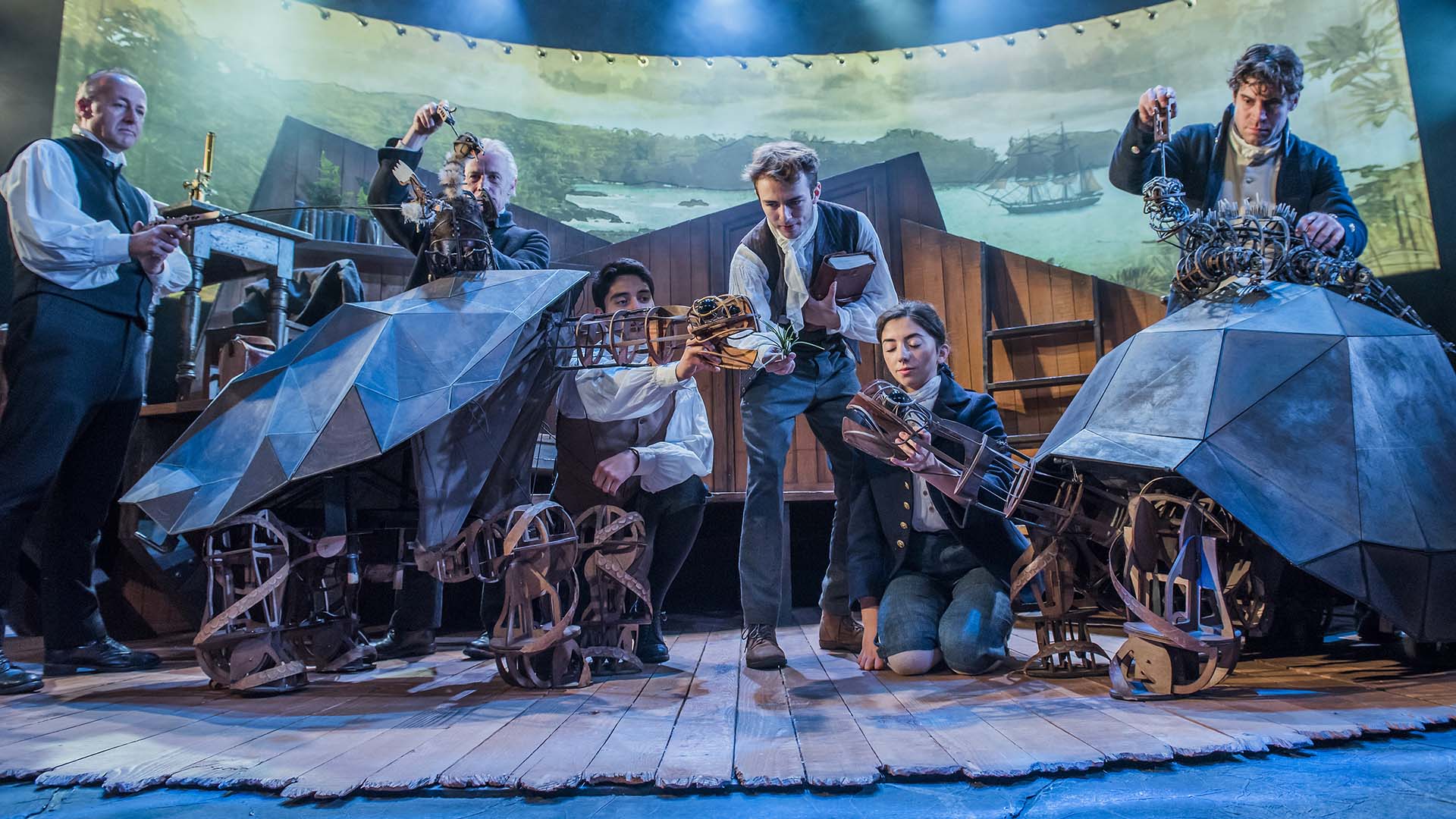
  6. The Wider Earth - Dead Puppet Society, Trish Wadley Production and Glass Half Full Productions, The Playhouse: Charles Darwin's voyage of biological and self discovery aboard HMS Beagle (begun in 1831) is stunningly portrayed in this outstanding production. The ensemble cast moves the story and the scenery forward with aplomb as offices, ships, jungles and downs are conjured up with projections and simple on-stage effects. Finches, giant Galapagos tortoises, fireflies, butterflies, iguanas, turtles, sharks, shoals of fish and a scene-stealing armadillo are represented by skeleton puppets with incredible personality. Tom Conroy leads the cast as the young Charles Darwin full of questioning wonder and wrestling with the science and/or faith dichotomy which still continues to trouble civilization. This is a thoroughly engaging and immersive theatrical experience: highly recommended as a spectacle for all ages to enjoy. 
The Wider Earth

Wednesday, 10 February 2010

Creation

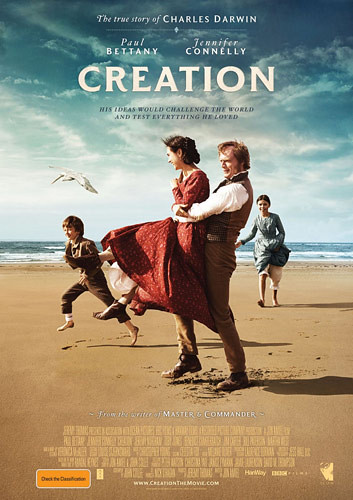
There was a time when no one believed in the Theory of Evolution. Then there was Darwin and On the Origin of Species and everyone did. Now some people refute evidence that the world wasn’t created in seven days. According to Creation, 150 years ago a nine-year-old child was made to kneel in rock salt for defending the existence of dinosaurs. She was Annie, the favourite, and short-lived, child of Charles Darwin.

Creation tells the story of a man’s personal and familial battle – to confirm what he has proven; he must turn his back on all his wife believes. Paul Bettany embodies Darwin’s inner struggle beautifully with nuances of insanity as he wrestles with the big issues. Science is at war with religion and, as the obnoxiously vituperative Huxley (a splendid Toby Jones) tells him, “You have killed God”.

He does not slash through the framework of society glibly and in fact prevaricates for a couple of decades before finishing his earth-shattering work. He knows that, “Society is bound together with religious beliefs – it’s an improbable form of barque, but it floats.” As he fidgets through grace before meals and leaves a church in a middle of a sermon by his friend Reverend Innes (a firm but gentle Jeremy Northam), we see the gradual eroding of his religion in a tale told through flashbacks and fast forwards. “The loss of faith is a slow process like the raising of continents over thousands of years.”

He questions the rational of a vindictive divinity. Thousands die that only a few may live – what sort of a plan is that? Innes can only answer, “It is not my duty to speculate on the will of God.” Just as there are no atheists in the trenches, Darwin postpones publishing because, although he has proved the triumph of science, he is still afraid to risk his mortal soul. When his daughter’s life hangs in the balance (it is to be supposed that she died from scarlet fever), he is prepared to bargain with God; if you let my child live...

This all sounds rather weighty and cerebral, yet Bettany’s Darwin is warm and vivacious. Whether playing with Jenny the orang-utan, explaining to his daughter in explicit detail how light can make a picture as she fusses in the photographer’s studio, or waiting nervously for his religious wife to finish reading his book and pronounce her verdict, he is eminently human albeit not particularly Victorian.

If there is a heaven and hell, he may be separated from his wife for eternity. And he loves his wife as he loves his children. Jennifer Connelly plays Emma Darwin with unassuming grace and strength. Their chemistry is clear through looks and gestures that belie the oft-portrayed repressed emotions of the era. She says of her husband, “He’s like a barnacle and if you prise him from his rock you’ll kill him.” It appears that she is this rock.

It transpires that Darwin and his wife are first cousins and both of them feel guilt over their daughter, Annie’s death. He worries that they never should have married and that their blood is too close. He thought they were breeding the perfect child but now fears that they endowed her with the weakness that killed her. Amid the current debate about designer babies, it is opportune of him to muse, “Nature selects for survival; humans for appearance.”

There is rather an obvious scene in a pub where two pigeon fanciers explain to him that they are breeding their birds to enhance their attributes, although there are inevitable casualties en route. Is he guilty of treating living things as experiments – even his children? In one of his hallucinations, the dead embryos captured in specimen-jars come horrifically alive in his study. In a fit of fevered rage he releases all the doves from their cote, disgusted by his genetic engineering. His imagination becomes increasingly obsessed with Annie (Martha West) who continues to dominate his thoughts after her death.

Great cinematography abounds from the opening credits (cells; sperm; fish; birds; butterflies; wildebeest) to the sped-up cycle of life and the seasonal changes depicting passage of time. The English countryside is stunning with its woodland mammals and rock pool inhabitants. Nature is instructive and it is also a battlefield. In a scene straight out of a BBC documentary, a fox catches a rabbit much to the dismay of the youngest Darwin girl. The moral is left to Annie to explain, “The fox has to eat the rabbit or its babies will die – that’s the balance of things.”

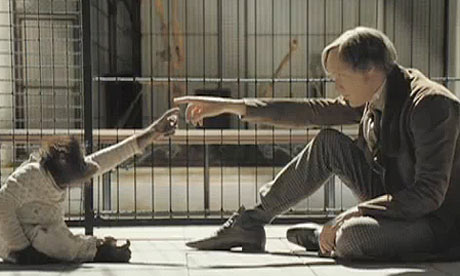
And above all, this is a story. Darwin regales his children with tales of adventure – how many kids can rely on their father’s personal exploits of climbing the Andes, being on a ship struck by St Elmo’s fire, earthquakes and giant sloths? The backdrop is an achingly beautiful string quartet or the passionate piano playing of Emma. The beautiful descriptions come from a voice over of diaries and letters weaving a rich tapestry of light and dark threads.

Nothing is black and white. Can you maintain a belief in an abstract theory when it threatens you personally? How far can you have a difference of opinion and still be friends? How much should you leave to your children and what do you owe them? The film contends that we are in a constant state of flux – we have been and are being evolved – and that this is not the end. The future (stem-cell research; cloning; religious fundamentalism and the latest God delusion) is as yet unwritten.

It is fitting that the film is based on the book, Annie’s Box by Randal Keynes, a great-great-grandson of Darwin himself. As Charles and Emma separate and reunite, their harmony and entropy echoes the opening credits. Side-by-side and hand-and-hand they appear two-by-two in a manner that will satisfy followers of Genesis and genetics alike.