Showing posts with label Radio. Show all posts

Friday, 22 May 2026

Friday Five: The shows keep on coming

  1. The Dear Departed: Live Radio Play - Lexi Sekuless Productions and ArtSound, The Mill Theatre: A fun hour or so spent in the presence of some fine actors going through their paces and clearly enjoying themselves. The play itself is a fairly innocuous drama from 1908 by Stanley Houghton which Bart Meehan has adapted into something more immediately palatable. A couple of sisters, Amelia and Elizabeth (Andrea Close and Helen McFarlane) and their extended family of husbands and child (Richard Manning, Sarah Hartley and Timmy Sekuless), squabble over the last will and testament of their dear deaprted father, until they realise that he (Graeme Rhodes) is not dead a at all. Although they do their own foley and commit to the characterisation, I question whether performing a rehearsed reading is a little self-indulgent. Don't get me wrong, all these people are charming actors and delightful company, but I can't help questioning whether it is more entertaining for the actors than the audience.
  2. No Exit - Mockingbird Too, The Studio, Belconnen Arts Centre: The famous quote, "Hell is other people" is the premise of this play, except it was written by Jean-Paul Sartre, so it is actually, "L'enfer, c'est les autres". The originial title is Huis clos, which is the French equivalent of the legal term, in camera, itself Latin for 'in a chamber' or a private discussion behind closed doors. These levels of translation and interpretation are relevant to this existentialist drama first produced in 1944, in which three people, Garcin (Eli Narev), Inez (Victoria Tyrell Dixon) and Estelle (Phoebe Chua) are trapped together in the afterlife. They imagine they will face torture or flames of damnation but the Valet (played with goblin-like glee by Peter Fock) who guides them to their room, assures them that while there is none of that, they can never close their eyes. While physically this does indeed sound like torment, metaphorically they are forced to see everything, including themselves through others' eyes and without filters. Initially they attempt not to speak to each other, but they then decide to explain why and how they died, before falling back upon the realisation that they don't like each other and perhaps silence might be the best policy. Being as we know that hell is eternal, there is no dramtic intrigue in the expectation of a denoument which compromises the pacing of the play. The actors try their best to enliven the situation and Victoria Tyrell Dixon in particular displays her range, from anger to seduction and back through desparation and ennui, as well as she can. The other two are less successful and once the premise is set, the action doesn't really take us anywhere - perhaps that is the true meaning of hell.    
  3. Thom Pain (based on nothing) by Will Eno - Lexi Sekuless Production and Joey Minogue, The Mill Theatre: Do you like those stream of consciousness comedians (usually American - usually New York) who seem to fall apart in front of your eyes when performing in a club? Or do they make you cringe as you have no option but to sit and endure their manic inner monologue, wondering if there are actually any jokes in this set at all? If the former, this is the play for you, as Joey Minogue as Thom Pain performs an hour of deep introspection, musing on seemingly random subjects including the death of his childhood dog, which informs his adolescent trauma, while being constantly distracted by his environment. It's a rambling monolgue delivered as therapy, without inviting the audience to do anything but witness a private meditation. The performace is solid, but the show is unengaging.
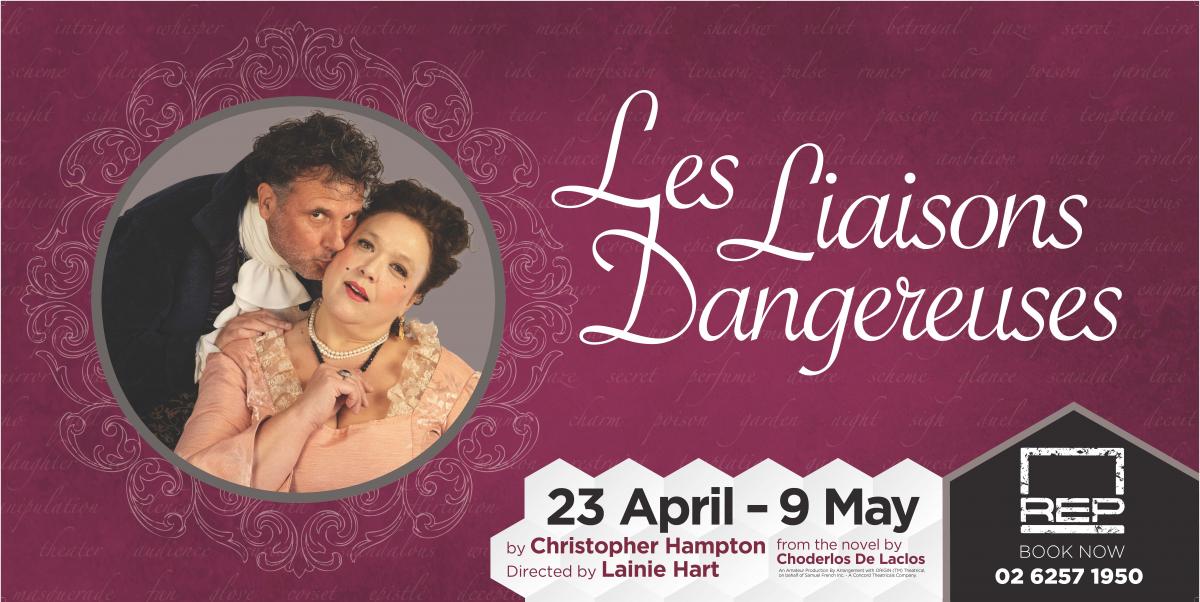
  4. Les Liaisons Dangereuses - Canberra Repertory, Theatre 3: This is a strong production of a highly-regarded play. Excellent performances from the three leads carry the drama and wit well; the casting of married leads (Jordan Best as Merteuil and Jim Adamik as Valmont) allows the sexual flirtation to flourish, and Yanina Clifton as Tourvel displays a haughty demeanour which is broken as she abandons herself to a torturous love. Director Lainie Hart keeps the action tight, with staging in quadrants and sharp character-driven scene changes, the fight scene is well executed, and the understanding of the game-turned-bad nature comes across well through card games and levels of both actors and set. The innovative approach to multiple scenes and locations keeps the pace from dragging too much, as the scene changes are fluid and morph into each other, although a touch more of the letters on which the play/novel is based would have been welcome. The set, sound and costume and are all cohesive; the scarlet woman taffeta of Merteuil and matching waistcoat of Valmont are suitably sumptous, and all the bodices, bustles, ruffles and cuffs look absolutely comme il faut. A commendation must go the intimacy consultant (Jill Young) as this play contains a rape scene which is vey sensitively handled. 
  5. Vanya and Sonia and Masha and Spike - Mockingbird, The Studio, Belco Arts Centre: Brother and sister (by adoption; not birth, which accounts for some almost incestous contemplations), Vanya (Chris Bladock) and Sonia (Tracey Noble) live alone together in a Pennsylvanian farmhouse  contemplating the blue heron in the garden and their daily grind. Their lives stretch before them in an endless future of ennui, until the third sibling, Masha (Helen McFarlane) returns from her rapidly-drying-up screen career with a toyboy lover, Spike (Darcy Worthy), in tow and news that she is going to sell the family home (which she owns and allows her siblings to live in rent-free). There is also a fancy-dress party next door to which she has invited them, bringing costumes that show her in a good light. A young woman, Nina (Lily Welling), suggests a threat to Masha's hold over Spike while providing a catalyst for Vanya to stage his play based on the avant-garde work of Konstantin in The Seagull. And hovering on the edges is Cassandra, the housekeeper who spits out random portentious warnings and dabbles in a little voodoo on the side. Mockingbird Theatre often mixes veteran actors with newcomers, and the effect can make for an uneven production. Chris Baldock is commanding as Vanya, particularly shining in his closing tirade lamenting the decline of manners in the modern world, Tracey Noble fully embodies the petulance of a woman afraid she has missed out on life and trying to blame someone else for her failings, and Helen McFarlane is utterly beliveable as the one trying to cling to her outward presentation to the world, secretly knowing that it isn't their true self. Darcy Worthy keeps taking his clothes off as the script demands and he is certainly nice to look at, although his acting is laboured and gestures repetitive, Lily Welling's freshness and innocence are delightful but the pitch is a little too high, and India Kazakoff feels too young and inexperienced to carry the weight of the Cassandra character (described as '30-60' in the script). Steph Evans directs with a relatively light touch - the best moments are the natural sibling bickerings - in this consummate satire of Chekovian drama in which nothing appears to happen, but everything actually does. 

Friday, 16 February 2024

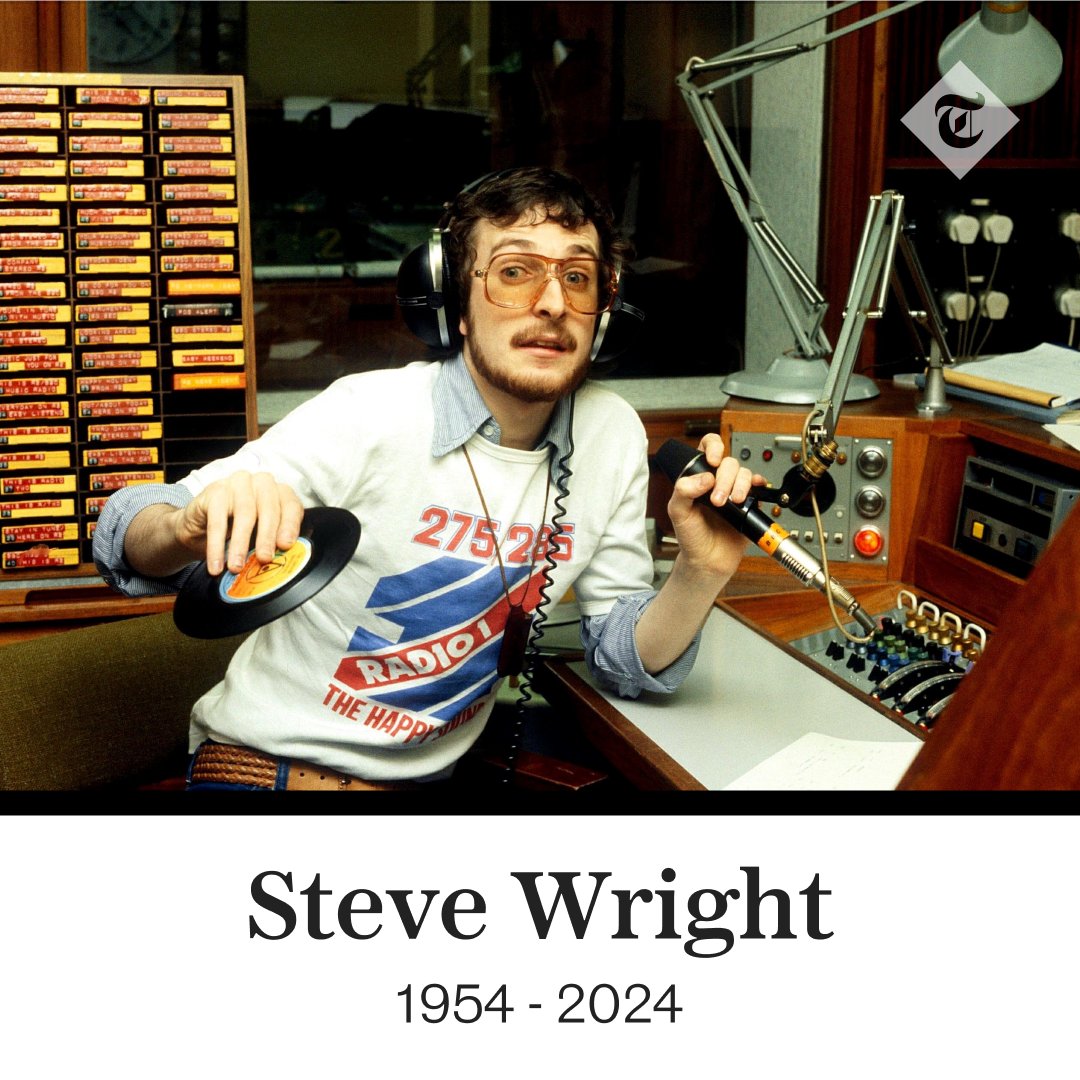
Love the Show Steve! Friday Five: BBC Radio 1 DJs.


BBC Radio 1 played a big part of my formative years. It was my musical background; I felt comforted by familiar tunes and challenged by new ones. I defined my style through sounds - those I liked and those I didn't. The music made up my identity. There were the road shows, the drive time mixes, the morning routines, the chart release countdowns, the ridiculously catchy-jingles, the in-jokes and the wonderful lack of advertising. I didn't actually realise how wonderful that last point was until I started to listen to commercial radio and wished the station didn't have to keep being interrupted by the utterly banal - how naive I was not to know that was capitalism. 

Of course, it wasn't just the music; it was the personalities and their presentation. I learned a lot about mic technique and public speaking, just by listening to others. I learned there was a time to be controversial and opinionated and a time to let others speak their views. As this is was a public service broadcaster it was meant to be apolitical (as with all things which are supposedly non partisan, the right thinks it is too left and the left thinks it is too right), but as it targeted the 15-29 age group, it mainly focussed on 'youth issues' if it strayed into that territory at all.

Annie Nightingale
I'm mentioning it in the past tense because I stopped listening it to it when I left the UK in 1996. It is still going, as it has been since September 1967. Recently I have been thinking of it often, however, as several of the DJs to whom I used to listen have died, with the most recent being Steve Wright. So here, for Friday Five, I thought I would pay my respects to some of the great BBC Radio 1 DJs of the recent past (in alphabetical order). 
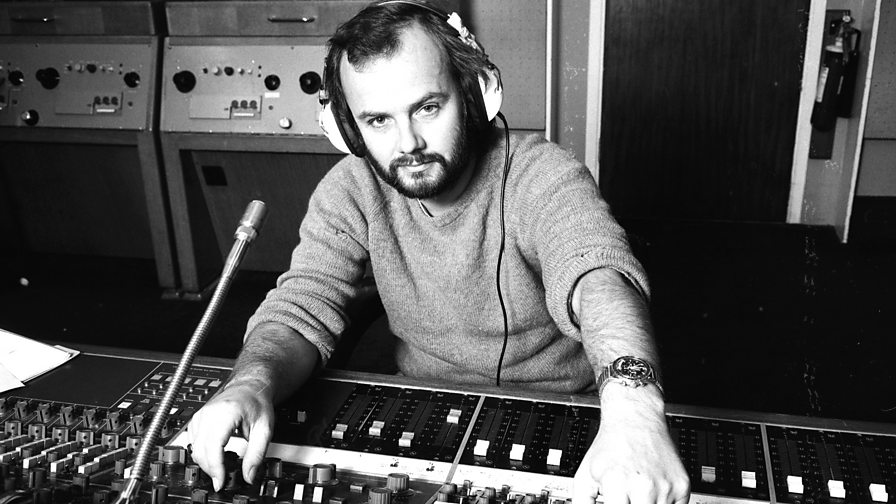
  1. Annie Nightingale (1940-2024) - one of Britain's trailblazing DJs died earlier this year and it was a great loss to the musical community. As the first female presenter on BBC Radio 1, she specialised in championing new, experimental and underground music. She hosted afternoon request shows, afternoon slots, evening shows, and current affairs shows. In the late 1980s she considered leaving radio after becoming disillusioned with popular music, but instead became interested and involved with acid house music from 1989 onwards, playing it on her Radio 1 show before it became mainstream. She travelled and performed as a DJ at festivals all over the world and continued playing house music on her show until her death. 
  2. Janice Long (1955-2021) - Janice Long (née Chegwin - big sister to Keith) presented a weekday evening show (Monday - Thursday, 7-10pm) featuring a mix of new music and current affairs. I used to listen to it as I did my homework (it ran from 1984-1987). She left the station in 1988 to have a baby, and was not offered a way to return, so she moved to Greater London Radio instead. It's her voice I remember most, as listening to it in my bedroom was an almost daily occurrence for me. 
  3. John Peel (1939-2004) - The longest-serving of the original DJs on BBC Radio 1, he broadcast regularly from 1967 until his death in 2004. He was an absolute inspiration and a devoted Liverpool fan. He chatted away on the radio about new bands to whom he had been introduced by his son, William. With his avuncular attitude and eclectic taste, he showcased a number of genres from pop, dub and reggae to punk, post punk, electronica, indie rock, extreme metal and British hip-hop. His radio show was noted for the regular Peel Sessions- four songs recorded by an artist in the BBC studios, many of which became definitive versions - and the Festive Fifty, which was he only countdown that mattered. When I lived in Manchester I would occasionally walk past him on Oxford Road as we both hurried to or from work/ class, and it would always make my day to be in the presence of greatness. 
  4. John Peel
  5. Mike Smith (1955-2014) - Mike Smith was the presenter of the weekday lunchtime show on BBC1 from 1983-4, but it was his stint on the breakfast show from 1986-8 that brought him to my attention. He was charming, friendly, chatty, and a comforting presence, one of BBC TV's main presenters at Live Aid in 1985, and a regular presenter of Top of the Pops. He mainly played chart hits and new music from mainstream bands - nothing startling - with a family-friendly approach. He also piloted helicopters and married Blue Peter co-presenter, Sarah Greene. He seemed like a thoroughly wholesome chap. 
  6. Steve Wright (1954-2024) - Steve Wright was one of my childhood DJs, whose show Steve Wright in the Afternoon had a cast of characters performing irreverent skits, inspired by the style of his mentor Kenny Everett. The 'posse' included producers and radio staff who joined in with the spoof and sketches. The program ran from 1981 to 1993 and it was what we listened to on the bus on the way home from school. The style - known as the zoo format due to the general feeling of chaos - became legendary and defined what it was to be a DJ at that time. It wasn't enough to just play music; you had to be a personality as well and to entertain above all. As he said himself, "It's a tabloid newspaper of the airwaves - fast, fun and packed with info. Something for everyone."

Wednesday, 15 February 2017

My Newest Favourite Thing: The Royal Flying Doctor Service


The Royal Flying Doctors Base and Bruce Langford Visitor Centre at Broken Hill is a place of information and inspiration. The film showing in the theatre combines tales of remarkable heroism with the history of the service, tributes to the doctors, pilots and flight nurses who work for the Royal Flying Doctor Service (RFDS), along with the outback folk who rely upon their skills and expertise in everyday situations.

The mission of the RFDS is to provide excellence in aeromedical and primary health care across Australia. The RDFS is one of the largest and most comprehensive aeromedical organisations in the world. Using the latest in aviation, medical and communications technology, they deliver extensive primary health care and 24-hour emergency services to those who live, work and travel throughout Australia.


The base is the headquarters of the South East section, covering all of NSW, Tasmania and Victoria. All of the administration, medical, and aviation teams pertaining to this area are centred here along with the tourist facility. While the RFDS is best known for emergency retrieval work, they also provide GP clinics, telehealth, dental care, mental health services, rural women’s health services, aboriginal health services, health promotion and education, patient transport services by air and road, as well as research into rural health issues.

The friendly tour guides are happy to supply statistics and figures, including the fact that the RFDS national fleet has 66 aircraft, 23 aero-bases, and 48 road patient vehicles, and that they had over 290,000 patient contacts in 2015. I think their favourite facts, however, are that in the last year they flew the equivalent distance of seven times to the moon and back (26,157,502 kilometres), and that the RFDS helps someone every two minutes of every day.


Viewing the planes from the platform in the hangar brings everything a little closer. In Qld, NSW, Victoria and Tasmania, the planes used are the King Air B350 C and the B200 C. Each of these specially modified aircraft is like a flying emergency room. As well as carrying medical equipment like resuscitation devices and neonatal incubators, RFDS aircraft are also fitted with an additional battery to provide medical power, a medical oxygen and suction system, and a special communications system for interaction between the pilot and the medical staff in the cabin.

As well as the medical knowledge of the RFDS personnel, the organisation also relies on the expertise of the pilots who have superior flying skills, dealing with extreme weather storms and rudimentary airstrips without lighting, which have to be cleared of wildlife before landing. The official handbook explains, “The presence of holes, cracks and ruts will degrade the aircraft's performance and handling and will increase the possibility of structural damage. The smoothness of the surface can be tested by driving a fully laden 3 tonne vehicle along the runway at a speed of 80kph. If this is accomplished without discomfort to the occupants, the surface can be considered satisfactory.”

The Mantle of Safety Museum contains examples of early communication, medical and aviation equipment as well as a plethora of pictures and information to explain the history and progress of this phenomenal organisation, beginning with the founder, the Very Reverend Doctor John Flynn, OBE, DD. Born in 1880 at Moliagul, Victoria, he worked as a country teacher and missionary before training for the Ministry of the Presbyterian Church. Following his ordination in 1911, he took up an appointment to the Smith of Dunesk Mission in the Northern Flinders Rangers, S.A.


The Very Reverend Doctor John Flynn
Within a year Flynn was commissioned to survey Northern Australia for the Presbyterian Church. This led to the establishment in 1912 of the Australian Inland Mission, of which he became founding superintendent. Opening under the motto ‘For Christ and the Continent’, the mission’s objective was to administer to the spiritual, social and medical needs of outback people. As he worked in rural and remote Australia setting up hostels and bush hospitals for pastoralists, miners, road workers, railwaymen and other settlers, he witnessed first-hand the rigours of outback life.

Increasingly ‘Flynn of the Inland’ as he was known became aware of the need for an aerial medical service, and developed a vision to provide a ‘mantle of safety’ for the people of the bush. His revolutionary scheme was realised in 1928 when Flying Doctor operations began at Cloncurry, Queensland. The growth of the RFDS in those early days was rapid and soon reached right across the vast continent. By the late 1930s there were sections of the RFDS operating in Victoria, Western Australia, South Australia, New South Wales and Northern Territory as well as Queensland. By the 1950s the RFDS was acknowledged by former Prime Minister Sir Robert Menzies as,

“perhaps the single greatest contribution to the effective settlement of the far distant country that we have witnessed in our time.”

After his death in 1951, John Flynn was succeeded by The Very Reverend Dr Fred McKay, AC, CMG, OBE, ME, BD, Hon. LLD, who himself became an outback legend. In 1934 as a student Presbyterian minister, McKay was planning to pursue theological studies abroad, until a visit from John Flynn changed the course of his life. Flynn’s vivid descriptions of the Australian Inland Mission’s work persuaded McKay to become an itinerant parole padre. 

Ordained in 1935, McKay spent the next six years on the track in Western Queensland becoming Flynn’s principal assistant. His parish, extending from Innamincka to Cape York, included Cloncurry, nerve centre of the newly established Flying Doctor Service. After serving as a RAAF chaplain in WWII and a brief ministry in Brisbane, McKay succeeded Flynn as Superintendent of the AIM in 1951, and retained the post for 23 years. He died in 2000 aged 92.


The Flying Doctor radio network was used also for education. In 1934, the inventor of the pedal wireless, Alfred Traeger, spoke of constructing ‘a suitable set for the children of the interior at very reasonable cost.’ (Fred McKay, who was also a keen historian, wrote the book, Traeger the Pedal Radio Man, which was published in 1955). The first to take up the idea of using two-way radio for the education of isolated children was Adelaide Meithke, a South Australian educationalist and friend of John Flynn.

In 1944 while travelling to Alice Springs as a councillor of the Flying Doctor Service, she noticed the shyness of the outback children. Seized by the idea of ‘bridging the lonely distance’ she set up, as a branch of the Flying Doctor Service, the world’s first School of the Air. It began operating from Alice Springs in 1950 and was officially opened the following year.

The experiment was repeated elsewhere and soon children once solely dependent on correspondence lessons could now speak directly to teachers and interact with other children. By the end of the 1950s there were already three more Schools of the Air operating in Australia: at Broken Hill; Port Augusta, SA; and Meekatharra, WA. Since then the schools have proliferated across the continent.


Over the years the school has bridged the isolation of many outback children but, thanks to recent advances in communications, no longer depends on the Flying Doctor network. In 2003 radio communication was replaced by a satellite system enabling students to talk to teachers using computers. This has allowed them to experience visual learning while improving their technical skills.

On 10 August 1955 the Flying Doctor Service added the prefix Royal to its name. This honour was granted by Her Majesty Queen Elizabeth II in recognition of the Service’s outstanding contribution to the Outback. The Queen and the Duke of Edinburgh witnessed the Service’s work first-hand during their visit to Australia in 1954. On this, the first visit by a British monarch, the royal couple spent two months touring the continent, visiting 58 centres from Cairns to Fremantle. On Thursday 18 March 1954, the Queen and Duke arrived at Broken Hill, the 45th stop on their tour, and visited the Flying Doctor base, where the Queen spoke over the radio network, saying 

“I have heard so much of the Flying Doctor Service, and of the security and comfort it brings to the Outback. I would like to take this opportunity of paying a tribute to its founder, the Reverend John Flynn, and for expressing my admiration for those, past and present, who have contributed to its splendid work.”

The Flying Dentist also became involved in this organisation. Until relatively recently, professional dental services were beyond the reach of most people in the Outback. Here dentists were even scarcer than doctors, and people accepted dental problems as a fact of life, to be endured with the aid of oil of cloves or a mouthful of rum. When pain became unbearable, a sufferer would have a tooth extracted with a pair of pliers or treat an abscess with battery acid; there was no thought of ‘conservative’ dentistry.

In 1960 the NSW Flying Dentist Service was established to bring relief to the people of the far west, a co-operative arrangement whereby the Department of Health provided a dentist while the RDFS Base at Broken Hill supplied transport and clinics where the dentist could operate. Initially children were targeted, with the dentist making systematic visits to schools and townships in the area.

During his first visit to Wilcannia, Dr Bob Burns, the first flying dentist, filled 120 teeth in a day. Not surprisingly, his leg gave out after working the treadle drill for hours and the Flying Doctor pilot, Vic Cover, had to take over; until his leg, too, failed and he ended the day down on his knees, working the treadle with his hands. Later the dentist’s drilling equipment was powered by a 12-volt battery, but this also had a limited life and sometimes it had to be replaced with car batteries.


In collaboration with the NSW Government, the dental service has expanded, now providing regular clinics and services to remote communities. As well as treating cavities and disease, dentists educate patients on oral hygiene and preventative dental care.

The Mantle of Safety Museum has an interesting display on the development of the RFDS logo, which has transformed eight times over the last eighty years to reflect the changing nature of the Service and to modernise its look. It was originally black and white featuring a Maltese cross (to represent medicine), wings (aviation), zig zag flashes (radio) and the map of Australia (although Tasmania was omitted). Over time medicine came to be represented by the caduceus and aviation by eagle’s wings. The design incorporated a propeller and a laurel wreath, Tasmania was added to the map, and words were placed around the symbol.

The modern logo (most recently updated in 2009) acknowledges historical associations with earlier logos by retaining the traditional symbols of medicine (the caduceus), aviation (wings) and the map of Australia. The wings have been softened to better express the sense of caring and protective mantle of safety, compared to the militaristic association of the earlier eagle’s wings. The design incorporates the national colours of red, white and blue, and the contemporary font has an increased weighting between the symbol and the words.


In 1994 the Reserve Bank of Australia included the image of the Reverend John Flynn on the $20 note. Other images on the note include the fabric bi-plane ‘Victory’, which flew the first Flying Doctor mission from Cloncurry, QLD on 17 May 1928, a camel signifying the five camels Flynn purchased in 1913 so that his Patrol Padres could complete their mission work throughout Central Australia, and the pedal radio invented by Alfred Traeger in 1929 enabling the people of the outback to call on the Flying Doctor for assistance. The body chart depicted was created by Sister Lucy Garlick in 1951 and is still used today. It enables patients to describe the region and intensity of their pain or injury during a remote telehealth consultation.

The RFDS has been recognised as Australia’s most reputable charity for the last five years running, and is registered with and regulated by the Australian Charities and Not-for-profit Commission. Naturally, none of this medical or aviation equipment is cheap, and the organisation relies on donations to keep it flying. The Bruce Langford Visitor Centre has a variety of merchandise on sale, the proceeds of which all go to the RFDS.

For the past six decades, the Broken Hill Women’s Auxiliary Members combine hundreds of kilos of fruit, flour, spices and eggs into 2,000 Christmas puddings. These puddings are in such demand that they sell out each year while raising many thousands of dollars for the RFDS. There are also delightful calico tea-towels commemorating this feat of home economics, and last year the Women’s Auxiliary raised over $75,000.


RDFS Christmas puddings
Other community groups and benefactors include the RideWest Charity Bike Ride, which covers 1,237km over seven days as fundraisers cycle from Brisbane to Longreach. The terrain they traverse typifies outback Queensland, and all the corporations and individuals ride to give something back to the heart of Australia’s community culture. Further awareness of the organisation comes from the sale of DVDs of The Flying Doctors TV programme (all 221 episodes), which is particularly popular in the UK and Netherlands, leading to large charitable donations. As stranded tourists and ‘grey nomad’ travellers become an increasing subject of the RFDS rescue missions, it is fitting that they make these contributions.

This is now my newest favourite charity and I urge you to donate if and when you can to keep these secular angels in the sky.

Monday, 23 November 2009

Hard work doesn't pay


Last weekend we went down to Invercargill so that Him Outdoors could run the Southland Marathon. It was celebrating its one hundredth anniversary and is the oldest full distance marathon in the Southern Hemisphere.

I hobbled around the 10km on a dodgy knee, and Him Outdoors ran the marathon in a personal best time (2:52:15) – he doesn’t really ‘do’ marathons unless they are off-road and over mountains.

But this isn’t really the point. What I noticed was that he was equal 23rd overall and 14th Master (a ‘Master’ is over 35 on race day). Twelve of the top 20 males were Masters. There were 33 Open men, and 159 Masters. In the women’s category the top two women were Masters. The ratio of Open to Masters was 17:58.

In the half-marathon, Bernie Portenski ran 1:27:27, the second fastest half marathon ever by a woman over 60. She was just over a minute outside the world record. I don’t suppose you heard about it.

You probably did hear about the LG Text championships, because it was on national news. The national ‘champion’ won $10,000 and a trip to New York to represent NZ in the world championships where the winner gets USD100,000.

Despite all the talk about battling obesity and pushing play, sport is not really encouraged for young folk. Obviously the bright lights and big dollars have allure. In real sport (from which I am excluding X-games, Monopoly, poker and paintball), there isn’t any for anything other than rugby. Hopefully the fantastic All Whites victory (although they might have to change that moniker in South Africa) might change this. But I doubt it.

Apart from some nationalistic flag waving, the Olympic rowing and cycling medals had little effect on the youth psyche. Why? Because it’s hard work. It’s a hell of a lot of training for a number of years to perhaps get a medal, and you probably won’t be that good. Early morning starts, quantified nutritional intake, sacrifices of nights out drinking and partying, commitment and dedication… Why not just press a few buttons or throw a few dice instead?

Peter Snell, John Walker, Murray Halberg, Dick Quax, Arthur Lydiard, Marise Chamberlain, Alison Roe – these are legendary names and rightfully so. They earned their reputation and respect by quite literally doing the hard yards.

Times have changed and what kids want these days, according to career surveys and interviews, is money and the ‘fame’. Often they have no concept that they actually have to earn that fame.

A friend of mine who interviewed potential hosts for a radio station told me that when she asked the candidates why they wanted to be on the radio, they nearly all said because they wanted to be famous – not a good journalist, a knowledgeable presenter, a music lover, a comedian, or even (perhaps knowing that they lacked any aptitude) a personality.

With the comparable rewards that are being offered, no wonder kids would rather sit on their arses text messaging their friends than go out training for five hours a day, fitted around their ‘real’ job because they can’t get sponsorship to be an athlete. They may be lazy, but they’re not stupid.

Wednesday, 14 January 2009

Road trip: San Francisco – Oakhurst

We have breakfast with Our Gracious Hostess at Stacks – American diners for breakfast are such a treat for me! I love the eggs, the pancakes, the waffles and the endless cups of black filter coffee. I have huevos rancheros which are delicious – I’m getting my fix of Mexican foods.

We call into a Barnes and Noble (not so counter my principles in their own country) for a new diary and another book that I’m pretty sure I don’t need. There is an entire industry here – part of me loves it (books are beautiful) while part of me is slightly saddened at the thought of middle-aged women (the major book market) using bookmarks, catalogues and inspirational quotes to fill their otherwise empty lives. And yes, I am part of that demographic.

Setting off on our adventures, the first thing we encounter is a child abduction notice on the freeway with the make of the car and licence plate numbers up on the overhead signs. We drive from San Francisco through to Yosemite noticing oddities along the way such as Halloween decorations, which are everywhere – this is clearly a very big deal here. Pumpkin patches support giant, mutant pumpkins.

American radio plays a variety of music: one channel plays an homage to New Kids on the Block; another plays Linken Park and other X-Games music. There is jazz, blues, classics (which appears to be The Beatles and Chicago), Spanish fiesta music (which sounds like Captain Pugwash), climb-every-mountain anthems, and a lot of country. Just like the television – so many channels; same old shite. Quantity does not equal quality.

Every pick-up in town is parked outside Cost Less Liquors. Other shops include House of Beef Steakhouse, Whiskey River Saloon, Feed and Seed, Long’s Drugs – Drive Thru Pharmacy (if you’re too ill to get out of the car, should you really be driving?), Buckston’s Western Gear (get your Stetsons and spurs here), Claim Jumper Outpost (‘free soda with fill up’), Tie Dye Jerky – elk or buffalo. All of these are to be found at Big Oak Flat, elevation 3,000ft, population 200.

Just past the Mark Twain/Brent Hart trail is 49 acres of barren scrubland for sale – it probably comes with free rattlesnakes. There are trailer parks (sorry, mobile home camps) and motel rooms for $49.95 next to a ‘gentleman’s club’. Nice. I’d be surprised to see a gentleman here at Chinese Camp.

A town advertises itself with the draw cards of food, espresso, clean bathrooms and raft trips. Groveland features the red earth and saloon doors of gold mining towns, complete with the Iron Door General Store. The roads are supported by an Adopt-a-Highway programme, which makes sure the road verges are kept litter-free. Sponsors include Dave and Son Automotive, Buck and Bunny, and the Coronary Improvement Programme.

We check into a motel in Oakhurst – the Yosemite Inn is ‘the last hotel in town’ and boasts ‘free HBO and breakfast.’ We walk to a Mexican restaurant for dinner, clinging to the side of the road as lorries hurtle past – this is obviously not a walking area. The food is okay (I discover tamales are stodgy corn-flour steamed nastiness) but I have a Sierra Nevada Pale Ale which is very tasty. It is a light gold colour with lazy bubbles and a decent head at first which quickly dissolves into a dishwater scum. It leaves a sediment behind but tastes perfectly balanced between bitter hops and sweet malt.