Friday, 4 June 2021

Friday Five: The Shows Go On

As mentioned in a previous post, I am trying to see as much theatre as I can, dependent on my other commitments, and I shall try to report back (in chronological order of viewing).

5 Shows Seen So Far This Year:

  1. Animal Farm - shake & stir theatre co., The Playhouse, Canberra Theatre Centre: This is an absolutely fantastic interpretation of one of my favourite novels. People are falling over themselves to draw parallels between the Trump administration and the propaganda within the play - but it remains as firmly rooted as ever in Orwell's concerns about communist doublespeak. The ensemble of actors portray all the anthropomorphosised animals with excellent gestures and expressionism, maintaining an outstanding physicality throughout. The set is bleak and brilliant in equal measure. Lighting and sound blend artfully into the overall presentation and despite the grim truths of the production, there are still laugh-out-loud moments - the hen rebellion is dealt with humour until it suddenly isn't, and the transformation of beasts into men and back again is wry and poignant. A teacher of year eights (13-14) said her class went to see it and were disappointed that it didn't feature real animals. I never thought I'd say this, but sometimes theatre is wasted on the young.
  2. Don Juan - A Slightly Isolated Dog, Bicentennial Hall, Queanbeyan: Pretending to be a famous French theatre troupe - 'We are very famous' 'And very French' gives this Kiwi ensemble of five actors the perfect opportunity to have fun with flamboyant stereotypes and outrageous accents. Theirs is a modern and collaborative approach and they encourage photos, which they then later share through their social media channels - direct marketing for the non-traditional theatre goers. Through a mixture of audience interaction (nothing confronting), song, dance, visual interpretations (a boat tossed on a stormy sea is a cardboard box on a tarpaulin, shaken about by the audience), and a voice distortion box, we learn a different side to Don Juan from any we had previously known. It is engaging and great fun for a cold mid-week night, reminding us why we need to get back into performance spaces.
  3. A German Life - The Gordon Frost Organisation, The Playhouse, Canberra Theatre Centre: Robyn Nevin delivers this fantastic script by Christopher Hampton as if she were born to play this role. Brunhilde Pomsel is an unassuming woman with good shorthand skills who, almost by chance, came to work in Joseph Goebbels' Propaganda Ministry. She survived the war and its aftermath (after five years in prison) and now, near the end of her life and in a nursing home, she recounts what she recalls of those days. The sparsely furnished room for an elderly resident throws up echoes of incarceration while projections of Nazi rallies, mass evacuations, ruined cities and concentration camps, are starkly presented in black and white on the walls for all to see. It is disturbingly intimate and asks us to question how much we think she knew (every time she denies knowledge, she stumbles over her words or questions her receding memory) and what would we honestly do in her situation. Neil Armfield directs one woman to capture our attention throughout the running time, and the play raises many questions about personal responsibility, communal culpability and the veracity of memory. She opines, "Nowadays, I don’t think people would be stupid enough to fall for the kind of nonsense we fell for. All that hot air, I don’t think you can get that past people anymore.” Well, the audience all felt uncomfortable at that moment - apart from the smug ones who missed the point.
  4. Jekyll & Hyde - A Slightly Isolated Dog, Bicentennial Hall, Queanbeyan: And we're back for more from A Slightly Isolated Dog who bring their seemingly chaotic but totally controlled performance style to the story of Jekyll and Hyde. All of the ensemble get a go at being the man with a dark side within ('but he pushes it down') donning a wig and glasses to play the evil alter-ego, but their physicality is more important than their props and they literally embody character acting. The sound and lighting production is excellent and the timing is superb - it takes a lot of hard work to make something look this effortless, and they are a joy to watch. Both this and the previous offering are conducted in traverse staging, drawing the audience into the unfolding drama in a non-confrontational manner; the performances are short and leave the audience laughing and wanting more - they are a triumph.
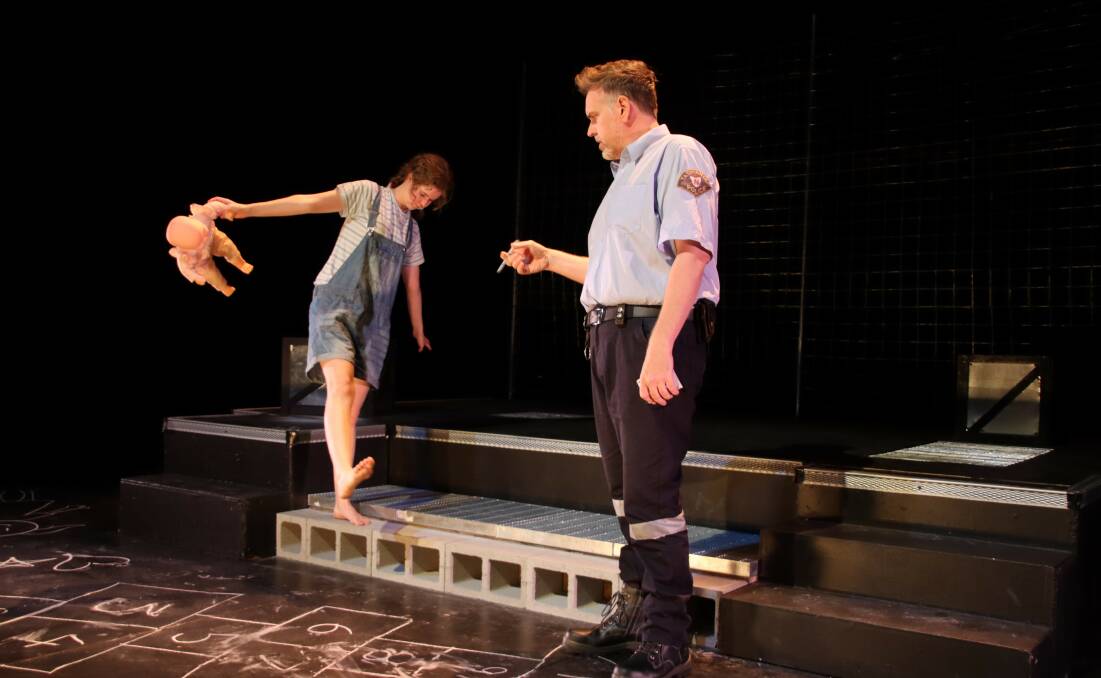
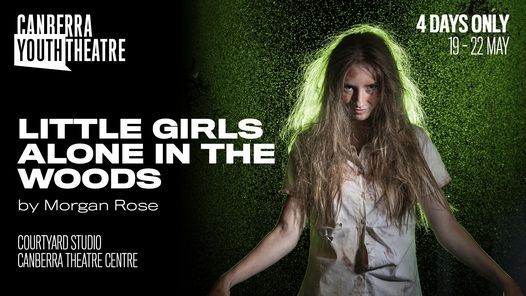
  5. Little Girls Alone in the Woods - Canberra Youth Theatre, Courtyard Studio, Canberra Theatre Centre: The Bacchae by Euripides is an ancient Greek drama which has captured imaginations for years, and lent itself to many interpretations as playwrights, authors, composers and directors seek to assign meaning and moral to a tale of violence, cynicism, divination and control. Among others Joe Orton, Caryl Churchill, Ingmar Bergman, Brian De Palma, Wole Soyinka, Friedrich Nietzsche, Gustav Holst, Thomas Mann and Henrik Ibsen have pondered the dichotomy between protection and imprisonment. Morgan Rose views the cult and legend of Dionysus through a feminist lens as her play suggests that young women are disappearing into the wilds of the woods to cavort and rebel against the confines of the patriarchy. Luke Rogers directs this version with a large cast of varying ability, and he is adept at playing to their strengths. Some of the ensemble work is excellent as the actors work together with both movement and voice, but when they try to stand out and compete against each other, it becomes discordant and incomprehensible. Whether they are lounging about in a study group preparing for exams and completing assignments on their laptops, or play fighting in pyjamas with pillows, they portray the messiness of youth that some adults try to streamline and corral. Change, transition, adolescence, questions and exploration can be uncomfortable for those who want to control, such as the police force who issue tagging bracelets that all females must wear for their own safety, to prevent them from going astray. The staging is bold with a man-made metal cage-like structure hinting of capture and confinement from a prison to a zoo, and as the action spills off the set into the audience space it suggests that our wilderness could either be part of the problem or a solution. Sound and lights are incorporated well to highlight some of the more confrontational aspects of isolation and power imbalance, although the musical ending doesn't pack the punch that perhaps it hoped it would. In general, this is a highly promising piece of work that delivers a deliberate sense of unease.
Wednesday, 2 June 2021

Women's Health Matters: Pain and Prejudice


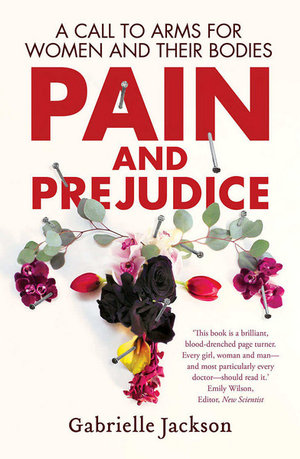
Pain and Prejudice by Gabrielle Jackson
Allen & Unwin
Pp. 321

Subtitled ‘A Call to Arms for Women and Their Bodies’, this book focuses on how women have been badly treated by the medical profession in the ‘Western World’ (there are many studies, figures and reports, all from the UK, the USA, Australia and New Zealand) and suggests that the times are ripe for revolution. It centres on the fact that medicine was traditionally a male profession and that the male was considered the default, so the difference in women was barely acknowledged let alone appreciated. In a similar line to that taken by Caroline Criado Perez in her book, Invisible Women: Exposing Data Bias in a World Designed for Men, Jackson argues that women are being ignored at best and killed at worst due to this gender bias in medicine.

In general women live longer than men, but they are in more pain. They are not taught to know their bodies or talk about their ailments; they are meant to nurture and support others before themselves. Women aren’t accustomed to discussing ‘female ailments’ – menstruation, menopause and sexual pain are still relatively taboo topics. Many women can’t identify their reproductive organs on a diagram and are certainly not meant to talk about them, as it is considered shameful. An influential study by Melissa Parker on Australian girls found that 93% of them experienced some period pain. About 20% experience severe pain, 24% say their period interferes with four out of nine life activities, and 26% miss school because of pain. “So a quarter of girls are missing school because of pain, and nobody thinks it’s a problem?”

When women demand attention, over their health or issues of equality, they are often labelled as hysterical, and “As an insult, ‘hysterical is still disarmingly effective.” Yet, when men present with the exact same symptoms, it is called shellshock or PTSD. Traditionally medicine was a male profession, and women are often not believed about their own health. In the late nineteenth and early twentieth century, “medicine became an elite profession and took over from religious institutions as the primary enforcers of the social roles of women.”

Because the default case study for all ailments is male, “We assume that the ways in which women are different from men must be the ways in which women are inferior or broken or diseased when in fact it might be that women are just different.” Symptoms of heart attacks are different in women and often misdiagnosed. A World Health Organisation report explains, “It has traditionally been thought of as a man’s disease which has led to deadly consequences for women – in 2004, 7.4 million women over 60 years of age died of cardiovascular disease compared with 6.3 million men.” Stress is a factor in heart disease, but women are often dismissed as suffering from nothing but anxiety when men who present with the same symptoms are diagnosed with heart disease.

Before 1993 there was no legal requirement to include women in clinical trials 

Many clinical tests only use men in their trials, which can prove fatal to women. In 1993, the US Food and Drug Administration and the National Institutes of Health mandated the inclusion of women in clinical trials. Before then, trials were routinely carried out on men only, including: a twenty-year longitudinal study (began in 1958) to explore whether taking an aspirin every day could reduce the risk of heart disease (conducted in 22,071 men and no women); a 1982 trial looking at whether dietary change and exercise could help prevent heart disease (conducted in 13,000 men and no women), and even a trial in the 1960s to investigate whether supplementation with oestrogen was an effective preventive treatment for heart disease (conducted in 8341 men, and no women).

Women generally experience more chronic pain than men – they suffer pains that cannot be seen, so they are often discounted, and pelvic pain is “also beset by stigmas and taboos that make it difficult for women to talk about their sex organs or anything related to them.” When women are believed about experiencing pain, they are often thought to be exaggerating. “Even female doctors, after training and working in the heavily masculinised medical culture, can view this language as confronting and histrionic.”

Women suffer more chronic pain than men

There are several overlapping pain conditions and women who suffer from one are likely to also suffer from others. These include endometriosis; vulvodynia; fibromyalgia; chronic fatigue syndrome/ myalgic encephalomyelitis; interstitial cystitis/ painful bladder syndrome; temporomandibular joint disorders; irritable bowel syndrome; chronic tension-type headache; chronic migraine and chronic low back pain. “Chronic pain conditions aren’t conditions that kill us but they radically alter our opportunities to reach our full potential in life… Pain doesn’t actually kill people – it keeps women in the home and out of work, which has no effect upon the power structures of society, providing no incentive for action.”

Doctors don’t really want to see patients who are difficult to diagnose and harder to fix as it looks bad for their figures and solved statistics: they even call them ‘heart-sink patients’. Women are aware of this stigma, and when they are told they have medically unexplained symptoms, anxiety, depression or are disbelieved, they can move from doctor to doctor in order to find a diagnosis or treatment relief. “In an exasperating development, ‘doctor-shopping’ has come to be seen as an indicator that pain is made up, rather than a result of pain doctors won’t believe.”

Women’s pain is not treated as seriously as men’s pain, and Jackson suggests that women should not simply accept this, but educate themselves about their bodies and demand that they be treated with equal funding and respect. It would be a brave and/or stupid person who would argue with that.

Friday, 28 May 2021

Friday Five: Depictions of the Greek Underworld

I have been exploring the Greek underworld - not literally, obviously - but because The Penelopiad by Margaret Atwood, the play I am directing and co-producing, is partially set there.

The underworld itself - sometimes known as Hades, after its patron god - is described as being either at the outer bounds of the ocean or beneath the depths or ends of the earth. It is considered the dark counterpart to the brightness of Mount Olympus with the kingdom of the dead corresponding to the kingdom of the gods. The Underworld is a realm invisible to the living, made solely for the dead.

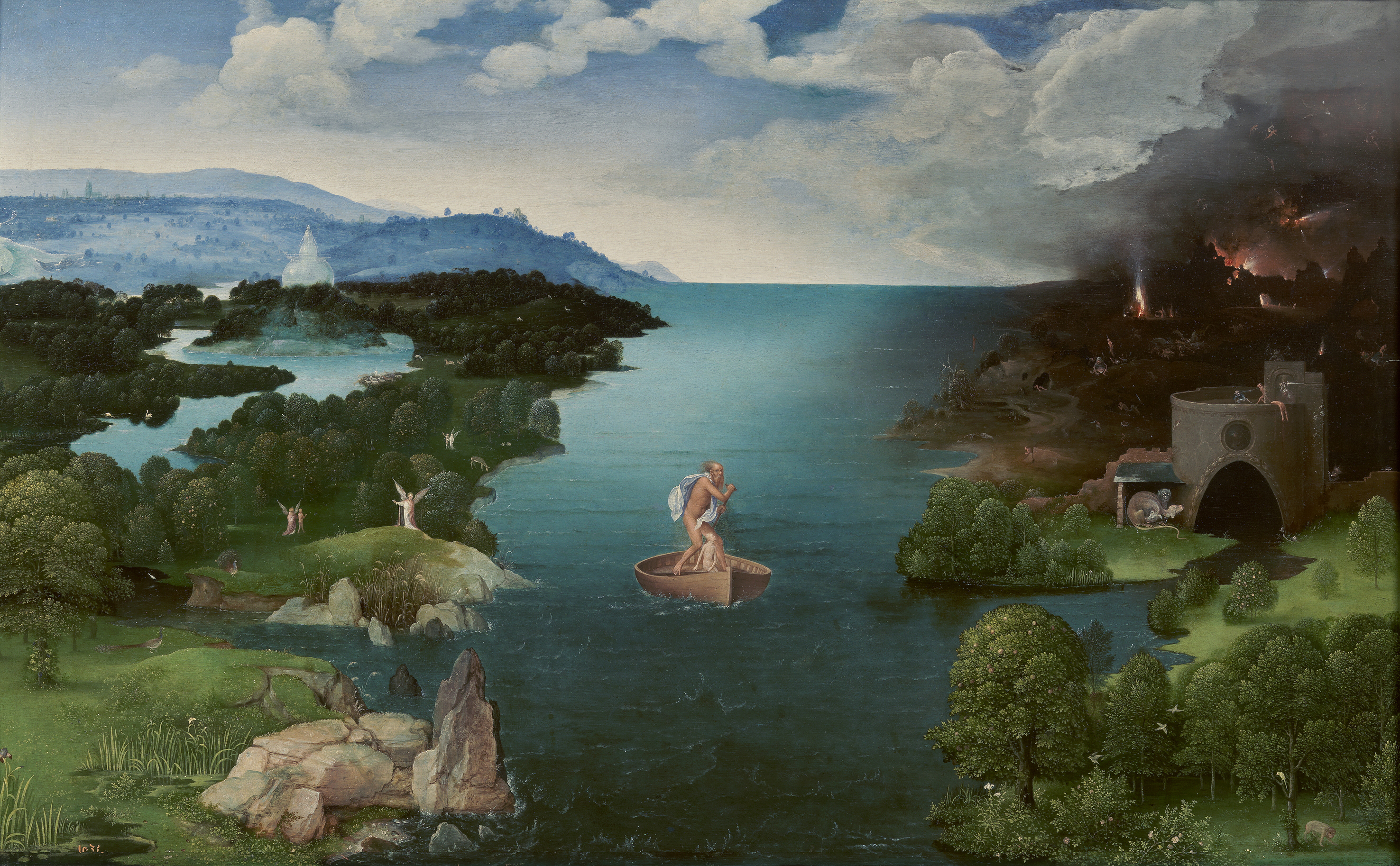
Landscape with Charon crossing the Styx by Joachim Patinir

The Greeks had a definite belief that there was a journey to the afterlife or another world. They believed that death was not a complete end to life or human existence.

In the Greek underworld, the souls of the dead still existed, but they are insubstantial, and flitted around the underworld with no sense of purpose. The Greeks accepted the existence of the soul after death, but saw this afterlife as meaningless. In the underworld, the identity of a dead person still existed, but it had no strength or true influence. The dead within the Homeric underworld lack menos,or strength, and therefore they cannot influence those on earth. They also lack phrenes, or wit, and are heedless of what goes on around them and on the earth above them. Their lives in the underworld were very neutral, so all social statuses and political positions were eliminated and no one was able to use their previous lives to their advantage in the underworld.

Generally speaking, the Greek Underworld can be thought of as being made up of three different regions; Tartarus, the Asphodel Meadows and Elysium.

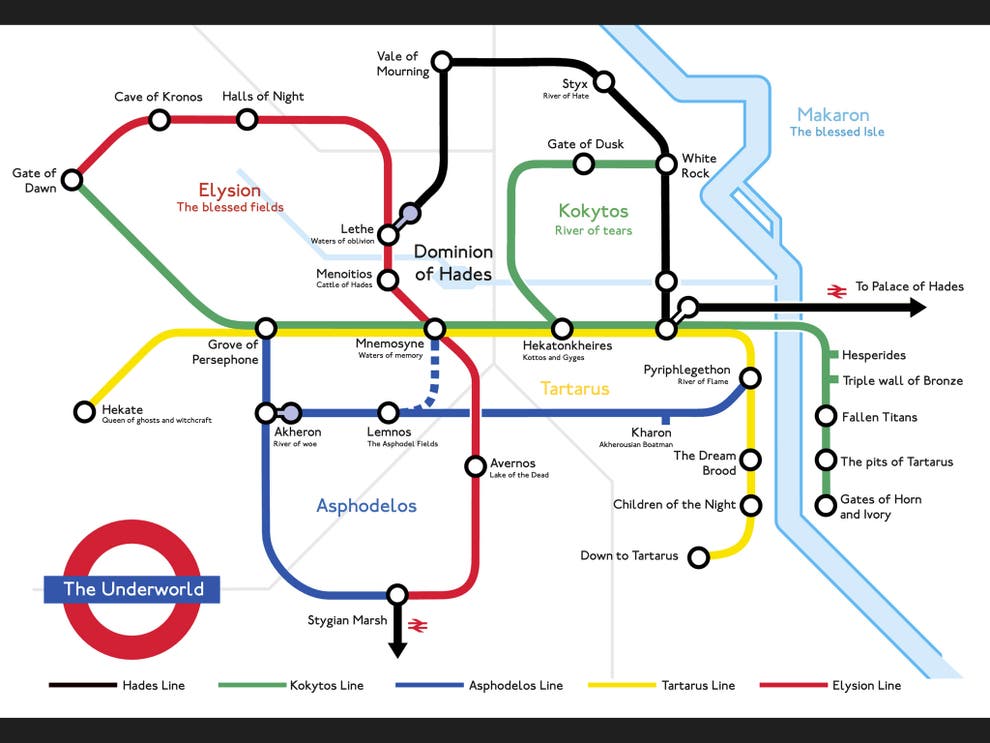
An alternative view of the London Underground tube map by the Iris Project

While Tartarus is not considered to be directly a part of the underworld, it is described as being as far beneath the underworld as the earth is beneath the sky. It was thought to be the deepest region of the Underworld, ad a place where it would take an anvil nine days to reach if allowed to fall from the rest of the Underworld. It is so dark that the “night is poured around it in three rows like a collar round the neck, while above it grows the roots of the earth and of the unharvested sea.” – Robert Garland, The Greek Way of Death

Tartarus is the region of the Underworld normally associated with hell, and was the area where imprisonment and punishment was undertaken; as such it was the normal location of the imprisoned Titans, Tantalus, Ixion and Sisyphus. Zeus cast the Titans along with his father Cronus into Tartarus after defeating them. Homer wrote that Cronus then became the king of Tartarus. While Odysseus does not see the Titans himself, he mentions some of the people within the underworld who are experiencing punishment for their sins.

Aneas and Sibyl in the Underworld by Jan Brueghel the Younger
The Asphodel Meadows was a place for ordinary or indifferent souls who did not commit any significant crimes, but who also did not achieve any greatness or recognition that would warrant them being admitted to the Elysian Fields. It was where mortals who did not belong anywhere else in the underworld were sent. It was where the majority of the deceased would end up, for it was the region of indifference. Having drunk from the River Lethe the deceased located here would forget their previous lives, but would spend eternity in a greyness of mindlessness.

While in the underworld, the dead passed the time through simple pastimes such as playing games, as shown from objects found in tombs such as dice and game-boards. Grave gifts such as clothing, jewellery, and food were left by the living for use in the underworld as well, since many viewed these gifts to carry over into the underworld. There was not a general consensus as to whether the dead were able to consume food or not. Homer depicted the dead as unable to eat or drink unless they had been summoned; however, some reliefs portray the underworld as having many elaborate feasts. While not completely clear, it is implied that the dead could still have sexual intimacy with another, although no children were produced. The Greeks also showed belief in the possibility of marriage in the underworld, which in a sense describes the Greek underworld having no difference than from their current life.

Fields of Asphodel by Brian Doers
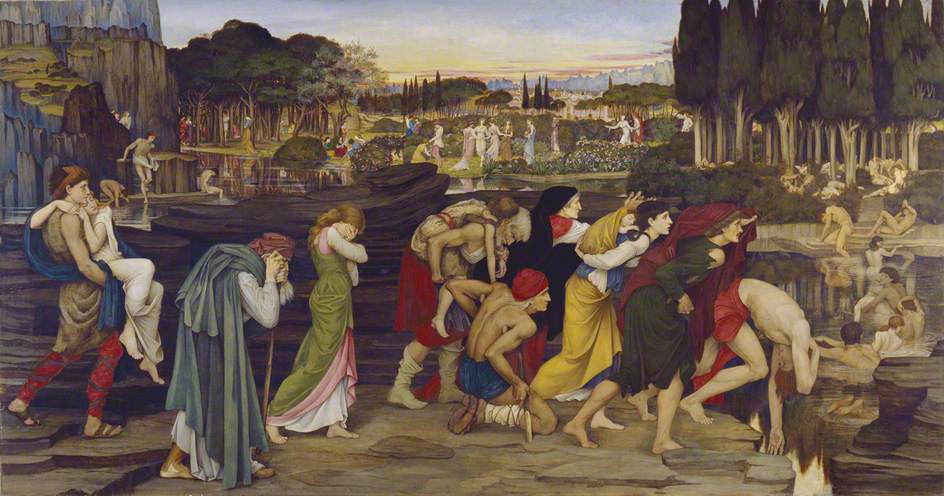
Elysium, or the Elysian Fields, was a place for the especially distinguished. It was ruled over by Rhadamanthus, and the souls that dwelled there had an easy afterlife and would spend an eternity of pleasure free from work and strife. Usually, those who had proximity to the gods were granted admission, rather than those who were especially righteous or had ethical merit, however, later on, those who were pure and righteous were considered to reside in Elysium. Most accepted to Elysium were demigods or heroes. Heroes such as Cadmus, Peleus, and Achilles also were transported here after their deaths. Normal people who lived righteous and virtuous lives could also gain entrance such as Socrates who proved his worth sufficiently through philosophy. It is the region of the Underworld where mortals were supposed to aspire to and the most closely associated with paradise.

The Waters of Lethe by the Plains of Elysium by John Rodham Spencer-Stanhope

The idea of progress did not exist in the Greek underworld – at the moment of death, the psyche was frozen, in experience and appearance. The souls in the underworld did not age or really change in any sense. They did not lead any sort of active life in the underworld – they were exactly the same as they were in life. Therefore, those who had died in battle were eternally blood-spattered in the underworld and those who had died peacefully were able to remain that way.

Overall, the Greek dead were considered to be irritable and unpleasant, but not dangerous or malevolent. They grew angry if they felt a hostile presence near their graves and drink offerings were given in order to appease them so as not to anger the dead. Mostly, blood offerings were given, because they needed the essence of life to become communicative and conscious again. This is shown in Homer's Odyssey, where Odysseus had to give blood in order for the souls to interact with him.

Hades itself was free from the concept of time. The dead are aware of both the past and the future, and in poems describing Greek heroes, the dead helped move the plot of the story by prophesying and telling truths unknown to the hero. The only way for humans to communicate with the dead was to suspend time and their normal life to reach Hades, the place beyond immediate perception and human time.

It sounds as though social strata was rigidly imposed even back then and even in death.

Tuesday, 25 May 2021

My Newest Favourite Thing: Ken & Julia Yontenani

Five years ago I went to an exhibition at NGA Contemporary. The gallery closed the next day. It's not my fault, honest - the gallery on the Lake Burley Griffin waterfront was only open for 18 months with articles at the time citing 'the federal government's continued efficiency dividend imposed on several cultural institutions' or 'relentless government cutbacks' as the reason for the closure. Anyway, I was clearing some photos from my phone because it's full (hard to believe, I know, being as it's still got photos from five years ago on it...), and I came across these from the exhibition so I thought I would share.

In two major installations, artists Ken and Julia Yonetani explore the notion that although the world appears rich in natural resources, the well-being of the planet is held in precarious balance. The first exhibition, Crystal Palace: The Great Exhibition of the Works of Industry of all Nuclear Nations is a provocative response to the Fukushima Daiichi nuclear power plant disaster in Japan in 2011. In an installation of chandeliers reconfigured to emanate UV light, and decorated with specially sourced uranium glass, each chandelier represents a country that operates nuclear power stations and is of a scale relative to that country's nuclear output. 

The idea of using the chandelier was sparked when the Yonetanis were entranced by the displays in the shop windows while on a bus ride in London. Tempted by the opulent beauty of antique chandeliers and their history in the evolution of electric light, they envisioned a contemporary take on The Great Exhibition of 1851 in the Crystal Palace, which aimed to showcase the world's latest technologies (those of the Industrial Revolution). This set the stage for the artists' idea of nuclear nations of the world.

Faced with the challenge of how to represent radiation, they hit upon using uranium glass beads and ultraviolet light bulbs that make the green of the beads fluoresce in the dark. The work is aesthetically astounding, accessible and engaging. Uranium glass contains very small traces of uranium within the glass, is legal and poses no health risks. While their chandeliers are entirely safe, the idea of recycling a uranium by-product that glows in the dark appealed to the artists. 

‘You can’t see, smell or perceive radiation with your senses, but it becomes visible in our works when illuminated with ultraviolet lights,’ say the artists. ‘Presented in darkness, the glass chandeliers and tubes glow with an eerie bright green light indicating the presence of radiation. We hope to prompt viewers to react in their own way to this radioactive presence.’

The blurb says that there are many cross-cultural layers of meaning and paradoxes in this installation that combines significant environmental issues within a floating glowing dream-world. I think it's pretty. 

Alongside these opulent chandeliers sits The last supper, a nine-metre table made of over one tonne of groundwater salt sourced from the Murray-Darling Basin featuring a variety of foodstuffs in the form of an exquisite banquet. Drawing its title from Leonardo's great Renaissance mural of the same name, this work plays with the idea of the final meal - the endgame of how we utilise our natural resources. 


The artists' use of salt came out of a residency working with scientists at the Murray-Darling Freshwater Research Centre, where their research was focused on the question of how to deal with rising salt levels in the water irrigating crops in a region regarded as a food bowl. Their initial concerns broadened, however, to include the impact of salinity in a a global sense, noting the subject of salt has been fraught since the beginning of human existence. ‘Here salt is a metaphor for the death of the land, sacrificed in the production and consumption of what has become The last supper,’ explain the artists.


On a practical level, the medium of salt posed great difficulties for the artists due to its solubility. After experimenting with smaller works, the creation of a nine-metre salt banquet table replete with an array of foodstuffs and objects was a labour of love and a great challenge. It connects with a tradition of still-life and banqueting subjects in the history of art as well as with different religious and cross-cultural traditions.As the artists have said,
"Although the work isn't necessarily a religious comment, The Last Supper is obviously connected to biblical stories, and salt is very much connected to not only the bible but a lot of religions, including in Japan - it's seen as a very sacred material."

The incongruity of the salt creations of edible treats is most market on the supposedly sweet things, and it also carries over into a work which combines the two installations, in a piece that meets the viewer as they enter the gallery. Grape Chandelier (2011) is made of salt and metal, although it looks like an exotic style of beaded curtain one might find in the tropics. 

"Historically in Europe the chandelier was often considered as reminiscent of the shape of grapes. In this chandelier, we have cast more than 5,000 grapes with salt. The grapes were sourced in the Mildura region, known for its wine production. The issues of irrigation, wine production and salinity all go hand in hand in this region. Hence we put them all together in this work, which is actually our first chandelier-inspired work, made before the Crystal Palace series. We began drawing on the idea of the chandelier as a symbol of luxury from the Renaissance era with this work." - Ken and Julia Yonetani

Friday, 21 May 2021

Friday Five: Theatre Seen This Year

Rachel Pengilly and Craig Alexander in Echo theatre's production of Wolf Lullaby

It's been a long time, but the theatres are open again and it is a delight to be back. I am trying to see what I can, dependent on my other commitments, and I shall try to report back (in chronological order).

5 Shows Seen So Far This Year:
  1. Wolf Lullaby - Echo theatre, Queanbeyan Performing Arts Centre: Written by Hilary Bell, this is a play that asks, 'Is there intrinsic evil in the world?' When a young child is murdered in a small town, suspicion falls on nine-year-old Lizzie, played with alarming credibility by Rachel Pengilly. Her young parents (Natasha Vickery and Joel Horwood) are naturally confronted by the dawning realisation that their child may be capable of such a crime, and grapple with the fact that in some sense they created her (the father even goes so far as to ask if she is really his - tainted blood, and all that). When is one old enough to know the difference between right and wrong; storytelling and lies; boundaries and empathy? And how can one learn when presented with such conflicting role models (the arresting office, Ray is a fantastically flawed character - a dream part for an actor and one which Craig Alexander clearly relishes)? There could be an element of sensationalism with such material (and those with memories of  James Bulger in the U.K. and Derrick Robie in the U.S.A. might be tempted to avoid its visceral memories), but Jordan Best directs in the shadowy grey areas of nuance and suggestion, which is where she is at her most creative. This production is not lurid in any way, but it is deeply disturbing on many levels. 
  2. Cat on a Hot Tin Roof - Canberra Repertory Theatre, Theatre 3: In the spirit of full disclosure I must admit that I don't really like Tennessee Williams' plays - I find them mean-spirited and whiny, without any warmth or sensitivity and I dislike his vindictive portrayal of women. Having said that, this is a good production, directed with pace by Anne Somes. The lead actors play out their drama well on a set by Cate Clelland, which evokes the heat and the irritation of the situation (although the lighting design is distracting and, while though very close to Williams' initial premise, it proves that a writer doesn't always know what is best for their play). Victoria Dixon plays Maggie, the titular cat, with frustration and boredom, biding her time and knowing exactly when to unsheathe her claws; Michael Sparks is strong as an unsympathetic Big Daddy and Liz St Clair Long has fun flitting about the stage with restless insecurity. The clear standout here is Teig Sadhana who shines in the difficult role of Brick, capturing angst, depression, frustration and self-loathing, while getting steadily drunk and remaining coherent. He radiated the appropriate amount of pain and self-pity, with a convincing energy, as he portrayed a former athlete who had been broken mentally and physically. While he remained a deeply flawed and unpleasant character, he never tried to deliberately win sympathy or ‘entertain’ us, which gave the character depth and realism.
  3. Ben Elton Live 2021 - Canberra Theatre Centre: I'm including comedy in this review, because it is one of the first things to return to the stage, and also because I bought tickets for this gig about 18 months ago and am so excited it’s finally here. I first saw Ben Elton 30 years ago when I was a student in Manchester. I’ve seen him on nearly every tour since. I promise I’m not a stalker. I agree with others: he’s no longer an angry young man; rather a grumpy old git, and his material has aged with him. He is more self-aware than most of his audience (‘if you think you’re still 21 inside, ask an actual 21 year old’) and provides an informed and entertaining interpretation of the development of comedy in context. He’s still sharp and topical, and knows how to write things to make us think, and realise how little we know.
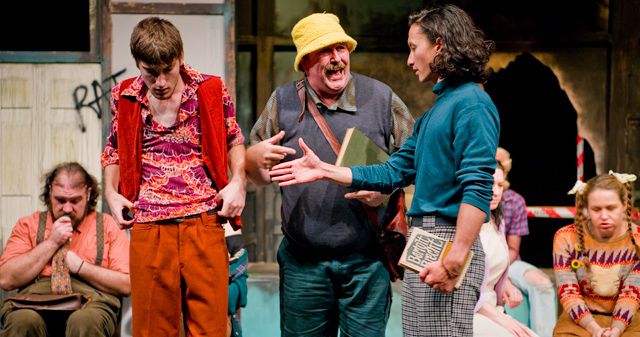
  4. The cast of Canberra Repertory's Cosi
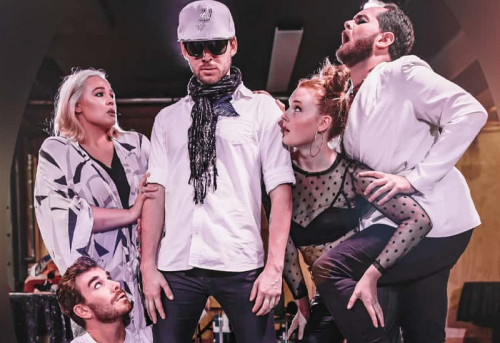
  5. Cosi - Canberra Repertory Theatre, Theatre 3: This is the first time I've ever seen Louis Nowra's Australian classic about an idealistic young man trying to put on an ambitious production of Cosi fan Tutte in a psychiatric facility with patients who can't speak Italian. Or sing. It's got a lot to recommend it, most notably the sensitive direction from Sophie Benassi combined with some great performances. Chris Baldock was entirely committed to his portrayal of Roy (and I don’t just mean in that ghastly haircut and costume). He maintained a consistency in his gestures and ticks that felt genuine and not excessive. Perhaps the true testament to his acting was that I was more interested in the person than the illness, and I feel that captures the essence of the play more than any other accolade. Max Gambale as Henry had the strength to portray a role that was largely non vocal and to make him interesting and appealing, with sensitivity when required – his outburst over the Viet Cong and his presentation of the toy soldiers towards the end of the play felt a little like set pieces, but the pay-off was well earned. All the female characters are underwritten and Ruth is one of the hardest roles to play - Alex Pelvin played her with such aching calm and continuity that she became the most realistic of the characters on stage. Her quiet questioning of every detail was clearly reflected in her dedication to the integrity of the role and her natural warmth translated into her being the one person I really wanted to watch. Meanwhile Steph Roberts was good at capturing the mood changes and personality shifts in Cherry's character, but she occasionally strayed into caricature and played lines for laughs rather than truth. There is an inherent problem with amateur productions of plays about amateur thesbians in that it can be difficult to discern the difference between the 'good' and the 'bad' acting, and this was evident on some occasions. On the whole, however, it was affirming: in a world of political divisions, individual preoccupations, performance anxiety and patriarchal expectations of 'normality', we discover that what really matters is truth, connections and love.
  6. Adam Hills: Shoes Half Full - Canberra Theatre Centre: Adam Hills is living proof that you can be a decent chap and still be bloody funny. He is inclusive and witty, highlighting his own inadequacies rather than belittling anyone else - he is happy enough to show us his prosthetic leg, to take it off, and admit that he would really have liked to have been born with two feet. His rapport with the audience is such that he even has the house lights slightly up so that he can engage more with us. He respects his fans from the deaf community and gets a laugh out of his sign language interpreter when he tells one of his more ribald or accent-related stories. I have heard some of these anecdotes before on previous televised tours or on The Last Leg but they are genuinely amusing due to the fact that he seems to get a real kick out of life (if you'll pardon the pun: I'm sure he would). Having lived in both countries and understanding the humour, highlights and cultural differences between them, he spans my UK/AUS divide perfectly (not a euphemism).

Tuesday, 18 May 2021

Putting the Cult into Culture: The Vesuvius Club


The Vesuvius Club by Mark Gatiss
Pocket Books
Pp.240

Mark Gatiss is well-known as an actor, screen-writer, and author, with multiple plaudits for (amongst other things) Dr Who, Sherlock, Dracula, The League of Gentlemen, The Madness of George III, and Coriolanus (for which he was nominated for an Olivier award for best actor in a supporting role). With The Vesuvius Club, his first non-Dr Who novel, he received a nomination in the category of Best Newcomer in the 2006 British Book Awards, thus assuring his position as a cult figure in the world of contemporary culture.

The Vesuvius Club is a Lucifer Box novel (the first of three), the subtitle of which is, “A Bit of Fluff”. This indicates that it is not to be taken too seriously, but also hints at a derogatory remark about a sexual partner. Indeed, there is lots of barely-concealed double entendre on account of the fact that, in the Edwardian era in which the novel is set, “London was in a bit of a panic with the recent exigencies of Mr O.F.O’F.W. Wilde so fresh in the memory.” A comment on the jacket describes the novel as “Oscar Wilde crossed with H.P. Lovecraft” and, with the addition of John Buchan, that pretty much captures the genre mashup. The tone is one of humour and horror with a dash of wit and the world of espionage; there are archaic views of beauty propounded by the aesthetes (namely youth and slimness), racist stereotypes, and action-packed set scenes.

Lucifer Box is a flamboyant portrait artist, who lives at Number Nine, Downing Street. “I know, ostentatious, isn’t it? But somebody has to live there.” He uses his position to get close to the rich and influential and to provide cover for his clandestine activities as a secret agent. The Royal Academy acts as secret headquarters, where the toilet partition wall slides up to reveal the spymaster (obviously this also has other seedier connotations). He enjoys his work and thinking up novel ways to eliminate enemies: “artistic licence to kill, you might say.”

His mission is to investigate the disappearance of the Cambridge Four; a group of scientists, all now missing, presumed dead. This madcap adventure incorporates a whirlwind of stock thriller scenes: a horse-drawn cab chase with pistols; a rendezvous in the mist at a mausoleum; wrestling in a steamy Turkish bath; underground S&M clubs; glittering parties; an attack by a venomous centipede; a hunt through the sewers; explosions; eruptions; and volcanoes.

From the opening sentence it is clear that Gatiss is parodying Wilde’s linguistic style. “I have always been the most appalling judge of character. It is my most beguiling virtue.” The novel is full of similar sayings, causing the reader to wonder whether it is a witty aside or an empty aphorism. The illustrations by Ian Bass echo those of Aubrey Beardsley, and the louche, world-weary attitude is also familiar, as he fulfils his role with equal relish and ennui. “It was midway between the fish course and the pudding, as Supple opened his mouth to begin another interminable tale, that I did the decent thing and shot him.”

The novel is a spirited homage to spy novels and the work of Oscar Wilde, with a dash of cultish horror blended into the thriller. It’s fun and frivolous and a perfect divertissement.

Friday, 14 May 2021

Friday Five: Moustaches

The no-nonsense reign-of-terror tache of Joseph Stalin
Last week we went to see the shake & stir production of Animal Farm, which was excellent. The person playing the character of Napoleon was sporting a moustache reminiscent of Joseph Stalin - obviously not accidentally. Generally I'm not a big fan of moustaches, but there are certain aspects of this type of facial hair that are instantly recognisable, and have become iconic. On the way home we discussed which ones instantly spring to mind.

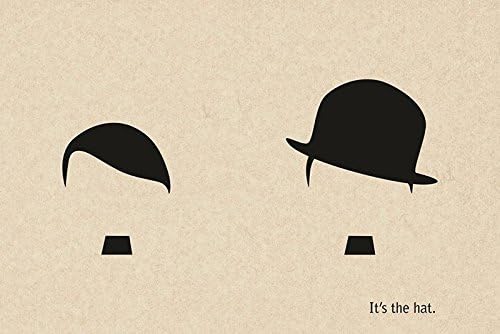
  1. Apparently it was once known as the 'toothbrush moustache'; now it can only be seen as the Hitler-tache. It was also popular with Charlie Chaplin (born 1889, the same year as Adolf Hitler) and Oliver Hardy (born 1892). So it seems that for a few years in the early 1990s, if one sported this style of tache, it would be touch and go as to whether one turned into a beloved comedian or a fascist dictator.
  2. Salvador Dali lived his surrealist art through his facial hair - weird and improbable; somewhat nightmarish but certainly memorable. A special mention in this category must go to Hercule Poirot, who was also a twirling tache fan, but since he is fictional, I'm going with the David Suchet representation.
  3. The mid-80s manly actor version as popularised by Tom Selleck and Burt Reynolds. It shouted American TV to me, and I found them strangely off-putting (plus I couldn't tell them apart). I always expect people with this type of tache to speak with an American accent.
  4. Merv Hughes. He was a brilliant bowler who (being Australian) was equally revered and reviled by England fans, crowds of whom used to imitate his warm-up stretches behind him. But when his name is mentioned, the first thing that comes to my mind is that moustache.
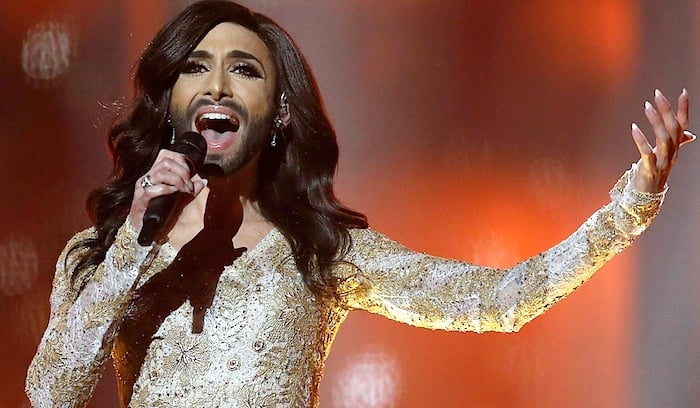
  5. For sheer shock factor, Austrian Conchita Wurst stands out with her 2014 Eurovision-winning entry that confused and confronted several viewers and made her a style icon for others. When she accepted the trophy she announced, 'We are unity and we are unstoppable', which she later admitted was a direct message to Vladimir Putin whose administration had implemented a law restricting LBGT rights the previous year. I have never liked a moustache more.     
That's all, folks!