Monday, 25 January 2010

Boy Books

The latest list to challenge my Libran (and female) sensibilities is Esqire's 75 Books Every Man Should Read. Clearly, I am not a man, but I'm always interested in the difference in reading habits between the sexes, so I took a look. I have read about a third of their list so I suppose I am entitled to some insight.

One of the things I took from this list is that men don't read books by women - we know this anyway. Often on men's top ten favourite reading lists, the only female author you will find is Harper Lee. I often thought this was because, what with the androgynous name and general lack of public appearances, many blokes think she is a man. Perhaps the same is true of Flannery O'Connor, as she is the only female included in the 75. I think that's pretty shallow. But then, why 'should' someone read a book? To find out about things they don't know, or to reaffirm what they already do?

The books have little blurbs to sum them up. A large proportion are about war. Others are about dogs, horses and cattle or mountains and seafaring - exploration in other words. Men 'should' read about tough manly heroes and their pursuit of survival; adjectives include raw, unrelenting and revenge.

They admire stories about slaves, prison, spies, scandal, presidents, journalists, detectives and the Holocaust; apparently these are manly topics. They are also encouraged to read tales of mateship, farting and sex; childhood, highschool and college. There is usually an edge about having a passionate longing (whether or not it is requited) with your best friend's girlfriend/wife and a troubled relationship with your father.

Of course, there are heaps of titles about drugs and drinking. Descriptions are full of words such as crazy, drunk, hallucinatory, boozing, brawling, fighting, whiskey and defeat. Naturally this leads to a chronic onset of navel-gazing; dirty, damned, grotesque, trapped, desolation, darkness, loss of self.
It's no surprise that the quintissential boy book, Heart of Darkness makes it onto the list, although I am puzzled by the omission of Albert Caumus' L'Etranger. Apparently men should read of cold brilliance, sparseness, animalism, brutality and deception.

I find this list somewhat depressing, mainly because it suggests that men are still living in the past. They dream of swashbuckling adventures where men were tough and women were unimportant. If there was a war to fight, then all the better, as they could prove their valour and value. They could then adopt an attractive world-weary pose to demonstrate strength and knowledge of unspeakable things. When they lost their pioneering capabilities they retreated into drugs and alcohol, unable to face reality, assuming a delusional paranoia that everyone was out to get them.

In real life they are drinking in bars, working in offices and playing pointless computer games by themselves. They read these fantasies but they don't discuss them (how many men do you know in book clubs?) because they like to believe they are the explorer who has discovered new territory. They still don't have any friends and they still don't care what women think.

Friday, 22 January 2010

My newest favourite thing: cherries


Cherries are the heralds of summer. They are the rubies in the centre of the golden stone fruit bowl.

When children, and some adults, swing the ripe red pendulums from their ears and pretend to be wearing sumptuous earrings, you know the season has arrived.

Obviously, when they arrive depends on where you live. Here they arrive just in time for Christmas, but in the Northern Hemisphere I associate them with my sister’s birthday. The Weevil was born in July and we were often abroad in European orienteering countries for the event.

I have a childhood memory (of course, they are notoriously unreliable) of the Weevil skipping joyously along carrying a Black Forest gateaux (I suspect we may even have been in the Black Forest itself) and tripping; sending cream, cherries and chocolate shavings in all directions. The tears had nothing to do with the skimmed knees.

A stall in Arrowtown tempts you with luscious delights; the sellers have come from That Dam Fruit Stall in Cromwell. You can try varieties and pick a favourite punnet, if you are decisive.

Otherwise you struggle with your choice; red, white, pink or purple? Sweet or tart; ‘subacid’ or ‘bland’ – those last descriptions are not mine but come from the Horticultural Society. They probably provided the more prosaic number and letter naming system, while someone with a little more imagination came up with ‘Liberty Bell’, ‘Stardust’, ‘Columbia’ and ‘Staccato’.

Not only do they taste delicious, but apparently they are good for you. Cherries contain high quantities of the antioxidant anthocyanin, (also found in grapes and berries) so you can claim you are being healthy as you puff out your cheeks with the pips.

We would count them as children to see who we were going to marry; tinker, tailor, soldier, sailor, rich-man, poor-man, beggar-man, thief. There was never any mention of electrical engineers so I can only assume their powers of prediction are equally as good as any other form of divination.

If you’re not counting the pips, you can always spit them out. My mother will be pleased to know that I haven’t entered (or even witnessed) the cherry pip spitting championships, but there is a hotly contested regional round of the competition in Cromwell at the start of the season. They make their own entertainment in this area, you know.

And when the cherries have all gone, it's not too long to wait for the blushing blossoms to appear. Symbolising the ephemeral nature of life, they are bashed and buffeted by the winds but some survive.

They are revered in Japan and in 1912 the Japanese gave a gift of some 3000 trees to America to symbolise their blossoming friendship between nations. Is it even more symbolic that these ornamental trees bear no fruit? Whatever, they look simply beautiful.

Wednesday, 20 January 2010

Books read in August


The following are short reviews of the books that I read in August. The marks I have given them in the brackets are out of five.

Border Songs – Jim Lynch (4.5)
The anti-hero of Border Songs is tall, autistic, dyslexic Brandon who thinks in pictures, compiles mental lists of all the birds he has seen daily, and makes temporary art that is obviously influenced by “the great Andy Goldsworthy”. He joins the Border Patrol to catch drug smugglers and illegal immigrants, and discovers an uncanny talent for turning up in the right place at the right time.

His father, Norm has a failing dairy herd, a half-built yacht in his barn, and a wife (Jeanette) who is suffering from Alzheimer’s. He fantasises about Sophie the masseuse, who may or may not be writing a book about the inhabitants of the small town, and turning a blind eye to illegal immigrants in return for bundles of cash. His neighbour, Wayne taunts him from the Canadian side of the border where the drug laws are different, and Brandon falls in love with Wayne’s daughter Madeline who puts her gardening skills to good use.

No one actually knows where the boundary is, and a lot of money and effort seems to be poured into a ditch. The novel is whimsical and lyric with gentle prose which leaves a lasting impression. Full of a cast of picaresque characters and universal themes of exploration and defence, this book is simply beautiful.

Two Caravans – Marina Lewycka (4.4)
Marina Lewycka’s second novel covers some of the same ground as her first, A Short History of Tractors in Ukrainian, but in this she focuses more on the experiences of immigrants, legal or otherwise, in England. Obviously there are good and bad people of all nationalities – Ukrainian, African, Polish and even English. Told from a variety of perspectives, the story is also an expose of the demise of socialism in favour of the exploitation of the labour force.

This is not a novel about the unemployed underclass. Everyone in this book wants to work, even if it is low-paid, often demeaning in appalling conditions (the chicken farm is a narrative highlight), and usually illegal – no union members are employed. This is a capitalist society where self-preservation is everything and the human cost in employment rights is the first casualty.

Bizarrely, where there is exploitation, there is also integration as people are treated similarly despite class, gender, religion or race. Many of the immigrants came to England with hopes of a bright future, escaping “that old derelict Soviet world that we are trying to leave behind”, only to have their dreams of the Promised Land shattered by the reality with its hints of the violent underworld; human trafficking, guns, stolen passports and underage prostitutes.

There are constant shifts of point of view as we follow the different characters and this makes it difficult to get to know any of them well. It develops into a Mills and Boon/chick-lit type romance but there are acres of slapstick shenanigans and economic politics to travel though en route. Much of the plot is implausible but that’s not really the point, as it is more a novel of ideas and principles. It is far from dry and sterile, however, and the humour and language is as sparkling as in her first.

Timoleon Vieta Come Home – Dan Rhodes (4.5)
The title obviously brings to mind Lassie Come Home, and the fact that it features a mongrel, Timoleon Vieta, encourages the comparison. Cockcroft is a faded English composer and socialite who lives in a dilapidated farmhouse in the Italian countryside. He dreams of his previous lovers and lives only with his dog, with whom she shares a deep friendship. When a mysterious stranger arrives, known only as The Bosnian, the relationship is tested, and we have to question who is indeed man’s best friend?

The Bosnian and Timoleon Vieta don’t see eye to eye and the Bosnian persuades Cockcroft to drive the dog to Rome and abandon him there. Timoleon Vieta immediately sets out to walk back to the farmhouse. Along the way he encounters various people who are living out their own tales of love and pain, offering a kind of solace to those around him who take him in and feed him for a couple of days, giving him various names, before he resumes his own incredible journey.

It’s a hard-to-categorize book, written in a deceptively simple style. There are disturbing moments and there are heartrending passages, but it is a fantastic little read – like a twisted parable that has no moral. Life just is. This could be a Canterbury Tale based in Umbria – the dog’s tale, as it were.

The Sonnets – Warwick Collins (2.3)
I don’t understand the point of this book. Warwick Collins has taken Shakespeare’s sonnets and woven a very loose and not particularly entertaining story around them. Half of the novel is actually comprised of the sonnets themselves, which anyone with interest will have read already, and he even makes up a couple, passing them off as the ones that got away.

He writes his story in Shakespeare’s voice as he stays with the Earl of Southampton, his patron, when the theatres are closed. Southampton is fatherless and placed under the guardianship of Lord Burghley, Queen Elizabeth’s chief minister. Lord Burghley sees his ward as a rival and despises Shakespeare’s verses. Southampton, on the other hand, is flattered and impressed with the sonnets although he advises caution, telling Shakespeare to couch his sentiments in ambiguity; a handy explanation of the obscurity of the sonnets which allows Collins to interpret according to his will.

There are rumours of homosexuality to be countered. Through the questioning of Shakespeare by Southampton’s mother, who demands the household needs an heir, it is made clear that the love expressed towards the young lord in the sonnets is purely platonic and an example of artifice. Meanwhile, the dark lady is a married courtesan who becomes the mistress of both Southampton and Shakespeare. Christopher Marlowe gets a cameo role as he competes for Southampton’s attention, and is frequently compared with Shakespeare.

Collins has chosen to write in the first person but he doesn’t want to relinquish the omniscience of the third, which results in a dissatisfying effect. Collins also attempts to circumnavigate the restrictions of the first person narrator by having Shakespeare imagine a scene at which he is not present, which is awkward and jarring in its construction. He does capture the Warwickshire scenery of parks and woodland, but he also has a repetitious turn of phrase. Generally, this is a shameful exploitation of one great man’s art by a much lesser writer.

Monday, 18 January 2010

Many thanks to the fabulous cast


We were worried about the weather for Shakespeare on Location. We feared it would rain as it had done all week. If there are such things as weather gods, they were smiling on us as we had excellent weather - if anything it was too hot, (especially for Sarah Bogle in her cape as Chorus from Henry V) but we are not going to complain.

We were also concerned that people might stay away - the combination of the bard and the rain might prove to be too challenging. And yet they came in their droves. The Otago Daily Times was there, taking pictures. Here's Samuel Farr being Hamlet crossed with Bono for the 'I'm-so-much-cooler-than-thou' look.

I heard a comment that the excerpt from King Lear was good because it was basically a stand-alone piece and you could understand the story from that segment. David Cantwell, Jane Robertson, Patricia McInerney and Victoria Keating should be pleased with their Days of Our Lives interpretation.

Understanding might have been more limited for the scene from A Midsummer Night's Dream but the language is so beautiful that you can just let it wash over you, while the fairies (Jo Blick and Samuel Farr) threaten to wilt in the heat.

At least the scene from Antony and Cleopatra was conducted under the shade of the arbour. Jill Derbie's Cleopatra and Jason Medina's Messenger kept their cool.

The sunshine suited the day at the races theme we had chosen for the scene from Hamlet where Getrude (Jane Robertson) attempts to placate an increasingly distraught Ophelia (Caroline Early).

David Cantwell led us delightfully between scenes beside the pond as he sang the Page's song from As You Like It; 'There was a lover and his lass'. Hey Nonny No, indeed!

There were some incredibly quick changes from people; some of whom had to scurry from one spot to another in record time. It wasn't break-neck, but apparently it was strain-calf speed. Samuel Farr and Jason Medina coped admirably for a scene from As You Like It performed on the bridge.

We then crossed over the water where Jill Derbie and Jo Blick proved that Shakespeare is truly universal by performing a scene from Henry V in French.

Juliet (Patricia McInerney) was anxious for night to fall so that she could meet up with Romeo, but probably also because it had been a very long day (eight hours of solid acting on Saturday).

The giggling girls in Much Ado About Nothing (Caroline Early, Victoria Keating and Tanya Surrey) were just gorgeous as they set their trap for Beatrice (Jo Blick) who fell for it hook, line, and sinker.

We had two guides so they took turns leading the tours. Here is Victoria Mills as Prospero, releasing the delighted Ariel (Jane Robertson) in The Tempest.

So perhaps I was tempting fate by gatting Jill Derbie to sing Feste's 'The Rain It Raineth Every Day' from Twelfth Night as the closing song, but thankfully fate stayed resolutely steadfast.

Besides the sun and the cast I also want to mention the fantastic job done by Mary Todd who was an excellent wardrobe mistress and stage manager, keeping the production on track and adhering to its punishing schedule.

And a huge thank you to all the audience who came to see the show - I'd love to hear your feedback. You can also check out the latest from Remarkable Theatre on their website.

Friday, 15 January 2010

Annoying Songs

I feel it's time for another list, so here is my list of the top 20 most annoying songs ever:

1. Macarena – Los Del Rio; Superman – Black Lace; The Birdy Song – The Tweets; YMCA – Village People; The Time Warp
Any song with built-in actions; if I wanted to do exactly the same movements as a room-full of other co-ordinately-challenged people to some execrable music, I’d go to the gym.

2. From this moment – Shania Twain

Shameless manipulation – as if she didn’t just sit down and go, ‘I’m going to write a revoltingly mushy song that everyone will want to play at their wedding and I can garner immense royalties from it, never mind that the song itself is a pile of pap.’

3. Star Trekkin' – The Firm
I hate most ‘novelty’ songs but this is one of the worst. My best mate once left a pint of bitter behind when this came on the jukebox and he stormed out of the pub. Being the good friend I am I quickly downed my pint (and his) and followed him out.


4. I Wish I Could Fly – Keith Harris and Orville
This is another of the worst combining ‘novelty’ with childish lyrics and climb every mountain sentiment. Pass the bucket.

5. The Gambler­ – Kenny Rogers
It’s country, which is bad enough in itself, but it also encourages ukuleles/banjos, muppets, spontaneous sing-a-longs among drunken hen parties in New Zealand, and hoe-downs; are those the same thing?


6. Sweet Caroline – Neil Diamond
This song came out in 1969; surely to God after 40 years people might have moved on, but no. In New Zealand hordes of folk young enough to know better will run to the dance floor screaming, ‘I love this song!’ whenever it’s played – and that’s far too often. Their own music must be horrendous if they prefer this saccharine nonsense.

7. Word Up – Cameo
In fact any song (and there are many) that include the lyric, ‘wave/put your hands in the air like you just don’t care’. I blame this for being the first.

8. Bliss – Th’ Dudes
I’d never heard this song before I came to New Zealand, where it is played at every rugby event you will ever go to and it’s not as if they need any more encouragement. New Zealand has much of great substance and beauty to offer, and then there’s this.


9. Ironic – Alanis Morissette
Something is ironic if it the situation renders bad something that at any other time would have been good. Hence the death row pardon two minutes two late is ironic. The black fly in your chardonnay isn’t. If you’re going to sing a song about an adjective, you should at least know what it means.

10. Save the Best for Last – Vanessa Williams
For similar reasons to the above; the snow may well come down in June, especially if you live in the Southern hemisphere. No matter how much it rhymes, the sun will never go round the moon. Don’t be so stupid.

11. Emotions – Mariah Carey
Or in fact any song by the screaming human vibrator – just pick a note and stick with it. Your warbling and trilling may show off your voice to your yodelling teacher, but it’s ruining the song. I blame you personally for Christina Aguilera.

12. Everything I do, I do it for you – Bryan Adams Perhaps it’s not his fault, but this song was number one in England forever. Okay, so it was ‘only’ 16 consecutive weeks but it felt like forever, and it’s still the longest in British chart history. It was the theme tune to Robin Hood: Prince of Thieves so reminds me of Kevin Costner, and that’s never a good thing. It was summer 1991; I split up with my boyfriend and I just wanted to go back to Manchester.

13. Snoopy’s Christmas – The Royal Guardsmen Why is this song so popular in New Zealand? Despite attempts to secularise/ commercialise it, Christmas is by definition a religious holiday – the clue’s in the name. If you don’t like it; you don’t have to celebrate it. Celebrate Thanksgiving instead.

14. Every Rose Has Its Thorn – Poison; More Than Words – Extreme; Wind of Change – Scorpions; Don’t Want to Miss a Thing – Aerosmith
Any song in which a rock band does their slow and sultry power ballad to try and prove they can sing – they generally can’t. I love Guns n' Roses as much as the next bogan rock chick, but November Rain is a total wash-out.


15. Heal the World – Michael Jackson I know he’s dead now so we’re all meant worship at his cult of self-delusion but this has got to be the pinnacle of nausea from the prince of hypocrisy. All issue songs are ridiculous – let’s all buy a record/ wear a ribbon or a PVC bracelet to show that we really, really care about something we don’t give a toss about otherwise.

16. We Built This City – Starship; Can’t Fight This Feeling – REO Speedwagon; When the Going Gets Tough (the Tough Get Going) – Billy Ocean
I lived in America in the mid 80s – when we were on the coach to basketball/football matches, the rest of the team played the above mindless tosh. I sat stoically with my walkman on listening to The Cure, The Clash and Billy Bragg. When the batteries ran out I suffered. Boy, how I suffered.

17. There’s No One Quite Like Grandma – St Winifred’s School Choir
Three words – singing children; no! This was number one for two weeks over Christmas in 1980. This is even more remarkable because it was at the same as John Lennon was shot, and it kept his (Just Like) Starting Over off the top spot. Apparently the St Winifred’s School Choir
reformed last year to do a ‘charity version’ – I’d pay them to shut up.


18. Greatest Love of All – Whitney Houston
One of the worst examples of ‘climb every mountain’ songs you’ll ever hear – yeah, yeah, you’re wonderful and you learned it all from kids. This song is all the more painful because she has such a great voice and could have used it for good rather than drivel.

19. Can’t Get You Out of My Head – Kylie Minogue
I really like Kylie, bless her, but this song is just too infuriatingly catchy for its own good. I find myself singing it out loud when I’m cycling or running, which earns me some odd looks because I don’t’ own an i-pod. I also inadvertently match my stroke to its rhythm when swimming. 50 lengths of that can drive you crazy.

20. I Dreamed a Dream; Don’t Cry for Me Argentina; I Don’t Know How to Love Him; Love Changes Everything; Memory
All of these are actually great songs in their place, which is in a musical. The only song that can possibly exist outside a musical is One Night in Bangkok. They should not be played in isolation or released as singles onto the charts.

Wednesday, 13 January 2010

Rain and snow


It has rained every day this year. It has been a nightmare trying to schedule rehearsals for the outdoor performance and because we need to keep the costumes and props dry, we have struggled with getting enough runs in. I have turned into a crazy woman who walks along muttering to herself and occasionally shaking her fist and shouting at the sky.

Meanwhile the snow continues to cause havoc in England. But it is just so beautiful in the Lake District. I still want to be snowed in (in a centrally heated, doubled glazed house, of course). I imagine an open fire, a contented cat, a good book, a full-bodied red and a red-blooded lover. And forays out into the world to chat with neighbours and compare conditions. In scenery like this I would indeed be walking in a winter wonderland.

Check out more of these gorgeous photos at Tony Richards' website.

Monday, 11 January 2010

Books read in July


The following are short reviews of the books that I read in July. The marks I have given them in the brackets are out of five.

The Sportswriter – Richard Ford (3.5)
Frank Bascombe is a sports writer who writes as much about his life as he does about sports. He is introspective but direct and scrupulously avoids metaphor and analogies, narrating the story of his life with a sardonic detachment, like Holden Caulfield all grown up.

Although he remains on good terms with his ex-wife after their son’s death, he has no other real friends. He is a member of the divorced men’s club and they go on fishing trips and to bars where they talk about cigars and sports. He has a fatalistic view of life and relatively low expectations. Life just is; things just are. He takes a girlfriend to a hotel in Detroit and they are snowed in – it is a masterpiece of alienation.

He defines himself by his job, rather than any other aspect of his life and he is even disparaging of that. “It is no loss to mankind when one writer decides to call it a day. When a tree falls in the forest, who cares but the monkeys?” He believes that writers actually do life a disservice, and that sports’ writers are the worst. He prefers guessing and theorising to knowing statistics and he enjoys sports as comforting waste of time rather than a clinical business.

The novel was written in 1988 but has a timeless quality and, although he seems to posit himself as Everyman, it is not a particularly cheerful picture. There is an almost Garrison Keillor-esque aspect to his writing, and it is a paradox that you can be gripped by his self-confessed unprepossessing life.


Twelfth Night: Critical Essays – Stanley Wells (ed.) (4)
In this collection of essays on Shakespeare’s Twelfth Night, critics, directors and scholars debate aspects of staging, character, plot, language and individual productions.

Critics vary greatly in their opinions on the play, from the title to the setting and the characterisation. Often the critical essay says more about the critic (and the time in which they were writing) than it does about the play – for example J. B. Priestley clearly has a very dim view of marriage, believing that Sir Toby is a tragic figure because he is ‘tricked into’ marrying Maria who will instantly change character once she has a ring on her finger. “Maria the chambermaid, with a comically sympathetic view of sack, catches, and late hours, is one thing, and Maria the wife, with a husband to reform, is another.” It is small wonder then that J. B. Priestley was married three times.

Many of the critics and directors deem Malvolio to be the central character, although how much sympathy to award him and how much affiliation he should have with the Puritans is hotly debated. It is often stated that Shakespeare borrowed all the bits of Twelfth Night from other plays – including his own, and many of the essayists compare works and characters.

The juxtaposition of romance with comedy means there is always the shadow of the one on the other. This is discussed by all of the critics as is the difference in language between the courts and the importance of music. They also write about the setting and how the play may have multiple interpretations setting a fantastic challenge for directors wishing to make their mark.

The essays also include general comments on acting, staging and extraneous business, all of which are fascinating and well worth considering. If performing the play, this book is an invaluable companion.

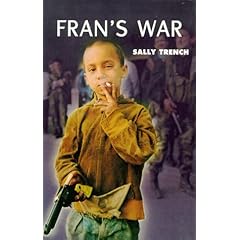
Fran’s War – Sally Trench (3)
Told through the eyes of a child, but written by an adult, Fran’s War is a bit like I Am David or The Silver Sword, as a bunch of children in a war-torn country try to survive and reach a safe place. Evicted from their homes in the ‘Bosnian conflict’ they gather a small troupe (including a starving stray dog which provides unconditional love and loyalty) and they traipse through the mountains in their own incredible journey.

On their travels, Fran and her friends encounter the UN and renegade soldiers. They walk across minefields and see their villages burn and their neighbours shot in the head. They camp in caves and hide in basements. Fran rifles through dead bodies in the hospital mortuary for extra clothing. All the classic images of war-struck Bosnia are included. The children carry water in a child’s buggy; queue endlessly for bread and meagre provisions; burn books for heat and fuel; and dash across bridges to avoid sniper fire.

Religion plays a big part in this novel, which is only to be expected considering that Sally Trench was named Catholic Woman of the Year in 1995. She portions no blame, however, and is even-handed in her treatment of all faiths. Each side thinks the other is the enemy and the minority will be the victims. Resentments and perceived injustices flare up so that they turn on one another seeking someone to blame until, “War had come to our village without a single shot being fired.” As a child, Fran encounters a tall blonde foreigner while skiing at a resort. She thinks of him as God and when she meets him seven years later as an aid worker in an extremely unlikely turn of events, he becomes a clear Christ-like figure.

It would be difficult to categorise this novel – it is probably too graphic for young adults and contains some over-bearing religious iconography, but it is too simplistic for an adult readership. It perhaps belongs to the no man’s land of war.


Approaches to Twelfth Night – Michael Billington (ed.) (4.2)
Michael Billington talks to four directors about their approaches to Twelfth Night and this is practically a transcript of their conversation. They discuss the division between the comic and the romantic scenes, the setting and the characters.

The sections on whether or not to play it in modern dress, how much to stick to the text and how much to compromise to a modern audience are very interesting. Terry Hands says the different humours can exist side-by-side because each emotion is intense in itself – as in pointillism there are red or white dots but no wishy-washy pink. John Caird reflects on the myriad of potential interpretations and suggests that every actor should be present at all rehearsals so that they are aware of the possible meanings too.

Although the interview is about this play in particular, and there are discussions of the role and portrayal of each of the characters, it is also about acting in general. There are some useful asides about how an actor finds an emotional connection with their character. John Caird argues that actors are not normal, so their experiences will not be those of the audience. He also cautions against the efficacy of creating a back story, as many actors do. This is all very well to help the actor understand the character and the words, but how do you convey that to the audience without overdoing it?

This is fascinating stuff for anyone who wants to act or direct and certainly for anyone who wants to be involved in a Shakespeare production.

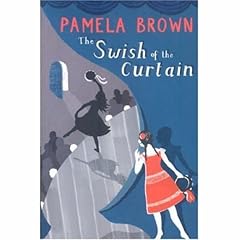
The Swish of the Curtain – Pamela Brown (3.4)
Recently as I discussed with some friends the books that had the biggest influence on their lives, one of my good friends mentioned this novel she had read being about a group of children who set up a theater company and produce their own plays. ‘Need I say more?’ she asked and I thought not, so I got it out of the library to see what the excitement was all about.

It’s terribly dated although that isn’t necessarily a bad thing. It’s sexist but simple. The children perform a range of plays from Shakespearean excerpts to pantomimes and nativity plays. And they always get a great audience. They write their own songs and plays, enter a competition (which of course they win) and perform outdoor pageants. As they play instruments, perform acrobatics, sing, dance and act, they are little Renaissance figures. Everyone in the village comes to support them and enjoy the artistic experience – now that’s certainly dated!

Pamela Brown began this book when she was fourteen-and-a-half, and finished it when she was fifteen. Although it is badly written and she has a habit of overusing adverbs (“he said, ungrammatically”; “she remarked ambiguously”) she is probably far more informed about literary matters than most modern teenagers. The children all give their opinions on the performance of Shakespeare’s plays with knowledge of stagecraft and character development not limited to CGI and video games.

Although the parents worry that trying to make a career in the theatre is “such a precarious living” they acquiesce for their children to go to a dramatic school. It is the sort of book where you know they will be able to overcome all hurdles and achieve their ambitions no matter how unlikely and insurmountable they may appear. All is jolly and the feel-good factor is turned up high. They don’t write children’s books like that anymore either.