Showing posts with label Adelaide. Show all posts

Friday, 31 October 2014

Friday Five: Adelaide Rocks!

Some members of my family are fascinated by rocks. They have degrees and PhDs in the subject. I am not one of them. Words are more my passion. However, some of these aggregate lumps have tales of their own to tell, and as I wandered around the Minerals and Meteorites exhibition at the South Australian Museum, I found myself to be pretty interested in their stories.

The colours and names are wonderfully poetic, and, even without knowing the geology behind them, they intrigue me. Quartz, malachite, smithsonite, berthierite, freibergite; sparkly with points and nodules; bright hues of blues, greens, reds and purples from Wallaroo, Burra Burra, and other places in South Australia.

5 Special Rocks:


  1. Fluorescent rocks from the Sterling Hill and Franklin mines in New Jersey. They really do glow in the dark!
  2. Malachite - how beautiful is that!


  3. Gypsum - probably not as soft and fluffy as it looks
  4. Someone has organised these colourful pebbles in a way that appeals to my OCD nature.
  5. Opalised shells from a piece of ancient sea-bed.

Friday, 3 October 2014

Friday Five: Lounging about

I've always been slightly confused about whether the item of furniture seen in posh houses and vintage settings is called a chaise longue or a chaise lounge - there seems to be no doubt that it is a French chair, but is the point that it is a long chair, or that it is a chair designed for lounging rather than sitting? 

For no apparent reason, I seemed to be surrounded by the things on a recent trip to South Australia, so they became something of a theme...

5 Chaises Longue/Lounge:
  1. The hotel room in Adelaide featured one which was very comfy for reading books and watching Liverpool games - unfortunately the score wasn't as satisfying.

  2. The Art Gallery of South Australia didn't help, depicting this work by Marcel Breuer as a 'long chair' and imploring punters 'please do not sit'.

  3. Another example in the gallery, By Marc Newson, describes itself as a chaise longue, so I think I'm going to stick with that from now on.

  4. Meanwhile, in Auburn, this innovative design combines a clawfoot bath with the chaise. I like it.

  5. At Emily's Bistro and Emporium at Quorn, it is difficult to tell whether the antique furniture and clothing for sale are considered quirky or current.

Wednesday, 3 July 2013

Hans Academy


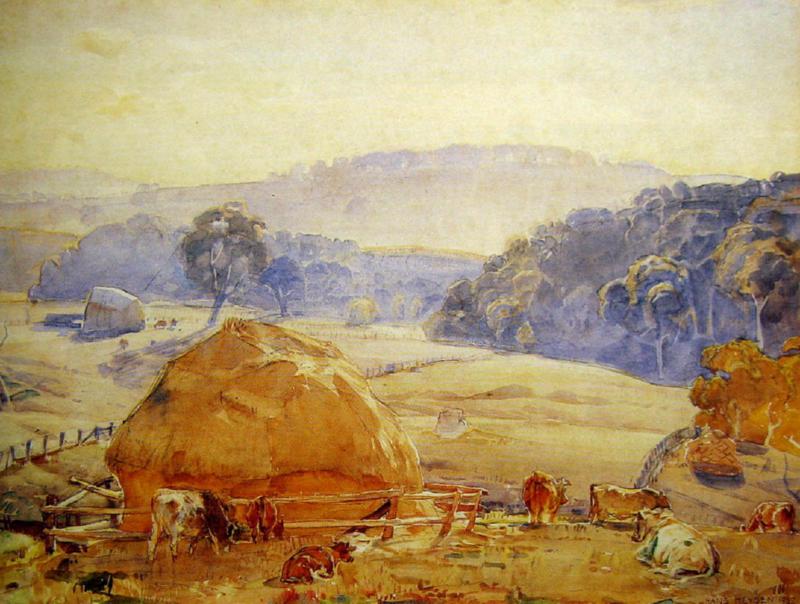
Hans Heysen (1877 – 1968) was a renowned landscape artist who spent most of his working life in and around Hahndorf, South Australia. A superb draughtsman, skilled watercolourist and accomplished painter in oils, he was famous for his unique romantic-realist representation of Australian landscape, in particular of the massive gum trees in the Adelaide Hills that he so loved.


He is considered to be the first artist to visit the outback and is known for his sensitive and penetrating vision and devotion to nature. As well as depictions of the Flinders Ranges of the north of South Australia, his pen and pencil drawings and charcoal compositions evoke the quality of light in the Adelaide Hills.

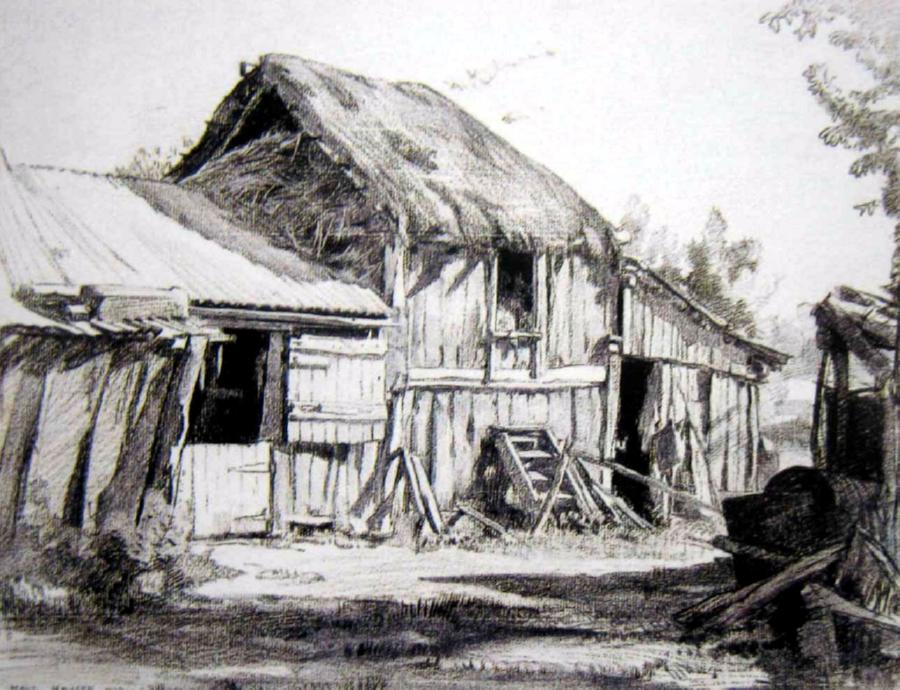
Heysen donated a selection of drawings to the Hahndorf Academy which are now on permanent display. These exquisite sketches and preparatory drawings were completed over a period of fourteen years from 1906 to 1920. They reflect the artist’s love of Hahndorf where he and his wife settled in 1908, as well as his strong support of the Academy.

The Academy was a school, established in 1857, whose purpose was to provide, “a sound and good English and German education in order to enable its pupils to enter the learned professions or to prepare for commercial life.” It became a secondary boarding school teaching in both English and German with a strong reputation for art, physical education, academic scholarship, commerce and music.

Due to various financial difficulties, the building was sold several times and served many functions, including as a Lutheran teacher’s seminary, a nursing home and hospital, council offices, military headquarters, a betting shop, a dentist’s surgery, private dwellings and flats, and a recreation centre.

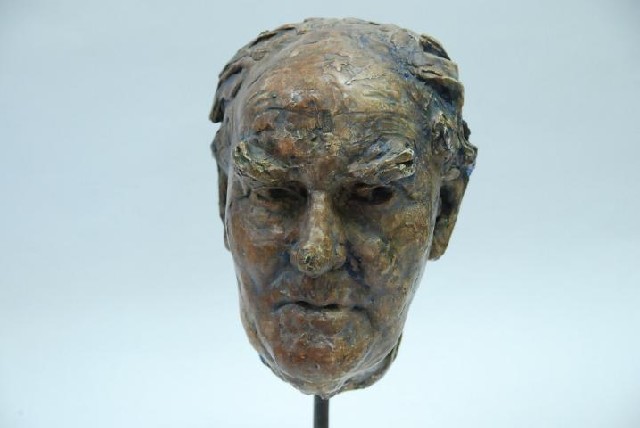
Eventually it became the Hahndorf Galleries and German Folk Museum, with an exhibition of Hans Heysen’s works to commemorate his 90th birthday. The subsequent programmes of works by emerging artists drew visitors from around the world, and the Academy also became well known for its concerts. The Heysen Room was dedicated to displaying the works that Hans Heysen had donated to help raise funds plus the bronze sculpture of his head by John Dowie.

Heysen’s sketches at the Academy include German Wagon, Cutting Chaff, Farm log roller, Haebich’s Smithy, Back Street Corner, Witmer’s Pump, Thatched barn, and The Road to Hahndorf. Heysen didn’t have the heart to finish this last painting, as the authorities felled the trees (although he offered them the selling price of the timber to try and save them).

The spiel at the Academy claims that the pictures Heysen donated are part of a visual archive. “The images are a reminder of days gone by; a lively German town filled with the sounds of horse drawn vehicles and children playing... the aroma of German sausage and freshly baked bread and the charm of the thatched cottages lining the main street.”

Tuesday, 25 June 2013

Adelaide Migration Museum: It's not over here

The Immigrants by Aurelio Fortelaan
The Migration Museum in Adelaide is a building with a story of its own. The site was originally used as a Native School where Aboriginal children were boarded and educated. It then served as part of Adelaide’s Destitute Asylum (housing the poor and homeless and ‘fallen women’), from 1852 to 1918. In its final incarnation before becoming the current museum, it was a Government Chemistry Department, where chemists analysed blood samples. All of these eras have a small exhibition explaining their purposes, although the main body of the museum features the history of migration in Australia.

Scientific discoveries in navigation and shipbuilding technology meant that by the fifteenth century ships could travel much greater distances than before. The competitive nation-states of Europe began a search for distant lands where they could exploit natural resources in order to increase their power and trading opportunities. In 1492 Columbus claimed the Americas for Spain.

For the next four centuries, Spain, Portugal, the Netherlands, England, France and Germany progressively explored the Americas, Africa, Asia and the Pacific. Soldiers, missionaries, settlers and armies of bureaucrats followed in the wake of these voyages of ‘discovery’. The world’s oceans were linked through a network of empires, colonies, trading posts and shipping routes.

Between 1815 and 1930, 52 million people left homes in Britain, Ireland, the German States, Scandinavia, Italy and Southern Europe. Of those, 3.5 million came to Australia (fewer to South Australia). They were exiles for political or religious reasons, leaving their native land due to instances of poverty, such as the Irish famine or the Highland clearances of Scotland. They sought opportunities of work and land.

Of course, while the story of immigration is an important one for the continent, it was not Terra Nullius. The Kaurna people are the indigenous owners of the land of the Adelaide Plains and they called the area by the mouth of the Torrens River, which became the city of Adelaide, Tananya, which means Red Kangaroo.

The white settlers could have learned much from the original inhabitants, but were too busy trying to make a new Britannia; ‘civilising and Christianising’ the Aborigines. They found the rose (a symbol of England) flourished in South Australia, and Archdeacon Matthew Hale introduced cricket at Poonindie as part of the ‘civilising’ process. Escaping persecution made the new migrants zealous for religious freedom; there is a reason Adelaide is known as the city of churches.

The octagonal display room of the museum features many exhibits of what the immigrants decided they needed to take or were physically able to carry. Some of the items such as valuable work boots, sentimental christening gowns or tea-sets one couldn’t bear to leave behind are terribly poignant as people embarked upon a new life on the other side of the world.


In 1829 one of the founders of South Australia, Edward Gibbon Wakefield, published a theory of systematic or scientific colonisation in which settlers would no longer receive free grants of land as in other colonies. He suggested instead that colonial land should be sold for a set price to men of wealth, and the proceeds used to pay emigration costs of desirable labourers. The class system was still in evidence, however, and the ‘wrong type of labourers’ were arriving. The government began subsidising immigrants only at times of extreme shortage.

Australia became a Federation in 1901. The Nomenclature Act of 1917 prohibited use of German language and changed place names of German origin. In 1927 the Duke and Duchess of York opened the new Parliament House in Canberra, and in 1930, the first telephone link to Britain was established between Melbourne and London. And the waves of migration were reaching Australian shores from all over the globe.

In 1906 Australia took formal control of PNG from Britain; 7,500 Jewish refugees from Germany were accepted in 1973, flowed by Chinese refugees in 1940 after the Japanese invasion. Italian prisoners of war arrived in 1941, and in 1946 Austrians, Maltese, Italians and Germans came. Free and assisted passage agreements with the UK and Poland were set up to help displaced persons to migrate, and in 1948 the creation of Israel led to emigration of Palestinians.

Child migrants began to arrive in 1951 and, as of 1956, jet aircraft flights to Australia made it easier for Eastern Europeans to travel, which they did with the assistance of the Operation Reunion Scheme. Many people from the UK flocked Down Under as part of the Bring out a Briton campaign of 1957. The British, and particularly the English, make up a large percentage of Australia’s immigrants, but are often referred to as ‘the invisible migrants’.

Not all migrants were welcomed equally. A dictation test was established in 1901 in which some new migrants had to transcribe 50 words of ‘any European language.’ From 1909 the Immigration Restriction Act (known as the White Immigration policy) was implemented and until it was repealed in 1958, no one who was given the test passed it. Dictation would be given in Swedish, Scots Gaelic or Hungarian if the immigration officers didn’t like the look of you (i.e. you were Irish, Asian, black) or your politics.
A tapestry from Bosnia and Herzegovina
Immigration has continued steadily over the years, following a pattern of social, economic, political or geographical upheaval: – Italians from Sicily arrived after the earthquake of 1968; 12,000 Czech and Slovak refugees arrived following the Soviet invasion; Vietnamese people came to avoid the war in their country, and Cambodian refugees fled Pol Pot’s regime throughout the 1970s. Bengali immigrants escaped civil war between East and West Pakistan in 1971, and Chilean refugees escaped Pinochet where they could.

The relationship has not always been an easy one, however, and although migration adds multicultural richness in terms of faith, food, dress and theatre, not everyone is happy with the diversity. In 1949 the Minister of Immigration, Arthur Calwell, instigated The Good Neighbour Project to ‘Australianise all our migrants in as short a time as possible’. The Aboriginal Tent Embassy was erected in Canberra in 1972 by indigenous people who felt their rights were being eroded by foreign intervention.

Despite the Declaration of Universal Migration in 1973 which stipulates, ‘any persons anywhere in the world can apply to migrate to Australia no matter what their sex, colour, ethnic origin or religion’, there is still a large amount of tension and unease around the subject, bursting into violent protest on occasion such as the 2005 race riots.

The museum had no section on the (current) Opposition leader’s tirade against Indonesian asylum seekers – Tony Abbott maintains he will ‘turn back the boats’ – but the fact that this is an incendiary issue which might have a significantly influence the upcoming federal election suggests that the migration museum has several more chapters to include in its narrative journey.

Tapestry detail

Wednesday, 13 February 2013

Art Gallery of South Australia: Part Three

Moving perhaps to more familiar artistic territory for me, here are some more of the artworks I enjoyed.
The Letter (1889) by Emma Minnie Boyd
This is a fine example of the later nineteenth century Victorian narrative style of painting which told stories and pointed morals. It hints at the young woman's possible future as she looks away wistfully, the letter tucked behind her back and the opened envelope lying at her feet, pointing to a world beyond the threshold of the drawing room.

I also like the treatment of light in this painting as the interior is dark and precise highlighting the peacock floor feature and Persian style carpets indicative of the popular aesthetic movement, while the sunlight filtering through the curtains and the impressionist style brushwork of the outdoors world provide a pleasing contrast.
 
Peacock Panel (1899) by Albert Pedvin
And speaking of peacocks and aesthetics, this glorious beast shines brightly against the walls. It's watercolour, pencil and gold leaf on wood, and is quite a remarkable feature in the gallery.

The Four Seasons (1902) by Hugh Ramsay
Detail from The Four Seasons
This is Hugh Ramsay’s only known multiple panel work. It was originally placed in a Tasmanian hospital and later incorporated into a bookshelf in the billiard room in the house of John Ramsay, the artist’s brother. Illustrating women in harmony with their environment, the figures can be identified by their corresponding landscapes as spring, summer, autumn and winter. The lyrical treatment of the figures and drapery show the influence of French symbolist Puvis de Chavanne, while the Latin inscriptions reference the romantic Pre-Raphaelite tradition. Ramsay’s embrace of these influences reveals a more poetic side to his more typically masculine work.

Onions (1905) and Still life with celery and apples (1901) by Margaret Preston
The Tea Urn (1909) by Margaret Preston
Aboriginal landscape (1941) by Margaret Preston
Margaret Preston was one of Australia’s foremost modernists. Travelling widely both in Australia and overseas brought her into direct contact with modern European art and its assimilation of oriental and so called ‘primitive’ art influences. As early as the mid 1920s Preston began to reference Aboriginal art, in some instances borrowing directly from the designs made on rainforest shields.

In Aboriginal Landscape Preston modernises the then waning landscape tradition via the visual language of Aboriginal art. Furthermore, Preston believed that it was through the influence and agency of Aboriginal art that Australia could develop a truly national art form.

The Pink Scarf (1913) by Hilda Rix Nicholas
I know very little about this artist and less about this painting, but the soft gentle colours moved me, along with the young woman's slightly wounded expression. Apparently Nicholas has been accused of painting 'picturebox perfection' but I wonder if the fear of the young woman's propensity to blend into the wallpaper is what we see reflected in her features.

French Café (1936) by Peter Purves Smith
French Café was painted towards the end of Purves-Smith’s study at the Grosvenor School of Modern Art in London. Depicting three men and a woman seated at a table it pays homage to Cézanne’s famous series Cardplayers. The work shows, on one hand, compliance to artificial form with flattened planes, modelled figures and flat light while also representing a departure into an imaginary realm characterised by elongated arms and exaggerated facial features. A sense of alienation is evoked by the open doorway where a loan figure stands in the shadow of an isolated tree.

The Bridge (1030) by Dorrit Black
The Olive Plantation (1946) by Dorrit Black
Dorrit Black travelled overseas and studied in both London and Paris. It was her training in France in the Cubist manner in the late 1920s that led her to simplify her compositions and focus on the fundamental structures of her subjects. On her return to Australia, Black made a significant contribution to the Australian artistic community by teaching, promoting and practicing the philosophy of modernism – initially in Sydney in the early 1930s, and later in Adelaide during the 1940s.

The Olive Plantation is one of Australia’s most distinctive landscapes of the 1940s. It is a tonal depiction of the Adelaide foothills at Magill, now surrounded by suburban houses. The rounded solid forms are characteristic of Black’s modernist compositions of the 1940s.
 
Subway Escalator (1953) by Frank Hinder
Frank Hinder was an artist known for abstract and semi-abstract paintings and drawings, which expressed his belief that art is a means of revealing the fundamental laws of design that underlie the world of appearances. He not only painted and exhibited as a Modernist artist, but also worked on theatre and costume designs, commercial art for book publishers, magazines and advertising agencies, textile designs, and lithographic printmaking.

In this painting he uses tempera to produce dry, light colours and precise lines, rendering the city as a dynamic, living organism, where everything (particularly people and buildings) is in a state of endlessly altering relationships.

The Lift (1954) by John Brack
John Brack is regarded as one of the most significant Australian artists of the twentieth century. His art is characterised by his carefully considered and controlled compositions, and by his choice of subject matter, often consisting of mundane images drawn from the world around him. Of course I had to take a picture of this one to show Him Outdoors (who didn't come to the gallery with me).

The Lift belongs to an important group of works from the 1950s which reflect the awful reality of the Holocaust. Rather than making an anguished or impassioned response to this subject, Brack imbues these paintings with their power by exercising constraint. The unnerving quality of this work comes from imagining that the steps leading up to this seemingly ordinary lift are analogous to the tragic fate suffered by the Jewish people led to their deaths in the gas chambers of Nazi Germany.

Tuesday, 12 February 2013

Art Gallery of South Australia: Part Two

The Sisters (1954) by Arthur Boyd
I thought I'd mainly focus on the sculpture in this post, as there was a lot of it about, including this intriguin piece by a man better known for his landscapes and war art. It confronts the visitor to the gallery, being in the first room in front of a range of Sidney Nolan's portraits.

There were some very fine sculptures and pieces of metalwork in the gallery too. Many silversmiths arrived from Europe and adapted their skills to the Australian environment.

Perfume bottle holder (circa 1875) by Henry Steiner
Steiner was born in Rodenberg near Hanover in 1835. He arrived in Adelaide in 1858 and set up in business on his own account around 1860. Steiner was a very prolific silversmith who exhibited at many of the great 19th century exhibitions around the world.

This is an actual emu egg that encloses two perfume bottles. The egg has been cut in two and is hinged to allow access to the perfume bottles inside. The bottles are made of two very large beans from a Queensland tree, with silver necks and caps added to make them functional as perfume containers. It is an excellent example of the silversmith's ability to combine skills in engineering and design in the production of this visually striking, as well as mechanically clever, work of art - the emu finial activated the locking mechanism.

Detail from Julius Schomburgk's Presentation Cup (1861)
Schomburgk emigrated to South Australia from Prussia in 1850 and soon established a solid reputation for his silversmithing and design skills. A committed exponent of Victorian naturalism, he incorporated in his designs a vast range of sculptural motifs representing Australian flora and fauna in combination with figures of Aborigines.

Curator Robert Reason says, “For me, the work from 1850s and sixties is the most fascinating – you can really sense these European trained silversmiths grappling with their new environment and see them responding with different design solutions to Australia’s unique flora and fauna and Aboriginal people.”

Bishop Augustus Short Testimonial Candelabrum (1876) by Henry Steiner
Table (1878) by Henry Hugentobler and Conrad Sturm

This flamboyant table is an outstanding example of the technique known as marquetry, in which pieces of contrasting timbers are inlaid on a surface in decorative patterns. Reported to contain 30,000 pieces of timber (Australian red cedar; pine; stringy bark; red gum; black gun), it is the most elaborate example of nineteenth century South Australian furniture. It was made as a display piece and exhibited at the Sydney and Melbourne international exhibitions of 1879 and 1880 respectively.

Wreath of hair in a floral design (circa 1880) attributed to Zelma Sobels
I don't know why, but I've always found things made out of human hair a bit creepy. Actually, I suppose I do know why; it's the thought of people being forced to cut or shave their hair for money, or in concentration camps. Piles of hair on hairdressers' floors always makes me shudder as it was attached so recently and now it's lifeless. Hair in plugholes makes me feel ill and I always very carefully dispose of mine - nail clippings too: those things have power in the wrong hands.

Eros (1892-93) by Alfred Gilbert
I'm not really sure what this statue is doing in the Australian section, but I like it, so I've included the picture. And he looks pretty good there too.

Transitional shield (circa 1930) - artist unknown
This early South Australian shield has been carved from a dense hardwood and then burnt and scraped back to create a tortoise shell-like appearance before being incised with delicate decorations. The shield is described as a transitional shield because it combines the traditional form of a parrying shield, used as both a weapon and to parry the enemy away, with decorative elements from a non-Indigenous culture. The inclusion of introduced species such as camels, horses and cattle provide a fascinating and succinct synopsis of European contact. The focus on the kangaroo and emu can be read as both Aboriginal totem or game images and as a reference to the Australian coat of arms.

Caprice (1935) by Barbara Tribe
This glorious sculpture won Tribe a New South Wales Travelling Art Scholarship when she was just 22. The scholarship provided £250 per annum for two years’ travel, plus the return fare to Southampton. Not since its inception in 1900 had this scholarship been awarded to a sculptor, or to a woman – an exceptional achievement.

I love the curvaceous warmth and exuberance of this sculpture. It did not surprise me to learn that Barbara Tribe, born in Sydney to recent immigrant parents, was a proficient swimmer and body surfer who represented her state. I can image that Caprice has just emerged from a swim in the ocean and is stretching her body on the rocks.

Transmutation (2010) by Caroline Rothwell
This is from Rothwell's website: "Transmutation, a pre-Darwinian word used to describe ideas of evolutionary change is also an alchemical term referring to the attempt to change a base metal into a precious metal. Both these terms are relevant to Caroline Rothwell’s practice where science, art and perception collide.

"Rothwell’s work revolves around our relationship with the natural world, particularly how the unintended consequences of our past crash into present and future technologies and environmental politics. Her work also explores very sculptural concerns where ideas of monumentality and process are challenged. Form gains a sense of liquidity, what appears light may be tremendously heavy or vice versa, industrial materials are hand-crafted. Things are never quite as they seem."

Indeed.

Wednesday, 6 February 2013

Art Gallery of South Australia: Part One


The Art Gallery of South Australia in Adelaide contains the largest collection of Australian art in the world, so of course I went to look at it. Photography is allowed without flash, so I recorded the panel explanations of favourite artworks, to study them later. Here are some of them.

Portrait of Captain Matthew Flinders, RN 1774-1814 (1807) by Toussaint Antoine de Chazal de Chamarel
This portrait painted by the French amateur painter de Chazal is the only known life-size oil portrait of Captain Matthew Flinders.

Matthew Flinders made a voyage to Australia in 1801-03 as captain of the Investigator. It was on this expedition that the South Australian coastline was charted for the first time by a European explorer. Returning to Britain in 1803, Flinders was detained, for almost seven years on the French colony of Mauritius on charges of being a British spy. It was during his detention that this portrait was painted.

I've become fascinated with explorers' exploits and I particularly like Flinders because of his affection for his ship's cat, Trim, about whom he wrote a book (as did Bryce Courtenay several years later). I think this portrait, hinting at sensitivity and secrecy, makes him look like the type of chap who could love a cat.

Self Portrait (1815) - Colonel William Light
Colonel William Light arrived in South Australia in 1836 to survey the colony. As well as a meticulous draughtsman, he was regarded as an excellent watercolourist. The first European artist in South Australia, he made numerous drawings and watercolours that recorded the first landing and the first settlement. He designed Adelaide, the colony's capital, and surveyed more than 600,000 hectares of surrounding land.

I like how he has portrayed himself nonchalantly leaning against a rock with suitably craggy and romantic scenery in the background and a folded-up telescope in his hand. Apparently this style is representative of the Regency fashion - studied or calculated informality designed to make "young upwardly mobile dandies look dashing or at least interesting in a Byronic way.'

Captain Cook on the coast of New South Wales (1860) by Joseph Blacker
Joseph Backler was a talented forger in London before he was caught making false money orders in 1832 and transported to New South Wales for life. Once in Sydney his talent for drawing marked him out as a special convict and he was assigned to the Surveyor general's department as a draughtsman. After he was pardoned in 1847 he made his income as a landscape and portrait painter.

This portrait of Captain James Cook was made from copies as Cook died in 1779. He is depicted standing on a rocky legde with cliffs in the distance, suggesting the East coast ocean cliffs near the Heads of Sydney Harbour, resting his hand on a globe of the world, on the northern hemisphere, likely to be England.

Fish Catch and Dawes Point, Sydney Harbour (1813) by John William Lewin
This is the earliest known oil painting to have been painted in Australia. John Lewin, Australia’s first professional artist, arrived in Sydney in 1800 after training as a natural history painter in London. The arranged fish catch from the harbour waters is positioned on the shore at Kirribilli Point. The view looks south across Sydney Harbour to Dawes Point, from which the Harbour Bridge spans today. This painting is an oddity being neither a straight forward natural history painting, nor simply a decorative still-life, nor a sporting painting of a proud fisherman’s catch – all popular subjects in Britain in the early nineteenth-century. Rather, it is a combination of all of the above.

A View of the artist's house and garden, in Mill's Plains, Van Diemen's Land (1835) by John Glover
This painting of Glover’s Patterdale farm at Deddington in Northern Tasmania depicts the artist’s new shingle-roofed stone house and wooden studio-gallery surrounded by his flourishing garden in bright sunlight in the summer of 1934-35. Glover has delighted in depicting each of the English annuals in the new squared garden of his farmhouse, and he has also taken pains to depict accurately the distinct qualities of the native Australian trees beyond.

Group of natives of Tasmania (1860) by Robert Dowling
Robert Dowling was Australia’s first locally trained professional artist. He arrived in Tasmania with his parents in 1834 at the age of seven, and later settled in Launceston. In the 1840s he studied in Tasmania, under several artists including Thomas Bock. Dowling relied heavily on Bock’s 1830s watercolour portraits of Aboriginal Tasmanians to create this group composition when most of the sitters had passed away.

The painting depicts notable Aboriginal Tasmanians who, due to their connection to G.A. Robinson’s Friendly Mission, were the repeated subject of major Tasmanian artists.

In the Sassafras Valley, Victoria (1875) - Isaac Whitehead
Isaac Whitehead’s detailed paintings provide some of the most evocative depictions of natural forest stands in Australian art. In this painting ancient eucalypts create a towering, protective canopy through which dappled sunlight filters onto the fronds of tree-ferns and the creek beneath. The giant scale of the trees is emphasised by the inclusion of bushwalkers and figures seated around a campfire, dwarfed by their surroundings.

Whitehead worked as a framemaker in Dublin before arriving in Victoria in the late 1950s where he established himself as Melbourne’s leading framemaker. He made frames for the leading Melbourne painters Nicholas Chevalier, Thomas Clark, Louis Buvelot and Eugene von Guérard. This painting is framed by an example of his 1868 international prize-winning frame.

Evening Shadows, backwater of the Murray, South Australia (1880) by H.J. Johnstone
This painting was the first work of art acquired by the Art Gallery of South Australia. Since it was first displayed at the Gallery’s opening in June 1881, it has been one of the most reproduced and copied paintings in the collection.

H.J. Johnstone arrived in Victoria in 1853. After an unsuccessful attempt at prospection on the Victorian gold fields, he established himself in Melbourne as a photographer and then as a landscape painter of scenes of Victoria and South Australia. Johnstone left Australia in late 1876 but continued to paint Australian landscapes, often from his photographs, in the United States, London and Paris for the Australian market. Evening Shadows, painted in either London or Paris, is typical of Johnstone’s landscapes, all of which are characterised by an uncanny photographic stillness.