Showing posts with label Jane Yolen. Show all posts

Wednesday, 18 January 2023

Thorny Issues: Briar Rose


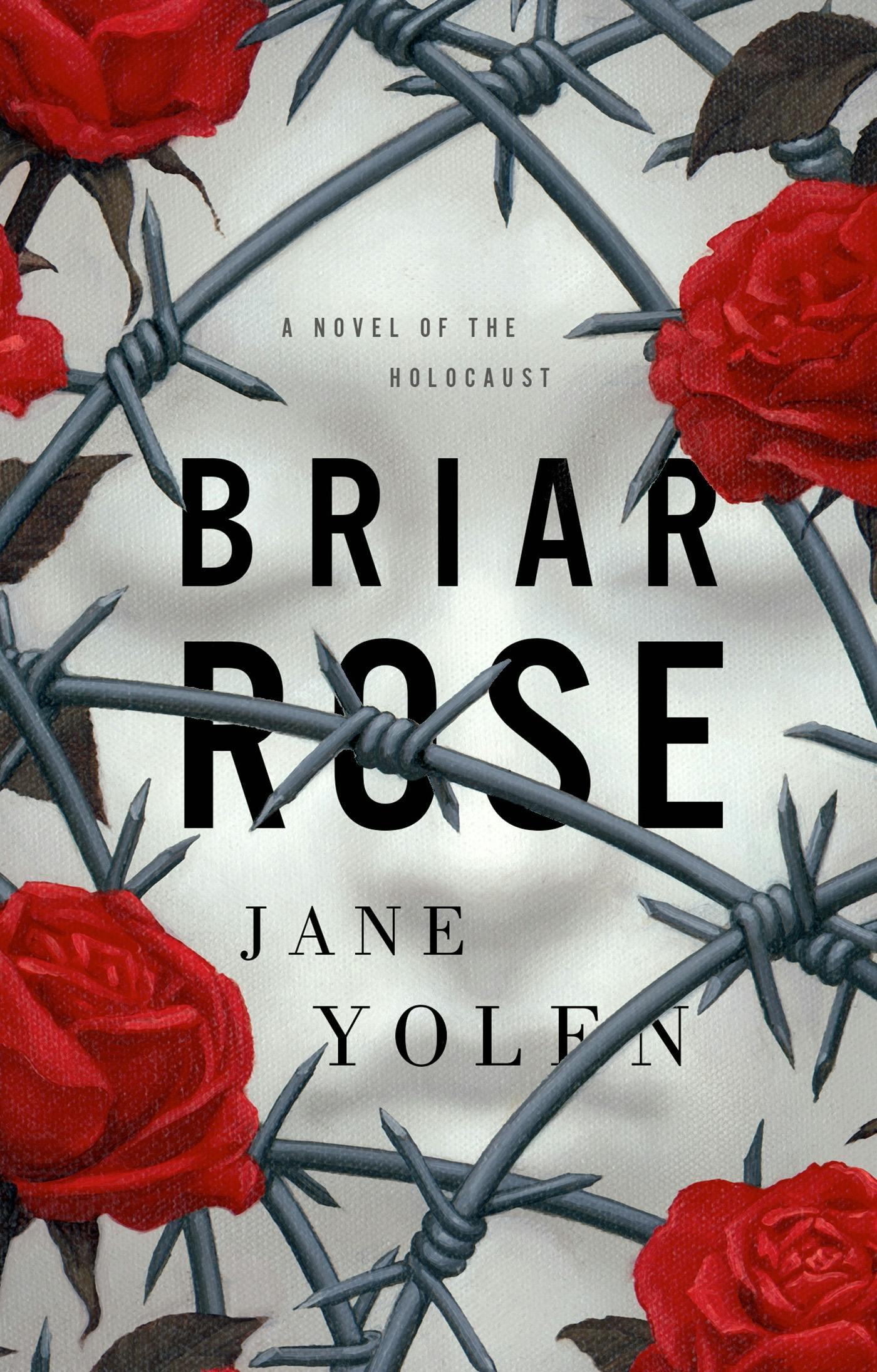
Briar Rose by Jane Yolen
Tor
Pp. 281

Jane Yolen’s Briar Rose is one of a series of re-told fairy-tales created by Terri Windling, who states in the foreword, “For countless centuries, storytellers have used the richly symbolic language of fairy tales to explore all the dark, and bright, and shades of gray of the human experience. Jane Yolen knows this better than most. And does it better than most.” Yolen takes the story of Briar Rose (also known as Sleeping Beauty) and links it to the Holocaust in ways that seems perfectly feasible while simultaneously fantastical. It is a Young Adult novel, with simplistic and unrealistic plot devices and characterisation, but it is also interesting reading for anyone who understands the power of the land of make believe.

Rebecca Berlin (Becca) is a young woman who has grown up hearing her grandmother (Gemma), always telling the same story, Briar Rose, in exactly the same words. No one knows much about Gemma, but after her death, Becca finds a box of personal effects which leads her to think there may be a war-time past. Her editor, Stan, encourages her to go to Poland to seek out the mysterious past of her grandmother. With the ease of stories over reality, he arranges her travel and translator through his journalistic contacts, so that when Becca reaches Poland she is assisted by a woman named Magda an incredibly hospitable tour-guide, translator, and unlocker of gates both literal and metaphoric.

They conveniently find a man, Josef Potocki, who knows Gemma’s story, which he relates to them in the middle third of the book – a story within a story, within a story. It transpires that the castle is a concentration camp, the brambles are barbed wire, the sleeping beauty is gassed, and the prince’s kiss is the breath of life. Tales are told as a means of coping with events, and if they are painful and don’t provide relief, one wonders what is the point. Becca is desperate to paint herself as the heroine in this tale; the Cinderella of the story. She can’t wait to return to America and boast to her sisters that she found the truth, even though they thought she was crazy for trying – yes, there are two of them with similar names (Sylvia and Shana) and she is the youngest.
The fairy-tale tropes loom large throughout the novel, and the narration is tightly constructed at the expense of character. This is satisfying in and of itself, and true to the genre. It may read like a creative writing challenge, but it certainly passes the test it has set itself.

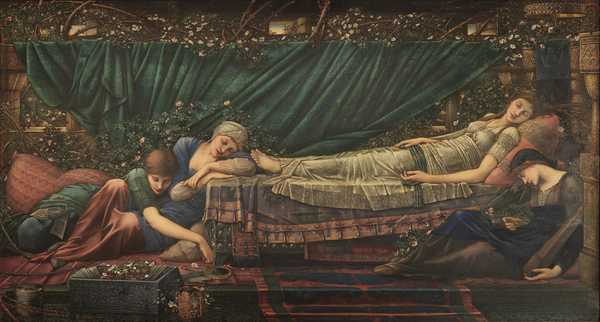
The Rose Bower from the Briar Rose series (1885-1890) by Edward Burne-Jones 

Wednesday, 13 January 2021

You'll do girl, you'll do: Finding Baba Yaga


Finding Baba Yaga by Jane Yolen
Tom Doherty Associates
Pp. 131

This contemporary retelling of an iconic myth is written entirely in blank verse. It is reminiscent of the artful design of a Russian Matryoshka nesting dolls, as elements of Slavic myth, Russian folklore and fairy tales cleverly fit among the contours of American realism. It also explores a number of themes including the nature and power of language, the journey from childhood to adulthood, the relationship between religion and language, ‘good’ and ‘bad’ words, the unique dynamic of female friendships and the mother/daughter relationship. Yolen begins her tale, “You think you know this story. / You do not.”

Teenaged Natasha lives with her parents, and knows she must get away from them and their constant fighting. Ever since her father has discovered religion, it has become worse as he monitors her language and behaviour. She runs away into the forest but, although the woods, stones and water are a recurring fairy tale image or reference, this is not the one familiar from storybooks and the settings are slightly skewed; “The forest opens like a yawn,/ as if it knew I was coming,/ has seen me before,/ can’t be bothered to resist.” We recognise the motifs of the lost child in the woods, but Yolen suggests there is more to the story if we look, listen, and abandon our preconceptions. At the end of Chapter Two, The Runaway, in This Is Not a Fairy Tale she writes, “Expect no princes./ Expect no magic rings./ Expect no glass slippers./ Expect no fairy godmothers. / Expect no singing dwarfs. / Expect no talking dragons. / Expect only/ seven deadlies delivered:/ exhaustion,/ boredom,/ regret,/ hunger,/ anger,/ danger,/ death./ All part of God’s taketh away.”

And then she encounters Baba Yaga, with all of her traditional traits. She lives in a house which turns about on its chicken legs: “It is like living on a house boat:/ the swell of the waves, the turn of the tides,/ a moment of emotion, with the ‘e’ removed.” She is a tough old woman with an iron nose, and the contemporary references to strong women are apparent; “She’s tougher than Clinton or Thatcher ever were.” This clash of realism and magical imagery continues as she explains how Baba Yaga flies through the sky in her mortar, guided by her pestle, but no one see her “unless you count bad dreams”. She flies “across tundra, taiga, major highways,/ avoiding traffic jams, roundabouts,/ only bothering the occasional helicopter/ or low-flying private planes.”

Natasha learns to tell her story, and that “A story is, not always means.” It may be grim – “I think I know now/ there are no happy evers./ Only happy moments.” – but she grows as a narrator, examining the meanings of words and exploring postmodernism through form and structure, drawing attention to the artifice of the narrative. “I am becoming a poet./ I am thinking in metaphors./ I am walking through a poem.”

As Natasha rewrites the myth with herself as the hero of her own story, she discovers that “Stories retold are stories remade.” After all, if we believe critical analysis, there are only seven stories anyway, so we need to refresh them every now and then. In searching for (and finding) Baba Yaga, Natasha is really on a quest to discover her own inner vice, strength and truth. By the end of the book she states, “So, this is a tale/ both old and new,/ borrowed, narrowed,/ broadened, deepened,/ rethreaded, rewoven,/ stitches uneven,/ re-plastered, re-harled, rehearsed, reworked/ until it’s my own.” It is familiar and unique. It is brilliant.