Showing posts with label human nature. Show all posts

Tuesday, 12 May 2020

That Way Madness Lies: The Warlow Experiment


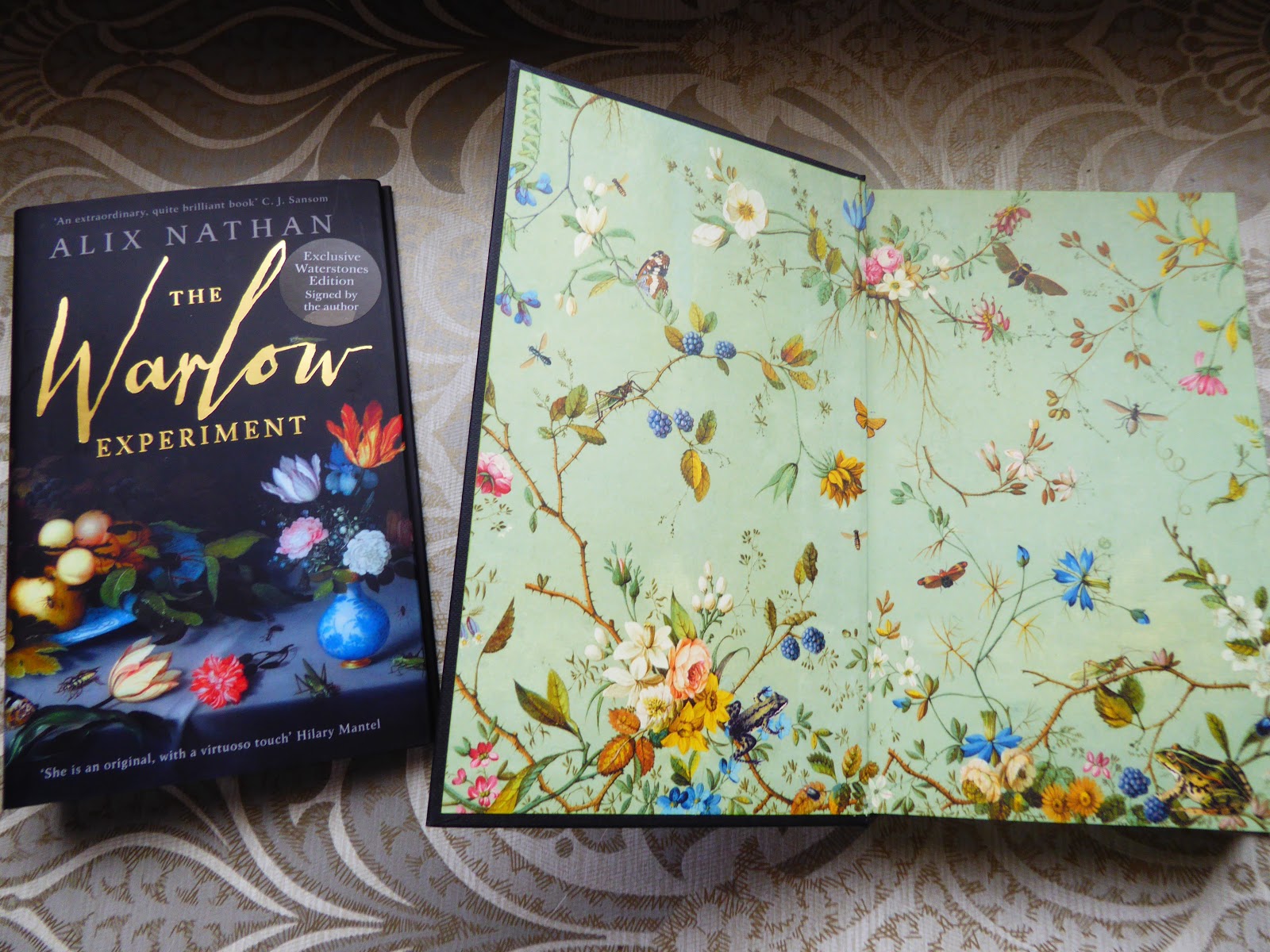
The Warlow Experiment by Alix Nathan
Serpent's Tail
Pp. 276

This novel is based on the true story of an eccentric Victorian gentleman, Herbert Powyss, who conducted an experiment; he placed an advert in a newspaper asking for a man to volunteer to be placed in isolation in his cellar for seven years with ‘every convenience desired’ but ‘without seeing a human face’. John Warlow was the only person who answered the advert, ‘a semi-literate labourer with a wife and six children to provide for’. Alix Nathan imagines how this experiment might have worked, or not, and she has created a rich novel of mental manipulation. She imagines that Powyss wants to see how a mind would cope without social contact and write up his findings to present to the Royal Society.

Powyss is typical of his era in that he likes to collect and catalogue things. He imagines that a human would be no different to his plants, “where so often he’d exerted order and precision, used good sense and experience, where reason had ruled”. Many of the metaphors are flora-related; he also hangs paintings on his walls of the Dutch masters and the cover of the book is a Flemish Vanitas image with fruit and flowers surrounded by insect life. Even the endpapers are glorious depictions of wildlife on wallpaper, representing both the care with which Powyss took to furnish Warlow’s underground apartments, and the never-ceasing ecological effects of co-existence.

Everyone in the house is affected by the presence of the man in the cellar, including the cook and the butler. The novel frequently switches perspective mid-chapter from Powyss to Fox, his old schoolfellow, or Hannah, Warlow’s wife, to Catherine, the housemaid. As one expects, madness ensues, and there are clear echoes of Frankenstein, Pygmalion, and even Jekyll and Hyde. Science without nature is abhorrent and potentially impossible. Life is fragile and unpredictable. Alix Nathan’s book is a superb rationale for the Ethical Conduct of Human Research Committee.

Thursday, 23 April 2009

Helping Hands


A big thank you to my friend Lindsay for alerting me to this project by a student in New York. Her intention is to explore the imaginative use of communications technologies and see how they might 'augment, improve and bring delight and art into people's lives.'

To this end, she built a 'human-like object' which rolls in a straight line with a destination displayed on a flag. It relies on people it meets to read this flag and to aim it in the right direction to reach its goal. She wondered if people with their cynicism and paranoia would bother to help a lost little robot.

The results are nauseatingly cute and overwhelmingly heartwarming. Curiously I imagine that New York and London would be two places where this experiment might succeed. There is humanity and compassion in these cities; it just manifests itself in a slightly odd way. This is truely one from the 'restore your faith in human nature' files.