|
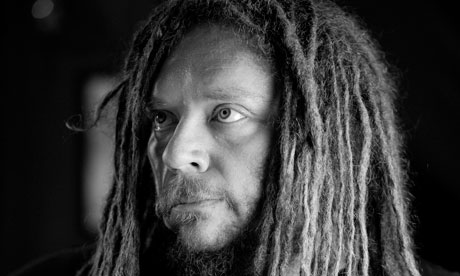
| Jaron Lanier |
Today's post is brought to you by 'You Are Not A Gadget: A Manifesto' by Jaron Lanier. I have just finished reading this book and my mind is reeling. Lanier is a respected Internet visionary, a gifted computer scientist, and an expert on virtual reality. He is disappointed that the limitless power of the Internet has not been used to reach its exciting potential and has instead been harnessed by homogenous conglomerates or, as he refers to them, 'lords of the clouds'.
Rather than experimentation and creativity, he fears the hive mindset of Internet users encourages mediocrity and degrades personal interaction. But he is not entirely negative - he is a product of the e-generation himself. He suggests some ways we can individually encourage original thought and personality as an antidote to endless mashups of other people's popular culture.
5 Ways you can 'be a person instead of a source of fragments to be exploited by others':
- 'Don't post anonymously unless you really might be in danger.'
- 'If you put effort into Wikipedia articles, put even more effort into using your personal voice and expression outside of the wiki to help attract people who don't yet realise that they are interested in the topics you contributed to.'
- 'Create a website that expresses something about who you are that won't fit into the template available to you on a social networking site.'
- 'Write a blog post that took weeks of reflection before you heard the inner voice that needed to come out.'
- 'Innovate in order to find a way to describe your internal state instead of trivial external events, to avoid the creeping danger of believing that objectively described events define you, as they would define a machine.'
A couple of weeks ago I read an article in The Canberra Times by Chris Wallace. She was writing of the furore created by knee-jerk journalistic reaction to Hilary Mantel's mis-quoted comments about Kate Middleton. Wallace still called her that, although she must be Kate Windsor or some such now, mustn't she? Or did she keep her name? That would be quite radical, but is entirely beside the point.
The point is not even Mantel's speech in question, given as the first of the London Review of Books' Winter Lectures at the British Museum and reprinted in full. The point is the haste of pundits and plonkers to comment on stuff about which they know nothing. The internet exacerbates this with abundant examples of trolling and ignorance.
It seems to happen a lot with literature, however. Governments and various authoritative bodies have often banned books because they don't like their substance or content. Usually they haven't read them. The people who pronounced the fatwa against Salman Rushdie claimed it was due to the blasphemy inherent in The Satanic Verses, which of course they had not read.
Folk frequently dismiss artforms such as opera or ballet, without ever having seen one. Similarly some claim to despise football without ever having been to game. Pundits are falling over themselves to mock the new Pope, yet most of them know nothing at all about Catholicism and have certainly never read the Bible. Some people vote for political parties without the faintest clue of their policies.
The internet spawns opinions - everyone seems to have one on just about everything. And yet many of them can't have a coherent conversation about the thing they claim to hate. And it is always hate. Softer sentiments don't stand out from the crowd. Sure, it can be fun to make sweeping statements (and of course I've done it), but I think perhaps we should be more conscientious about trying to uncover the whole story before spitting forth spiteful comments.
"Readers have responsibilities, not just writers. Paying proper attention and reading the whole damn thing before rushing to condemn is the least courtesy writers are owed." - Chris Wallace