Showing posts with label sexual assault. Show all posts

Wednesday, 1 May 2024

Gender Violence Packaged As Entertainment: The Silent Wife


The Silent Wife by Karin Slaughter
Harper Collins
Pp. 476

This is the tenth novel in the Will Trent series and comes with an expectation that the reader knows and cares about these characters. Without the prior knowledge, that’s a pretty hard sell. In an author’s note at the end, Karin Slaughter claims she writes love stories. “Really gritty, violent love stories, but still.” If love stories come with lashings of violence against women, then we might have to accept this claim, but it is depressing and disturbing for all that. The basic premise is that a man kidnaps women, leaves them drugged and immobilised, then returns to repeatedly rape them – he is found and imprisoned, but ten years later (while he is still in prison) similar crimes start up again – did they get the wrong man?

The novel alternates between times frames and returns to the cold case, which featured all the same characters but in different roles. Then, Jeffrey was investigating the case and was married to Sara. Now, Jeffrey is dead, and Will is in charge of the case with his professional partner, Faith. Will is romantically linked with Sara, the medical examiner. If there were mistakes made in the previous case, Will tries to shield Sara from errors her husband might have made. There were also glaring oversights made by Lena (such as assuming the victim was dead when she wasn’t), for which Sara cannot forgive her. Lena is still in action and pregnant, and this seems to rankle everyone, which indicates they are suffering serious trauma from a past the other books might explain if there were any interest in finding out.


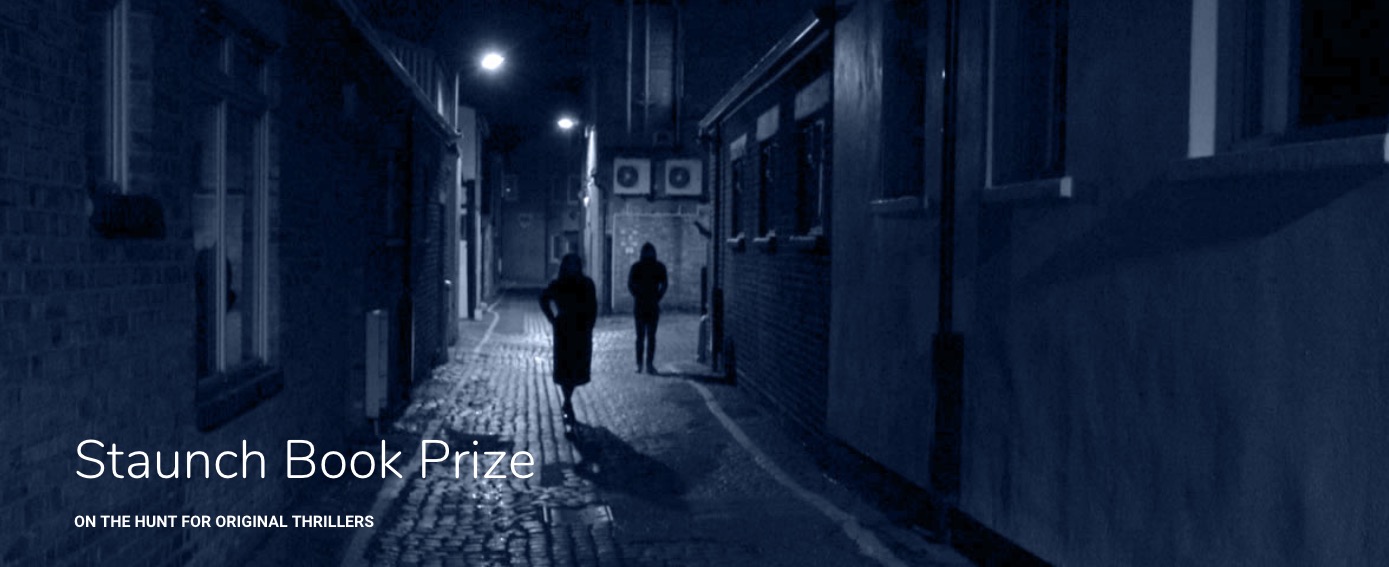
In 2018 The Staunch Prize was introduced for the best thriller ‘in which no woman is beaten, stalked, sexually exploited, raped or murdered’. The founder, author and screenwriter Bridget Lawless, went on to say, “As violence against women in fiction reaches a ridiculous high, the Staunch Book Prize invites thriller writers to keep us on the edge of our seats without resorting to the same old cliches – particularly female characters who are sexually assaulted (however ‘necessary to the plot’) or done away with (however ‘ingeniously’).” It closed in 2022. Not enough entries? Some claimed it was a ‘gag order’ and the case for violence against women should be raised and addressed through fiction, even if these tropes are used as entertainment.


The Silent Wife is worth considering in this light. It begins with a woman running through the woods being stalked by a man who will brutally assault her. Rape and violence towards women are central to this novel, written by a woman. Will feels the need to point out that all rape victims are different. Might that be because they are human beings as well as ‘victims’? “Some were angry. Some entered into a fugue state. Some wanted revenge. Most desperately wanted to leave. A few had even laughed when they told their stories. He had noted the same unpredictable affects among veterans returning from war. Trauma was trauma. Every person reacted differently.”


Of course, there are plenty of police procedural tropes throughout the novel with that hard-bitten tougher-than-nails attitude Americans like to portray. One can almost hear the actors barking out the empty words on interchangeable TV programs NCIS/ CSI /SVU such as, “We don’t have bodies or crime scenes. We have guesses and a spreadsheet. The families deserve answers and this is the only way to get them.” Cops go undercover and put themselves in danger with hidden microphones seeking a confession that will result in a death penalty. They maintain that tough exterior with flippant wisecracks.


The novel is fast paced with characters superficially caring about the victims. The reader is supposed to care about the characters. It’s hard to differentiate any of them from each other, and the dialogue is written with an eye to the TV adaptation. It leaves a sensation of empty fatigue and a knowledge that as long as people are entertained by this style of violence, it will continue. The consumer may pretend to be horrified, but by treating this as a titivation, we are part of the problem.

Tuesday, 22 June 2021

Cliched Romantic Claptrap: A Matter of Grave Concern


A Matter of Grave Concern by Brenda Novak
Montlake Romance
Pp.325

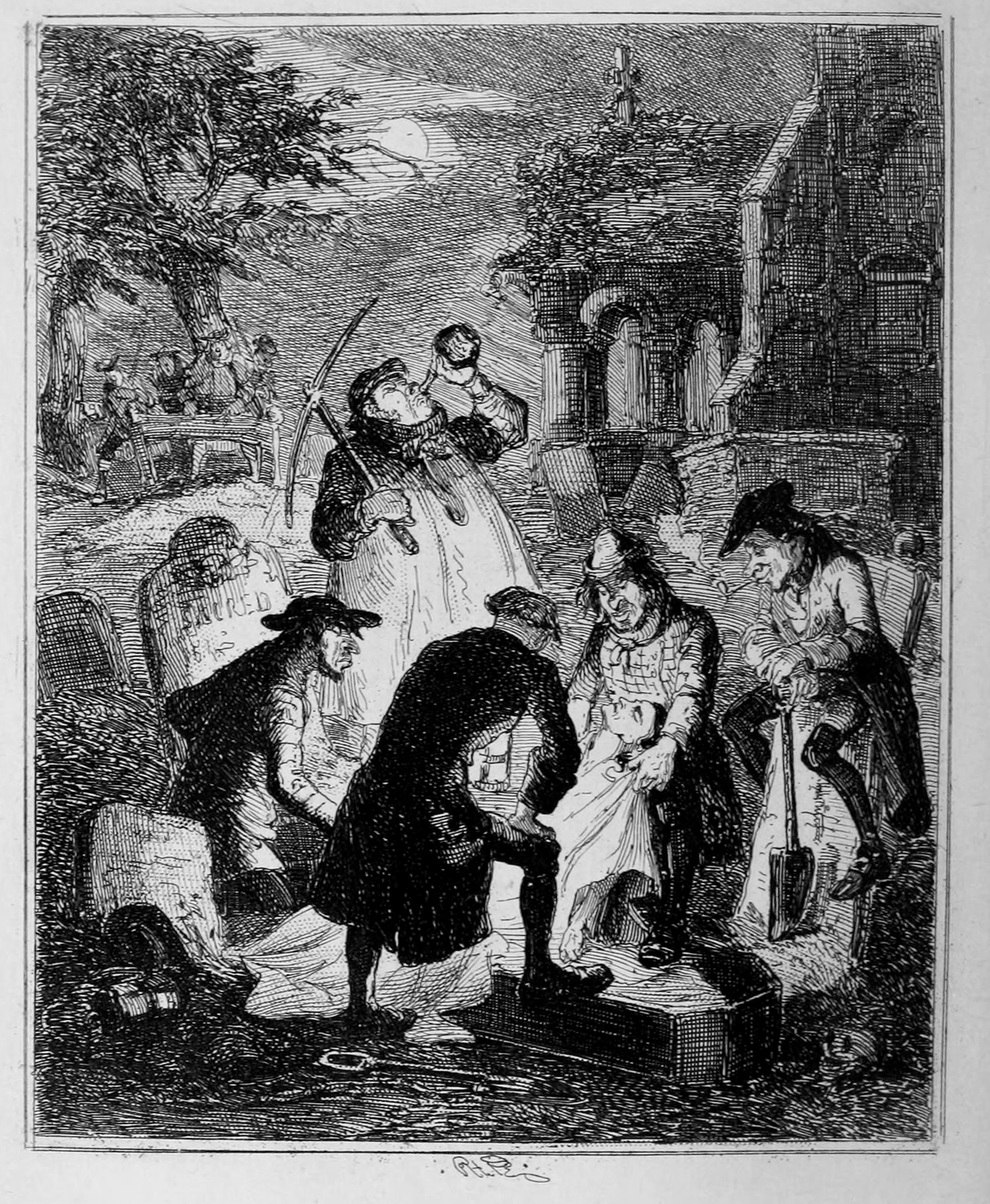
Brenda Novak has written over 50 novels and is a New York Times Bestselling Author, so she clearly has a following, although if trying to place her genre it would be somewhere on the misogynistic side of historical romance. This novel begins with an interesting premise about Abigail Hale, a woman who buys corpses to supply the medical school, run by her father, with cadavers. These corpses are often found illegally by grave robbers or, worse, people who kill in order to have a fresh stock of bodies. 

Resurrectionists by phiz

One of the grave robbers in The London Supply Company, Max Wilder, is actually a nobleman in disguise, trying to find out what happened to his step-sister who has disappeared and he fears she has been murdered. This scenario is interesting, but it all goes rapidly downhill when Abby goes to the home of the leader of the gang, Big Jack, to recover the money they took from her. She is captured and she falls in love with Max, who supposedly protects her, but also initiates her sexually while holding her captive; it’s all very distasteful and the sexual fantasy element seems misguided.

Abby dreams of being a surgeon, although women are forbidden from practicing medicine. Supposedly she has some feminist leanings, but she still likes to be dominated and falls for her captor. She refers often to the plight of women in the late Regency period, “Because she refused to adopt the role society tried to press upon her, she had always fought to fit in, even at the college. Lecturers and students alike couldn’t understand why she couldn’t be content to sit in the corner and darn socks.” Women have few options, apart from to go to the alms-houses, which “provided such a cruel and meagre existence that no one wanted to end up there”, and of course, there is prostitution.

There are offerings of historical information which do not blend with the plot, and land with a clang, such as the mention of “Sir Robert Peel’s new police force” or “the notorious gentleman’s guide to the current brothels and prostitutes in London – Harris’s List of Covent Garden Ladies.” It is as though Novak wants to educate as well as titivate, and she is far from subtle with the introduction of knowledge, but she also writes of England for an American market, as evidenced by her slips of language. Although Max is a high class noble (Lucien Cavendish, the Duke of Rowenberry), he tells Abby to, ‘Quit being so smug”, which is not an English expression of any era.

Interior with a Sleeping Man and a Woman Darning Socks by Wybrand Hendricks

Max is supposedly heroic and appealing in the way he cares for Abby, and she is drawn to his male magnetism and controlling aspect. “Max Wilder couldn’t be classified as a saint. There was something dangerous about him, something bordering on the uncivilized. From what she had seen so far, he dared more than a man should. He flouted whatever rule he chose to flout, and seemed to have no compunction about asserting his will in any given situation, regardless of how it affected others.” The novel constantly switches viewpoint, and we are meant to believe that a man so used to getting his own way is attracted to someone who might question his authority.

Abby admits her love for Max only to discover he is betrothed to another woman through an old alliance between families; of course it wouldn’t do for him to have any romantic attachment to anyone but her. Although she is now pregnant with his child (and we have been told about the consequences of unwed motherhood), she does the ‘decent thing’ by not telling him. “If she loved him, she would support him in what would make him the happiest, and she knew what that was.” This is patently ridiculous and a romance novel trope; one of many. There are long scenes of what Max and Abby feel for each other, but the actual plot hurries towards the end. In the last few chapters there are stabbings, abduction, hangings, and circumnavigations of the globe which appear to take weeks rather than months.

The sexual politics are at best uncomfortable and at worse downright offensive. As for the narrative, all of the potential interest in a story about grave robbers, medical science, and a young woman trying to negotiate a life in a man’s world is swept away on a torrent of clichéd romantic claptrap.

Wednesday, 26 June 2019

Blurred Lines: How to Talk to Girls at Parties


How to Talk to Girls at Parties by Neil Gaiman; illustrated by Fabio Moon and Gabriel Ba
Dark Horse Books
Pp.62

This is the first graphic novel I have read since I sat with a box of comic books at school on those rainy days when we couldn’t access the playground – unless you count Viz, of course, which kept me amused through my late teens. It was published June 2016, although the original short story by Neil Gaiman was written in 2006. The artistic content is clearly as important as the narrative or the words themselves, and here the images are supplied by Fábio Moon and Gabriel Bá: a Brazilian duo (twin brothers), who have won awards and international acclaim for telling stories in comic book form. The pictures feature bright colours with strong outlines and bold details against watercolour-like backgrounds to the panels. It is impressive and efficient to be able to draw pictures in place of descriptions, but it can occasionally lead to confusion as details, humorous asides, and motivations are omitted.

The story is set in East Croydon, told by Enn, and framed as a narrative from 30 years ago. He is a fifteen-year-old boy with all the normal concerns of a heterosexual teenager: namely how to make girls notice him when everyone seems to be attracted to his best mate, Vic. The language is either deliberately teenaged and ignorant or woefully blokey and sexist as he talks of girls as objects. Vic tells Enn, “You just have to talk to them. They’re just girls. They don’t come from another planet”, which is not bad advice, although it may also turn out not to be true.

At a party, Vic abandons him to go upstairs with the best-looking girl present (presumably for intimate encounters). Enn is despondent but forces himself to talk to three girls: Wain’s Wain, who explains that she is a second – she has six fingers on one hand – and thus not allowed to breed; a second nameless girl who claims, “I love being a tourist” and regales him with stories of “swimming in sunfire pools with whales” and learning to breathe; and Triolet, who claims to be a poem.


The story plays upon the need to belong and the fear of being an outsider, with strong implications of other-worldliness. Women are clearly from another planet – Mars and Venus anyone? When Triolet kisses him, it blows his mind. He sees “towers of glass and diamond and people with eyes of the palest green and unstoppable beneath every syllable I could feel the relentless advance of the ocean.” The drawing is of a fantasy land with bridges and turrets; minarets and spires in green and gold – a bit like The Emerald City in The Wizard of Oz.

Vic interrupts his reverie as he runs terrified from the house and Stella stands looking down at him in fury. There are suggestions that he tried to sexually assault her, although it is all rather ambiguous (The short story includes the line, “Her clothes were in disarray, and there was makeup smudged across her face, and her eyes”, which makes it less so). When Enn looks back he finds he remembers impressions of the evening rather than facts, and perhaps it is all a metaphor for the mind-altering universe of teenage hormones.


Neil Gaiman is hailed as a hero by many of my fantasy-loving friends, but I can’t help but feel there is something distasteful about this story. The pictures are beautiful but the sentiments are not. In trying to blur the lines of sexual experimentation and assault, I think this is unhelpful – especially when considering the teenage market at which it is aimed.