Wednesday, 20 November 2024

Townsville’s Palmetum

When we learned a good friend had died, we had been expecting it, but were still devastated. We were in Townsville at the time and we went to the Palmetum to reflect. It's a botanic garden displaying one the largest and most diverse public collections of plams in the world. Botanic gardens make me feel calm - there is a reassuring sense of life, growth and continuity. It was what I needed to find peace.


I haven't really got words, so I will just share images. 

In the avenue of Bismarkia nobilis
The Xerophytic Zone is the sort of desert area, which receives irrigation only while plants are being established or during extremely long dry spells. The flowers are bright, but the stalks are spiky and often covered in insects.


I find spirals and circles comforting as they return to their beginnings and intimate infinity. 


Some of them remind me of corals and marine plants and animals - I suppose nature uses similar formations throughout all environments. 


These green ants are found throughout tropical northern Australia from the western Kimberley through northern NT to central eastern Queensland. They are called gulguk by the Larrika people, who harvest them ethically in Arnhem land. They are mainly orange with a bright green abdomen, which is edible, with a powerful taste of citrus and coriander seed. As they are high in protein, Vitamin C and iron, and also contain amino acids, Zinc, Magnesium and B12, they were traditionally used in the Indigenous diet and medicines, to combat coughs and colds. They are now increasingly found as a garnish and a flavouring for everything from cheeses to boutique gin.   


And then we return to a cool spot with a water fountain, because water is life. 

Friday, 15 November 2024

Friday Five: Paintings by Sally Black

Sally Black is a visual artist in Canberra, producing works on paper with water-based mediums such as watercolour and ink. We saw her work at Strathnairn and I like seeing the familiar landscapes rendered afresh in her paintings.


She creates landscapes in monotype printmaking techniques with watercolour inks that push towards abstraction. She is also known for her pen and watercolour sketches, which detail everyday scens with unusual perspectives and distortions.

Shepherd's Lookout- study
Gruner's  Abstracted

Sally has an interest in exploring the deep connections to the landscape both form her perspective as an artist, and the connections landholders have to their properties.

Friday, 8 November 2024

Friday Five: Cat Memes

Because nothing cheers me up quite like cats, here is some feline therapy.

Friday, 1 November 2024

Fiday Five: Books Read in October

  1. Medusa by Jessie Burton (Bloomsbury) - Supposedly a feminist retelling of the Greek myth from Medusa's perspective, this is fairly simplistic and reads as young adult fiction. Medusa meets Perseus on an island; they talk from either side of a rock, tell each other their stories and fall in love. They hold hands but never see each other, indicating that beauty is in the eye of the beholder. Medusa wonders, “I thought of what it might mean to have a boy admire you, not for how you looked, but for who you were. For your thoughts and your deeds, your fears and your dreams. Was such a miracle to be my inheritance?” It’s what every young adult wants to hear, but it is not achievable. She also claims, “When beauty’s assigned you as a girl, it somehow becomes the essence of your being. It takes over everything else you might be. When you’re a boy, it never dominates who you can be.” This is true, in a world of binaries, and the pair assert agency over their own ‘myth’. Both Medusa and Perseus have been manipulated by the Fates and gods, questioning how much control does one have over one’s destiny? Medusa claims her name is Mirena, which means both duality and strength (and is also the name of the Queen of the Amazons and a contraceptive device). The novella is an introduction to telling one's own story, creating an identity, and learning that an individual can be more than one thing. Medusa revels in the new-found knowledge, “I was growing accustomed to this new sensation of uncomfortable compromises, of living in the grey areas of life, rather than the starker strips of black and white I’d believed in as a child.” It's an entertaining read of self-discovery more akin to the Percy Jackson novels than Natalie Haynes' works.
  2. Frogkisser! by Garth Nix (Allen & Unwin) - This is a fantasy/ fairytale mash-up in which young Princess Anya has to go on a quest to restore the kingdom and save her sister, Morven. There is a lot of hokum about collecting ingredients such as a pint of witches' tears and three-day-old hail stones to make a Reversal Lip Balm. With this balm she can kiss the frogs that have been transformed by her evil stepstepfather (her stepmother remarried after her father died) back into their original shape, including the hapless Prince Denholm, with whom Morven has fallen in love. She sets out accompanied by a loyal dog, Ardent, who is easily distracted by food, and falls in with an apprentice thief, Shrub, who has been transformed into an orange newt, and Bert, short for Roberta, leader of the Association of Responsible Robbers who steal from the rich and give to the poor. Bert tells Anya that their ethos is about "making sure that those who have too much do some sharing with those who have too little, and it isn't always just about valuable things like money or even basic things like food. It is also about sharing power and opportunities." Anya doesn't understand this as she is a princess and has always had unrecognised privilege. This is clearly a Life Lesson, and is handled in a rather clunky fashion. As Anya completes her quest, meeting several characters and learning self-awareness, there are nods to Narnia and the Discworld novels but without the complexity of the former or the satirical light touch of the latter. It's fine, but largely forgettable. 
  3. Hagitude by Sharon Blackie (September Publishing) -From the author of If Women Rose Rooted, which examined women’s connection to the natural world, comes Hagitude, a reimagining of the second half of life; menopause and how it affects women along with society’s expectations. As with the previous book, Blackie uses the archetypes of Jungian philosophy, and mythical tales to explain her theories. She begins by explaining the negative portrayal of ageing in Western culture. “Older women, when they’re not rendered completely invisible, are still trivialised and marginalised, and often actively ridiculed.” Unlike some of the legends from cultures which revere and respect elders with their gifts of wisdom, our tales of old women suggest they are something to be shunned, and the ageing process must be avoided at all costs. Much of this fear of the old woman can be ascribed to the ‘witch wound’ as many  women fear not conforming to the narrow expectations of society. Due to the witch trials and their associations, many women were culturally oppressed and modified their behaviours to escape unwanted and dangerous attention, and “to avoid being overly visible. Young women are enamoured with sparkly witches and spooky glam, but that is not the connection to nature and the earth that appeals to menopausal women. Blackie makes an interesting case for menopause being like a crucible in which the fire burns through to the heart and essence of the human, just as she quotes Michaelangelo talking of his sculpture, “I saw the angel in the marble and carved until I set him free.” By considering the body as a thing that carries us, rather than the totality of who we are, she raises some thoughtful propositions and encourages a refreshing outlook.
  4. So Late in the Day by Claire Keegan (Faber) - A very short work (a mere 47 pages) in which Cathal, at the end of his working day, reflects on his relationship with his ex-fiancée, Sabine, a French gallery worker. The economy and efficiency of language is remarkable as it paints pictures that lodge in the brain far more than wordier works of fiction. From the opening sentence - “On Friday, July 29th, Dublin got the weather that was forecast.” - with its hints of mundanity and brilliance, we know what to expect. Like Joyce, Proust or Woolf, the commonplace is juxtaposed with the specific in a slightly unsettling way. The construction of sentences and the use of verbs to shorten actions - “He took up the coffee, leaving before he sugared it" - gives it a lyrical lilt and an immediacy I also noticed recently in Paul Lynch’s work – it is an Irish thing? Keegan introduces feelings and emotions in the description of events. We learn that the narrator is mean and petty as he remembers an evening with Sabine in terms of value. “She took a long shower then and changed and drank a full litre of Evian over a Chinese which he’d had to order, over the phone. The restaurant charged four euros for delivery." He expects some reward for being kind – “Did I not order your dinner tonight and pay for it? Did I not buy all those cherries for your fancy tart? And haven’t I helped you here all day, moving all your stuff?” It is powerful to make the narrator so unsympathetic halfway through the novella, noting that the story was originally published in French under the title Misogynie. This is a tense tale without hyperbole or dramatic effects, but it resonates in a disturbing way as it questions what men really want from women and whether we have made any significant progress in gender equality.
  5. Dark Queen Rising by Paul Doherty (Crème de la Crime) -Dark Queen Rising is billed as a murder mystery with a meticulously researched political and historical setting. In the later fifteenth century, while the House of Lancaster is in disarray (King Henry VI is locked in the Tower of London; his wife Margaret of Anjou and their son, Prince Edward are captured and imprisoned), the House of York is rampant and the three brothers Edward (later King Edward IV), George (Duke of Clarence), and Richard (Duke of Gloucester, later King Richard III) are at war amongst themselves. The novel is full of set pieces and action; double crossing and espionage; smuggling and disguises; secret passages and hidden doorways. The immediate mystery is that people are found dead in room locked and bolted from the inside with the key turned. This leads to the search for a document - the Titus Regulus - containing secret ciphers, that could change attitudes to the right of succession. The problem is that “No one really knows what the ‘Titulus Regius’ truly is, where it’s hidden, or what form it takes.” It falls to Christopher Urswick, the personal clerk of Margaret of Beaufort (married to Edmund Tudor, half-brother to Henry VI of England – due to having the same mother, Katherine of Valois) to solve the mystery. Doherty writes in his notes that, “Some people even regard Urswick as the founder of the British Secret Service", and there is plenty of chaos and suspicion as people are constantly swapping loyalties, and death is everywhere.

Friday, 25 October 2024

Friday Five: Cross-Stitch Halloween

In the lead-up to Halloween, I thought I'd share these cross-stitch designs. I appreciate that although it is a Friday Five, there are only four of them and one of them is of Wednesday. Spooky!


Friday, 18 October 2024

Friday Five: Daniel Craig's Bond


I have seen the latest Bond. I have thoughts and some issues. But before I saw it, I refreshed myself by watching the previous Daniel Craig Bond films, beginning with Casino Royale, which is 15 years old. It took a few days, obviously, and I had a martini or two, but with gin - you know; the proper way. The following contains spoilers.

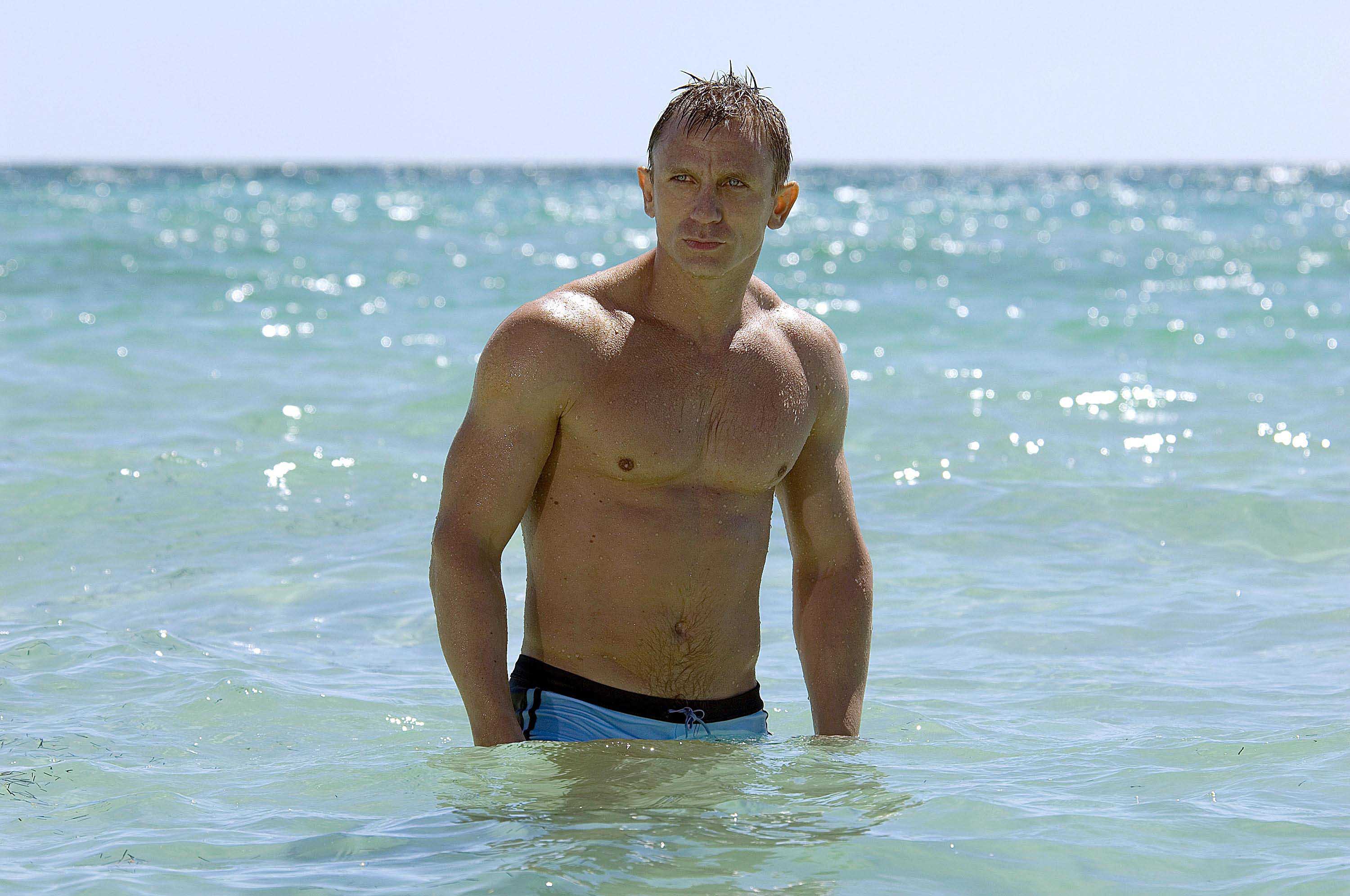
  1. Casino Royale (2006) - rebooting Bond with Daniel Craig was utterly inspired. A little darker and more serious - less spoof and more spy - than previous outings in the Bond franchise, the third screen version of this Ian Fleming novel relied more on practical stuntwork than the CGI placements of former films. The torture scene is both excruciating and disturbingly erotic. The scene in the stationary vehicle was more thrilling and dramatic than when they are chasing each other through picturesque landscapes in high octane pursuits. We are also introduced to the DBS, which has the potential to steal the show. The acting is stellar as you would expect from folk more used to theatre; Judi Dench as M sparks off DC with the direct current those initials suggest, and Mads Mikkelsen does a great turn as the baddie, Le Chiffre. Sadly, the 'Bond girl' trope still puts pouting over substance, and Eva Green as Vesper Lynd is insubstantial. As these things demand, however (if Bond falls in love, the object of his affection must be elminated to give him motivation), she dies at the end - shutting herself into a lift in a derelict Venetian palace that crumbles into the Grand Canal.


  2. Quantum of Solace (2008) - generally panned when it was released, I think this film has a lot more to offer than many suggested. Daniel Craig (or his stunt double) rides a motorbike, runs over rooftops, flies a plane, pushes bodies off buildings and through windows, walks across deserts, steers a boat, hangs off dodgy-looking scaffolding in building structures, executes dangerous overtaking manoeuvres on narrow twisting roads, and wears sunglasses like a boss. You want more? The Bond girl is actually good! Olga Kurylenko plays Camille Montes as a Bolivian agent who actually does something interesting. Mathieu Amalric is the main villain, Dominic Greene, who claimed to model his perfomance on 'the smile of Tony Blair and the craziness of Sarkozy'. We also get to see Rory Kinnear, Phil Ritter and Gemma Arterton (always a bonus) and the opening salvo by Jack White and Alicia Keys is pretty good too, although a departure from the popular Bond-ballad style of theme tune usually preferred. 
  3. Skyfall (2012) - many people's favourite, and for very good reason. The opening sequence is worth the price of admission alone, as Bond fights a baddie atop a moving train and M instructs Moneypenny to 'take the damn shot'. As she does so, she accidentally shoots Bond who falls into a river and is presumed dead. Of course he isn't, although he takes advantage of the presumption for early retirement, only returning to service in London when the MI6 computers are hacked and their building blown up. There's some shennangians in Shanghai with a thrilling casino scene and even more palpitations in the London Underground - 'Health and safety; carry on.' Ben Wishaw pops up as Q, Naomie Harris is Moneypenny, Javier Bardem is top-notch fabulous villain, Raoul Silva, and Adele cashes in with the theme song. We see a softer side to Bond as he returns to his ancestral home in the Scottish highlands and Ralph Fiennes succeeds Judi Dench as M in a heartbreaking and brilliant handover.  
  4. Spectre (2015) - Bond is once again sidelined due to unauthorised action, and M (Ralph Fiennes) is in a power struggle with Max Denbigh dubbed C (played with unctuous indifference by Andrew Scott). We have scenes in Mexico City (Day of the Dead), Rome (The Forum), Austria (snow), and London (helicopters crashing into bridges), and some decent stunts. Unfortunately the insipid Bond girl returns (Lea Seydoux as Madeleine Swann), and Bond falls for her and makes ridiculous choices. On the plus side we get Christophe Waltz as big daddy baddy Blofeld, Monica Bellucci providing an age-appropriate dalliance, and a throwback to an exploding gadget. We also get to see M take down the duplicitous C and say, 'And now we know what C stands for' - supposedly it's 'careless', after he hasn't checked the bullets in the gun, but I think we all know differently.
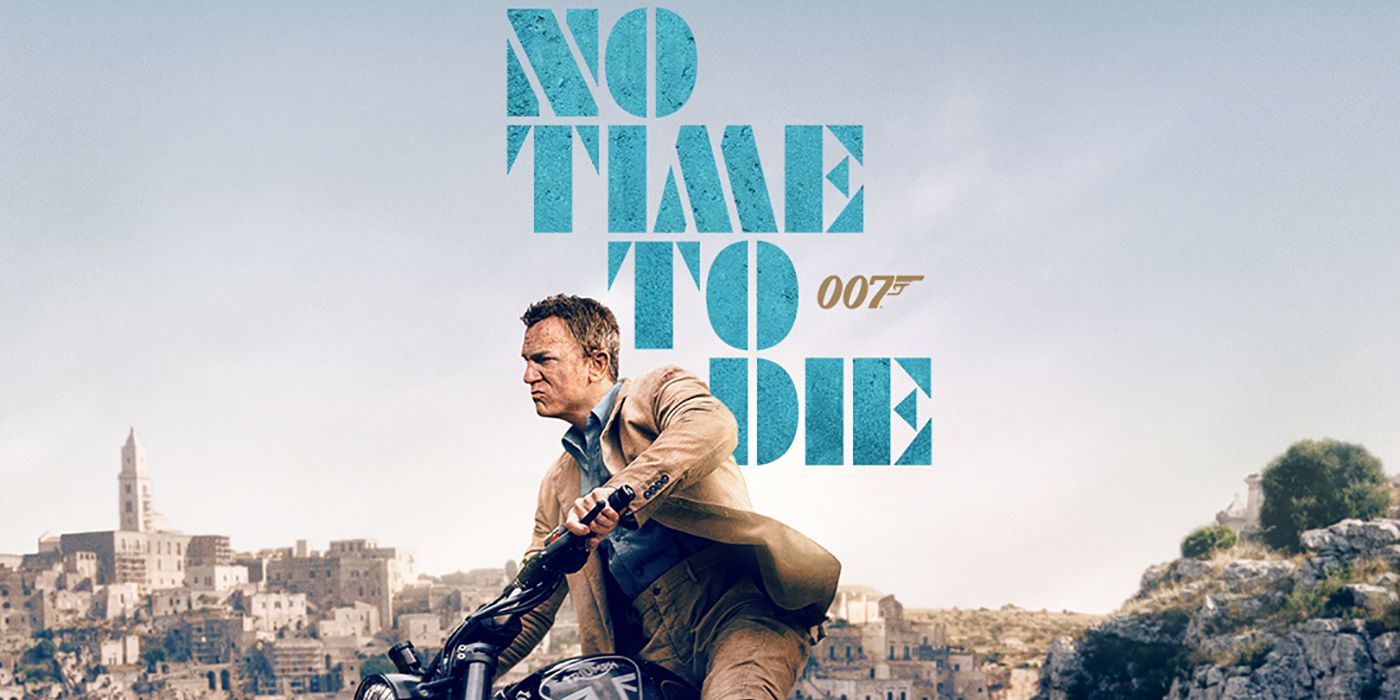
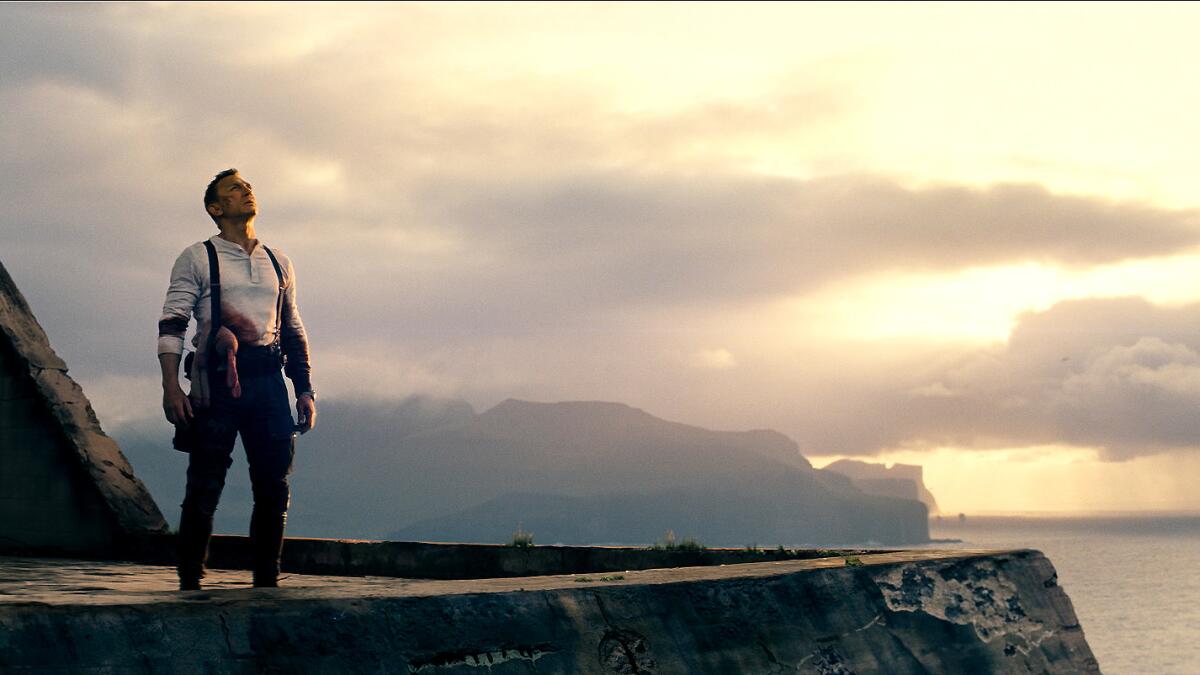
  5. No Time To Die (2021) - There were all the spoilers in the world for this film. Mainly the connections to Jason Bourne - there was never just one. Daniel Craig is still superb and the supporting cast of M (Ralph Fiennes), Q (Ben Wishaw), Moneypenny (Naomi Harris), Felix Leiter (Jeffrey Wright) and Bill Tanner (Rory Kinnear) are all delightful. The new agents are a revelation. Lashana Lynch as the new 007 has gravitas, and the CIA agent, Paloma (played by Ana de Armas), is admirably engaging. Less so the charisma-free Lea Seydoux who returns to her Yoko Ono-esque role to mess up the Bond we know and love. The ending has way too much mawkish sentimentality and, with its sledgehammer points about the importance of parenthood, it made me nostalgic for the old sign-offs of double entendres and smutty humour.