Friday, 13 December 2013

Friday Five: Red and White


A couple of years ago I mentioned my love of red and white as a colour combination. Leaving aside the fact that red and white grapes make up champagne, there are still at least five reasons why those colours look brilliant together:

5 Great Red and White combos:
  1. Christmas - from stripy candy canes to the great jolly present-giver himself
  2. England - the red rose of the House of Lancaster merged with the white rose of the House of York to form the Tudor rose and the emblem of England
  3. Liverpool FC - need I say more?
  4. Strawberries and cream - one of the best and simplest food presentations ever
  5. Barbers' poles - curiously hypnotic
Looks good on E-types too

Friday, 6 December 2013

Friday Five: World's Worst...


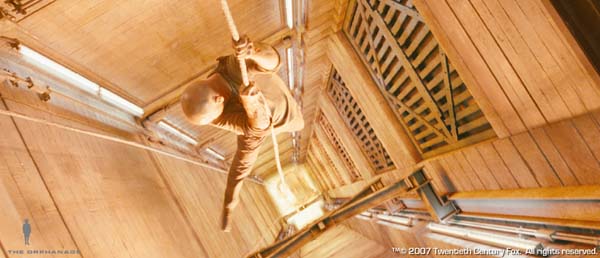
Him Outdoors is a lift engineer. I mention this, for people who don't know, because it means I get specific running commentary when we ever watch any film with a lift scene. There are lots. Think Jason Bourne; James Bond; anything with action sequences...

I have never seen Towering Inferno but I am reliably informed that it has the least realistic lift scene ever. This is closely followed by Die Hard, which has many. I've seen it a few times and now even I am able to mumble caustically, 'that would never happen'. Incidentally, the scene in Mission: Impossible is apparently not only possible and realistic, but has actually been known to happen. I know, scary, right?

So I was thinking, who are the world's worst people with whom to watch a film, and have you ever done it? Leave me a comment to let me know.


5 worst people with whom to watch a film:
  1. Hackers with a computer programmer
  2. Vertical Limit with a climber 
  3. Se7en with a serial killer
  4. Rocky V with a boxer
  5. Any of the Lord of the Rings films with anyone from Queenstown (if they're not in it, they know someone who is, and they will point them out at every opportunity)
For the record, I have done all of the above except number 3. To the best of my knowledge.

Thursday, 5 December 2013

Celebrate Now!


Jubilant entertainments
Make the most poignant memories.
The saddest I am is when
I remember happy days
We can no longer share. But
I’m grateful for the experience
For all they make me cry.

So, yes, I shall celebrate
Every birthday, anniversary
And significant milestone
With those I love while they live
Though the same occasions,
Like unforgettable grave markers
Will haunt me when they die.

Tuesday, 3 December 2013

Amour - I love it


Obviously a festival favourite, this French language film has been shown at Paris, Berlin and Vienna, among others and won the Palme d’Or at Cannes 2012. It is a powerful exploration of an elderly couple, Anne (Emmanuelle Riva) and Georges (Jean-Louis Trintigant), whose relationship undergoes severe strain when Anne suffers a stroke and Georges has to care for her.

The story is told in one long flashback, so the outcome is known from the beginning. Both Anne and Georges are retired piano teachers, and an introductory scene shows them among an audience watching a pianist at a performance. The film features a lot of talk about music, and lots of records and CDs on the bookshelves, but there is no intrusive background music. Towards the end Georges drifts into music in his mind and he imagines Anne sitting at the piano.

One of Anne’s former pupils visits her and begins to play a piece on the piano in the apartment, but the film is often silent. When Georges plays the piano himself, we can clearly hear Anne’s breathing. A cleaner comes and does the hoovering; other sounds are running water or the chink of a knife on a plate. To break the quietude, Georges does the washing up with the radio on.

Apart from the opening concert scene, the film is shot entirely in the apartment. There are close-ups of the landscape pictures on the walls, and further intimate images of Anne’s face as she is fitted with a nappy by a nurse. This silence and single set, combined with a very small cast could become oppressive were it not for the sensitive direction of Michael Heneke and the outstanding acting abilities of the couple and their daughter, Eva (Isabelle Huppert) which flesh out this everyday domestic tale of ageing and family dynamics.

Anne’s incapacity is the result of a failed operation on a blocked carotid artery. There is only a 5% failure rate, but that is little comfort for the patient. Anne makes Georges promise never to take her back to the hospital, which he is willing to do in the early stages. She returns to the apartment in a motorised wheelchair, spinning around with rare laughter. They realise they still have many stories they haven’t told each other even after so many years of marriage, and their emotions intensify with their memories.


As Anne deteriorates, she becomes increasingly frustrated and grumpy. Georges tells her she will end up friendless and scolds, “What would you say if no one came to your funeral?” to which she replies, “Nothing, probably”. Georges cuts up her food, dresses her, takes her to the toilet, and washes her hair with a saucepan in the bath. He acts without any trace of rancour but it is clear that as he must do everything for her, neither of them has any independence.

When Anne tries to reach for a book, she falls out of bed and breaks a lamp. Georges calmly repositions her, and all the inanimate objects, mildly rebuking, “Can’t you call me when you need something?” Anne begs him not to treat her like a moron and insists that she doesn’t want to go on – not for her sake but for his – as she knows it will only get worse. His own fears are of being burgled or invaded and he worries about leaving the apartment to fetch groceries, involving the concierge and his wife who keep a respectful distance while supplying neighbourly assistance.

Hiring a nurse gives Georges some relief yet, despite his daughter’s urging, he refuses to renege on his promise. Eva reinforces the audience’s understanding of the bond between her parents when she tells Georges that she remembers hearing them make love. Unlike many children, she wasn’t embarrassed at the thought of her parents’ sex life but rather felt reassured, thinking it proved that they were in love and would always have each other.


Eva’s husband has affairs, which she is used to although her father doesn’t understand why she stays in an unhappy relationship. And this is the nub of the film – no one can understand the ties that bind, whether through marriage or blood. Georges tells Eva, “I love you as much as your mother” but his ability to juggle affiliations is limited. When Eva bemoans Anne’s state, Georges tells her, “Your concern is no use to me. I don’t have time to deal with your concern. It annoys me to see you breeze in here saying what’s right. Who do you think you are?” She is family.


Armour is subtle and stunning, saying so much in so few words. It is heart-wrenchingly beautiful and dignified, despite its somewhat depressing premise. We can only agree with Anne’s final whispered words; “C’est beau, la vie”.


Friday, 29 November 2013

Friday Five: TV Detective Duos


I was going to make this post about something else entirely, but then I heard this morning that Lewis Collins had died. Instantly I heard the theme tune to The Professionals in my head. It was one of my favourite television programmes as a kid.

I think my first childhood crush was on Martin Shaw (closely followed by Kevin Keegan - odd to think that I may have had a thing about perms?) but I loved everything about it from the opening credits, with the car breaking through the window, to the solid plot-lines and thrilling (to a young viewer in the late 70s/ early 80s) stunts and car chases. We used to play The Professionals in the playground, ducking behind doorways and running along corridors to fling ourselves on the floor shouting 'Cover me!' 

What stood out most, however, was the excellent characterisation, dialogue and chemistry between the actors. They seemed real people with a sense of humour and a past that influenced their actions, rather than just puppets mouthing the words to advance the story. Bodie and Doyle were among the finest TV detective duos I have ever seen, and they established my appreciation for the gritty/ witty drama I have admired ever since.

Apart from Bodie and Doyle (who are unquestionable leaders of this genre), I would also like to make a special mention of the Doctor (Christopher Eccleston/ David Tennant) and Rose. Their partnership across time and space was a powerful one, although they can't really be included in this list as they are not strictly detectives. 

5 Favourite TV Detective Duos:

  1. Sam Tyler (John Simm) and Gene Hunt (Philip Glenister) - yes, there is Life on Mars. This was such a wonderful concept with brilliant acting, and the sum of these two was way more than their parts.
  2. Inspector Morse (John Thaw) and Sergeant Lewis (Kevin Whatley) - later Inspector Lewis and Detective Sergeant Hathaway (Laurence Fox) - the interaction between the characters in Morse was as important as the sleuthing, and the spin-off series of Lewis was equally (but differently) remarkable.
  3. Sherlock Holmes (Benedict Cumberbatch) and Dr. John Watson (Martin Freeman) - the reinvention of this famous duo was superb. Once again, individual talent is more than doubled.
  4. John Steed (Patrick Macnee) and Emma Peel (Diana Rigg) - The Avengers was the stuff of my childhood dreams, and nightmares.
  5. Maddie Hayes (Cybil Shepherd) and David Addison (Bruce Willis) - the first two series of Moonlighting were the best thing on American television - the mixture of comedy and drama with witty dialogue and larger-than-life personalities was quirky and original. As usual, for American series, it went on too long past its sell-by date.

Tuesday, 26 November 2013

Two Gents: Many Parts


Two Gentlemen of Verona (Vakomana Vaviri ve Zimbabwe)
Street Theatre, 19, 21, 23 March 2013

Shakespeare’s comedies can be very confusing for a modern audience, with mistaken identity, cross dressing, clownish characters, exalted romance, and outdated themes of filial loyalty and banishment. This South African township theatre version, featuring only two actors, Denton Chikura and Tonderai Munyebvu, has the potential to be even more baffling, yet their adaptation (along with Arne Pohlmeier, who also directed) is simply sublime. To paraphrase from another Shakespearean play, they have into a thousand parts divided two men.

In the beginning, Munyebvu (arguably the more cerebral of the pair) appears through the emergency exit door carrying a suitcase. Is he part of the play? Is he meant to be here? He is shortly joined by Munyebvu (a master of physical comedy), and the wondrous aspect is set. Immediately the audience is directly involved in the production as the actors include them – literally in the case of fleshing out the outlaws in one scene where audience members are ushered on stage and then moved and manipulated by Chikura and Munyebvu as they speak from behind them, putting words into their mouths.


The actors embody all of the characters of the play, changing between them with just a twist of a shawl, a flourish of a cloak, or a flick of a glove. These costume items emerge from the suitcase, which also features as the only prop and doubles as, among other things, a bath a boat, and a table. The diligent duo play everyone from Julia disguised as a page boy to follow her lover, Proteus, to Crab the dog with rolling eyes and panting tongue. A man playing a woman playing a man seems authentically Shakespearean, while a man playing an anthropomorphosised dog takes the drama to another level entirely.

Just as there is no divide between the actors and the audience, there is no class barrier between the masters (Proteus and Valentine) and the servants (Launce and Speed). The actors respect the language – Proteus and Valentine speak in blank verse – but they are not above making asides to the audience to ensure that they understand and are participating. When Chikura complains that Munyebvu has spat on him, Munyebvu explains, “It’s all these plosives you can see – when you get plosives, you can do it too.” When Munyebvu appears to be distracted, Chikura complains, “He always makes this noise during my monologue”.

As Valentine writing a letter to Sylvia’s lover, Thurio, Chikura exhorts the audience, “keep up; there’s only two of us.” Letters play a major role in the plot and are read out on palms and traded with high fives. Similarly rings are exchanged with a clicking of fingers. The pared-back performance is pieced out by delicious African rhythms played upon the suitcase, and an instrument that may be a balafon, while the harmonious voices of the actors swell the scene.


It’s not all a laugh a minute, however, as the play touches upon some dark and serious themes. When Valentine first sets out for Milan from Verona, he wants his friend Proteus to accompany him, but Proteus wishes to remain behind with his love, Julia. Proteus’ father orders him to follow Valentine, which he does, after many fond farewells to his Julia. In Milan, Valentine falls in love with Sylvia, the Duke’s daughter, but when Proteus spies Sylvia, he forgets his promised love for Julia and vows to win Sylvia for himself. The bonds of love and friendship are sorely tested. In an interview Munyevbu reveals that when he plays Proteus betraying Valentine, he has had audience members interjecting to tell him he is a ‘bad man’.

The most problematic and ugly aspect of the play is the ending in which Proteus, learning that Sylvia is not in love with him pursues her into the woods and threatens, “I’ll force thee to yield to my desire.” Valentine encounters this scene and is disgusted with Proteus but forgives him after Proteus demonstrates what he considers to be true repentance, while Julia, still disguised as a boy has also witnessed the attempted rape. This tragic scene becomes desperately serious as the character of Sylvia becomes a discarded glove.

It is tricky to reinstate the comic closure where the original couples are reunited and the production does not gloss over the dichotomy. The final scene is left to Sylvia and Julia to share an overwhelmingly tender and emotional moment without words but where looks convey action and thought in the most profound interpretation. Many plot devices are sacrificed to the development of character and comedy but the truth of the sentiments – love, friendship, constancy, repentance, forgiveness, and devotion (including the master and his dog) – are all emphasised.


For a Zimbabwean company living in Britain in exile from the Mugabe regime, the themes of displacement and enforced travel are powerful. The company are between boundaries and cultures with their individual experience of Diaspora. For four years they have travelled globally, including performing this play in the African language of Shona as part of the Globe to Globe festival.

The vibrant production of Shakespeare’s earliest and possibly least performed play is a triumph. The hour and a half flies by in the capable hands, mouths and bodies of one of the most engaging double acts I have ever seen.

Saturday, 23 November 2013

Photogenics: Sometimes the Camera Does Lie


I know it is hugely controversial to suggest this, but excessive data surveillance may not be an entirely bad thing. Having realised that our Kiwi passports run out early in the New Year, we were very pleased to discover that we could renew them on-line. This is probably due to the fact that the New Zealand Immigration Department can find out anything they need to about us, from the fact that we pay our taxes to the books we check out of the library. Really, this doesn’t bother me. I am not ashamed to read young adult fiction or to vote for Libby Trickett on Dancing with the Stars.

Most happily of all, however, is the fact that one can now take one’s own photo – or rather, get one’s partner to do it in the kitchen – I’m not part of the selfie generation. Incidentally, is it just me (I know it isn’t) or does the word ‘selfie’ conjure up unwanted images of onanism? (I would recommend looking that up in an old-fashioned dictionary rather than googling it.) As long as it is the right size, you’ve got your eyes open and no encroaching shadows or blurriness, it should be accepted. You no longer have to go to those ‘special places’ (post offices or photo booths) and get them done, then take them to a judge or a veterinary surgeon who you have known since birth so that they can swear that it is a genuine likeness of you and all that.

Except, it is unlikely to be a genuine likeness, because you are still not allowed to smile. Now, admittedly, when I come off a long haul flight during which some demon spawn has been howling and battering the back of my seat for the past 36 hours, I’m not generally laughing and joking and distributing bonhomie to all and sundry. But smiling, at least a little, is my general default setting – especially when meeting new people, even if they are customs officers.

When I am not permitted to smile (i.e. in passport photos) Him Outdoors says I look like Myra Hindley, which is somewhat unfair, and also, I suspect, not conducive to ease of entry at passport control. I think I, like almost everyone, look better when smiling and animated. Some people look good in pictures, and these are people who are considered to be photogenic. Let’s take this to mean that they are bland and two-dimensional in real life.

Some of the most beautiful contemporary women – Kate Winslett; Toni Colette; Meryl Streep; Natalie Portman; Catherine, Duchess of Cambridge – can look almost ugly in photographs. I believe this is because they are known for their animation, warmth and fun-loving personalities. Sitting still and posing isn’t their forte, and neither should it be. The more lively, energetic and vibrant you are, the more likely you are to be unphotogenic.

Once you think you are unphotogenic, it is doubtful that you are going to relax when anyone is around with a camera. You will probably have a lot of pictures of you gurning, looking away or holding your arms in awkward positions as you try to block the shot. None of these are going to be pretty, and that can only make the situation worse. Some of my favourite pictures of me are from my wedding when I was having such a great day and was so happy that I didn’t really care what I looked like. I relaxed.

Also, we had a fabulous photographer (Dennis Orchard) who was twice UK wedding photographer of the year. My other favourite photo of me, which I use for head shots at theatrical enterprises, was taken by a friend and professional photographer (Dan Childs) who has a wonderful manner and delightful way of putting camera-shy people at their ease. And this is a major point – cameras these days are ubiquitous, and they are often really good quality. But just because everyone has a camera on their phone, it doesn’t make them a photographer. Photographers understand light, angles, focus, composition and settings. And they also understand people and their feelings and anxieties. So often people are ready to blame themselves for being a bad subject, but they rarely blame the person on the other side of the lens – it takes two to photo!

Research I have read on these matters claims that symmetrical features make beautiful people who make good images. This means that no one who plays ball sports or fell out of a tree as a child is apt to look their best in photographs. I’m not really saying that every photogenic person is plain in real life, but I am saying that most exuberant, expressive, and adventurous types are probably going to be unphotogenic. This includes most of my friends, and I love you all. Here’s to falling out of trees and laughing about it, even if it means the camera is unkind!