Showing posts with label Christmas. Show all posts
Friday, 20 December 2024
Friday, 25 December 2020
Friday Five: Who's Who on Christmas Day
Obviously many families are separated this year by disease as well as distance, but through the wonders of modern technology, many of us were able to gather and converse through a screen. I miss the hugs and the contact, but I love to see the smiles and hear the laughter. As part of my festive family get-together, I compiled a quiz around the whys and wherefores of Christmas. Round one was 'Who?' and featured the following people, all born on Christmas Day (and they're all in black and white because my colour printer wasn't working). Put your answers in the comments if you're interested, and I'll tell you if you're right.
5 People Born on Christmas Day
Labels:
Christmas,
family,
famous people,
Friday Five,
quiz
Friday, 11 December 2020
Friday Five: Christmas Tree Ornaments
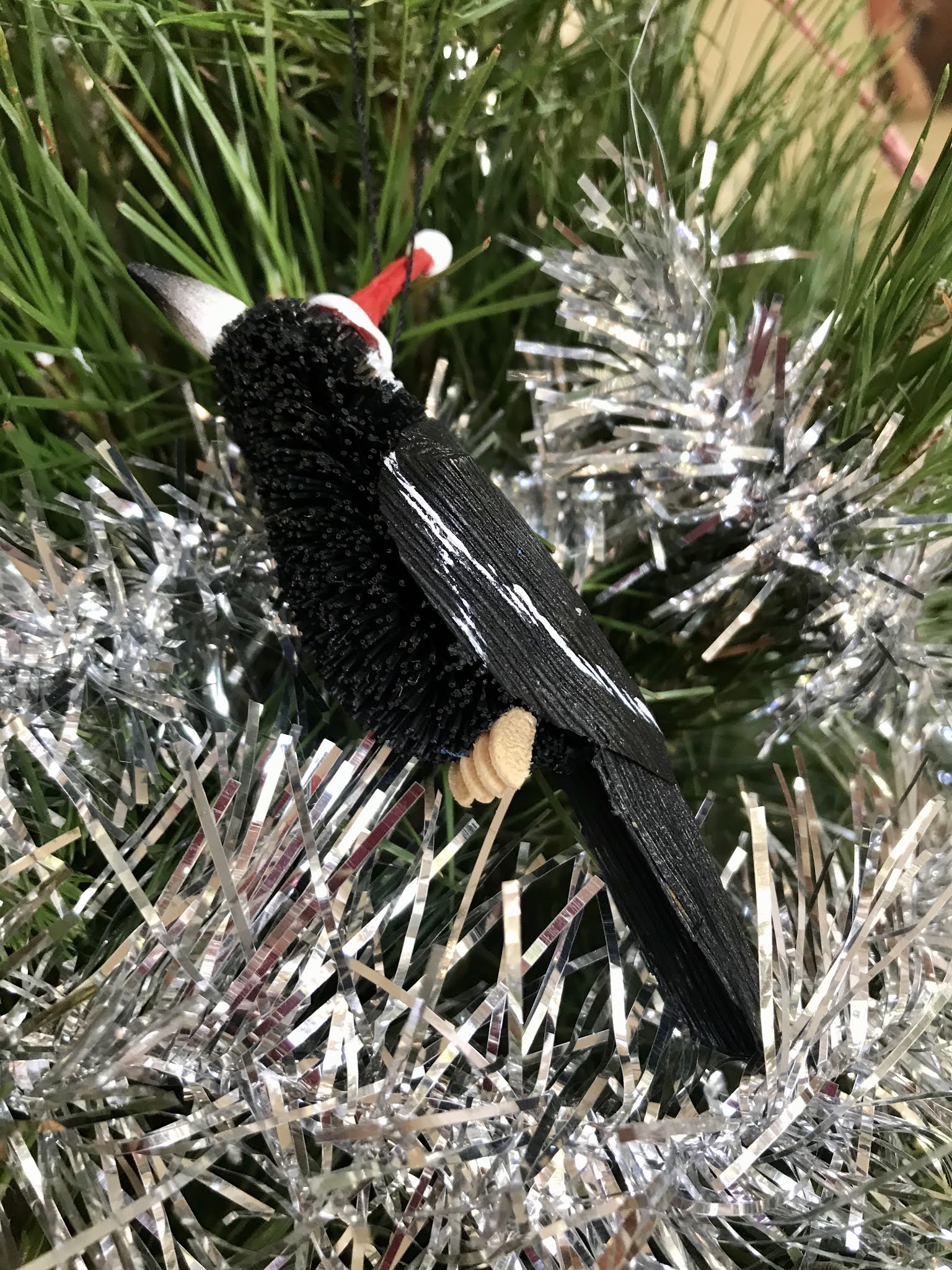
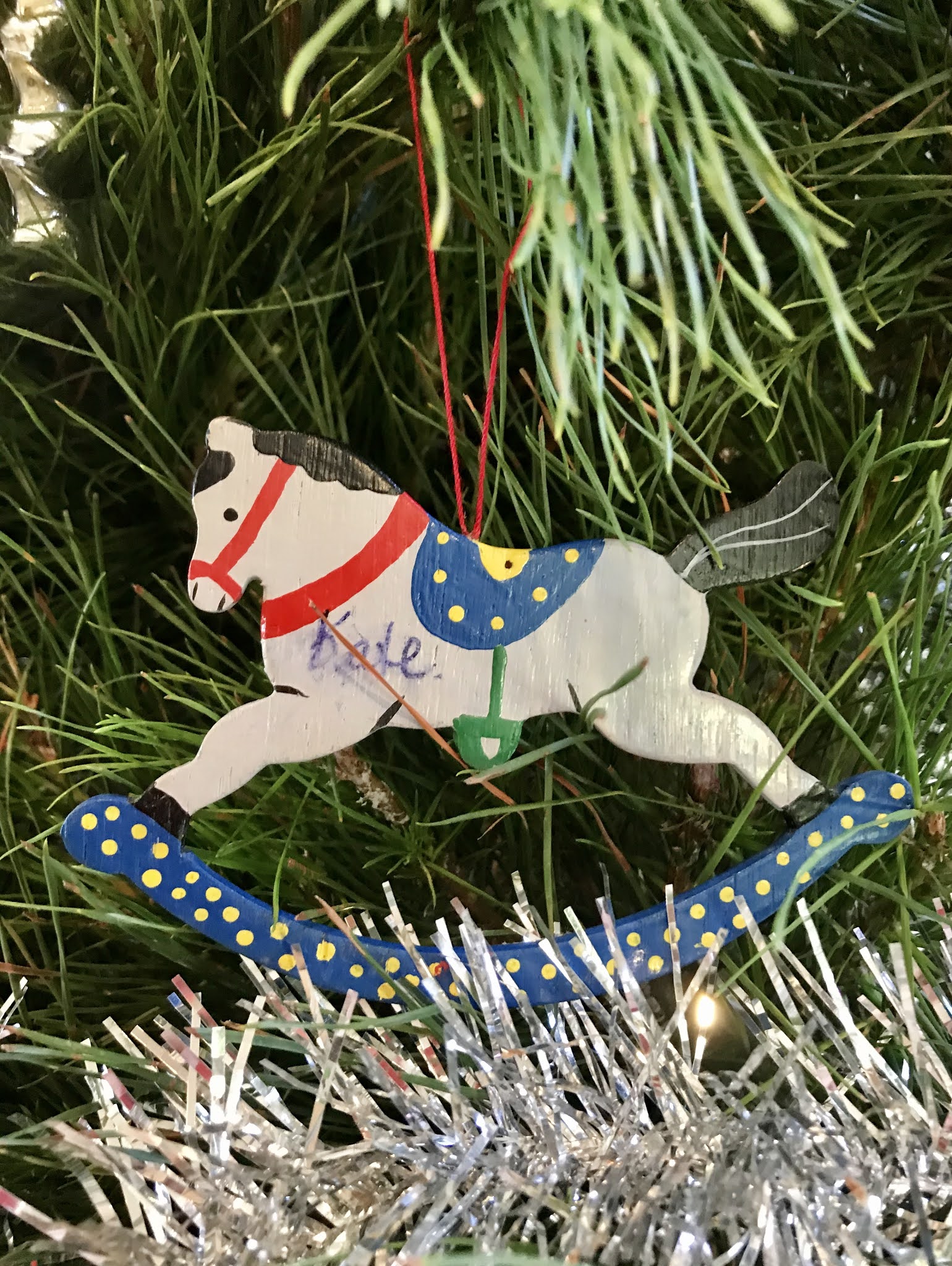
As we now have kittens in our lives, I managed to persuade Him Outdoors that we needed a tree for their first Christmas. Cats of any age love Christmas trees; all those shiny things to play with and pull off: such fun! I was a little concerned that they might hurt themselves or cut their paws if they broke anything, so I only decorated the tree with robust and non-shatter items. There are still many precious memories among the branches.
7 Christmas Tree Decorations:
- A football - of course
- A fantail - given to us by The Weevil and a reminder of New Zealand
- A tui - a gift from another Kiwi friend
- A magpie - we've also got a couple of doves nestling among the branches - I love to see birds in the trees
- A rocking horse - my mother decided this one was for me - you can tell because she wrote my name on it
- A collage Christmas tree on a Christmas tree - very post modern from Nephew Aidan
- Pom poms - as you do (if you're Niece Niamh)
Labels:
birds,
cats,
Christmas,
Christmas tree,
football,
mum,
Nephew Aidan,
Niece Niamh,
ornaments,
The Weevil
Tuesday, 24 December 2019
God Help Us: Winter
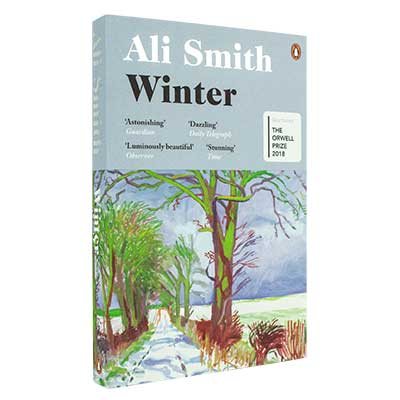
Winter by Ali Smith
Penguin
Pp. 322
Ali Smith’s seasonal quartet began with Autumn, published last year, and continues here with Winter. The subject is quite different but many of the themes are familiar. It is written in a continuous fluid style, but with short sentences and without irksome stream-of-consciousness. The novel embroiders snatches of literature and legend into a rich tapestry: a retelling of Dickens’ A Christmas Carol for our times. Dickens opened his festive novel with the words, “Marley was dead, to begin with. There is no doubt whatever about that.” Smith riffs on this idea. “God was dead: to begin with. And romance was dead. Chivalry was dead. Poetry, the novel, painting, they were all dead, and art was dead. Theatre and cinema were both dead. Literature was dead. The book was dead.”
So, what’s left? An ageing woman
called Sophia imagines a child’s floating head to keep her company. She is
visited by her son, Arthur (Art for short), who writes a blog called Art in Nature, which his ex-girlfriend,
Charlotte, hates because it isn’t political. He explains, “What I do is, by its
nature, not political. Politics is transitory. I watch the progress of the year
in the fields, I look closely at the structures of hedgerows. Hedgerows are,
well, they’re hedgerows. They just aren’t political.” Not wanting to admit he
is alone, Art pays Lux, a girl he spotted in a bus-stop, to accompany him and
pretend to be his girlfriend. When Sophia appears to be very ill, Lux contacts
her estranged sister, Iris, to whom she no longer speaks. Iris turns up on the
doorstep and recriminations and family resentments rise to the surface. The names
with their connotations of sleeping heroes, guiding light and Greek gods are
all pertinent.
The treatment of nature is centre stage – if Autumn was about Brexit; then Winter is about the environment, and the disasters destroying the planet and humanity. Iris is politically motivated, and the sisters dredge up memories of the Greenham Common protests, about which Smith seems almost nostalgic. She suggests that individuals can still make a different if they work together, as topics range from the Grenfell Tower to the insistence on stopping migrants; the political becomes personal and vice versa. The novel contains CND songs, and 1960-style rhymes about poisonous gasses and noxious chemicals. Horrifyingly, people are crowdfunding to raise money to stop rescue boats from helping refugees.
Having been impressed by Cymbeline, Lux originally came to England because it is the land of Shakespeare. In an obvious political metaphor, she says, “If this writer from this place can make this mad and bitter mess into this graceful thing it is at the end, where the balance comes back and all the lies are revealed and all the losses are compensated… then that’s the place I’m going. I’ll go there, I’ll live there.”
The treatment of nature is centre stage – if Autumn was about Brexit; then Winter is about the environment, and the disasters destroying the planet and humanity. Iris is politically motivated, and the sisters dredge up memories of the Greenham Common protests, about which Smith seems almost nostalgic. She suggests that individuals can still make a different if they work together, as topics range from the Grenfell Tower to the insistence on stopping migrants; the political becomes personal and vice versa. The novel contains CND songs, and 1960-style rhymes about poisonous gasses and noxious chemicals. Horrifyingly, people are crowdfunding to raise money to stop rescue boats from helping refugees.
Having been impressed by Cymbeline, Lux originally came to England because it is the land of Shakespeare. In an obvious political metaphor, she says, “If this writer from this place can make this mad and bitter mess into this graceful thing it is at the end, where the balance comes back and all the lies are revealed and all the losses are compensated… then that’s the place I’m going. I’ll go there, I’ll live there.”
Language and
communication are themselves under threat in this modern world. To glean
information, people no longer talk to each other; they google things and the
results are listed. Just as there is a disembodied floating head in Sophia’s imagination,
words are split in half to create new meanings: get ahead; get a head; “I’m
nobody’s child. I’m no body’s child.” Art examines the concept of snow and the
connotations of the word ‘snowflake’. In one section, Art asks Lux a series of
questions, and then we see her side of the dialogue separately as she answers
them. Further indications that cohesive dialogue is breaking down is seen in
parliament when a man barks like a dog at a woman who is trying to make a
speech.
This
is a novel of stories and interpretations. We are given tales of fertility; the
Green Man, Sir Gawain and the Green Knight, and defenders of past rituals and
natural bounty. Smith combines the richness of the past with the frustrations
of the present and a glimmer of hope for the future, believing that communities
and compassion can overcome division and isolation. Winter is an incredible achievement – it was written to reflect the
immediacy of the time (even the text is not justified, implying a sense of urgency),
yet it feels fresh rather than hurried. It ends with another echo from A Christmas Carol: “In the middle of
summer it’s winter. White Christmas. God help us, every one. Art in nature.” It’s
enough to make the reader want to take to the streets.
Friday, 5 December 2014
Friday Five: Festive Salads
| Brussels sprouts salad with crispy bacon |
5 Festive-looking dishes from our kitchen:
- Brussels sprouts salad with crispy bacon
- Sticky barbecued prawn salad (with banana prawns, green chilies, avocados, fresh basil and cherry tomatoes)
- Couscous, chorizo and courgette salad
- Roast rack of lamb with mint, bean and feta salad
- Spinach and tomato bake
| Spinach and tomato bake |
Monday, 1 December 2014
Advent Beer Calendar
Our Christmas present to each other this year is an advent beer calendar. I bought twelve bottles and Him Outdoors bought another twelve. We wrapped them up in tissue paper and ribbon, numbered them with place cards left over from our wedding (I told you they would come in handy!) and popped them into our champagne riddling rack. We now have twenty-four days of festive drinking. Cheers!
Labels:
advent calendar,
beer,
Christmas,
Him Outdoors,
riddling rack
Friday, 13 December 2013
Friday Five: Red and White
A couple of years ago I mentioned my love of red and white as a colour combination. Leaving aside the fact that red and white grapes make up champagne, there are still at least five reasons why those colours look brilliant together:
5 Great Red and White combos:
- Christmas - from stripy candy canes to the great jolly present-giver himself
- England - the red rose of the House of Lancaster merged with the white rose of the House of York to form the Tudor rose and the emblem of England
- Liverpool FC - need I say more?
- Strawberries and cream - one of the best and simplest food presentations ever
- Barbers' poles - curiously hypnotic
![]() |
| Looks good on E-types too |
Labels:
Christmas,
E-type Jaguar,
England,
Father Christmas,
Friday Five,
Liverpool FC,
rose,
strawberry
Wednesday, 30 January 2013
Quote for Today: Christmas Culture
"I loved our first Christmas in Australia - it's completely different to being here and it only seems to last a day, if that. I've warned Shane that ours lasts a good 10 days - most of which is spent lying on the sofa eating Quality Streets." - Liz Hurley comes to terms with the 'finer points' of relationship differences with Shane Warne. (Plus she's lying: look at her - there's no way she scoffs boxes of chocolates.)
Friday, 28 December 2012
Friday Five: Christmas Fare
For the Christmas period, I decided I wasn't really bothering with presents and decorations (apart from the book-tree of course) and all that malarkey, but I did make an effort with the food.
For Christmas dinner we had Tarragon-roasted chicken with pancetta and grapes accompanied by Maple-roasted veggies with orange and pine nut gremolata, which surprisingly didn't fit the overall theme. All the rest of the food followed a festive red and green/ red and white/ red, green and white colour scheme.
5 Colour-Schemed Christmas Dishes
![]() |
| Festive Ice-Cream Terrine |
For Christmas dinner we had Tarragon-roasted chicken with pancetta and grapes accompanied by Maple-roasted veggies with orange and pine nut gremolata, which surprisingly didn't fit the overall theme. All the rest of the food followed a festive red and green/ red and white/ red, green and white colour scheme.
5 Colour-Schemed Christmas Dishes
- Chicken, pepperdew and green bean salad
- Green apple, ham and rosé risotto
- Roasted aubergine, mushroom and tomato pasta wih ricotta
- Beef, lentil and walnut salad
- Festive ice-cream terrine
Friday, 23 December 2011
Friday Five: Festive Birthday
Him Outdoors has a birthday today - happy birthday to him. People often say how awful it must have been as a child to have your birthday so close to Christmas. I share this opinion, but not because of the dread of the combined birthday and Christmas present - quite frankly, if you are not religious, why are you celebrating Christmas with gift giving anyway?
No, the reason for my antipathy for the festive birthday is that I like to celebrate as many separate occasions as possible (and deliberately got married six months away from my birthday to stagger the anniversaries). We have friends whose daughter was born on Christmas Day (no, they didn't call her Holly or Carol or something equally naff) and she celebrates her birthday in the morning and Christmas in the afternoon, which seems to work for them. So, because these lists are meant to be positive, I have come up with
5 Good Things about Having a Birthday at Christmas-time:
No, the reason for my antipathy for the festive birthday is that I like to celebrate as many separate occasions as possible (and deliberately got married six months away from my birthday to stagger the anniversaries). We have friends whose daughter was born on Christmas Day (no, they didn't call her Holly or Carol or something equally naff) and she celebrates her birthday in the morning and Christmas in the afternoon, which seems to work for them. So, because these lists are meant to be positive, I have come up with
5 Good Things about Having a Birthday at Christmas-time:
- You generally get the day off (particularly when you're a child and school has broken up for the holidays)
- Most people have decided that if they haven't done it yet, they're not going to, so have relaxed and are in a good mood
- The atmosphere in the pubs is good and lively (but not frantic and faintly desperate as it can be at New Year)
- Chocolate, biscuits, cake, sweets, and general party food is everywhere!
- Champagne is on special offer
Labels:
Christmas,
Friday Five,
Happy Birthday,
Him Outdoors
Sunday, 9 October 2011
Quick Quintet: High Days and Holidays
I used to love the summer holidays during my student years. I have heard that some people didn't - apparently they got bored. Where was their imagination? True, the holidays seemed to stretch on forever, but that was the joy of them. You could always postpone that essay on Marxist interpretations of linguistic theory while you went to pubs in the afternoon and drank real ale in the sunshine.
When I was little there were games to play, when I got older there were boys to see, and there were always books to read and, if you were lucky, countries to visit. Inter-railing around Europe was a teenage rite of passage. And then there were the summer jobs. We went hop-picking or worked in factories and shops to save up for the holiday, or the records, or the clothes or the fags. And we thought how lucky we were that we would never have to do this full-time. Clearly we were wrong, but we were young and life was fun.
Now life is still fun, but holidays are shorter and every day off is precious. When we can mark it with a celebration it is even better. Here are my favourite:
The Best 5 Holidays*:
When I was little there were games to play, when I got older there were boys to see, and there were always books to read and, if you were lucky, countries to visit. Inter-railing around Europe was a teenage rite of passage. And then there were the summer jobs. We went hop-picking or worked in factories and shops to save up for the holiday, or the records, or the clothes or the fags. And we thought how lucky we were that we would never have to do this full-time. Clearly we were wrong, but we were young and life was fun.
Now life is still fun, but holidays are shorter and every day off is precious. When we can mark it with a celebration it is even better. Here are my favourite:
The Best 5 Holidays*:
- Christmas: Family; friends; food; bubbles; lights; tinsel; glittery stuff; good cheer and, if you're lucky, snow - who could ask for anything more?
- Easter: Now that I no longer have to run around the forest in my pyjamas, I love Easter. It's a time of rebirth and new beginnings; a chance to catch up with friends and family; lambs and daffodils; green grass and the promise of Spring.
- St George's Day: A chance to celebrate all things English, recite Shakespeare, listen to Britpop, drink real ale, eat cheese and pickle sandwiches and even indulge in a spot of Morris Dancing.
- Harvest Festival: The cornucopia of colours; the abundance of wine; the church floral arrangements and window displays with sheaves of wheat; the bigs hats and village fetes; the collections of canned food for the aged; the chance to use words like bounty, abundance, and cornucopia.
- Guy Fawkes night: The smell of cordite and mischief in the air; bonfires, baked potatoes and toffee apples; fireworks exploding in showers of colour in the night sky; a brisk chill and the thought of witches; and, if I remember rightly, a damn fine rave or two.
Labels:
Christmas,
Easter,
Guy Fawkes,
Harvest Festival,
holiday,
Quick Quintet,
St George's Day
Friday, 24 December 2010
Christmas values
For the past couple of weeks I have been sick with worry for a good friend of mine who has just been diagnosed with cancer. He is generally as solid and dependable as an oak and now he needs all his strength to counter this vicious disease, which is wrapping itself around his internal organs like poison ivy. When terrible things like this happen to people we love, naturally we question our faith and our values.
This time of year is full of added pressure. We are bombarded with messages of a million things we ‘must’ do: buy the presents; tidy the house; deck the halls; prepare the dinner; ice the cake; wrap the presents; dress the tree; write the cards; finish all the jobs at work; send out the emails; clean the windows; sort out the cupboards; dust off the deckchairs… the list is endless.
Looking at one of my dearest friends lying in his hospital bed I realised that none of that matters at all. I know that the doctors, nurses and surgeons are all doing the best they can for him so in many ways it is the best place for him to be. But it’s full of sick people. And he needs to feel invigorated. His many visitors bring him love and support, but they can’t bring him fresh sea-air and pounding waves; it’s that which makes me feel alive.
Saturday, 19 December 2009
Christmas carols
I was coming home from Manchester for Christmas; it was Christmas Eve; snow had fallen steadily and the M1 was closed. I spent hours huddled in a freezing coach station in Birmingham that smelt of wee with the bus driver and several other passengers as we waited for news that the road had been cleared and we could carry on our journey. I just started singing Silent Night – I thought I was singing to myself until other people joined in. It was a magical moment.
In the Bleak Mid-winter was the first solo I ever sang. I went to a C of E primary school and we were taught the carols for school assemblies. I loved the words and the sentiments – there were often sheep and donkeys and little baby Jesus lying in a manger. It was all jolly lovely I thought.
Recently I was having a discussion about how I hated ‘modern’ Christmas music, such as Rocking Around the Christmas Tree, I Saw Mommy Kissing Santa Clause, Santa Claus is Coming to Town and the like. I was horrified to find that someone whom I previously liked and even respected had a secret penchant for Mariah Carey’s All I Want for Christmas. I’ll never look at her the same way again. Fairytale of New York is about the only decent non-carol Christmas song I can tolerate. I was at this concert.
At the local English language school where they teach English to foreign language students, the ‘festive season’ has dispensed with carols altogether – many of them celebrate a denominational religious holiday which is not accepted in current culturally sensitive circles, but also the language is too archaic and difficult to understand.
It always was. My father, who hates blind faith, insisted that if I was going to sing those ‘infernal tunes’ around the house, I should at least know what they meant. When I was about eight, he sat me down and we went painstakingly through the lyrics of Good King Wenceslas until I fully understood the socialist principles of the 10th Century Bohemian king, who believed in helping the poor.
I loved the part where the page and monarch went forth together ‘through the rude wind’s wild lament and the bitter weather.’ I have often thought of this carol when trudging through snow on seemingly endless walks or skiing trips when I have trailed behind Him Outdoors, following in his footsteps. The merry tune and the positive thoughts it inspires does indeed help to ‘freeze my blood less coldly.’ Father dear wasn’t so keen on the good king’s politics or the inherent Christian message, but I think he may find more cheer in the fact that the regal Wenceslas is also the patron saint of beer.
Labels:
carols,
Christmas,
Good King Wenceslas,
Silent Night,
singing
Tuesday, 15 December 2009
Food waste
It’s still one of the few foods that I don’t like (melon and tripe are the others, in case you’re interested), although I’ve tried. Back then I simply couldn’t see the point of it, once you’d swirled the blob of raspberry jam into it and made it go pink. The dinner ladies were aghast and told me that ‘starving children in Africa would be grateful for that’.
I wished no harm on the starving children in Africa and thought I was doing them a favour by transferring the congealed goo into an envelope and addressing it to them. Apparently not. I got into quite substantial trouble for that, and I have been concerned about food waste ever since.
8.3 million tonnes of food is thrown away by households in the UK every year. That’s a lot of food. The ‘Love food hate waste’ website states that if we all stop wasting food that could have been eaten, the CO2 impact would be the equivalent of taking 1 in 4 cars off the road. That’s a lot of cars. A recent study conducted by the University of Arizona (UA) in Tucson, reveals that almost half of the food in America goes to waste. That’s outrageous.
We need to buy it all at once because we don’t want to make excessive trips and burn extra fuel. We can’t take a trip down to the local high-street greengrocer, butcher or baker because they no longer exist – the corporate supermarket in the shopping mall squeezed them out of existence.
And the effort of getting there and parking and walking around the impersonal, clinical cavern with the soporific music, and then waiting in the line with tantrum-throwing toddlers and loading it all onto the conveyor belt and taking it all off and getting it all into the car and returning the trolley and driving home and unpacking it all and putting it all in the fridge and the pantry is such that you don’t want to do it any more than you have to – so you buy as much as possible in one go, and are rewarded with coupons if you spend over a certain monetary value.
It’s an easy trap to fall into, but I am crawling out of the pit and have discovered my own form of resistance. It’s called planning. I plan my week’s evening meals. I buy magazines (Dish is a current favourite) and I try out new recipes from them and old cookbooks. I write out a list of the ingredients that I need to make these meals and that’s all I buy, plus some fresh fruit and salad stuff for snacking on, and (of course) cat food for Chester.
I write the meals up on a blackboard and I know that either Him Outdoors or I can make anything on that board because we have a recipe and the ingredients. I don’t have snacks in the house because I will eat fruit if I need a quick fix. If I do ever have leftovers I have a pantry full of herbs and spices, dried pasta and tins of beans – a mixture of some of these staples can make something healthy and tasty (and if we have a civil emergency I’m sorted for a good few weeks).
It’s not a massive step (I need to start a compost heap to make use of the scraps) but it’s a little thing that makes me feel better about the starving children in Africa. I may not be able to do much to help them individually, but I can at least not waste the resources that I have.
I’m also adopting this procedure for Christmas presents this year – make a list and stick to it. Impulse buys are rarely a good idea in the long run. 'Waste not; want not' as the old folk used to say. They probably still do, but now I agree with them – help; I’m becoming an old folk!
Labels:
Christmas,
Dish,
food,
food waste,
recipe,
school dinners,
semolina,
supermarket
Monday, 7 December 2009
The Great Mince Pie Bake-Off
I’ve been through this before – everything is upside-down here and the seasons don’t fit.
So I was delighted to be invited to a great mince-pie bake off. The lovely Amanda Wooldridge of XL Coaching and the charming Anna Passera of Vivace Group were holding a contest to see who makes the best mince pies.
I had some insider information into the secret recipes – apparently (as the French have always maintained) the key to success is butter. In common with that other Christmas staple (mulled wine), the coup de grace is the spirit you choose to add a certain je ne sais quoi. It seems that a soupçon of whisky or Cointreau is preferred.
I read that infamous killjoy Oliver Cromwell banned mince pies (the devil’s food or some such piffle) in 1647 and, since the law has never been revoked, it is still actually illegal to eat them in England. Obviously no one takes this seriously and they really are an institution. They are handed out as a treat at such diverse venues as trains and theatres throughout the land.
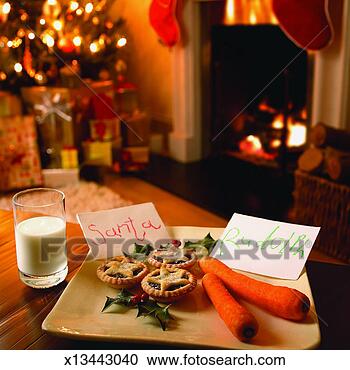
One of the big mince pie traditions, of course, involves leaving one out for Father Christmas on Christmas Eve to say thank you for filling our stockings. In our house, this used to be accompanied by a glass of sherry and a carrot for the reindeer. *Spoiler Alert* It was when I heard Dad asking if Father Christmas could have a glass of whisky instead that my doubts were aroused.
FC used to leave us clues to find our presents – we had to work for them, you understand. The clues often comprised complicated physics equations or anagrams of cabinet ministers and football teams. These were particularly challenging as Dad (I mean Father Christmas) couldn’t spell, but Dad always seemed to know what he meant – they had long chats over the mince pie and whisky, apparently. I liked to picture this for years, but really it was an obvious giveaway. That and the suspiciously familiar handwriting.
Certain Christmas traditions with which I grew up seem out of place in New Zealand. There is hardly any possibility of a White Christmas; turkey with all the trimmings will leave you feeling stuffed; it’s too hot to dress up as the fat bloke in a red felt suit and a big white beard (unless you live in Wellington); and the robins look different.

So I was delighted to be invited to a great mince-pie bake off. The lovely Amanda Wooldridge of XL Coaching and the charming Anna Passera of Vivace Group were holding a contest to see who makes the best mince pies. In a blind tasting with a glass or two of bubbly, friends and connoisseurs gathered to taste the gourmet delights. And delightful they were. I love a good mince pie and these two were fine examples. Brandy butter, custard or whipped cream are often the perfect accompaniment, but these two varieties boldly held their own without need for enhancement.
I had some insider information into the secret recipes – apparently (as the French have always maintained) the key to success is butter. In common with that other Christmas staple (mulled wine), the coup de grace is the spirit you choose to add a certain je ne sais quoi. It seems that a soupçon of whisky or Cointreau is preferred.There has been some recent brouhaha over claims that mince pies can push you over the alcohol driving limit. To this I say pish-posh. Every second year chemistry student knows that baking alcohol means it’s not really alcohol anymore – something to do with evaporation or some such. This was exposed on BBC Radio 5 Live. Alarmingly the segment went on to condemn Christmas cake instead, for soaking up the three or four bottles of sherry that people (by which I mean my mum) pour over it in the lead-up to the big day.
I read that infamous killjoy Oliver Cromwell banned mince pies (the devil’s food or some such piffle) in 1647 and, since the law has never been revoked, it is still actually illegal to eat them in England. Obviously no one takes this seriously and they really are an institution. They are handed out as a treat at such diverse venues as trains and theatres throughout the land.
Labels:
alcohol,
Christmas,
Father Christmas,
mince pies,
Oliver Cromwell
Thursday, 12 November 2009
You Don't Bring Me Flowers...
Him Outdoors doesn’t buy me flowers. I complain about this but it makes no difference. He thinks they’re frivolous and he simply can’t see the point in them. He says ‘If I suddenly bought you flowers, you’d think that something was wrong.’ I wonder how many men use that lame excuse – trust me; we wouldn’t. I love flowers and I like to have them in the house, so I buy my own.But he buys me other presents – usually what he considers to be practical gifts. He bought me some new headphones because I have to transcribe recorded interviews and the headphones I had pressed too hard against my ears and made them hurt. He bought me a polariser for my camera because he knows I love the vivid colours of Central Otago and am always trying to capture them in photographs.
He buys me beer and wine (also frivolous I know, but he can see the point in that), particularly beverages with names relating to things and places I like. He buys me winter cycling gloves because he knows how much I hate being cold. Once he bought me the boxed set of the Clash singles on vinyl – no special occasion; he just knows they’re one of my favourite ever bands.
He doesn’t really ‘do’ birthdays, anniversaries or what he calls commercial holidays – we’ll go out for a meal and a drink on each other’s birthday, but there are generally no gifts involved. The gifts are thoughtful little touches, and they come throughout the year, when he thinks of them. He’s not the sort of person to buy something and save it for three months until the official celebration is at hand – he would only have lost it or forgotten where he put it by then.
I remember the first Christmas present he ever bought me; it was a blender. We didn’t spend Christmas Day together and I unwrapped it in front of my family. My mother cast a dubious glance at it – to her it was as offensive as an iron or a hoover. ‘He bought you a what?’ But I was a student and living off home-made potato and leek soup. I really needed a blender and he knew it would save me time and effort, rather than having to mash and mix all the vegetables by hand. It was incredibly touching and the sign that I had found a kind and thoughtful man. So I don’t mind if I have to buy my own flowers. It’s a small price to pay.
Tuesday, 16 June 2009
Cultural Collision
Living in New Zealand, as I do, there are many things that I will never get used to. For a start the seasons are the wrong way round – how can you have Christmas in the middle of summer, Bonfire Night in spring when you have to wait until 10pm to set off the fireworks, and Easter when all of nature is curling up and going to sleep rather than bursting into life?
Secondly, they call the wrong thing football. Here’s a tip – if it’s ‘a solid or hollow sphere’ that you kick with ‘the lower extremity of the leg below the ankle’ then it’s football. If you pick up an ovoid inflatable and run with it, then it’s either cheating, or it’s rugby – union or league depending on the level of violence involved – American football if there’s padding, and Aussie rules if there are no discernible rules whatsoever.
And other thing: although we share a similar history, the popular iconography is far more American than English and, according to a friend I mentioned this to, becoming more so each day. I noticed this when I was writing the Midsummer Night’s Dream review. My 80s was clearly a very different time to most Kiwis’ 80s. And this is not the only decade to suffer this phenomenon.
When we first arrived to these fair shores we were invited to a fancy dress party (the love of those is also a Kiwi thing I don’t understand – Him Outdoors has his theories which I have mentioned before but shan’t again). The theme was 70s. Naturally, we went as punks – ripped jeans, tatty leather and safety pins galore – expecting to hear The Sex Pistols, The Damned, The Clash, and Siouxsie and the Banshees.
Everyone else was dressed in kaftans, headbands, love beads and painted flowers. They tripped around drippily to Johnny Cash, Creedence Clearwater Revival, The Mamas and the Papas, and The Beach Boys. Wrong decade, surely, I thought – and may well have said. I was an aggressive punk after all – I felt like a Hell’s Angel that had just turned up to Woodstock.
This feeling of displacement continues daily. We are lulled into a false sense of security and familiarity – they play cricket; their judicial and political system are based on ours (although how someone who is not even wanted by their electorate can still occupy a seat in Parliament bewilders me); they screen Coronation Street twice a week (it’s a year behind) and they speak a version of our language. But the popular iconography – from the plastic news presenters to the ‘fashion’ of vests and baseball caps – is largely American.
Not all, I hasten to add. There are pockets of Scottish ‘it’s cold and it’s wet and we like it’ heritage (Southland); there is a large Yorkshire ‘we are better than everyone else and why talk when you can grunt?’ element (Otago); there are prime examples of Home Counties ‘what school did you go to and who are your parents?’ affectation (Canterbury); and a delightful patch of faux French ‘let’s fly the tricolour and call our streets by Gallic names’ chic (Akaroa).
Of course there is a rich and distinctive Māori culture which adds a unique and valuable component to the heritage. And there are colourful swathes of Pacific Island traditions, Asian customs, and all sorts of bits and pieces of European inheritance from the Italian-style blessing of the boats at Island Bay to a strange Viking connection at Dannevirke (settled by a handful of Danes and Norwegians).
The result of all this is a little curious and unsettling like one of those dreams where you know something is different but you’re not sure what. I’m not saying it’s wrong, but it is odd. Some things are simply ingrained in your formative years and when they change, you may never get used to them. Ah well, ‘Vive La Difference!’ as they say in Akaroa.
Secondly, they call the wrong thing football. Here’s a tip – if it’s ‘a solid or hollow sphere’ that you kick with ‘the lower extremity of the leg below the ankle’ then it’s football. If you pick up an ovoid inflatable and run with it, then it’s either cheating, or it’s rugby – union or league depending on the level of violence involved – American football if there’s padding, and Aussie rules if there are no discernible rules whatsoever.And other thing: although we share a similar history, the popular iconography is far more American than English and, according to a friend I mentioned this to, becoming more so each day. I noticed this when I was writing the Midsummer Night’s Dream review. My 80s was clearly a very different time to most Kiwis’ 80s. And this is not the only decade to suffer this phenomenon.
When we first arrived to these fair shores we were invited to a fancy dress party (the love of those is also a Kiwi thing I don’t understand – Him Outdoors has his theories which I have mentioned before but shan’t again). The theme was 70s. Naturally, we went as punks – ripped jeans, tatty leather and safety pins galore – expecting to hear The Sex Pistols, The Damned, The Clash, and Siouxsie and the Banshees.Everyone else was dressed in kaftans, headbands, love beads and painted flowers. They tripped around drippily to Johnny Cash, Creedence Clearwater Revival, The Mamas and the Papas, and The Beach Boys. Wrong decade, surely, I thought – and may well have said. I was an aggressive punk after all – I felt like a Hell’s Angel that had just turned up to Woodstock.
This feeling of displacement continues daily. We are lulled into a false sense of security and familiarity – they play cricket; their judicial and political system are based on ours (although how someone who is not even wanted by their electorate can still occupy a seat in Parliament bewilders me); they screen Coronation Street twice a week (it’s a year behind) and they speak a version of our language. But the popular iconography – from the plastic news presenters to the ‘fashion’ of vests and baseball caps – is largely American.Not all, I hasten to add. There are pockets of Scottish ‘it’s cold and it’s wet and we like it’ heritage (Southland); there is a large Yorkshire ‘we are better than everyone else and why talk when you can grunt?’ element (Otago); there are prime examples of Home Counties ‘what school did you go to and who are your parents?’ affectation (Canterbury); and a delightful patch of faux French ‘let’s fly the tricolour and call our streets by Gallic names’ chic (Akaroa).
Of course there is a rich and distinctive Māori culture which adds a unique and valuable component to the heritage. And there are colourful swathes of Pacific Island traditions, Asian customs, and all sorts of bits and pieces of European inheritance from the Italian-style blessing of the boats at Island Bay to a strange Viking connection at Dannevirke (settled by a handful of Danes and Norwegians).The result of all this is a little curious and unsettling like one of those dreams where you know something is different but you’re not sure what. I’m not saying it’s wrong, but it is odd. Some things are simply ingrained in your formative years and when they change, you may never get used to them. Ah well, ‘Vive La Difference!’ as they say in Akaroa.

Subscribe to:
Posts (Atom)


.jpg)
.jpg)
.jpg)