Showing posts with label Ensemble Theatre. Show all posts

Friday, 24 December 2021

Friday Five: Best Theatre of 2021

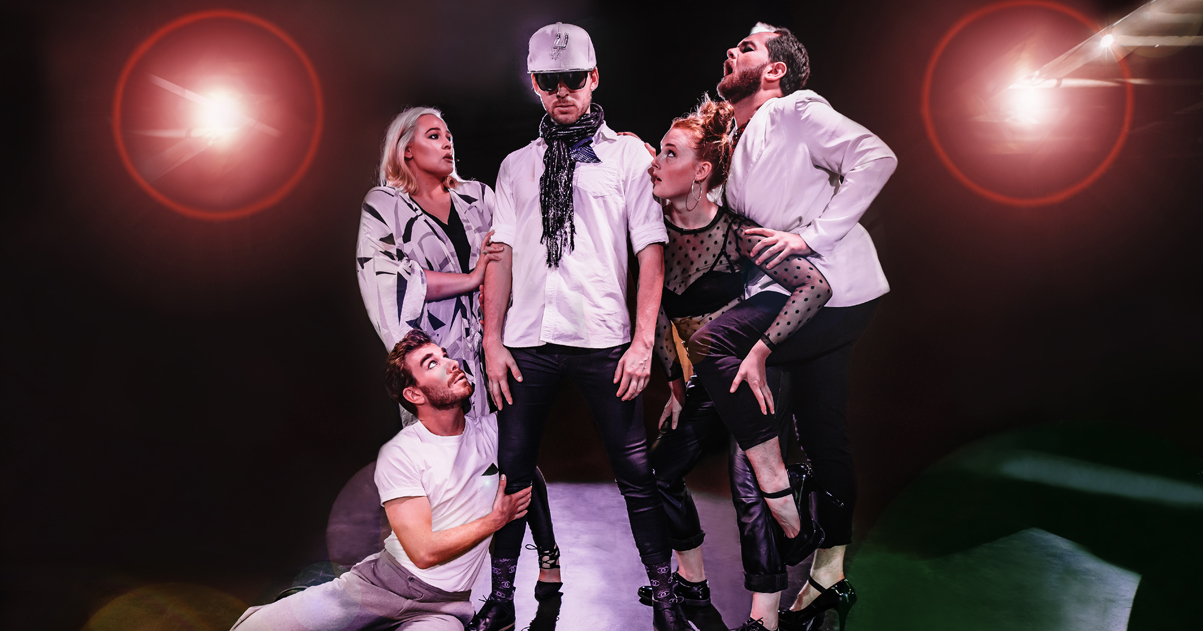
A Slightly Isolated Dog perform Don Juan

Following on from last year, it was still difficult to see much theatre over the last twelve months, what with COVID shutting down shows with moments to go, and the arts industry in a perilous position. I did manage to see approximately 20 productions this year, however, so I am able to list my top five, with honourable mentions.
5 Best Theatre Productions I Saw in 2021 (in alphabetical order):
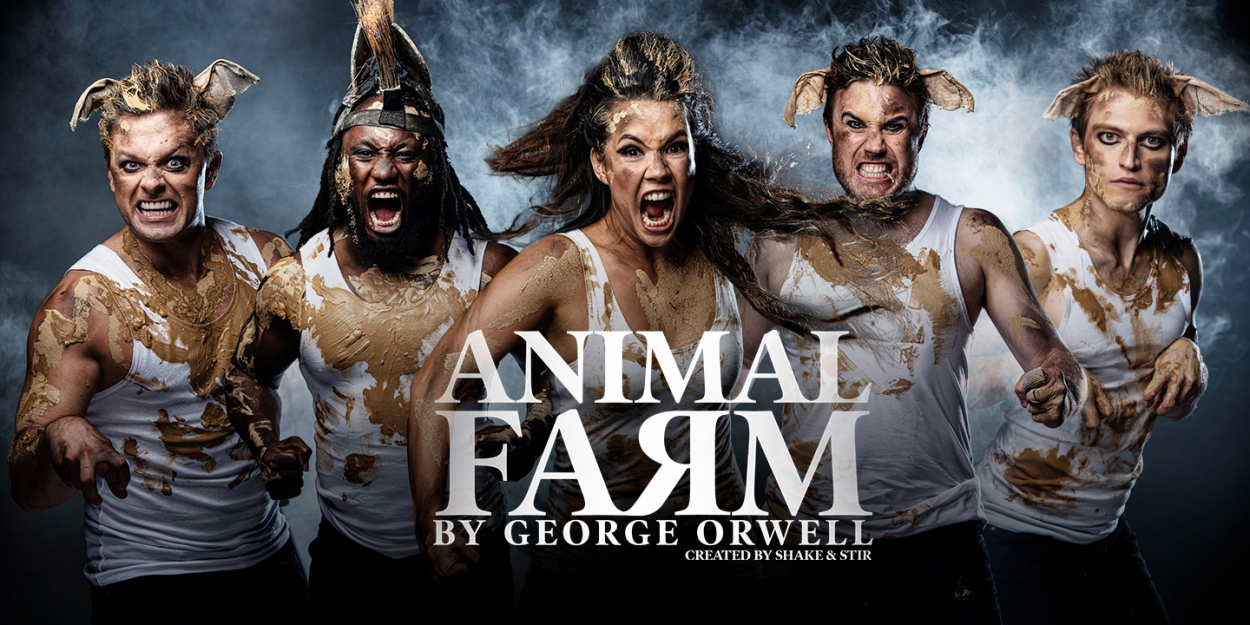
  1. Animal Farm - shake & stir theatre co., The Playhouse: This is an absolutely fantastic interpretation of one of my favourite novels. People are falling over themselves to draw parallels between the Trump administration and the propaganda within the play, but it remains as firmly rooted as ever in Orwell’s concerns about communist doublespeak. The ensemble of actors portrays all the anthropomorphised animals with excellent gestures and expressionism, maintaining an outstanding physicality throughout. The set is bleak and brilliant in equal measure. Lighting and sound blend artfully into the overall presentation and despite the grim truths of the production, there are still laugh-out-loud moments - the hen rebellion is dealt with humour until it suddenly isn't, and the transformation of beasts into men and back again is wry and poignant. A teacher of year eights (13-14) said her class went to see it and were disappointed that it didn't feature real animals. I never thought I'd say this, but sometimes theatre is wasted on the young.

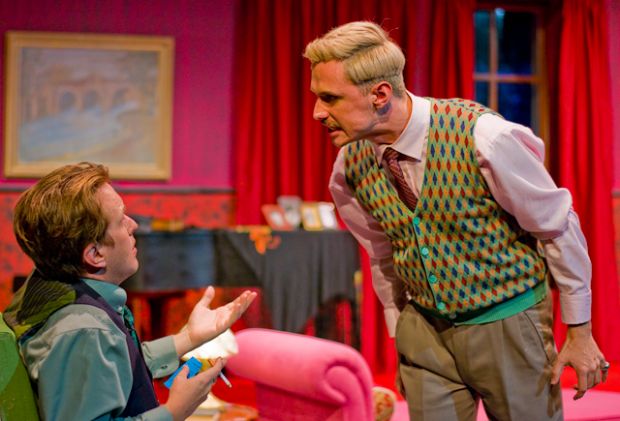
  2. The Appleton Ladies Potato Race - Ensemble Theatre, The Playhouse: Written by Melanie Tait, this charming, heartfelt and positively affirming play provides five great roles for women and a story that is both specific and universal. The small country town of Appleton is disturbed when returning resident and new GP Penny Anderson (Sharon Millerchip) discovers that the famous Potato Race awards $1,000 prize money to men and $200 to women. As she takes on the organisers, the competitors and the spectators she comes face to face with those who want change and those who see no problems with the way things are. Director, Priscilla Jackman teases out all the niggles, nuances, resentments and rejections as the characters try to understand and accept each other for who they really are. It's as like a fusion of Made in Dagenham with The Dressmaker served with an added side of potato puns.
  3. Don Juan/ Jekyll & Hyde - A Slightly Isolated Dog, Bicentennial Hall, Queanbeyan Performing Arts Centre: Pretending to be a famous French theatre troupe – ‘We are very famous’ ‘And very French’ – gives this Kiwi ensemble of five actors the perfect opportunity to have fun with flamboyant stereotypes and outrageous accents. Theirs is a modern and collaborative approach and they encourage photos, which they then later share through their social media channels - direct marketing for the non-traditional theatre goers. Through a mixture of audience interaction (nothing confronting), song, dance, visual interpretations (a boat tossed on a stormy sea is a cardboard box on a tarpaulin, shaken about by the audience), and a voice distortion box, one night we learn a different side to Don Juan from any we had previously known. Another night, they bring bring their seemingly chaotic but totally controlled performance style to the story of Jekyll and Hyde. All of the ensemble get a go at being the man with a dark side within (‘but he pushes it down’) donning a wig and glasses to play the evil alter-ego, but their physicality is more important than their props and they literally embody character acting. The sound and lighting production is excellent and the timing is superb – it takes a lot of hard work to make something look this effortless, and they are a joy to watch. Both this and the previous offering are conducted in traverse staging, drawing the audience into the unfolding drama in a non-confrontational manner; the performances are short and leave the audience laughing and wanting more – they are a triumph.

  4. A German Life - The Gordon Frost Organisation, The Playhouse: Robyn Nevin delivers this fantastic script by Christopher Hampton as if she were born to play this role. Brunhilde Pomsel is an unassuming woman with good shorthand skills who, almost by chance, came to work in Joseph Goebbels’ Propaganda Ministry. She survived the war and its aftermath (after five years in prison) and now, near the end of her life and in a nursing home, she recounts what she recalls of those days. The sparsely furnished room for an elderly resident throws up echoes of incarceration while projections of Nazi rallies, mass evacuations, ruined cities and concentration camps, are starkly presented in black and white on the walls for all to see. It is disturbingly intimate and asks us to question how much we think she knew (every time she denies knowledge, she stumbles over her words or questions her receding memory) and what would we honestly do in her situation. Neil Armfield directs one woman to capture our attention throughout the running time, and the play raises many questions about personal responsibility, communal culpability and the veracity of memory. She opines, "Nowadays, I don’t think people would be stupid enough to fall for the kind of nonsense we fell for. All that hot air, I don’t think you can get that past people anymore.” Well, the audience all felt uncomfortable at that moment - apart from the smug ones who missed the point.
  5. Milk - The Street, The Street Theatre: I believe the theatre is a forum for sharing stories; exploring the past; questioning the present; and preparing for the future. ‘Milk’ does all of the above with superb staging and atmospheric sound and lighting featuring pivotal moments in liminal spaces. If Dylan Van Den Berg wrote this as an ode to his daughter, she is one very lucky human. We stand with you. We pay our respects to the traditional custodians of the land on which we live.

Honourable Mentions to:
  • Carpe DM - Canberra Youth Theatre, Gorman's House: A bold, thoughtful and intelligent new work as past of a project with Canberra Youth Theatre's Emerge Company. Devised works exploring contemporary themes can be a little self-indulgent, but the moments of honesty and reflection make up for the understandable cliches as young people think they are the first to ever have these thoughts.
  • The Governor's Family - Canberra Repertory Society, Theatre 3: Plaudits to Rep for taking on this confronting work. It's not often a community theatre company with a traditionally conservative audience would program a play tackling themes of cultural appropriation, gender diversity, incest and political revolution.
  • The Stranger - Ainslie and Gorman Arts Centres and Bare Witness Theatre Company, Ralph Wilson Theatre: Outstanding work by Christopher Samuel Carroll to command the audience with a one-man show and deliver fresh insight to a work of existentialist nihilism. Considering I detest the original novel by Albert Camus, I was impressed beyond all expectations at the translation, staging and performance. Chapeau!
Christopher Samuel Carroll standing on a beach staring at the sea in a production of The Stranger

Friday, 20 August 2021

Friday Five: More Theatre


As we are all in lockdown, I thought it would be time to review the last theatre productions I was able to attend as, who knows when we will get to go and sit collectively in the dark again.

5 Recent Theatre Productions:
Josh Wiseman and Pippin Carroll in Rope
  1. Rope - Canberra Repertory Society, Theatre 3: This is a well-acted and well-staged production of an old-fashioned piece of theatre. Known to many due to the Alfred Hitchcock film, this interpretation still has sufficient bluffs and double bluffs to keep the audience hanging on until the end. The trope of a bored entitled elite killing someone just because they can and not acknowledging there will be consequences is well trod now (not least through Dostoevsky's Crime and Punishment or, more recently, Donna Tartt's 1990s book club favourite The Secret History), but at the time of writing (1929), the concept was original enough to be diverting. Patrick Hamilton's plays (he also wrote Gaslight) can be interpreted as stuffy and overwrought drawing-room dramas (and the opulence of the set threatens to overwhelm), but the fact that this still felt fresh is due in large part to the light but detailed direction by Ed Wightman and the flamboyantly compelling acting by Pippin Carroll in the lead role of Wyndham Brandon. Other acting is uneven and not all of the styles blend well together, but it is relatively tight at a one-act 90-mins running time.
  2. The Appleton Ladies Potato Race - Ensemble Theatre, Canberra Theatre Centre: Written by Melanie Tait, this charming, heartfelt and positively affirming play provides five great roles for women and a story that is both specific and universal. The small country town of Appleton is disturbed when returning resident and new GP Penny Anderson (Sharon Millerchip) discovers that the famous Potato Race awards $1,000 prize money to men and $200 to women. As she takes on the organisers, the competitors and the spectators she comes face to face with those who want change and those who see no problems with the way things are. Director, Priscilla Jackman teases out all the niggles, nuances, resentments and rejections as the characters try to understand and accept each other for who they really are. It's as like a fusion of Made in Dagenham with The Dressmaker served with an added side of potato puns.
  3. Hello, Is There Anybody There? - Tempo Theatre, Belconnen Community Theatre: Tempo love to have fun with their productions, and they ham up this self-aware murder mystery with great delight. Lady Amelia (Cheryl Browne) is searching for a subject for her next novel, aware that it has all been done before and there are no new murder tropes - so with many a knowing nod to the audience (the fourth wall is completely demolished), she explores them all over the space of the play, aided and abetted by her drunken sot of a sexist husband (Kim Wilson) and the farcical cop duo (Michael Ubrihien and Nikki-Lynne Hunter rocking her Scottish accent for all its inherent humour). The writing is drenched in self-deprecation and deadpan delivery, and the cast milk it like the comedy cow it is with the butler and the maid (Gary Robinson and Marian FitzGerald) joining in the murderous parlour games. It's ridiculous but it's fun.
  4. Milk - The Street, Street TheatreI believe the theatre is a forum for sharing stories; exploring the past; questioning the present; and preparing for the future. Milk does all of the above with superb staging and atmospheric sound and lighting featuring pivotal moments in liminal spaces. If this an ode to the writer (Dylan Van Der Burgh)'s daughter, she is one very lucky human. We stand with you. We pay our respects to the traditional custodians of the land on which we live.

  5. The Governor's Family - Canberra Repertory Society, Theatre 3: Plaudits to Rep for taking on this confronting work. It's not often a community theatre company with a traditionally conservative audience would program a play tackling themes of cultural appropriation, gender diversity, incest and political revolution. If it is a little packed with righteousness, that is the fault of the writing and not of the delivery. Director Tony Llewellyn-Jones has assembled a cast of considerable merit to portray the dysfunctional family of the fictional Governor of NSW, Howard Mountgarret (played with agonising guilt and torment by Peter Holland in one of his finest performances to date). Frances Pod (Kiara Tomkins) is a young indigenous woman who has been raped by a group of Irishmen. Mountgarrett takes her into his home ostensibly as a gesture of compassion, but one which is viewed with scepticism by his weary and depressed wife (Antonia Kitzel) and insurrectionist cross-dressing daughter (Caitlin Baker) and partisan interest by his poetic justice-seeking son (Robbie Haltiner). As Mountgarret has to decide how to deal with the perpetrators - brothers of the temperamental newspaper man and potential beau of his daughter (Jack Casey) - he knows his actions will have greater implications for the future of the colony, which are hammered home with a decisive lack of subtlety in the second act. Andrew Kay's versatile set is a highlight, using the potential of the revolve and the scrim to place us in different sections of society with always the suggestion of another in the periphery. The production elements add in the moments of light and shade that the script itself lacks to make this a fully challenging piece of theatre.

Wednesday, 19 June 2013

Frankenstein: as Shelley Intended

Frankenstein by Nick Dear
Ensemble Theatre Production
Street Theatre, 7-11 May 2013

From the opening strains of the cello (composer Elena Kats-Chernin; cellist Heather Stratfold), which set the tempo and the heart racing, and underscore the rest of the action, this visceral, chilling, moving and powerful drama (director Mark Kilmurry) provides much to look at and even more to think about.

Everyone knows a version of the Frankenstein story, but they are probably more familiar with the cinematic depictions of the mid 1900s than the psychologically tortured Gothic melodrama that Mary Shelley wrote in 1817. Despite a reference to the Hammer House of Horror in the predominantly black and white costumes with occasional splashes of red, Nick Dear’s adaptation focuses mainly on the ethical elements of the legend.

Having tinkered with the divine right of creation by constructing a creature from dead human skin and organs, Doctor Victor Frankenstein (Andrew Henry) must suffer consequences. If one wants to create life; one should produce children, yet Frankenstein’s reluctance for intimacy with his finance, Elisabeth (Katie Fitchett) makes this seem unlikely.

Instead he manufactures the Creature, which is represented with startling brilliance by Lee Jones. Jones’ spasmodic movements suggest a twisted choreography. The ‘birth’ scene in particular is incredibly disturbing: actions such as discovering one’s fingers, toes and penis, while cute in a baby, are confronting in a nearly-naked adult.


When thrown out by his disgusted creator, the Creature stumbles upon the farm of a blind university professor (Michael Ross), who teaches him morals, literature and philosophy, unafraid of what he can’t see. He explains that society can breed cruelty; people gather together for comfort and companionship, but then massacre each other, just as soldiers destroyed the professor’s books.

The professor’s son and daughter-in-law (Michael Rebetzke and Olivia Stambouliah) share a loving marriage. The Creature is inspired by this example of equality but when he is introduced to them they recoil in horror and he seeks revenge for their repulsion. Although he wants to be good and loved, he is scorned and derided, which forms his character.

Shelley was greatly inspired by the contemporary doctrine of Calvinism – Calvin taught in Geneva where much of the novel (and subsequently play) is set – which teaches that people are born depraved and only achieve salvation through God. Other religions and philosophies of the time propounded that we are born pure, and learn evil through education and environment. The entire novel can be read as a debate on this issue, and Kilmurry’s direction certainly highlights this aspect.

Things in nature go together and need partners, so the Creature needs a companion and asks Victor for a wife. It is a concept familiar to the Shelley’s and forms the essence of Percy Bysshe Shelley’s poem Love’s Philosophy; “The fountains mingle with the river/ And the rivers with the ocean/ The winds of heaven mix for ever/ With a sweet emotion;/ Nothing in the world is single,/ All things by a law divine/ In one another’s being mingle –/ Why not I with thine?”

The bride that Victor creates is ‘perfection’ by early nineteenth-century standards of the ideal female: she looks great but doesn’t say anything. Women were considered second-rate and early feminist principles are prevalent in Frankenstein (many male detractors argued that Mary Shelley couldn’t possibly have written such a great work herself and must have had help from her husband).

Fitchett embodies this strength in the character of Elisabeth. She is determined to share her husband’s scientific experiments arguing (passionately and justifiably) that the only reason she cannot understand them is that women are not permitted to go to university. She is tired of perfection and searching for something other, claiming that the lakes and mountains are beautiful, but boring and the people are dull.

The handsome but austere settings of Switzerland and the North Pole wind and snowscape (with a brief foray to the Orkney Islands) are superbly executed through sound (Daryl Wallis) and lighting (Nicholas Higgins). Victorian light bulbs drip from the ceiling like stalactites, and the effects are exceptional from the pulsing accompaniment of the heartbeat to the flickering fire and woodland gobos.

The on-stage Foley art adds a nightmarish abstract dimension as actors recreate the sounds of grave digging, beatings and crackling flames. This enhances the clear and creative set design with a central scrim – the semi-transparent curtain occasionally closed like a hospital cubicle to screen the action while conversely highlighting dire imaginings.

The antagonistic symbiotic relationship shared by the Creature and his creator is made flesh by the spectacular acting of the principals and the co-ordinated cyclical design (Simone Romanuk). The final tableau of the North Pole connects us back to the beginning with its infinite succession of life, death, birth, creation and destruction; all reflected in the round black granite stage. It’s timeless, it’s brilliant and it’s truer to the original source material than any previous version of this classic tale.