Showing posts with label theatre. Show all posts

Friday, 27 February 2026

Friday Five: First Shows of the Year

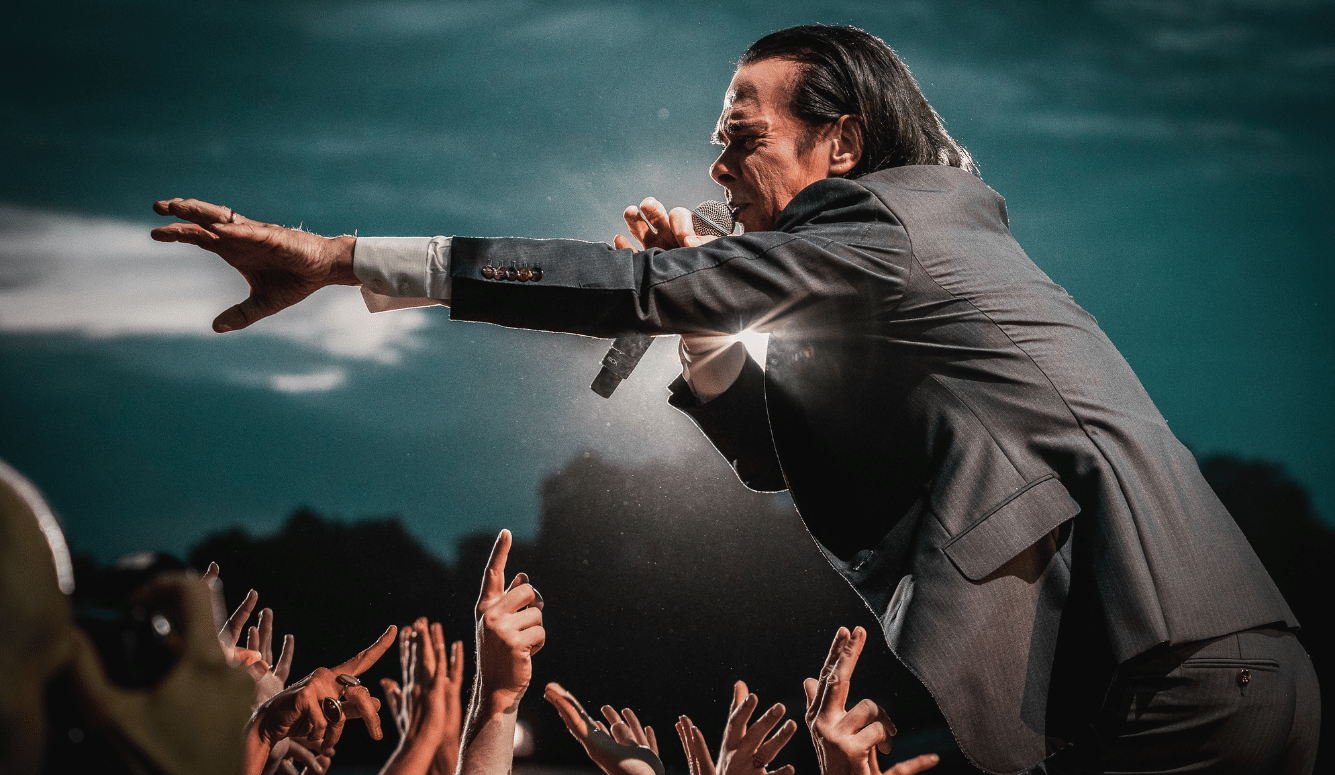
  1. Nick Cave and the Bad Seeds - Supersonic Australia, The Domain, Sydney: As part of the Wild God Tour, the band played two shows in January featuring a messianic performance by Mr Cave, a 17-piece ensemble, some of the best backing vocals I have head in a long time, and a supporting cast of bats flying overhead at dusk (the lack of Release the Bats from the set was the only disappointment). Nick Cave is a consumate performer, whether belting out fan-favourites Tupelo and O Children or baring his soul with tunes about his dead son, I Need You (with the repeated refrain, 'just breathe') and Joy. Warren Ellis does Warren Ellis things at the side of the stage as Cave roams, struts and surfs about the place, equally comfortable pounding the piano or stroking the keys, his energy through two and a half hours is obvious in every gesture and facial expression. Jubilee Street is a deliverance for the ages, while more mainstream hits Red Right Hand and The Weeping Song invite the crowd to sing along until there is barely a dry eye in the domain by the time he finishes (us) off with Into My Arms.
  2. The Book of Mormon - Anne Garfino, Important Musicals and Suzanne Jones, Capitol Theatre, Sydney: A delightful and irreverent pastiche of a show that mocks every genre of musical theatre, cultural hegemony and organised religion while still maintaining a moral code. From the team that brough you South Park comes a musical that skewers itself with outstanding acting, singing, choreography, sets and costumes. From the opening number, Hello! in which we are introduced to a cast of missionaries of the Latter-day Saints, we know there is earnestness up for lampooning. Elders Price (Sean Johnston) and Cunningham (Nick Cox) are paired up and sent to Uganda - not quite the cushy Orlando posting they anticipated. Cue jokes about dictatorship, AIDS, child abuse, blasphemy, and myth making. The songs are memorable and amusing, the sacriligeous Lion-King-inspired Hasa Diga Eebowai and the toe-tapping Turn It Off about supressing unwanted feelings are highlights, and the dream-a-dream ballad Sal Tlay Ka Siti is the version of the song that goes like this (performed by Paris Leveque with wholly convincing naivety in her professional debut). Spooky Mormon Hell Dream is a wonderful excuse to play with props, character and lighting, and the breathtaking audacity of I Am Africa had me wondering how they got away with it. The last word should go to Trey Parker who writes, "There's this line that you can cross all you want as long as you have a reason for doing it. If it has a point and it has a story and it has genuine, real character and emotion, then you can pretty much do whatever you want. There is no line if you're being truthful. We learned that lesson a long time ago."
  3. You Tell My Mum I'm Dead - Sunspot Productions, The Courtyard Studio: This is an interesting new work from a promising young writer (Emily O'Mahoney), focussing on the Australian 'schoolies' phenomenom where hoards of 18-year-old school leavers descend on beach towns (particularly the Gold Coast and, in this instance, Bateman's Bay) to celebrate their new-found freedom. Gangs of youths, many of whom are away from parental control and experimenting with excessive drugs and alcohol for the first time, flirt, fight and try to figure out who they want to be as they emerge blinking from the confines of adolesence into the bright lights of adulthood. What could possibly go wrong? Director, Kathleen Dunkerley makes some bold choices in their use of space, light and sound effects, accompanied by straightforward acting decisions as they play to the cast's strengths. We spend time in the company of three young women: Cara (Emily O'Mahoney), whose natural performance and final decisive monolgue capture the insecurity of being on the cusp of womanhood; Max (Breanna Kelly), who brings energy and sincerity to an assured performance with unexpectedly emotional anguish; and Layla (Ainslie Bull), with a metaphoric speech about lambs being led to slaughter which could be the crux of the play if delivered with more power. The commitment and engagement from all involved make this an exciting ensemble to watch in future.
  4. La Souris Blanche - ReAction Theatre, Street 2: Nancy Wake was a New-Zealand born Australian nurse and journalist who joined the French Resistance and later the Special Operations Executive during World War II and briefly pursued a postwar career as an intelligence officer in the Air Ministry. Known as the White Mouse, part of her legendary appeal is due to her insistence on maintaining her femininity amidst guerilla warfare, often taking silk nightgowns, Chanel lipstick and red satin pillows on spying missions in the French mountains. This production, written by Christine Croyden and translated by Véronique Duché is performed entirely in French, to immerse the audience in the language and the atmosphere of the resistance. Surtitles as well as wartime images are projected onto sheets hanging from the top of the stage, ripped and layered to provide entrances and exits, suggesting forests, apartments and nightclubs, all while evoking torn parachutes of downed airmen - both practical and imaginative. Nancy herself is performed by Ionna Gagani and Natalia Nour (as young Nancy) as the agent provocateur prepares to receive a belated award from the Australian government and reflects on her life and the choices that led her here. Flashbacks of her training and actions, including learning to kill silently and the consequences of that ability, are executed with passion, wit and candour. Director Louise Howlett doesn't shy away from the violence, while incorporating the romance and an artistic element through song and dance. There is a lot to the story, and this 80-minute play only peels back a partial couche d'oignon, leaving audience members craving more information, which is surely one of the purposes of drama, n'est-ce pas?
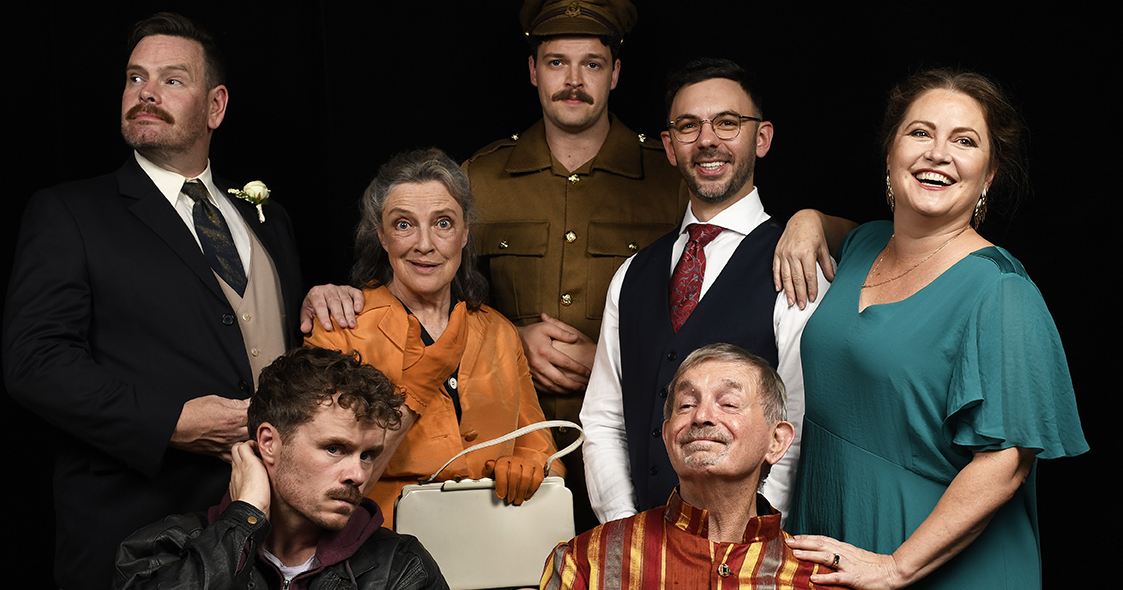
  5. Bedroom Farce - Canberra Repertory Society, Theatre 3: The play can be pretty dated with its casual references to domestic violence and defined gender roles, as four couples talk about the things that happen behind closed doors. The title is misleading as it is not a farce so much as a sit-com where character interplay matters as much as precision timing. In this, the older couple, Ernest (Pat Gallagher) and Delia (Sally Rynveld) are perfect as the slightly stuffy and bewildered moral compass (think Richard Briers and Penelope Wilton in Ever Decreasing Circles). Their son, Trevor (played with too much posturing and insufficient presence by James Grundoff) has a combative relationship with Susannah (Lara Connolly whose histronics elicit ridicule rather than empathy), who crash the house warming party of practical jokers Malcolm (well-executed bonhomie from Lachlan Abrahams) and Kate (Antonia Kitzel as the centrepiece of the play with a fun and thoughtful performance). Making up the octet are Nick (Rob de Fries has a good line in physical theatre and condescending disdain but is way too old for the role which makes it ick) and Jan (Azerie Cromhout), Trevor's former girlfriend. Although the script frequently mentions her strength and how she would have been a better match for the tempestuous Nick, this is not evident on stage. All the action occurs across a series of bedrooms, delightfully designed by Andrew Kay, showing the character of the couples and allowing continous sightlines and theatrical flow. Despite some good acting and technical elements, the zeitgeist-blind casting of a couple where the man is old anough to be the woman's grandfather and the tone-deaf approach to domestic violence are insurmountable issues.
Ionna Gagani and Natalia Nour as Nancy Wake in La Souris Blanche

Friday, 19 July 2024

Friday Five: More Theatre

Lexi Sekuless as the prosecutor in Terror
  1. Terror - Lexi Sekuless Productions, Mill Theatre on Dairy Road - This is a really interesting and interactive piece with audience voting on a jury decision. A pilot (played by Mark Lee, who can stand looking inscrutable for a long time) has shot down a plane full of hijacked passengers, on his own initiative and contrary to an official order. The lawyers arguing for the prosecution and defence (Lexi Sekuless and Tim Sekuless respectively) deliver convincing arguments and appeal to the audience directly. As the judge, Tracy Noble is inimitable in her summing up and control of the situation. Director Kim Beamish has a tight rein on the cast and the raw, industrial set, with expertly choregraphed moments representing the dramatic events and the claustrophobic atmosphere both of a targeted plane and a tense courtroom. 
  2. Streetcar Named Desire - Free-Rain, ACT Hub - This is known as a vehicle for female actors to shine, and there is, indeed, great acting from the female leads, although the men have a little more issue being authentically oafish, and the ensemble is uneven, with some of the muttering being distracting rather than supportive of the main cast. Amy Kowalczuk as Blanche DuBois is one of the best Blanches I've ever seen. It's a vile role but she approaches it with depth and nuance. Fluttery hand gestures and quick movements highlight her stressed (bordering on neurotic) attitude. Her playful sister moment with Stella (Meaghan Stewart) is beautiful as a glimpse of what could have been. The switch to flirtation and girlishness powerfully shifts to predatory, and the moment when she realises she has lost everything and has no autonomy is frightening and heartbreaking. Alex Hoskison as Stanley Kowalski is powerful and wounded with an inner strength and plenty of charisma, but not brutish or disgusting enough. He doesn't play ignorant and always looks as though he has a plan, making him defensive rather than cruel. Meaghan Stewart as Stella is charming and convincingly caught between her man and her sister, wanting to do right by both and failing to please either. Her compassion and need shine through on stage with only occasional slips into the actor instead of the character, with accent and mannerisms. Lachlan Ruffy gives the character of Harold Mitchell more nuance than it often receives, wanting to be the gentleman and look after the vulnerable, but fiercely wounded when he thinks he has been duped. He is the real toxic male of this production. Sarah Hull's Eunice is a perfect antidote to the heightened situation of the downstairs flat - she is earthy and sensual, putting up with the situation and trying to find positives where she can, providing sympathy, understanding and compassion as a real good Southern neighbour should. The tight, cramped set implies the situation and environment well, although there are some issues with sightlines. The bathroom is such a large presence in the play that it could have been incorporated, and there is no obvious indication where Blanche is actually sleeping. Tennessee Williams has a very specific attitude to light expressing truth in his plays, which can be intrusive but works well here. Blanche says, 'I don't want realism. I want magic' and this is reflected in the chase light scene and the abrupt changes. As she is afraid of bright lights and prefers the softening glow, more shade and contrast could have been provided. Sound is very clear and obvious - perhaps too much so, as it comes in single chunks rather than spread throughout - but the nightmare tune ending in a gunshot is well played. 


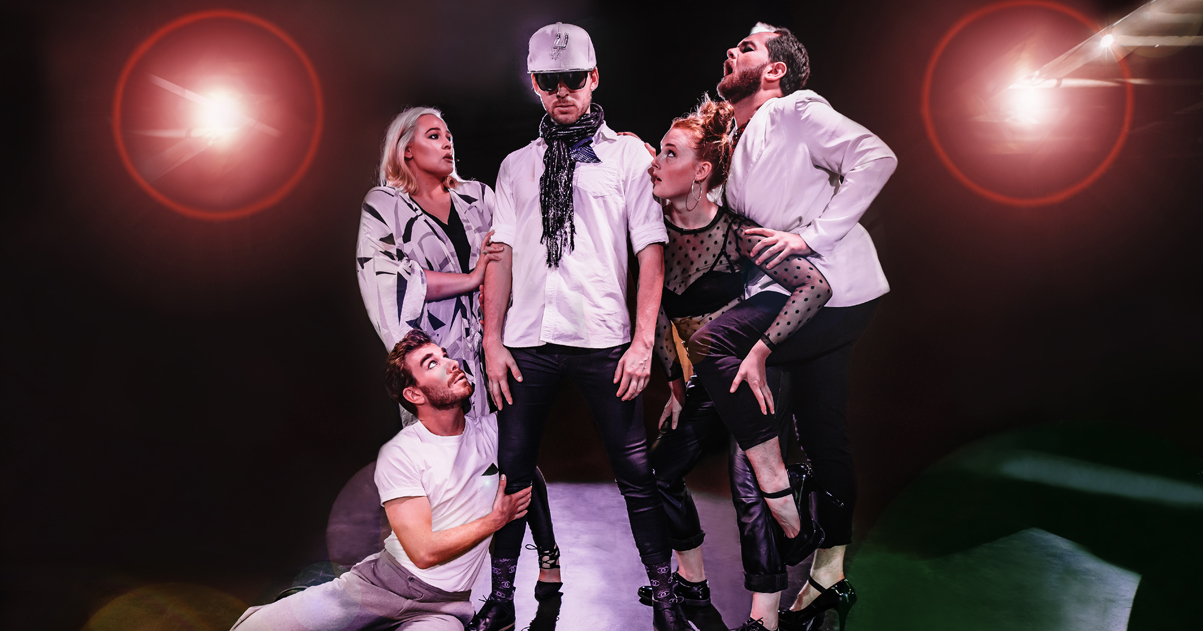
  3. American Idiot - Queanbeyan Players, The Q - It's a juke box musical with privileged young people trying desparately hard to be desparate and hard. Three wannabe incel lads (Johnny, Tunny and Will, played by John Whinfield, Darcy Kinsella and Zac Izzard) want to get out of town and have adventures, seeing women as handbrakes to their careering egos. As it is sung through, there are some strong songs (HolidayKnow Your Enemy, She's a RebelWe Are the Waiting, and the titular track) but not a lot in between. The choreography seems very out of place and era (there is a lot of jumping, hand flicking and weird lurching, which is more reminiscent of Michael Jackson's Thriller than post-punk angst), whereas the inclusion of some older, steadying hands in the ensemble (I'm looking at you, David Cannell), may bring experience to the stage but their presence is questionable. A standout is Declan Pigram in the role of St Jimmy, a creepy, sunglasses-wearing dealer who is revealed to be a drug-addled manifestation of Johnny's subconscious (occasionally portrayed by Green Day's lead singer and guitarist, Billie Joe Armstrong). It doesn't really matter what the audience feel as this is paean to the fans and the friends; the cast all have a fantastic time (and I'm sure they all think they look cute in their costumes - they do), as is exemplified by them draping their arms around each other in the high-school-esque final number/ curtain call, Good Riddance (Time of Your Life). This is a passion project for director, Bradley McDowell, and I like the laughably faux-punk Green Day just fine, but this doesn't add anything to my appreciation of the band or their music.
  4. Crime and Punishment - The Street, Street Two - In this claustrophobic production, Christopher Samuel Carroll plays the anti-hero of Dostoyevsky's novel with a range of emotion that compels the audience to side with him at times despite his heinous deed. His vocal and physical presentations cover a gamut of feelings and experiences that are quite exquisite. PJ Williams is remarkably phlegmatic as the inspector who goads his friend/ confidant/ suspect into a confession (come on - no one can accuse this of spoilers since the seminal work of psychological fiction was first published in 1866). Josephine Gazzard is perhaps the weak link as she plays all the female characters, some with a lack of focus and a listlessness that threatens to derail the play. The adaptation by Marilyn Campbell-Lowe and Curt Columbus condenses the towering novel into a mere 90 minutes, which could have been even more taut if Sonia, the street-walker character, had more impetus and energy. Designer Kathleen Kershaw has given us levels and surfaces to consider, with the idea of self-reflection never far from the surafce.
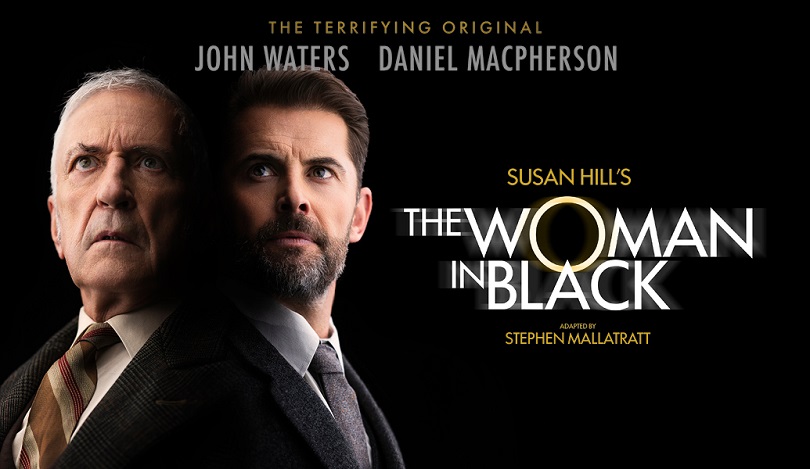
  5. The Woman in Black - PW Productions, Woodward Productions & Neil Gooding Productions, Canberra Theatre Centre - The play relies upon actors who elicit empathy and technical elements that create suspense. Fortunately, this production has all that in spades. John Waters plays Arthur Kipps, the narrator of the story, complete with framing device, and proceeds to assume all the other parts with aplomb. Daniel Macpherson acts out the story that Waters narrates, as the young Arthur Kipps, and the unreliable narrator trope weaves in and out of the production with fascinating and thoroughly engaging stagecraft. The set is sparse (designer - Michael Holt), allowing the audience to picture the scenes as described in their imagination, the lighting is effective (Kevin Sleep) and the sound dramatic (Sebastian Frost). The rocking chair that rocks by itself; the door that opens with no-one there; the galloping horse and the sudden jump scares are all genuinely scary. Director, Robin Herford has given us a wonderfully atmospheric piece of theatre, which is worth going out in the cold to experience.

Friday, 7 June 2024

Friday Five: Show Posters

One of the themes of the play I am directing, Dead Man's Cell Phone, is the way people interract through their phones rather than realistically and so their understanding of each other becomes skewed and depersonalised. In devising a poster to advertise the play, I wanted to spotlight the overload of impersonal information and intimate details and the way in which it is easy to become sucked into this heightened but depleted digital world. I didn't want any recognisable faces or features, other than possibly a hand which could belong to any body. These are my suggestions for what I had in mind.

This is what the publicity department gave me.


I was recently listening to an interview with Ridley Scott in which he said that he strongly disliked the poster for Prometheus, because it actually contains a plot spoiler. He asked for it to be changed, but it remained because apparently the marketing department is more powerful than a director. Well, if they won't listen to Ridley, I can't really expect them to listen to me.

In the meantime, at least the poster is bright and should grab the attention, hopefully drawing people to come and see our wonderful production. And it also goes really well with the colours on a can of Bentspoke Crankshaft.

Friday, 17 May 2024

Friday Five: Theatre Since Then


  1. Seagull - Chaika Theatre, ACT Hub: A bright and witty adaptation by Karen Vickery with some fine performances, particularly from Natasha Vickery as Nina (a divine portrayal of a broken spirit without mawkish sentimentality), Joel Horwood as Kostya, and Amy Kowalczuk as Polina (calmy understated with a stillness and depth that is very moving). The outood to indoor setting works well and overall the production manages to be fresh and original while maintaining the humour and pathos, although there are slight distractions in some curious staging and costume choices, and some excess faffing with props. 
  2. The Shoe-Horn Sonata - Lexi Sekuless Productions, Mill Theatre: This is an exquisite production of a challenging script. Two women, Bridie (Andrea Close) and Sheila (Zsuzsi Soboslay), meet again 50 years after they were released from a concentration camp where they were taken in the fall of Singapore. Close is a non-nonsense Aussie and Soboslay is a more subdued Brit, and they complement and contrast each other equally. They say you should never ask what someone in these circumstances has done to survive, and these women, who were forced to be the best of friends, have kept secrets from each other for half a century. Now they are exposed in a hotel bedroom and a television studio as their histories are probed and dissected. Lexi Sekuless' direction and setting aloow us to feel their emotions as we intrude upon their privacy. War robs humans of their dignity - the very least we owe the survivors is respect. This is essential viewing.
  3. Gaslight - Gas Theatricals, Canberra Theatre Centre: The play that launched the term for someone (usually a man) persuading another (usually a woman) that they are going mad due to a series of seemingly insignificant but carefully planned incidents is often considered old-fashioned. Patrick Hamilton wrote it in 1938, and now Canadian playwrights Johanna Wright and Patty Jamieson have given it a sensitive remodelling, while maintaing its Edwardian essence. The story remains basically the same as an utter arse of a man, Jack (played with casual indifference by Toby Schmidt) toys with the mental health of his wife Bella (a superb study in character development by Geraldine Hakewill). In trying to discover hidden gems, he turns down the lights, hides her personal affects and removes paitings, all while administering laudanum and telling her she is frail and over-imaginative. ithout spoiling the plaot, it will suffice to say that the character of Inspector Ruff has been excised from the stage allowing Bella more agency over her discories and the thoroughly satisfying denoument.

  4. Five Women Wearing the Same Dress - Everyman Theatre, ACT Hub: For a play that is supposedly about five women (bridesmaids at a wedding), it still manages to fail the Bechdel Test, and it introduces the concept of child sexual abuse as an 'amusing' 10-minute diversion. The setting in the round with a railing effectively screening the bedroom (as if the bridesmaids are in an MMA cage) leads to some poor blocking and limited interaction between characters. The same dress is obviously the bridesmaids' gown and, as is often the case when supposed to suit all, it looks equally horrendous on everyone - fantastically well designed by Fiona Leach.The level of acting is variable, with Kelly Roberts providing a focal point as Trisha, the strongest of the women in a poorly-written role.  Billed as a 'fun night out', it is dicordant at best.
  5. The Actress - Canberra Repertory Society, Theatre 3: With a great vision for the set and staging, the production elements are strong but the limited range in acting and pace hampers this production. It is slow on cues with a lack of engagement between characters. Kate Harris as Nicole, the daughter, has clear diction and a warm presence that felt more natural than everyone involved in the dramatic sphere. Rob de Fries as Paul, her father and ex-husband of the main character, played his part on the same plane, which worked well for their relationship, and displayed unctous charm and amusing confidence without being creepy por aggressive, whihc is hard to do with that script. As the eponymous Lydia Martin, Liz St Clair-Long is obviously theatrical without any doftening or expression of character that encourages audience empathy. This is far from her best work and, if this really were the last performace from an actress, it would be disappointing.

Friday, 19 April 2024

Friday Five: Theatre in 2024 So Far...

The cast of Queers at ACT Hub
  1. Queers - Everyman Theatre, ACT Hub: A evening of well-performed entertainment that sits more under cabaret than theatre. It is a series of eight monologues performed by indiviual actors with no interaction between them. The direction (Jarrad West and Steph Roberts) is solid as each seperate monolgue takes us through various decades and gives some insight into the main concerns of the gay 'scene', which (according to the publisher of the works curated by Mark Gatiss) 'celebrate a century of evolving social attitudes and political milestones in British gay history. Here, the pub setting and musical interludes provided extra interest and atmosphere, with a special mention for Steph Roberts who played the bartender interracting with actors and adience alike.  
  2. Last of the Red Hot Lovers - Canberra Repertory Society, Theatre 3: A fine production of a not-particularly outstanding play. Barney Cashman (David Cannell) decides he wants to have lots of sex with different women so he invites three of them individually to his appartment and fails to get intimate with any of them, possibly due to a disturbing and extremely unpleasant habit of constantly sniffing his fingers. As usual with a Neil Simon play, the self-indulgent, over-entitled, middle-aged, middle-class, mediocre white man is centre stage while the women are left to act in supporting roles. Victoria Tyrrell Dixon played the wisecracking Elaine Navazio with the perfect blend of cool confidence and comic timing, Stephanie Bailey as Bobbi Michelle played a demanding role with a lightness of touch, gradually and sensitively revealing the truth of her fantasist behaviour, and Janie Lawson as Jeanette Fisher handled existentialist dread well, although was a little stilted and uncertain of her cues.
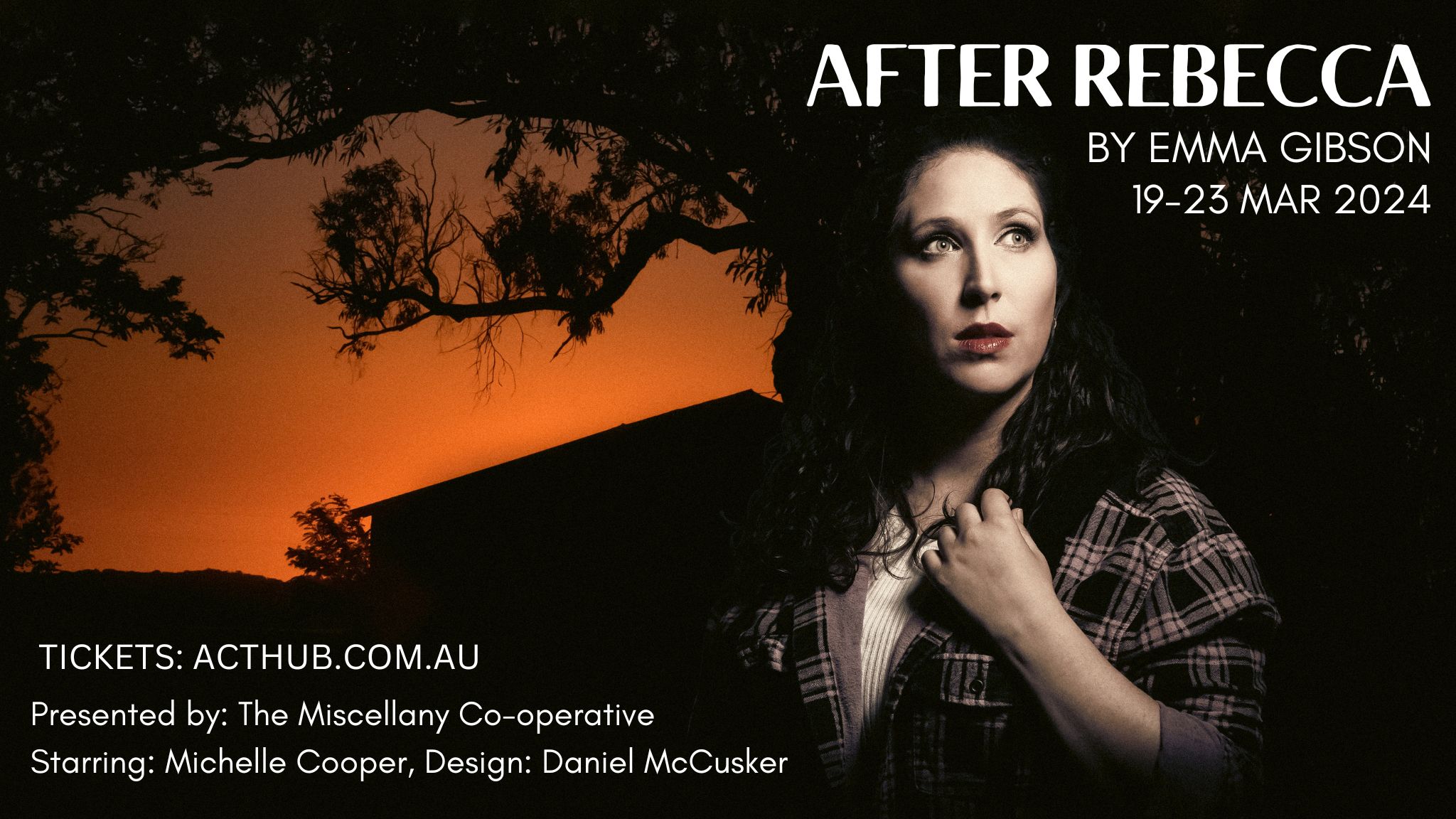
  3. After Rebecca - The Miscellany Co-operative, ACT Hub: Michelle Cooper is a tour de force in action as she delivers this one-person, seventy-five-minute mologue, which tackles themes of abuse and co-ercive control. She also co-directs with Emma Fibson, who wrote the work which transposes the story Daphne du Maurier's Rebecca to a remote outback farm. The idea of a young impressionable woman being swept off her feet by the star of a reality show only to discover when she is alone and isolated that he is more than the handsome heart-throb portrayed on television and that she is expected to be much less than the talented production assistant he met and seduced, is horrendously relevant and contemporary. It starts with a confidence which seems attractive. He takes charge, he promises adventure, he removes you from your support network, he shapes you to fit his mould, he snaps in anger, he denies everything, he will never ever stop. And you say sorry. Sixteen women have been killed in Australia this year due to ‘gender-based violence’. That’s more than one a week. It's only March. You need to see this.  
  4. Sh*t-Faced Shakespeare, Macbeth - Canberra Comedy Festival, The Playhouse, Canberra Theatre Centre: Six years ago I saw Shit-Faced Shakespeare do their version of Romeo and Juliet at the Canberra Comedy Festival and I loved it. This interpretation of Macbeth is just as fun, sharp and witty, and as there is a different inebriated actor/ character each night, it has a wide range of appeal and bears repeat viewing. I also think the more you know the play; the funnier it is, and I have seen and performed in this play more times than any other of Shakespeare's canon. It's very well-crafted entertainment.
  5. RBG: Of Many, One - Canberra Theatre and Sydney Theatre Company, The Playhouse, Canberra Theatre Centre: FOr anyone who saw and loved Julia and Prima Facie, this new work by Suzie Miller will be a welcome delight. Heather Mitchell portrays the titular character, Ruth Bader Ginsberg from her budding legal awakening through her appointment as a Supreme Court Justice of the USA, and her cult status that saw her labelled as Notorious RBG. I have been interested in her career so I couldn't say if prior knowledge is necessary to the enjoyment of the play, but what I can say is that Mitchell is quite brilliant in embodying the woman as she ages and develops, learning and encountering all the highs and lows of her experience. The script is spectacular as Miller blends primary source material with directorial imagination, and the performance, directed by Priscilla Jackman, is nothing short of remarkable. Theatre that tells us stories of outstanding people and their effect on their surroundings is theatre worth watching. 

Friday, 29 March 2024

Friday Five: Io'll Give it Foive: Rating Systems


I am currently on a theatre judging panel, and previously I have been a professional reviewer. Don't get me started on the talent and skill required to review or the inherent complications with reviewing theatre in a small town (you will receive death threats if you say anything negative about a play that someone's mate's in, and woe betide anyone who says that the kid in the school fiasco was anything other than a little angel - it's always better than Broadway...). Everyone thinks they can do it, and, given the proliferation of social media and available platforms, they try. Spoiler: they can't.

Anyway, as I am scarred for life by precocious and entitled responses to reviews ('they just didn't get it' is a familiar refrain from people producing sub-standard work that they think is hilarious), that is not what this post is about. Due to the aforementioned social media attitude, many people don't even read reviews - they just want to see the rating. And in a world where semantically 'average' (which is perfectly acceptable by definition) has come to mean bad, and an A grade is insufficient for your little darling who clearly deserves an A*, how do we rate books, plays, films, etc.?


Our judging guidelines suggest that 1-4 is limited development; 5-6 is well developed, and 7-10 is excellent. According to our mean average (we have eight judges, so we add up the scores and divide by eight), three-quarters of the shows we have seen this year are excellent. I can assure you, dear reader; they are not. But people are afraid to give what is perceived as a 'low' score.

Oftentimes, a simple number out of ten (or five) is sufficient. There was a British TV show called Thank Your Lucky Stars, which ran from 1961 to 1966. As this was before I was born, I never saw it, but I know it featured a segment called Spin-a-Disc in which a guest DJ and three teenagers reviewed three singles. Janice Nicholls, a former office clerk from the Midlands coined the catchphrase, ‘Oi’ll give it foive’, which she said in a strong Black Country accent, and which became a common phrase in our household. 

With certain artistic sports which are included in the Olympics (another topic best avoided unless you want to be in for a long night), the highest and lowest judges' scores are removed so things are supposedly more representative. This is intended to circumvent the Eurovision Song Contest/ Local Theatre Community phenomenon of everyone giving top marks to their best mates. It doesn't always work, but it is a start. Or we could write out formulae and get specific, although still with plenty of room for interpretation, as in some of these rating systems.

  1. The Richter Scale: According to Britannica.com, the Richter Scale is a quantitative measure of an earthquake's magnitude, determined using the logarithm of the amplitude (height) of the largest seismic wave calibrated to a scale by a seismograph. Originally devised to measure the magnitude of earthquakes of moderate size (magnitude 3 to magnitude 7), theoretically, the Richter scale has no upper limit, although in practice no earthquake has ever been registered on the scale above magnitude 8.6 (the Valdivia earthquake of 1960). Each increase of one unit on the scale represents a 10-fold increase in the magnitude of an earthquake. In other words, numbers on the Richter scale are proportional to the common (base 10) logarithms of maximum wave amplitudes. Each increase of one unit also represents the release of about 31 times more energy than that represented by the previous whole number on the scale (That is, an earthquake measuring 5.0 releases 31 times more energy than an earthquake measuring 4.0). Confused? Me too - that's why I leave it to the seismologists. 
  2. British Board of Film Classification: This one seems relatively straightforward. The focus is 'to help children and families choose well by providing them with the guidance they need to help them choose what's right for them and avoid what's not'. The classifications are - U (suitable for all or 'universal'); PG (Parental Guidance); 12A (Cinema release suitable for 12 years and over); 12 (Video release suitable for 12 years and over); 15 (suitable only for 15 years and over); 18 (suitable only for 18 years and over); R18 (Adults works for licensed premises only). The classification board states on its website that it takes into consideration 'bad language, dangerous behaviour, discrimination, drugs, horror, nudity, sex, violence and sexual violence, when making recommendations. They also consider context, tone and impact - how it makes the audience feel - and even the release format - for example, as DVDs, Blu-rays and VoD content are generally watched at home, there is a higher risk of under-age viewing'. This is not just an organisation designed to spoil your fun, but one which takes seriously its responsibility to prevent the viewing public from experiencing unnecessary trauma. The problems arise because different classification boards have different standards and measures. For example, the Motion Picture Association of film rating system has several different bands (with different age recommendations depending on state) and Americans tend to censor 'bad language' much more heavily than violence. 
  3. Magna Carta - Clause 35: Since 1215 it has been enshrined in British law that beer is served in pints (568ml equivalent) and half pints (284ml equivalent). The actual wording is, 'There shall be standard measures of wine, ale, and corn (the London quarter), throughout the kingdom.' This makes perfect sense: you know what you're getting and can compare prices with total transparency. Unlike the system in Australia of pints (which may or may not be the same size as a UK pint), pots, midis, schooners, glasses, handles, schmiddies, butchers, ponies, bobbies and sevens. These are different names and sizes depending on which state is serving your beer. It's annoying and frustrating. Beer should not be messed about like this.
  4. Climbing: This is so that wispy-bearded climbers can hang out in cafes drinking mugs of tea and impressing each other with their tales of derring-do and how they plan to conquer the HVD, when it stops raining. As with many areas of specific lingo, they all know what they're talking about and form a club that deliberatly excludes those who don't. The adjective grades attempt to give a sense of the overall difficulty of the climb. This will be influenced by many aspects, including 'seriousness, sustaindness, technical difficulty, exposure, strenousness, rock quality, and any other less tangible aspects which lend difficulty to a pitch.' Apparently it is an open system, which the guidebooks smugly indicate runs from 'Easy, which is barely climbing, to E11, which has been barely climbed'. Along the way we have Moderate (M), Very Difficult (VD), Hard Very Difficult (HVD), Mild Severe (MS), Severe (S), Hard Severe (HS), Mild Very Severe (MVS), Very Severe (VS), Hard Very Severe (HVS), and Extremely Severe. The last category is further broken down into sub-grades from E1 to E11, with the numerical technical grading describing the hardest (crux) move on the climb. You're welcome.
  5. The Beaufort Wind Scale: The Shipping Forecast is many people's favourite part of the news, sport and weather radio bulletin. As well as providing a litany of fantastically poetic names (disappointingly many of them are just lumps of rock in the sea), it also enlists the Beaufort wind force scale to deliver weather warnings. The scale ranges from 1.Calm (wind speed <1km/h; probable wave height 0m) to 11.Hurricane (wind speed 118+ km/h; probable wave height 14+m), which is highly scientific with all wind speeds measured at 10 metres above ground using meterological instruments. What is more lyrical are the specifications, which relate descriptions of likely observations on land or at sea. For example, the specification for 5.Fresh Breeze (wind speed 29-38 km/h; probable wave height 2m) is 'Small trees in leaf begin to sway; crested wavelets form on inland waters. Moderate waves, many white horses', while a 9.Strong Gale (wind speed 75-88km/h; probable wave height 7m) is described as, 'Slight structural damage (chimney pots and slates removed). Wave crests topple over, and spray affects visibility'. In case you are wondering about that previously-mentioned hurricane, it is, quite simply, 'Devastation. Air filled with foam and spray, very poor visibility.'

Friday, 29 December 2023

Top Ten: Favourite Theatre in 2023

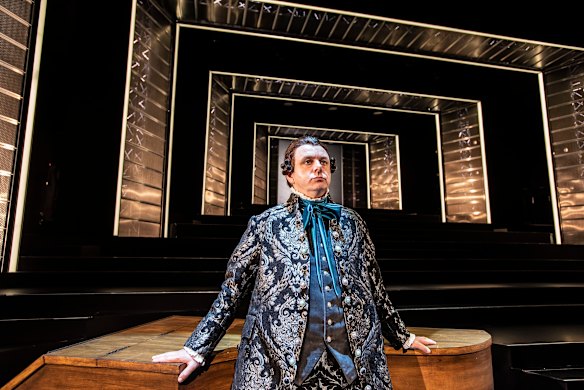
Michael Sheen in Amadeus at Sydney Opera House
I realise it's a Friday and that's usually a Friday Five, but as it's the end of the year, I give you a double episode, so here are my ten favourite theatre productions that I have seen this year (in alphabetical order):
  1. Amadeus - Sydney Opera House, Red Line Productions, and the Metropolitan Orchestra, Concert Hall, Sydney Opera House: Let's face it, Michael Sheen is the draw-card here. Peter Shaffer's play is full of words and wit, interspersed with snatches of music and spectacle, and it requires a triumphant actor to bring the bombast and pathos in equal measure. As he looks back on the rumours concerning his part in the untimely death of Wolfgang Amadeus Mozart (Rahel Romain), Salieri (Sheen) interprets events with a satirical detachment and studied indifference, barely concealing his passionate envy and desperate ambition. It is a masterly performance, and his voice and presence command our attention. The costumes are sumptuous (Anna Cordingley and Romance Was Born) with the rich fabrics, sensational colours and flamboyant designs appearing particularly striking on the austere set (designed by Michael Scott-Mitchell), illuminated by Nick Schlieper's lighting design - heavy on the back-lit scenes - which creates intriguing shapes, silhouettes and shadows. Besides the brilliant pairing of Romain and Sheen, other stand-out performances come from Toby Schmitz as an endearingly foppish Emperor Joseph II, Belinda Giblin and Josh Quong Tart as the frenetic Venticelli who buzz about the stage transporting news and gossip, and the musicians of the Metropolitan Orchestra who supply Mozart's sublime music which, despite Salieri's best (and indeed, worst) efforts, we all know and love. 
  2. The Children - Chaika Theatre, ACT Hub: When people you genuinely like, respect and admire play characters so despicable you have a visceral reaction and want to punch them,… that’s great acting. Michael Sparks, Karen Vickery and Lainie Hart give superb performances in this potentially bleak futuristic drama set in a post-nuclear where you can't work to save your life. But you can save that of others. The pathos and frustration leads to boiling questions about definitions of selfishness. Into this sterile landscape, directors Tony Knight and Sophie Benassi introduce subtle touches of natural processes, and the chopping of a cucumber has never before been such a statement. ‘You don’t even know it, but right there, in that moment, you’ve lost, you’ve lowered your defences and the enemy’s got in, hasn’t it?’
  3. The Complete Works of William Shakespeare (Abridged) [Revised] - Canberra Repertory Society, Theatre 3: Highly entertaining and very well-delivered with confident performances by Alex McPherson, Callum Doherty and Ryan Street. It is a challenge for the three actors to 'perform' all of Shakespeare's plays (and the sonnets) with mild audience interaction and character development, and the trio rise to meet it with aplomb. Kayla Ciceran's set nods to previous productions on this stage, which reflects the self-referential tone of the piece, and the lighting (Stephen Still) highlights all the right areas at all the right times. It flags slightly when one actor is left alone on stage by themself, but soon picks up the pace again in the second act to address Hamlet with requisite humour and the encores and reprises (including the esirper) do not outstay their welcome.
  4. Good Works - Lexi Sekuless Productions, Mill Theatre: Director Julian Meyrick brings an intriguing touch to this potentially complicated drama. As the timelines and characters mingle and merge, the actors (Adele Querol, Helen McFarlane, Lexi Sekuless, Martin Everett, Neil Pigot, Oliver Bailey) work as a tight ensemble to highlight the claustrophobic atmosphere and mores of a post-war small-town environment. Some scenes are deeply disturbing as fear and hatred erupt in violence - subjects include corporal punishment, unmarried mothers and same-sex relationships - while moments of compassion and understanding are treated with respect and touching empathy. The versatile set (Kathleen Kershaw) is deceptively simple and the lighting (Jennifer Wright) and sound (Damian Ashcroft) are strikingly effective in this intimate space. 
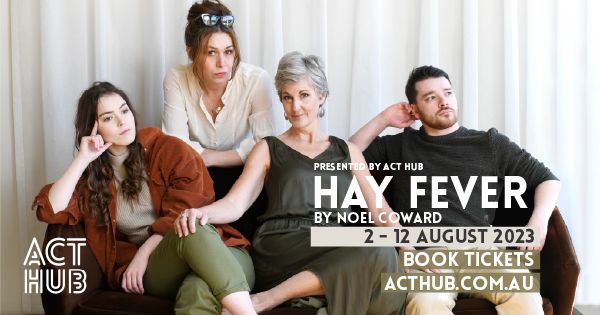
  5. Hay Fever - ACT Hub, ACT Hub: Gender-swapping Noel Coward may seem obvious. It could, however, very easily not work in this quintessential play of English manners, in which members of the Bliss family each invite s guest to their country house for the weekend ('on a clear day you can see Marlow' - my favourite line, obviously) only to treat them appallingly. The fact that it is still so charmingly awful (in all the best ways) is due in part to Joel Horwood's tight direction and set (full use of the stage to represent the ramshackle elements of a country house while inviting an awkward interaction with the audience). The rest is down to the obvious glee with which the actors portrayed their roles with strong physical and vocal performance techniques, led by the outstanding Andrea Close as Judith Bliss in a turn of pure comic genius.
  6. The Bliss Family in Hay Fever
  7. Julia - Canberra Theatre Centre & Sydney Theatre Company, The Playhouse, Canberra Theatre Centre: Apparently the Canberra Theatre Centre had to fight to get this premiere by Joanna Murray-Smith, and their efforts are well rewarded. Justine Clarke plays Julia Gillard in an almost one-woman play as she revisits scenes from her personal life and political career. It's not an impression so much as an embodiment, hitting the highs (successfully passing 561 bills through parliament) and lows (the oppositional slurs and sexism) with strength and perfect emphasis. Aided by well-chosen projections, director, Sarah Goodes teases out all the subtlety behind the speeches and the meaning behind the memorable moments. Of course it all leads up to that anti-misogyny speech which brings this house to its feet with justified applause. 
  8. King Lear - Echo Theatre, The Q: Echo Theatre's King Lear is a stark interpretation of one of Shakespeare's most challenging plays with some bold and visionary directorial choices (Joel Horwood). With the startlingly dramatic soundscape (Neville Pye) and the bleak setting (Kathleen Kershaw), this production places us truly in the Wasteland. Karen Vickery assumes the fragile balance of performative arrogance and ultimate insecurity of the titular character with a wealth of strength and experience. The supporting cast sell their stories through clarity and costume (Helen Wojtas), with the subplot of Gloucester's (Michael Sparks) literal and metaphorical blindness to the intentions of his sons, Edmund (Lewis McDonald) and Edgar (Josh Wiseman) clearly mirroring Lear's oblivion. As an added bonus, the Dover cliff scene makes more sense than in any performance I have previously seen.
  9. Ukulele Man - Canberra Cabaret Festival, ACT Hub: Marcel Cole brings this cabaret act to Canberra on the back of award-winning performances on the festival circuit. Directed by Mirjana Ristevski, he plays the part of  1930s/40s English entertainer, George Formby, accompanied by his ukulele and his mother Katie Cole, who plays his mother, wife and any other characters and musicians as required. With equal amounts of humour, pathos, wistful yearning and practical acceptance, not to mention expert timing and endearing renditions of Formby favourites (When I'm Cleaning Windows, Leaning on a Lamp Post, With My Little Ukulele in My Hand), the performance is fully deserving of the standing ovation it received. Turned out nice again.
  10. The Visitors - Canberra Theatre Centre, Sydney Theatre Company & Moogahlin Performing Arts, The Playhouse: Jane Harrison reimagines the crucial moment when local elders meet on 26 January 1788 to decide what to do about the fleet of ships that appears to be arriving in the harbour. Do they welcome the visitors as is their custom, or do they ask them to move on. And what happens if they stay? A solid ensemble of talented actors present their arguments on a sandstone rock stage as if in one of those endlessly tedious work meetings where hierarchical structures bubble beneath the surface, personal resentments are barely concealed, and nothing actually gets decided. Costuming is a mix of modern business suits and indigenous apparel, sounds are the calls of the forests, and the light is bright to the point of glaring. As a political satire, there are moments of brow-beating didacticism (it is exactly the sort of theatre we will be told 'everyone should see'), but it is mainly humorous and thoughtful provoking discussion and consideration - and isn't that part of the purpose of theatre?
  11. You Can't Tell Anyone - Canberra Youth Theatre, Courtyard Studio: Written by Joanna Richards, this is a really interesting and original play with a opportunities for a varied cast to display their talents.  Director Caitlin Baker employs a range of technical choices to create atmosphere and tension. The young cast deliver the smart and realistic dialogue to provide humour and immediacy as they gather at school graduation to consider future options. Deciding to play a party game, Paranoia (it would make a much better title, incidentally), in which the participants must provide answers to questions revealing what others truly think of them, a supernatural element creeps in making them all even more uncomfortable. The feeling of being between two worlds (as a metaphor for the threshold of adulthood) is made almost palpable through effective set (Kathleen Kershaw), atmospheric sound (Patrick Haesler) and lighting design (Ethan Hamill).
The cast of The Visitors

Friday, 2 December 2022

Friday Five: Another Round of Theatre

  1. Who's Afraid of Virginia Woolf? - Free-Rain Theatre Company, ACT HUB: If you’ve ever been to one of those parties which go on too long and you should have left hours ago but somehow you just can’t and it turns into a metaphorical self-flagellation and everyone is ugly, mean and cruel, you will recognise this scenario. Cate Clelland directs Edward Albee’s Who’s Afraid of Virginia Woolf? with an almost uncomfortable intimacy as we come literally face to face with couples falling and tearing each other apart. Albee wrote, "There was a time when people believed in deities. And then revolutions came—industrial, French, Freudian, Marxist. God and absolutes vanished. Individuals find this very difficult and uncomfortable. All they have left is fantasy or the examination of the self." The four actors (Andrea Close; Michael Sparks; Karina Hudson; Josh Wiseman) do an outstanding job of examining themselves for three hours, hiding behind games and illusions because their reality is empty and brutal. Watch this play with absolute admiration; then find someone you love, hold them close, and tell them how much you value them, because the alternative is unbearable.
  2. Art - The Street, Street One: Directed by Shelley Higgs and designed by Imogen Keen, this production is outstanding. It deconstructs language and theatre itself and builds it back into something cohesive as three men argue over a painting that remains concealed for a good part of the play. Serge (Shane Dundas) has bought it; Marc (Christopher Carroll) thinks it is ridiculous and Yvan (Craig Alexander) attempts to placate both sides without being forced into expressing an opinion. Of course, we take from art what we bring to it, and the men project their feelings, emotions, resentments and frustrations onto the canvas, just as the audience projects theirs onto the stage. The physical comedy is ramped up to match the witty script by Yasmina Reza, translated from French into English by Christopher Hampton, and they combine to make a fast-paced entertaining night out that also gives the audience something to think about.  
  3. Christopher Carroll, Craig Alexander and Shane Dundas in Art at The Street Theatre
  4. Bakkhai - NUTS, Kambri Cultural Centre: Playwright Anne Carson adapted this Greek tragedy from Euripides, claiming that it is his most subversive play, "telling the story of a man who cannot admit he would rather live in the skin of a woman, and a god who seems to combine all sexualities into a single ruinous demand for adoration." Director Kieran Knox has found plenty to exploit in the work, giving roles to a multitude of actors (some much better than others) in this student production. While it may miss many of the subtleties of civic duty and personal insecurity and identification, it succumbs to the trans and queer narrative that the cast and crew so clearly want to give it. Played in the round, the audience are up close and personal to way too much shrieking and the sombre moments risk being laughable, but the ensemble has a lot of fun with lots of anger, gore, shouting, violence, death, exile, filicide and madness - typical fun Greek tragedy. Moral of the story: don’t mock the gods; they’ve not got a great sense of humour or humility. Definitely worth watching if you like that sort of thing.
  5. Soul Trading - Canberra Youth Theatre, Courtyard Studio: Kate Walder has written an intriguing new work set in the future (2079) where every child has an educational robot to help them learn and their lives are strictly regulated in every department. Jerry (Ted Abraham) is slightly different from the other kids and his 3-D-printed robot, Elon (Orlando Dove), is even more so. Thematic elements of  human interaction, environmental concerns and the morality of genetic selection add engaging layers to the witty production directed by Jena Prince. Production values of set, costume (Phoenix Mae), sound (Patrick Haesler) and lights (Antony Hateley) are extremely high and contribute to the atmosphere of the performance, which is both slick and charming. Although projection and diction from the cast is frequently questionable, the movement of the young actors which differentiate the sharp efficiency of the AI bots from their more languid and emotive human companions is highly commendable from this promising ensemble.
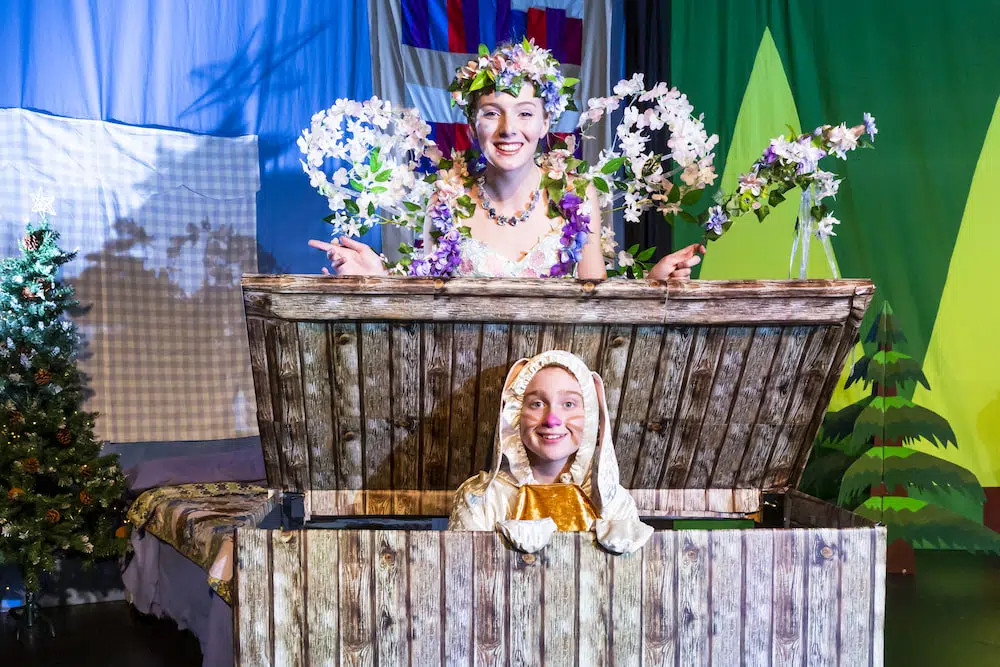
  6. The Velveteen Rabbit - Child Players ACT, Belconnen Community Theatre: This theatrical adaptation of a childhood classic is utterly adorable and perfectly pitched at the young audience. Simple and effective set, props and costumes are all innovative for the obviously limited budget. It is a good decision to have an adult actor (Janine O' Dwyer) play Nana - the older audience loved her long-suffering actions and eye rolls - and child actors for all the rest; the toys who come alive by emerging from the toy-box are clear and easy to understand. The blocking in a couple of scenes means that sight-lines are challenged and focus is lost, but on the whole it is well-delineated with separate spaces for action - inside/ outside - and the calendar marking the passage of time is inspired and beautifully illustrated. As the Velveteen Rabbit, Asha Ellis displays a  delightfully mature approach for such a young performer with clear physical movements and facial expressions, great comedy timing, a sense of innocent wonder, and sympathetic interactions with the other characters. All the cast members get moments to highlight their abilities (the choreography of the real rabbits dance is charming), pleasing the family audience and the actors themselves. There is nothing too fancy or distracting, with nice moments of differentiation between the characters and explanation of the story, which makes for a wonderful first theatre outing.
Lily Welling and Asha Ellis in The Velveteen Rabbit by Child Players ACT

Friday, 30 September 2022

Friday Five: Cross Stitch Crew

And now for the final quintet from Our Country's Good, here are the cross stitches that I made for certain members of the crew. These are all lines spoken by the character I played, Mary (Dabby) Bryant. Based on a real woman from history, this character dreamed of returning to her native Devon, and in fact she did (although not in the play itself). Despite being unable to read, she conducts conversations about the nature of theatre and the meaning of plays, which add the meta-theatrical level to the production.

For one of the cross stitches I maintained the avian theme from previous works (the crimson rosella, because it is one of my favourites), but for the others I chose either the colours of the Aboriginal flag as a representative of this land, or those that remind me of Devon. At one point Dabby says, "I want to see a wall of stone. I want to hear the Atlantic breaking into the estuary", and she also exclaims, "Oh, give me some English rain. I could recognise English rain anywhere. And Devon rain... is the softest in England".

I gave this one to The Luminosity who was the Assistant Director and also ran several line-learning sessions
For the German Rep who made my basket of chicken props (pine cones with feathers). The character follows this up with, 'This is a very stupid line and I'm not saying it'.
Said at the end of the play as Dabby dreams of 'my future success'
For our Stage Manager, who did indeed see the whole play, several times
The conclusion of the above line, for our kind and generous prompt

Tuesday, 30 August 2022

Crime of its Time: Vintage Murder


Vintage Murder by Ngaio Marsh
Fontana
Pp.223

Inspector Roderick Alleyn is on holiday in New Zealand when he gets caught up with a theatre group and a murder, involving a mistimed opening of a jeroboam of champagne. This combines Ngaio Marsh’s interests perfectly, allowing her to give her chapters such titles as Prologue in a Train, Intermezzo, Duologue, and Business with Props. Written in 1937, it is dated in language and attitude, although it was doubtless considered progressive at the time.

Detectives, witnesses and suspects have a lot in common with actors as they rehearse stories, play parts and deliver lines, whereas Alleyn is straightforward and direct with a self-deprecating sense of humour. When he lists the suspects, their possible motives and alibis, he draws up a chart which is included in the chapter Entr’acte to assist the reader as much as himself – naturally, everybody has one.

There is snobbery towards people’s age, size, class and accent, although most prejudice, however, occurs towards the Maori people, as exemplified through the character of Dr Rangi Te Pokiha. A considerably hateful comedian describes Te Pokiha as “the black quack” and “the light-brown medico”, and when Te Pokiha retaliates (he has also been called silly, obviously wrong, and a liar), we are told, “The whites of his eyes seemed to become more noticeable and his heavy brows came together… [His] warm voice thickened. His lips coarsened into a sort of snarl. He showed his teeth like a dog… the odd twenty per cent of pure savage.” One suspect asserts, “There is no colour bar in this country,” but people still use the expression ‘a white man’ to denote a person of good character. Alleyn describes the country and the people with an anthropological aspect that is offensive to modern readers.

The plot is well-crafted, some of the characterisation and theatrical tropes are fun, and the Kiwi setting is original, but the inherent racism, sexism and body-shaming are problematic. Crime novels may remain popular, but fortunately times have changed.

Friday, 27 May 2022

Friday Five: Recent Theatre Excursions


These are brief reviews of the theatre productions I have seen recently:
  1. King of Pigs - Red Line Productions and Critical Stages Touring, The Q, Queanbeyan: King of Pigs is an excellent and important show. We can’t ignore violence in the home. Physical violence; mental cruelty; coercive control. Talk about it; make it stop. We are all responsible. Seventy minutes of tightly-directed well produced storytelling with a strong ensemble and Kate Skinner as a commanding presence in the centre of the maelstrom.
  2. Dags - Canberra Youth Theatre, Courtyard Studio: It's amazing to see how people who didn't live through the 80s love it a lot more than those of us who did. The energetic ensemble had great fun with the spirited design elements in this American teen-movie-style coming-of-age story at a high school. Choreography, props (not credited) and costumes (Aislinn King) were vibrant with upbeat pop tunes and hair ballads; Rubik cubes and rollerblades; dresses, playsuits and tops and shorts in bright geometric prints all proving to be highly enjoyable for cast and audience. The functional and movable set (Aislinn King) was in harmony with the Day-Glo colours and abstract, angular art of the period, allowing for flow of action across multiple scenes - bedroom; classroom; school bus - and interaction as the cast moved it into position with choreographed routines. Jade Breen as Gillian developed her character from an annoying brat unsure of her place in the world to a determined young woman with inner strength and individuality. Some of the ensemble work was engaging as the actors split into small groups and came back to a cohesive whole (ones to watch are Lily Welling; Breanna Kelly; Elliot Cleaves; William Best; Disa Swifte), while other aspects looked a little awkward and uncomfortable and were inaudible. Director Luke Rogers could have explored some of the darker themes in more depth (sexual pressure; eating disorders; self-harm) but he chose to play to his audience with refreshing humour and nothing to scare the horses.
  3. The Boys - Alchemy Artistic, ACT HUB: This company has set a ludicrously high benchmark for its inaugural production. By placing this work dealing with toxic masculinity and gender violence in the round, director Amy Kowalczuk has embraced a stylish naturalism. Highlighting the pugilistic elements by evoking a boxing ring atmosphere, this is a very immersive experience as the audience are so close to the action. The power play between the genders and classes are embodied through physical movement (choreographed by Michelle Norris), inspired Brechtian alienation devices, and a versatile set that allows for various levels and height dynamics. As Brett, the man released from prison and returning to his family, Alex Hoskison portrays the barely pent up rage of a psychopath with chilling conviction. His brothers Glenn (Cole Hilder) and Stevie (Blue Hyslop) are powerless to choose their own path away from the blindingly narrow beam of his searchlight, while their respective girlfriends Michelle (Meaghan Stewart), Jackie (Indy Scarletti) and Nola (Caitlin Baker) fight for recognition and respect in their own individual ways. As the matriarch, Sandra (Liz St Clair Long), makes excuses for her 'boys' and gathers the 'girls' together, we see in the final silent scream what a losing battle this is. Amy Kowalczuk has produced this piece as the final component of her Master of Theatre and Performance (there is a Q&A and a survey as part of each performance). I would award her top marks. 
  4. Hotel Sorrento - Canberra Repertory Society, Theatre 3: Kudos to director, Alexandra Pelvin, for taking Hannie Rayson's script with multiple scenes and settings and creating something harmonious. It's a great modern Australian work involving three sisters, one of whom, Meg (Rachel Howard) has written a Booker-Prize-nominated novel which, although fictional, may border on autobiography and expose some family stories. When she returns from London to Sorrento in Victoria with her English husband, Edwin (Peter Holland), the tensions simmer below the surface and threaten to drag them all down in their wake. Hilary (Victoria Tyrrell Dixon), the eldest, has stayed in the family home to care for their father, Wal (Saban Lloyd Berrell) and her son, Troy (Nick Dyball) while Pippa (Jess Waterhouse) is on a break from her high-powered New York career, displaying all the angst of the middle child simultaneously trying to fit in and stand out. An odd couple of friends, Marge (Elaine Noon) and Dick (Ryan Erlandsen) round out the characters - as written they exist to be the mouthpiece for ideas of gender and cultural politics, but they are acted with enough depth to be more than just the discussion puppets they might be. The creative set design (Michael Sparks) allows room for expression and interpretation of all the moments, and the delivery is kept subtle avoiding the temptation to fall into melodramatic soap opera, highlighting the wry asides rather than full-frontal confrontation. There are many potential stereotypes contained within this play but the admirable direction and acting make these characters seem like real people, and the dinner scene is remarkably convincing. As Tolstoy once wrote, "All happy families are alike; each unhappy family is unhappy in its own way."
  5. Jess Waterhouse, Rachel Howard and Victoria Tyrrell Dixon as the three sisters in Hotel Sorrento 
  6. Three Tall Women - Chaika Theatre Company, ACT HUB: One of the titular women is Karen Vickery, playing a ninety-two-year-old woman (A) who is close to death and reliving her life with senile and interrupted memories. Her audience is her carer, B (Lainie Hart), and a solicitor, C (Natasha Vickery), who attend to her physical and legal/ financial needs when she lets them. At the end of the first act she has a stroke, and then, as a figure lies in the bed throughout Act II, the three women play versions of her aged 26, 52 and 78, none of them wanting to turn into their future version but knowing that inevitably they must. So far; so Edward Albee, who delights in distancing his plays from his audience with overt absurdism. Due to the nature of the play it highlights the individual aspect of the actor and leaves little room for rapport. It is like watching a masterclass - "Look at me; I'm acting!" - and they do it very well with clarity and deliberation, but it feels dispassionate and insular. With the concluding lines, 'That's the happiest moment. When it's all done. When we stop. When we can stop.', I don't think this play even likes itself.

Friday, 24 December 2021

Friday Five: Best Theatre of 2021

A Slightly Isolated Dog perform Don Juan

Following on from last year, it was still difficult to see much theatre over the last twelve months, what with COVID shutting down shows with moments to go, and the arts industry in a perilous position. I did manage to see approximately 20 productions this year, however, so I am able to list my top five, with honourable mentions.

5 Best Theatre Productions I Saw in 2021 (in alphabetical order):
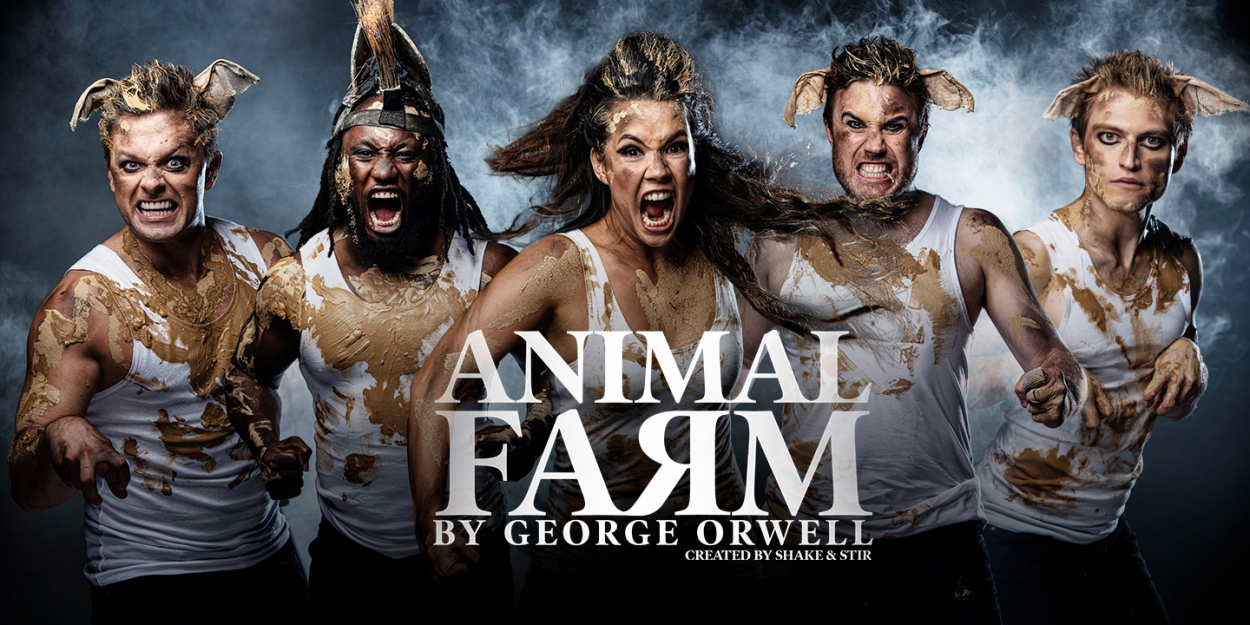
  1. Animal Farm - shake & stir theatre co., The Playhouse: This is an absolutely fantastic interpretation of one of my favourite novels. People are falling over themselves to draw parallels between the Trump administration and the propaganda within the play, but it remains as firmly rooted as ever in Orwell’s concerns about communist doublespeak. The ensemble of actors portrays all the anthropomorphised animals with excellent gestures and expressionism, maintaining an outstanding physicality throughout. The set is bleak and brilliant in equal measure. Lighting and sound blend artfully into the overall presentation and despite the grim truths of the production, there are still laugh-out-loud moments - the hen rebellion is dealt with humour until it suddenly isn't, and the transformation of beasts into men and back again is wry and poignant. A teacher of year eights (13-14) said her class went to see it and were disappointed that it didn't feature real animals. I never thought I'd say this, but sometimes theatre is wasted on the young.

  2. The Appleton Ladies Potato Race - Ensemble Theatre, The Playhouse: Written by Melanie Tait, this charming, heartfelt and positively affirming play provides five great roles for women and a story that is both specific and universal. The small country town of Appleton is disturbed when returning resident and new GP Penny Anderson (Sharon Millerchip) discovers that the famous Potato Race awards $1,000 prize money to men and $200 to women. As she takes on the organisers, the competitors and the spectators she comes face to face with those who want change and those who see no problems with the way things are. Director, Priscilla Jackman teases out all the niggles, nuances, resentments and rejections as the characters try to understand and accept each other for who they really are. It's as like a fusion of Made in Dagenham with The Dressmaker served with an added side of potato puns.
  3. Don Juan/ Jekyll & Hyde - A Slightly Isolated Dog, Bicentennial Hall, Queanbeyan Performing Arts Centre: Pretending to be a famous French theatre troupe – ‘We are very famous’ ‘And very French’ – gives this Kiwi ensemble of five actors the perfect opportunity to have fun with flamboyant stereotypes and outrageous accents. Theirs is a modern and collaborative approach and they encourage photos, which they then later share through their social media channels - direct marketing for the non-traditional theatre goers. Through a mixture of audience interaction (nothing confronting), song, dance, visual interpretations (a boat tossed on a stormy sea is a cardboard box on a tarpaulin, shaken about by the audience), and a voice distortion box, one night we learn a different side to Don Juan from any we had previously known. Another night, they bring bring their seemingly chaotic but totally controlled performance style to the story of Jekyll and Hyde. All of the ensemble get a go at being the man with a dark side within (‘but he pushes it down’) donning a wig and glasses to play the evil alter-ego, but their physicality is more important than their props and they literally embody character acting. The sound and lighting production is excellent and the timing is superb – it takes a lot of hard work to make something look this effortless, and they are a joy to watch. Both this and the previous offering are conducted in traverse staging, drawing the audience into the unfolding drama in a non-confrontational manner; the performances are short and leave the audience laughing and wanting more – they are a triumph.

  4. A German Life - The Gordon Frost Organisation, The Playhouse: Robyn Nevin delivers this fantastic script by Christopher Hampton as if she were born to play this role. Brunhilde Pomsel is an unassuming woman with good shorthand skills who, almost by chance, came to work in Joseph Goebbels’ Propaganda Ministry. She survived the war and its aftermath (after five years in prison) and now, near the end of her life and in a nursing home, she recounts what she recalls of those days. The sparsely furnished room for an elderly resident throws up echoes of incarceration while projections of Nazi rallies, mass evacuations, ruined cities and concentration camps, are starkly presented in black and white on the walls for all to see. It is disturbingly intimate and asks us to question how much we think she knew (every time she denies knowledge, she stumbles over her words or questions her receding memory) and what would we honestly do in her situation. Neil Armfield directs one woman to capture our attention throughout the running time, and the play raises many questions about personal responsibility, communal culpability and the veracity of memory. She opines, "Nowadays, I don’t think people would be stupid enough to fall for the kind of nonsense we fell for. All that hot air, I don’t think you can get that past people anymore.” Well, the audience all felt uncomfortable at that moment - apart from the smug ones who missed the point.
  5. Milk - The Street, The Street Theatre: I believe the theatre is a forum for sharing stories; exploring the past; questioning the present; and preparing for the future. ‘Milk’ does all of the above with superb staging and atmospheric sound and lighting featuring pivotal moments in liminal spaces. If Dylan Van Den Berg wrote this as an ode to his daughter, she is one very lucky human. We stand with you. We pay our respects to the traditional custodians of the land on which we live.

Honourable Mentions to:
  • Carpe DM - Canberra Youth Theatre, Gorman's House: A bold, thoughtful and intelligent new work as past of a project with Canberra Youth Theatre's Emerge Company. Devised works exploring contemporary themes can be a little self-indulgent, but the moments of honesty and reflection make up for the understandable cliches as young people think they are the first to ever have these thoughts.
  • The Governor's Family - Canberra Repertory Society, Theatre 3: Plaudits to Rep for taking on this confronting work. It's not often a community theatre company with a traditionally conservative audience would program a play tackling themes of cultural appropriation, gender diversity, incest and political revolution.
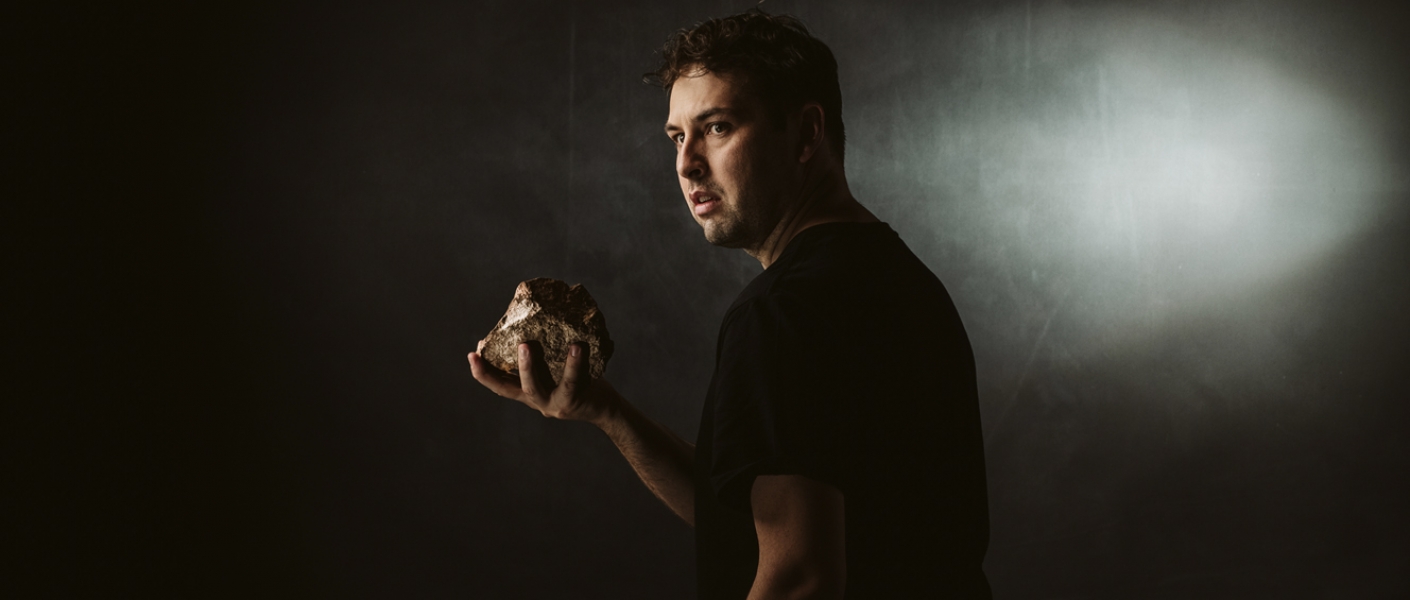
  • The Stranger - Ainslie and Gorman Arts Centres and Bare Witness Theatre Company, Ralph Wilson Theatre: Outstanding work by Christopher Samuel Carroll to command the audience with a one-man show and deliver fresh insight to a work of existentialist nihilism. Considering I detest the original novel by Albert Camus, I was impressed beyond all expectations at the translation, staging and performance. Chapeau!
Christopher Samuel Carroll standing on a beach staring at the sea in a production of The Stranger