Showing posts with label crime. Show all posts

Wednesday, 29 April 2026

Horror in Another Dimension: Strange Houses


Strange Houses by Uketsu
Pushkin Vertigo
Pp.197
 

This is the first of three (so far) short novels by Uketsu, translated to English from the original Japanese by Jim Rion. According to the publisher’s blurb, the author, Uketsu, is “an enigmatic YouTuber and author, specializing in horror and mystery, who has exploded onto the literary scene in Japan, where his books have sold millions of copies. He only ever appears online, wearing a mask and speaking through a voice changer. His true identity is unknown.” A sort of viral Banksy if you will.


The story begins with the narrator explaining, “I’m a freelance writer, my speciality being stories of the macabre. Given this line of work, lots of people approach me with their personal experiences of the eerie and the unpleasant.” He goes on to tell a story with a blanket level of detail, in which floor plans and family trees take up half the book – refreshingly, there is no need to flick back to the beginning pictures to follow along. The floor plans reveal hidden passages and secret rooms for nefarious business. Most of the text is written as play dialogue, which contains all the exposition so there is very little description. There is an element of Edgar Allen Poe’s short stories; thrilling creepy tales that can be read in a day or two.


In keeping with detective fiction rules that all clues must be mentioned, there are plenty of apparent irrelevancies, but also deliberate omissions. Despite exhuming some standard tropes, the Japanese horror story is certainly different. Sub-headings within chapters are almost like a child’s first reader: A Message from a Friend; An Unexpected Email; The Mysterious Space; Daydream; Two Bathrooms; The Article; A Grisly Discovery; Differences; The Letter; The Hidden Room; The Sign. The tale deals with dismembered bodies, curses, murderous children, blackmail, and the importance of succession and illegitimacy. One character fairly remarks, “I can see how it all fits together, but… isn’t it all a little far-fetched? It’s so convoluted.” Japanese horror is built on this sort of thing, and there is already a film - released in Japan in 2024.


The murders themselves seem quite matter of fact. “The Katabuchi family has been murdering people for generations. I don’t know why, but it has become a tradition.” When a character suspects her father is involved, the narrator notes, “It was not the kind of truth that most people could have accepted so calmly, but she seemed surprisingly untroubled.” He, himself, hardly seems more disturbed, as he ponders where a child was killed, but not why they were killed at all. He casually discusses horrific customs, such as, “Mabiki. ‘Thinning the garden’. In Japan, there was once a tradition of aborting babies or even killing children to keep down the number of mouths to feed. The practice lasted into the late nineteenth or even early twentieth century in some communities.” When the ending appears to be inconclusive, and his colleague “flashed a broad grin”, he allows himself to feel “a twinge of irritation at his total lack of concern.”


Training children in macabre cults and brainwashing them into murder adds a particularly chilling element. “He had an unhealthy pallor, and his expression was as blank as if it had never known emotion… He never took any action of his own volition and never expressed any of his own feelings or desires.” The whole scenario is highly implausible, but this is the breeding ground for horror. “It sounds wild, but we already know the Katabuchi family is not a normal one.” Investigating murder by looking into floor plans brings a new angle – in many dimensions – to a standard genre. They may be compact crimes, but they are far from cosy.
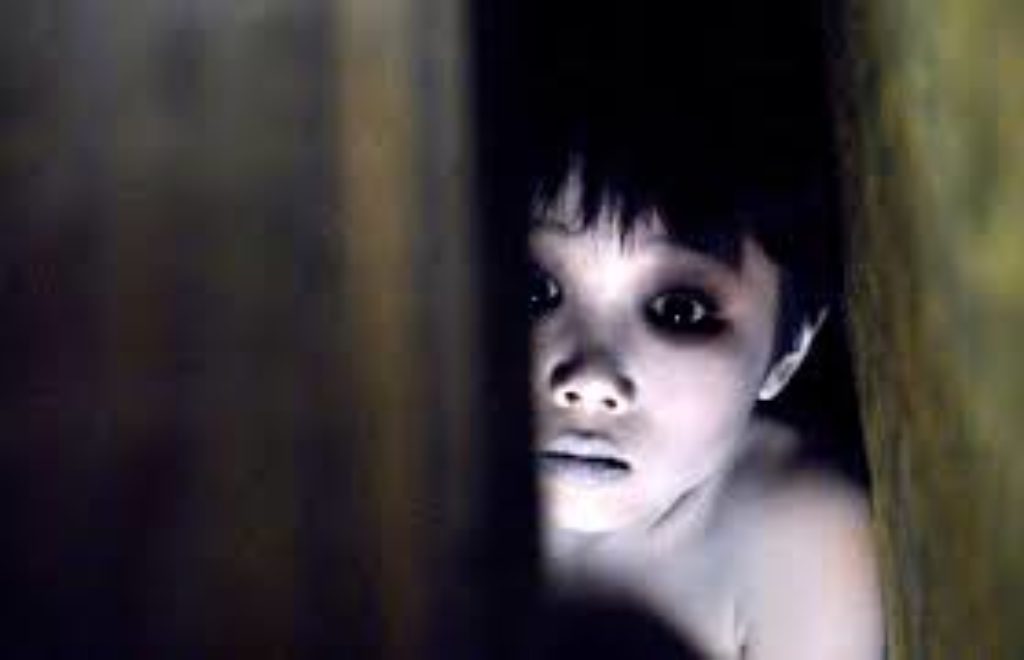

Wednesday, 20 March 2024

Trouble in Paradise: How the One-Armed Sister Sweeps Her House


How the One-Armed Sister Sweeps Her House by Cherie Jones
Tinder Press
Pp. 308

The title refers to a cautionary tale parents tell their daughters not to be willful, as the child in the narrative loses an arm due to curiosity when she enters a tunnel despite dire warnings. The message misfires when Lala (she who is told the tale by her grandmother, Wilma) wonders whether the girl could cope without the limb, swapped for following passion. She is cautioned, ‘but how will she sweep the house with only one arm’? She questions whether a woman’s worth is judged by her housekeeping, and maybe she would rather lead an adventurous life.


Unfortunately, her adventures do not lead to happiness. The novel is set in Barbados on a beach straight from the brochures of paradise. White folk live in tall, gated houses, while violence, prostitution, drug smuggling, murder and other criminal activities exist beyond their gardens, and everyone carries a gun. The police turn a blind eye to the abuse (particularly of women) until it enters those houses of those who go to embassies and ruin the tourist trade.


The community is steeped in intergenerational violence and abuse. Mothers beat their children because they do not want them to go bad and need to whip the devil out of them; they fear that sparing the rod is the cause of the child’s failings. Lala marries Adan, who regularly beats and rapes her, even while she is recovering from a traumatic birth. He commits robberies to pay for his lifestyle, which escalate to drug smuggling and murder in a sort of subplot to the novel. His cruelty leads to a tug of war with their newborn (known only as Baby because they have not yet decided on a name), which results in the death of the child as she is dropped on the floor.


Girls are routinely raped by their male relatives: Lala is the child of her mother, Esme, and her grandfather, Carter. The young women are sent away to remove the temptation, while the man is not considered to be at fault. Lala is made to sleep in the outhouse to avoid her grandfather’s attentions, or how else can he resist? Women are pursued by men. The policeman who investigates the Baby’s death pursues Sheba and refuses to accept that she doesn’t want his protection; Adan fixates on his ‘outside woman’ despite being married to Lala.

"A grown man cannot help himself, she explains, in the presence of a young Wilkinson girl. This is the way it has been for generations. It is not the man’s fault, says Wilma, there is nothing he can do about it. It was this way with her mother before her, her daughter and granddaughter after her. It was this way with her."

In some ways, the novel, full of descriptive scenes and local patois, is reminiscent of those by Alice Walker, Toni Morrison or Alan Duff. Characters struggle to connect with community and lash out at those who seek to reinforce their culture without understanding the roots of reggae or Rasta, merely turning gangsta. When Wilma holds a funeral for Baby, Adan does not attend because he is wary of her connection to culture, although he tells his friends that she is a bitch and “he not going anywhere around her or her house.” He is alone and left behind in the world where he has lost his local bonds.


Even Lala is infused in her beliefs, although they may not support her – her grief, trauma and post-partum depression are explained in superstition. “She is convinced also that supernatural beings are conspiring on her daughter’s behalf to make her understand that she will pay for her part in her death.” She fears a “wicked duppy” is playing tricks on her, putting cans of formula in the cupboard, although she knows she has thrown them all out, sprinkling the scent of baby powder in the house, and “It is this duppy, or another, equally malevolent, who infuses the peculiar sound the paper bag of flour makes when she is making dumplings and it hits the floor with the same sound she heard when Baby was dropped.”


Reviewers have called the book unflinching, claustrophobic, pitiless, and relentless. Focussing on murder, abuse, a violent marriage and the death of a baby, it is certainly no light-hearted tale, but there is a slight glimmer of hope towards the end, and it is ultimately compelling. It is exquisitely constructed, with flashbacks to flesh out the characters and the pathways that have led them to this Barbadian beach, and it is a great achievement for a debut novel.

Tuesday, 25 July 2023

You Keep It All In: A Clear Conscience


A Clear Conscience by Frances Fyfield
Corgi
Pp. 284

Helen West is a prosecutor in domestic violence cases, and this is her fifth outing in novels by Frances Fyfield, although that is not obviously apparent from this edition. The fast-paced and bleak thriller is set in the world of back-street boozers, wife abusers, ex-boxers, and knock-off perfume. The crime is both petty and serious, as passion erupts into fights over office romance and much darker offences. The characters are criminals, cleaners, bar staff, ex-army personnel, lawyers, policemen and caseworkers.

The writing style is almost breathless, and grammar seems optional as the prose gathers pace along with the narrative. The author constantly switches point of view so it appears to be third-person omniscient but we are always in the mind of the subject, blurring the lines between reality and perception. Helen’s friend Emily employs Cath as a cleaner; Cath’s brother Damien is the murder victim of a case investigated by Bailey, Helen’s partner; Damien was killed after a night at the pub where Joe, Cath’s abusive husband works. There are no easy answers or definitive source of truth; law and justice are explicitly not the same thing.

Everyone lies to a certain extent, and no one tells the whole truth to anyone, even themselves. “We are all at cross purposes, he thought, every one of us a little mad, each of us with a piece of puzzle in our hands, while the truth floats up there like that big, black raincloud.” In an attempt to feel better about one’s self-image, characters believe their own narrative and don’t examine their motives too closely. Helen is obsessed with home decorating, Cath smells of bleach, Emily dismisses Cath for suspected theft of perfume – the interior renovation metaphor alludes to the patina of gloss that covers cracks but doesn’t mend them. Perfume serves a similar masking purpose. “What a terrible gift was perfume, always given by a man to make you wear it and please him, while you stank of blackmail.”

Written in 1994, the novel has an end-of-the-century feminism feel as the author questions women’s roles and their need to validate themselves in society. Helen claims to be determinedly independent and happily childfree. “I’d hate to be a megalomaniac wife and mother. Mothers run a closed book. They shut the world out, close off anything inconvenient, as if being mum in charge of a family is so self-satisfying, so sanctifying, they never need have a conscience about anything else.” And yet, she is yearning for something intangible. “It was useless pretending she was not influenced by what she saw and read; she was not immune to the contagion of the romantic or the desire for security purveyed by mothers and magazines…but she did not quite know how to not want it either, or how to close her ears to the blandishments of marriage propaganda.”

Although short and sharp, this is an oppressive novel in which women are struggling to stand alone without being defined by men – partners; bosses; social constructs. There is a menacing tone and a fear that they will never be enough – but by whose standards? It reminds me of that playground 'joke', Q: Why do women wear make-up and perfume? A: Because they're ugly and they smell. They are not and they do not, but our patriarchal capitalist society has a vested interest in making them think thus.

Wednesday, 19 October 2022

With a Pinch of Salt


I've been thinking about my post last week, and what an incongruity there is between the epergne that was awarded to the Campbells, and the bushrangers who attacked them in their home. I am often inspired by the authors I read and I am currently reading both 1788: Comprising of A Narrative of the Expedition to Botany Bay and A Complete Account of the Settlement at Port Jackson by Watkin Tench, and Diary of a Somebody by Brian Bilston. 

While describing the behaviour of the convicts in Port Jackson, Tench lamented that they were punished for stealing food. Rations were systematically reduced as food was scarce, but the convicts still had to toil for long hours in high temperatures "without adequate refreshment." Those who stole food were frequently flogged and chained together. Tench decries, 
"The first step in every community which wishes to preserve honesty should be to set the people above want. The throes of hunger will ever prove too powerful for integrity to withstand."

This is as true now as it was in 1788, or in 1864 when the bushrangers stole from the landowners. And it seems trenchantly symbolic that the victims were awarded an ornament designed for displaying and sharing condiments in turn created to enhance and complement fancy food. With this and the pithy wit of Brian Bilston 'the poet laureate of Twitter' in mind, I crafted the following (with apologies to both).

You were always keen as mustard,
To spice things up,
Not to curry favour
But to rub salt in the wounds.
So you got us all in a pickle
Then sat back gingerly
All big cheese and toffee-nosed,
As though butter wouldn't melt.  

Tuesday, 30 August 2022

Crime of its Time: Vintage Murder


Vintage Murder by Ngaio Marsh
Fontana
Pp.223

Inspector Roderick Alleyn is on holiday in New Zealand when he gets caught up with a theatre group and a murder, involving a mistimed opening of a jeroboam of champagne. This combines Ngaio Marsh’s interests perfectly, allowing her to give her chapters such titles as Prologue in a Train, Intermezzo, Duologue, and Business with Props. Written in 1937, it is dated in language and attitude, although it was doubtless considered progressive at the time.

Detectives, witnesses and suspects have a lot in common with actors as they rehearse stories, play parts and deliver lines, whereas Alleyn is straightforward and direct with a self-deprecating sense of humour. When he lists the suspects, their possible motives and alibis, he draws up a chart which is included in the chapter Entr’acte to assist the reader as much as himself – naturally, everybody has one.

There is snobbery towards people’s age, size, class and accent, although most prejudice, however, occurs towards the Maori people, as exemplified through the character of Dr Rangi Te Pokiha. A considerably hateful comedian describes Te Pokiha as “the black quack” and “the light-brown medico”, and when Te Pokiha retaliates (he has also been called silly, obviously wrong, and a liar), we are told, “The whites of his eyes seemed to become more noticeable and his heavy brows came together… [His] warm voice thickened. His lips coarsened into a sort of snarl. He showed his teeth like a dog… the odd twenty per cent of pure savage.” One suspect asserts, “There is no colour bar in this country,” but people still use the expression ‘a white man’ to denote a person of good character. Alleyn describes the country and the people with an anthropological aspect that is offensive to modern readers.

The plot is well-crafted, some of the characterisation and theatrical tropes are fun, and the Kiwi setting is original, but the inherent racism, sexism and body-shaming are problematic. Crime novels may remain popular, but fortunately times have changed.

Friday, 27 August 2021

Friday Five: Classic Films I 'Should' Have Watched

You know those films that you always feel you should  have watched, but you just haven't got round to it yet? Well, over the last week (we're in lockdown), I've been trying to catch up with some.

5 Classic Films I 'Should' Have Already Seen:

  1. The Exorcist (1973 Horror/ Supernatural) - Lots of male doctors lecturing a woman about how to run her life and deal with her daughter; the keepers of the knowledge deciding females they can't understand must be hysterical... It might be almost 50 years old, but some aspects still resonate. I believe good horror stories are never 'just' about horror; they connect with our deepest fears, ignorance and insecurities to explore something psychological. I feel this films does that, and Ellen Burstyn is spectacular. In conclusion: worth watching as a classic of the genre (I know all the best lines anyway), but probably not scary to a modern audience.
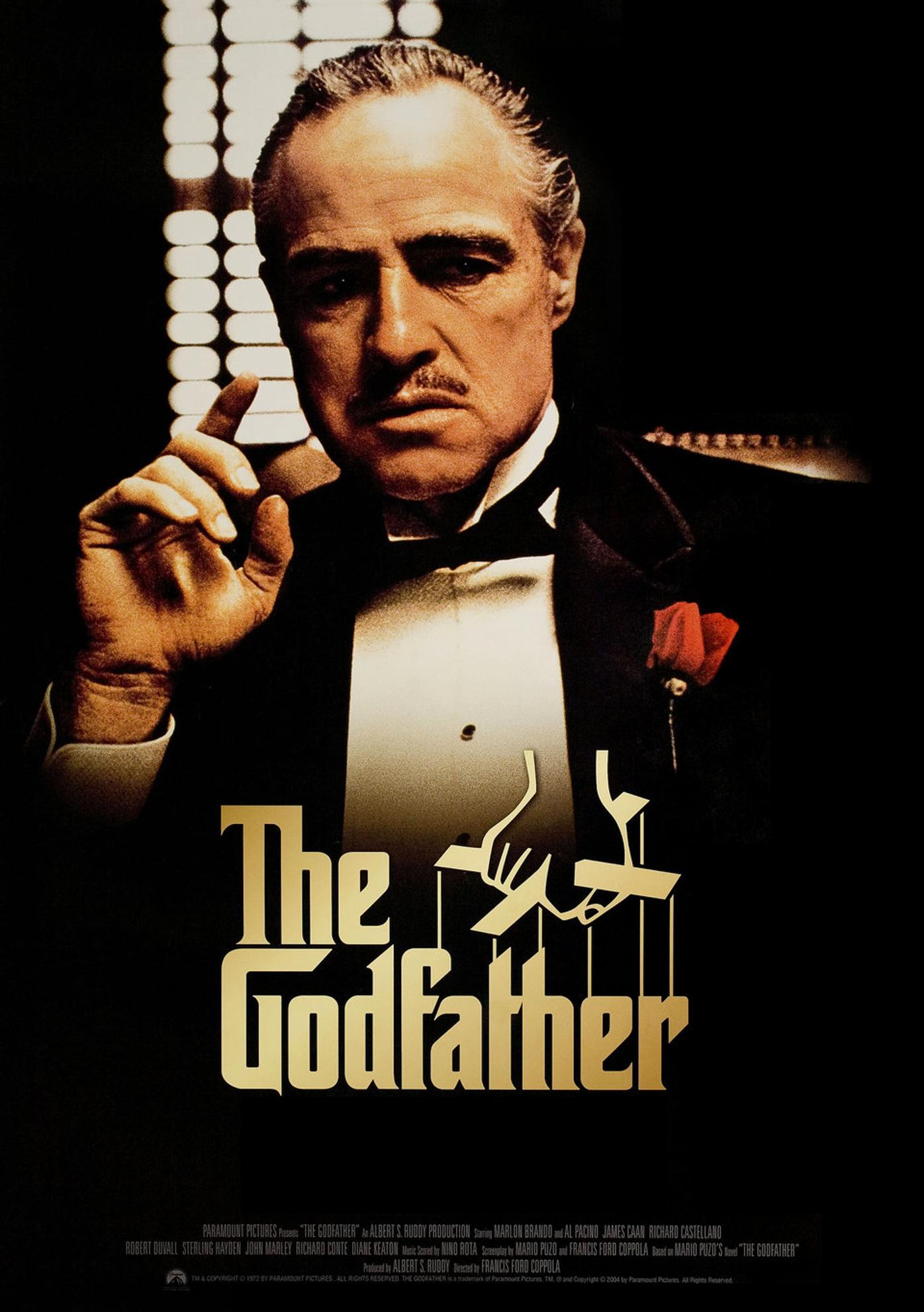
  2. The Godfather (1972 Crime/ Drama) - Men use their violence and strength to secure nepotistic deals and gain yet more wealth and power. How quaint. Again, all the best lines are familiar - offers you can't refuse; sleeping with the fishes etc. - the score is sumptuous, and Marlon Brando, Al Pacino and James Caan give brilliant performances. I understand that this film re-calibrated the notion of seeing gangsters as a response to a corrupt society and made them into good guys, but it really is all about the guys, isn't it - and the toxic masculinity and lack of female representation may have set the women's movement back as far as it advanced the film genre.
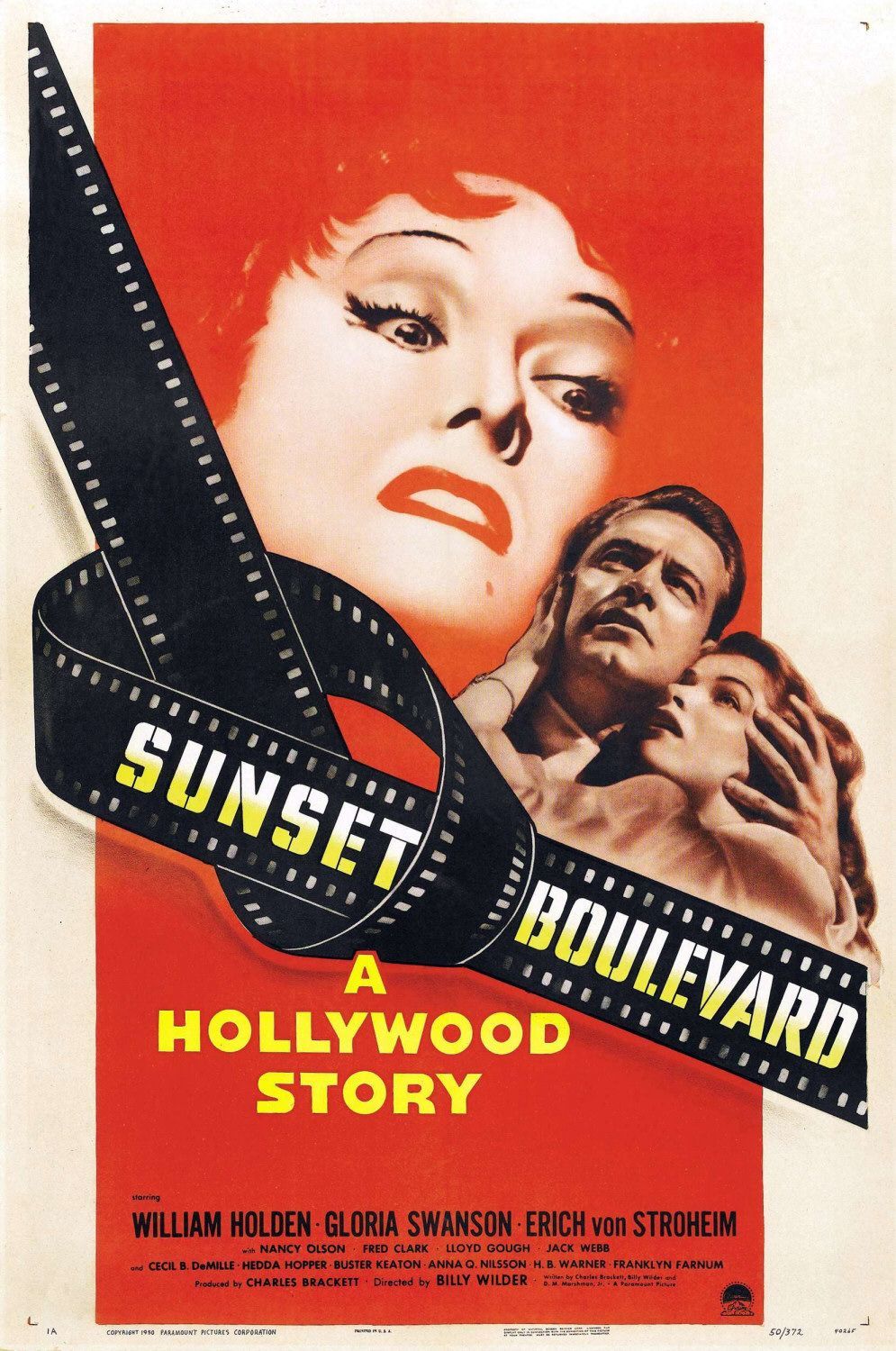
  3. Sunset Boulevard (1950 Noir/ Drama) - Mavellous fun; full of dramatic tension, stunning design and black comedy, with a seminal central performance from Gloria Swanson as a previous silent screen star in a world of talking pictures. "There's nothing tragic about being 50. Not unless you're trying to be 25."
  4. Battleship Potemkin (1926 Drama/ Silent) - I love me a good bit of revolutionary propaganda and I have particular views on borscht, so I thought I was ready for this. I wan't - it is outstanding! Those montages sequences and individual close-ups in the middle of mayhem are utterly groundbreaking, and the stirring score is thrilling. I appreciate the excellent moustache detail and I now understand the The Untouchables reference. 
  5. Bonnie & Clyde (1967 Drama/ Crime) - Obviously the inspiration for The Dukes of Hazzard with a comedy-crime-committing duo who claim 'we rob banks' although there is nothing to rob because the people are so poor they've got nothing to save. I understand that life may be dull, but killing people is not the answer (although I agree with Ivan Moss's verdict on tattoos). Faye Dunaway has some fabulous outfits, Gene Wilder's screen debut is a highlight, and whatever charm and charisma Warren Beatty has (and with his reported womanising he must have some) it can only be off-screen rather than on. 

Tuesday, 6 July 2021

Ham and Pea Soup: A Rare Interest in Corpses


A Rare Interest in Corpses by Ann Granger
Headline
Pp. 410

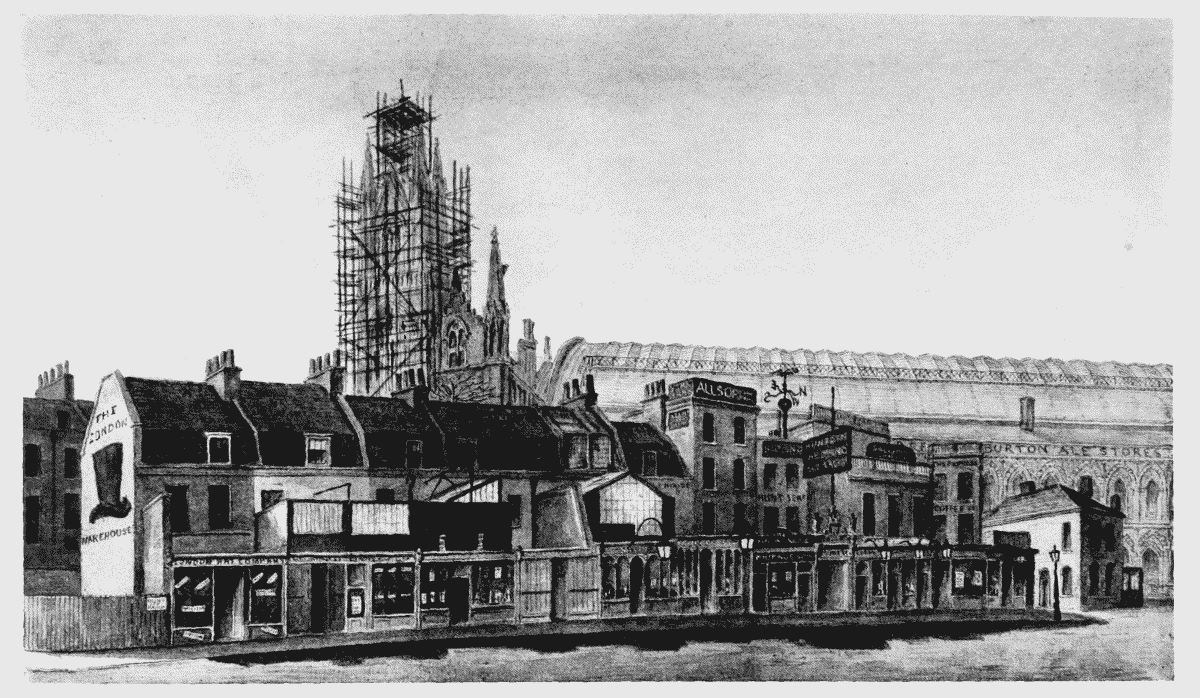
Marketed in some territories as The Companion, this is the first novel in what becomes a historical crime series set in Victorian London. After her father’s death in 1864, the penniless Elizabeth (Lizzie) Martin takes up a position as companion to Mrs Parry, her god-father’s wealthy widow, only to find that her predecessor, Madeleine Hexham, who had supposedly run off with an unknown man, is dead (and pregnant). Madeleine’s body is discovered in the recently-demolished slums around the prestigious new railway station at St Pancras, and Inspector Benjamin Ross is in charge of the investigation. Lizzie realises that she knows Ross from her childhood (her father sponsored his education) and that ‘Aunt’ Parry, as she is encouraged to call her, was a landlord for the housing development, causing several elements to build up into a classic detective mystery.

Through the use of alternating chapters between Lizzie and Ross, we are drip-fed information about the developments and social mores of the times, ranging from scientific progress to insights into the working of and attitudes to the police force, and personal relationships.

London is changing and the era is one of rapid development: the capitalist society dictates the rich will get richer while the poor are further oppressed. Mr Fletcher runs the construction company which is building the station on the grounds of the housing Mrs Parry sold to the railway for development. He doesn’t want the police involved on his worksite, because people are fascinated when a body is found. Mrs Parry is equally uncomfortable. “No one wants to be known as a slum landlord and after Madeleine’s body was found there, she liked even less the idea that people would associate her with the place.”

St Pancras Station in the course of building (1871)

Morals and attitudes to women are also questioned. The supposedly religious and upstanding Dr Tibbett expresses his conservative reactionary views to Lizzie in a manner that demonstrates the constraints within which she must work. “I am sorry to say I find increasingly that there is a type of modern young woman who fancies she may speak as freely as a man. I am an old-fashioned fellow who believes that woman is the greatest ornament to her sex when she realises the boundaries Nature has set for her.” He, and others, blame female victims when they are exploited and abused. “We did not know the circumstances of Madeleine’s death. Whatever Tibbett had to say it would amount to declaring that it was all her own fault.”

This is a world in which class distinctions are rife and supremely hierarchical. Inspector Ross comes from mining stock and has risen through the ranks; his superiors dislike him because he is working class. He notes that the social strata extends to the upstairs/ downstairs milieu of the masters and servants. “I reflected that below stairs there existed a world which, in true Darwinian fashion, had evolved quite differently to society above. Had the great naturalist set himself to study it, he might have found as much of interest there as he had in Terra del Fuego.” Although this is the first in the series about Benjamin Ross and Elizabeth Martin, it is evident that there will be more, and that Lizzie and Ben will end up together; they are both honest and self-aware with a strong moral backbone.

The novel is full of the classic features of the Victorian detective drama. The dim-witted Dunn (Ross’s superior officer) struggles to solve the mystery, announcing, “This is turning into a dashed complicated business, regular cat’s-cradle of possible motives.” There is a dressing table with a hidden drawer in which Lizzie conveniently finds a diary written by the dead woman. Thick Victorian fogs made of coal fire smoke and freezing atmospheric conditions add to the ambience and there is even a standard chase through the pea-souper. It is satisfying without being too demanding and a thoroughly enjoyable addition to the genre.
George du Maurier cartoon in Punch, 1889

Wednesday, 1 January 2020

Cosy Cat Crime: The Cat Who Sniffed Glue


The Cat Who Sniffed Glue by Lilian Jackson Braun
Jove Books
Pp. 200

The eighth book in The Cat Who… mystery series is a light-hearted mystery featuring an eligible bachelor, Jim Qwilleran, and two Siamese cats, Koko and Yum Yum. Qwilleran is biggish, 50-ish, and with a moustache that bristles when he is ‘on to something’. He is a bachelor so he eats out at restaurants every night and has a succession of lady-friends, whom he calls for dinner dates. They are always keen to accept (perhaps because of his inherited fortune) and he has a succession of romantic entanglements with housekeepers, librarians and interior designers.

The cats play a major role in his life, and they are incredibly spoiled, with their own apartment and chef. With feline intuition, they help Qwilleran solve crimes as he explains the details of cases to them, and they respond with clues such as banging into things, sitting on vital evidence, or tripping up villains.

The novel is set in Pickax City, Moose County, “400 miles north of everywhere”, with nearby towns called Chipmunk and Brrr (it’s the coldest place in the county) bursting with folksy characters. Written in 1988, it is a novel of its time, before the digital age. Newspapers are still read in physical form; the town does not have one but Qwilleran, himself a ‘newspaper man’ helps to establish The Moose County Something. It is going to “hit the streets” in a week, and there is no name for it – maybe things were run differently thirty years ago, but this still seems very slack in a corporate world, and is yet another aspect of the novel that is exceptionally homey.

Braun also incorporates theatrical tropes into her mystery, as each chapter is introduced with Place, Time, and Cast – this is both an original device and means to introduce characters, but also an example of lazy description and stereotypical characters. Interior designers and architects see buildings as a set designer would, and places are described like stage directions.

The crime begins with vandalism and drink driving, but all are shocked when it progresses to murder. It is what is described as a ‘cosy mystery’, the increasingly-popular genre of crime that is the literary equivalent to a hot cup of tea; the perfect antidote to the daily onslaught of violence and outrage. The characters are broadly drawn, there will be more description of meals eaten than of wounds inflicted, there is very little violence or pain, but copious cold leads to follow in the quaint little community, and the murders don’t really matter all that much. In these olden times there are no forensics, and red herrings include plenty of opportunities for the cat to sniff glue: snowshoes; bookbinding; taxidermy; model-ship making; theatrical make-up.

Amazon has three sub-categories of ‘cosy mystery’: animals; crafts and hobbies; and culinary. This places itself firmly in the former category, and if you know what to expect, you will not be disappointed.


Tuesday, 14 May 2013

Count Down Quotes to 'The Hollow' 12

"We often know quite well who's guilty of crime, but we can't always get sufficent evidence." - Inspector Colquhoun, C.I.D.