- Flowers for His Funeral by Ann Granger (Headline) - In the seventh of the Mitchell and Markby Costwold whodunnits, we encounter rural mansions, village pubs, unfriendly locals, hidden shelters in the woods, and crumbling masonry. When Markby runs into his ex-wife Rachel at the Chelsea Flower Show, he would not believe that her present husband, Alex, would wind up dead moments later, and yet when that happens, he and Meredith (Mitchell) head to Rachel's village to help find the killer, convinced the cause of death was not simply a heart attack. Malefis Abbey, where Rachel lives, is a picture-book murder house, "Its Gothic windows and fantastic chimneys all looking odder than ever among the surrounding trees, suggesting a secret and sinister castle in a fairy-tale." There are some woeful stereotypes as the streetwise Londoners have to deal with the cunning country folk, and suspects are on the list merely because of their foreign nature - "Forgiveness was not much in the tradition of the Middle East. Vengeance was." I'm still not sure what the relationship is between the two main sleuths - friends with benefits? - but the author is at pains to point out how solid, sensible Meredith is completely at odds with flighty, demanding Rachel.
- Question 7 by Richard Flanagan (Penguin) - Chekov's Question 7 is a short story incorporating misdirection as a parody of children's mental arithmetic puzzles: "Wednesday, June 17, 1881, a train had to leave station A at 3am in order to reach station B at 11pm; just as the train was about to depart, however, an order came that the train had to reach station B by 7pm. Who loves longer, a man or a woman?" Flanagan uses the concept of this non-sequitur to write about his past, his father, nuclear fusion, the affair between H.G. Wells and Rebecca West, science fiction, Tasmanian tigers, half-life, extinction, ur-texts, Hiroshima, near death experiences, and other chain reactions. There is a lot to consider, and some of it feels like the unedited ramblings of a man who has won many literary prizes. Some of the aphorisms feel like homilies - "The past is always most clearly seen by those who never saw it"; "Experience is but a moment. Making sense of that moment is a life"; "Sometimes we discover that we live in the dreams and nightmares of others and we dream anew." He strings these together in a way which initially seems profound but may equally not be. Trent Dalton and Tim Winton write in the same manner of short apparently punchy sentences - it is the way of the male Australian literati, but it leaves me largely unmoved.
- Everything's Fine by Cecilia Rabess (Picador) - The theme of this story might be to question whether opposities can be together if they do indeed attract in the first place. Josh is preppy, Conservative (with a large C) and white; Jess is from an entirely different background, motivated by morals rather than money, and the only black person in their economics class at their Ivy League college. They have a whirlwind and tempestuous relationship which matures over a length of time (reminiscent of David Nicholls' One Day in that regard) but the cracks appear when Jess is forced to admit to her friends that her boyfriend is a Republican and Josh doesn't understand why she might be upset that he owns a MAGA hat with all its connotations of "racism, hatred and systemic inequality". There's a lot of lecturing as the politics are personal, and Jess tries to ignore the signs - "Everything's fine". She knows her father would be horrified to learn about her boyfriend's ideals, and Josh tells her, "It's better to be happy than right." Is it? Or is it true that "Love conquers all, except geography, and history, and contemporary sociopolitical reality"?
- Chinaman: The Legend of Pradeep Matthew by Shehan Karunatilaka (Penguin Books) - From the Booker-Prize-winning author (The Seven Moons of Maali Almeida) comes a book he wrote ten years earlier, which has since been republished in the light of this acclaim. The sort of shaggy dog story follows retired sportswriter and cricketing tragic, W.G., as he attempts to track down his hero, spin bowler Predeep S. Matthew. W.G. believes Matthew, international representative for Sri Lanka, was the greatest cricketer ever to walk the earth, but his name has been largely erased from the records due to high-profile personality clashes and disciplinary actions. Now that W.G. knows he is dying, he wants to uncover the bowler's story and publish it in a book as his final magnum opus. Alongside the cricket (and there is a lot of it with pen and ink drawings of different ball deliveries) is his personal relationships, with his long-suffering wife, estranged son and ragtag mob of besties. The setting in Sri Lanka is fascinating geographically and politically as the country is torn apart by civil war and the pronunciation of a word can get you killed, and when the novel moves to New Zealand for its denoument, it is no less vibrant. There is much to admire, even if cricket is not your thing, as the tale is deliberately obtuse. After all, a Chinaman is not just a rare bowling action designed to deceive the batter, it is also a term meaning gullibility in Sri Lankan dialect. How much to be swept up in the narrative is entirely up to the reader.
- The Long Night by Christian White (Affirm Press) - A young woman is kidnapped and taken to a cabin in the woods. A mother paints her trauma onto canvases - the pictures are pretentious and her explanatons of them even more so - and displays her art in galleries when her world is rocked by the abduction of her daughter. The novel mines every trope of the horror film (cabin in the woods; person in back seat of the car; lightning flashes; well on property; trap for young women; trying to remain silent and still while being crawled on by insects), of which Em is entirely aware, having watched them all and enjoying them dispassionately.“I don’t like being scared, exactly – I like being scared on my own terms. Something about the fear makes me feel safe and in control, like I can hold the monsters at arm’s length.”Once again, women are victims of male aggression, but they also save themselves and each other which may go some way to redressing the balance. "They're both breaking down: both bruised and mud-streaked and drenched. The night has peeled them back to the bone, like so much hanging tree bark."It is very well constructed with alternating chapters which get shorter, each one finishing on a cliff-hanger, and a clear timeline as sections are divided into hour stamps: 7pm; 10pm; Midnight; 2am; 4am; Dawn, which plays into the long night of the title. However, White has done this seemingly concurrent narrative that turns out not to be thing before in The Wife and the Widow, so the ‘twist’ is not a surprise.
Friday, 5 June 2026
Friday Five: Books Read in May
Tuesday, 23 July 2024
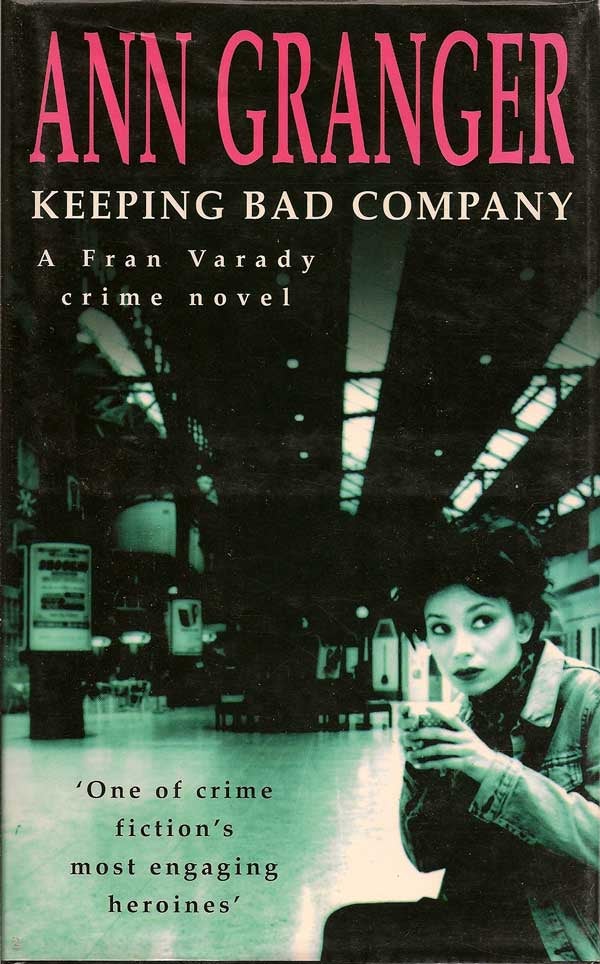
People Matter: Keeping Bad Company
While waiting at a station she buys a cup of coffee for a homeless man, Albie, who tells her he witnessed a kidnapping. She believes him, although no one else seems to, and when she decides to look more closely into the matter, Albie winds up dead. Fran senses she may be in danger herself as she meets kidnappers, ransom hunters, distressed parents, and uninterested police officers. She quickly learns that no one trusts anyone else. She particularly doesn’t trust men, and their violence and intimidation are treated almost casually.
She baldly asserts, “If you’re a young woman and live alone,
as I did, the risk of a stalker hanging around the place is always there. They
see you around the area, follow you home. Sometimes it gets no further than
that. They get bored and seek out other prey. Or they get frightened off.” It
is a depressing fact that she needs to know this information. “Noise is a
weapon. If you can’t do anything else, yell. It disorientates, frightens, and above
all, attracts outside attention.” We were all taught this as young women.
Her
politics are socialist-leaning, and she despises those who can see no further
than their comfortable lives. “It’s a fact that no matter how bad things are,
they can always get worse. Beggars can’t be choosers they say, and I bet ‘they’
are comfortably housed.” Being an artistic and creative type, her motivations
are less consumerist. They assume we all want the things our consumer society
reckons essential to health and happiness. But what about the ability to find
hope and happiness in little things?”
Her world is one of corner shops, basement flats, disused warehouses and greasy-spoon cafes. She refers to one of the pubs she frequents as “resolutely downmarket. That’s what its patrons like about it. Everywhere else around has been gentrified, yuppified or poncified. The term depends on whether you’re an estate agent or one of the Rose’s regulars.” Her language is generally straightforward with the occasional glimpse of imaginative prose.
This is an immediate environment and a likeable
central character, who gets caught up in criminal acts through no fault of her
own. There are seven books in the series of the Everywoman – I shall seek out
more.
Tuesday, 6 July 2021
Ham and Pea Soup: A Rare Interest in Corpses
Through the use of alternating chapters between Lizzie and Ross, we are drip-fed information about the developments and social mores of the times, ranging from scientific progress to insights into the working of and attitudes to the police force, and personal relationships.
London is changing and the era is
one of rapid development: the capitalist society dictates the rich will get
richer while the poor are further oppressed. Mr Fletcher runs the construction
company which is building the station on the grounds of the housing Mrs Parry
sold to the railway for development. He doesn’t want the police involved on his
worksite, because people are fascinated when a body is found. Mrs Parry is
equally uncomfortable. “No one wants to be known as a slum landlord and after
Madeleine’s body was found there, she liked even less the idea that people
would associate her with the place.”
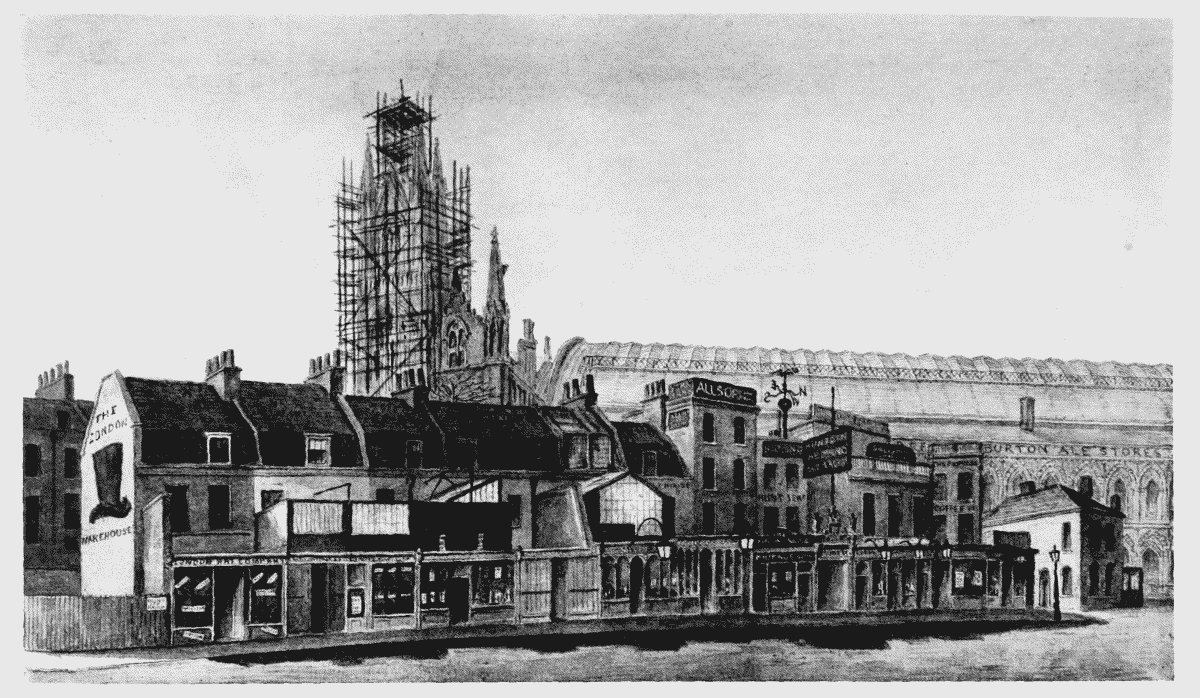
![]() |
| St Pancras Station in the course of building (1871) |
Morals and attitudes to women are
also questioned. The supposedly religious and upstanding Dr Tibbett expresses
his conservative reactionary views to Lizzie in a manner that demonstrates the
constraints within which she must work. “I am sorry to say I find increasingly
that there is a type of modern young woman who fancies she may speak as freely
as a man. I am an old-fashioned fellow who believes that woman is the greatest
ornament to her sex when she realises the boundaries Nature has set for her.” He,
and others, blame female victims when they are exploited and abused. “We did
not know the circumstances of Madeleine’s death. Whatever Tibbett had to say it
would amount to declaring that it was all her own fault.”
This is a world in which class
distinctions are rife and supremely hierarchical. Inspector Ross comes from
mining stock and has risen through the ranks; his superiors dislike him because
he is working class. He notes that the social strata extends to the upstairs/
downstairs milieu of the masters and servants. “I reflected that below stairs
there existed a world which, in true Darwinian fashion, had evolved quite
differently to society above. Had the great naturalist set himself to study it,
he might have found as much of interest there as he had in Terra del Fuego.” Although
this is the first in the series about Benjamin Ross and Elizabeth Martin, it is
evident that there will be more, and that Lizzie and Ben will end up together;
they are both honest and self-aware with a strong moral backbone.
Tuesday, 29 September 2020
Dripping with Middle-class Snobbery: Rack, Ruin and Murder
With
the help of the clueless Sergeant Morton, Carter rather fortuitously (and not
entirely convincingly) uncovers the criminal elements of the tale. As in all
families and small villages, there are buried secrets. Old Monty Bickerstaff (he
of the erstwhile grand country house and biscuit emporium) has been keeping one
for years. Now he is finding he can no longer cope without his daily whisky,
memories of the past are starting to trouble him.
Later,
when truths come to light, he remarks, “Secrets are buggers. The only place for
them is out in the open where they can’t muck up anyone’s life.” This is
clearly the homily of the novel, but without secrets there would be no murder
mysteries, so they must remain, no matter what young Tansy Peterson argues. “They
were all so bloody hypocritical in those days. They really were. They were dead
set on respectability. That didn’t mean they behaved themselves, just that they
buried any bad news, any scandal, as they saw it.” This allows for some clunky
exposition as the Superintendent explains to young people today what things were
like in olden times, and that it wasn’t easy to get a divorce, especially if
you were a woman.
As
with all death-by-numbers stories, there must be multiple characters, whom we
can count as suspects, and they must all be described succinctly so that we can
instantly form impressions. Granger’s portraits are one-dimensional and often
snide; she is particularly prone to class and weight shaming, and clothes are
often shorthand for character. Naturally, Jess is perfectly positioned as the
manic-pixie-dream girl trope, “a terrier of a girl, with short dark-red hair, a
pointed chin and widely spaced grey eyes that sparkled with intelligence.”
Other
women are described by age, weight and perceived attractiveness, for example
one is “pretty in a wan sort of way", while another is “an overweight blonde
wearing tight black leggings that did nothing to disguise her plump thighs and
bulging calves”. Older people get short shrift in the description stakes – they
are largely past fanciable age and therefore barely relevant. It always reverts
to age, such as three women who have been firmly and inescapably labelled: “The
oldest woman was waving her arms above her head. The youngest, overweight,
lumbered beside her, mouth gaping and badly dyed scarlet hair flying. Between the
two extremes of age came a middle-aged third who must be Maggie Colley.”
Men don’t
necessarily escape the class, weight and age censure either, and middle-class
snobbery fairly drips off the pages with character outlines such as, “a burly,
bearded man in grimy jeans and quilted body-warmer worn over a plaid shirt” or,
“a short, podgy individual, wearing a ginger woolly cardigan, baggy brown
corduroy trousers and slippers.”
Tuesday, 25 August 2020
Victorian Thriller of Modern Manners: A Particular Eye for Villainy
A Particular Eye for Villainy by Ann Granger
Set in Victorian London, this novel (the fourth in a series of seven so far, but perfectly readable as a stand-alone novel) concerns a husband and wife ‘team’ who are not exactly working together. Narrated in alternate voices, the story follows Elizabeth Martin Ross and her husband, Inspector Benjamin Ross as they attempt to solve the mysterious murder of a man on their street, Thomas Tapley. No one knows anything about Mr Tapley, where he comes from, what he does, or where he goes during the day. He was taken in by a respectable landlady (Mrs Jameson, a neighbour of the Ross’s) and accepted because he “was possessed of a certain charm and innocence of manner. For all his down-at-heel appearance, the street soon decided he was ‘an eccentric’ and approved his presence.”
Naturally,
discoveries are soon made, such as the fact that he has a brother, Jonathan
Tapley, who is a barrister, a daughter, Flora, who is soon to be married, and a
secret from his past. The novel is also peopled with earthy characters such as
cab drivers, prize fighters, street urchins and policemen. Superintendent Dunn
exclaims to Inspector Ross, “Only think of the players in this drama! Beautiful
and pure young woman – I suppose Flora Tapley to be both – on the brink of
marriage. Son of a peer. Eminent barrister. Mysterious Frenchwoman of dubious
background seen with the victim on the beach at a Continental watering hole.
Good grief, Ross, this business has all the ingredients of a shilling shocker!”
And all this is before Superintendent Dunn even knows about the private
detective disguised as a clown.
Ann Granger
makes the most of her setting, with the time and location being of paramount
importance. As it is before telephones and cars, characters are constantly sending
telegrams and catching a cab to deliver news or collect people. The novel
ranges from Southampton to Harrogate via London and France, infused with a suspicion
of foreigners and seaside towns, which “tend to have a racy reputation.” Deauville
and Trouville are apparently known “as the sort of place fellows take their
mistresses.” There are, of course, grim and criminal elements: there is an
altercation at a graveyard and a chase across rooftops like something out of Oliver Twist and the accounts of the
less salubrious parts of the city are imitations of Dickensian descriptions.
As with another
Ann Granger novel I have read, there is a focus on the process of the law. In
many aspects detection is a puzzle, and Inspector Ross searches for clues, but
the author points out that people’s lives can depend upon this game and that
they need compassion and humanity. If the law is a game, policemen and lawyers don’t
always play on the same side, and they often compete. Inspector Ross battles
with Jonathan Tapley and clearly does not like him: “I could not let him win. I
would not let him win. We were like a pair of duellists, facing one another in
a misty dawn, pistols drawn and having one shot each.
Monday, 6 July 2020
Cosy Cotswolds Crime: A Season for Murder
This novel is subtitled A Mitchell and Markby Village Whodunnit, implying there are more. A quick Google search reveals there are fifteen and this is the second. I would happily read them, as I found this to be what is somewhat dismissively termed, a ‘cosy murder’ novel, but it is perfect for reading on a rainy weekend, and as comforting as a bowl of chicken soup. It is set in a world of village life, country lanes, cosy pubs, and the Boxing Day Hunt where do-gooders attempt to help with varying degrees of success, and men are cruel to women. It was published in 1991 before mobile phones and internet searches – crime was different then; a plot point relies upon bin men collecting the rubbish bags personally. The moors are spooky, the lanes can be too quiet, and myths and superstitions abound along with ancient and pagan rituals. It’s all wonderfully atmospheric.
As usual, a young, attractive
independent woman (Harriet) is the murder victim, but there is blame
apportioned to her and her behaviour: she had many gentleman callers; she was a
harpy and a whore; she had no one special to look after her; “But I wouldn’t
have done it if she hadn’t driven me to it… It was entirely her own fault, her
doing, not mine… She was the cause, she started it all.” Men can’t be trusted
apparently, and they certainly can’t be friends with women. Harriet, and women
in general, suffer from this dichotomy.
The novel follows typical crime
tropes and we are aware that due process must be followed; in law as in
literature. “I’m not a barrister, Markby thought, nor judge nor jury. But he
was the first step on the path to those persons and he had to get this right!
If he didn’t, some clever lawyer would get the boy off on a technicality.” Another
of these tropes is that there must be chemistry and tension between the male and
female detectives, and so, of course, there is. Meredith is a happily single
woman, yet still feels she has to prove herself to others and stake her place
in the world, especially at Christmas; a very lonely time.