Showing posts with label stalker. Show all posts

Tuesday, 23 July 2024

People Matter: Keeping Bad Company


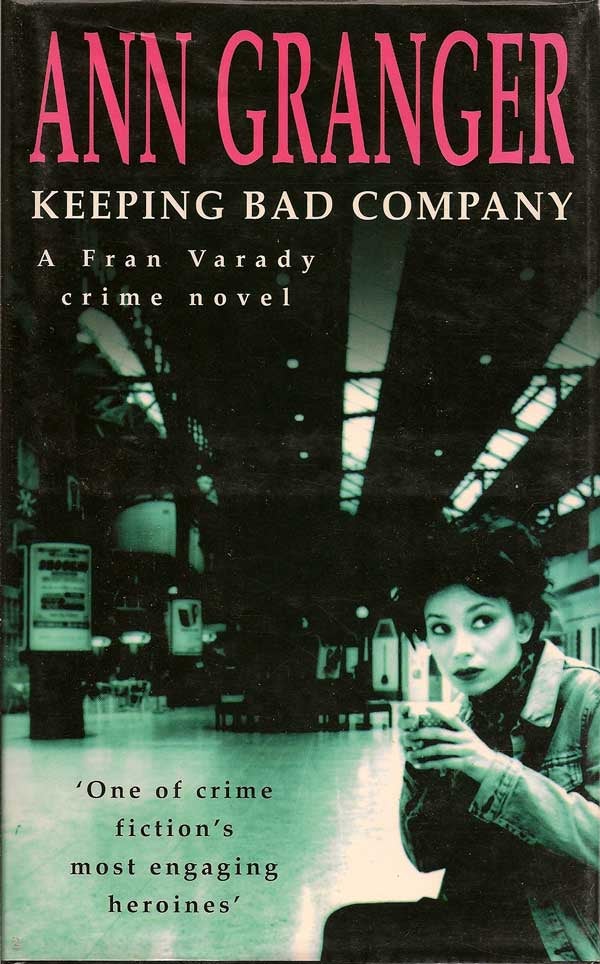
Keeping Bad Company by Ann Granger
Headline
Pp. 311

This Fran Varady Crime Novel is the second in the series. The reader is clearly expected to have some knowledge of the character, but the novel stands up even without it. Fran is an out-of-work actor living in squats and having run-ins with police. “I knew enough to keep clear of trouble. I can’t help it if trouble sometimes seeks me out.” She has an Indian friend, Ganesh, a decent set of morals, firm opinions, a sardonic outlook on life, and occasional flashes of humour. As the novel is narrated from the first-person perspective, the reader is naturally drawn to her.

While waiting at a station she buys a cup of coffee for a homeless man, Albie, who tells her he witnessed a kidnapping. She believes him, although no one else seems to, and when she decides to look more closely into the matter, Albie winds up dead. Fran senses she may be in danger herself as she meets kidnappers, ransom hunters, distressed parents, and uninterested police officers. She quickly learns that no one trusts anyone else. She particularly doesn’t trust men, and their violence and intimidation are treated almost casually. 



She baldly asserts, “If you’re a young woman and live alone, as I did, the risk of a stalker hanging around the place is always there. They see you around the area, follow you home. Sometimes it gets no further than that. They get bored and seek out other prey. Or they get frightened off.” It is a depressing fact that she needs to know this information. “Noise is a weapon. If you can’t do anything else, yell. It disorientates, frightens, and above all, attracts outside attention.” We were all taught this as young women.


Her politics are socialist-leaning, and she despises those who can see no further than their comfortable lives. “It’s a fact that no matter how bad things are, they can always get worse. Beggars can’t be choosers they say, and I bet ‘they’ are comfortably housed.” Being an artistic and creative type, her motivations are less consumerist. They assume we all want the things our consumer society reckons essential to health and happiness. But what about the ability to find hope and happiness in little things?”



Her world is one of corner shops, basement flats, disused warehouses and greasy-spoon cafes. She refers to one of the pubs she frequents as “resolutely downmarket. That’s what its patrons like about it. Everywhere else around has been gentrified, yuppified or poncified. The term depends on whether you’re an estate agent or one of the Rose’s regulars.” Her language is generally straightforward with the occasional glimpse of imaginative prose.


This is an immediate environment and a likeable central character, who gets caught up in criminal acts through no fault of her own. There are seven books in the series of the Everywoman – I shall seek out more.

Tuesday, 17 March 2020

Second Person Singular: You


You by Caroline Kepnes
Simon & Schuster
Pp. 422

Joe Goldberg narrates this erotic thriller in a way which is intended to be claustrophobic and creepy, but just results in being tired and formulaic. Maybe it is because Gone Girl ruined everything and there have been so many imitations of the toxic controlling relationship and the unreliable narrator that we are no longer shocked by the horrible things people do to each other in the name of their warped ‘love’. Perhaps the advent of the Fifty Shades phenomenon leads us to an expectation of more dominant sexual content in contemporary novels. Whatever the reason, this novel does not surprise, titivate, nor really even register interest.

The USP of the novel is that it is narrated not only in the first person, but that it is addressed to the second, so the ‘you’ of the title is both a character in the novel, and also potentially the reader. Joe Goldberg is the owner of a bookshop, into which walks his obvious love interest, Guinevere Beck (who prefers to be called Beck, as you would). The interaction between them is what is known in the movies as the ‘meet-cute’, and it is meant to recall scenes from rom-coms such as You’ve Got Mail.

Because it is a first-person narration, the reader is drawn into his world and perspective, but alarm bells ring straightaway. Stalkers are not sexy. Joe likes to observe people without them being aware they are being watched, which is uncomfortable when he preys on Beck, stealing her phone, hacking her emails and stalking her on Twitter, analysing every message and tweet that she sends, trying to fathom hidden meanings and monitor her behaviour under the guise of being her protector. He also stalks her physically, following her home and watching her through the windows – she doesn’t close her curtains – perhaps she does know and her behaviour is intentionally that of an exhibitionist.

Joe likes to play games, but it seems that Beck does too. She leads him on and then turns away, which infuriates him, but is she really teasing him or is that just his interpretation? Beck is not an attractive character either; she seems narcissistic and self-obsessed, but is that his portrayal of her? Beck is studying for an MFA in creative writing, and thinks of herself as a writer inventing scenarios, although feedback from her fellow students suggests her short stories are thinly-disguised diary entries. Joe’s record of the relationship makes his reasoning sound acceptable, until his violence and depraved actions surface. Is it interesting or depressing to be inside the mind of a privileged, entitled predator?

Joe uses many popular culture references of disturbed minds to drop clues that all is not rosy in his world. The allusions begin innocuously enough although they rapidly get darker as elements of fantasy, delusion and mental illness creep in to the descriptions. People with mental conditions are often aware of them in others but blind to them in themselves. In mentioning American Psycho he deliberately draws attention to the artifice and the twisted imagination of certain people. We are cautioned that this may not be real (there is a cage in the basement of the bookshop; few other characters with whom he interacts etc.), but the characters are so dislikeable, and the novel appears to be derivative and playing on all the popular tropes of the recent erotic thriller glut, making it impossible to care.