Showing posts with label children. Show all posts

Wednesday, 29 April 2026

Horror in Another Dimension: Strange Houses


Strange Houses by Uketsu
Pushkin Vertigo
Pp.197
 

This is the first of three (so far) short novels by Uketsu, translated to English from the original Japanese by Jim Rion. According to the publisher’s blurb, the author, Uketsu, is “an enigmatic YouTuber and author, specializing in horror and mystery, who has exploded onto the literary scene in Japan, where his books have sold millions of copies. He only ever appears online, wearing a mask and speaking through a voice changer. His true identity is unknown.” A sort of viral Banksy if you will.


The story begins with the narrator explaining, “I’m a freelance writer, my speciality being stories of the macabre. Given this line of work, lots of people approach me with their personal experiences of the eerie and the unpleasant.” He goes on to tell a story with a blanket level of detail, in which floor plans and family trees take up half the book – refreshingly, there is no need to flick back to the beginning pictures to follow along. The floor plans reveal hidden passages and secret rooms for nefarious business. Most of the text is written as play dialogue, which contains all the exposition so there is very little description. There is an element of Edgar Allen Poe’s short stories; thrilling creepy tales that can be read in a day or two.


In keeping with detective fiction rules that all clues must be mentioned, there are plenty of apparent irrelevancies, but also deliberate omissions. Despite exhuming some standard tropes, the Japanese horror story is certainly different. Sub-headings within chapters are almost like a child’s first reader: A Message from a Friend; An Unexpected Email; The Mysterious Space; Daydream; Two Bathrooms; The Article; A Grisly Discovery; Differences; The Letter; The Hidden Room; The Sign. The tale deals with dismembered bodies, curses, murderous children, blackmail, and the importance of succession and illegitimacy. One character fairly remarks, “I can see how it all fits together, but… isn’t it all a little far-fetched? It’s so convoluted.” Japanese horror is built on this sort of thing, and there is already a film - released in Japan in 2024.


The murders themselves seem quite matter of fact. “The Katabuchi family has been murdering people for generations. I don’t know why, but it has become a tradition.” When a character suspects her father is involved, the narrator notes, “It was not the kind of truth that most people could have accepted so calmly, but she seemed surprisingly untroubled.” He, himself, hardly seems more disturbed, as he ponders where a child was killed, but not why they were killed at all. He casually discusses horrific customs, such as, “Mabiki. ‘Thinning the garden’. In Japan, there was once a tradition of aborting babies or even killing children to keep down the number of mouths to feed. The practice lasted into the late nineteenth or even early twentieth century in some communities.” When the ending appears to be inconclusive, and his colleague “flashed a broad grin”, he allows himself to feel “a twinge of irritation at his total lack of concern.”


Training children in macabre cults and brainwashing them into murder adds a particularly chilling element. “He had an unhealthy pallor, and his expression was as blank as if it had never known emotion… He never took any action of his own volition and never expressed any of his own feelings or desires.” The whole scenario is highly implausible, but this is the breeding ground for horror. “It sounds wild, but we already know the Katabuchi family is not a normal one.” Investigating murder by looking into floor plans brings a new angle – in many dimensions – to a standard genre. They may be compact crimes, but they are far from cosy.

Tuesday, 21 March 2023

Flight of Fancy: When the Wind Blows


Described as a mystery thriller with fantasy elements, this novel is the first in a series which sparked the Maximum Ride spin-off series. It concerns genetic experiments on babies which produce children with wings: what could possibly go wrong? There are evil manipulators behind these cruel experiments, but there are also those with strong moral instincts. Innocent people who stumble across the flying kids suspiciously vanish. The novel is fast paced with short (two-paged) chapters, clearly-drawn lines between the good and bad guys, little room for ambiguity, and an element of romance with an eye to the big screen: she’s a vet; he’s a ‘troubled and unconventional FBI agent’.

All of the action is described in literal detail, and much of it would look better on screen than it does on the page. “We gathered up the children, kept them moving. We slid and fell and scraped our way down the hillside into a small valley. Then we climbed painfully up the side of a facing hill. Then down the opposite side. We ran until we couldn’t run anymore, and then we ran some more.” The short sentences and minutiae are clunky and dated in a way that recalls Stieg Larsson’s product-placement-crime-fest novels. “Kit continued to work furiously at the desktop. Like many of the younger agents in the Bureau, he was good at it. He likes computers most of the time, and was comfortable around them. He brought up Netscape, then opened it. In the location field, he typed – about:global.” Other aspects of science are explained for dummies to seem technical.

Maximum Ride fan art

The obvious moralising also becomes tedious. When the children escape from the lab, the baddies chase them down with a justification that “The good that will ultimately come will justify everything. The most important days in history are almost here.” Just in case we might have missed the point, it is reiterated several times. “Biotech was definitely the new frontier in science. It can, and undoubtedly will, push evolution farther and faster than anything has in history. The question, though, is whether we’re ready, emotionally and morally, for what we will be able to create in the very near future.” The novel is an undemanding, fairly gripping page-turner that you could read on a plane between interrupted dozes and not be upset if you left it behind in the seat-pocket.

Tuesday, 6 October 2020

Playing the Gothic Game: The Turn of the Screw


The Turn of the Screw by Henry James
Silver Burdett Company
Pp. 118

Originally published in 1898, The Turn of the Screw still delights and terrifies readers over 120 years later. The enduring appeal of the novella is due to James’ mastery with form and style as he uses Gothic tropes to exploit deep-seated fears and phobias. An unnamed governess narrates the story of how she takes her first position at Bly, a remote country house, and begins to fear that it is haunted by the previous employees, the valet, Quint, and the governess, Miss Jessel. She fears the spirits intend to harm her young charges and she is determined to keep them safe, with disastrous consequences.

The Gothic conceits are all present in a way that would be familiar to contemporary readers, and suggest that James is playing with them. The possible presence of ghosts in an isolated mansion (Mrs Grose, the kindly but dim-witted servant, is the only other living occupant) with dark corridors and darker secrets is a ruse recognisable to readers of popular fiction from The Castle of Otranto and The Mysteries of Udolpho (mentioned specifically in this novel) to Jane Eyre and Dracula (published the previous year). It also employs the device of a framed narrative, such as in Wuthering Heights, Frankenstein, and The Legend of Sleepy Hollow, in which we are told of a story told to someone else in the words of a manuscript a governess had left behind. This third-hand tale is introduced with chilling and thrilling glee as a typical ghost story; “The story had held us, round the fire, sufficiently breathless, but except the obvious remark that it was gruesome, as, on Christmas Eve in an old house, a strange tale should essentially be, I remember no comment uttered.”

Angelic children have become a mainstay of modern horror, and eight-year-old Flora and ten-year-old Miles are clearly prototypes as, “Both the children had a gentleness that kept them – how I shall I express it – almost impersonal and certainly quite unpunishable.” They are almost impossibly delightful with “their more than earthly beauty, their absolutely unnatural goodness”, although this may simply be an inexperienced governess’ interpretation of childhood.

The tension is increased throughout the tale, like the titular turning of the screw, as there are hints of paranoia and madness. For all the elaborate language, nothing is definite and everything remains in shadows. The metaphor is made explicit as the governess suffers from insomnia, stalking the halls with a candle in the middle of the night.

A Freudian interpretation would suggest hysteria and sexual repression: Quint and Miss Jessel were discharged for conducting an illicit affair, from the knowledge of which the children must naturally be protected. There is certainly a suspicion of surveillance, and the governess feels she is being observed, and judged, by the spirits on her performance. The central issue of the story is whether the ghosts are real, and the governess’ efforts in protecting the children are justified, or whether she is going mad, in which case they are at risk from her, and her consideration that they are linked to unspeakable evil is a reflection of her tormented psyche.

At the end of the nineteenth century readers were far more likely to believe in ghosts than they are now, although we are perhaps more understanding of psychoses.  Because James refuses to choose a definitive solution to his mystery, the tale of terror is compelling either way. It continues to be popular because we like a good scare, and this one is a ripper.

Tuesday, 16 June 2020

2018 Archibald Prize Junior Version

In previous posts, I have presented my favourite portraits from the touring Archibald Prize, as I saw the exhibition at the marvellous Orange Regional Art Gallery. 

As part of the exhibition, budding artists from the Central West, between the ages of 5 and 18 were invited to submit a portrait for the Young Archie Central West competition. The portrait was to be of a person who is special to them; 'someone who is known to them and plays an important role in their life'. 

Here are some of the adorable and heart-warming hilarious results. I am really impressed with all the young talent on display and I just can't help but be cheered at the thought that perhaps this is what we really look like to the small people. I hope the portraits make you as happy as they made me.

Babushka by Charli Hobbs

The above portrait was the winner of the 15-18 years category. Charli's rationale is extremely touching.
"My piece of artwork is to replicate my grandmother born 1958. She was 22. She made a big move to be close to my family in 2015. I didn't really see her much before but now she plays a big roll [sic] in my life. She has always supported me and it's just right for me to paint this pic to say thanks."
Awww!
 

Tuesday, 3 April 2018

How Many is Enough?


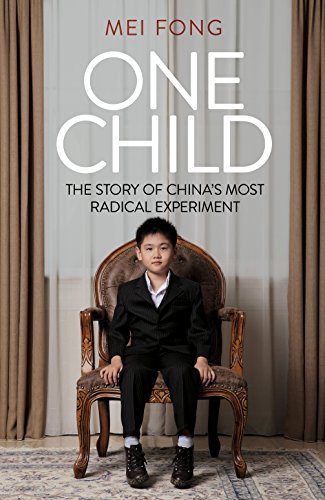
One Child: Life, Love and Parenthood in Modern China by Mei Fong 
(Oneworld Publications), Pp. 236

Pulitzer Prize-winning journalist Mei Fong has spent eight years documenting the effects of the one-child policy across Chinese society. In this critically acclaimed account, she weaves together personal stories and social politics to produce an evocative investigation into how the policy has changed China and why the repercussions will be felt across the world for decades to come.

The one-child policy was introduced in 1979; it was ‘relaxed’ in 2013 and phased out in 2016. Mei Fong argues that it was flawed from the initial concept when it was introduced as a form of population control, and that population growth would have decreased naturally without the need for such draconian measures. Even since the abandonment of the one-child policy, the birth rate in China is not increasing. Polls reveal that although couples would like to have two children, many say “it’s unaffordable, too stressful, and will impinge on their personal goals too much…by having one child, they can better concentrate their resources and have a more successful child.”

As it was, the policy led to many unforeseen issues, including the number of enforced abortions and sterilisations. “In one year alone, 1983, China sterilised over 20 million people, more than the combined population of the three largest US cities, New York, Los Angeles, and Chicago.”

During the system of the one-child policy, the law was relaxed to allow people to pay to have a second child. Naturally this benefitted the rich (and arguably led to a more affluent, urban and spoiled population) while providing a source of income for poorer counties where families were charged heavy compensation fees (shehui fuyangfei) for having more than one child. As these fines were the only income that did not have to be handed over to the central government/ national treasury ‘for redistribution’ they were rigidly enforced.

In a society which is geared towards marriage and family, this policy has long-reaching effects on cultural attitudes, such as the creation of the Little Emperor phenomenon, and the shocking treatment of elders. The author uncovered many harrowing instances of elder abuse as the spoiled single offspring no longer see the necessity of caring for their parent. “The one-child policy significantly reduced the number of care-givers for China’s elderly, not just in quantity alone, but also in quality. There are fewer women in China now – and by extension, fewer daughters-in-law, and they’re the ones who really take care of the elderly.”

There are terrible stories of geriatrics being put in pigpens by their children or shunted off to unsanitary nursing homes where they wait to die. If this trend continues there will be insufficient young people to care for the current population. According to academic predictions, “Somewhere in the decade between 2020 and 2030 China’s absolute population will hit is peak and start to decline. By 2100, China’s population could have declined back to 1950 levels of about 500 million.”

Perhaps to Western sensibilities, one of the more obvious side effects is the treatment of women. “With the current gender imbalance, women are certainly more valuable, but not necessarily more valued. In addition to a rising anti-feminist backlash, the female shortage has resulted in increasing commodification of women. Prostitution and sex-trafficking in China have been on the rise for the past decade.” Many women in neighbouring countries, such as Vietnam, Cambodia, Myanmar and North Korea, are forced or tricked into being sold as wives for Chinese men.

In the last two decades 120,000 children from China have been adopted internationally. Naturally this has “significantly shaped global attitudes toward race, family, and the ethics of intercountry adoption” but is it all ethical? Mei Fong asks, “Is the wave of Chinese adoptions, as many believe, an altruistic act that rescues hundreds of unwanted, mostly female children from a life of penury and institutionalization – or is it really baby buying on an international scale, sanctioned and even facilitated by the Chinese government?” She discovers multiple incidents of babies being stolen and sold to orphanages.

Ethical questions also arise regarding fertility and consequent eugenics. With the ability to have only one child, many people are using reproductive technologies to have the kind of children they want “This usually means choosing the sex and the number – twins are favoured – and screening out genetic diseases. In cases where an egg donor is desired – and where genetic material is passed on – Chinese parents are also trying to select traits like intelligence, height, looks, blood type, even double eyelids.”

Mei Fong argues that the one-child policy was unnecessary and cruel violating a number of human rights and leading to infinitely more problems than it solved. This is a fairly bleak outlook on the future of China due to a devastating policy that will have far-reaching and unplanned consequences.

Monday, 20 February 2017

Middling Mediterranean Novel

Not Quite Nice by Celia Imrie
(Bloomsbury) Pp. 326


This is the passable but not outstanding writing debut from the superb actor, Celia Imrie. It centres on a group of ex-pats living in Bellevue-Sur-Mer, a town near Nice in the South of France. The cast of characters are dealing with marriage break-ups, awful children and failed careers; most are retired and all are attempting to start a new life. In a 2015 Guardian interview, Celia Imrie said, “All the parts I’m writing are parts I’d like to play”, and that is obvious in this mixture of Marigold Hotel and Year in Provence.

The fluffy, comfortable, undemanding style of writing envelops unrealistic, pantomime characters and ludicrous plots. The women: Theresa, Sally, Carol and Faith are practically interchangeable, and the men include a gay couple, an ex-con and current fraudster, and an Australian lothario who refers to the set as “mollycoddled or henpecked men [and] their female jailors” – he’s not far wrong. There are dramatic events but they are all resolved with no lingering ramifications, and everything seems a little too easy. When one of the characters sets up a cooking class to make a little extra money, it all goes wonderfully, and of course the recipes are included, which is all a bit passé.

A resounding theme is that the younger generation are all mercenary and mean, and the older generation struggles to come to terms with the way they have turned out. A couple of the women are bullied mercilessly by their children and are tied to their lives to the exclusion of their own. They are obsessed with their offspring, and this is pointed out to them by those who don’t have any. “You never stop talking about your children. You spend your hours tirelessly maundering on about your tiresome adult offspring. Don’t you realise that there is nothing so boring as other people’s children, except, perhaps, other people’s dreams?” Quite.

It’s unsurprising that Celia Imrie writes about women of a certain age rediscovering their sense of self rather than their obligations to others, and all of these characters have come to this village for a fresh start and to lead the life they want. Of course the towns are picture-perfect and delightful. Her descriptive passages are derivative and it’s depressing to think one can publish any old tosh as a celebrity, whereas this would never be accepted from an unknown author.

There is an element of that smug middle-class Englishness that is inherent to these living-abroad-with-all-the-charming-but-peculiar-foreigners novels. None of them speak French, quite patronisingly expecting the French to speak English to them, and to mix with their ‘own people’. Why don’t they either move somewhere English-speaking or make more of an effort? A few sentences later they are declaiming, “What made Bellevue-Sur-Mer so nice was that it still kept hold of an everyday reality – the majority of shops and restaurants were for locals, not tourists.”

Celia Imrie may want to play these people, but they are quite ghastly and snobbish; hard to like and harder to care about.

Thursday, 28 February 2013

A World Away: Child Migration

On Their Own: Britain's Child Migrants
National Archives of Australia
December 2012 - March 2013

From the 1860s more than 100,000 British children were sent to Canada, 7,000 to Australia, and several hundred to Southern Rhodesia (later Zimbabwe) and New Zealand through child migration schemes. Some were as young as three, but the average age was eight years old, and most of them never returned home.

Their lives changed dramatically and fortunes varied. Some succeeded in creating new futures. Others suffered lonely, brutal childhoods. All experienced disruption and separation from family and homeland. This exhibition, a collaboration between the Australian National Maritime Museum and National Museums Liverpool UK, tells their emotional stories.


In the late nineteenth century, emigration was viewed as a solution to Britain’s economic and social problems. Between 1801 and 1911 the population of Britain increased from 9million to 36million and the rapid rise of industrialism led to overcrowded cities, disease, long hours and poor working conditions. It cost ₤15 to migrate a child and ₤12 a year to look after them on the Poor Law in Britain.

Charities were set up to support emigration including the Child Migration Scheme established by Kingsley Fairbridge in 1909. In 1900 many of the emigrating children came from workhouses, later they came from children’s homes and orphanages. Some parents chose the scheme for their children – orphans were not necessarily without parents – many children were taken into care when their parents couldn’t afford to look after them. They were told they were orphans to ensure they severed all ties with allegedly unworthy relations and made a fresh start.

Children were sent for the prospects of better living conditions and steady employment – a way to improve life away from the perceived evils of city life. It was not all totally altruistic, obviously, as there were growing labour needs in Britain’s dominions. The children were to be the bricks upon which the Empire would continue to be built. Australia in particular ran a ‘Populate or Perish’ campaign. The country was booming and there were demands for more children.


Before leaving Britain, children were given a wooden trunk containing winter and summer clothes (the first time many of them had ever had new clothes), a copy of the Bible and Pilgrim’s Progress. Fairbridge boys were outfitted in smart blazers, shorts, leather shoes and brown and gold striped ties. This fine wardrobe was taken from the children on arrival and replaced with khaki work clothes and bare feet. Barnardos gave children travel bags with new clothes, shoes and personal items (such as toothbrushes and combs) which were taken off them when they arrived in Australia and sent back to Britain to be used again by the next party of migrants.

The voyage was both frightening and exciting. The children they left behind home and family, but also poverty and hardship: they had new clothes and made new friends. Depending on their destination, they saw and experienced many strange sights, boats, islands and harbours – Suez Canal; Arab traders and camels; whales, dolphins and icebergs (off Labrador Coast); Quebec; Montreal; Dar es Salaam; Tanzania; Tenerife; Rock of Gibraltar; Naples; Mt Vesuvius; Port Said; Tropical Colombo; Sri Lanka.


Steamship travel afforded exotic delights and plenty to eat; many children put on weight. They played games of leapfrog and quoits and learned to swim in the pool. One interviewee remembers, “The ship had a swimming pool in the middle and I was terrified to jump in because I thought it would have no bottom and I would end up out in the sea and drown.” I can’t help but be reminded of the Land of Toys in Pinocchio where children are lured with leisure before being turned into beasts of burden. A quote at the exhibition confirms,

“The visual record of child migration is dominated by photographs of cheering children departing the UK and arriving in new lands. These photographs were taken to promote the work of sending organisations and ensure they continued to attract financial support from governments and wealthy patrons. They provide a remarkable contrast to the often damning written and oral testimonies of former child migrants, which form the basis of many case studies in the exhibition.”
Land of Toys by Bakke
Some children were given the choice of emigrating to Canada or Australia and the reasons for their choices are heartbreakingly innocent – they chose Canada because they wanted to be lumberjacks; Australia because they liked cricket or didn’t like the cold. In New Zealand many were fostered; in Canada and Australia they were put to work on the land; in Rhodesia they were educated (at the time they were told that ‘the blacks worked the land’). Some were happy with the skills they learned and later went into the farming trade, wool industry and defence forces.


For some the experience of Canada was that they were stationed in bleak, remote farms, where their accent was ridiculed and they were not allowed to eat with the family. In Australia many were shocked by the heat and the landscape, and sent to remote farm training schools or religious institutions. Pinjarra (80km south of Perth) was the first school of the Kingsley Fairbridge’s Child Emigration Society in 1912. The cottages in which the children were accommodated were called Clive, Raleigh etc – named after British navigators and war heroes to reinforce his imperial vision.

The Fairbridge Society and Barnardos sought ‘good British stock’ to populate, settle and defend the continent, but the boys were destined to be farmers, and the girls domestics and farmers’ wives. One woman recalls, “You finish school at 15 and became a cook in the Fairbridge dining room. Later you meet your future husband, an old Fairbridgian at the Fairbridge holiday camp.” The children were often put to hard labour; tilling soil, churning butter, milking cows, and hauling heavy bricks to build their own dormitories. The correspondent continues, “They asked for the best British stock – children of good health, high IQ and sound moral character – then put them to work as labourers. What a breach of faith that was.”


For some children, things were not so bad. The exhibition collects anecdotal evidence from many who underwent the schemes. One lad earned ₤10 a week and sent ₤1 to Barnardos for banking, for the savings to be released when he was 21. Others, however, tell tales of physical, sexual and verbal abuse, producing scars that remained with them for life. Some societies stole the children’s wages, belongings and letters from ‘home’ and told the children their parents were dead and that they had no siblings; that they were unloved and unwanted. When some of these children found out the truth the betrayal sent them mad. Things improved slightly with the Big Brother Movement (BBM) where Big Brothers helped Little Brothers to settle, but an interpretation panel baldly states,

“For former child migrants the legacy of their experience remains. Many have struggled, not only due to the hardships and abuse they endured, but also because they were torn from their homeland and lost their identities. Others were lucky enough to find fulfilment in their lives.”
In 1914, the First World War put a stop to child migration, although many former child migrants fought in the Canadian army as they still felt strong connections with their British roots. It recommenced after the war, but the interwar years were marked by poverty and austerity in formerly receptive colonies and child migration to Canada was formally ended by 1939. Australia became the main destination after Canada ended the scheme. One third of war evacuees to Australia later emigrated there for good. Indeed, some former child migrants also fought in the Australian army, only to later discover that they had never been granted citizenship.

In 1945 the introduction of the Welfare State reduced the need for child migration schemes, and they were officially ended in 1967. The Australian and British governments apologised for their roles in schemes “that were once considered generous philanthropy, but are now widely condemned as being fundamentally flawed.” The exhibition contains a number of oral histories, which are very moving. Videos and recordings reveal adults who still have a love for Britain even though they have lived in Australia since the age of 12, rationalising that they would have had to endure another war if they had remained in Britain.

Since the 1990s the Child Migrants’ Trust helps to reunite families. The hardest hearted cynic cannot fail to be moved by the collection of tales of reconciliations with parents thought dead and the difficulties of tracing families. Children were often given the wrong birth date and wrong name, and told they were told they had no relations, making it almost impossible to find their missing identity. One interviewee finally found his mother through her name on his birth certificate which had been concealed from him for many years. By the time he found it, she had been dead for two years.

Former child migrants gather in London for the apology from British Prime Minister Gordon Brown in February 2010.
The exhibition is sensitively handled; a well-balanced and thought-provoking treatment of an incredibly emotional issue. We can’t change history, but hopefully we can learn from it. We have done some terrible things in the past with the best of misguided intentions. In the words of the exhibition itself:

“The history of child migration is complex and contested. Issues of redress and compensation remain unresolved. Many former child migrants are still coming to terms with their deportation and dislocation and find it painful to reflect on their past.”

Friday, 14 December 2012

Friday Five: Non-competitive pursuits


I think it's fair to say that I don't like reality TV. I have mentioned this before. One of my least favourite sub-genres is the competition variety. You know the type of thing, where people are pitted against each other to paint a room or build a wall and then someone wins and everyone at home thinks they could have done the same and the real decorators and stonemasons go out of business while general standards plummet.

Although I like the celebrity dancing ones (especially the ice-dancing one), I know I am no expert. This is not true of the people who routinely watch the singing shows and then feel free to critique performances about which they know nothing. It also means that we are left with chanteurs who think that to belt and warble is the epitome of 'singing' and we are left without subtlety, nuance or character. Bob Dylan or Florence Welch wouldn't make it through the first round.

With performance and artistic pursuits, a lot is left to personal preference - A might like sci-fi or farce; B might prefer romance or Jacobean drama; C might swoon at ballet and metaphysical poetry and so on. It doesn't mean any one is 'better' than the other - it just means they shouldn't be judged against each other. In 'pure' sport if you run fastest, jump highest or throw something furthest, you win. You are the best at that particular thing. Don't get me wrong, some things lend themselves to competition and this is a good thing (not keeping the score during football games because 'it's all about participation' is ridiculous!) but when subjectivity creeps in, nothing is so clear.

Acting, comedy and writing awards are often suspect. Yes, they are worth something when awarded by your peers, but often they are voted for by a partisan panel - the more friends you have in the audience; the more likely you are to win. These tributes might provide a feel-good factor, but they are relatively worthless. Entertainment is not a science; nor should it be a competition.

5 Things that should never be a competition:
  1. Cooking - as far as I am concerned you either cook because it is your job and you are paid, or because it is a way of expressing love and friendship to those around you. Eat with me and know you are welcome. Do not judge the temperature of the soup or the slicing of the vegetables. I have prepared this gift for you in my own way.
  2. Surgery - there will come a day when cameras go into operating theatres and viewers vote on who best wields the scalpel. I'm surprised it hasn't happened already. Health is personal, although you wouldn't know it from those shows which 'expose' physical deformities and laugh at fat people. Some things should be conducted behind the curtained cubicle - pull yourself together.
  3. Sex - it's personal and not up for discussion apart from between the relevant parties. According to late-night phone-ins (you hear a lot driving home from rehearsals) many people seem to be concerned about whether or not their sex-life is 'normal'. As long as you and your partner are happy with it, whatever you're doing, or not doing, is fine.
  4. Raising children - I hate the use of nouns as verbs, so have resisted the urge to call it parenting. I'm sure it's pretty difficult to raise a child to be a reasonable and responsible human being. Just do your job and stop comparing yourself and your child to others. In some respects they're all the same; in others they're all different - don't bother worrying or boasting, and if you must do either, do it to yourself as no one else cares. Really.
  5. Friendship/love - when I was little I used to refer to 'best friends'. Now I know that best is a superlative meaning 'of the most excellent or outstanding or desirable kind' there can only be one, by definition. I would now say I have many good or close friends - all of them special to me in individual ways and I love and admire them for their specific qualities. I would never try to rank one above the other. That's not how this love thing works.

Thursday, 17 May 2012

Quiet Zones


I am sitting in the library trying to work. Until our internet connection is established at home, this is the only place I can do so. And yet I am struggling, because of the deafening screams of children. Yes, that’s right, in the library.

There is a glass rectangle marked ‘quiet zone’. It looks like some sort of modern art installation or version of a torture chamber where prisoners are contained in the see-through cage with the sun beating down. It is opposite the ‘play area’ and it is not sound-proofed. It is deafening, and my idea of hell.

Inevitably questions arise: Why is there a ‘play area’ in a library? I understand the need to introduce children to the wonderful world of reading and even for the horror that is story-time, but why isn’t this separate, maybe in a windowless basement? Shouldn’t these children (and their parents) also be taught the need to respect others; for their privacy and their desire for silence? To read or study (and this library is next-door to a large college) in peace?

It’s no secret that two of my favourite things in life are books and beer/ wine. It follows, therefore, that two of my favourite activities are reading and drinking, and by logical consequence that two of my favourite locations should be libraries and pubs. Until recently, this was indeed so. Now they are all but ruined by children.

Okay, so I know that people think I don’t like children. This isn’t true. What I dislike intensely is rude and inconsiderate behaviour by people of any age. Children appear to display this more and more frequently with the tacit (and often open) approval of their parents. If you don’t believe me, just try complaining when a child shrieks in your ear as you try to type in the library or runs into you and spills your pint in the pub.

Certain areas should have designated behaviours. I wouldn’t go to a park and be annoyed by children squealing on the swings. Noisy participation is all to be encouraged at a Wiggles concert. Brightly-coloured plastic toys and high-pitched appreciation of rubber food are what I would expect at fast-food outlets. And as far as I’m concerned you can do pretty much whatever you want in your own home.

But please, just stay out of my space. And if we really have to interact in it, can we do so by the rules? Quietly? I’m not alone in this. The poor young woman opposite me, who has been trying to study, has given up and packed up her books to go somewhere more peaceful – the airport, perhaps. She sighed as she departed and wished me good luck, before suggesting I should invest in a pair of headphones if I wanted any silence in the library. Good advice, perhaps, but should I really have to?

Thursday, 19 August 2010

Let them eat cake!

The latest ridiculousness to be filed in the customer-is-always-righteous file is the recent issue of 'cakeage'. Thankfully, it is not quite a scandal or we would be hearing predictable stories of cake-gate.
 
Apparently a group of folk went to a restaurant in Richmond to celebrate a 70th birthday and were charged $12 to eat a cake they had baked themselves and brought along. They were 'disgusted' (I can but imagine their spurius indignation) and contacted their
local paper to complain; note, incidentally, that they didn't discuss this with the restaurnt owner at the time. He later expressed himself to be 'shocked' by the response - you can't beat a dash of hyperbole in the kitchen.
 
I wonder what makes people think they can take their own food into a restaurant. Would these people go to a pub and crack out their own home-brew? Are these the people who go to the theatre to watch a performance and conduct their own conversation? Probably.

 
It is not the same as the service charge applied on public holidays, which is simply ludicrous. Some 'hospitality' outlets insist it costs more to open on these days; to pay staff an extra percentage on their meagre wages to compensate for them missing out on time with their loved ones or leisure activities; a cost which, apparently, is not recovered by the increased custom. In that case, this cost should be factored into the prices for the rest of the year. It's not as though Christmas is a surprise to anyone; even Easter may be a moveable feast, but you know it happens every year. That way the cost is spread through to everyone and is negligible.


But why should others shoulder the financial burden because you want to have your cake and eat it (in public) too? Why don't you just have it at home? This is similar to parents who bring their own food to cafés to feed their chidren. Their argument is that the café is making money from the mothers who buy a coffee. I've seen these meetings. Children throw food, drink and various bodily excretions around the place. They run, wriggle, fidget and scream.

All normal people are driven away or take one look at the bedlam and decide to eat elsewhere. After the mothers' mayhem has gone, the café is left to clean up and replace the tables and chairs to their original position, plus dispose of semi-masticated food that they haven't even provided. Some cafés are happy to provide this service, and fair play to them. I avoid such places.

I prefer to go to a café where I can enjoy my coffee and conversation in peace. Coffee houses were originally established as places to discuss the events of the day and share ideas. One of the first, Café Procope (est. 1686), was a major meeting venue for the proponents of the French Enlightenment, such as Voltaire, Rosseau, Diderot et al. It is arguably the birthplace of the Encyclopedie - the first modern encylopaedia; try writing that while being deafened by a toddler's tantrum! Lloyds of London began life as a coffee house where politics and business were the topics on the menu (sport was reserved for the pub).

There used to be a wonderful place like this in Queenstown where folk met to pontificiate and enjoy their caffeinated pleasures. The place ground the beans on location and you could purchase them whole - they were in big sacks at the side of the shop. It was a tiny venue and not conducive to small children clogging up the place with cumbersome pushchairs, falling off the stools or plunging their grubby mitts into sackfuls of coffee. The owner banned children from the premises. One crusading mother took him to the Commission of Human Rights and her complaint was upheld. He has since moved on and there is now no refuge from screaming miniature hooligans in town.

Restaurants and cafés should have the right to charge what they choose to serve whom they want. They should print their charges and intentions clearly so there can be no confusion. And then everyone can make an educated decision about where they spend their time and money. If you don't like disruptive infants, child-free zones, or paying for 'cakeage', go somewhere else. There are plenty of choices, and so there should be. Vive la difference! (as they would have said at Le Café Procope).

Wednesday, 31 December 2008

Entertaining Children

My brother, sister-in-law and their children are visiting. This is wonderful as I haven't seen my brother for a number of years and before two weeks ago had never met their youngest child. Whenever we have friends and family to visit, we take them on tours of Wellington and environs, but we don't really do this with people with children so we wondered how to entertain them?

Fortunately they love to entertain themselves, telling themselves stories and disappearing into their imaginative worlds. On Christmas Eve they 'helped' me bake the biscuits which were to comprise presents for the parents and other adults. We made star biscuits and hundreds and thousands of the sprinkles were consumed, along with blue icing which is now decorating the kitchen benchtops.

They enjoy playing with their Christmas presents, colouring books and dot-to-dots. It seems we are more amused by table football than they. One day we went along to a park and took a football. My brother and Him Outdoors played with the football for about an hour while the children were content with the swings and the slides.


As we usually do, we took our guests to the wineries out at Martinborough. I can thoroughly recommend Vynfields as a place to take little people. The wine tastings come on a tray so you can take them away and sit in the magnificent garden with a platter too if you like. This means you can enjoy them at your leaisure while keeping an eye on the children playing in the wide open space.

Apparently rocks under trees can be converted to peanut butter sandwiches for yellow aliens (don't ask) and stone tables make excellent space ships.


Ata Rangi also has a large area for running around and playing stuck-in-the-mud or Peter Pan. I was slightly surprised that Wendy and the crocodile were the characters to be as I had always thought Wendy was a bit wet, but I think the drawcard here was that she could walk a plank (or a bench, if we're honest). Meanwhile we could get stuck into the Craighall Chardonnay with impunity.

A typical Wellington childhood entertainment is Te Papa, and we went along to see the colossal squid. I thought it was a little odd that bits of it were cut up and put in specimen jars, although it was still pretty impressive stretched out in it's entirety.

The children liked the 3D video that accompanied the exhibit, although the two questions they kept asking were, 'What killed it and why?' (Answers: fishermen; for our entertainment) and, 'Where are the dinosaurs?' (Answer: there aren't any, but there are some fossils). In fact, dramatic though the squid may be (and we are reminded that it is a colossal squid and not one of the giant variety - they are quite a different kettle of fish apparently) it lost out in the popularity stakes to ice cream.

Movenpick on Herd Street does delicious flavours - hokey pokey, vanilla (with real seeds from the pods) and the raspberry/strawberry sorbet ('It's healthy!') were among the favourites.

A short stroll along the waterfront to the playground at Freyberg Beach meant everyone could play on a variety of vomit-inducing contraptions which finished off the afternoon nicely. So there we have it; how to entertain children for a weekend in Wellington without driving adults to distraction.

Tuesday, 21 October 2008

Meanwhile, back in New Zealand

Well, I have been away travelling for the last four weeks through Italy and America, and now I am back. I have a head full of memories and a camera full of photographs, the results of which will soon be flooding onto these blog pages, so don’t say you haven’t been warned. In the meantime I’ve read books, seen films, perused newspapers, watched television, listened to radio programmes, and talked to people about issues and current events.

Because of the places I have visited, it is no surprise that the main topics concern violence and rioting near Naples from the drug-related Camorra, the rescue mission of European governments to bail out banks and halt the freefalling economy, fires in California, and the US election campaign, and the great Stevie G scores his 100th goal for the mighty Liverpool. Honestly, they refer to him as Capitan Fantastico in the Italian press.


I haven’t heard New Zealand mentioned once in the past month; proof of the island’s isolation. So we bought a paper to see what has been happening while we’ve been away. Nothing, in a word, which could also be viewed as life continuing (or not) as usual.

Don’t get me wrong; this isn’t altogether bad. Who wants to live in a land of crime, pollution, overpopulation and the constant threat of terrorism? Not I. I love the beaches and coves of the Bay of Islands; the forests of Fiordland; the mountains and clear light of Otago; the vineyards and peaceful culture of Marlborough; the wide open spaces and the laid-back attitude to life. That’s why I live here, but it is true to say that not a lot happens.

The tedious wheel of predictable fortune is confirmed by the front page which announces that five people ‘win’ $6 million each, while two teenagers die in a modified 4WD, another hits and kills a cyclist from behind, and another two folk are involved in a head-on collision on North Canterbury Roads – how’s that for the lottery of life?

Meanwhile, Helen Clark bests John Key in a debate but he still climbs ahead in the polls – it’s all about the tax cuts, people. The financial market crashes but house prices remain relatively stable – at least you can see a house while your shares vanish into the ether. New Zealand beat England at netball (this is news?) and the Greens seem to be reverting to Chinese strategies and promoting a one-child policy.

Speaking of children, the first thing I noticed on arriving back in this country (besides the generally appalling dress-sense) was the proliferation of squealing children throwing tantrums. I’ve not heard that sound for a blessed four weeks and I can’t say I’ve missed it. New Zealand seems inordinately obsessed with children – to you they may be expressing themselves; to me they are disruptive and irritating to everyone in the vicinity.

Sure, they have children in other parts of the world, but they don’t pander to their every whim and elevate them above all normal social expectations. They are in restaurants (no ‘kids menus’ in Italy – they eat what adults eat; just less of it), on public transport, in museums and art galleries, in parks and everywhere we have been. But they are polite and well-behaved so you don’t have to notice them unless you choose.

Children: they are a part of life, but they are not the sole reason for it. As Him Outdoors puts it, ‘They may be the future, but they are not the now, now, now!’

Saturday, 9 August 2008

Green fatigue

So the power crisis is officially over for another year - that's a relief. The power conservers, or eco-Nazis, happily tell you what you should and shouldn't do to be 'green' and love to point the moral finger if you step out of line. It is so easy to feel smug and to criticise others.

Just as the born again anti-smoking brigade make me want to go out and light up a fag although I have never smoked in my life, these people make me want to mix my compost with my plastics, although I have been recycling since we gave bundles of paper to the Scouts and rinsed our milk bottles and put them on our doorsteps as children.

Nothing in this eco-crusade is straight-forward. We grew our own vegetables when we had a garden. We had to irrigate them with water. We now live in an apartment in town - we sold the car to reduce pollution and so had to move closer to the city. There is no garden for vegetables, but there is no car to wash and consume the precious water.

The businesses in town leave their lights on so that the reflections look pretty in the water - and they do. I like to look at them. The streetlights illuminate my late night run or cycle ride, which I do outdoors, on the streets, not in a gym with bright lights, pumping music, and blazing equipment.

I take baths rather than showers. I lie in the bath and relax for hours. If I stood under the shower for that long I would waste a lot more hot water. I already pay exorbitant prices for hot water, which the power company turns off at certain times when they think I don't need it. Will they start dictating when I have to turn my lights out and go to bed? Baths are a simple pleasure, and one for which I am censured.

But I am saving power every day by choosing not to have children. I don't put on extra loads of washing and drying. I don't buy cheap plastic toys and clothing from sweatshops in China that will end in landfills in two weeks when the little darlings have outgrown them. I don't leave the heating on in the house all day because they need to be kept a certain temperature. I don't drive a 4WD to the shops because I have such precious cargo on board that I have a right to guzzle resources and kill anything I come into contact with.

My non-existent children will not grow up to drive cars, burn fuel, fly around the world, and heat and light houses or offices. They will not buy and dispose of umpteen electical gadgets and telecommunication devices. They will not consume food which uses precious resources to produce. So let me have my bath without opprobrium.

My friend calls this backlash against the holier than thou environmental set, 'green fatigue'. It's an apt expression. The escalators in the publc library were turned off to conserve power. This action saves very little power, but it does force the elderly (for that is the largest proportion of library users) to walk up the stairs or plead for assistance to use the lift. The people who did this are the same people who oppose wind farms because they don't look pretty and they make noise.

Meanwhile mothers drive their children to cafes where they spill fluffies down the front of their new clothes. The pitter patter of tiny feet produces great big carbon footprints. And they welcome their friend's babies to the world with cards made from recycled paper and a superior smile because they are being good to the planet.