Showing posts with label mystery. Show all posts

Tuesday, 26 March 2024

Separating Fact from Fiction: The Chimney Sweeper's Boy


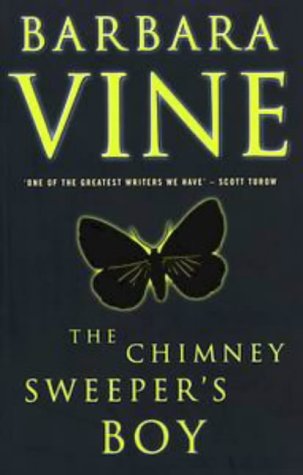
The Chimney Sweeper's Boy by Barbara Vine
Viking
Pp. 343

When Gerald Candless, a critically acclaimed author dies, his daughter, Sarah, is asked to write a memoir of her beloved father. As she starts to research his childhood and origins – i.e. his life before she was born – she soon discovers multiple discrepancies in the narrative. There follows a domestic investigation into family secrets that might make a man change his name and adopt an entirely new persona.

As with many Barbara Vine novels, the timeframe switches back and forth between past and present, and all the family members are affected by the consequences of one man’s actions. Each chapter begins with a ‘quote’ from one of Gerald Candless’ novels, allowing the author to play with her story-within-a-story motif, as Sarah plays amateur sleuth and attempts to mine fact from fiction. The moth on the spines of Gerald Candless’ books (and the jacket of this novel) proves to be a ‘clue’ in the manner of an old-fashioned detective novel, and simultaneously represents a subtle homage by Barbara Vine to the art of cover design.


The secrets are often to cover historic scandals, such as illegitimacy, unwed mothers, class distinctions and homosexuality, which would not raise an eyebrow today. She writes with sadness that such issues could lead to misunderstanding and even murder.  Another familiar trope is the notion of blood being a metaphor for generational inheritance (both positive and negative), while also being a vital fluid.


Like PD James or Robert Goddard, Barbara Vine writes literary suspense novels where the characters are more engaging the plot, and the themes are apparent from the start. Rather than racing to the end to find out whodunnit, the reader spends time with the characters wondering how they feel and what they are going to do about it.

Tuesday, 21 March 2023

Flight of Fancy: When the Wind Blows


Described as a mystery thriller with fantasy elements, this novel is the first in a series which sparked the Maximum Ride spin-off series. It concerns genetic experiments on babies which produce children with wings: what could possibly go wrong? There are evil manipulators behind these cruel experiments, but there are also those with strong moral instincts. Innocent people who stumble across the flying kids suspiciously vanish. The novel is fast paced with short (two-paged) chapters, clearly-drawn lines between the good and bad guys, little room for ambiguity, and an element of romance with an eye to the big screen: she’s a vet; he’s a ‘troubled and unconventional FBI agent’.

All of the action is described in literal detail, and much of it would look better on screen than it does on the page. “We gathered up the children, kept them moving. We slid and fell and scraped our way down the hillside into a small valley. Then we climbed painfully up the side of a facing hill. Then down the opposite side. We ran until we couldn’t run anymore, and then we ran some more.” The short sentences and minutiae are clunky and dated in a way that recalls Stieg Larsson’s product-placement-crime-fest novels. “Kit continued to work furiously at the desktop. Like many of the younger agents in the Bureau, he was good at it. He likes computers most of the time, and was comfortable around them. He brought up Netscape, then opened it. In the location field, he typed – about:global.” Other aspects of science are explained for dummies to seem technical.

Maximum Ride fan art

The obvious moralising also becomes tedious. When the children escape from the lab, the baddies chase them down with a justification that “The good that will ultimately come will justify everything. The most important days in history are almost here.” Just in case we might have missed the point, it is reiterated several times. “Biotech was definitely the new frontier in science. It can, and undoubtedly will, push evolution farther and faster than anything has in history. The question, though, is whether we’re ready, emotionally and morally, for what we will be able to create in the very near future.” The novel is an undemanding, fairly gripping page-turner that you could read on a plane between interrupted dozes and not be upset if you left it behind in the seat-pocket.

Tuesday, 22 December 2020

Boys' Own War Adventure: The Rest is Silence


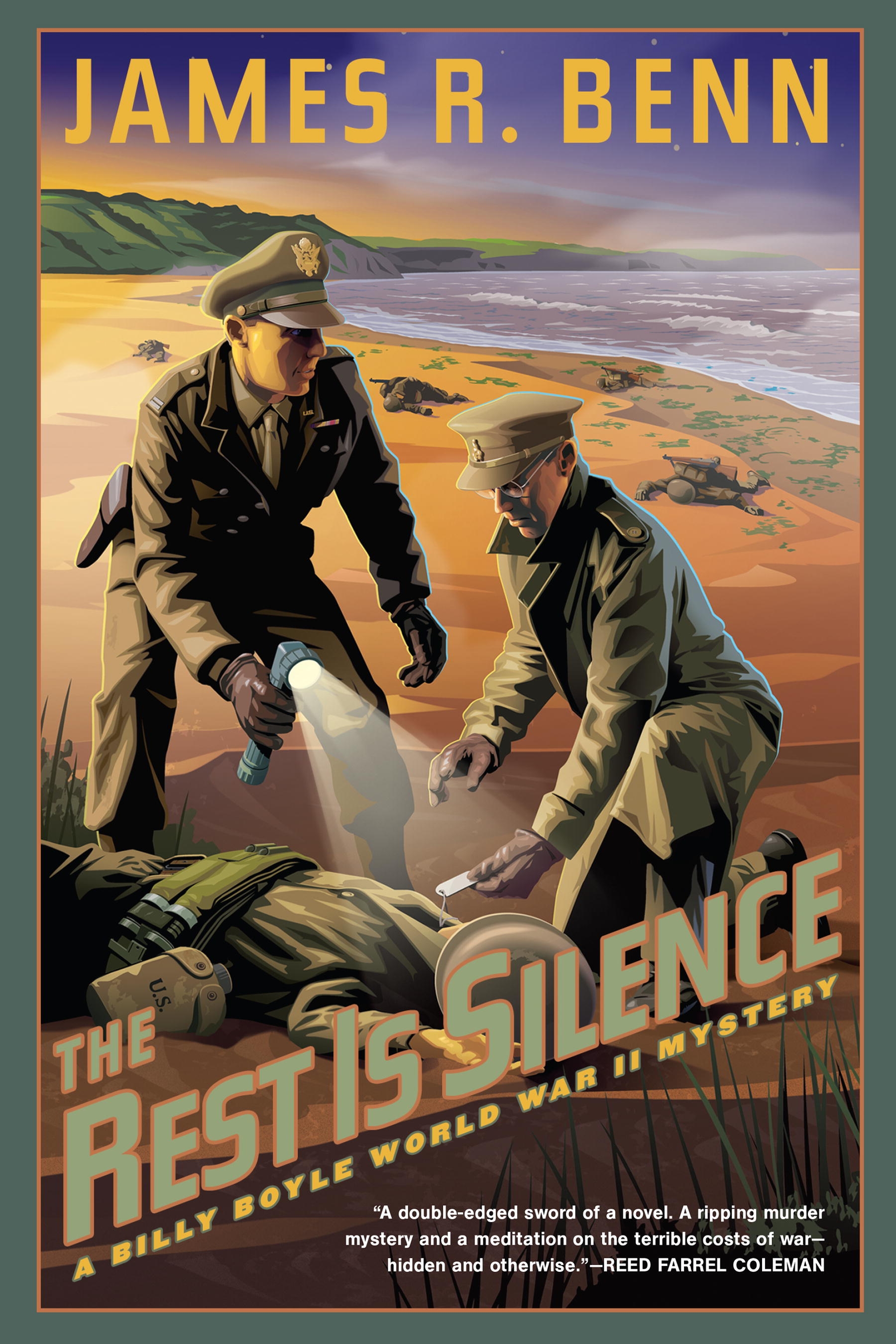
The Rest Is Silence by James R Benn
Soho Crime
Pp. 323

The writing on the jacket claims that this is “a Billy Boyle World War II Mystery”, so it is obviously one of a series in which US Army Captain Billy Boyle and his partner Kaz work for the Office of Special Investigations: “our job was to deal with low crimes in high places that got in the way of the war effort. And to deal with them quietly, although quiet wasn’t always in the cards.” The novel was published in 2014, but the style is that of a previous era with a hard-boiled-detective noir fiction bent.

When a body washes up on Slapton Sands on England’s Southern Coast, Boyle and Kaz are called in to investigate. The Devonshire Beach is the home to Operation Tiger (April 1944), the top-secret rehearsal for the approaching D-Day invasion of Normandy. This was a real event in which hundreds of Allied soldiers lost their lives; there were more American casualties in the exercise than the actual attack.

While the men are investigating the crime, they are billeted in a country house full of rich people, which includes a dead patriarch, old animosities, and a contested will. This provides ample sub-plots about relationship dynamics. One of the family members, Edgar, is writing a book about the interpretation of the end of Hamlet, which is where the title of the novel originates. Boyle seems to be taking a swipe at academia and philosophy, whereas he deals in hard truths and manly facts.

He is a plastic Paddy American who hates the English as part of his shtick, having to restrain himself from voicing his true feelings. Boyle is related to General Dwight Eisenhower, who is everyone’s boss in the US Army: “I call him Uncle Ike”. Lady Pemberton, the matriarch of the house in which he is staying says, “One bristles at the idea of a foreigner, even one of our American cousins, telling the British army what to do. But he seems like a decent fellow.” Boyle is naturally tough and uncompromising and rejects authority figures, or certainly British ones. War is unpleasant, requiring a stern exterior, and Boyle narrates his part in a stoical fashion. He takes no prisoners and favours neither side, trying to remain natural about the situation.

In some cases the language strains to be contemporary to the setting. There are men with physical deformities including Kaz: “[Kaz] grinned, his scarred face looking slightly maniacal. I don’t much mind maniacal when it’s on my side.” And there are men with mental scars as a result of the war, who have suicidal tendencies and difficulty readjusting to civilian life. These issues may be well-known now but were less so at the time, making the recognition anachronistic though the sentiment is sound.

Much of the novel reads like a boys’ own adventure with comrades in arms, smugglers, gun fights, and bureaucratic conversations about military exercises and clandestine operations. Its main interest is in the fact that it is set around a genuine historic incident. There are many others in this series (fifteen at present count), so people are clearly drawn to this style of storytelling with a historical mystery set against a military background with a cynical world-weary hero.

Bootprints of 749 troops were laid out on Slapton Sands, Devon, in April 2019 to mark the 75th anniversary of Exercise Tiger.

Wednesday, 1 January 2020

Cosy Cat Crime: The Cat Who Sniffed Glue


The Cat Who Sniffed Glue by Lilian Jackson Braun
Jove Books
Pp. 200

The eighth book in The Cat Who… mystery series is a light-hearted mystery featuring an eligible bachelor, Jim Qwilleran, and two Siamese cats, Koko and Yum Yum. Qwilleran is biggish, 50-ish, and with a moustache that bristles when he is ‘on to something’. He is a bachelor so he eats out at restaurants every night and has a succession of lady-friends, whom he calls for dinner dates. They are always keen to accept (perhaps because of his inherited fortune) and he has a succession of romantic entanglements with housekeepers, librarians and interior designers.

The cats play a major role in his life, and they are incredibly spoiled, with their own apartment and chef. With feline intuition, they help Qwilleran solve crimes as he explains the details of cases to them, and they respond with clues such as banging into things, sitting on vital evidence, or tripping up villains.

The novel is set in Pickax City, Moose County, “400 miles north of everywhere”, with nearby towns called Chipmunk and Brrr (it’s the coldest place in the county) bursting with folksy characters. Written in 1988, it is a novel of its time, before the digital age. Newspapers are still read in physical form; the town does not have one but Qwilleran, himself a ‘newspaper man’ helps to establish The Moose County Something. It is going to “hit the streets” in a week, and there is no name for it – maybe things were run differently thirty years ago, but this still seems very slack in a corporate world, and is yet another aspect of the novel that is exceptionally homey.

Braun also incorporates theatrical tropes into her mystery, as each chapter is introduced with Place, Time, and Cast – this is both an original device and means to introduce characters, but also an example of lazy description and stereotypical characters. Interior designers and architects see buildings as a set designer would, and places are described like stage directions.

The crime begins with vandalism and drink driving, but all are shocked when it progresses to murder. It is what is described as a ‘cosy mystery’, the increasingly-popular genre of crime that is the literary equivalent to a hot cup of tea; the perfect antidote to the daily onslaught of violence and outrage. The characters are broadly drawn, there will be more description of meals eaten than of wounds inflicted, there is very little violence or pain, but copious cold leads to follow in the quaint little community, and the murders don’t really matter all that much. In these olden times there are no forensics, and red herrings include plenty of opportunities for the cat to sniff glue: snowshoes; bookbinding; taxidermy; model-ship making; theatrical make-up.

Amazon has three sub-categories of ‘cosy mystery’: animals; crafts and hobbies; and culinary. This places itself firmly in the former category, and if you know what to expect, you will not be disappointed.


Friday, 10 May 2013

Friday Five: Merry Murders


As part of my research into the role I am playing in Agatha Christie's The Hollow, (Tempo Theatre, May 17-25), I have been reading lots of murder mysteries. Not the gory forensic ones or the grisly serial killer twisted psychopathic ones (often set in Scandinavia and clearly doing wonders for those country's tourism boards) but the ones set in country houses (or, disturbingly, theatres) where everything is very jolly and people gather patiently at the end to learn whodunit from the brilliant detective.

There's always an assortment of folk with motives and alibis - everyone is a suspect except (although not always excluded from the list) the victim. When the person has been murdered, there is never any real grief or emotion; just a curiosity as to the perpetrator. And all ends are neatly tied up with a pleasant reassurance.

Some people inherit or even get married and it's all happily ever after - except, of course, for the victim and the murderer who either gets meekly led away to face justice (they never get off on a technicality) or conveniently kills themself, thus sparing everyone else the trouble of a trial. Lovely!

5 Murder Mysteries I've Recently Read:
  1. The Hollow/ Three Act Tragedy/ The Seven Dials Mystery - Agatha Christie. Classics.
  2. Death at the Dolphin/ A Man Lay Dead - Ngaio Marsh. Not the most pleasant of detectives in Roderick Alleyn, but he always gets his man, or woman.
  3. The Full Cupboard of Life - Alexander McCall Smith. The fifth in the No 1 Ladies' Detecive Series. I've read the others and enjoyed them, so this was really just an excuse. There is barely any detection but quite a lot of bush psychology and tea-drinking.
  4. The Murder Room - P.D. James. A modern-ish take on the genre and there is a serial killer, but the other stuff is all present and correct.
  5. Gaudy Night - Dorothy L Sayers. A murder mystery without a murder. Curious. But it's set in Oxford so one should expect high-brow existentialism.