Showing posts with label Everyman Theatre. Show all posts

Friday, 29 November 2024

Friday Five: Bits of Theatre Reviews

  1. Away - Canberra Repertory Society, Theatre 3: This is considered an Australian classic, and it is treated as such, with weighty moments and dragging pauses. It tells the story of three internally conflicted families holidaying on the coast for Christmas, 1968 and, according to Wikipedia, is one of the most widely produced Australian plays of all time, being on the school curriculum in many states. It incorporates several moments of Shakespeare which don't so much subtley enhance the story but profoundly crash into it to try and suggest merit. This production doesn't hang well together, with some self-indulgent drama school moments (the storm at the end of the first act is enacted by cast practicing physical theatre in the way that non-theatre people is typical am-dram), but the sound (Neville Pye) and lighting (Nathan Sciberras) are excellent with a multitude of notes, techniques and colour to enhance the production. A variety of acting styles speak of a lack of cohesion - Callum Doherty excudes a flamboyant melodrama as Tom, a teenager with leukemia trying to experience all he can while he is well enough, while Andrea Close as Coral portrays the ups and downs of someone medictating through grief with great sincerity. The stage is not used to its full extent and scene changes are uneven - some of the cast remain in character to perform them; others don't. The play-within-a-play is appropriately intimate, and the half-painted scene for the 'beach' in the second act is evocative, although some of the kodak screen images are poorly projected and detract from the overall ambience. A stronger vision from director Lainie Hart communicated more clearly to all cast and crew might have helped this play find an even keel.
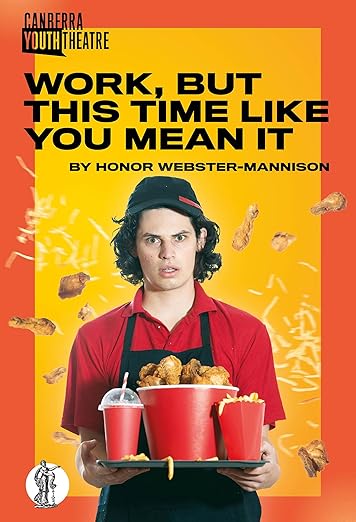
  2. Work But This Time Like You Mean It - Canberra Youth Theatre, Courtyard Theatre: A play about young people's first experiences in the workplace explores subjects such as trying to survive and have a good time on a minimum wage, dealing with demanding customers and irritating colleagues, and the realisation that this might be all there is for the endlessly foreseeable future. Written by Honor Webster-Mannison, the script won the 2022 Emerging Playwright Commission, and this production is really not as bleak as that might sound. Working in a fast food outlet (no names but it is red and yellow and the actors dress in chicken suits at one point), the characters are simply called after their positions, such as Shift Manager, Drive, Deep Fryer, Kiosk, etc. and perform repetive gestures, throwing and catching balls in synchronised movements. The young actors are mainly self-satisfied and have little rapport with their fellow cast members, with the possible exception of Kathleen Dunkerley as Register 1 (good range of pace and emotion) and Sterling Notley as Food Prep (measured and generous performance providing a foil to other actors). The set (Kathleen Kershaw) is the highlight of the piece, marking the transition between childhood (a soft play centre) and the slippery slope of post adolescence with a bright and obvious visual metaphor of a ballpit. Multiple overlapping voices, recorded speech, video games projections and dance breaks all add to the anarchic feeling, as directed by Luke Rogers, but each one of these elements could have been explored more thoroughly, instead of too many ideas appearing under-realised. The play has interesting moments and deliberately descends into chaos, but the unstructured disorder soon becomes tedious and looses the audience engagement.

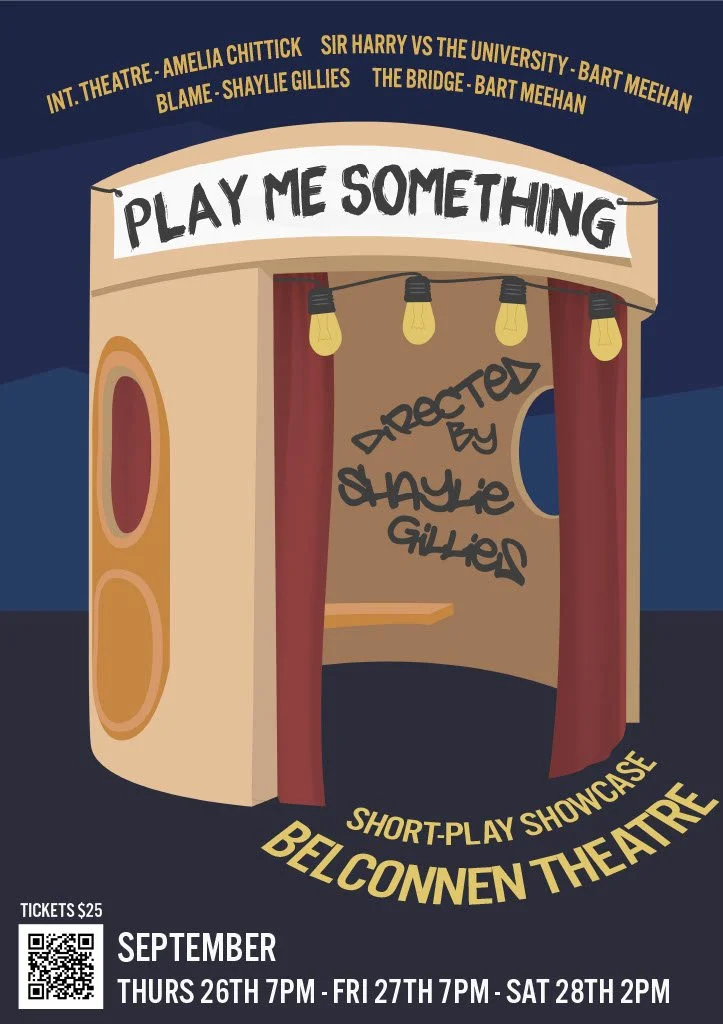
  3. Play Me Something - Green Oak Theatre, Belconnen Community Centre: Four short plays with no apparent direction (although Shaylie Gillies is credited) or cohesion. INT.THEATRE by Amelia Chittick is a play about actors preparing to do a play, while Sir Harry vs, The University by Bart Meehan is a well-written comedy about a disgraced actor who applies for a job at a university only to sue for discrimination when they don't get the role. I was surprised to see that Blame by Shaylie Gillies is about the effect on the community of the Aberfan disaster, until I was told that the event featured heavily in the TV hit show, The Crown, which would explain why people in Australia suddenly know about it. The last play on the bill is The Bridge, also by Bart Meehan, which deals with family loss, grief, difficult relationships and distorted memories. Due to the changing sets required, these were necessarily perfunctory, although the use of sheets in Blame is interesting, and the Greek chorus effect adds a much-needed diversion. I also admire the decision not to make the cast attempt Welsh accents. Actors performing in different pieces are at best competent and have clear favourites, interpreting these and mumbling inaudibly through others. For example Chazelle Cromhot plays Professor Turner with solid gestures in Sir Harry, obviously relishing the role, while leaving unnecessary pauses and being almost completely uncommitted to the role of Daughter in The Bridge. While I applaud the motivation to bring short plays to the stage in search of a wider audience, the performance feels under-rehearsed and could be considered a drama exercise, but not a finished product. The poster is a highlight.
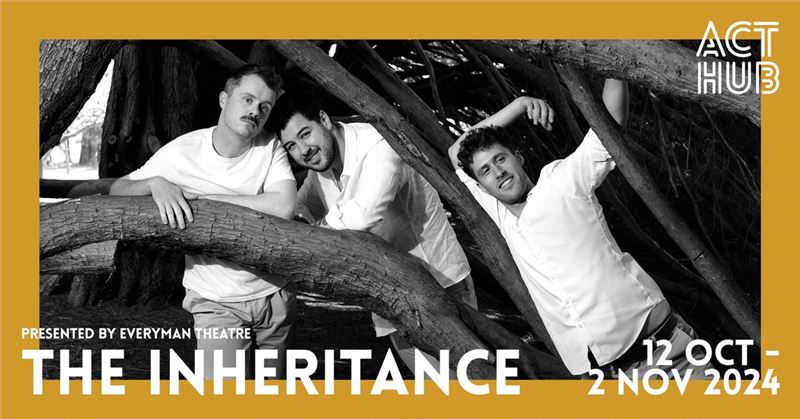
  4. The Inheritance Pts 1 & 2 - Everyman Theatre, ACT Hub: Seen over two nights (or for a solid six hours on a day with a matinee), this is a massive work of friendship and death, intended to be a re-imagining of E. M. Forster's Howard's End. It deals with homosexuality in the 1980s, so of course the promising young men are struck down by AIDS, in that decade's anthem for doomed youth. This is an intergenerational piece as the contemporary couple, Eric Glass (James McMahon) and Toby Darling (Joel Horwood) deal with the inherited trauma of that era through their privileged existence in Eric's family-owned apartment in New York. They are surrounded and embraced by a coterie of quasi-intellectuals, who shuffle bare foot across the boards, offering metaphorical foils if not rapier-like wit, and draping over each other to produce carefully posed tableaux. Self-referentially enough, Toby's semi-autobiographical novel is due to be adapted for Broadway, and he involves himself in the writing and the auditioning of himself through the character of Adam McDowell (Andrew Macmillan). It's full of in-jokes and meta-theatrical references, and it's actually quite hard to like these characters as they lounge about the stage reading and pontificating as though their every utterance holds weight. It doesn't. It's didactic and preachy and finishes with a monologue from Margaret (Karen Vickery), the only woman of the thumpingly male show, who loves all the rogues and scamps. And yet. Director, Jarrad West has done wonders with the material, not least in finding twelve men of solid acting ability. Joel Horwood's petulance is compelling, James McMahon's brooding presence is powerful, and Duncan Driver delivers an excellent commentary as the unfairly criticised E.M. Forster (why didn't he make his sexuality public?). There are simulations of sex and abuse, but the moment where an actor leapt into the arms of his acolytes who failed to catch him, leaving him crashing into the stage, was the one that really brought tears to my eyes.
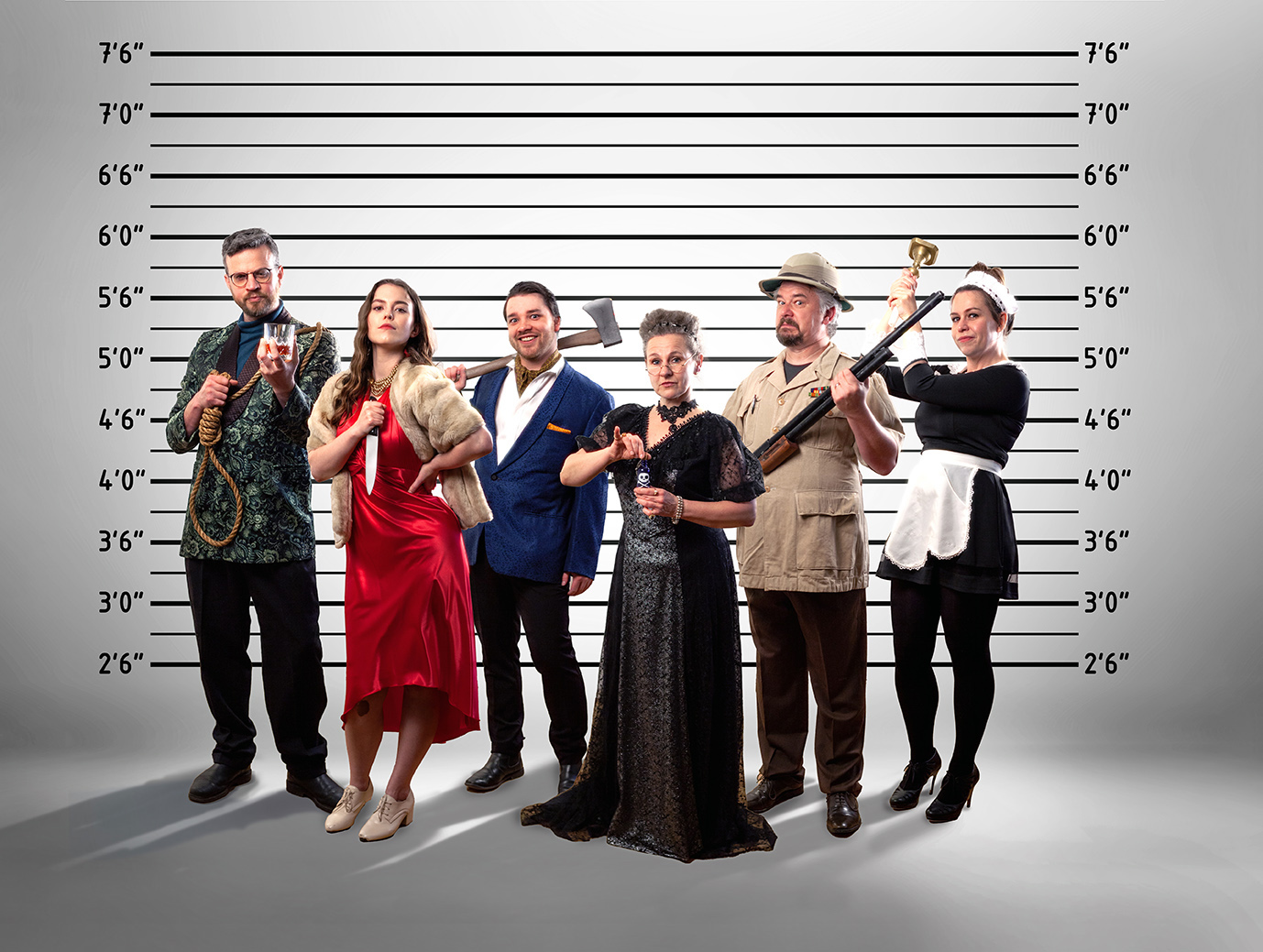
  5. Bloody Murder - Canberra Repertory Society, Theatre 3: Canberra Repertory traditionally stages their final production of the year as a fun night out in which audience and actors main purpose is to have fun. This is achieved in Bloody Murder, written by Ed Sala and directed by Josh Wiseman. The premise is that the characters in a quintissential country house murder mystery get fed up with playing the same old roles and turn upon the author (and the audience) to forge new ground and subvert their sterotypes. Antonia Kitzel is the matriarch of the house, Lady Somerset; Glenn Brighenti is her nephew, Charles, waiting in the wings to inherit her fortune, Steph Roberts is the maid in the ridiculous sexy French maid outfit favoured of male directors while delivering a Sybil Fawlty-esque performance, Arran McKenna is the war bore, an uptight mayor from India via central casting, Stuart Roberts is Devon Tremaine, the alcoholic has-been actor, and Holly Ross is Emma and the Countess, with a variety of accents with which she has a lot of fun, although I would caution that self-satisfaction on stage doesn't always equate to enjoyment from the audience. This is an ensemble piece so there are not meant to be stand-outs, but Aaron McKenna and Stuart Roberts both excel in their commitment to harmonious performances, never pulling focus, remaining pitch perfect in vocal and physical delivery, and offering supportive presence demonstrating superior textual understanding. The technical details all serve the play well, particularly the sound where Neville Pye is in his element, heightening atmosphere in an ironic manner from creaking floors to sensuous foreboding mood music. When it remembers not to take itself too seriously, this play is a lot of fun.

Friday, 17 May 2024

Friday Five: Theatre Since Then


  1. Seagull - Chaika Theatre, ACT Hub: A bright and witty adaptation by Karen Vickery with some fine performances, particularly from Natasha Vickery as Nina (a divine portrayal of a broken spirit without mawkish sentimentality), Joel Horwood as Kostya, and Amy Kowalczuk as Polina (calmy understated with a stillness and depth that is very moving). The outood to indoor setting works well and overall the production manages to be fresh and original while maintaining the humour and pathos, although there are slight distractions in some curious staging and costume choices, and some excess faffing with props. 
  2. The Shoe-Horn Sonata - Lexi Sekuless Productions, Mill Theatre: This is an exquisite production of a challenging script. Two women, Bridie (Andrea Close) and Sheila (Zsuzsi Soboslay), meet again 50 years after they were released from a concentration camp where they were taken in the fall of Singapore. Close is a non-nonsense Aussie and Soboslay is a more subdued Brit, and they complement and contrast each other equally. They say you should never ask what someone in these circumstances has done to survive, and these women, who were forced to be the best of friends, have kept secrets from each other for half a century. Now they are exposed in a hotel bedroom and a television studio as their histories are probed and dissected. Lexi Sekuless' direction and setting aloow us to feel their emotions as we intrude upon their privacy. War robs humans of their dignity - the very least we owe the survivors is respect. This is essential viewing.
  3. Gaslight - Gas Theatricals, Canberra Theatre Centre: The play that launched the term for someone (usually a man) persuading another (usually a woman) that they are going mad due to a series of seemingly insignificant but carefully planned incidents is often considered old-fashioned. Patrick Hamilton wrote it in 1938, and now Canadian playwrights Johanna Wright and Patty Jamieson have given it a sensitive remodelling, while maintaing its Edwardian essence. The story remains basically the same as an utter arse of a man, Jack (played with casual indifference by Toby Schmidt) toys with the mental health of his wife Bella (a superb study in character development by Geraldine Hakewill). In trying to discover hidden gems, he turns down the lights, hides her personal affects and removes paitings, all while administering laudanum and telling her she is frail and over-imaginative. ithout spoiling the plaot, it will suffice to say that the character of Inspector Ruff has been excised from the stage allowing Bella more agency over her discories and the thoroughly satisfying denoument.

  4. Five Women Wearing the Same Dress - Everyman Theatre, ACT Hub: For a play that is supposedly about five women (bridesmaids at a wedding), it still manages to fail the Bechdel Test, and it introduces the concept of child sexual abuse as an 'amusing' 10-minute diversion. The setting in the round with a railing effectively screening the bedroom (as if the bridesmaids are in an MMA cage) leads to some poor blocking and limited interaction between characters. The same dress is obviously the bridesmaids' gown and, as is often the case when supposed to suit all, it looks equally horrendous on everyone - fantastically well designed by Fiona Leach.The level of acting is variable, with Kelly Roberts providing a focal point as Trisha, the strongest of the women in a poorly-written role.  Billed as a 'fun night out', it is dicordant at best.
  5. The Actress - Canberra Repertory Society, Theatre 3: With a great vision for the set and staging, the production elements are strong but the limited range in acting and pace hampers this production. It is slow on cues with a lack of engagement between characters. Kate Harris as Nicole, the daughter, has clear diction and a warm presence that felt more natural than everyone involved in the dramatic sphere. Rob de Fries as Paul, her father and ex-husband of the main character, played his part on the same plane, which worked well for their relationship, and displayed unctous charm and amusing confidence without being creepy por aggressive, whihc is hard to do with that script. As the eponymous Lydia Martin, Liz St Clair-Long is obviously theatrical without any doftening or expression of character that encourages audience empathy. This is far from her best work and, if this really were the last performace from an actress, it would be disappointing.

Friday, 19 April 2024

Friday Five: Theatre in 2024 So Far...

The cast of Queers at ACT Hub
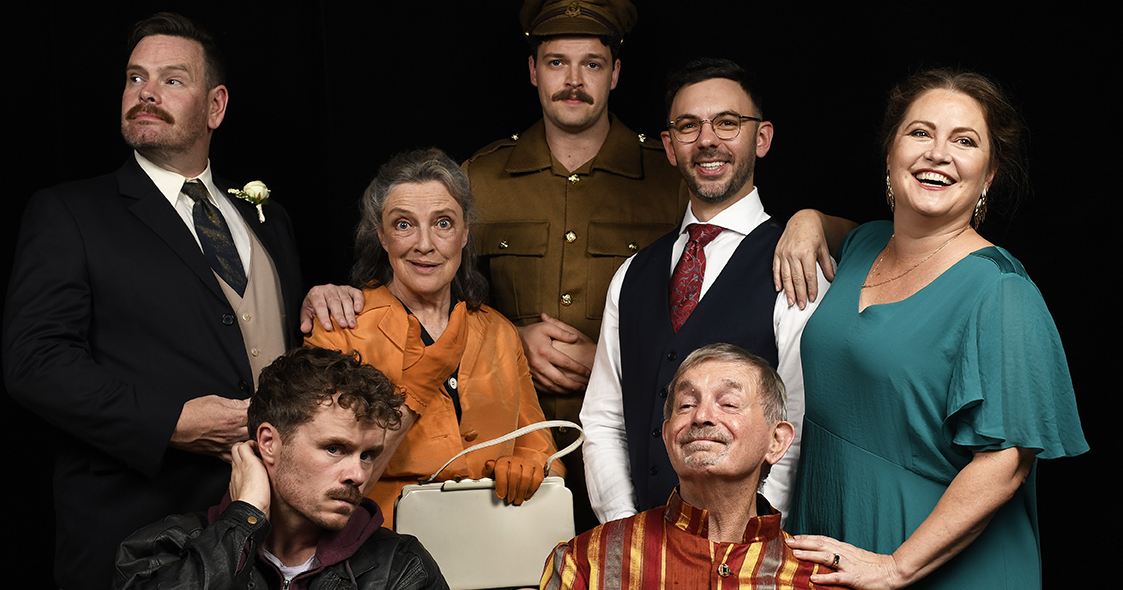
  1. Queers - Everyman Theatre, ACT Hub: A evening of well-performed entertainment that sits more under cabaret than theatre. It is a series of eight monologues performed by indiviual actors with no interaction between them. The direction (Jarrad West and Steph Roberts) is solid as each seperate monolgue takes us through various decades and gives some insight into the main concerns of the gay 'scene', which (according to the publisher of the works curated by Mark Gatiss) 'celebrate a century of evolving social attitudes and political milestones in British gay history. Here, the pub setting and musical interludes provided extra interest and atmosphere, with a special mention for Steph Roberts who played the bartender interracting with actors and adience alike.  
  2. Last of the Red Hot Lovers - Canberra Repertory Society, Theatre 3: A fine production of a not-particularly outstanding play. Barney Cashman (David Cannell) decides he wants to have lots of sex with different women so he invites three of them individually to his appartment and fails to get intimate with any of them, possibly due to a disturbing and extremely unpleasant habit of constantly sniffing his fingers. As usual with a Neil Simon play, the self-indulgent, over-entitled, middle-aged, middle-class, mediocre white man is centre stage while the women are left to act in supporting roles. Victoria Tyrrell Dixon played the wisecracking Elaine Navazio with the perfect blend of cool confidence and comic timing, Stephanie Bailey as Bobbi Michelle played a demanding role with a lightness of touch, gradually and sensitively revealing the truth of her fantasist behaviour, and Janie Lawson as Jeanette Fisher handled existentialist dread well, although was a little stilted and uncertain of her cues.
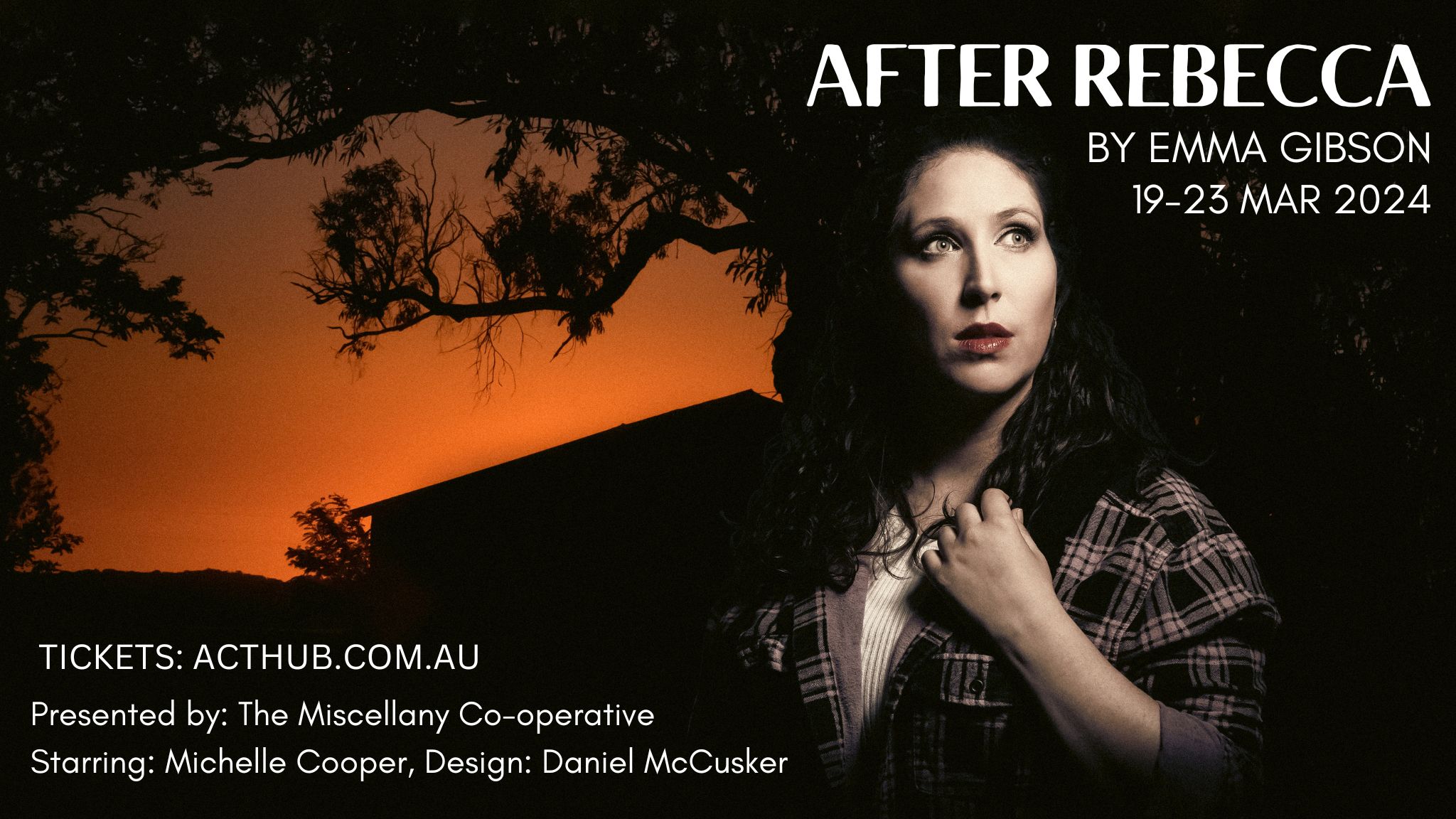
  3. After Rebecca - The Miscellany Co-operative, ACT Hub: Michelle Cooper is a tour de force in action as she delivers this one-person, seventy-five-minute mologue, which tackles themes of abuse and co-ercive control. She also co-directs with Emma Fibson, who wrote the work which transposes the story Daphne du Maurier's Rebecca to a remote outback farm. The idea of a young impressionable woman being swept off her feet by the star of a reality show only to discover when she is alone and isolated that he is more than the handsome heart-throb portrayed on television and that she is expected to be much less than the talented production assistant he met and seduced, is horrendously relevant and contemporary. It starts with a confidence which seems attractive. He takes charge, he promises adventure, he removes you from your support network, he shapes you to fit his mould, he snaps in anger, he denies everything, he will never ever stop. And you say sorry. Sixteen women have been killed in Australia this year due to ‘gender-based violence’. That’s more than one a week. It's only March. You need to see this.  
  4. Sh*t-Faced Shakespeare, Macbeth - Canberra Comedy Festival, The Playhouse, Canberra Theatre Centre: Six years ago I saw Shit-Faced Shakespeare do their version of Romeo and Juliet at the Canberra Comedy Festival and I loved it. This interpretation of Macbeth is just as fun, sharp and witty, and as there is a different inebriated actor/ character each night, it has a wide range of appeal and bears repeat viewing. I also think the more you know the play; the funnier it is, and I have seen and performed in this play more times than any other of Shakespeare's canon. It's very well-crafted entertainment.
  5. RBG: Of Many, One - Canberra Theatre and Sydney Theatre Company, The Playhouse, Canberra Theatre Centre: FOr anyone who saw and loved Julia and Prima Facie, this new work by Suzie Miller will be a welcome delight. Heather Mitchell portrays the titular character, Ruth Bader Ginsberg from her budding legal awakening through her appointment as a Supreme Court Justice of the USA, and her cult status that saw her labelled as Notorious RBG. I have been interested in her career so I couldn't say if prior knowledge is necessary to the enjoyment of the play, but what I can say is that Mitchell is quite brilliant in embodying the woman as she ages and develops, learning and encountering all the highs and lows of her experience. The script is spectacular as Miller blends primary source material with directorial imagination, and the performance, directed by Priscilla Jackman, is nothing short of remarkable. Theatre that tells us stories of outstanding people and their effect on their surroundings is theatre worth watching. 

Friday, 14 July 2023

Friday Five: Next on Stage

  1. At Dinner - ACT Hub Development Initiative, ACT Hub: In this new piece of writing by Rebecca Duke, we witness a date between two diners (Thea Jade and Timothy Cusack) and their interaction with the third actor (Nakiya Xyrakis), a server in the restaurant. The audience, served by the waiter and given a program in the form of a menu, are included as patrons into the proceedings. Director, Holly Johnson allows the words to do most of the action, in a simple setting where the actors barely move from their seated position. It is a credit to all involved that this retains audience interest despite the static set-up.
  2. White Rabbit, Red Rabbit - Aurora Nova and Lexi Sekuless Productions, Mill Theatre: The main stipulation for this play, written by Nassim Soleimanpour, is that the performer has never seen it before. It has no director and no rehearsal period. When the actor enters the space, the script is on a chair in a sealed envelope. They must open this envelope and read the contents, including all the stage directions, aloud to the audience. They must carry out the instructions as an actor but also as a human being - even if those instructions may cause themselves risk or potential harm. The audience is forced to be complicit in this dramatic manipulation. It also works better if the audience has not seen it before so is literally on the same page as the actor as they experience the twists and turns of the script. I admit I have seen it before (it was staged at The Street in 2014), where I had such a visceral negative reaction to the piece, I wanted to walk out of the theatre. This time around, I had no such response. The shock value was absent and without that, no matter how good PJ Williams is (and he is certainly engaging and guides the audience through the content like a kindly shepherd), it lacks the necessary punch and just seems mean-spirited. 
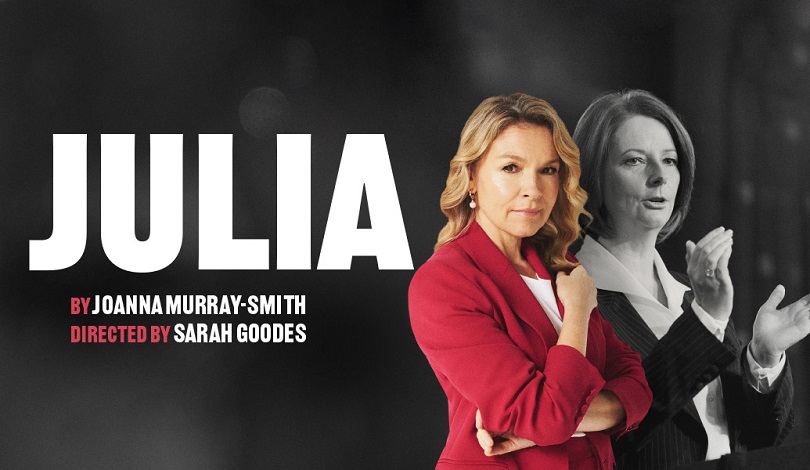
  3. Julia - Sydney Theatre Company and Canberra Theatre Centre, The Playhouse, Canberra Theatre Centre: Apparently the Canberra Theatre Centre had to fight to get this premiere by Joanna Murray-Smith, and their efforts are well rewarded. Justine Clarke plays Julia Gillard in an almost one-woman play as she revisits scenes from her personal life and political career. It's not an impression so much as an embodiment, hitting the highs (successfully passing 561 bills through parliament) and lows (the oppositional slurs and sexism) with strength and perfect emphasis. Aided by well-chosen projections, director, Sarah Goodes teases out all the subtlety behind the speeches and the meaning behind the memorable moments. Of course it all leads up to that anti-misogyny speech which brings this house to its feet with justified applause. 
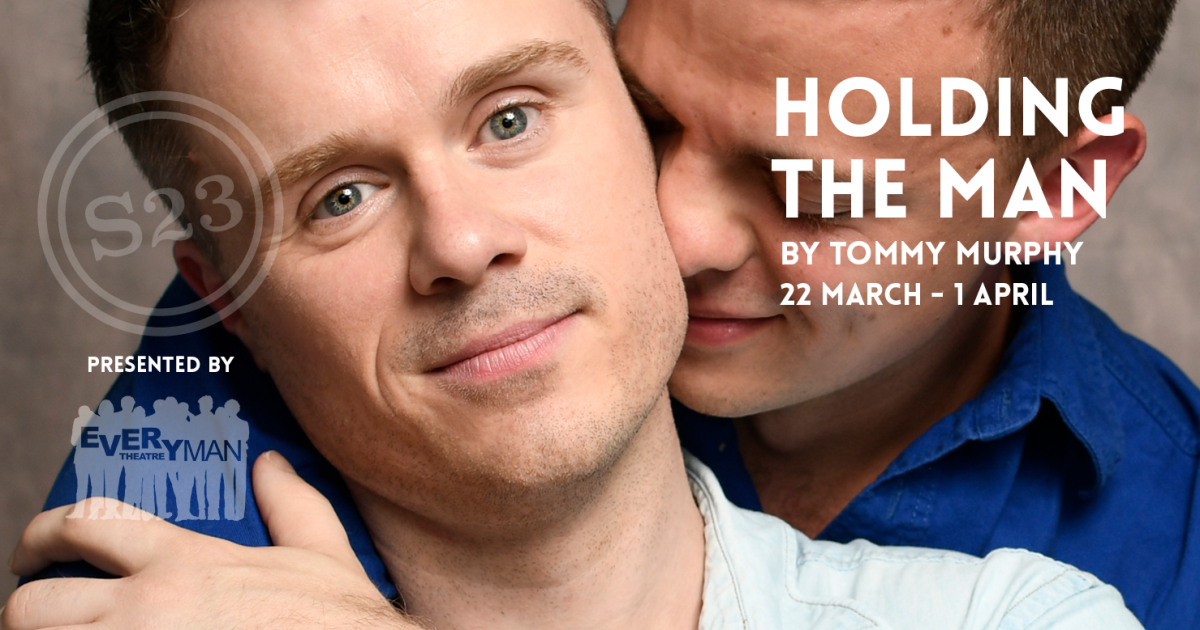
  4. Holding the Man - Everyman Theatre, ACT Hub: This is a touching play dealing with coming-of-age, coming out, and the effect the AIDS pandemic had on the gay community in the 1980s. First produced in 2006 based on a memoir published in 1995, it is entirely of its time, and exactly the worthy drama one would expect Jarrad West to direct for Everyman Theatre. There are a few issues with sight lines, the staging is basic and there are moments that drag (the masturbation scene was obviously more fun in rehearsal, and the mockery of the NIDA students dips into one-note caricature), but the central couple played by Joel Horwood (Tim Conigrave) and Lewis McDonald (John Caleo) are outstanding and push all the right buttons of awkwardness, arrogance and anguish. The supporting cast (Amy Kowalzcuk, Joe Dinn, Grayson Woodham, Tracy Noble) are kept very busy playing multiple roles with effective delineation that bring out all the requisite emotion and leaves the audience in no doubt that they have seen something beautiful unfold before them. 
  5. The Thing That's Missing - Perform Australia, Mill Theatre: Written by Elizabeth Avery Scott and directed by her partner, James Scott, this play features the advanced Diploma of Performance students from their acting school, Perform Australia. The four young people (Annie Nogaliza, Bronte Thomson, Mikkie Martinez, and Isaac Travers) have had something taken away from them, which ranges from the minor insignificance to the crucial piece of their humane puzzle. Each of the four actors tells their story before clearing the stage for the next vignette, until they end up together in their flat-share situation to offer companionship to each other and support their loss. There are moments of humour and some sharp dialogue to offset the well-meaning but overly earnest content. 

Friday, 23 December 2022

Friday Five: But Wait, There's More Theatre

Lima Prichard as Ste and Nick Dyball as Jamie in Beautiful Thing

  1. Beautiful Thing - Everyman Theatre, ACT Hub: The coming-of-age exploration of sexual orientation drama is sensitively directed by Jarrad West although some of the class issues and geo-political context is lacking. Sandra (Amy Kowalczuk) is a single mother in 80s Britain (southeast London, and the accent ain't bad) with all the social connotations that implies. Dressed in short leather skirts, chain-smoking and both seducing and repelling her latest hippie lover, Tony (played with cringe-worthy 'think-of-me-as-your-mate' pseudo cool by Colin Giles), Sandra is desperately concerned with appearances while pretending she doesn't care what the neighbours think. Her world order is challenged when her son Jamie (Nick Dyball, who does some great work when he isn't shouting to portray emotion) develops feelings for Ste, the heartthrob next-door. Liam Prichard has remarkable confidence in the role, delivering a subtle performance full of troubled teen vulnerability. Liv Boddington plays Leah, the drug-taking, Mama Cass-loving expelled adolescent with peculiar naivety rather than as an ASBO waiting to happen, in keeping with the sanitisation of the whole. Some of the blocking and sight-lines are questionable as the traverse set is problematic depending on where the audience member sits, but on the whole this is a heartfelt and touching production. 
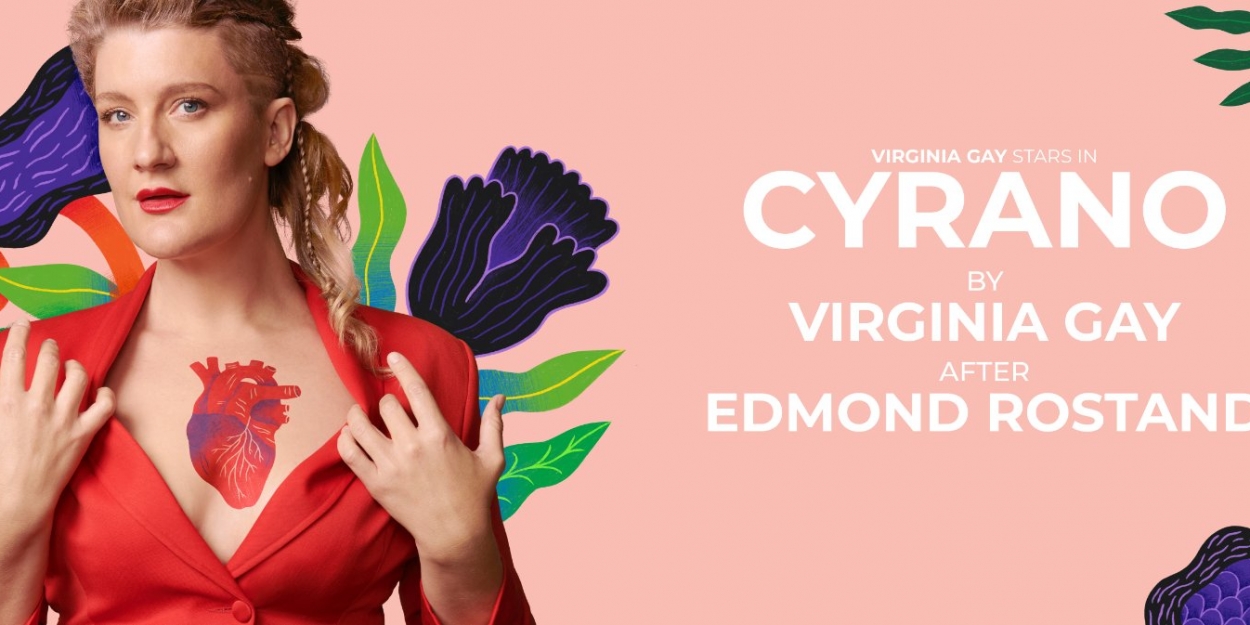
  2. Cyrano - Melbourne Theatre Company, Southbank Theatre: The production directed by Sarah Goodes is original and immediate, switching genders, updating language, and consolidating characters to make this a story for our times rather than an historic piece. Playwright and performer, Virginia Gay writes, "The stories that we tell have enormous importance... I don't think entertainment and fighting for something more are mutually exclusive; if you can do them both at once, then that is the sweet spot." This is smart and sexy, with many a self-aware wry comment on the nature of theatricality - often directly to the audience - enhanced by a plain, back-stage set. Gay is superb as the titular character with all the best lines and the nuanced personal development, Tuuli Narkle works hard with limited material as Roxanne, and Claude Jabbour brings the buff in contrast to the brains as the alternate love interest. The supporting chorus (Holly Austin, Robin Goldsworthy, Milo Hartill) guide us through the story with music, humour and theatrics, as they have heard it many times before, but the interpretation makes it feel fresh to our eyes and ears. 
  3. Murder on the Nile - Tempo Theatre, Belconnen Community Theatre: Jon Elphick directs another Agatha Christie for Tempo Theatre - this is the eleventh time that he has done so, and it's pretty solid with no frills. First performed in 1946, Murder on the Nile is the play of the novel (and subsequent film versions) of the film, Death on the Nile. The staging here is all on a boat - mainly portrayed by a couple of port holes in the set - on the Nile - a missed opportunity for some dramatic lighting to portray the vivid sunsets mentioned in the script. Regular stalwarts of the company, Garry Robinson, Marian Fitzgerald, Paul Jackson and Kim Wilson return to play a variety of roles they've played before. If you've seen one Tempo production of an Agatha Christie play; you've seen them all - this isn't a bad thing because it makes Christie comfortable and familiar and sometimes that's just what's required from a night at the theatre. 
  4. Come Alive Festival of Museum Theatre - The National Library of Australia and the National Portrait Gallery, NPG: Come Alive is a student festival that gains its inspiration from the exhibits and collections of the National Library of Australia and the National Portrait Gallery, creating  theatre performances that have drawn on characters, events, objects and items in the two galleries' vast collections. Peter Wilkins, artistic director of Come Alive, works with teachers and students to create the original and inspired performances in which students pursue their passion for the performing arts and engage with their nation's cultural heritage. Over a week, eleven groups presented fourteen performance through theatre, movement and music, as well as visual media. I saw St Clare's College perform Clowning Around (an abstract exploration of the association between clowns and mental disorders through movement and masks) and Colour My World inspired by the sculpture of Dr John Wu and his drive to create spaces for young patients that brought light into a world of darkness. I also saw a surreal and fascinating short piece by St Edmund's College called Life is Like a Box of Chocolates and inspired by a tin box of chocolates sent by Queen Victoria to her troops serving in South Africa in 1899. Nigel Palfreman is the teacher behind this memorable work which ranges from Buckingham Palace to the soldiers on the front line, and incorporates the legend of Banjo Patterson. Ashleigh Nguyen performed a dance piece based on the portrait and story of Anna May Wong, who 'reshaped the way Asian roles in American cinema could be conceived and created.' The bold work combines dance, text and video all choreographed and curated by Nguyen herself to confront stereotypes and challenge expectations. This is an excellent festival which should be encouraged and supported by all who care about engaging young people with their history and culture in original and exciting ways.
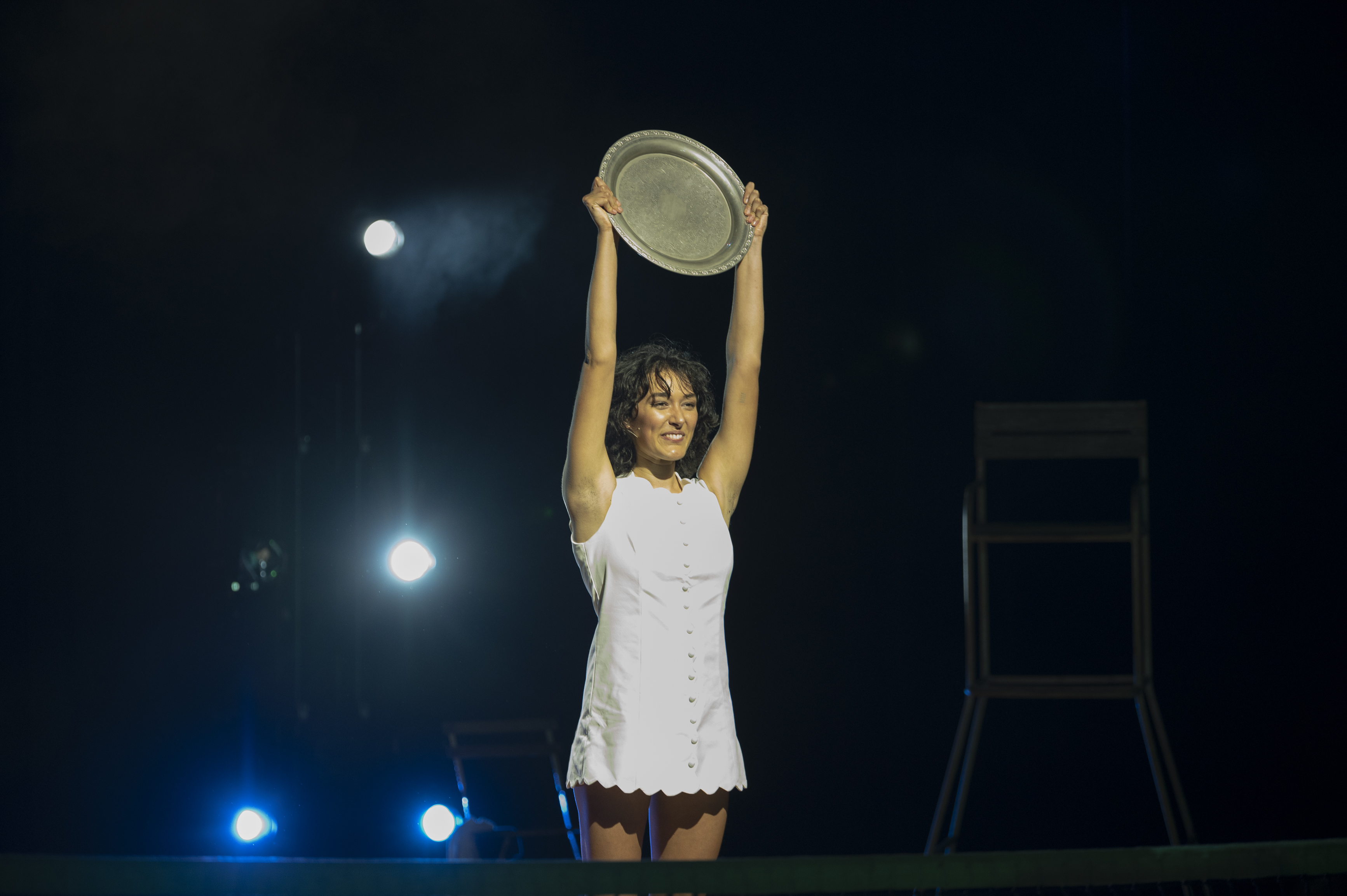
  5. Sunshine Super Girl - Performing Lines, The Q - Queanbeyan Performing Arts Centre: I remember watching the Wimbledon Women’s final in 1980 and knowing I was watching something special. Written and directed by Andrea James, Sunshine Super Girl follows the life, challenges and achievements of Evonne Goolagong Cawley, acted with a well-judged blend of charm and grit by Ella Ferris. All the other players in her story from her family to her coaches to coaches, competitors and journalists are given vibrant life and interpretation by the spectacular skills of the ensemble (Sermash Bin Saad, Jacqueline Compton, Lincoln Elliott, Katina Olsen). Katine Olsen is also credited as the movement director, and she has created an almost balletic interpretation of the drama of sport. Moments of humour and pathos are given equal weight as the highs and lows reflect the parrying back and forth of the ball over the net and into the angles of the court. The set, designed by Romaine Harper suits the purpose superbly as it represents the physical court, with movable fixtures, an umpire's chair, and metal benches representing everything from the family car to a hotel bed to a trophy cabinet. It would have been even more appealing if this were performed in the traverse setting as that would enhance the audience engagement and experience of the ebb and flow of the game(play). Sunshine Super Girl at The Q is a spectacular production of a play about a remarkable woman, and I’m all out of superlatives.
Ella Ferris as Evonne Goolagong Cawley in Sunshine Super Girl

Friday, 11 November 2022

Friday Five: The Latest Theatre

  1. This Changes Everything - Echo Youth, The Q: In a dystopian future, a group of young adults try to set up their own society, called The Community, on a platform out in the sea - the set with hierarchical levels and isolated pods works well for symbolism and lighting opportunities (Direction by Jordan Best; Lighting design by Jacob Aquilina). Written by Joel Horwood, it's not necessarily a novel idea (I wouldn't be the first to call it Animal Farm meets Lord of the Flies) and many of the motifs of a disingenuous leadership model are familiar - rules written on the wall are altered to suit and the founder of the group mysteriously vanishes, said to have fled and abandoned the remainers. As a British viewer, it's impossible not to think of Brexit, but there are many other issues and themes ('the negatives of Capitalism; the inequalities bred by exponential growth; a culture failing to engage with causes or impact of climate change') which are all generally well-handled, although the 'abuse trope' seems glib and unnecessary. The play also explores the fine line between Socialism (in which each works according to their talents) and Communism ruled by a totalitarian dictator, in which the level of violence and oppression are well-pitched at an adolescence; they can all be aware and concerned, but not still safe and not traumatised. Jade Breen has solid conviction as the Stalinist overlord, Maja; Tara Rose Blake as Kim, the one who switches sides to become the enforcer is believable and nuanced, and Will Best also stands out as Basic Jane, the cynical one trying to keep their head down and avoid being noticed (Animal Farm's Benjamin, if you will). There are the usual awkward moments and projection issues seen in junior casts, but generally this is a respectable piece of theatre that should be encouraged. 
  2. First Seen: Barren Ground by Helen Machalias - The Street, Street Theatre: Helen Machalias is such a great talent and I was intrigued to see what she would do next. This rehearsed read did not disappoint. I loved the exploration of the liminal spaces between life and death; myth and relaity; advertising dreams and political realities. Refugee's stories at an off-shore detention centre (on Christmas Island between 2010 and the closure of the centre in 2018) are told against a supporting framework of The Tempest where 'brave new world' poetry collides with 'stop the boats' rhetoric. When this returns as a full production, I will be first in line.
  3. Hand to God - Everyman Theatre, ACT HUB: I've not seen this play before, but I read that it won the Off Broadway Alliance Award for Best New Play and received five Tony Award nominations in 2015, although it closed early when it transferred to London and didn't garner such glowing reviews. I'm not surprised. It's crude, crass, blindingly obvious, and, according to the original playbill, an 'irreverent puppet comedy... about a possessed Christian-ministry puppet'. The widowed Margery (Steph Roberts) runs a Bible-promoting puppet-class attended by her son Jason (Michael Cooper), the sleazy teenager Tim (Joshua Wiseman), and quirky girl next-door, Jessica (Holly Ross). Men expect respect for no apparent reason, and women exist to give it to them - Steph Roberts deserves better than the demeaning cougar-seduction role she's given. Sure, she does it well - she does everything well - but this borders on hot-for-teacher-soft-porn fantasy.  To make this message more palatable (and supposedly satirical), Jason becomes fused with his demonic puppet, Tyrone, and Pastor Greg (Jarrad West filling in for Arran McKenna) has to perform an exorcism, while also trying to woo Margery despite the fact that her husband has only just died. Michael Cooper is quite brilliant at physical comedy and the combination of his acting skills and Jarrad West's slick slapstick direction make this less than just a repulsive piece of low-brow misogyny (mocking organised religion is hardly cutting-edge). In its favour, at least the entitled incel released his toxic masculinity with his hand up a puppet, not on a gun.  
  4. Romeo and Juliet - Canberra Repertory Society, Theatre 3: Co-directors Kelly Roberts and Chris Zuber use a young cast who display energy and enthusiasm, although many lost the poetry with the pace of their delivery, rushing the words and trying too hard to put their own stamp on this classic. Annabelle Hanson plays Juliet as a determined teenager who decides what she wants and goes for it, although it appears to be more independence from her parents (Richard Manning and Crystal Mahon) rather than love for Romeo (Pippin Carroll).Through her strong stance, balled fists and rigid posture, she radiates power and poetry with no need of any love interest - indeed she convinces more in her individual scenes than in those with Romeo, which lack chemistry or passion - this is not helped by the setting of their intimate scenes (the meeting; the balcony scene the bed scene) on distant parts of the stage. Carroll works hard on diction and projection but sacrifices passion and feeling, leaving the audience to rather engage with Mercutio (a fine performance by Anneka van der Velde whose restless movements imply there are hidden depths to the character hidden behind a facade of bravado) and the Nurse (Tracy Noble), who both bring the necessary energy and choric interpretation. 
  5. Ngadjung - Belco Arts, Belconnen Arts Centre: If you get a chance to see any work by Dylan Van Den Berg, see it. He is an original and incredible young talent who makes theatre that moves, inspires, connects, provokes and questions. In his director's notes, Van Den Berg explains that 'Ngadjung emerged from an original provocation to write a play about water - First Nations connection to water, human connection to water.' His play casts two women in a futuristic (and dry) environment, controlled by corporations who have privatised, monetised and politicised water to make it a commodity to which only the wealthy have ready access. Lisa Maza plays Flick, the elder who is desperately trying to maintain her connection to Country in a landscape that is irrevocably changing, and Kylah Day is Cass, the young interloper who stumbles across her patch, hiding from pursuers determined to repossess the secrets she stole. The relationship between these two actors is superb as their stories collide, mingle and separate like tributaries in a river. Production standards are also outstanding from the evocative set (designed by Imogen Keen) to the sound (Peter Bailey) and lighting (Linda Buck) design which create tension and atmosphere. In an extraordinary coup, Belco Arts commissioned this work from Van Den Berg, and it can only serve to enhance the significant reputations of all concerned. As with the inherent call to action against ignorance of climate change, this is one that demands to be seen and heard. 
Kylah Day and Lisa Maza in Ngadjung

Thursday, 12 September 2013

A Compelling Tale, However You Tell It.

Home at the End by Duncan Ley
Everyman Theatre
Courtyard Studio, Canberra Theatre Centre, 4-14 September 2013

How many ways can you tell a story? And how can you tell if it’s true? And if you don’t like your own history, can you rewrite it?

Reading from a storybook; interpretive dance; shadow play; masked mime; puppetry; writing on a computer; imaginary discourse; counselling and therapy sessions; plumbing the depths of family history; game shows; reportage; musical commentary – between them playwright Duncan Ley, director Jarrad West and the cast and crew of Home at the End employ all of these methods to bring us a tale of post-traumatic stress disorder and personal redemption.

If all that sounds a bit drama school, it is, in parts, but is rescued from pretentious self-indulgence by some solid acting and script-writing. The obvious storytelling segments are expertly presented and the audience is sucked into the narrative, in whatever way it is presented. Once again, Duncan Driver proves himself to be a mesmerising raconteur (he played a similar role as First Voice in Canberra Rep’s production of Under Milk Wood earlier this year) to Molly, the little girl who comes to visits his shack, followed by her mother, Andie, and, by extension, us.

The play is weaker in the naturalistic moments as the contemporary dialogue sounds forced. The audience may enjoy the witty banter about writing being a form of masturbation, but the one-liners occasionally feel as though we are watching one of those sitcoms where the jokes are shoehorned into the script for the benefit of a laugh.

Isaac Reilly, as Joe Smith, has one of the toughest roles of the play as he attempts to present realism in the midst of heightened drama. Helen McFarlane plays his wife Andie, who relishes the compound challenge of mixing the sensible everyday with surreal extremes. And some singing.

In the foyer as we were leaving, I heard the comment, ‘It must be a great play for the actors.’ That’s a fair point, as there are lots of complementary roles to play but this makes it sound as though it isn’t equally rewarding for spectators, which is untrue. It could be tightened and trimmed, as the play is a vessel which is bursting with so many ideas and themes that it seems to overspill and leak some from the sides. Perhaps a slightly smaller measure is required, if we are to see through a glass, darkly.

The subject matter is confrontational and a man’s descent into madness and destitution as a result of what he did or didn’t do at the moment of crisis, is appalling although compelling. Macabre hospital scenes and Kafka-esque interrogations (surely the name Josef cannot be a coincidence) are contrasted with gritty streets and soulless bars in an urban wilderness that feels depressingly familiar. Elements of humour highlighted by the ensemble cast keep the performance from being doom-ridden and harrowing.

The half-time shock seems to come out of nowhere, and blasts what was a fairly comfortable fable into something deeper, darker and more threatening. So many concepts are exploded, that there is barely time to consider them all before we are plunged back into the story. It is a play of two distinct halves as though something has been ripped apart and now cannot fit back together.

Set (Nick Valois), lighting (Kelly McGannon) and costumes (Emma Sekuless) are all put through their paces in this multi-tiered spectacle and pass the test with honours. It is clear the crew are working as hard as the cast to present this original, demanding and questioning drama.

One of those questions being, if the play is, as playwright Duncan Ley is quoted as explaining, ‘a gift of Canberra to itself’, and it’s the thought that counts, what exactly was he thinking? Pondering that poser (that’s without a ‘u’) kept me awake long into the small hours. I love theatre that can do that.